

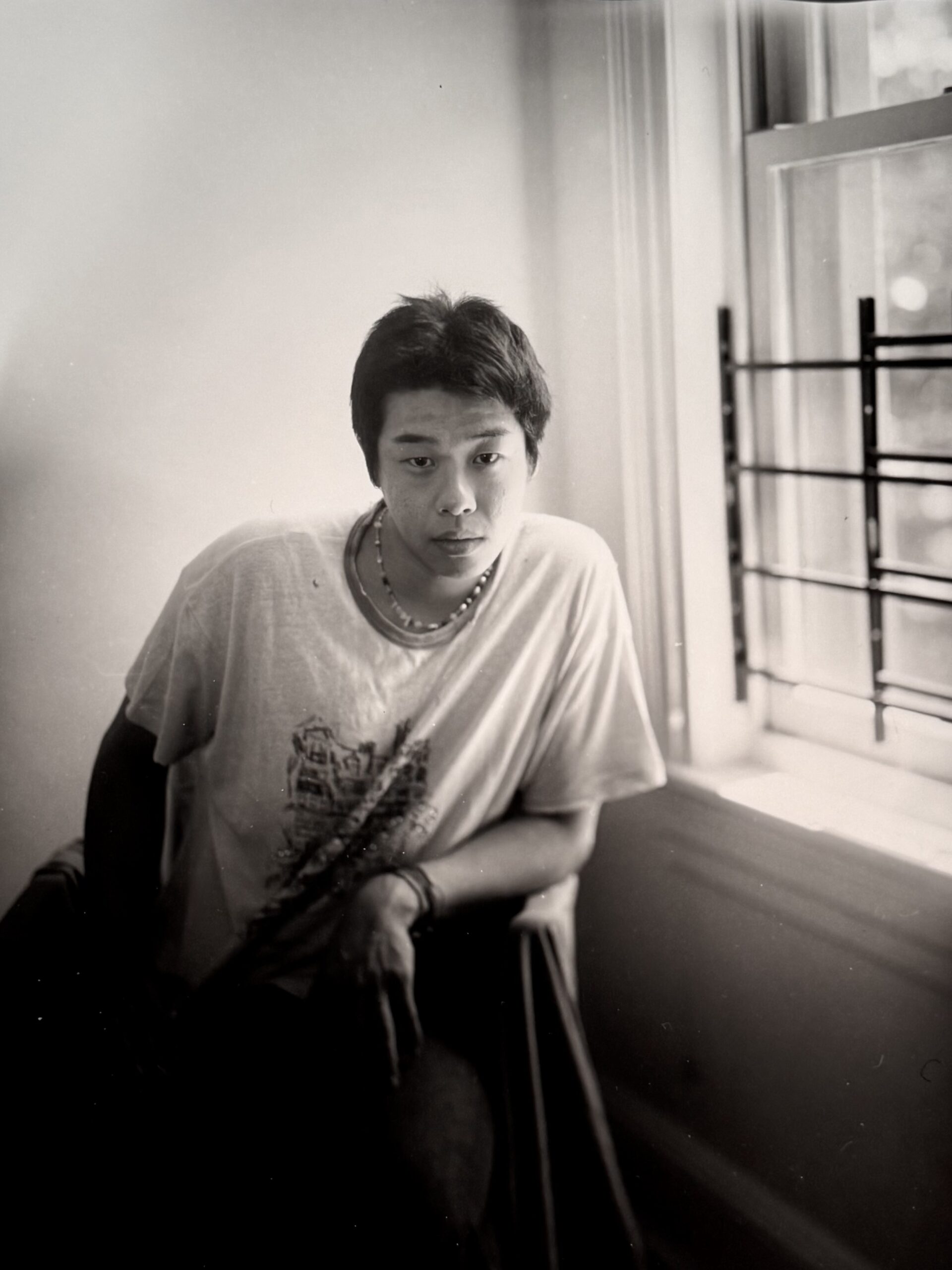
An overriding goal in my photography this past year has been to expand my ability to use lighting to create expressive indoor portraits, whether in a studio or on the fly. Practically speaking, this has meant translating what I learned in Ethan Hill‘s 2025 lighting course at the International Center for Photography—a class aimed primarily at digital shooters—to the far less intuitive world of film cameras.
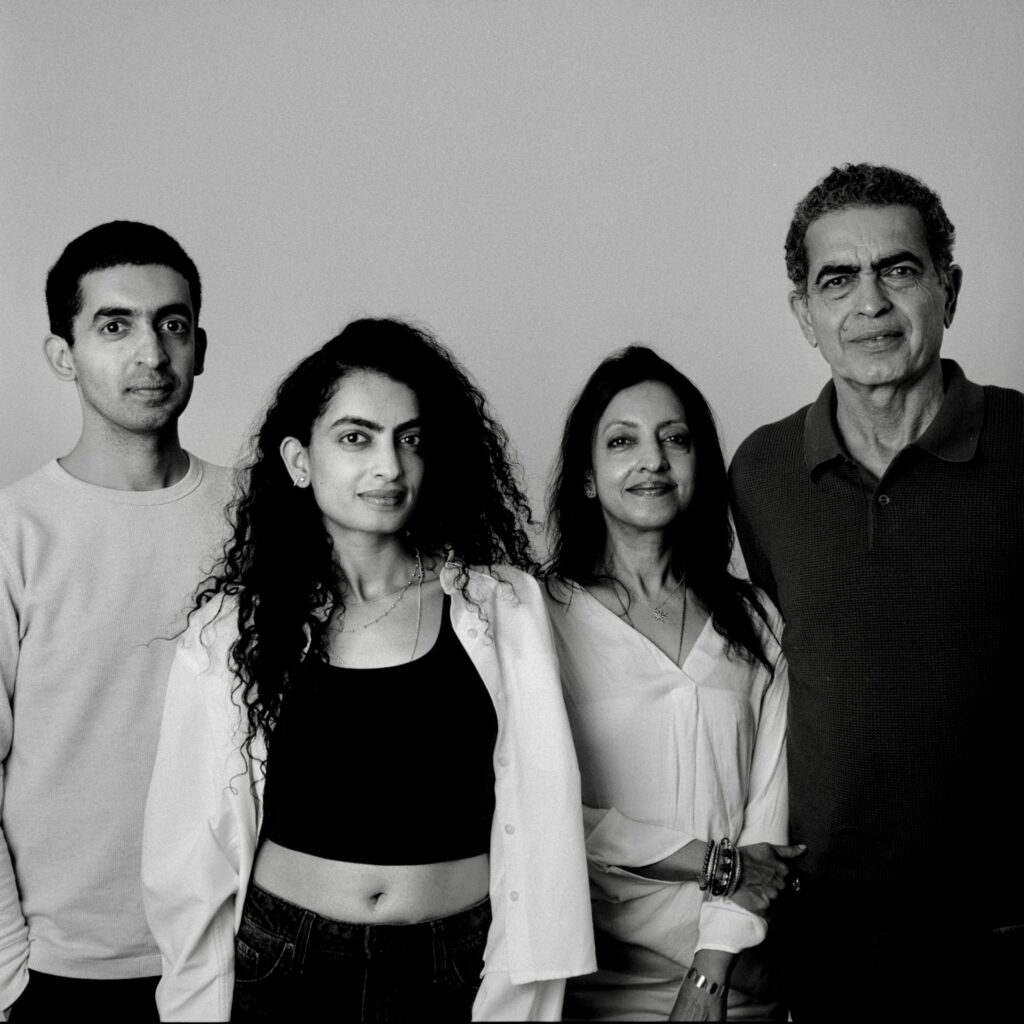
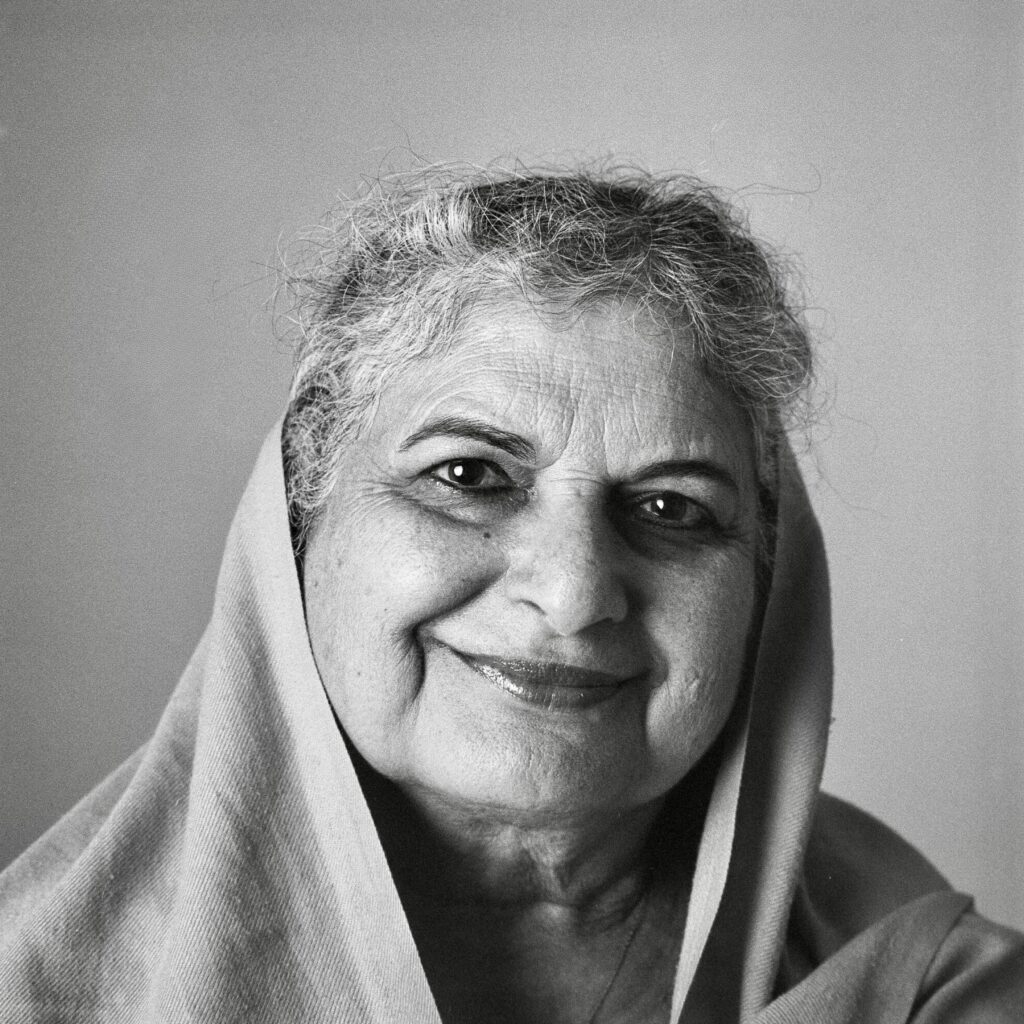
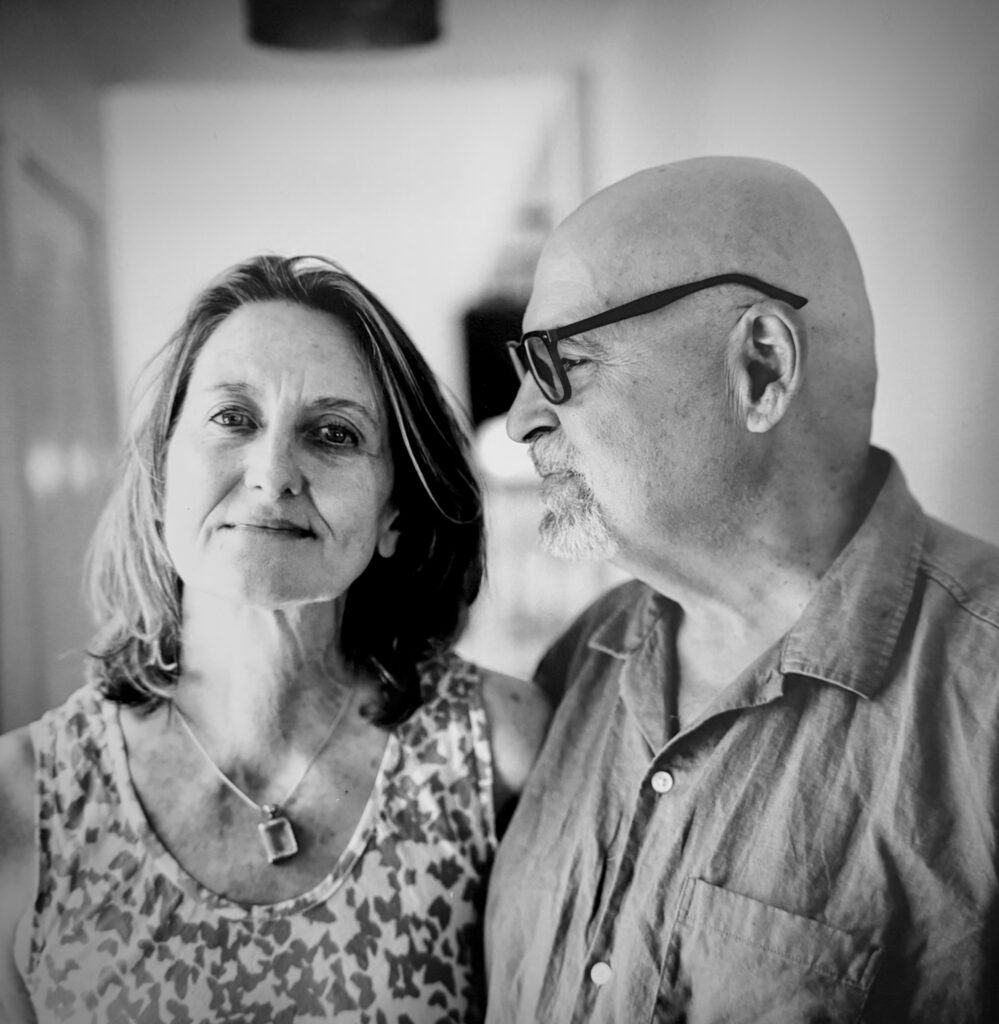
First, I must acknowledge that many excellent photographers, including quite a few 35mmc stalwarts (such as Alexandre Kreisman) never use strobe, indoors or out, and are natural light purists in the manner championed by Henri Cartier-Bresson. In addition to pooh-poohing color photography, Cartier-Bresson famously disdained artificial lighting, which he felt flattened photos and drained them of soul. This does not, however, mean that he passively accepted whatever lighting presented itself when making portraits. His provocative 1971 photo of the disgraced poet Ezra Pound is a case in point (click to see the full-resolution version at the Fondation Henri Cartier-Bresson or at New York’s MoMA).
This portrait, which Cartier-Bresson’s wife, photographer Martine Franck, describes as arising from an almost brutal standoff between her husband and his controversial subject, is remarkable also for the way that Cartier-Bresson chooses to use the light entering from a window outside the frame on camera left. Favoring the midtones with greater exposure—a choice a different photographer might reasonably have made—would likely have brightened the image, giving a more conventionally journalistic sense of the surroundings and perhaps rendering Pound’s face and eyes more legible. But doing so would have deprived the light of its starring role. In the portrait that light becomes a subject in its own right, an elemental flash in a darkness that seems to engulf, or perhaps emanate from, Pound. (Interestingly, the MoMA print from the 1980s does have slightly more open midtones than the 1971 frame in the Paris exhibition catalogue and website, for reasons unknown to me. This difference emphasizes the role of often anonymous printers and editors in shaping iconic images.)
I seriously doubt that an artist of Cartier-Bresson’s caliber needed to worry much about how he was using light in such scenes. What had long been automatic for him is something I will always have to work at, muttering aloud to myself in the process. In addition to questions of metering—do you favor the highlights, shadows, or midtones?—there is the Inverse Square Law, which has to do with the physical proximity of the subject to the window or other light source. Closer generally gives more intense brightness, as one might imagine, but also more abrupt falloff; further away means more even illumination and gentler transitions.
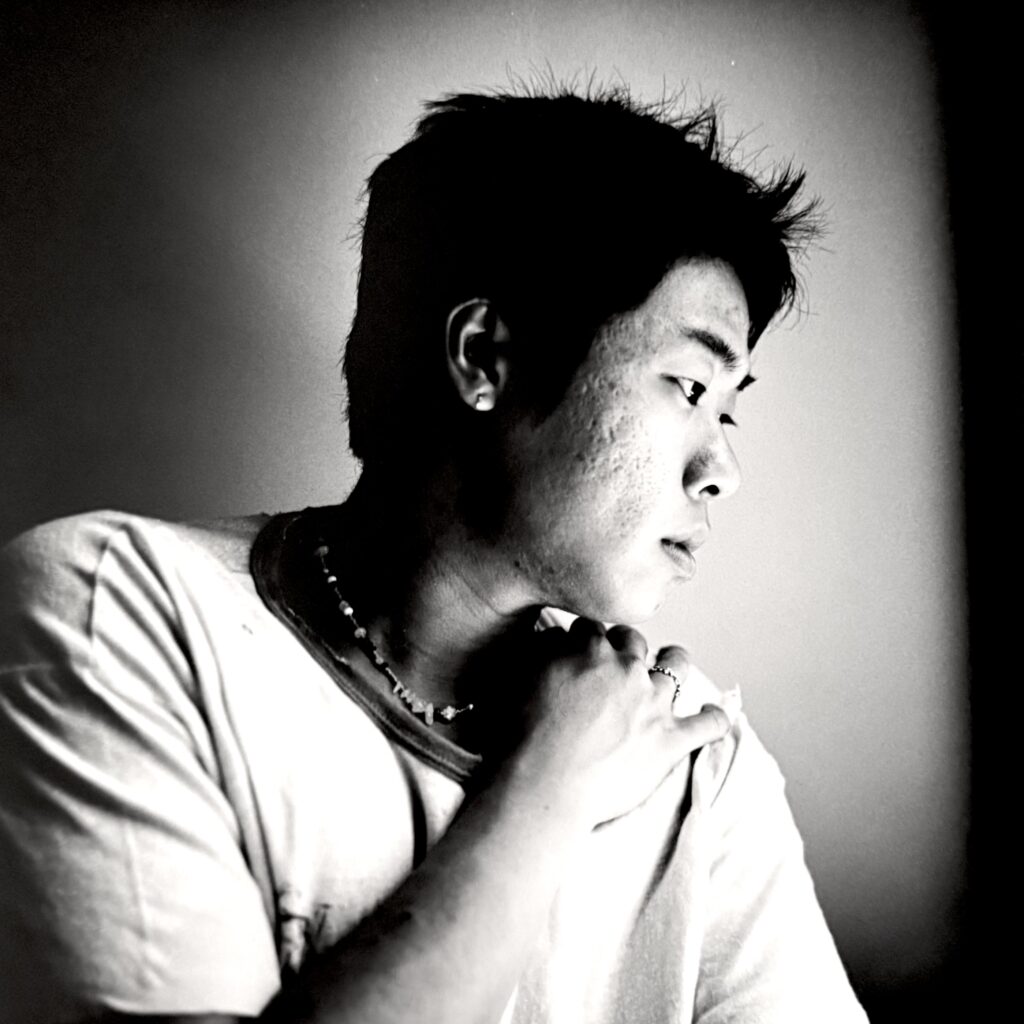
My first two portraits of Evan (the featured image and the next one) show what a major difference a slight shift in placement vis-à-vis the same south-facing light source can make in a portrait session. Although Evan leans his body loosely toward the window in the featured image, he is distant enough from it and angled toward the camera in such a way as to allow the light to softly envelop him. While there is some falloff between the light and dark sides of his face, the major shadows occur in the lower quarter of the photo, near a dark wood floor where the window light scarcely penetrates.
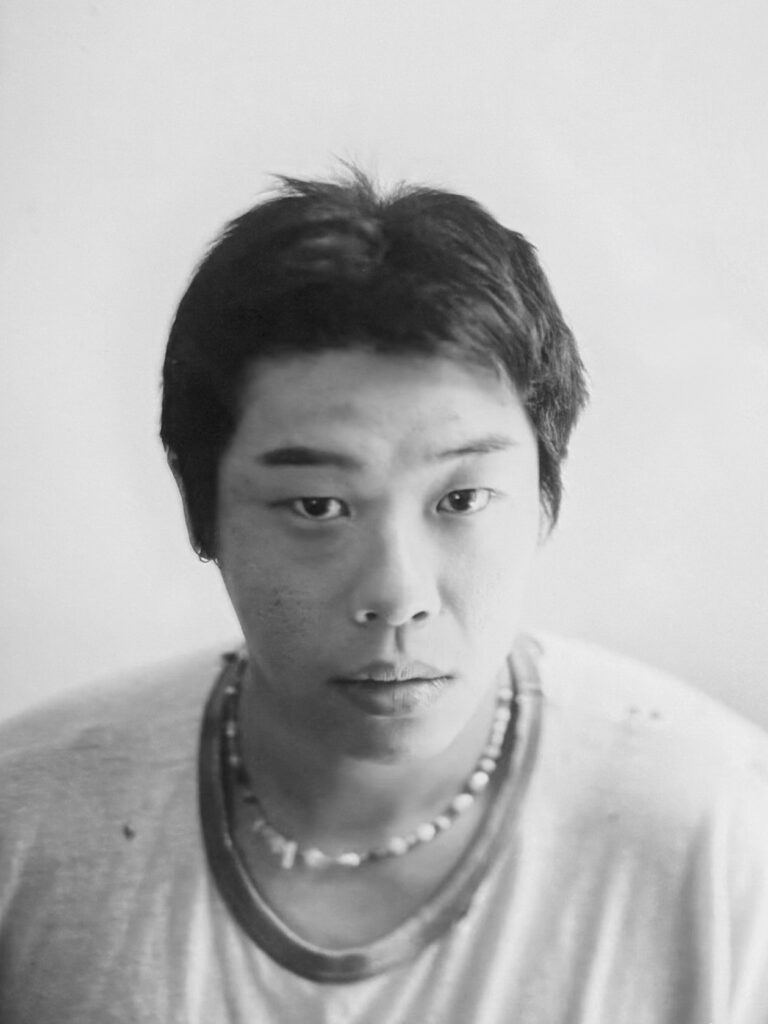
In the second frame, on the contrary, the light appears harder. It’s the same light—I took the photo minutes after the first—but it feels more intense owing to the fact that Evan now stands inches from the glass. I embraced the falloff by metering for the highlights and by printing the portrait at a relatively high contrast grade, selectively burning the shadows to deepen them further. The resulting image has a markedly bolder, more graphic feel.
The most radical departure in my Evan session is this final image, taken in the same studio but this time using a diffused strobe located camera right, overriding the window light. As with the featured image, I made this photo with a Deardorff 5×7, but this time positioned the camera on the tripod above Evan and used front tilt to create a soft, glowing vibe. (I did not want the high-key sharpness of an Avedon-style portrait in this instance). I hoped to further that dreamy feeling by feathering the light from the edge of the softbox diagonally in such a way as to allow it to graze Evan’s shoulders and face, creating gentle modeling and leaving no shadow on the wall behind.
Which Evan photo works best?
With the Ezra Pound portrait, you can easily see how Cartier-Bresson’s somber lighting serves a deeper artistic purpose, given the American poet’s treasonous collaboration with the Axis powers during World War II. With Evan, a Leica enthusiast (he uses an M2 with a gorgeous 1960s Summilux 50), there is no public story to speak of—no biographical data by which to evaluate the photos or the way the light works in them. So the choice of favorite image is, as with most photographs, ultimately subjective.
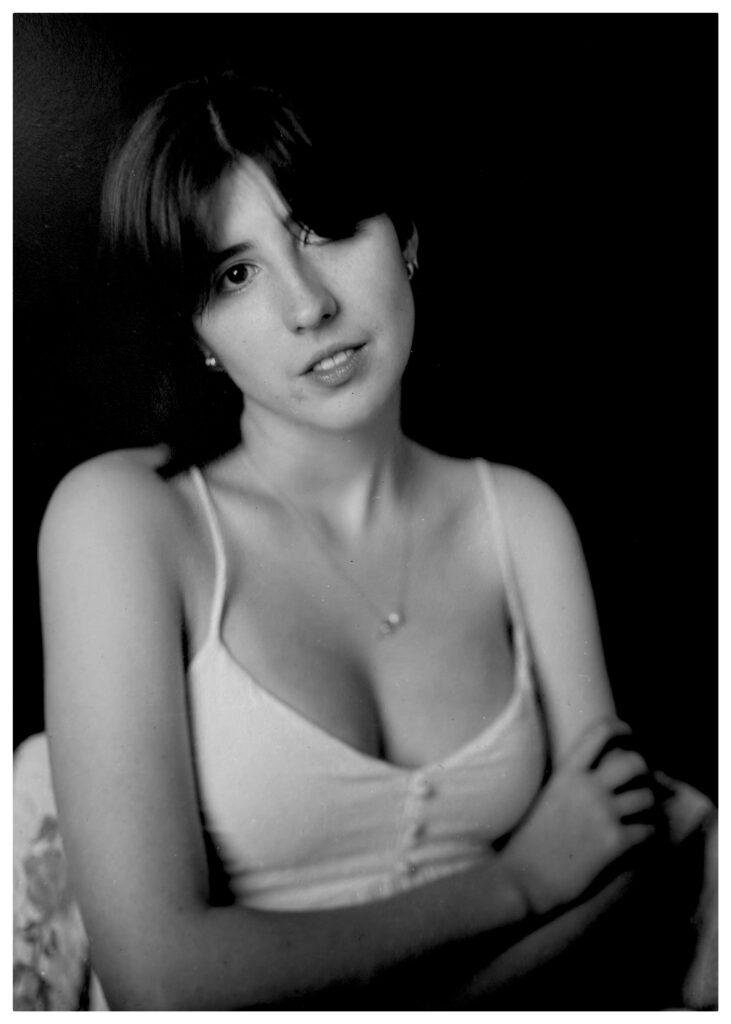
Rounding out this brief discussion of lighting in indoor photography, I’ll present a portrait of Molly, another young photographer who, like Evan, graciously agreed to model for me. While I made some more traditional studio frames of her against a black backdrop, the picture that speaks most to me from our session is the following, taken with Molly reclining in an adjacent room.
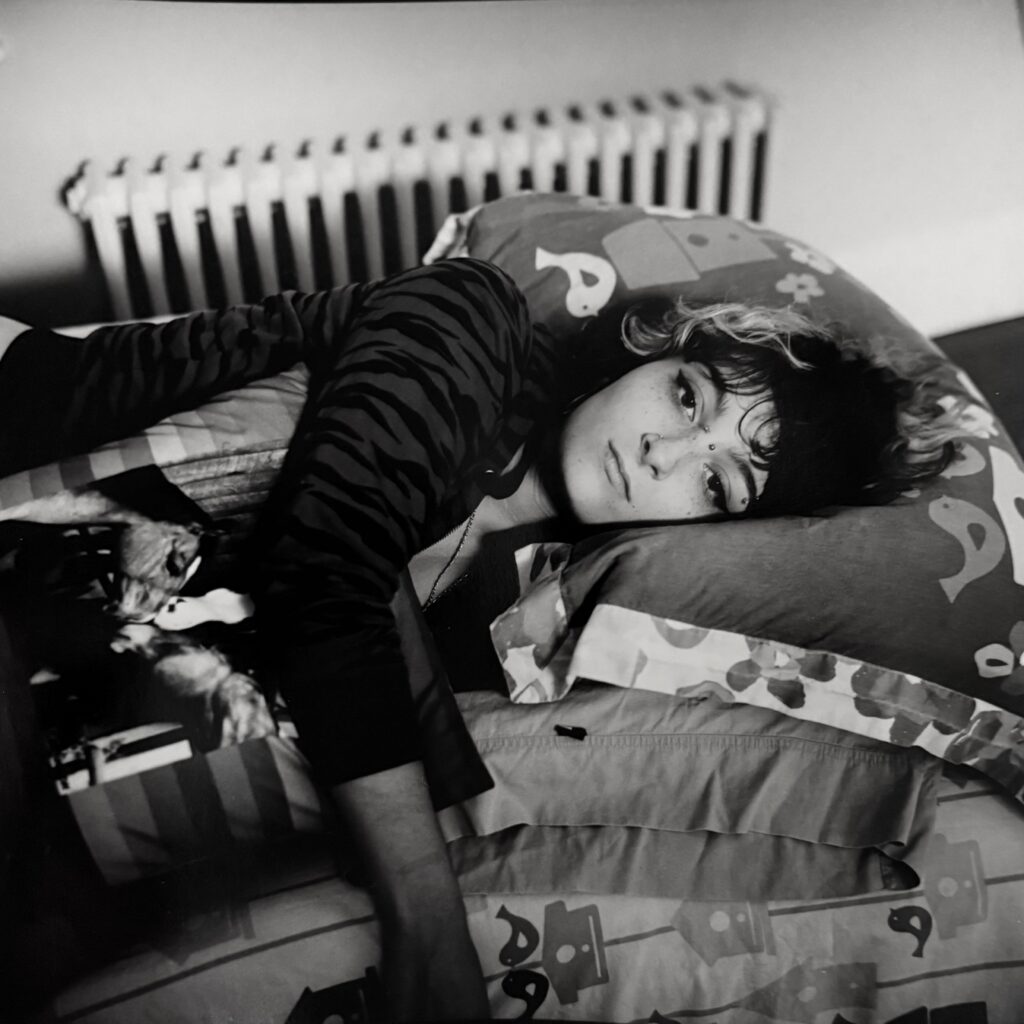
My goal with this photo was to have it feel both natural and somewhat contrived, a found moment in a private life that is also a bit of a performance. I could have taken the photo on a high-speed film with the Rolleiflex on a tripod and gotten some of the look I was after using available light, but this would’ve been an iffy proposition given the room’s dimness and the inconvenient location of the two windows (above the radiator behind Molly). As an alternative I positioned my strobe high in a doorframe above me, directing the light with an umbrella and keeping the unit between six and eight feet from my subject. I wanted the light to spill over the room, creating the feel of a high north-facing window without having to rearrange furniture or chisel out brickwork. At least one photographer friend of mine wondered if the photo had been made with window light, which is gratifying… though I’m not convinced that Cartier-Bresson would be on board with that assessment.
And, dear reader: what about you…?
Thanks as always for having a look.
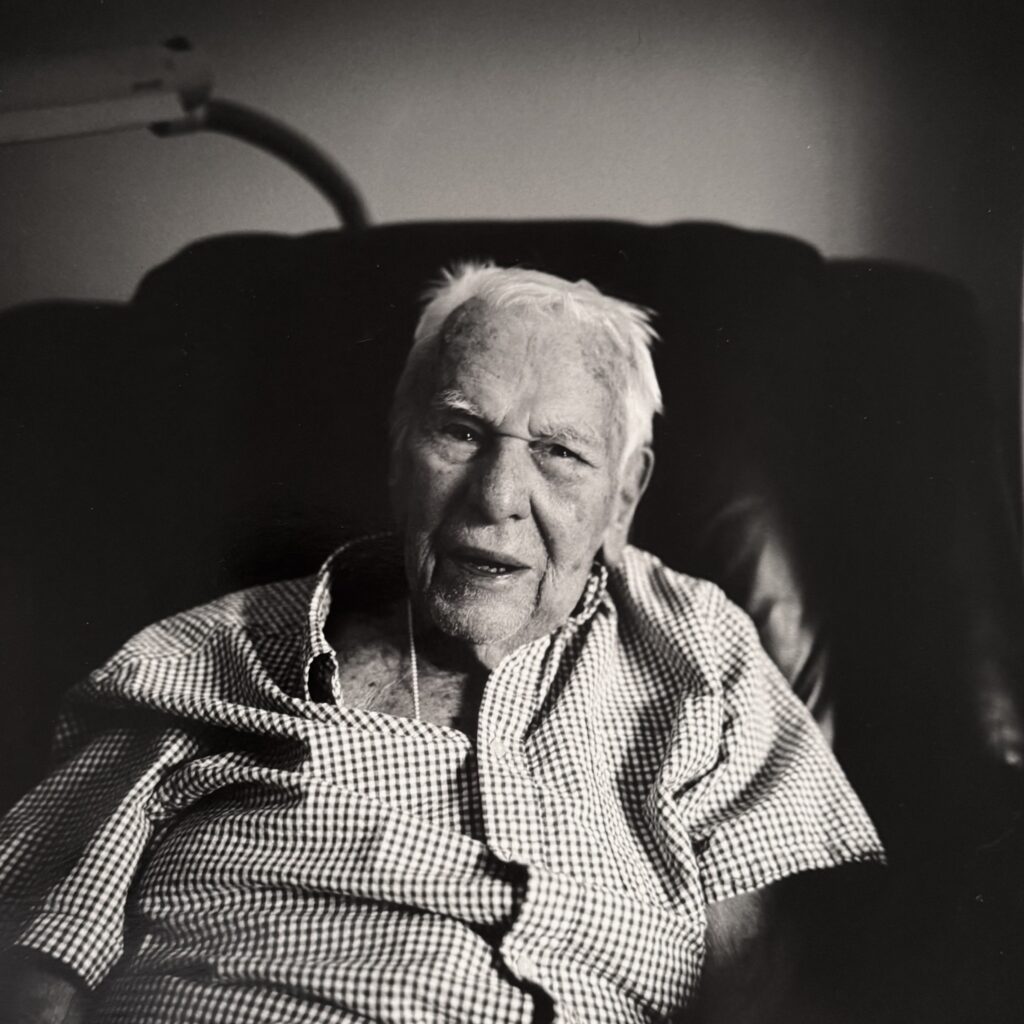
TECHNICAL NOTE: My portraits in this post are scans of darkroom prints made on Ilford MGFB Classic Paper, selenium toned. All negatives were rotary-processed using Kodak HC-110, Dilution H. In the five frames made with flash, I used an Impact 500V studio strobe triggered by an old-school PC cable. Tripping hazards notwithstanding, I find such cables better than electronic triggers, which I’m forever misplacing, dropping and stepping on.
FEATURED IMAGE: Evan I, 2026, Deardorff 5×7, Rodenstock Sironar-N 240mm f/5.6. Ilford HP5+.
Feel free to visit my website at www.leica1933.com to see more of my work.
Share this post:

Comments
Ibraar Hussain on Windows, Tripods and Strobes: Lighting Indoor Portraits on Film
Comment posted: 09/09/2026
I admit I’ve only ever used flash once with B&W film - with an Olympus OM2n using bounce a diffuser and a reflector - I was impressed but too lazy to ever try it again
My portraits are always made using some light entering a door or window with minimum indoor distractions
Catch lights in the eyes are the most important party and you’ve given the people life by having these
A reflector is a great help - wondering if you’ve added one into your armoury?
I recommend John Garrets books on B&W
Comment posted: 09/09/2026
Comment posted: 09/09/2026
Cem Eren on Windows, Tripods and Strobes: Lighting Indoor Portraits on Film
Comment posted: 09/09/2026
Comment posted: 09/09/2026
Art Meripol on Windows, Tripods and Strobes: Lighting Indoor Portraits on Film
Comment posted: 09/09/2026
It's kind of sad but the majority of my career the idea of lighting was to bring your subject to life but not make it look lit. If your lighting was apparent it was unskilled. Today's youth, fashion and culture are often about harsh artificial direct pops of flash trying to achieve a 'retro' look. So keep fighting the fight for beautifully lit.
Comment posted: 09/09/2026
Comment posted: 09/09/2026
Comment posted: 09/09/2026
Comment posted: 09/09/2026
Tony Warren on Windows, Tripods and Strobes: Lighting Indoor Portraits on Film
Comment posted: 09/09/2026
Comment posted: 09/09/2026
Comment posted: 09/09/2026
Comment posted: 09/09/2026
Jeffery Luhn on Windows, Tripods and Strobes: Lighting Indoor Portraits on Film
Comment posted: 10/09/2026
Great portraits! I've complimented you and Scott on this before, but it's worth repeating; your working distance and collaboration with your subjects is what brings life and honesty to the shots. You have the technical challenges worked out, so you're free to concentrate on the spirit of the moment and your connection with your model. I like Molly, your daughter, and Suman, the best, but they're all good. I like the first Evan photo the best. It is the most flattering of him.
Here's my take on artificial lighting vs natural lighting: If you use a softbox that's as big as a window, it's a window lit portrait. Who can really tell, except that the strobe shot is sharper. I usually put strips of black electrical tape on my softboxes to make window-like catchlights in the eyes.
It's hard to get a natural lit window portrait to be super sharp. Even on a tripod, the subject is making micro-movements. A strobe in a softbox is burning at 1/1000 or faster. With small battery powered speedlights, or a studio strobe on 1/16 power, it's more like 1/5,000 of a second. Sharp. I'm a fan of strobes. You don't need a tripod. If you want the lighting to be softer, or the background to be darker, move the light closer. Much easier than repositioning the model.
I'd completely disregard Henri's comment about artificial lighting. It's a silly thing to say. He probably didn't see many good artificially lit photos, or he felt threatened by photographers that could consistently produce good results. Maybe he was turned off by flash photography. He did one thing very well. He certainly would not have been able to use artificial lighting effectively. It wasn't his bag. He was a brilliant shooter, no doubt, but we only see a fraction of all the millions of frames he shot.
I see that some of your images are done on 5x7. Wow, that's a big challenge! Do you have an enlarger that takes that size negative? Quite the lost art. Can you imagine Karsh getting those great shots with an 8x10?
Thanks for posting such good stuff!
Jeffery
Comment posted: 10/09/2026
Comment posted: 10/09/2026
Comment posted: 10/09/2026
Comment posted: 10/09/2026
Comment posted: 10/09/2026
Alexander Seidler on Windows, Tripods and Strobes: Lighting Indoor Portraits on Film
Comment posted: 10/09/2026
Comment posted: 10/09/2026
Christian Hogue on Windows, Tripods and Strobes: Lighting Indoor Portraits on Film
Comment posted: 10/09/2026
Hp5 is good. I love delta though for the detailed mid tones. Well done!
Comment posted: 10/09/2026
Michael Kaplan on Windows, Tripods and Strobes: Lighting Indoor Portraits on Film
Comment posted: 10/09/2026
Wonderful article. I thrive on process so it’s interesting to see how you navigate the photographic elements to arrive at these beautiful images. When I was at RIT (ages ago!) we had the benefit of a massive Northlight studio to produce our photographs. Nothing could match the freedom of manipulating natural light, strobe, and film stock to satisfy our aesthetic needs. Thanks again for the study.
Comment posted: 10/09/2026
Omar Tibi on Windows, Tripods and Strobes: Lighting Indoor Portraits on Film
Comment posted: 13/09/2026
David Pauley on Windows, Tripods and Strobes: Lighting Indoor Portraits on Film
Comment posted: 13/09/2026
And thanks for the kind words! Your wife is lucky those portraits are only occasional. My husband a daughter are my primary Guinea pigs...! They mostly don't complain...