

This is a one roll project from a couple of years ago. At the time, I had not yet ventured into seriously working towards a set. Any images that seemed to go together were purely coincidental, and, while the practice of taking photos was still a joy, the reason for them, and the connections they could extend, felt like a missing piece. Hence, the one roll project.
I had completed one small project to this point: a collection of shots of doors and windows. It didn’t result in the sort of final product I felt proud of, however, so I was eager to try again with some lessons learned. I kept the theme more open, varied the type of shots more intentionally, and tried to compress the time frame from start to finish in order to stay more connected throughout the process.
I had recently visited some thrift stores and, like many current photographers working with film, I thought taking pictures of old things was a great idea. I also liked the way all the booths were piled high with life on top of life. Sets of things, chaotic sprawl of paraphernalia- beyond the theme of “old”, there was so much variety. So, I figured I’d start here. One roll, one subject, one camera, two lenses, one day.
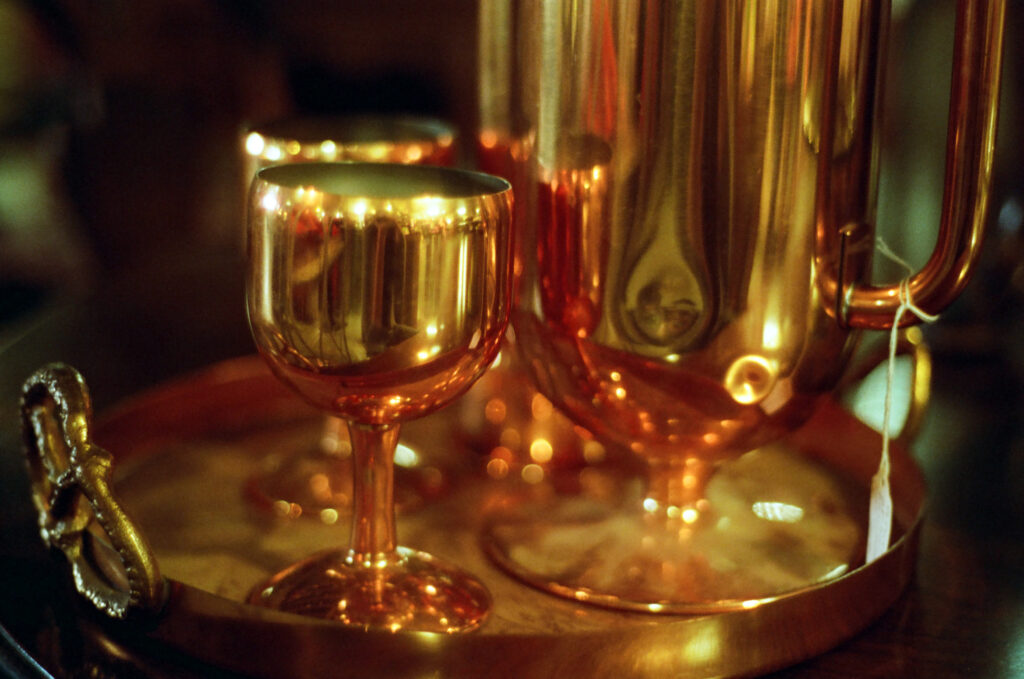
The subject and setting, as I alluded to earlier, were chosen for a few reasons. Among them were the easy access, relatively low foot traffic, variety of subject matter within the theme, and, last but not least, the location in a historic industrial building with tons of windows giving great, soft, natural light. I did consider adding a flash, but ended up opting to limit myself to what the light gave me.
The film I chose was Cinestill 400D exposed at 1600 and pushed two stops. I knew this would allow me to get enough light in the dimmer setting, and I liked the idea of the bloom that I could get with the pro mist filter I tend to use with Cinestill’s emulsions in order to reduce the red glow in the halation surrounding extreme highlights. I have to say I was very happy with the color rendition of the film in this environment, especially given the push. While the red in a few was distracting, I didn’t find it to be a consistent issue and was cognizant of its inevitable presence when I was shooting into bright light sources.
The camera was the Nikon FE2. I had two bodies fail over the last 10 years, but until then, they worked flawlessly. This third body has been rolling perfectly for years. The 40 year old machine had recently been tested and the shutter speeds were perfect, unlike every other body I had tested. Not the most lauded camera in Nikon’s esteemed lineage, but it was the very model my parents gifted me one Christmas, reigniting the primary artistic passion of my youth. In all ways, it seemed the fitting instrument.
For lenses, I went with the 50mm 1.4 Nikkor converted pre-ai for the character and ever so slight compression, and the 28mm f2.8 Nikkor Ai to get some context in the tight spaces, as well as to help keep some more depth of focus even at lower apertures. I had more clinical lenses (sharper, truer color rendition), but the nostalgic vibe of the project felt better suited to these two. One thing I was careful of, even though I wasn’t explicitly informed on the science of it yet, was that I wanted to try to keep as many images as possible at f2.8, or ideally f4, so I didn’t lean too heavily on blur to isolate subjects and remove distractions. I think this choice is one of the reasons I felt like so many (30-32 out of 36 frames) ended up working out for the project. Now I know that using proximity at smaller apertures, as opposed to throwing it wide open, can get the farther background still into that softer bokeh, even at shorter focal lengths, while ensuring greater depth of focus with the primary subject. I am quite glad I opted to bring two focal lengths (especially when they were easily pocket-able), because I knew I didn’t want all of the same style of image. With film, camera, aperture, and location already mostly locked in, being able to make a choice with each scene and subject helped me remain thoughtful throughout the session, rather than getting on autopilot.
The primary reason for this project was to get my feet wet with putting images together. Creating with a larger body of work in mind, maintaining a consistent style and narrative throughout, arranging the images in a meaningful way, and printing the collection were all new concepts for me at the time. The reason for one roll in one day was so I could move to the later stages of arranging and printing more quickly. Otherwise, the process of compiling images could have dragged on for months (or longer). I wanted to give special attention to those processing steps, and just having one set of 36 to thumb through sure made those steps less imposing. While I initially confined myself to this one set of 36, I did end up supplementing the project with four or five images from past rolls. I think they added a worthwhile element while staying consistent with the narrow focus of the set.
When it came to printing, I kept it mostly simple. I knew from Kyle McDougall (and others) that I wanted to increase the brightness overall between 20 and 30 percent to get that luminosity that good prints have. I also knew that Google Photo Books with the soft cover turned out like crap, but the images on the larger pages with the hardcover looked pretty good. Having seen how previous images had printed on those papers was very helpful in processing the files for printing this time.
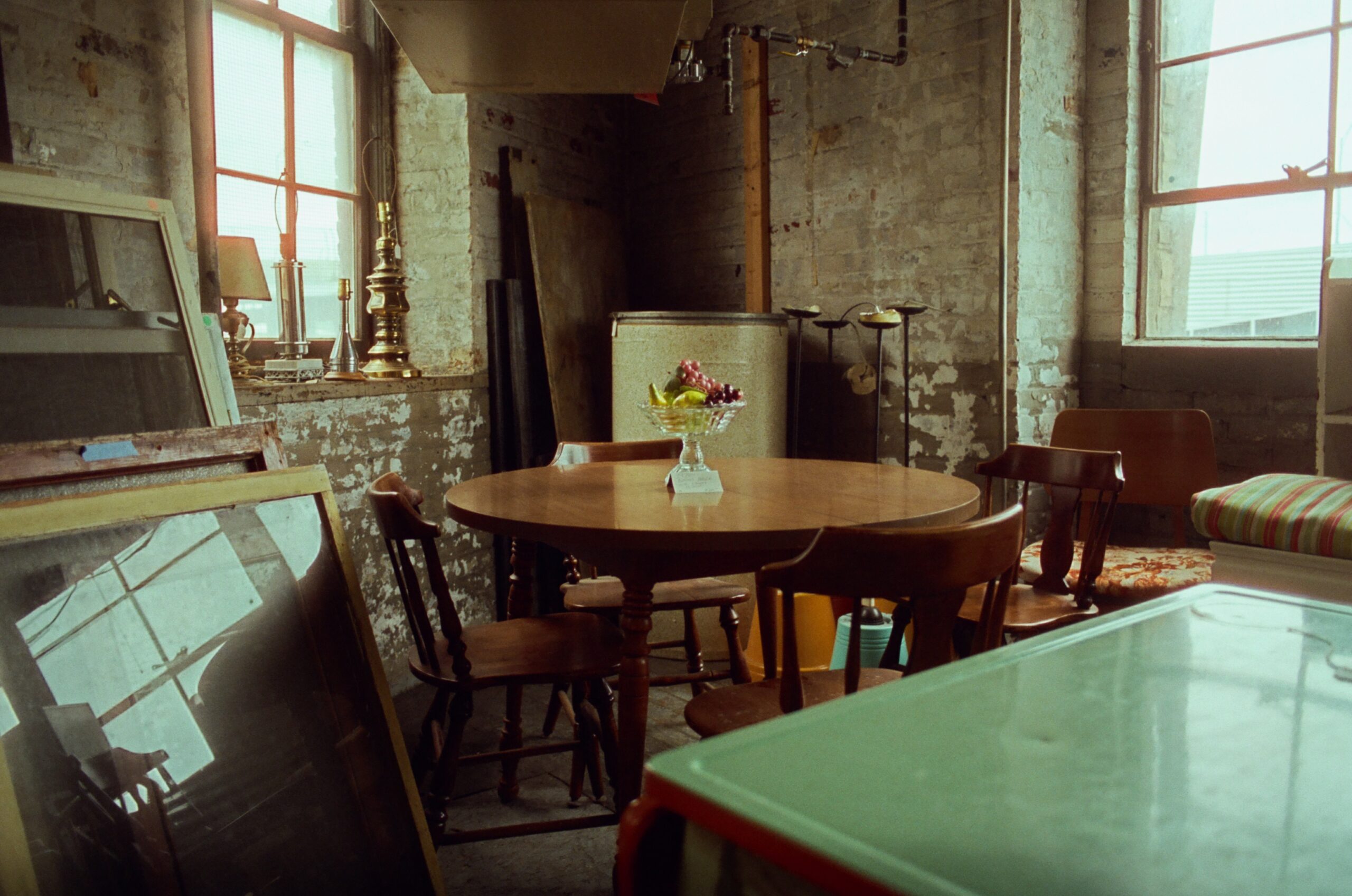
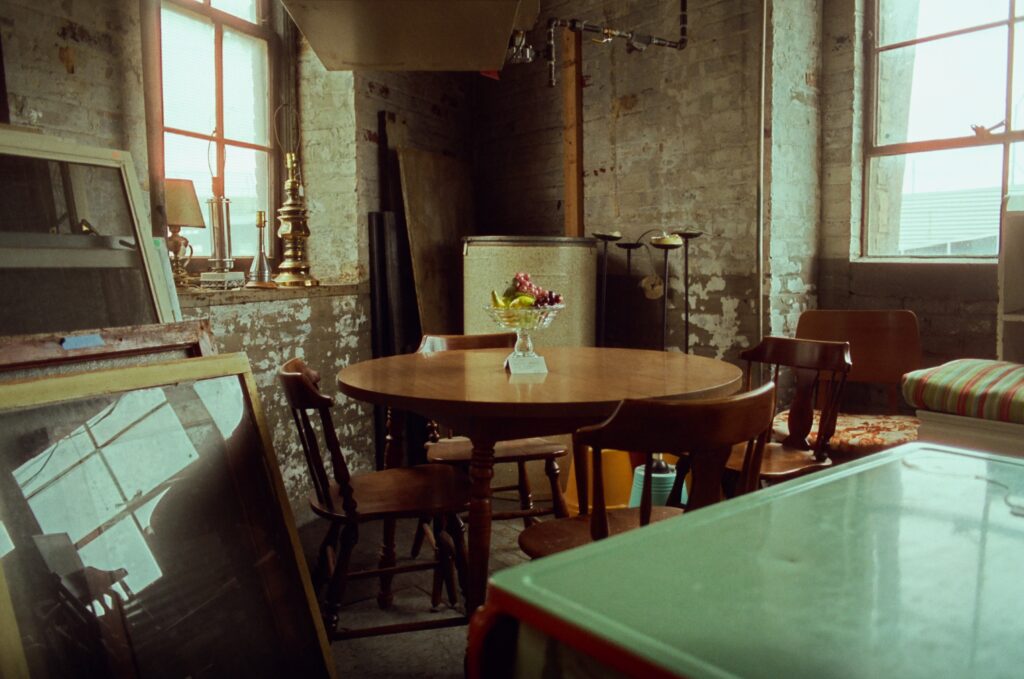
Now, let’s discuss the images. We’ll start with my favorite from the set. I’ve always had an eye roaming for still life compositions, so this frame of the fruit bowl on the table was one of the most satisfying scans to receive. It is subtle, but, to my eye, everything in the surroundings seems to cradle the central subject in a satisfying way.
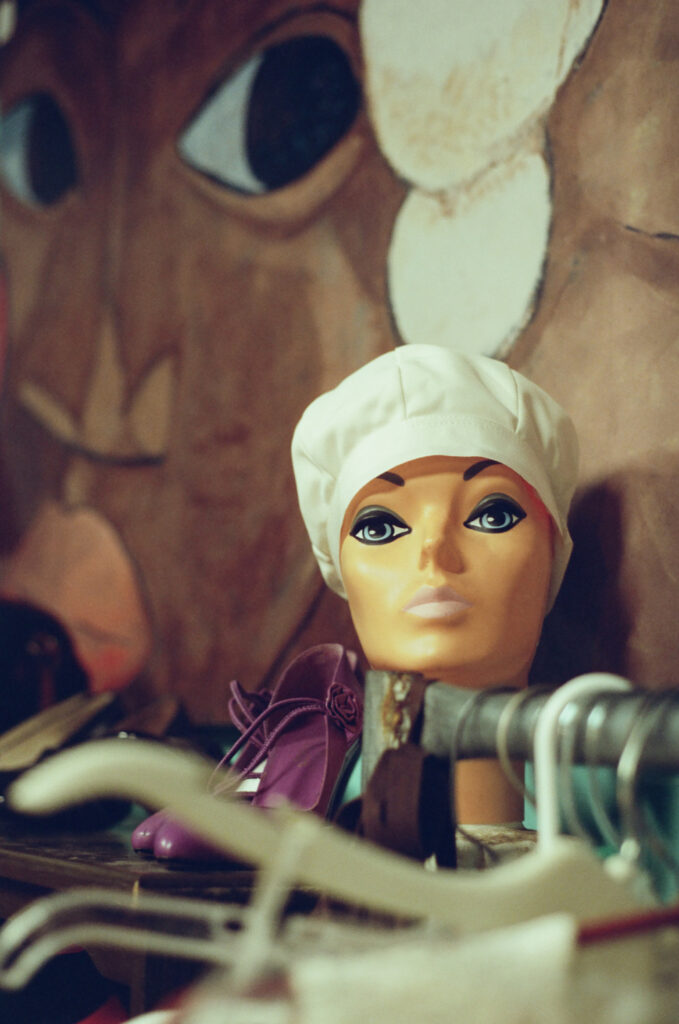
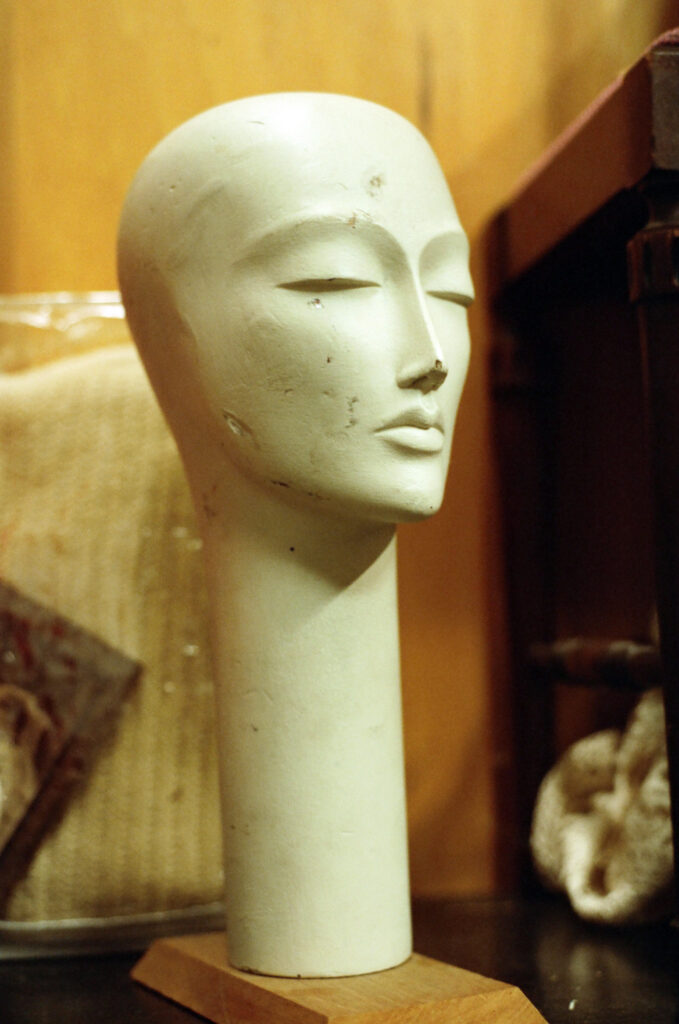
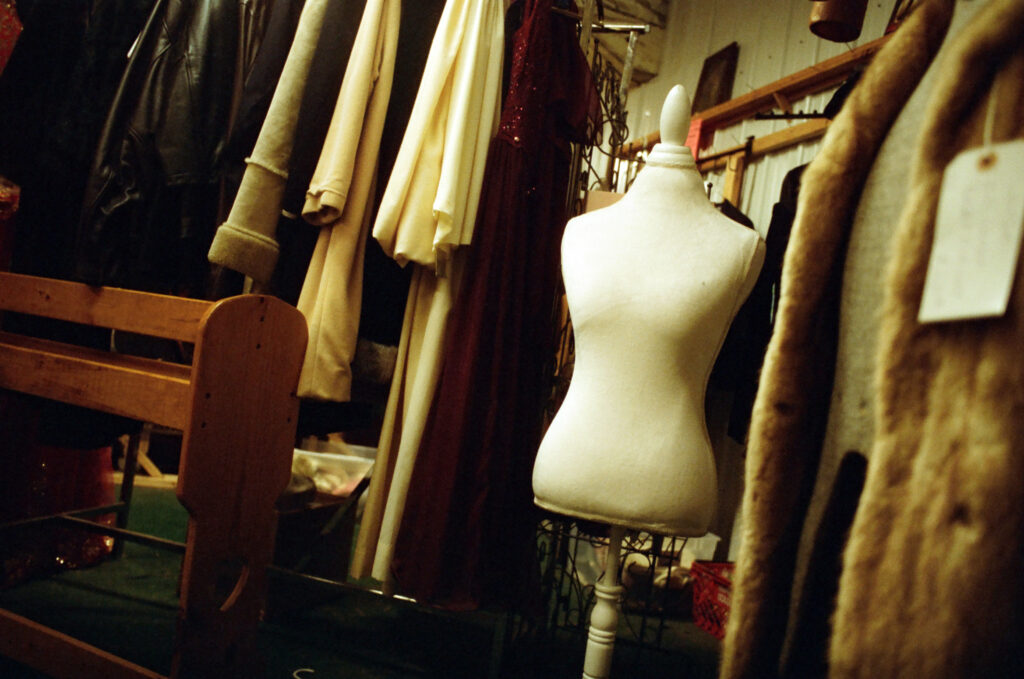
The next image I want to highlight is one of a few I took of an unexpectedly inspiring subject: the manakin. Stripping away the nuances of expression, it was thrilling to play with all the angles and options without feeling conscious of another person’s comfort, engagement, or (im)patience. That small part of the project has carried over into my candid family portraiture in a surprisingly profound way given the relatively little time I spent in that pursuit here.
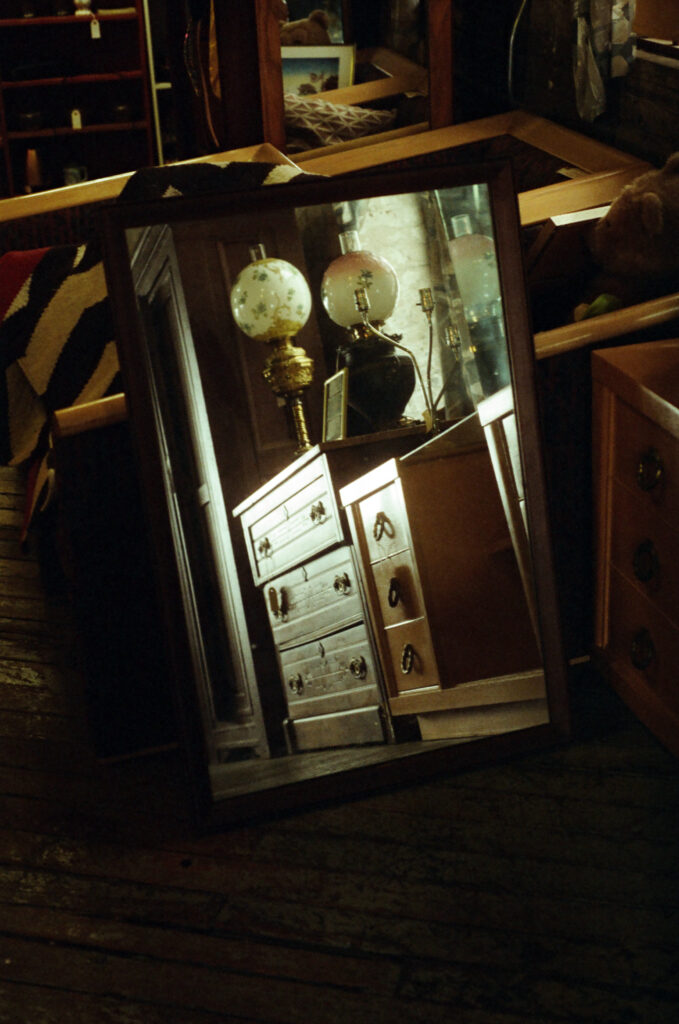
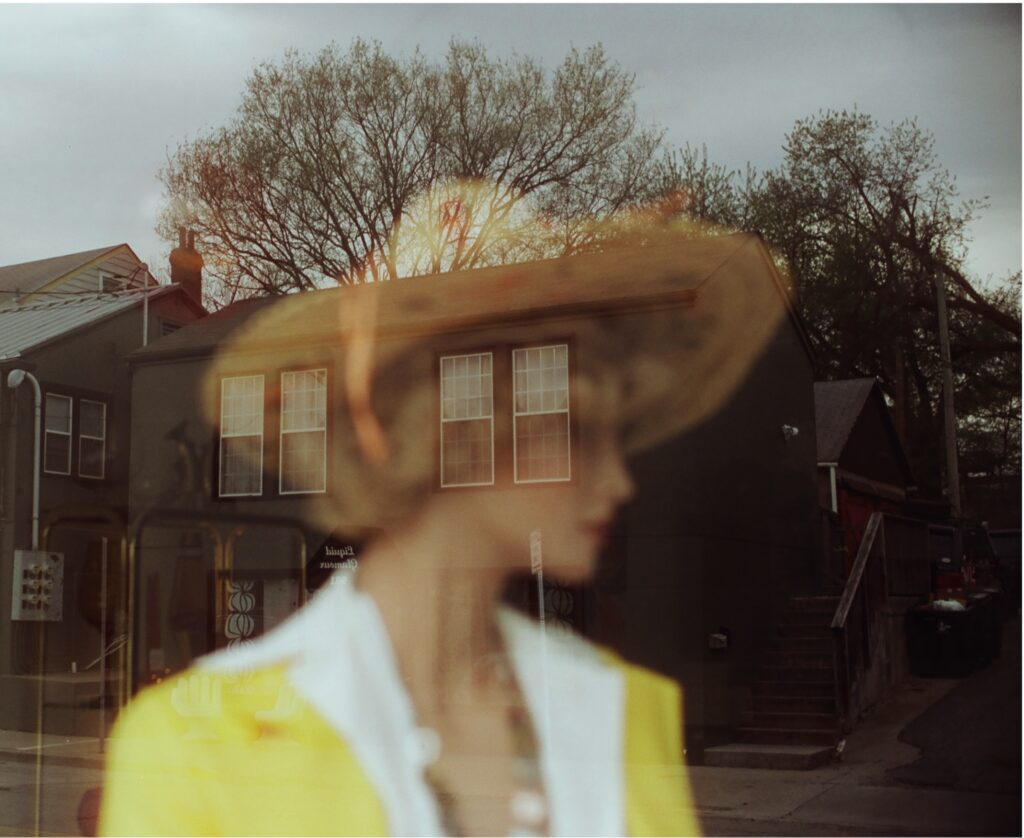
This “double exposurey” (which isn’t really a double, but a reflection) shot was taken before the idea of the project, but I felt like it fit nicely. I like the window to the soul/window to the mind story and thought it connected with how our stuff, including stuff we get rid of, can tell so much about us.
The final featured image I want to include from this project is a bit of an enigma to me. I didn’t think much about composing it other than I wanted the fur coat in the near ground and had to tip the horizon to get everything in there, but somehow that disorienting angle gives it the sense of a scene at a glimpse: quick, unfocused, unintentional, a blur.
This project was a formative part of my journey, and reflecting on it some two years later reinvigorates my sense of purpose going forward. Making prints has been a fun practice (honestly, I just get most of them on 8×10 from Walgreens with a white border to preserve the aspect ratio and have been loving the results), but the fulfillment this project brought keeps me always searching for the next big idea.
I am currently trying to develop an ongoing project centered around memories. One unifying aspect I want to incorporate is some aspect of unreality, whether it be using a flash, including a reflection or refraction, using filters, double exposures, fog, motion, or shooting through distortions created by screens, curtains, or the like. I have compiled around 60 possible images and am working to add more. Any and all ideas regarding this process would be very welcome!
Thank you for taking the time to read and look through all this. With it, I feel equally like a teacher, lending my experience to those exploring new ideas, and a novice, inviting the experience and expertise of my fellow artists to refine and expand my practice.
Share this post:

Comments
Martin Siegel on Another Man’s Treasure
Comment posted: 05/03/2026
David Hume on Another Man’s Treasure
Comment posted: 05/03/2026
Cheers