

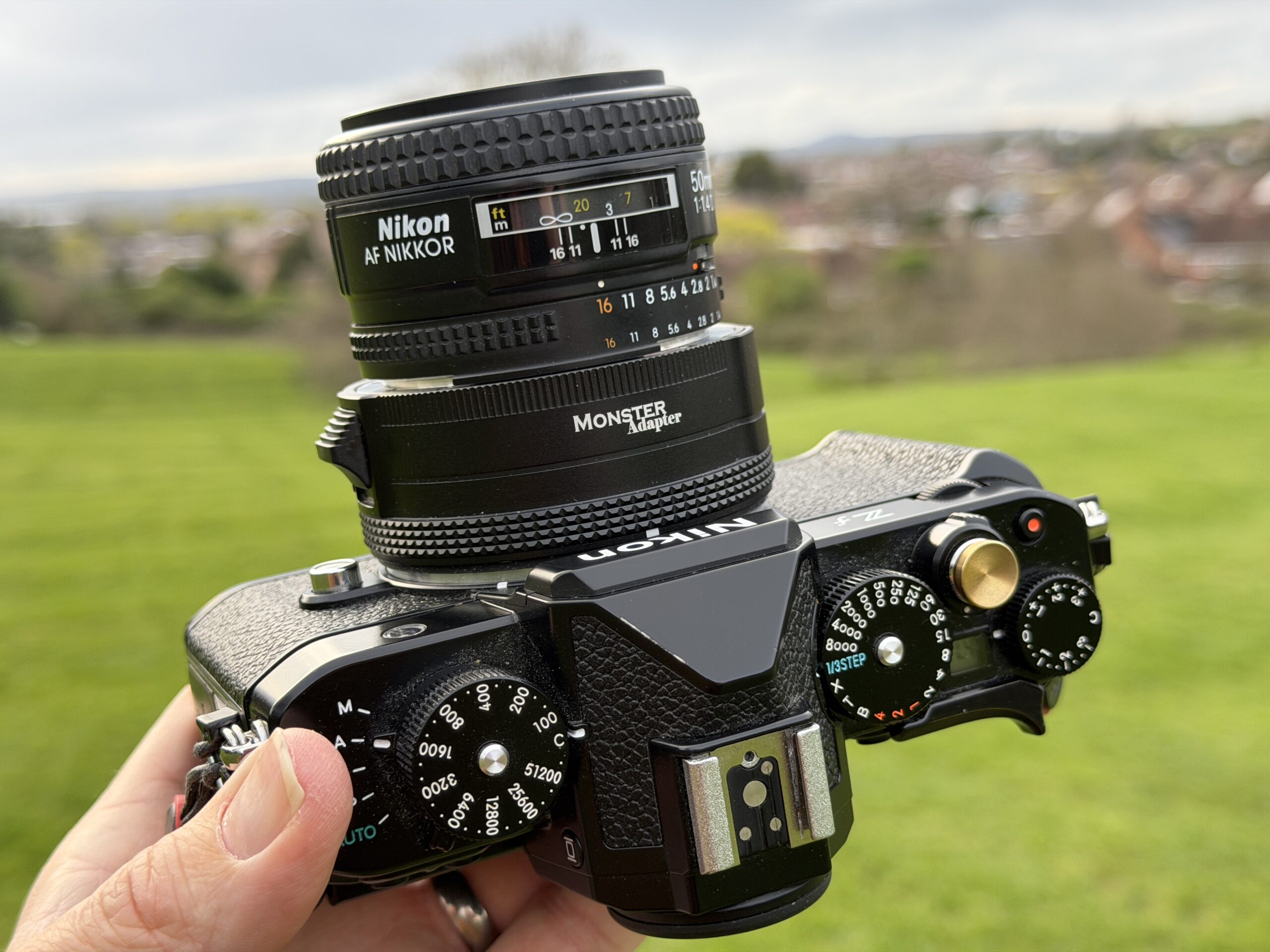
This is an introduction post to what I intend to be an ongoing series detailing the Monster Adapter LA-FZ1 – an adapter that allows screw drive Nikon AF lenses to be used on Nikon Z-Mount cameras. This post series will collectively form something of a review. This first part of the series will contain the background information around my specific interest in this adapter, as well as the core product information in terms of what this adapter is and does.
It’s worth noting that as of the day of publication of this post, the LA-FZ1 adapter is in version 1.2 of its firmware and is available to buy from Monster Adapters. It is currently perhaps best described as not being perfect in terms of its overall performance across the range of lenses it is designed to work with. As such, ongoing posts will detail my experiences adapting individual lenses, as well as any improvements I find in the adapter as and when new firmware versions are released.
I’ve chosen to take this approach as there are too many variables to try and detail everything in one review. To begin with, I have a collection of 8 screw-drive lenses (and growing), some of which work better than others on the adapter. In addition, the adapter has already been updated once since I have had it for review – this dramatically improved the functionality for all of the lenses, but some to a greater degree than others. So, rather than try and tackle all of this, and then update my thoughts within one post, I figured an ongoing series featuring individual lenses that I can update with any improvements I find as I go would work better.
You’ll be able to find articles in this series under the tag ‘Hamish’s Monster LA-FZ1 experiences’ – I will list them out at the bottom of this post too. I will also provide a very brief summary at the bottom of this post detailing my overall thoughts, as well as a short summary on the current firmware version.
Personal Context
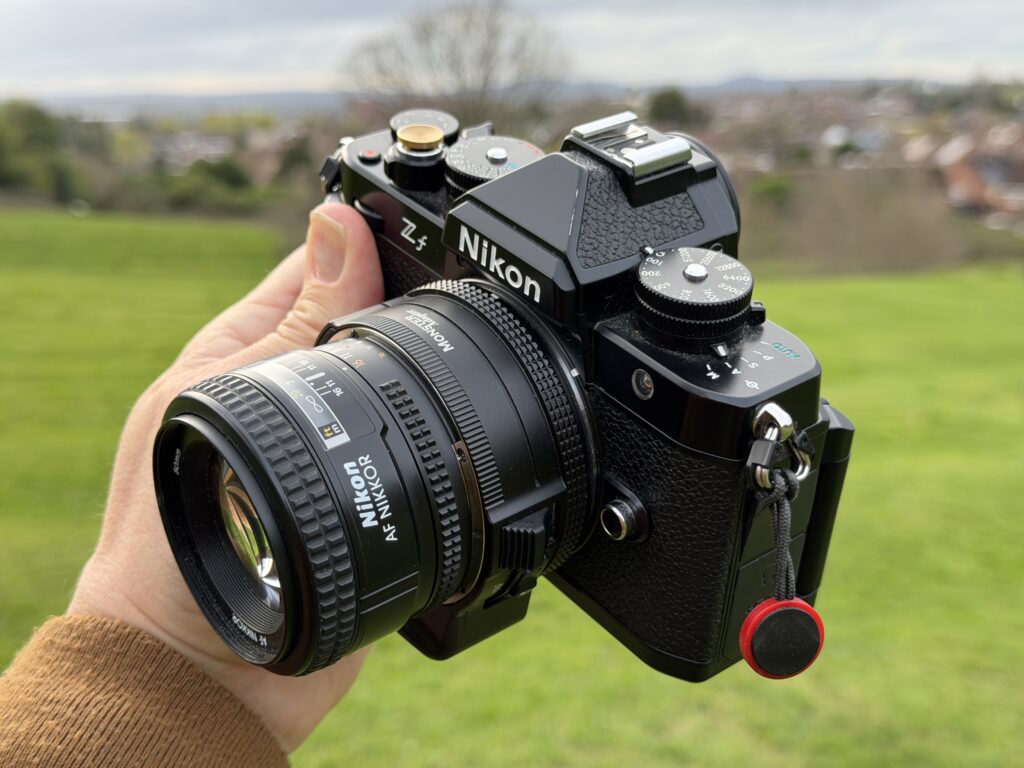
As some of you might know I recently jumped ship from Sony back to Nikon. My first camera (when I was 9) was a Nikon, I used to have a huge Nikon collection, and I used to shoot them professionally. But after a period of disappointment with a D800, after having lost my beloved D3 to rain damage, I switched to Sony. I was chasing the mirrorless dream, and Nikon had nothing to offer so I switched allegiances and bought a couple of early Sony full frame mirrorless cameras. I ended up sticking with Sony for four generations of cameras, and in the end found myself more than happy with what I was able to produce with them. At three generations, I’d also made peace with the menu systems. But ultimately that wasn’t enough. I never completely shook the gadgety feeling that Sony cameras gave me – they’re very good cameras, I can’t argue with that, but I just never quite gelled with them in the same way as I did with the (very) wide variety of Nikon cameras I’ve shot with.
Before I picked up the Nikon Zf, I’d already started using Nikon cameras and lenses for my hobby – in fact, I never really stopped shooting Nikon. Over the years I’ve consistently owned, shot, sold, and often re-bought lots of Nikon kit. For example, I’ve owned 3 D700s, 3 F100s and 3 85mm 1.8 AF-D lenses, and there’s a hell of a lot more I’ve owned twice too. But, since switching to Sony for work and Leica m-mount kit for my hobby, a lot of this kit was fairly secondary or even tertiary within my camera collection. This, I suppose, is why I was often so easy going about selling it when I found I was using it less. The problem was, at least in some cases, I missed the kit more than I expected and ended up buying it again.
All this was until more recently when I had finally bitten the bullet and bought a Nikon Df. I’ve never really stopped using my Leica kit, but I like having an AF alternative for both film and digital, and after dabbling with Pentax kit for a little while a few years ago, the Nikon AF kit within my collection had started to grow again. A chunk of this was pre-ai MF kit, but an even larger chunk involved a growing selection of early screw drive AF and AF-D lenses with a variety of both film and digital cameras. This had included the aforementioned 3rd purchases of a D700, F100 and 85mm 1.8d, but I had also involved a 180mm 2.8 that I’d had GAS for a lot of times over the years, as well as a 24mm, 35mm (that I’ve owned for about 20 years) 50mm 1.8 and 1.4, a 105mm 2.8 Micro and a zoom lens. There’s just a reality that I can’t escape that I love this era of Nikon lenses – they’re just such good value and all have fantastic optical characteristics that really sit in a sweet spot between modern and vintage for me!

Now, I’d considered a Df a lot of times over the years, but they aren’t cheap and that level of investment just hasn’t seemed right for kit that as I’ve said felt tertiary within the collection. But with this growing collection of lenses the time came when the balance tipped and I started finding myself wanting to shoot the Nikon AF kit more and more… so I bought one, and initially – aside from some issues with the handling of the thing – I was very happy. I’d been using it alongside my Sony A73 and was really enjoying using it.
Unfortunately, in time, having two full frame systems just started to seem a bit of a waste – and my broader kit selection felt disjointed. I just wanted one primary digital camera (or camera system) that could use with all of my lenses. What’s more, I’d begun to realise that there seemed to be a somewhat obvious solution to a few problems I had with both Nikon and Sony cameras. I realised that I wasn’t getting on so well with the Df because it was too big, handling wasn’t perfect, and it wasn’t mirrorless. Though with that, I did like the fact that it was highly compatible with all my Nikon lenses, the fact that it had a shutter speed dial, and that I felt at home with it as a Nikon. I also realised that I liked the Sony because it was smaller and was mirrorless so was useful for mounting pretty much any lens I liked to it – not least my m-mount lenses. But at the same time it I didn’t feel at home with it in the same way as I had felt with the Df overall as a Nikon camera.
The solution – when it finally came to me – seemed obvious, I needed a camera that had lot of the best of both of these worlds. I needed a camera that was smaller size and handled nicer than the Df, but still with Nikon menus, more traditional user interface, but was also mirrorless and would allow me to mount my m-mount lenses like the Sony. What I realised I needed was a Nikon Zf!
The big issue, of course, is that whilst the Zf might be a Nikon, the Z-mount is different to the F-mount of all of my other Nikon kit. This is no issue for the old MF pre-ai kit which can be mounted with a more simple dumb adapter if need be, but for the AF and AF-D lenses, I would either need to manually focus them, or I would need to buy an AF adapter… and that’s where things got sticky. Nikon themselves make an AF adapter for the later AF-S lenses, but they don’t make one that controls the AF in the older AF and AF-D screw drive autofocus lenses.
The Monster Adapter plan
Monster adapters do though. I’d been familiar with this brand from when I had been shooting Pentax lenses and had considered their Pentax K to Sony AF adapter – I’d been very close to buying one too, but the call of Nikon gear had pulled me back from that particular cliff edge.
In fact, Monster Adapters make a range of these sorts of adapters – most of which are designed to mount various AF lenses from different brands onto Sony cameras, though more recently they had announced an adapter to mount Nikon screw drive lenses onto Nikon Z mount cameras. There’s a little bit of speculation around the internet as to why Nikon don’t make one themselves, including ideas around communication protocols between camera and lens being too difficult to make work, the added complexity of the design, and that they don’t want users having access to so many older good quality lenses. Personally, I suspect it’s the mechanical complexity and cost of R&D vs. potential return on investment, but one way or another, they just don’t make one.
This nearly became the end of the Zf plan altogether for me. I’d initially assumed that Nikon must make an adapter, but then with a massive chunk of frustration discovered they didn’t. I then found out about the Monster Adapter LA-FZ1 and started to read reviews and comments on forums that were somewhat less than positive. It seemed the adapter didn’t work all that well with a lot of the lenses I wanted to use it with.
And then, somewhere, I can’t remember where, I stumbled upon a note that they were planning updates and that they had done the trick of releasing a product that was effectively still in beta testing. To some this might be an issue, but personally I find it interesting. Yes it’s probably better to have a product work perfectly out of the box, but I also enjoy seeing and experiencing the evolution of something like this.
The final piece of the puzzle was to get in touch with Monster Adapters to see if they would be interested in me reviewing it. We chatted, and I came up with the plan that I would write this as an ongoing review. In fact, I came unstuck to begin with as I wanted to force a lot more into one initial review. That was until recently when I came up with the plan I have outlined at the top of this post… and that’s where we are now.
The Monster Adapters LA-FZ1
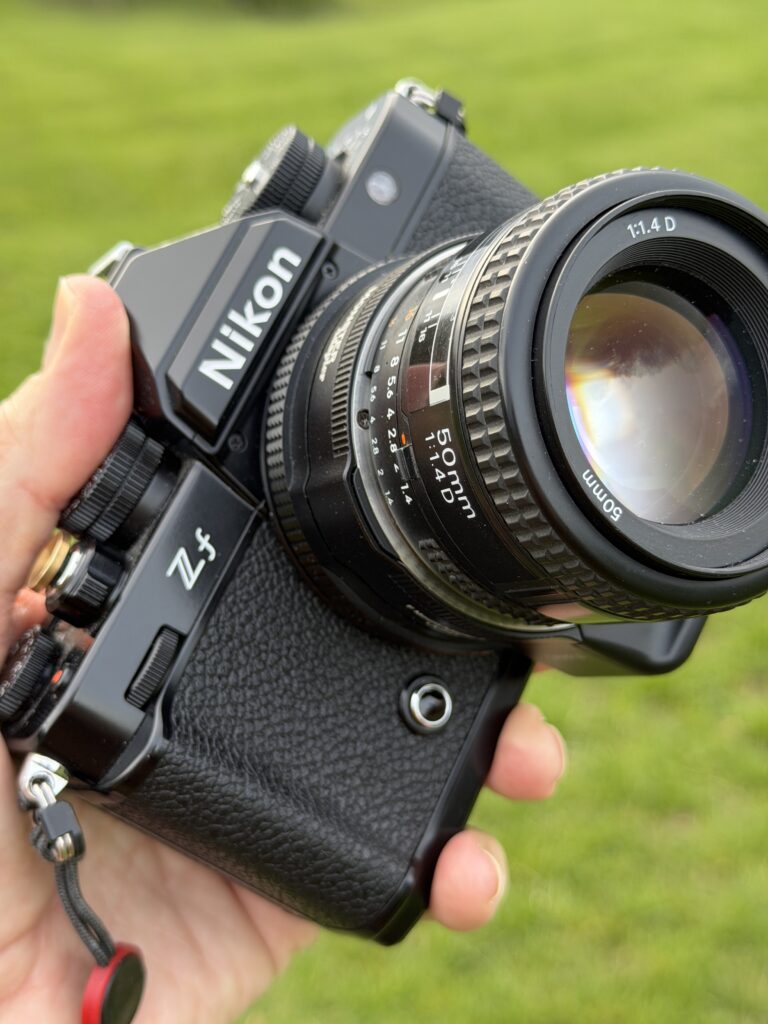
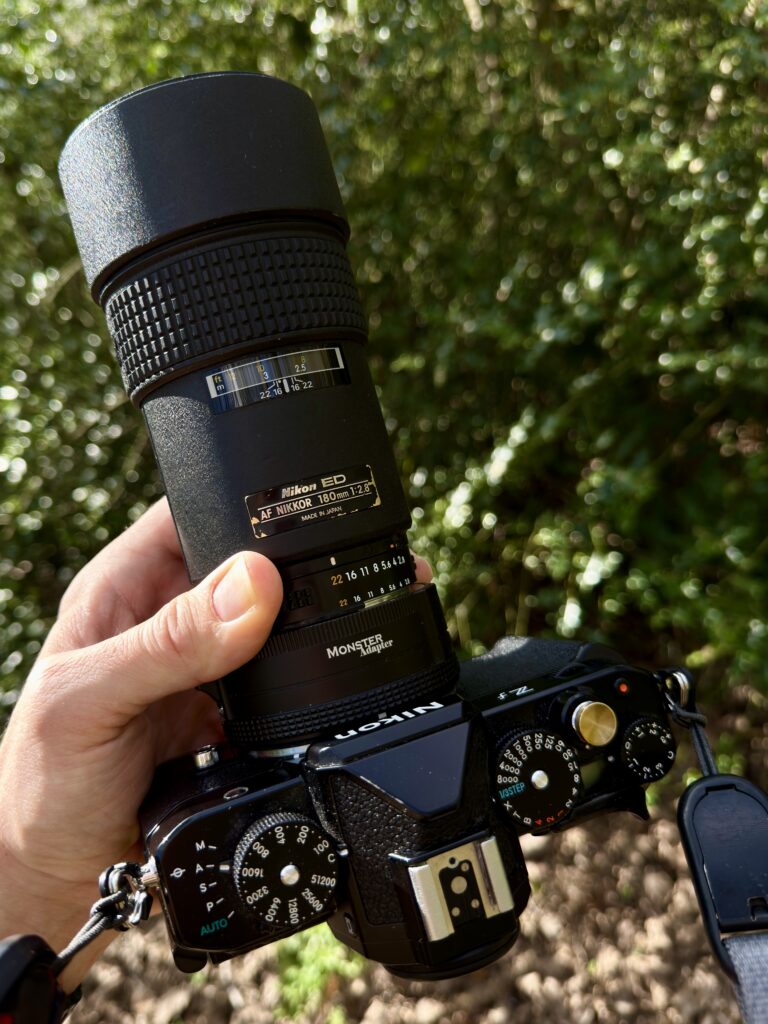
In very simple terms, the Monster Adapters LA-FZ1 is a lens adapter with a Nikon F-mount on the front and a Z-mount on the back. As mentioned, it is specifically designed to allow the use of Nikons earliest generations of autofocus lenses that relied on what’s known as a screw drive.
In-camera vs in-lens AF
These older AF lenses differ from modern designs as the autofocus is controlled via a motor inside the camera. More modern lenses have motors inside the lens and the camera just passes focusing information to the lens electronically which in turn is used to inform the motors in the lens to find the focus distance – that’s at least the gist of it, feel free to correct me in the comments if that’s not technically perfectly accurate. Older designs relied on the in-body autofocus motor to drive the autofocus functionality in the lens. This is achieved via the screw drive which comprises what amounts to a male pin that looks a little like a small flat headed screwdriver that pokes out of the camera’s lens mount and a female socket in the lens’s mount the looks a little like a screw head. When the lens is mounted to the camera, the pin in the camera slots into and interacts with the screw in the lens and rotates when the autofocus is activated in the camera. This drives the mechanism in the lens to bring the image into focus.
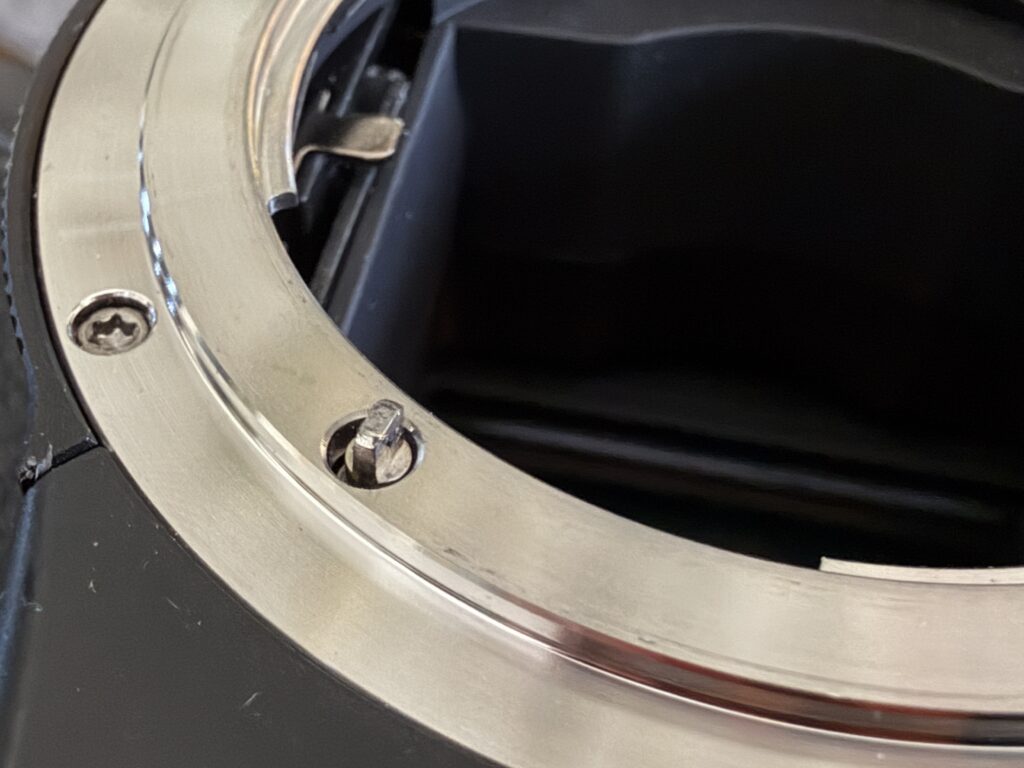
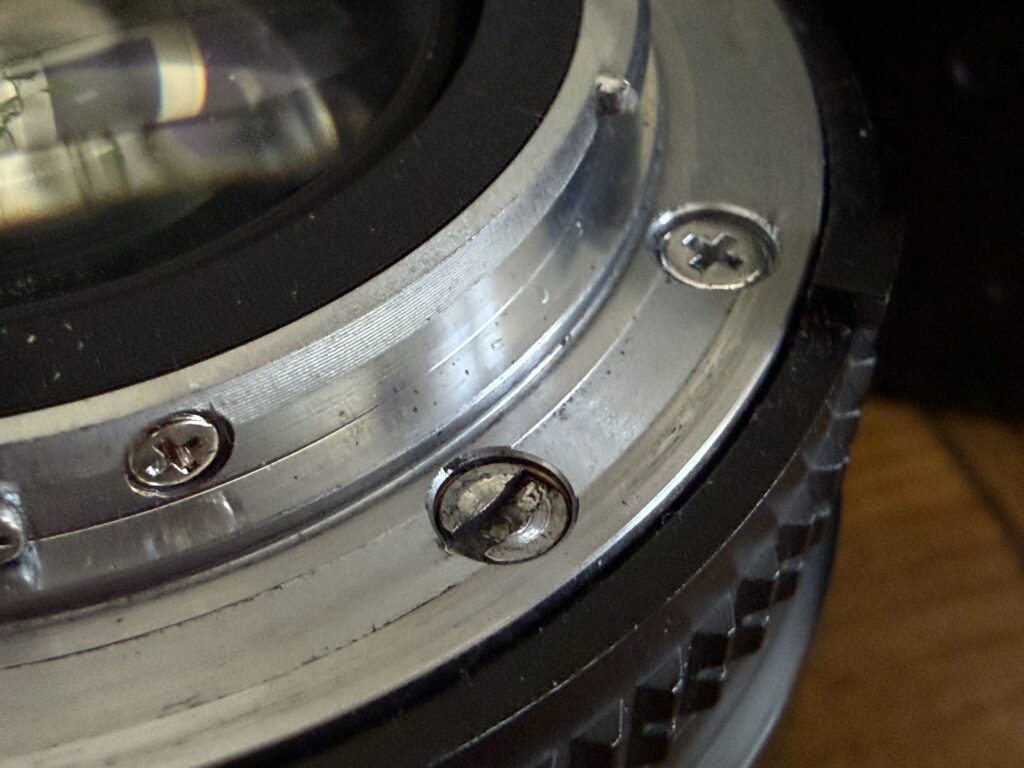
LA-FZ1 – screw drive adapter
There are also a few electronic pins in on the mount of the lens and in the throat of the camera. These pins transfer various electronic signals between lens and camera. in later AF lens designs, as mentioned, this also included information and power to the AF motors inside the lens. As such, Nikon’s own FTZ adapters are more simple inasmuch as they only transfer information electronically, whereas, as outlined, the Monster Adapter LA-FZ1 has both electronic and mechanical function on the F-Mount side of the adapter. There is no mechanical focus control in the Z-mount, as such the job of the LA-FZ1 is convert the electronic signals from the camera to mechanical focus control via a motor and screw drive in the adapter.
This is the key function of this adapter, it’s also the part of the functionality that as of v1.2 firmware isn’t quite perfect, but is nonetheless a lot better than it was when I first received the adapter when it was on v1.1. Again, as mentioned, I will make updates or follow-ups to posts detailing my ongoing experiences with the adapter and my range of lenses as and when firmware updates are released.
Design and build
The Z-mount has quite a large 55mm diameter with a flange distance of 16mm. The f-mount is 44mm with a 46.5mm flange distance. The LA-FZ1 is therefore quite a large adapter. Despite the difference in size of the mounts, the outer dimension of the adapter is essentially the same at the front as it is at the back, as a result, when f-mount lenses are mounted to the adapter, they look a little small in terms of their diameter compared to the front of the adapter. Nikon’s own FTZ adapters are probably more aesthetically pleasing in this respect, but of course, they don’t contain the mechanical components the Monster Adapter LA-FZ1 does.
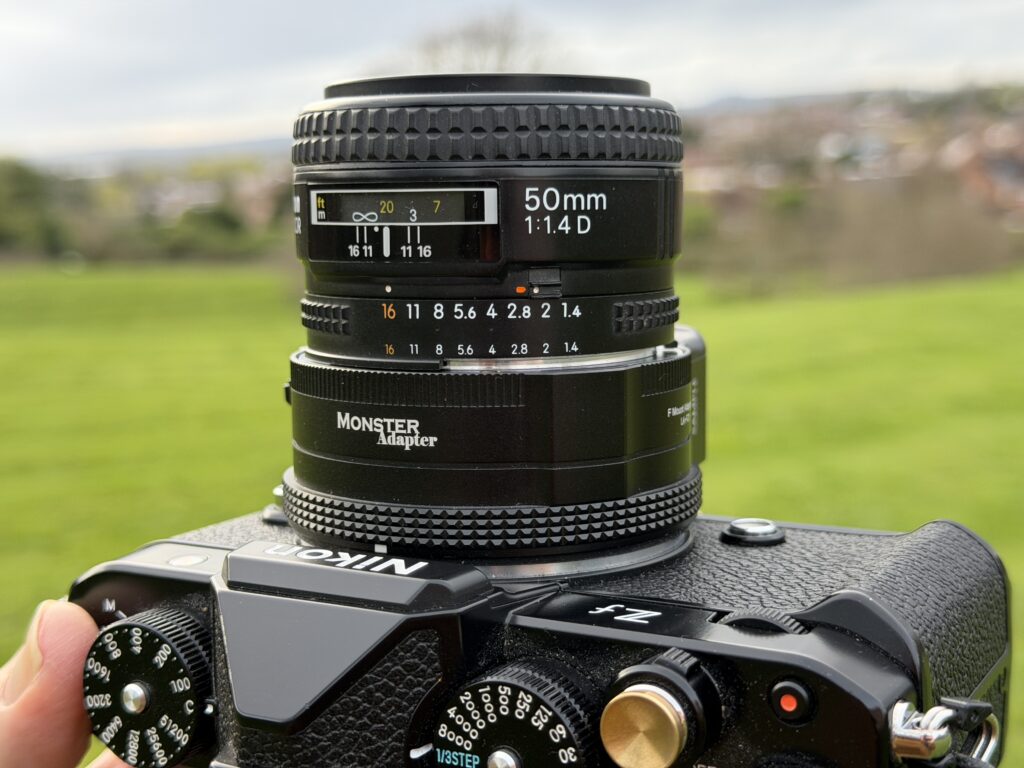
The outer finish of the monster adapter is also different to Nikon’s own adapters. Nikon’s appear to have the slightly textured plastic finish of Nikon’s later AF-S lenses, whereas the LA-FZ1 has a smooth finish that’s much more similar to the look of the majority of the early Nikon AF lenses that has a slightly shiny plastic finish. In fact, the LA-FZ1 actually has a metal outer shell and feels really quite solid and well made. Like the version 1 Nikon FTZ, it also has a bulge on the bottom of the adapter. No doubt this bulge contains various electronics. It’s worth noting that the later FTZ version 2 from Nikon did away with this bulge making it neater and allowing the camera and lens to sit on a surface without the adapter getting in the way. The bulge on the base of the LA-FZ1 sits below the bottom of the Zf meaning the camera and lens don’t sit comfortably on a surface.
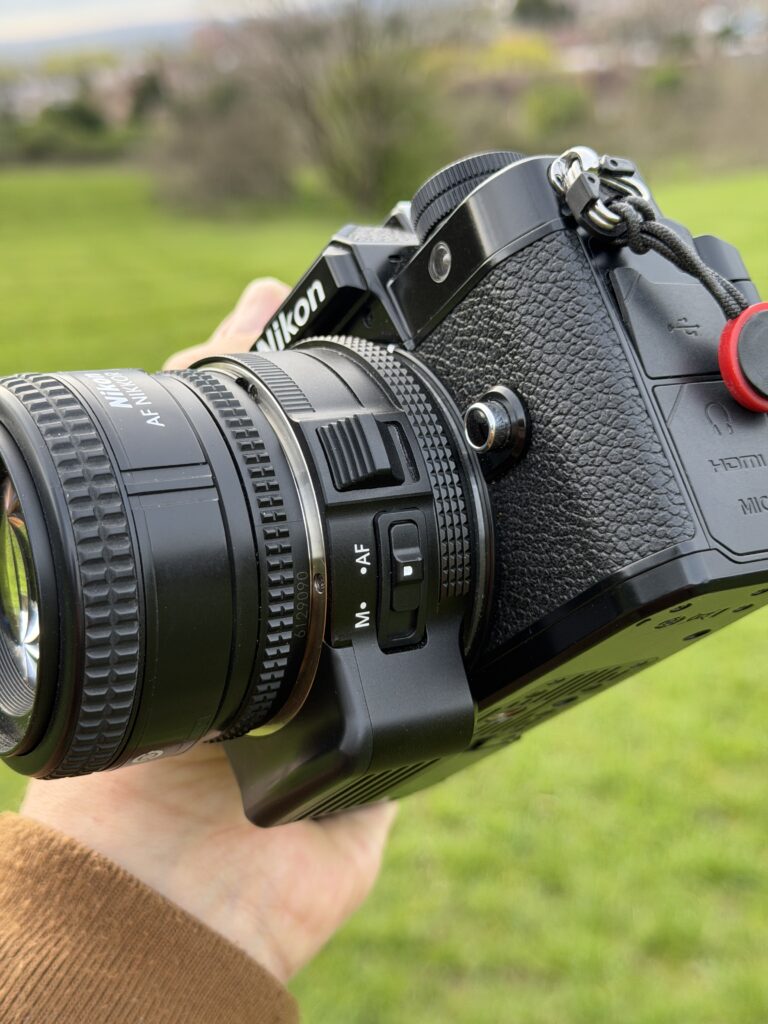
Controls, switches and other features
There isn’t much to the Monster Adapter LA-FZ1 beyond its internal electro-mechanical features. The outside of the adapter just has two switches. One of them is the lens release, the other is an AF/MF switch. As in Nikon’s cameras that have screw drive AF functionality, switching this switch disengages the screw drive and allows the lens to be used as a manual focus lens – though as many of you will likely know, quite a few of these older AF screw drive lenses don’t have a damped focusing control so don’t feel particularly pleasant to manual focus.
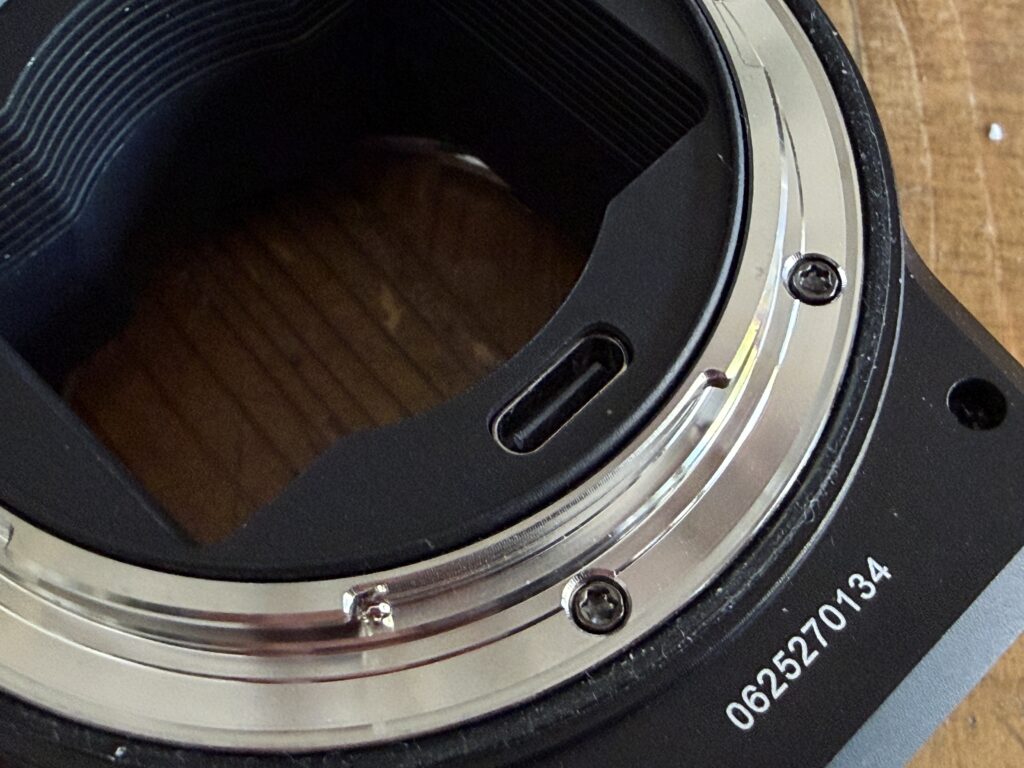
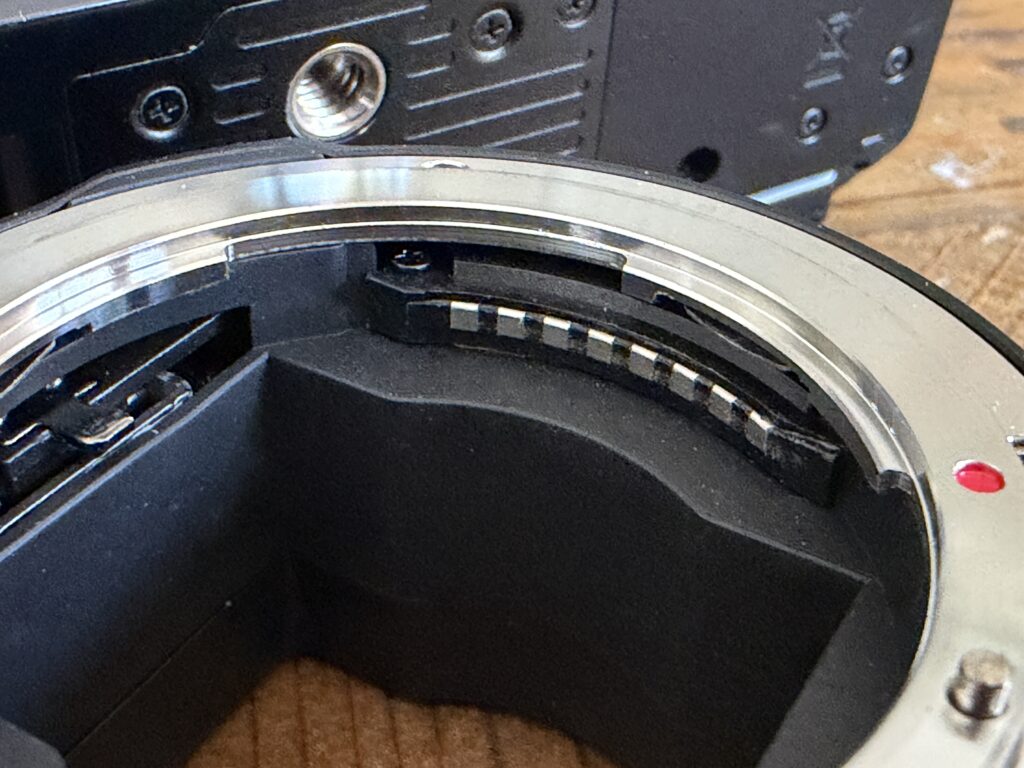
There’s also a USBc port inside the Z-Mount end of the adapter – this allows the firmware of the adapter to be updated. You can also see in the picture above that the adapter has a weather seal.
Aperture control
The lens must be set to the minimum aperture and the aperture controlled via the control wheel on the camera. Of course, this is the way Nikon AF cameras work too, so as much as I would like to be able to control the aperture on the lens, it’s difficult to complain too much about. In case you weren’t already aware, the aperture control on these lenses is really just there as a feature to allow backward compatibility with older manual focus cameras.
Extra electrical pins
One final point of particular note, and that does point to something that might come along in a future firmware update is the amount of electrical contacts in the adapter. In the Z-mount end of the adapter there is a full compliment of pins that match up to those in the Z-mount cameras. Interestingly though, in the F-mount end of the adapter there are 8 pins. This is 3 more than are found in most of the AF and AF-D lenses. To me this points to the idea that this adapter might later be updated to work with later AF-S Nikon F mount lenses!
Initial conclusions
For more in depth thoughts on how I feel about this adapter’s capabilities, it’s going to be worth reading my field tests as they relate to specific lenses – though I do have some overall thoughts. To kick off, there is no alternative to the Monster Adapter LA-FZ1. If you want to use alder screw drive Nikon AF lenses on a Nikon Z-mount camera, to date at least, this is your only option. For that reason, I am very happy this adapter exists – regardless of how well it does or doesn’t work.
I love my screw drive Nikon lenses. Yes there are plenty of more modern alternatives that perform loads better. Objectively, the screw drive AF system is flawed, it’s noisy, can be slow, and is not as repeatedly accurate as modern lenses. Optically these lenses are definitely more “characterful” than modern equivalents – though the optical characteristics they impart are absolutely the main factor in my appreciation of them, and what makes me want to use them on a digital camera.
Fortunately, I don’t need them to work perfectly under every circumstance. I’m never going to be wanting to use these lenses in particularly challenging or high-demand situations. I certainly don’t need to use them professionally. I now have plenty of other dedicated Nikon Z-mount lenses that I can use when I need a lens to perform objectively well.
Defining working in an ‘Expected Way’
But, I do want to be able to use them without a massive amount of fuss. I don’t mind if they don’t work quite as well as they do on my F100. They are far from up to modern standards even on that camera, so it’s not like I have expectations that are beyond their innate capabilities… but I do want them to at least function in what I would call an “expected way”, i.e. when the AF in the camera is activated, I want the lens seek and find focus within a relatively short amount of time without too much issue.
Below are my summary thoughts on firmware versions as to the success of the adapter given the above terms.
Version 1.1
I must admit, I was a little disappointed when I first received the adapter on V1.1 firmware. I’d been warned that it wasn’t great, but I was still a little surprised at how poor it was. In low light with any of my lenses it basically didn’t function. In good light with some of the wider and normal lenses it worked, but not reliably. I didn’t really persevere with using it.
I don’t publish any articles about my findings with this firmware.
Version 1.2
Version 1.2 felt like a massive step forward. Some of my lenses just seem to work pretty well normally, though some still have fairly serious issues. Issues include slight skittishness when trying to find focus on some of my wider lenses, and a total lack of ability to move from extreme ends of focusing range without assistance on some of the longer lenses. Overall though, I am pretty impressed with the adapter at this stage, but am certainly looking forward to further updates!
Articles specific to this firmware:
Monster Adapter LA-FZ1 (v1.2 firmware) & Nikon 180mm 2.8 AF
I will be publishing my thoughts on the 50mm 1.4 AF-D in the next day or so – this lens works brilliantly on the adapter – more soon!
More photos
You can also find all my photos taken with the adapter on my flickr here
You can also find more info and buy the adapter on the Monster Adapters website here
Share this post:


Comments
Gary Smith on Monster Adapter LA-FZ1 – Review Overview & Introduction
Comment posted: 06/04/2026
Hope all is well on your side of the pond. Also hope that the lunatic here doesn't end the world as we know it tomorrow...