


At the end of the post about the test of a Carl Zeiss Jena Sonnar 135/4 I concluded: “I didn’t miss more modern gear, and I didn’t lose a single shot because of the oddness of such an old lens. However, I wouldn’t do this experience again.”. So, how it comes that now I am commenting once again the performance of a manual lens such as the Zenith Helios 40-2 at the opera?
Well, technically speaking I am not contradicting myself: in fact, I didn’t bring the Zeiss —which I said I wouldn’t— i brought the Helios. However, hairsplitting apart, truth is that the temptation to try this lens on my X-T5 in a real-life scenario was too strong, so —as Oscar Wilde brilliantly said— the only way to get rid of temptation is to yield to it. And I gave in. So, in my next assignement I also took with me this Russian-era relic.
Being an 85/1,5, it is no surprise that Helios’ forte are portraits. This one was taken just before the play began. What makes the photo interesting is that, perhaps due to the make-up, the singer looks more like a waxwork than a human being. This is the magic of theatre — and of the Helios, too.
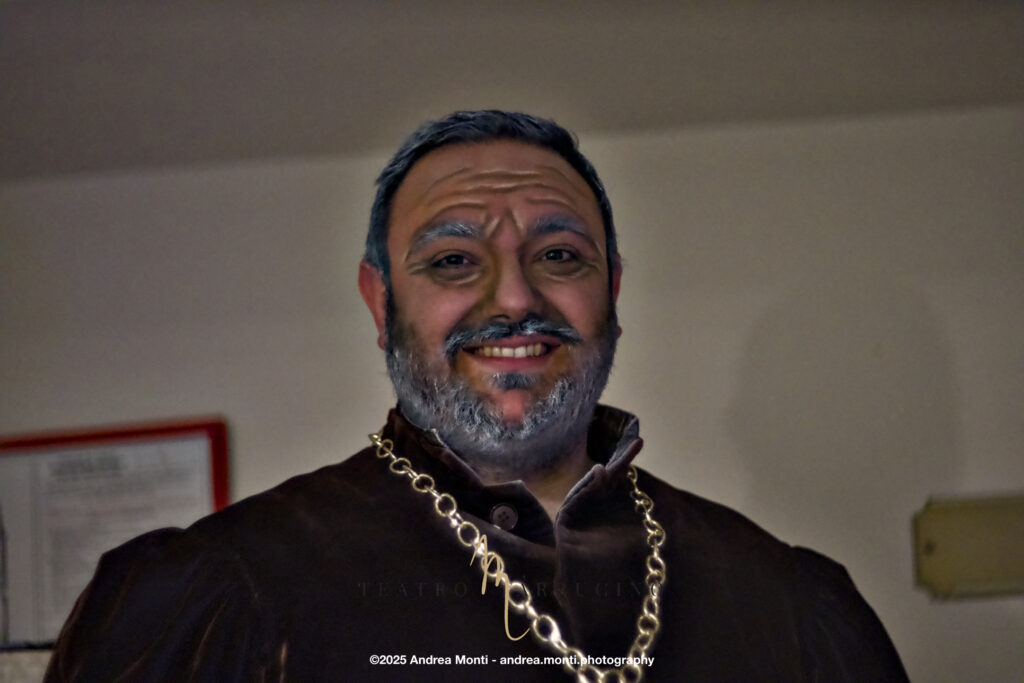
The Helios performs well also in close-up shots,
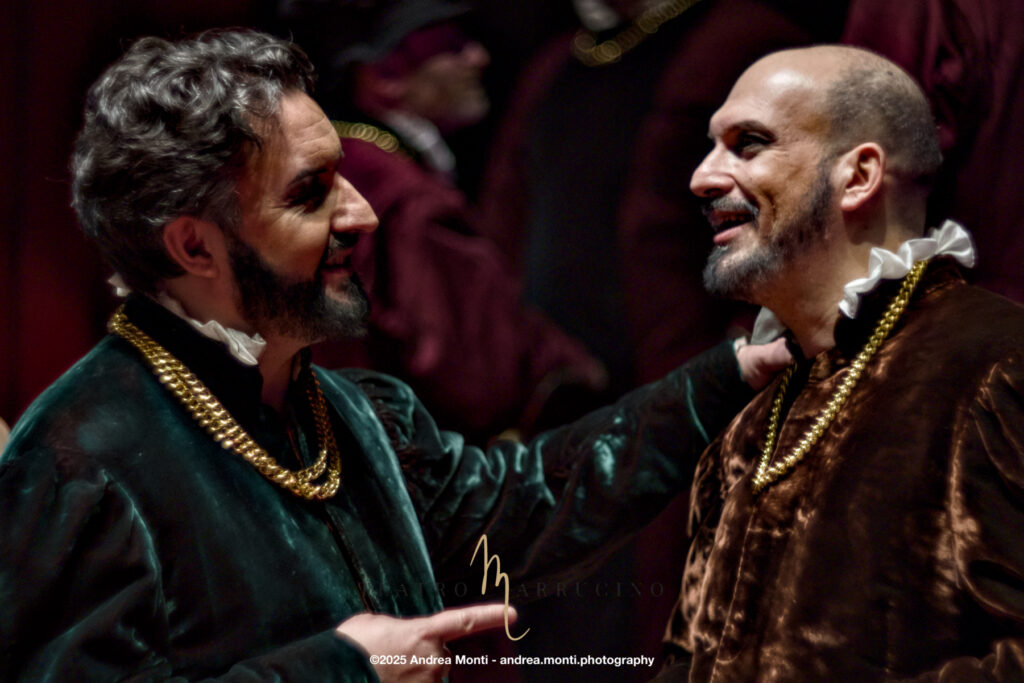
and the crop factor extends the focal length to around 120 mm, allowing for stronger foreground/background management.
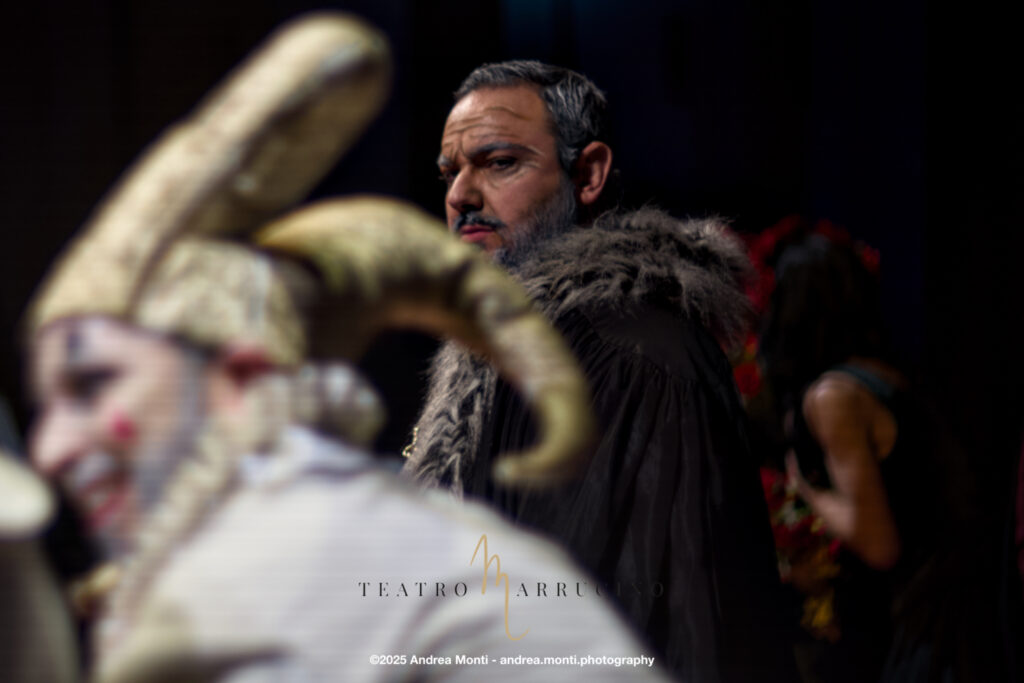 Stage lightinging is always a difficult issue in opera and prose. However, the Helios performed fairly well.
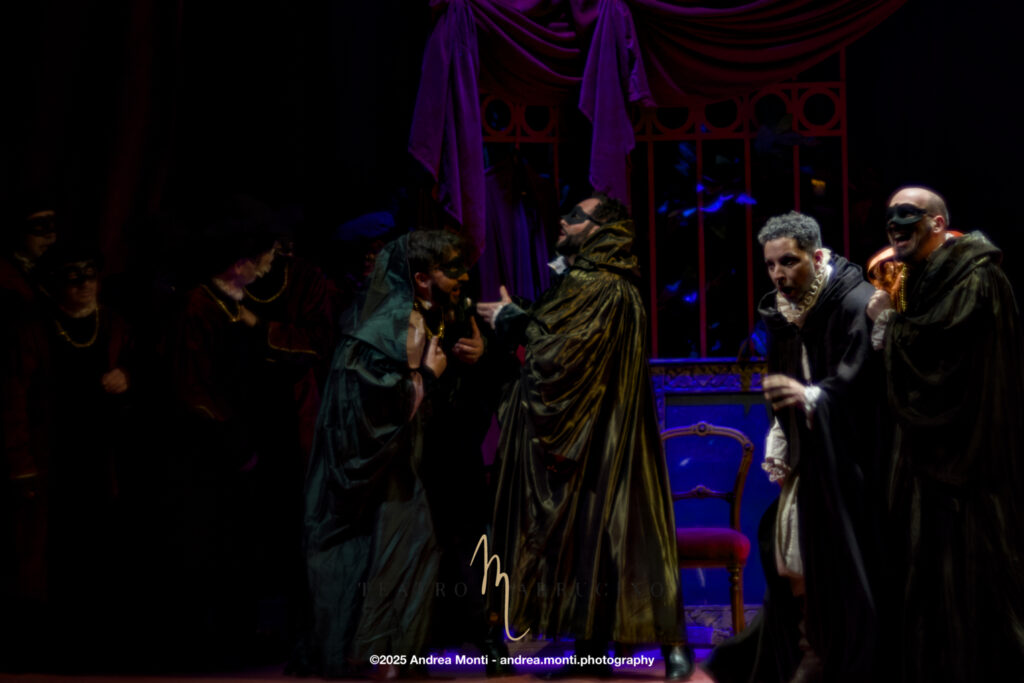
By contrast, banding caused by LEDs continues to be problematic, as it is dependent on the camera rather than the lens.
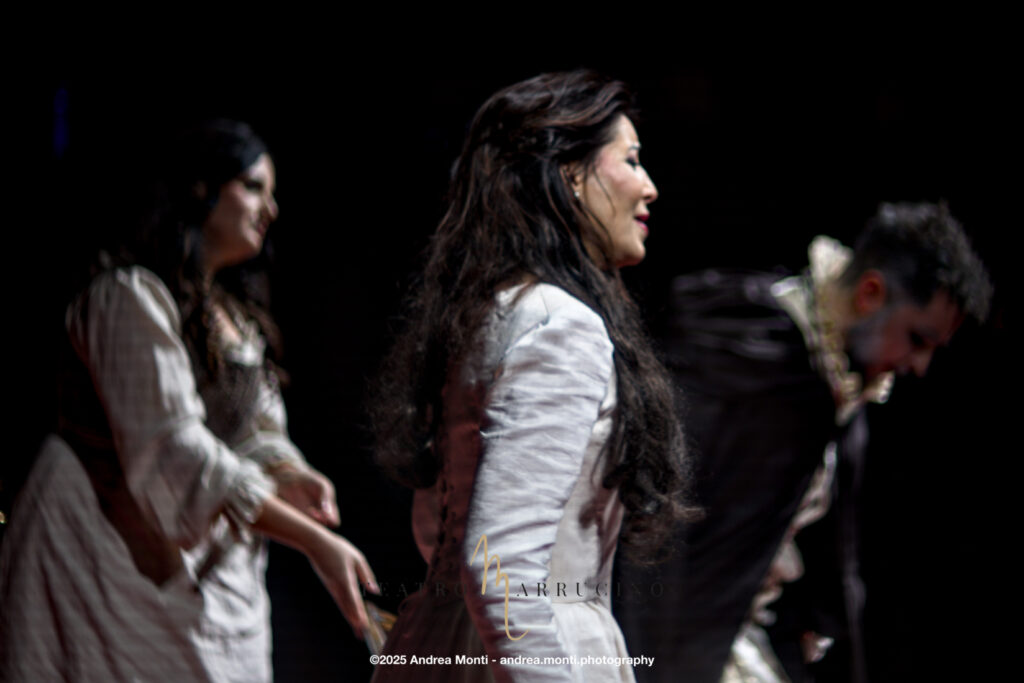
In order to reduce the need for a high ISO, I kept the lens wide open. This helped reduce image quality loss, but made focusing more difficult, as is demonstrated by all the photos displayed in this post. The X-T5’s focus-check feature worked pretty well, but as the camera is not manufactured in Vatican City, the firmware does not include the ‘miracle-making’ option.
Share this post:



Comments
Graham Line on Bringing an Helios 40-2 at the opera
Comment posted: 13/01/2026
Comment posted: 13/01/2026
Eric Rose on Bringing an Helios 40-2 at the opera
Comment posted: 13/01/2026
Comment posted: 13/01/2026
Tony Warren on Bringing an Helios 40-2 at the opera
Comment posted: 13/01/2026
Comment posted: 13/01/2026
Danilo Leonardi on Bringing an Helios 40-2 at the opera
Comment posted: 13/01/2026
Really enjoyed your article, your pictures are fantastic.
You mention that banding caused by LED lighting is problematic, and you mention using a Fujifilm XT5 body, and that made me think about the issue and do some research. I don’t know your exact exposure settings you used beyond your note that you photographed at the maximum f/1.5 of the Helios 85 mm lens, but I imagine you were operating in aperture priority or setting shutter speeds manually, perhaps with auto ISO? The fact that the pictures here show no banding but some you mention that did, makes me think that the shutter speed was changing between exposures. More on that point later. Banding usually comes from electronic shutter, so I’m also guessing that’s what you were using to be able to work silently on set. Mechanical shutters are much less prone to banding, unless very fast speeds are used, where the focal-plane curtains form a slit travelling across the sensor and could therefore re-introduce the problem (i.e. because some parts of the sensor are exposed at different light levels due to the flicker of the lighting).
With electronic shutter, the sensor is scanned row by row while it is being exposed, so each row can see slightly different brightness from flickering LED lighting. From my experience, the safest results come from using the Fujifilm X H2S with its stacked, fast-readout sensor.
I did some research to get an idea of entire-frame readout times, and compared the Fujifilm XT5 with the Fujifilm XH2S:
• X H2S, 26 MP, stacked APS-C, 6–10 ms, it roughly takes 1/160–1/100 s to read the entire sensor. The whole frame can therefore be scanned within one pulse of the LED lighting, so the risk of banding is minimal.
• XT5, 40 MP, APS-C, 13–31 ms, roughly 1/75–1/32 s to read the entire sensor, scanning the sensor could therefore span from one to three LED pulses, increasing the chance of banding with electronic shutter.
In Europe, mains alternates at 50 Hz, so most LED lighting flickers at 100 Hz, one brightness pulse every 10 ms, because LEDs usually pulse on both halves of the AC waveform. (In the US or Japan, mains alternates at 60 Hz, so LED flicker is typically 120 Hz.)
A practical way to avoid banding is to use shutter speeds that match the mains rhythm, so this means roughly 1/50 or 1/100 s in Europe. Antiflicker functions can also help by synchronising the start of the exposure with the LED pulse.
I’d be curious to hear if these shutter speeds are like those you used for the images that had no banding effect, and whether the ones that did show banding were photographed outside those two speeds?
Warm regards
Danilo
Comment posted: 13/01/2026
Comment posted: 13/01/2026
Ibraar Hussain on Bringing an Helios 40-2 at the opera
Comment posted: 14/01/2026