

This past year I decided to focus on black and white film photography and to tackle landscape photography. For me, that has been a hard challenge. My occasional attempts at landscape photography while out hiking and looking for wildlife have always seemed to fall flat, with the pictures never capturing what I was feeling as I enjoyed the outdoors. But having followed several YouTube channels on that topic, it was clear that there were many opportunities around me, but I had a lot to learn. So, this year I decided I was going to be more focused on trying to develop an eye for interesting black and white pictures.
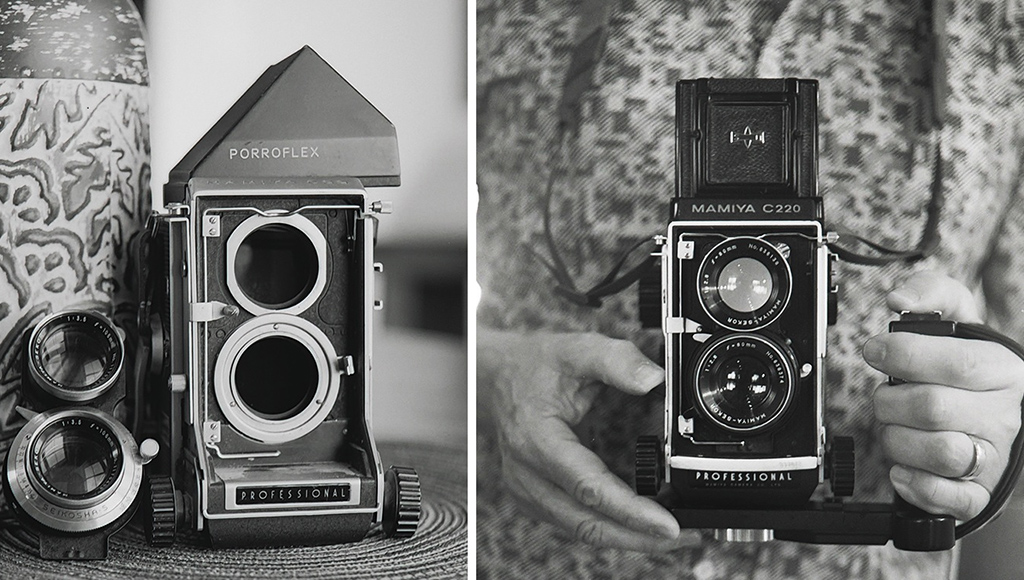
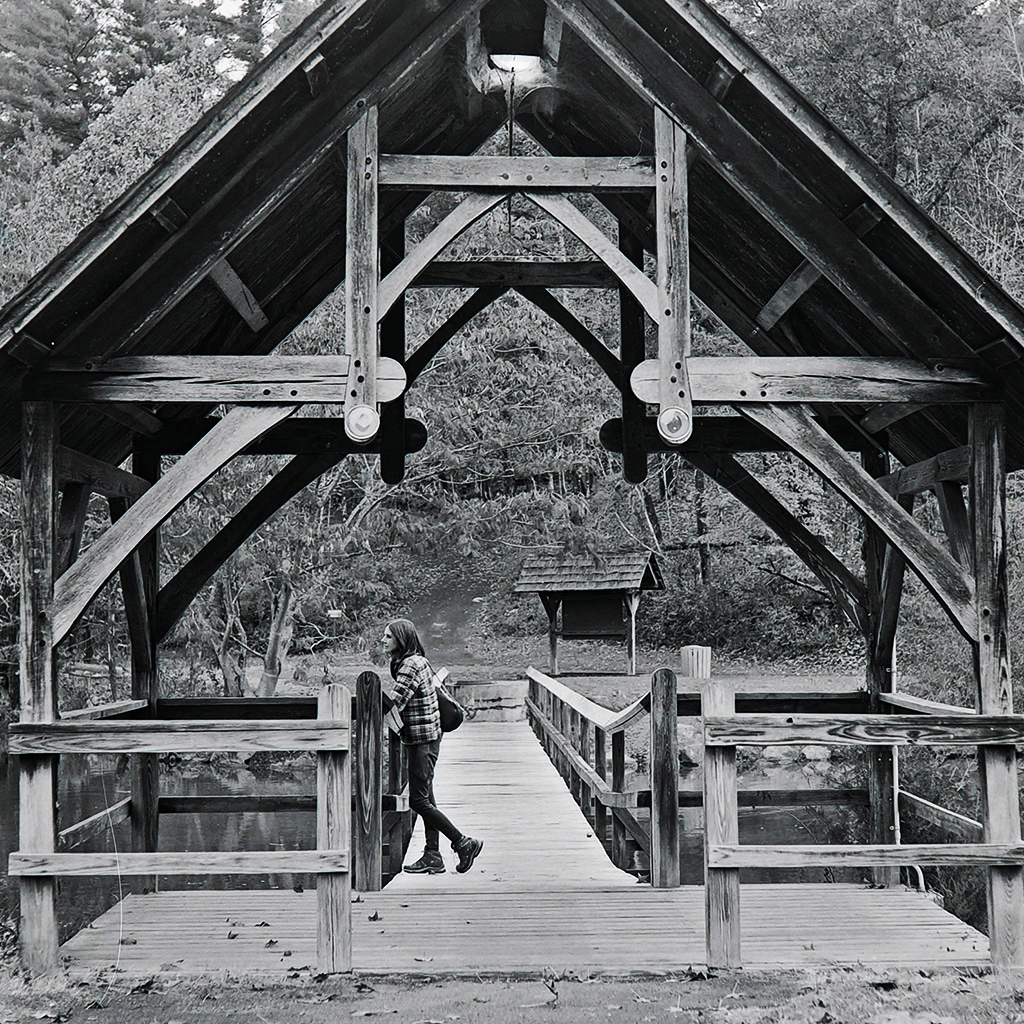
A great place to work on this has been Steele Creek Park, a beautiful park in Northeast Tennessee of over 2200 acres, with a lake, 24+ miles of hiking trails, and the Steele Creek Express – a scaled down, 24-gauge replica of a steam locomotive that provides rides for thousands every year. The park has wildlife, wildflowers, and scenery. I thought this would be a great place to explore with my Mamiya C220, with an 80mm Mamiya-Sekor lens.
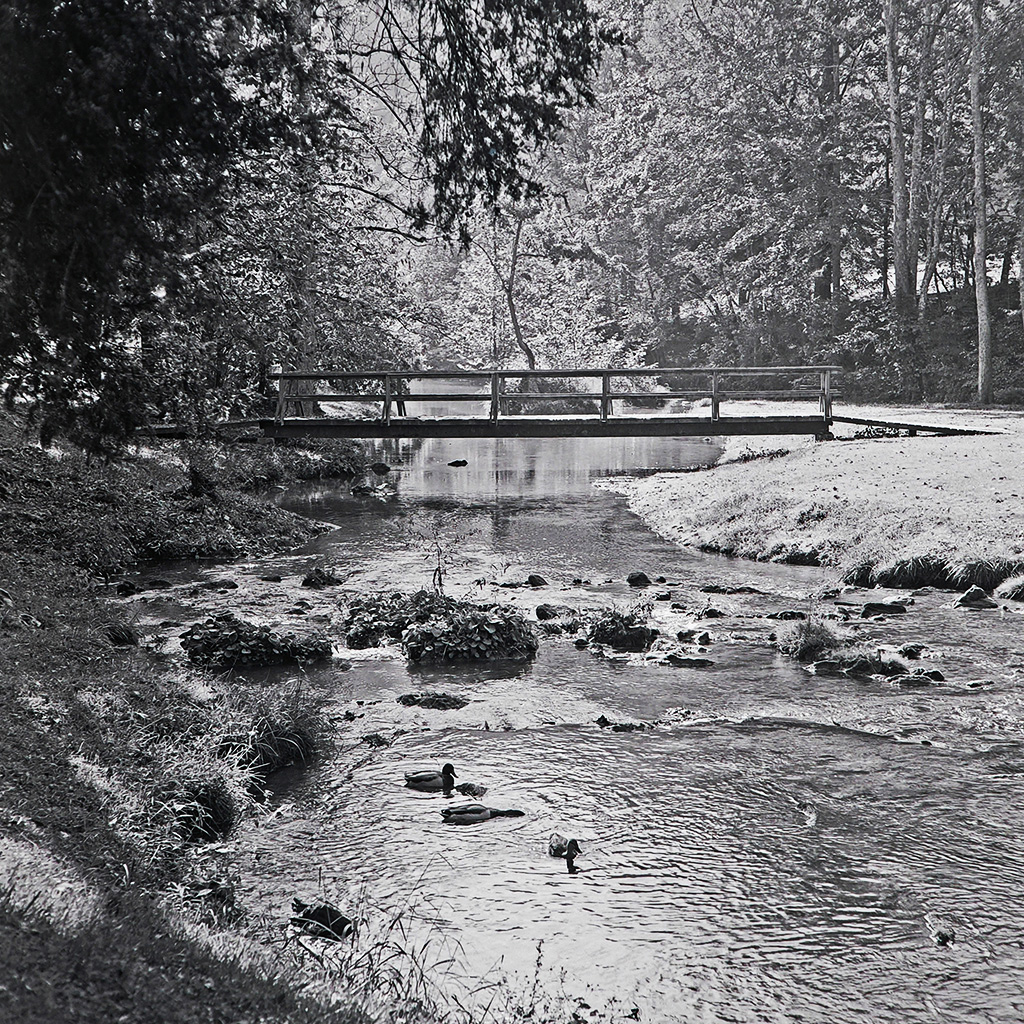
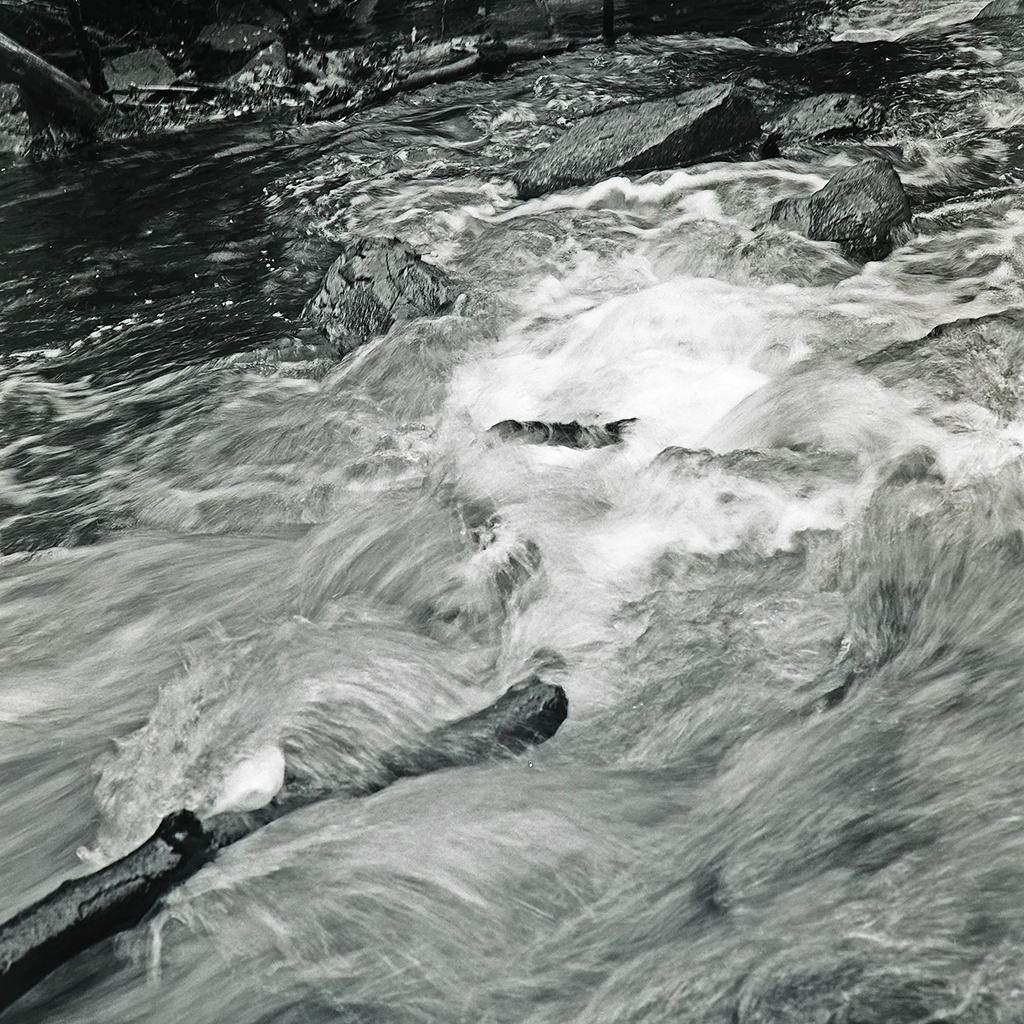
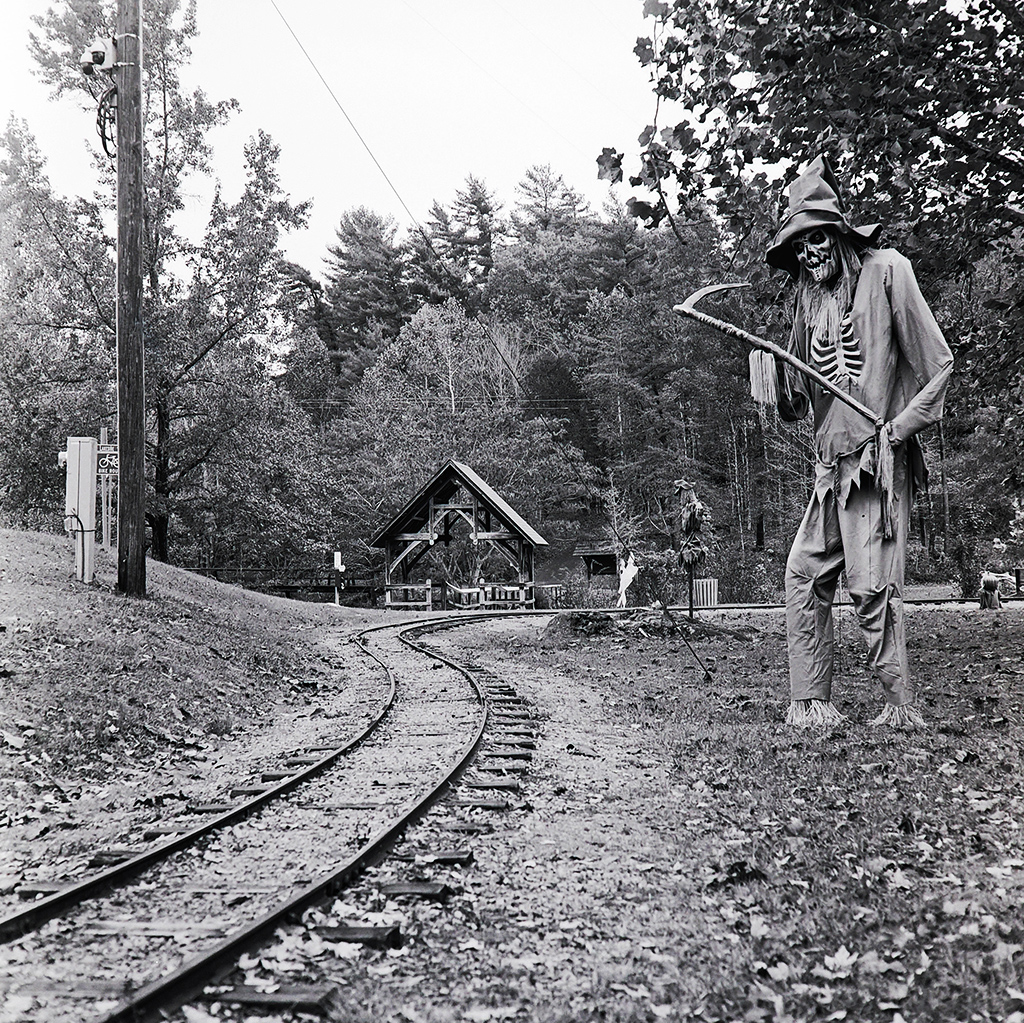
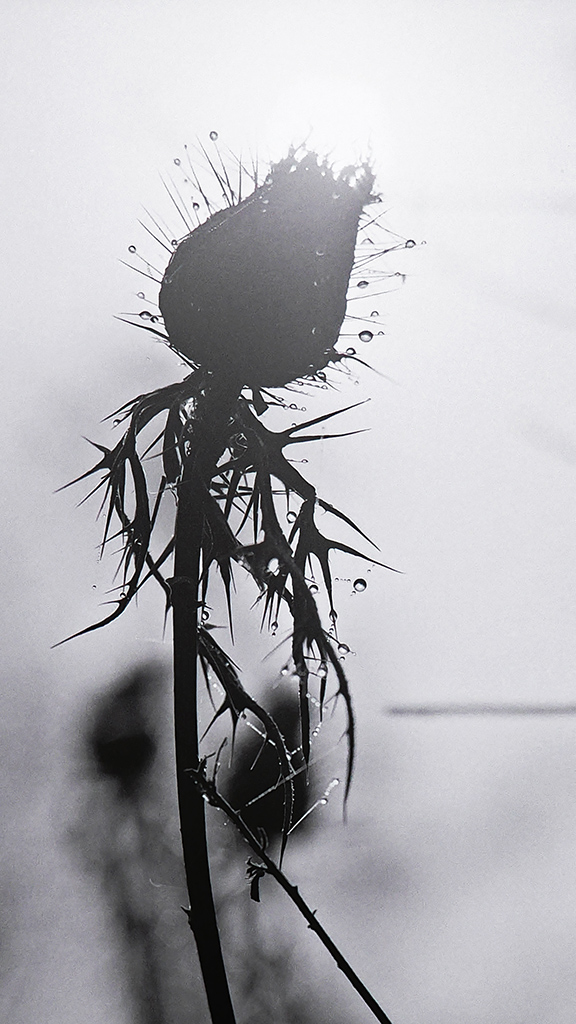
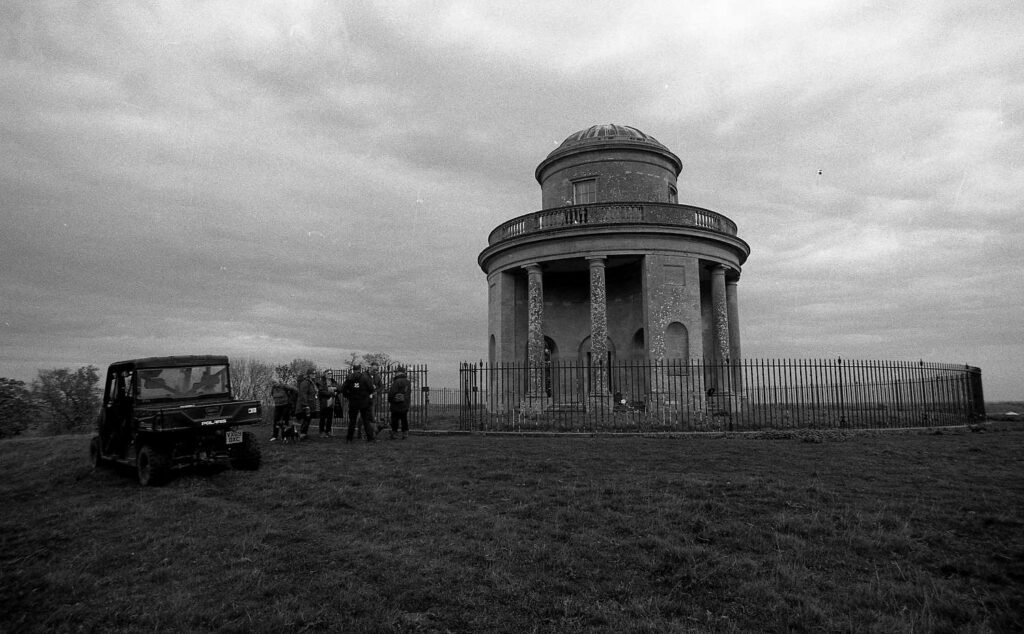
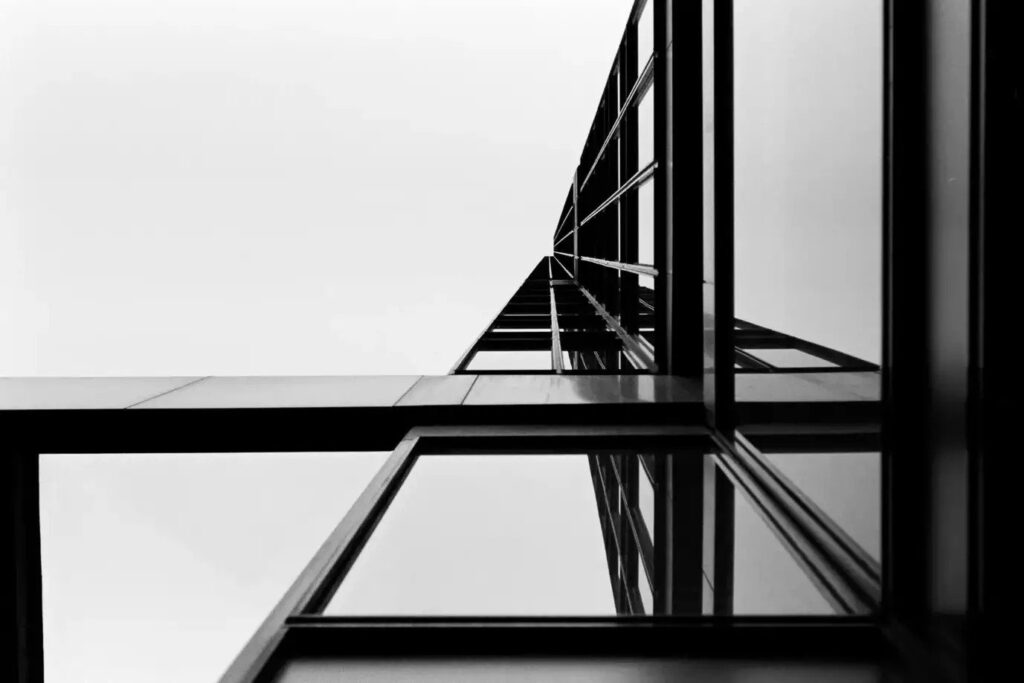
These are my five favorite pictures from the park. I used Ilford FP4+ at its rated 125 ISO and developed the film with a Patterson tank and reel using Ilfosol 3 at 1:14 dilution.
The Mamiya C220 came out in 1968 and was a part of the Mamiya “C” series which was the follow-on to the Mamiyaflex Twin-Lens Reflex (TLR) camera. The C series had the unusual feature, for TLR cameras, of having interchangeable lenses, and the ability to swap out lenses, mid-roll, without wasting a frame. I have the 80mm and 105mm and have a 55mm on the way. Mamiya also made 65, 135, 180, and 250mm lenses, each with their own integrated shutter. The Mamiya C Series ran from 1956 – 1994, and they were all in 6x6cm format.
As seen in the title image above, there is an optional eye-level viewer, the “Porroflex,” as well as an optional left side hand grip, which I find useful in keeping a steady hold at low shutter speeds. The camera on the left side is the Mamiya C33 variant which cocks the shutter along with the film advance. I prefer the overall simpler mechanisms of the C220.
What do I like about the Mamiya C220? I like experimenting with the square format; I like the fact that there are multiple lenses available for it; I like the fact that, with the bellows, I can do macro photos. The 6x6cm negatives scan well with my current setup using my OM-1 digital camera and a Negative Supply stand, light source and film holder, and they enlarge up to 16×16 inch prints quite nicely. I also enjoy the fully manual aspect of the camera, including the need to cock the shutter, use a light meter, deal with the flipped image in the waist-level finder, and calculate the bellows factor for close-ups, as I’m planning on trying large format in the future and I will need to get comfortable with all those steps in addition to the usual steps involved with shooting my 35mm cameras. I also find that using 120 film makes me a bit more careful with selecting shots. With my 35mm cameras I tended to shoot a whole 36-shot roll wherever I would go to hike so I could develop the film when I got home. With 12 shots per 120 roll I’m doing more assessing and planning for each shot.
The Mamiya C220 is robustly built, and the lens is sharp. It has been a great way for me to get into medium format. The only downside of the Mamiya is that it is significantly heavier than my 35mm cameras, but that does help with shooting handheld at slower shutter speeds. There also is the challenge inherent in using a TLR camera for close-up photos where the taking lens isn’t seeing exactly the same thing as the viewing lens, but there are guidelines inside the waist-level finder to assist with that.
At this stage, it has all I need to go further in this hobby.
Share this post:


Comments
Paul Quellin on 5 Frames With a Mamiya C220
Comment posted: 23/12/2025
andy hertig on 5 Frames With a Mamiya C220
Comment posted: 23/12/2025
Very beautiful and detailed pictures.
I've tried 6x6 several times, but I haven't quite warmed to it yet—at least not during the shoot.
The quality compared to 35mm is always enormous, no matter how old and inexpensive the 6x6 camera is.
Cheers, Andy
Walter Reumkens on 5 Frames With a Mamiya C220
Comment posted: 23/12/2025