

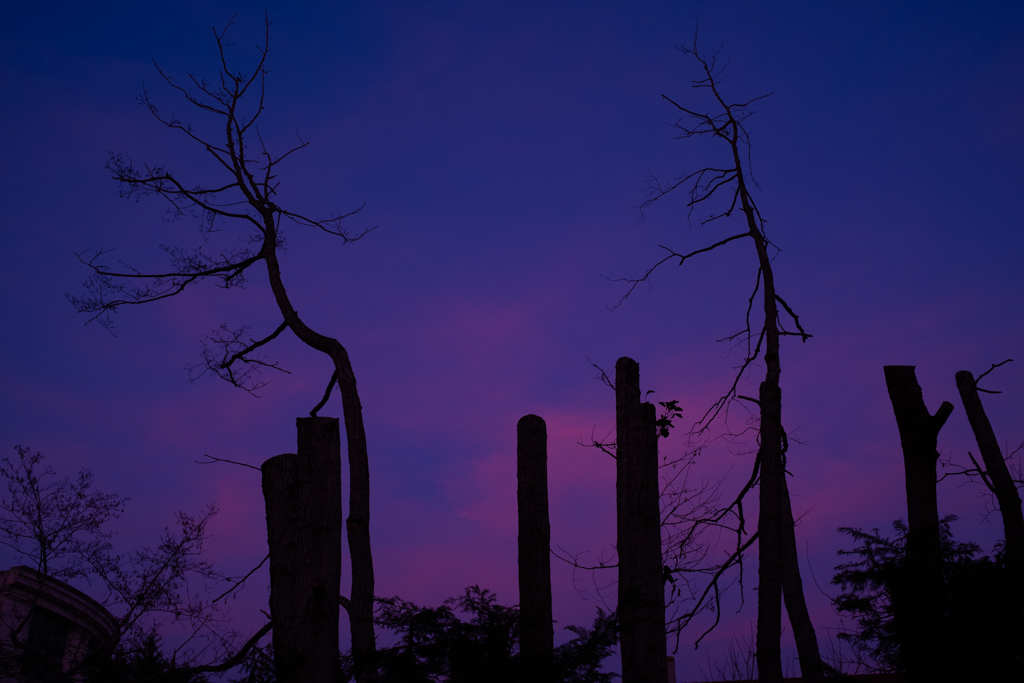
We bought the house we are living in now fifteen years ago. This small home, with a narrow creek flowing just behind it, offered us a place to spend pleasant moments during the time left over from our working lives. When our obligation to live in the city center came to an end, it became our permanent residence.
In summer, the shade of the magnificent alder trees lining the creek created an entirely different climate in the backyard. I’m writing this in the past tense, because those trees are no longer there.
About six years ago, an insect—identified by a neighbor and reported to the authorities—began causing the trees to dry out. It is thought that this species, not native to the area, reached us as a bitter gift of the global economy. Known as the citrus long-horned beetle, this insect has a remarkably hard shell and can fly short distances. It drills into tree trunks and lays its larvae; after developing inside the wood, the larvae emerge and continue the cycle.
When it was first detected, the authorities chopped down some trees to prevent its spread. We did not want our trees to be chopped. Although they came and carried out spraying, they warned us that treatment generally does not work and that, over time, the trees would die and eventually fall. Since cutting the trees was technically difficult, I suppose our request for spraying instead of chopping down also made things easier for them.
At the end of May last year, two trees fell in a dangerous way, right between two houses. When they came down, my wife was trying to make sense of the noise just two meters from where the branches struck. After this frightening incident, the authorities returned, marked the trees, and emphasized that they needed to be chopped down and destroyed. Yet somehow, nothing happened. With our own means, we had the trees that posed an immediate danger pruned, and we closed the matter as best we could.
The remaining two trees in the featured photograph, settled into our memories during a beautiful sunset. The tree on the left is no longer there; it fell safely on its own a few weeks ago.These dense-leaved trees, which in autumn could even shelter us from the rain when we stood beneath them, are now with us as dramatic poles. If the authorities come, they will most likely cut them at the base and run them through a shredder.
What can I say—this is life.
Share this post:







Comments
Art Meripol on After the Lost Trees – One Shot Story
Comment posted: 24/02/2026
Gary Smith on After the Lost Trees – One Shot Story
Comment posted: 24/02/2026
Thanks for sharing your loss with us Cem.
Omar Tibi on After the Lost Trees – One Shot Story
Comment posted: 27/02/2026