

In December 2023 I travelled to Rafaela, a town in the province of Santa Fe, Argentina. I went because my father was very unwell.
He was almost 90 and had just been moved into a home to receive hospice care. Until COVID times, my parents visited me every summer in London. After that, they stopped travelling. COVID and the lockdowns, together with their age, suddenly reduced what had previously been possible. They also stopped their frequent trips from Santa Fe province to Buenos Aires, something they had always done until then.
It was all a shock. I felt overwhelmed and hesitated over the arrangements for the trip, not to mention the practicalities of leaving part-time work and rescheduling freelance commitments at short notice. My last time in Argentina had been in December 2010. I have been living in Europe since 1990, more than half my life now, and travelling on a British passport for many years. In the middle of all of this, a conversation with my friend Joel helped. He listened, then said: this is very simple, you go tomorrow morning. And so I did. The trip could not be delayed. I spent time with my father, and we were able to speak before pain medication made that impossible. I will always be grateful for that chance. He died in January 2024.
I found a last-minute ticket in my price range, but it involved a second connecting flight within Germany to reach Frankfurt airport. So I spent some time in airport limbo. The onward flight to Buenos Aires lasted thirteen hours. Some of my fellow passengers already appeared to be in a festive frame of mind.
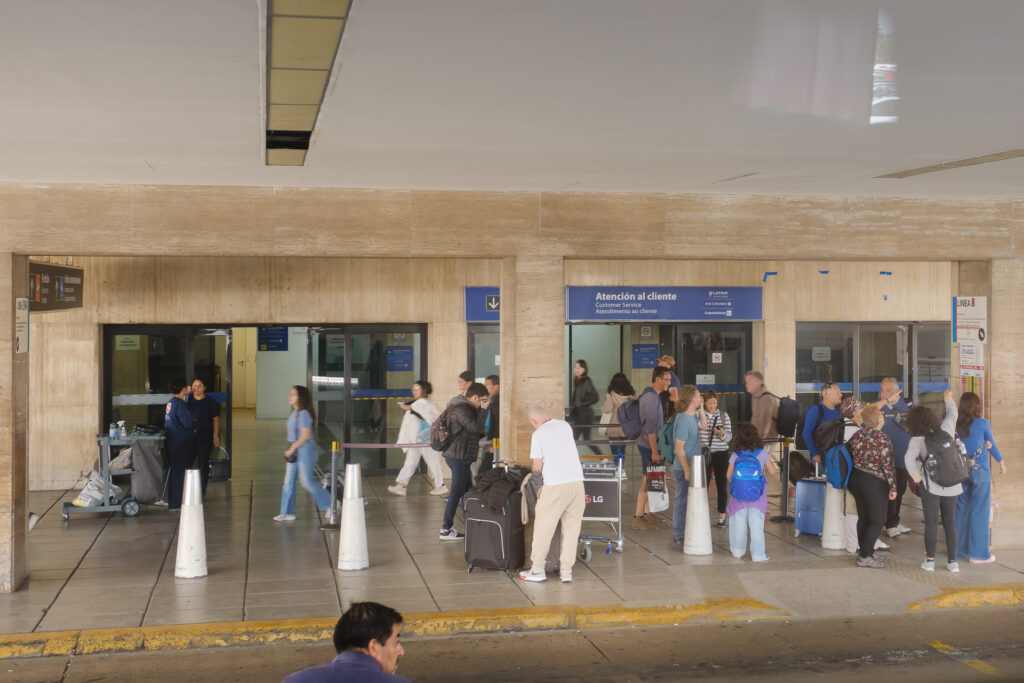
People emerge from immigration and customs and wait for buses and taxis. Arrival coincides with the immediate realisation that it is mid-summer.
I arrived only days before Christmas. The holiday season there is most definitely not a winter festival to compensate for dark days. These are the longest days of the year, when the sun beats down, and daytime temperatures reach 30 degrees Celsius and above.
After passport control and customs, I realised that this time was only the second occasion ever that my parents had not been at the airport to meet me, with everything organised.
Travel notes
For the journey, I carried a Fujifilm X-H2S body with a Fujinon 16–55mm f2.8 and a Zeiss Distagon 12mm f2.8, along with a two-battery TTL Godox flash unit. I took most photographs in Program mode, at ISO 400, often using the touch screen as the shutter release. I avoided the built-in LUTs, and chose the standard profile to keep the files neutral.
I took photographs while travelling, without much intention beyond the act of photographing itself. At the time, photography functioned as a way of marking the days. On returning to London, I could not bring myself to open the files. I made a few attempts, and then stopped. The photographs are now being revisited because distance and time have made the material workable again.
The photographs here are from Buenos Aires and from the journey north by coach to Santa Fe province, a distance of about 600 kilometres. Flying to a provincial main town and then continuing by bus to Rafaela makes the journey longer rather than shorter. By direct coach, however, it takes roughly eight hours. Long-distance passenger trains are, for practical purposes, nonexistent in Argentina.
On the coach, a window seat offered me the familiar view of Buenos Aires thinning out as the land opened into the vastness of the fertile plains, the “pampa húmeda.” It was afternoon. Later, the sun dropped gradually. I photographed as the journey progressed.
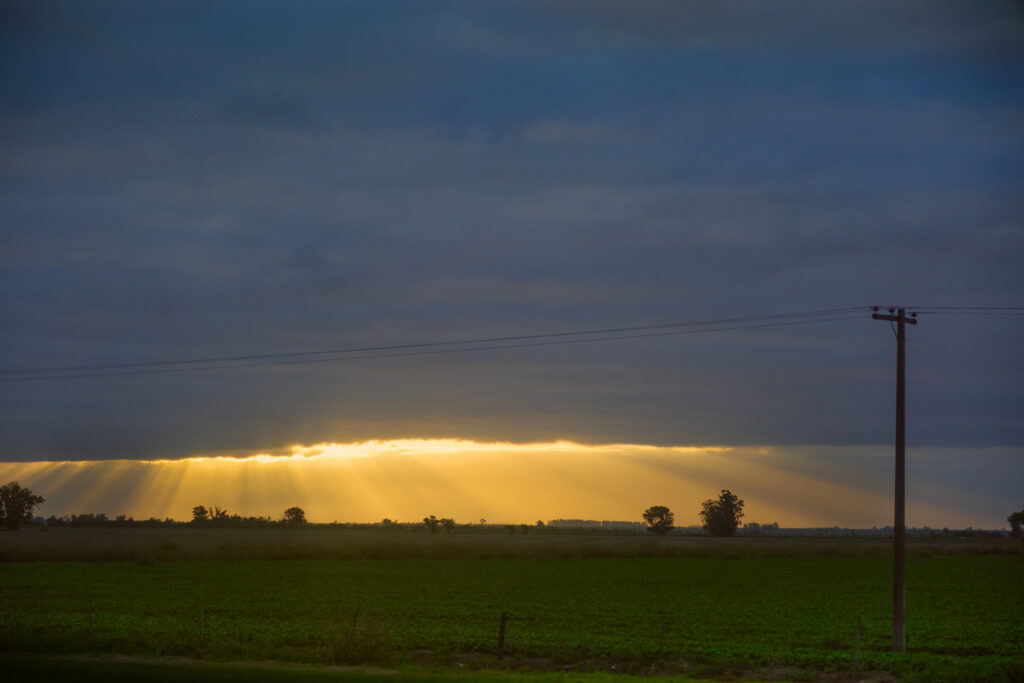
Filtered light breaks through cloud cover onto green fields. The plains open as the journey continues north.
Buenos Aires
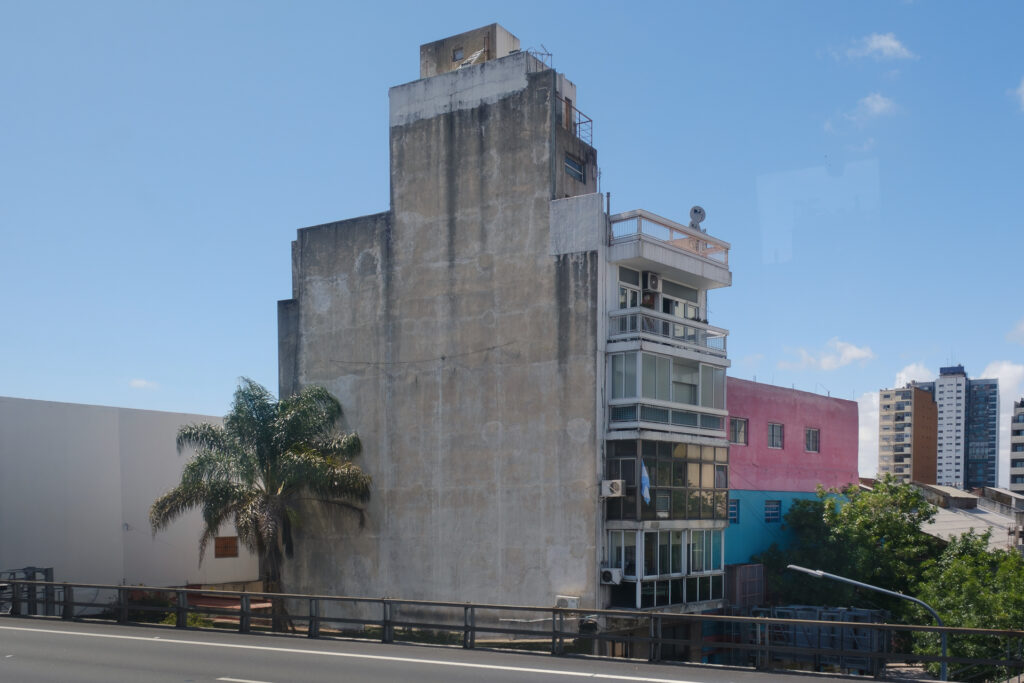
Already on the coach, I photographed from my window. It was the edge of the “villas”, the informal settlements, located on the other side of the perimeter fence of the coach station. They sit next to areas of wealth and commerce, and the contrast is immediate. I thought that nothing had changed. Differences between those with access to education and opportunity and those without are visible in everyday geography. This has always been part of the landscape.
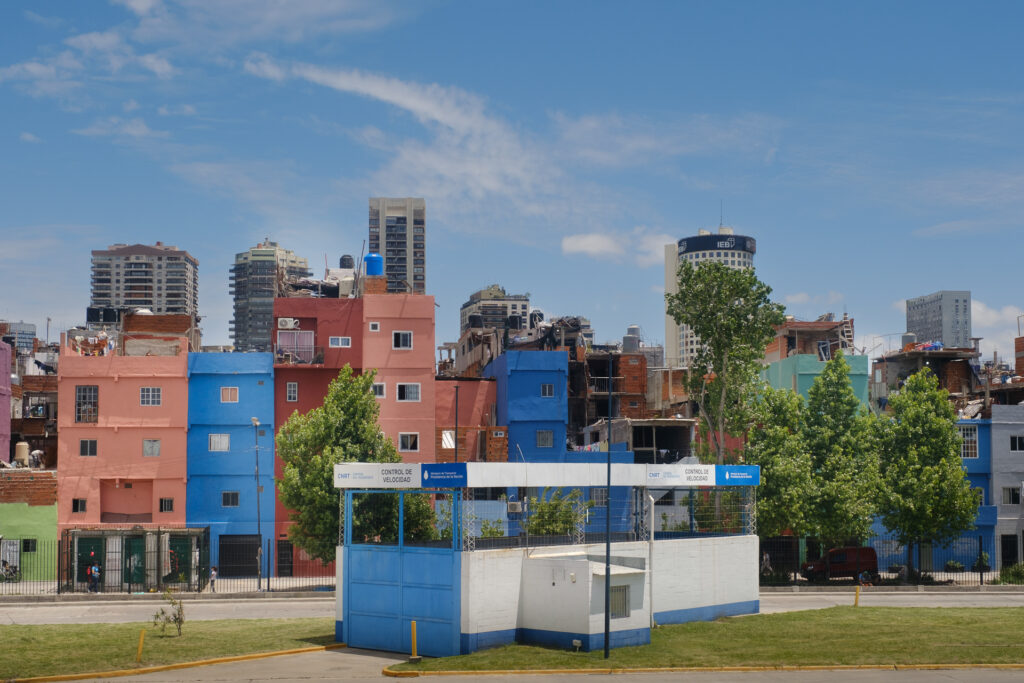
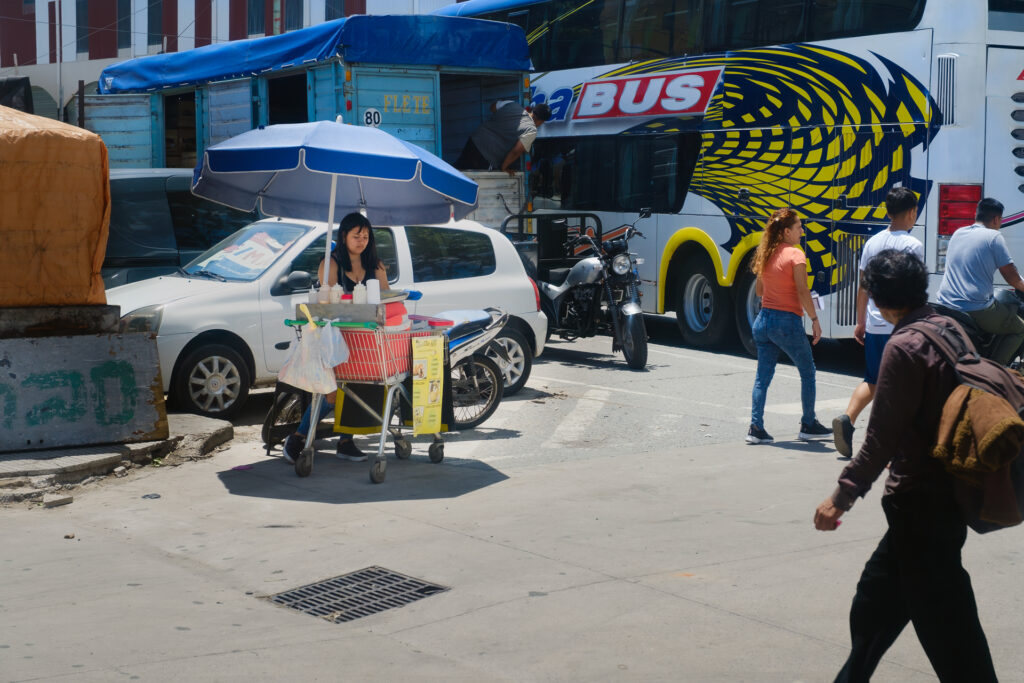
I did not stop at my parents’ flat in Buenos Aires, as no one was there. I purchased the coach ticket to Rafaela online from my seat on the airport bus. When the bus arrived at its final stop, I discovered that public transport still does not connect cleanly. A gap between the airport bus stop and the coach terminal required either a taxi, a bus ride, or a walk of ten blocks, roughly a kilometre, through central Buenos Aires. Against the advice of the airport bus driver, I decided to walk the distance along “Avenida del Libertador” as I practically had no luggage. There were very few pedestrians. The pavement, though very wide, ran alongside multiple lanes of traffic moving at almost motorway speed. It reminded me of the thoroughfares of Moscow, where I lived in the late 1990s: wide and fast, as if built for giants rather than human beings, and full of beaten-up, noisy vehicles.
Buenos Aires and Santa Fe province were familiar places. Yet my movement through them was that of someone with a history, but who was not returning. This became noticeable in many small ways. Since leaving the country in 1990, most of my conversations in Spanish had been exclusively with my parents, on weekly phone calls or occasional visits. I was not up to date. I seemed to automatically address strangers with “usted”, the formal version of “you”, while everyone else around me favoured the informal form.
Rafaela
In Rafaela, my days followed a schedule. Each day was organised around a visit to my father, and I stayed for the full visiting hours at the home. At siesta time and in the evenings, I returned to my parents’ house. My old bedroom remained unchanged since I had left for my studies decades ago. For the first time, I saw the house at Christmastime without any decorations.
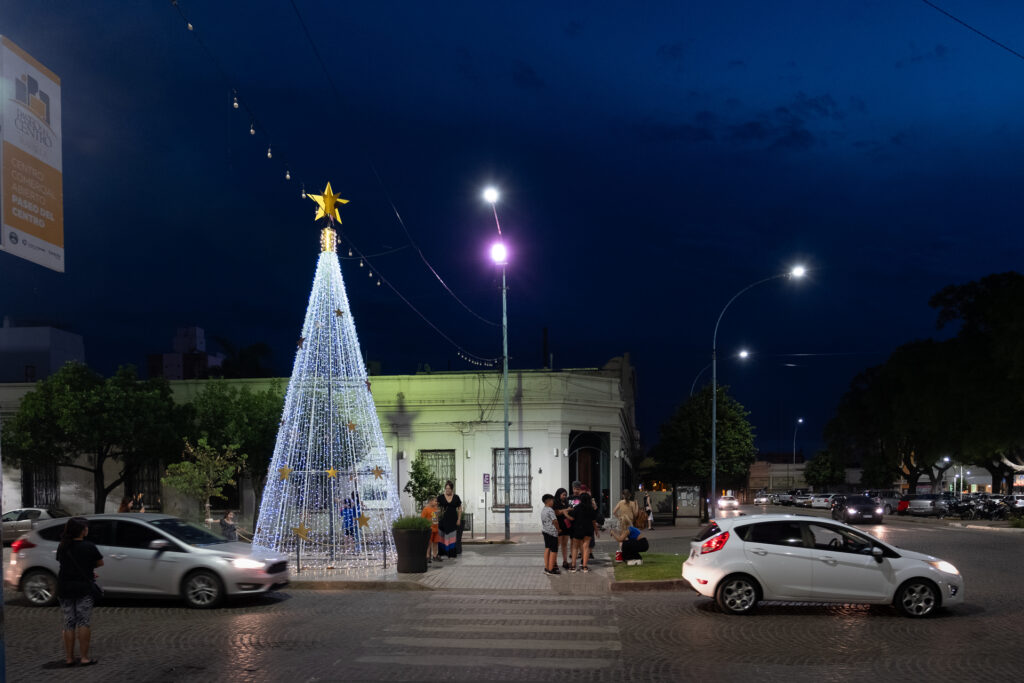
Memories of the Christmas Eve dinner parties of my childhood in that house kept surfacing. My family is partly of Italian and partly of Swiss-German origin, so the dishes at Christmas were always transplanted European ones. Many now opt for “asado”, the Argentinian beef barbecue, prepared outdoors and eaten al fresco as they wait for the clock to strike midnight and raise a toast. Barbecue, and the accompanying smoke, never appealed to me.
“Mate”, the green tea sipped with a straw, preferably from a gourd cup, is different. I still have it occasionally in London. My mother’s family arrived in the country more than a century ago, when Argentina was imagined by many as a recreation of Europe. Growing up, the legend of Europe was strong. I now realise that this longing may have helped make my decision to leave years ago feel natural.
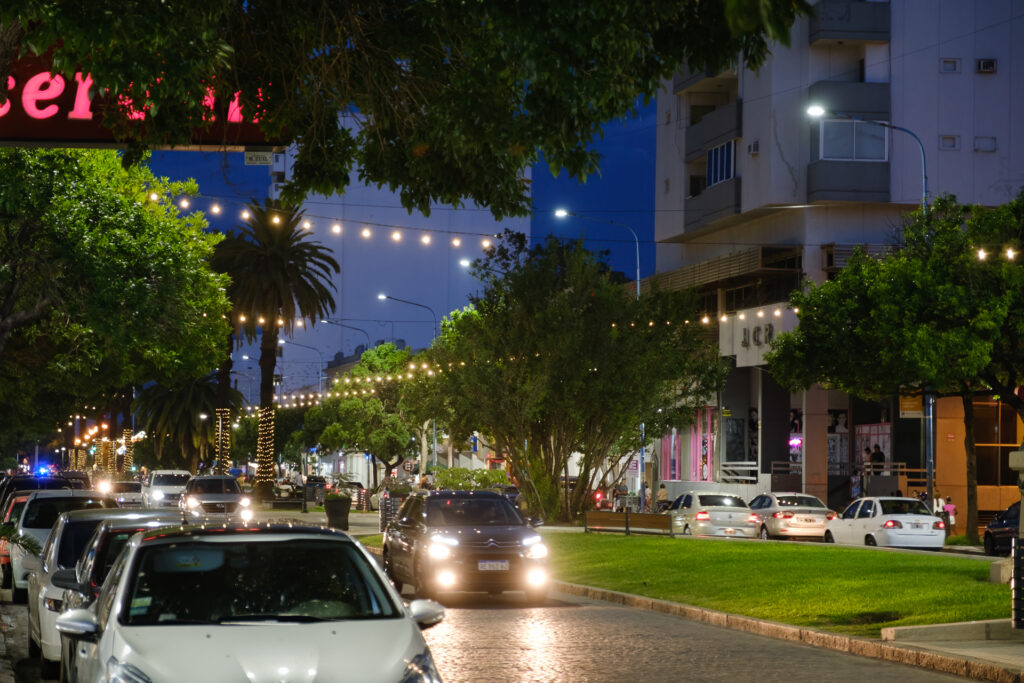
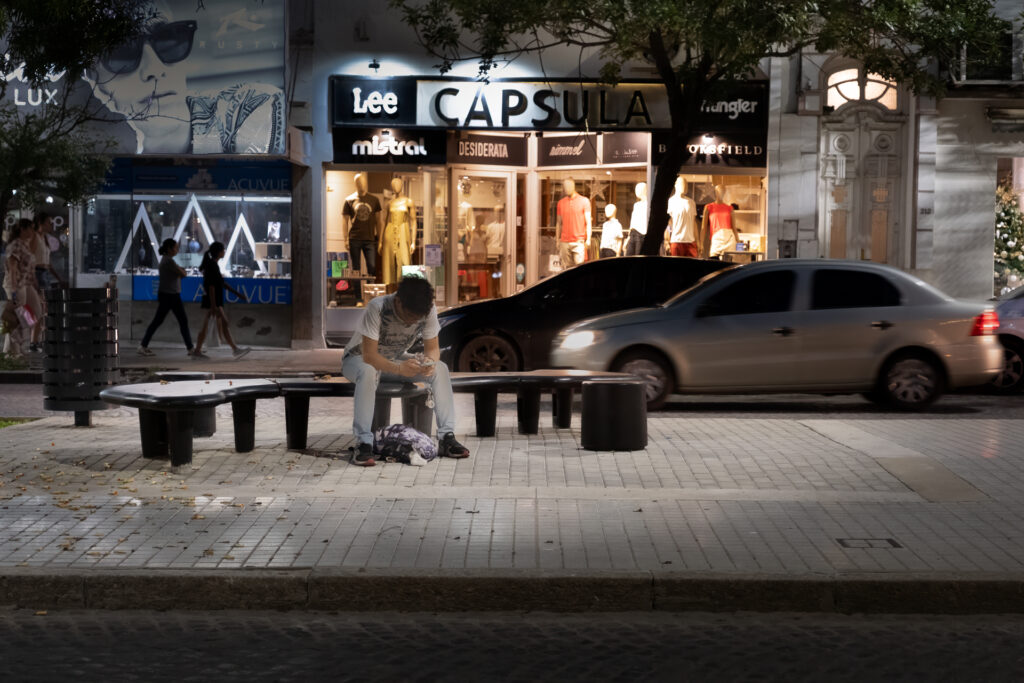
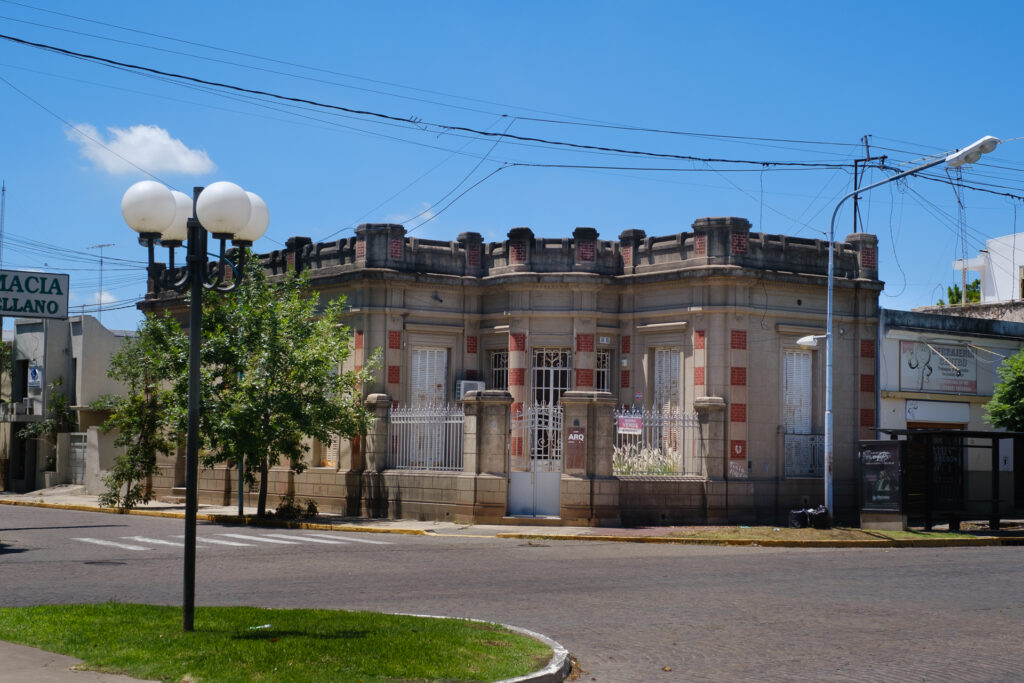
Rafaela in December is defined by very hot weather, typical of the more northern parts of the plains. The intense heat brings the cicadas out in the jacaranda trees along the streets. Their song rises and falls like engines revving. Air-conditioners, with their droning sound, are noticeable everywhere. They are attached to facades and hang from walls, often interrupting lines and surfaces. They likely detract from the look of the place. Most locals insist they are indispensable.
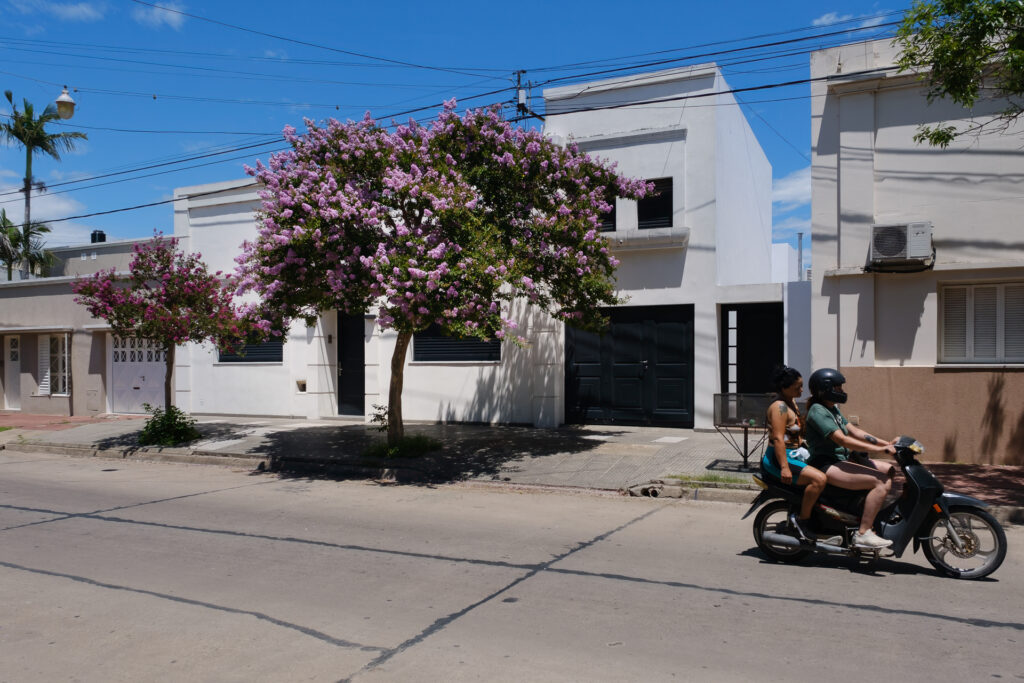
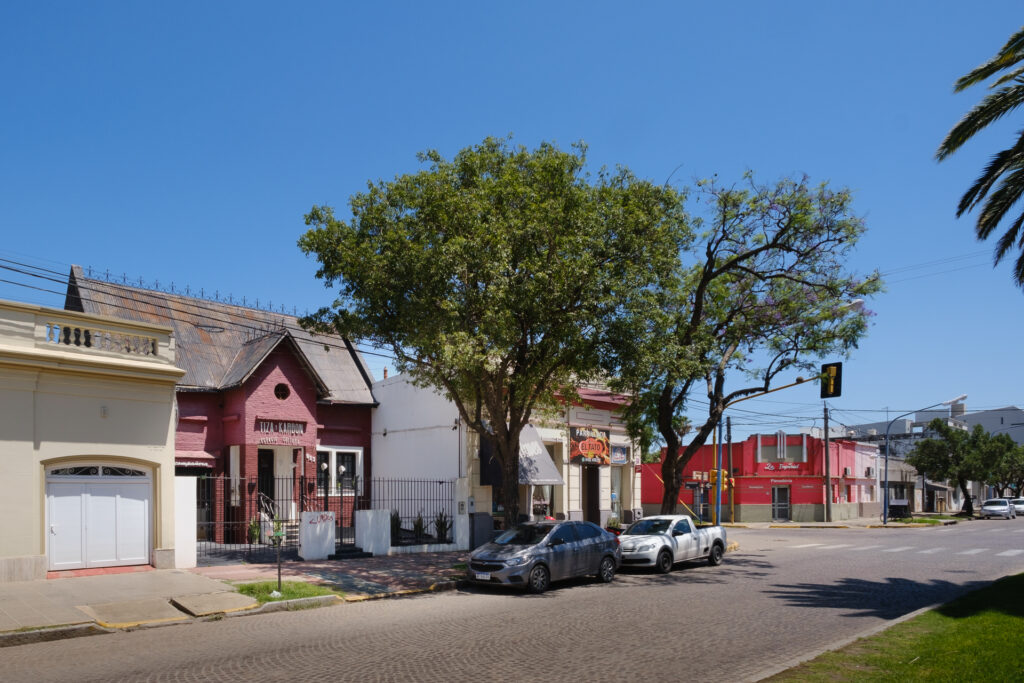
Throughout the day, the sun is high and powerful. The light is very different from the filtered light of London. Strong contrast and hard-edged shadows dominate. The fronts of buildings appear cut by dark shapes, and trees cast dense pools of shade.
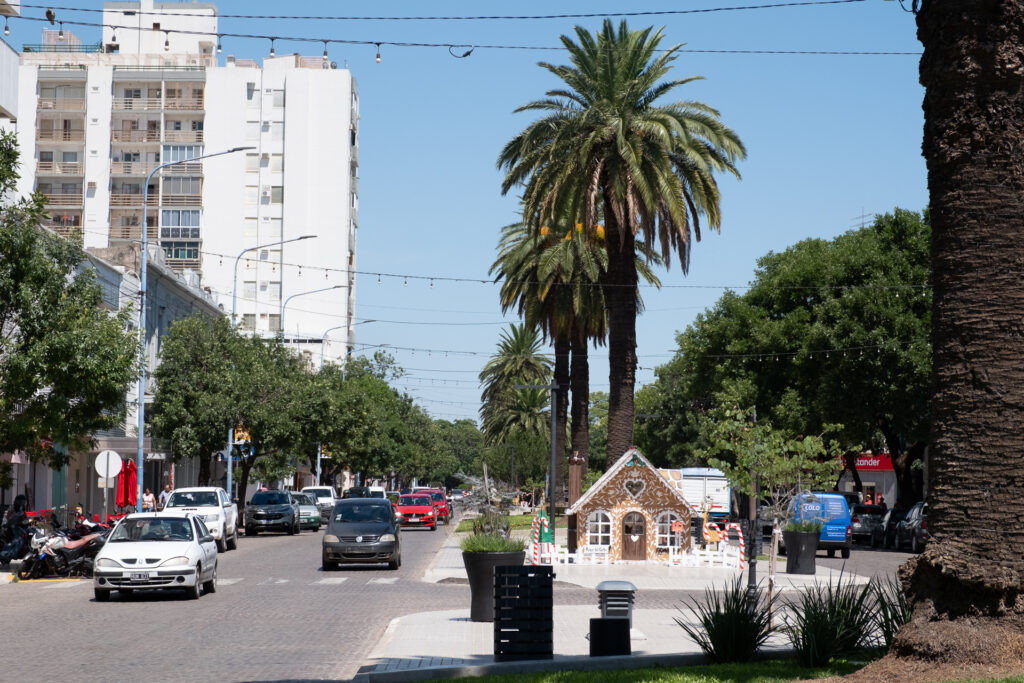
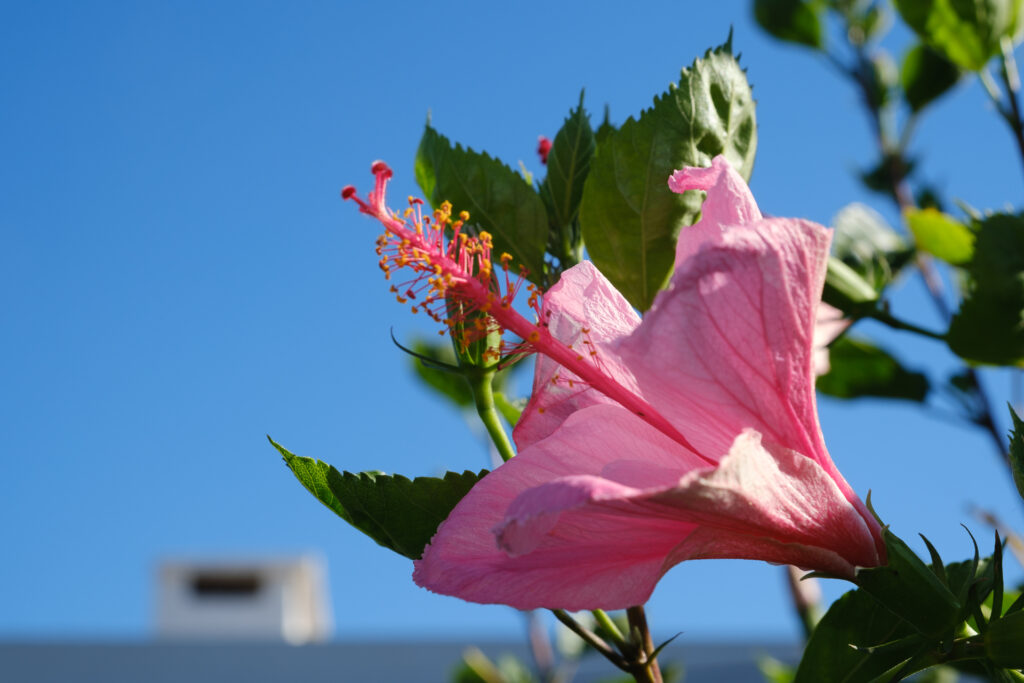
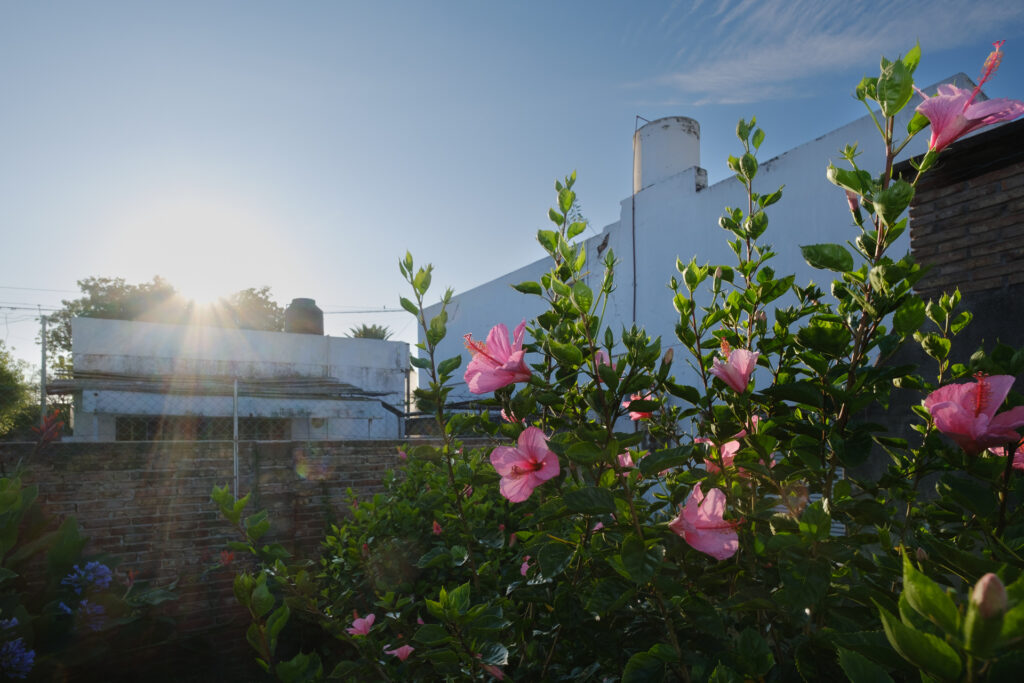
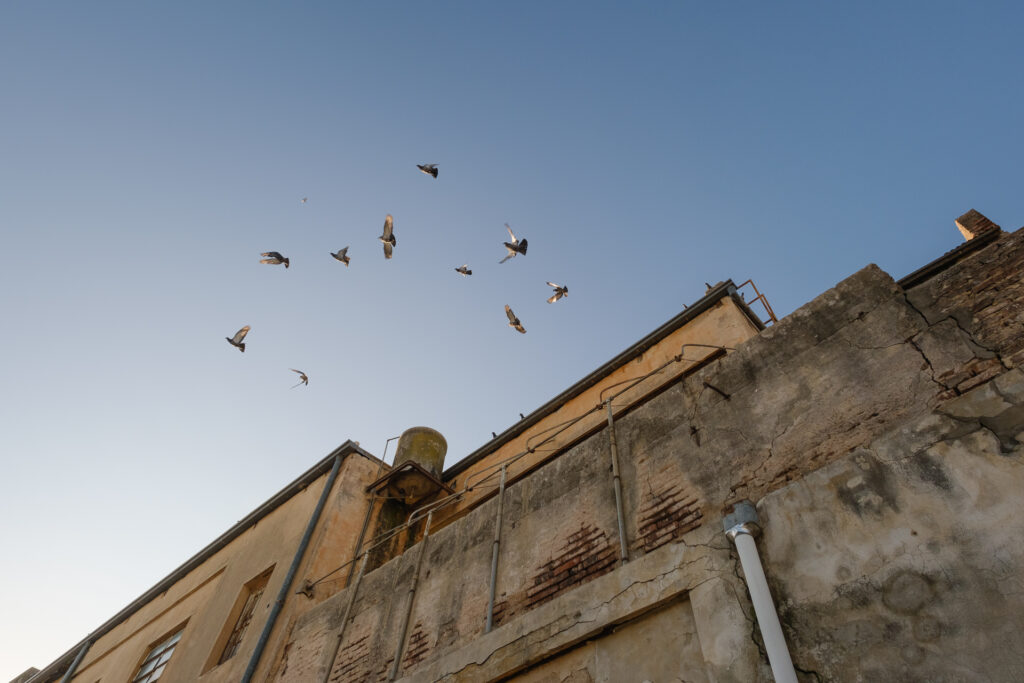
The photographs I took in Rafaela are observational: the town with Christmas in summer; the bottom of the garden, where pigeons gather and leave traces; hibiscus flowers, bushes planted years ago by my maternal grandfather. These images do not attempt explanation. They are records of being there, made because the days needed to be marked in some way.
Timing
This feels like the right moment to share some of these photographs. As I write during the 2025–26 holiday season in London, several layers come into focus. I carry memories of the 2023 journey to Argentina, and, separately, through my friend Joel, his children, and his family, Hanukkah has become part of my yearly awareness. Together with Christmas, these occasions make clear that time has passed. It is this passage of time that now allows me to return to the images, and to the events surrounding that summer in Argentina.
Afterwards
Photography is often something finished and resolved. At other times, the act of photographing is closer to marking time than to producing an outcome. Carrying a camera that summer became a way to keep moving, to photograph what appeared, without insisting on a narrative.
Preparing this article required returning to the photographs and memories of that summer in Argentina, offering me a way of confronting some of what remained unresolved, and allowing the experience, finally, to begin to recede.
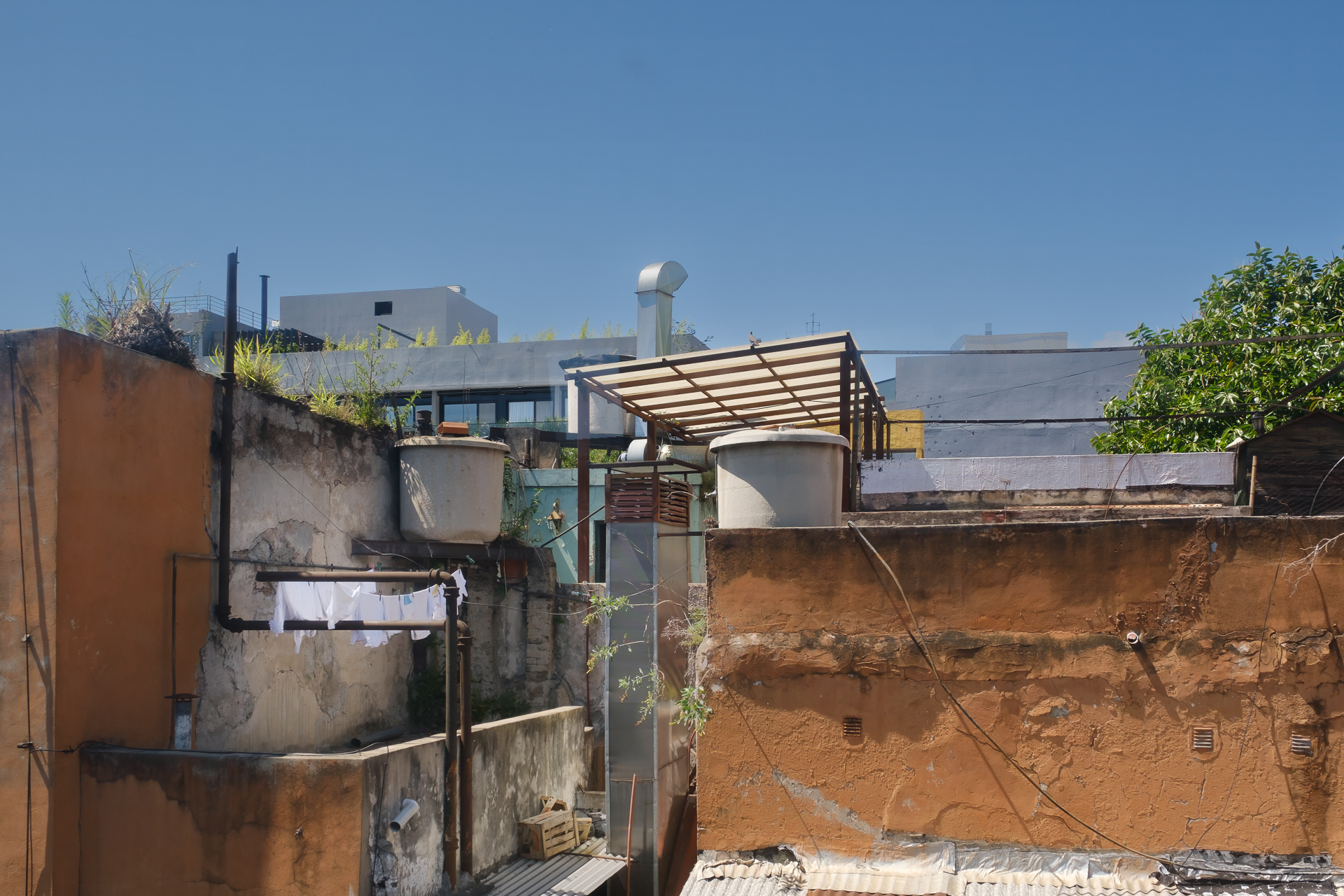
(Featured image at the top of the article: On the way to central Buenos Aires, as seen from the elevated road from the airport to the city centre: peeling orange paint, tin roofs, ventilation pipes, and rooftop water tanks. Plants and some weeds that grow directly from the walls. Strong sun, clear sky.)
Share this post:

Comments
Geoff Chaplin on Notes from a Journey Taken at Short Notice
Comment posted: 31/01/2026
Comment posted: 31/01/2026
Art Meripol on Notes from a Journey Taken at Short Notice
Comment posted: 31/01/2026
Comment posted: 31/01/2026
Bill Brown on Notes from a Journey Taken at Short Notice
Comment posted: 31/01/2026
Comment posted: 31/01/2026
Jeffery Luhn on Notes from a Journey Taken at Short Notice
Comment posted: 31/01/2026
Although you and I have ancestry from opposite sides of the globe, your reflections of your homeland and your parents is familiar and touching. Years before my father died, I brought a stack of old photos and a digital audio recorder to his home. My goal was to have him comment on each photograph so I could put everything together into a narrated slide show. The first picture I showed him was taken on a first date with my mother. He was in his US Marine uniform at age 18 and she was wearing a nice dress made by my (Ukranian taylor) grandfather. For the next two hours he spoke in clear detail about their lovely 50 years together. Everytime I tried to show him another photo, he just kept the first one in his hands. What an outpouring of love! We ended the session in tears. I never tried recording him again. He died years later at 94. I have always wanted to listen to that recording, and I will one day, but it won't match our time together that day.
Comment posted: 31/01/2026
Michael Murray on Notes from a Journey Taken at Short Notice
Comment posted: 04/02/2026
Second, the images. Surely you've curated a select few from many more taken, but these hit home both individually and as a set. I can't tell if my interpretation is being influenced by your story, but I see them in my mind like the way we see a place we once knew, like the saying "you can't go home again." These shots work well despite widely varying subjects, composition, and lighting.
The lead photo, the electric Christmas tree, and the highway-side apartment building are my favorites. These frames can stand alone, but they are even better together.
Comment posted: 04/02/2026
Comment posted: 04/02/2026
Comment posted: 04/02/2026
Comment posted: 04/02/2026
Comment posted: 04/02/2026