

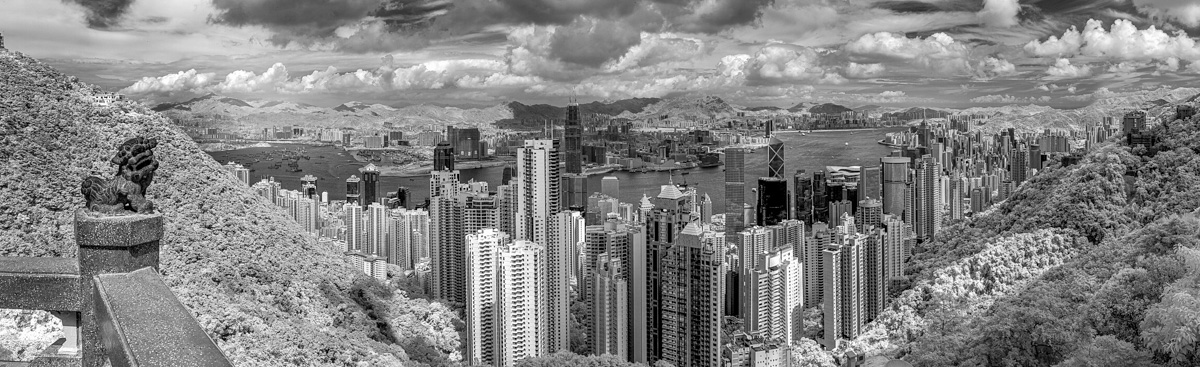
My introduction to infrared photography—both the inspiration and the activation—began in Hong Kong several decades ago. Infrared photography is a fascination that has stayed with me ever since, tracking alongside the generational leaps in digital photography over the last thirty years.
In 1989, I made my first trip to China to install computer systems in support of the Hainan Gas development project. The work itself happened near Shenzhen in the PRC, but Hong Kong was the stepping stone, the place where every journey into China truly began.
As a kid, I grew up with an almost mythical view of Hong Kong. In the mid-seventies, when we moved to Cyprus, we found ourselves in the middle of a British expat community, and many of them had lived in Hong Kong. I listened to their stories—this improbable city-state with its polyglot energy, its collision of British formality and Chinese dynamism, its neon heartbeat. By the time I finally visited in my mid-twenties, the place lived up to all of it. It was a transformative experience.
Hong Kong became a frequent port of call over the next few decades, and my visits always included a pilgrimage to the photography stores of Mong Kok along Nathan Road. Those stores were temples of photographic innovation, carrying Japanese gear often before it would ship in the United States—and at prices that made your wallet sing. On one of those visits, in late 1999, I walked out with a brand-new Contax 645 and a trio of Zeiss lenses.
I shot extensively with the Contax, almost entirely on Velvia 50 and 100, until 2003 when Kodak bestowed upon the world the 16-megapixel DCS Pro Back 645C. I’d already dipped a toe into early digital, but this was end-game technology at the time. High-resolution digital, married to the Contax and Zeiss glass, felt like alchemy. Even today, I’d argue that this unique combination of glass, CCD, pixel pitch, color fidelity, and sheer resolving power would still hold its own.
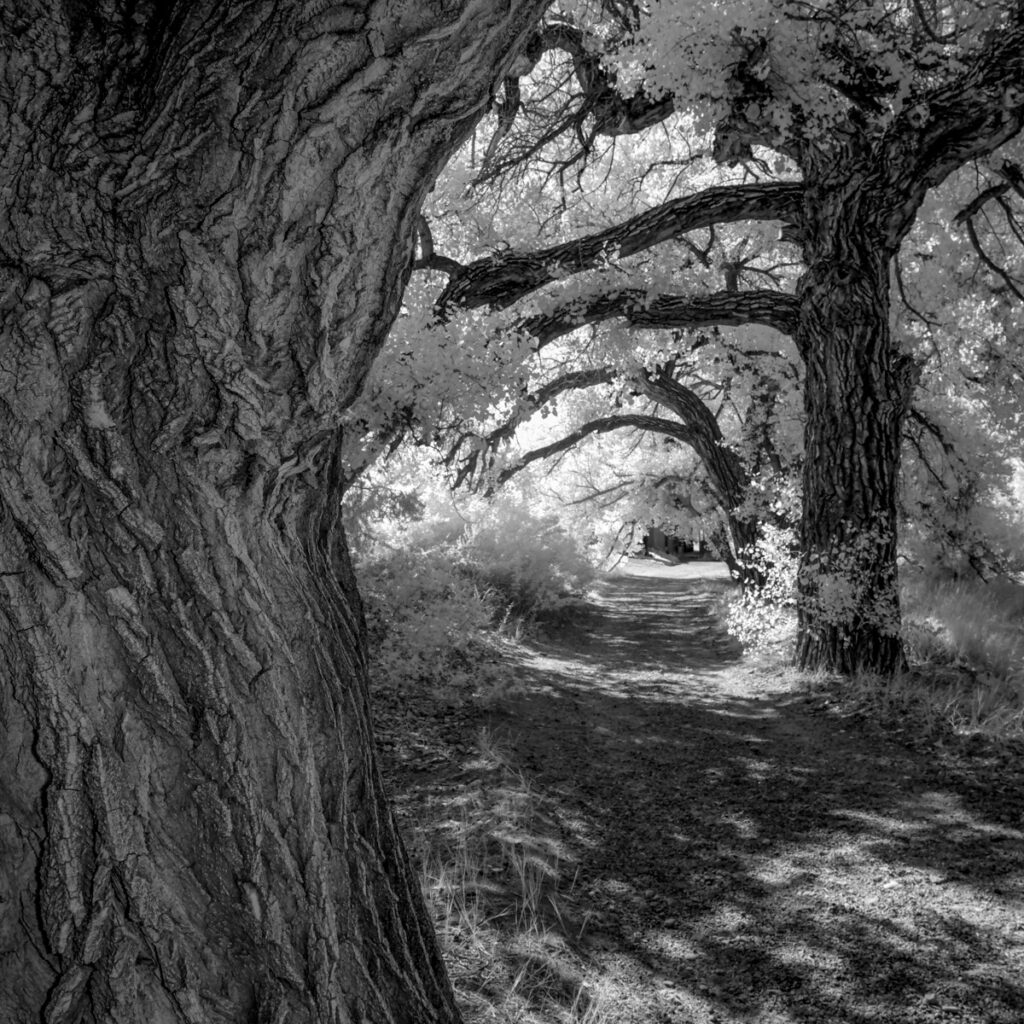
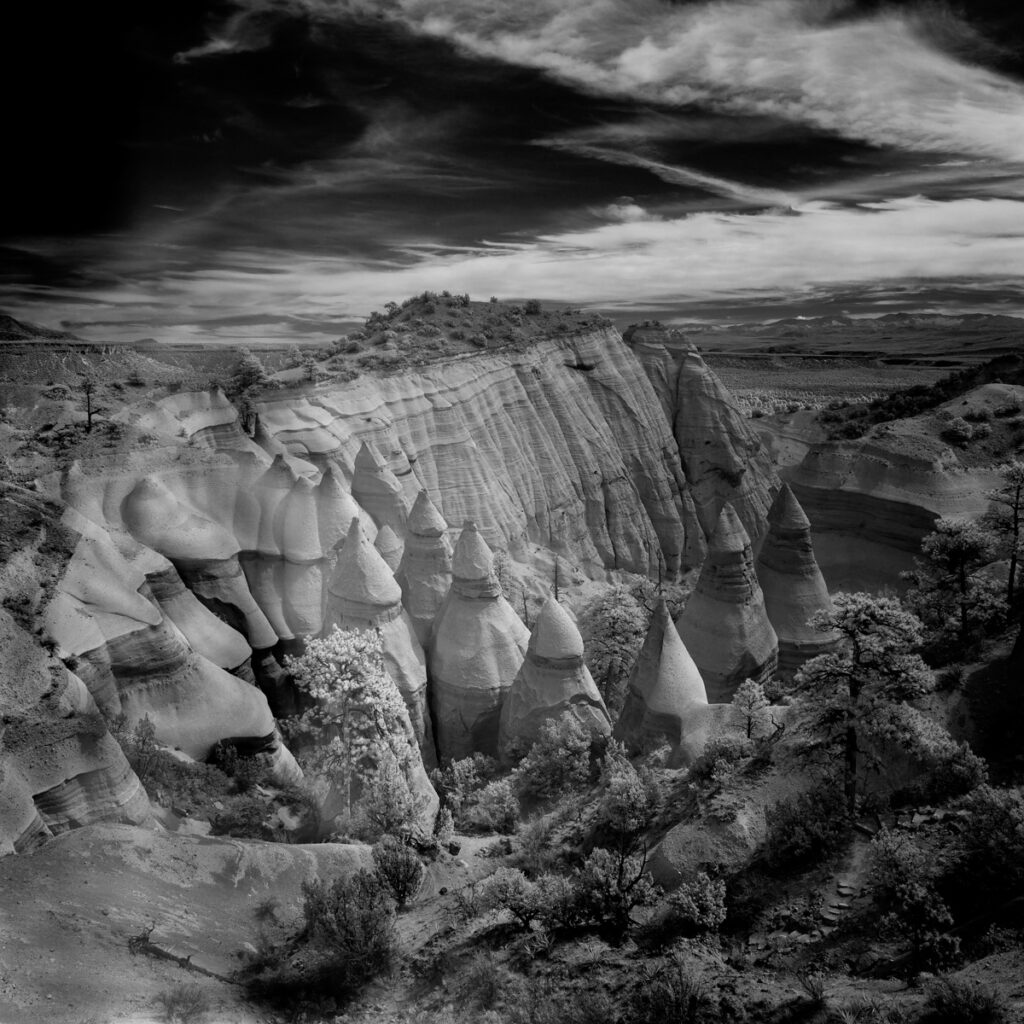
But the DCS Pro Back 645C—and specifically that model—had a trick up its sleeve. Its IR hot mirror could be safely removed by the user, without risk of damaging the camera. Paired with the inherrent infrared sensitivity of CCD sensors, it became an absolute monster for IR work. Even with an R72 filter on the lens, the sensitivity was nearly identical to daylight capture. It was a revelation.
And that’s how my journey into the world of infrared truly began. I never looked back.
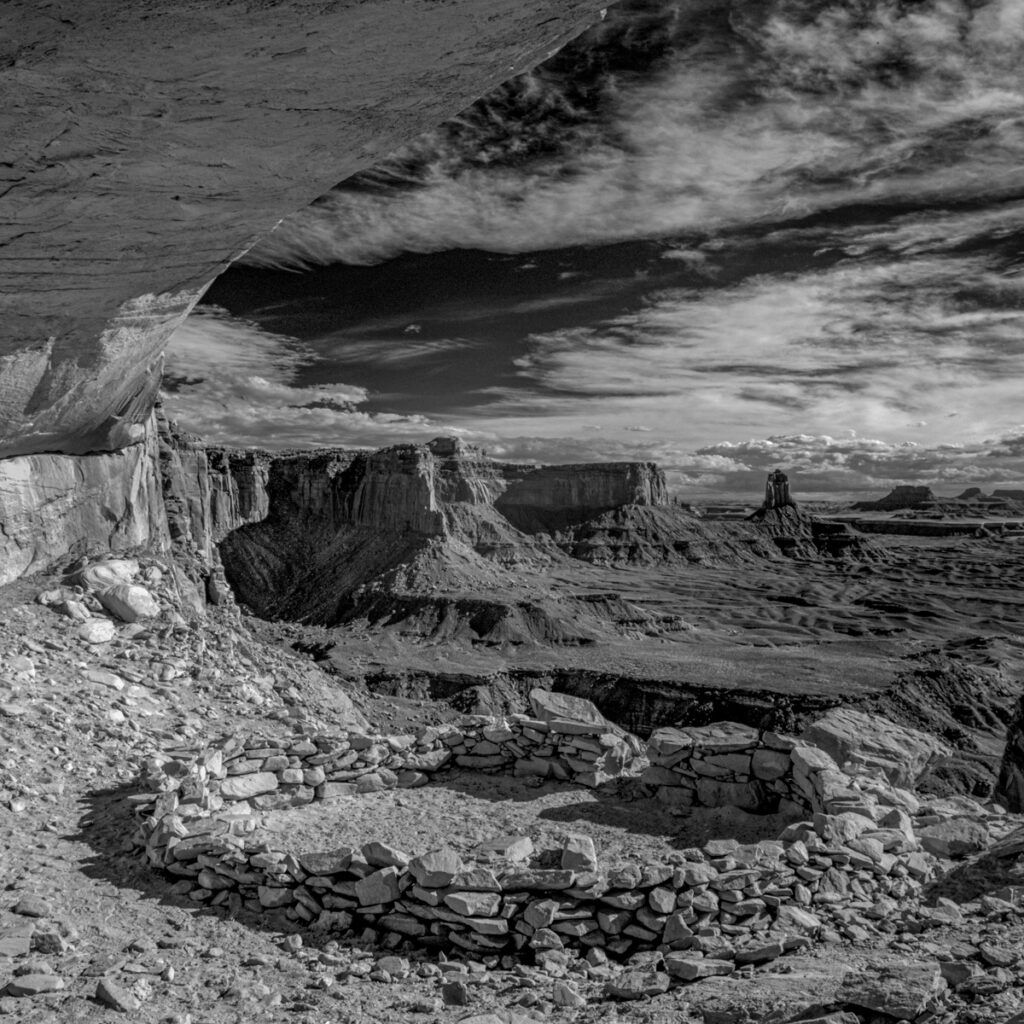
In the years since, I’ve owned full-spectrum conversions of Nikon DSLRs, Phase One backs, Sony mirrorless bodies, and most recently my original Hasselblad X2D after upgrading to the X2D 2. Being able to shoot 100-megapixel IR files is extraordinary—but part of me still yearns for that original pairing of Contax and Kodak.
Letting go of my DCS Pro Back 645C is one of my great photographic regrets. I still have my Contax 645, but 645Cs are rarer than hen’s teeth these days. If you happen to know of someone looking to part with theirs, please let me know. I’d happily bring one back home.

Infrared has always felt like a form of seeing beneath the surface—a way of revealing something the everyday eye can’t quite grasp. Maybe that’s why it stayed with me. Every time I shoot IR, I’m reminded of those early days: wandering the neon noise of Mong Kok, unboxing that Contax in a Hong Kong hotel room, and later pulling the IR filter from the Kodak back for the very first time. It felt like discovering a hidden layer of the world.
Three decades on, IR still gives me that same sense of discovery. Cameras have changed, resolutions have soared, and sensors behave differently, but the magic remains. Maybe that’s why I still pine for the old Kodak—because it wasn’t just a tool. It was the gateway, the catalyst that opened a path I’ve been following ever since.
And the truth is, I’m still following it. IR keeps teaching me new ways to see, to interpret, to pay attention. It reminds me that the world has more layers than we notice—and that sometimes the most interesting stories begin when you look beyond what the visible spectrum is willing to give you.
Share this post:


Comments
Gabriele Coassin on My Gateway to Infrared
Comment posted: 31/12/2025
It takes me back to my crazy experiments with infrared photography, both black and white and color, in the mid-1970s.
When I first saw Minor White's IR work, a world of beauty opened up to me, which I find here in these super-wide photos by Jonathan Murray. The reference to digital infrared is very interesting. But I remain attached to film photography, even though it's cumbersome and slow at every step to achieve the final work.
Thanks again for this beautiful summary and stunning images!
Comment posted: 31/12/2025
Eric Rose on My Gateway to Infrared
Comment posted: 31/12/2025
Comment posted: 31/12/2025
Neal Wellons on My Gateway to Infrared
Comment posted: 31/12/2025
In additional to digital (I shot with an adapted FujiX100s), i shot IR with many film cameras before mostly settling on a Holga 120 with 720nm filter. I love it too and hope this article adds more converts to a really fun and rewarding genre.
Comment posted: 31/12/2025