

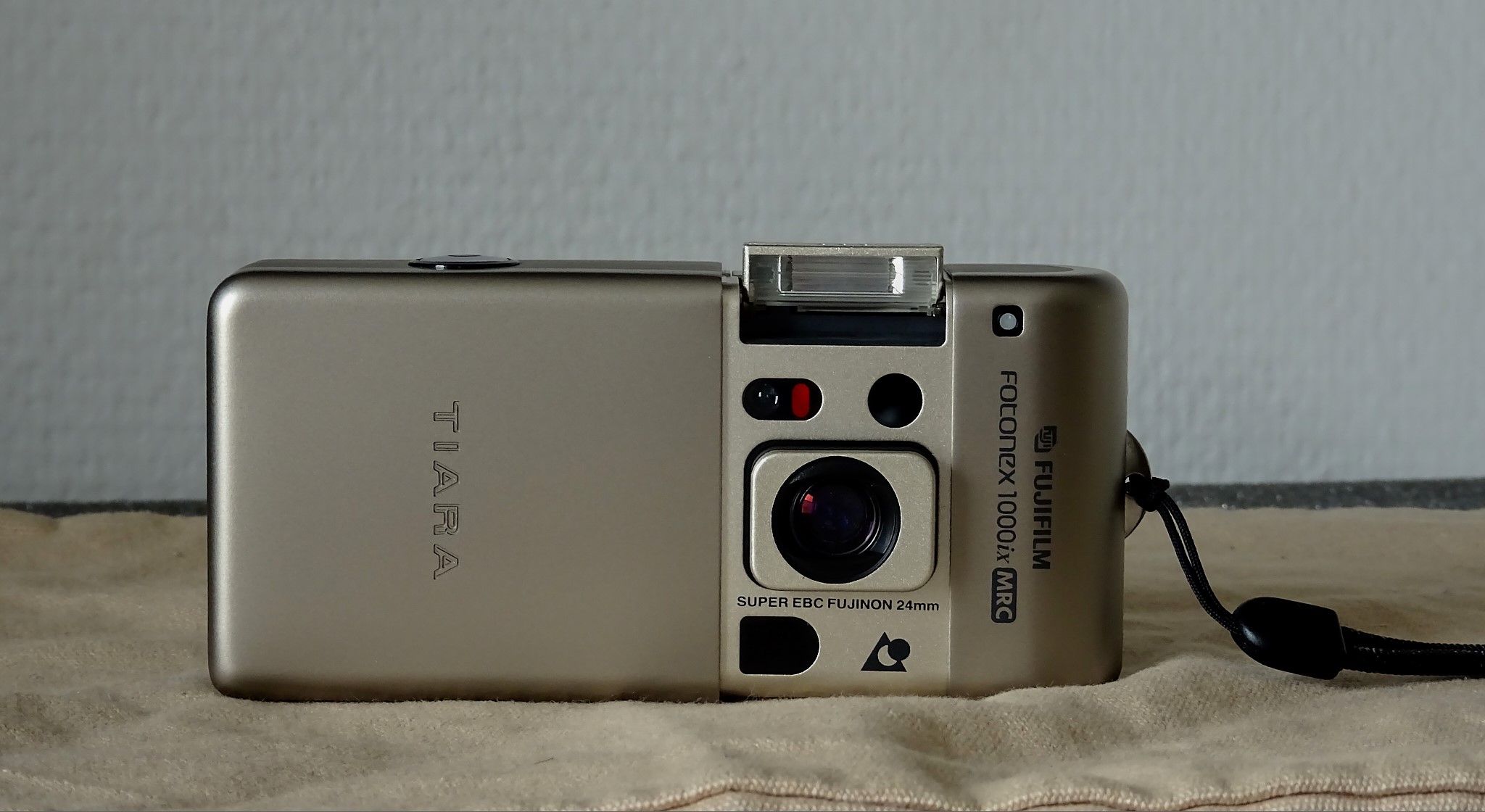
On 23 November 2025, our friend John Andrews showed us some of his fantastic photos taken with an APS film camera. Wonderful shots. We exchanged ideas, because, as befits a GAS victim, I also have three APS cameras in my collection. John recommended that I expose a roll with them again. While I was thinking about it, it started to rain outside and I began writing this article. My fourth report in 35mmc.
With the APS format, the camera and film industry wanted to save what was unstoppable: digital photography. The manufacturers’ cameras were all small, packed with technology from 1996 to 2011. In addition to this Fujifilm, I also own a Contax Tix and a simple Konica model. All of them have very good lenses.
This is the Fujifilm Fotonex 1000ix Tiara, which can be seen above in its unfolded state. To my knowledge, it was probably the smallest camera in the APS series. I had inserted a Fujifilm APS Nexia A200, the photos were taken in 2018, the film had already expired then.
Once the film canister is placed in the camera, advancing is automatic, as is the rewinding process later on. Exposed negatives remain safe in the canister too. My minilab can develop this format where scanning is done with a Noritsu scanner.
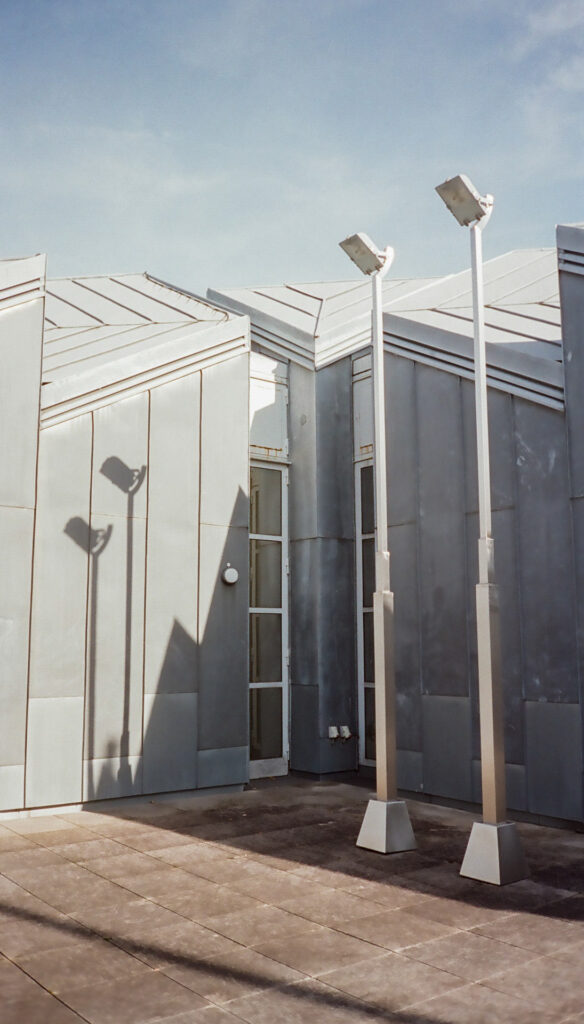
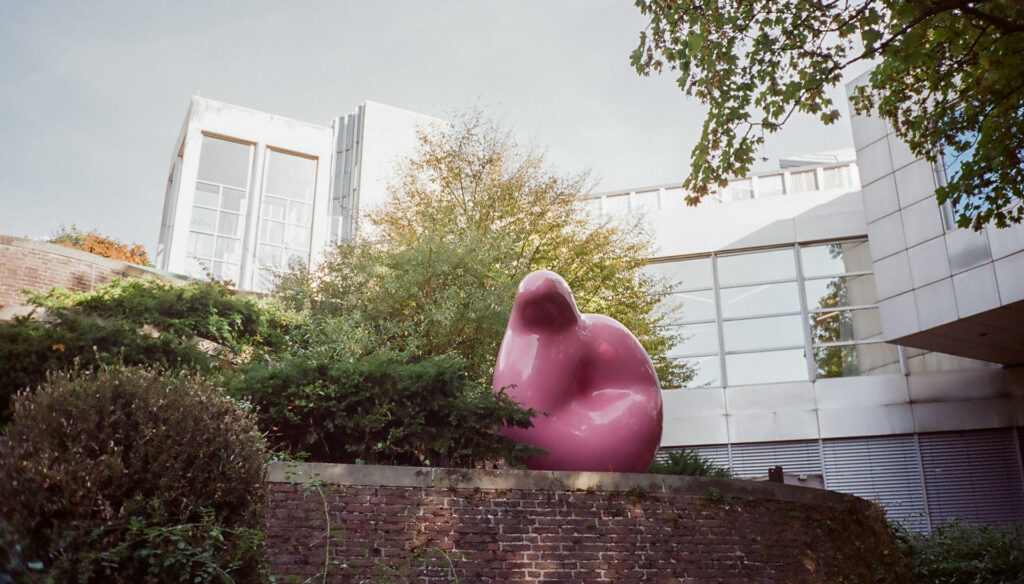
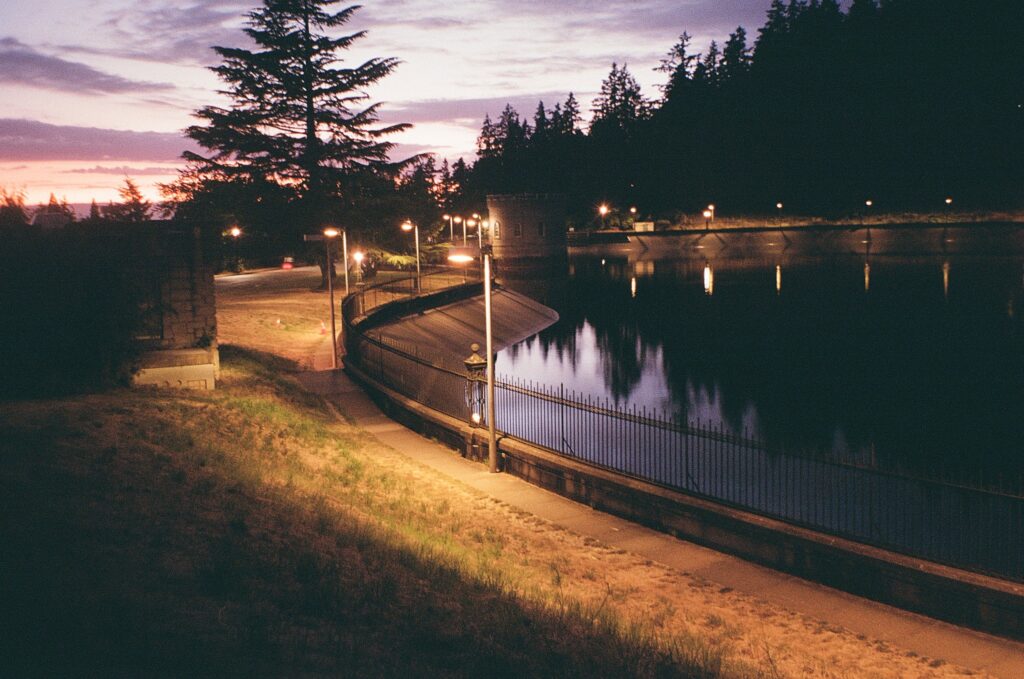
These five photos of mine were taken, like those in my second article, in the vicinity of the Museum Abteiberg in my hometown of Mönchengladbach. This allows for a comparison with the photos taken with the Nikon F2 and Kodak Ultramax 400.
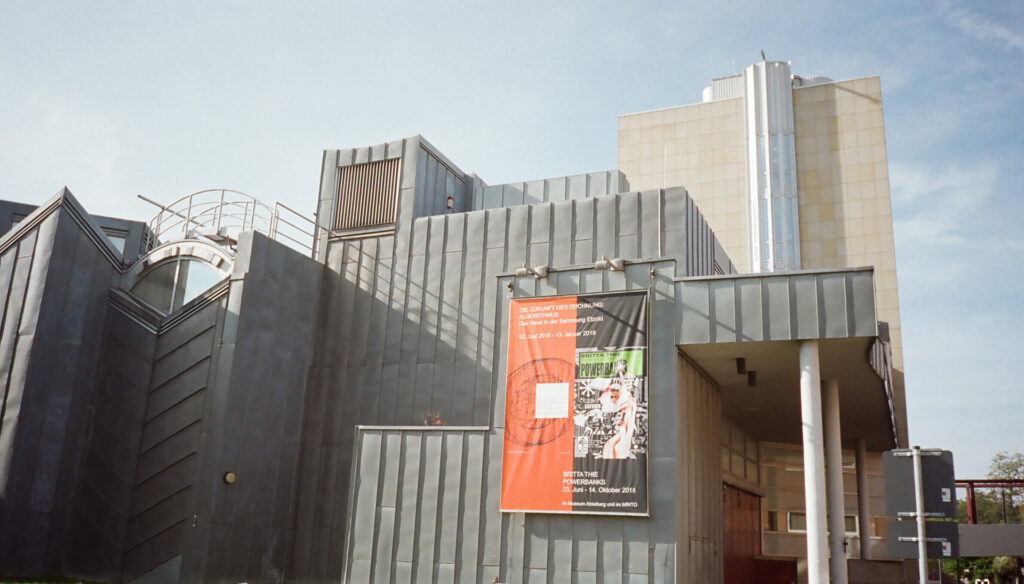
The museum building is one of the most architecturally beautiful museum buildings in Europe. The architect was Prof. Hans Hollein from Vienna, Austria. What you see here is a side façade, which is actually temporary, as there is no money available for the extension that was already planned when it was built. Not then, and certainly not now. So you get used to it.
The museum is built on a slope, the so-called Abteiberg, the founding site of the city with a monastery and church over 1000 years ago. The other side of the building is easily accessible via a large platform. This plated area is the roof of part of the building. The laid slabs are made of soft material and get dirty very quickly. The architect knew this, but wanted it that way.
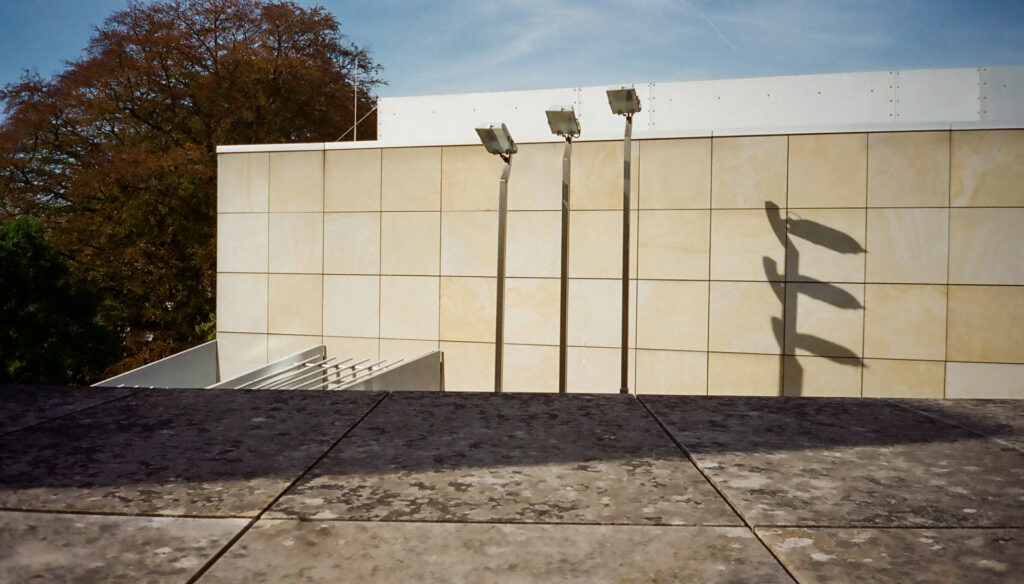
The floor tiles have been replaced twice since completion in 1982. But you get such nice patterns for photos, and the sun also contributes to this.
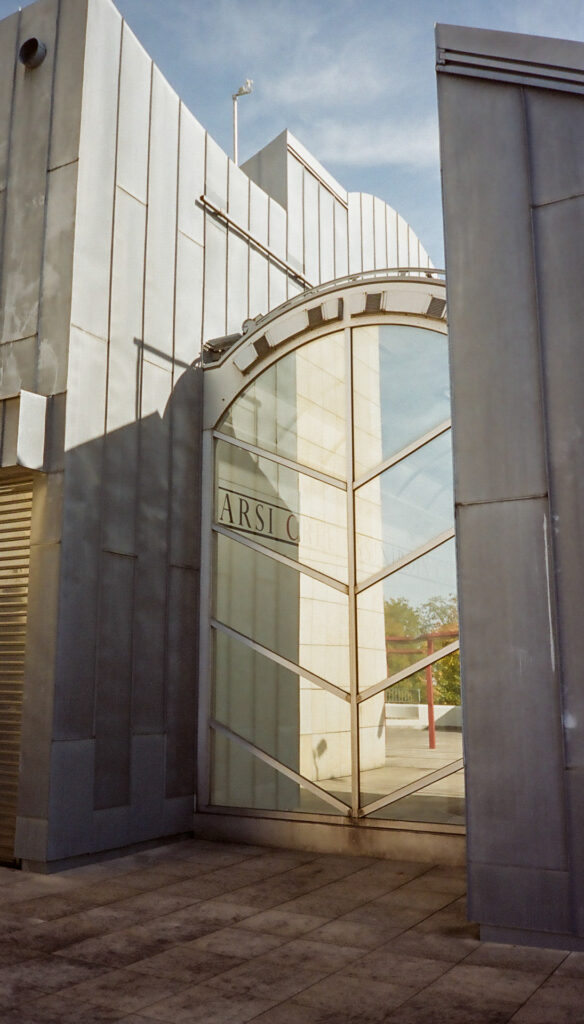
The architecture and the different shapes in combination with sunlight allow you to quickly expose a roll of film.
From the roof or platform of the museum, you can access the lower sculpture garden, which offers a view of the museum and its administration tower. But the main attraction is probably the sculpture by Claes Oldenburg, the world-famous artist born in Stockholm, Sweden, in 1929, who died in New York in 2022.
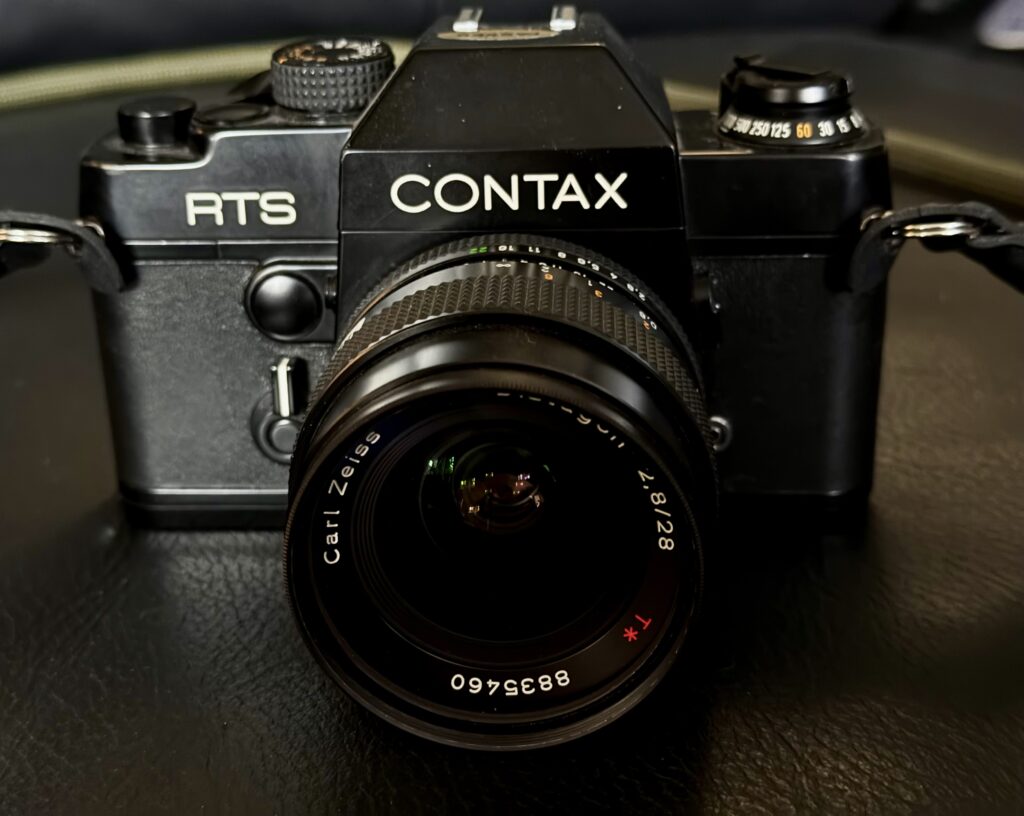
I would love to hear your thoughts on the article and photos. Many thanks to John Andrews for the suggestion. Nevertheless, I will be exposing another roll of APS film in the near future, probably with my Contax Tix, which, as I have discovered, hardly anyone knows about. Despite the fact it hasn’t been produced for a long time I still have enough expired film boxes in the fridge.
Thank you for reading.
Share this post:


Comments
John Andrews on 5 Frames with an APS film camera – the Fujifilm 1000ix Tiara
Comment posted: 19/12/2025
Comment posted: 19/12/2025
David Hume on 5 Frames with an APS film camera – the Fujifilm 1000ix Tiara
Comment posted: 20/12/2025
Comment posted: 20/12/2025
Kodachromeguy on 5 Frames with an APS film camera – the Fujifilm 1000ix Tiara
Comment posted: 20/12/2025
Comment posted: 20/12/2025
Sean Benham on 5 Frames with an APS film camera – the Fujifilm 1000ix Tiara
Comment posted: 21/12/2025
I’m actually sad they stopped making this film despite the fact that many developers can still develop it! And because of its convenient format I kept all those processed canisters and about 8 years ago had all of them scanned to JPGs!
Now today all these incredibly compact APS cameras are just left sitting of shelves. I truly wish it would make a comeback.
Thanks for the walk down memory lane for me!
Comment posted: 21/12/2025
Omar Tibi on 5 Frames with an APS film camera – the Fujifilm 1000ix Tiara
Comment posted: 21/12/2025
Funny that you mention the Tix - that would've been my suggestion for another camera to try. I've seen them available for very cheap and I've been tempted, but the lack of film keeps me away. Therefore I'm really curious as to how your shots on that will turn out.
Happy shooting Walter and thanks again for all your posts!
Comment posted: 21/12/2025