

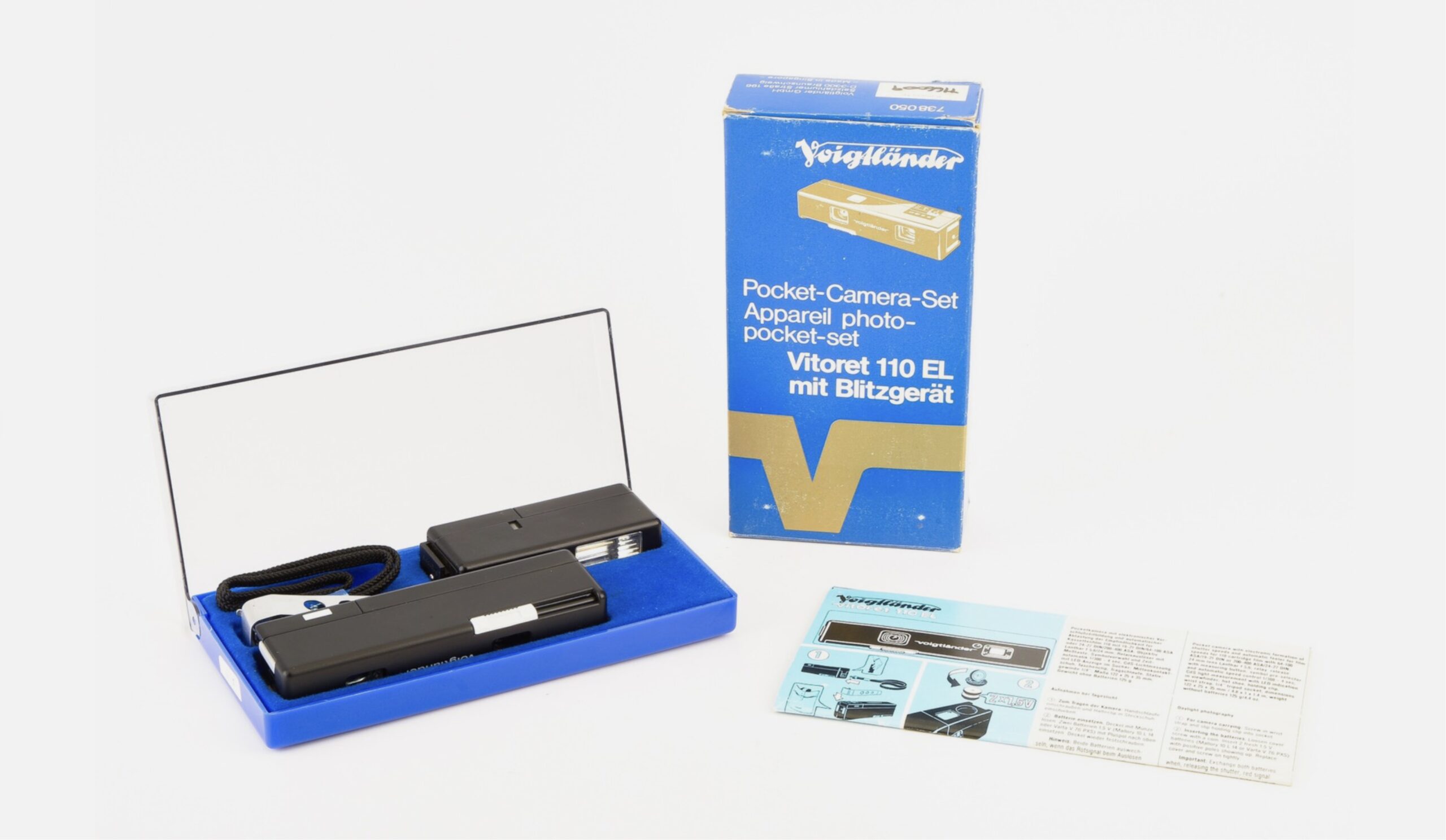
Image from a listing of the Voigtländer Vitoret 110 EL
How many different ways are there to source a vintage camera or lens? While there are more than just these five, I will just cover those I have tried.
First there are venues where you can actually see and touch the object: a repair shop and a camera store. Then there are others that offer goods online “auction” sites and retailers with a presence. And finally there are agents who will, for a fee, source a camera or lens for you. And yes, there are cameras and lenses in my collection from all five sources.
Assembling a camera system
Just because you want a camera and a lens, it does not have to come from the same place. Sure it is easier but maybe one source has a body and the other lenses. That was the situation with one particular camera and two lenses that came from two sources: the body through an online retailer, and lenses from Japan, through an agent. The camera in question – a Leica CL body. The lenses, a Minolta 2,8/40mm and a 4,0/90mm. Apparently Japan is a good source for lenses, in this case a Japanese brand. While the body came from a trusted online retailer, part of the note to the agent summarises the reasons for using their services:
Your fee was certainly fair. You saved me a great deal of work sorting through the offerings, looking at past sales and examining the seller’s track record. Unlike other purchases, this one was far less stressful and time-consuming. I’ve had to CLA two cameras, return two and report two scams. It is difficult to find cameras in good condition [**** is rather good] and problematic to buy from sellers with few sales. I was lucky with one purchase from a private seller who included a +2 Closeup lens and film with the Autocord.
I bought the 40mm first, and returned to them for the 90mm.
IRL shops
The two purchases from IRL retailers were quite by chance.
One repair shop had a Ricohflex Dia TLR on offer at a decent price, to complement two other TLRs, a Rolleiflex 3,5F Planar and a Minolta Autocord. The Ricohflex has since come apart in pieces and is waiting to be reassembled once the screws are sourced.
The other camera from a shop was an impulse purchase: the Kodak 1a Vest Pocket (ca 1928, a 116 format) and the subject of this post. I just happened to find the shop on a trip to a Los Angeles suburb. Why this one? A friend with me suggested going in. And there it was – a Kodak folder. It was not the first folder or the first Kodak – a Kodak Duo 620. Thanks to a cellphone, I did enough research to determine the film format and rough date but did no research on pricing etc. But it was not very expensive. Yes the camera needed a 120 to 116 adapter, since 70mm film is not commonly available. That purchase led to another 116 camera – a Voigtländer Iinos ii with Skopar 10,5cm/4,5.
Online resellers
I have ordered from standard online retailers, one in the states and one in Finland, both were positive experiences. Why Finland? I found a writer I liked on website like 35mmc. In their last article, they mentioned moving to Finland to work at an online reseller. Since then they have appeared in YouTube videos for the shop, for example this one.
I used to buy cameras and lenses free of import duty. But now with the nickel-and-dime tariffs, buying film cameras and lenses outside the states is problematic. Canada is still iffy, after the hissy-fit and the House of Representatives response striking down the added tariffs.
Auction sites
The auction site is more problematic, as noted above. I have bought several items from one seller, which turned out to be faulty – a Rollei 35 and a Leica iiig. Fortunately the seller had a return policy. And yes, there have been some cameras that were not as described, with partial refunds.
But buying there requires due diligence. Check the rating. Stick to those with close to 100% feedback. Examine the negative ratings. And then compare the product and price to other offerings and to previous sales, if available. Above all look at the images and read the description.
Definitely read the camera manual. There are two good sources – the extensive Butkus site and, recently discovered, submin.com for subminiature cameras. The manuals on submin are more difficult to print since they are jpg images of the pages that are easy to view online but more problematic to assemble. I print them by creating a PDF by assembling screen shots of each page.
All of this requires a great deal of work. And even then there have been mistakes. One recent purchase of a Minolta Autopak 500 (a 126 camera) had an issue – the tab for the aperture had broken off but could be turned using a small tool,
Guess I’ve been lucky, but I avoided “bid” items, considered bidding too stressful.
Bidding
In November, relented to buy an Olympus Pen S, successor. to the Olympus Pen. While Japan had the bulk of the offerings, preferred to look state-side to avoid larger shipping charges and import duty. Did due diligence.
While one stood out, it was an auction with opening bid and buy-now price. The description appealed:
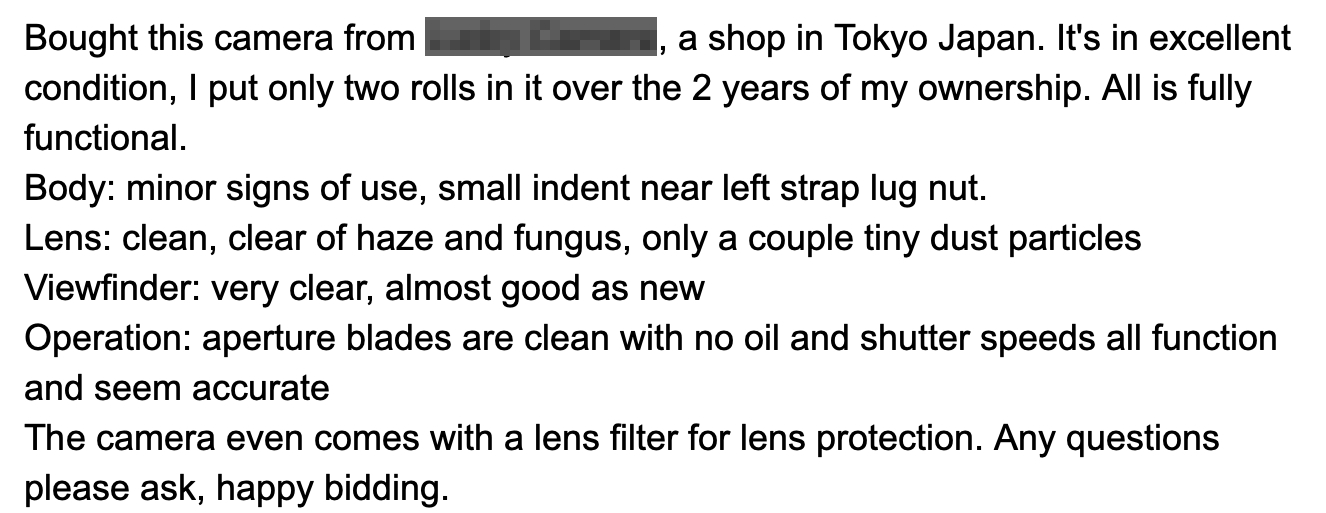
The description clinched the deal. Overcame the fear of bidding, using a proxy bid system to reduce some of the stress. Specified the maximum amount to spend – an odd amount close to Buy Now. It did the rest. To further reduce stress, checked 30 minutes before the end [no bids] and looked at email hours later. With no other bids, bought the camera for the starting bid, even with shipping and state tax, for under 85$US. Upon arrival, found it was in relatively pristine condition. It’s cute and it works.
An example
A recent purchase may prove instructive. Having fallen down the 16mm rabbit hole, I decided to explore offerings in the 110 space. I already had the Rollei A110, and Rollei E110 designed by Heinz Waaske. Waaske designed a number of cameras for Rollei including the Rollei 35, with which I did not bond. Liked Waaske’s minimal style and design vocabulary.
Winnowing it down
110 cameras range from the simple (fixed focus, one or two shutter speeds with one or two apertures) to SLR versions with zoom lenses. Frankly many 110 cameras looked ugly, even this Minox 110s, designed by Balda.
Online research led to Dusty Grains 7 Best 110 Cameras of All Time. One stood out – the Voigtländer Vitoret 110 EL. The description piqued interest:
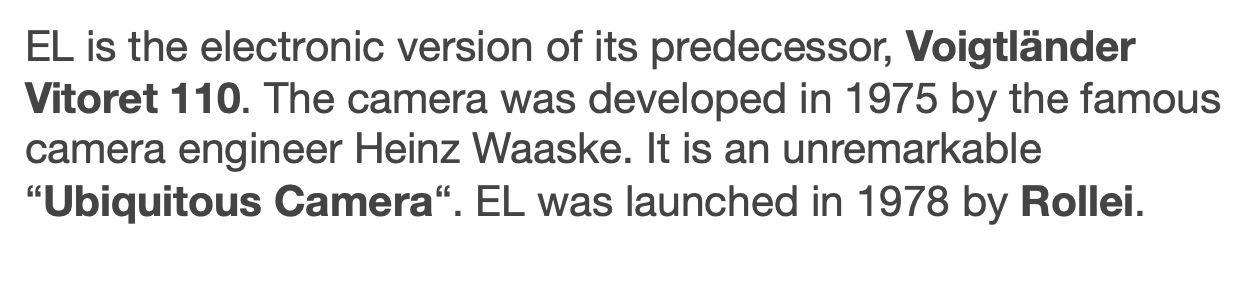
Definitely in the Heinz Waaske design vocabulary. And it was quite unlike the other 110 cameras – small and elegant, definitely warranting a future design discussion. And really simple to use. Choose the aperture, aim the camera and press the button,
Basically the camera is fixed focus with two apertures (5,6 and 11) with a detachable flash.
Likely candidates
With the standard online resellers not having a 110 EL, I was forced to the auction site. Fortunately since there only a few available from the states, there was time to linger over each.
While some descriptions were very brief, this one appealed:
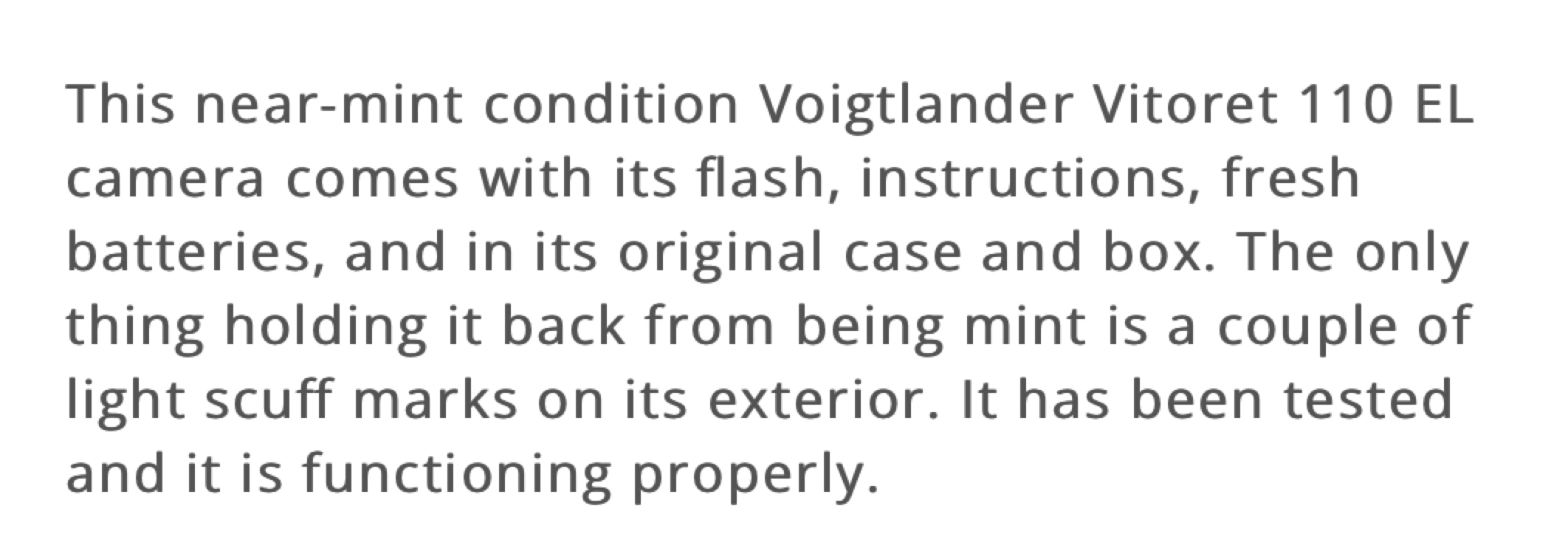
Batteries included. And there were many images. It arrived with free shipping, well packed (with tracking), complete with warranty card. I loaded it with Lomography 110 Tiger 200, it met the test, with the exception of user error – thumb obscuring part of the image.
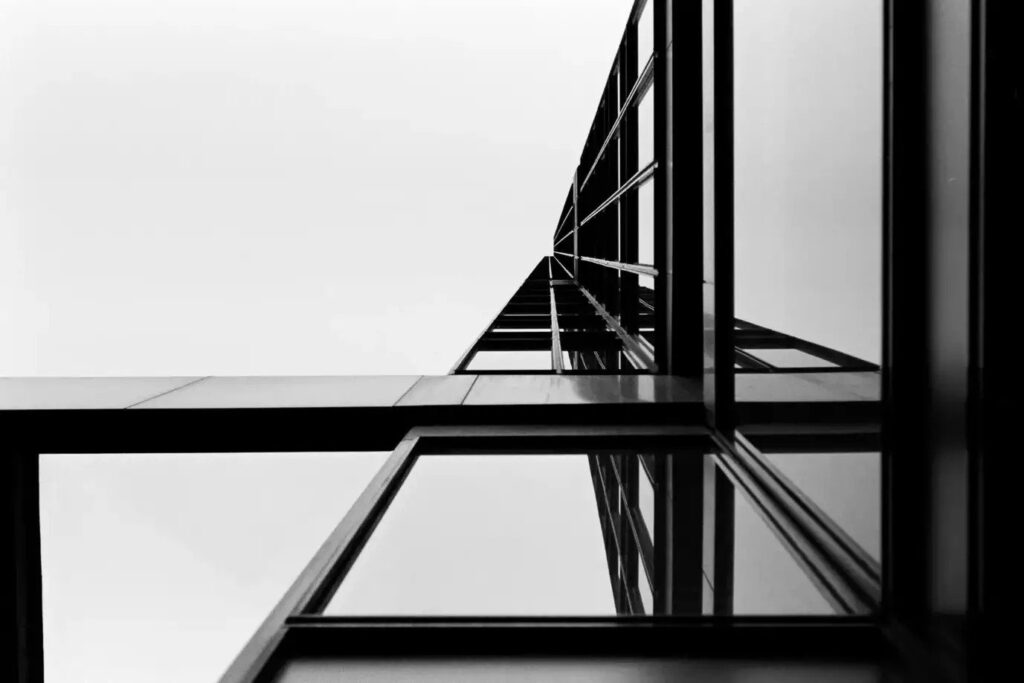
Icon LA (image below) processed the film.
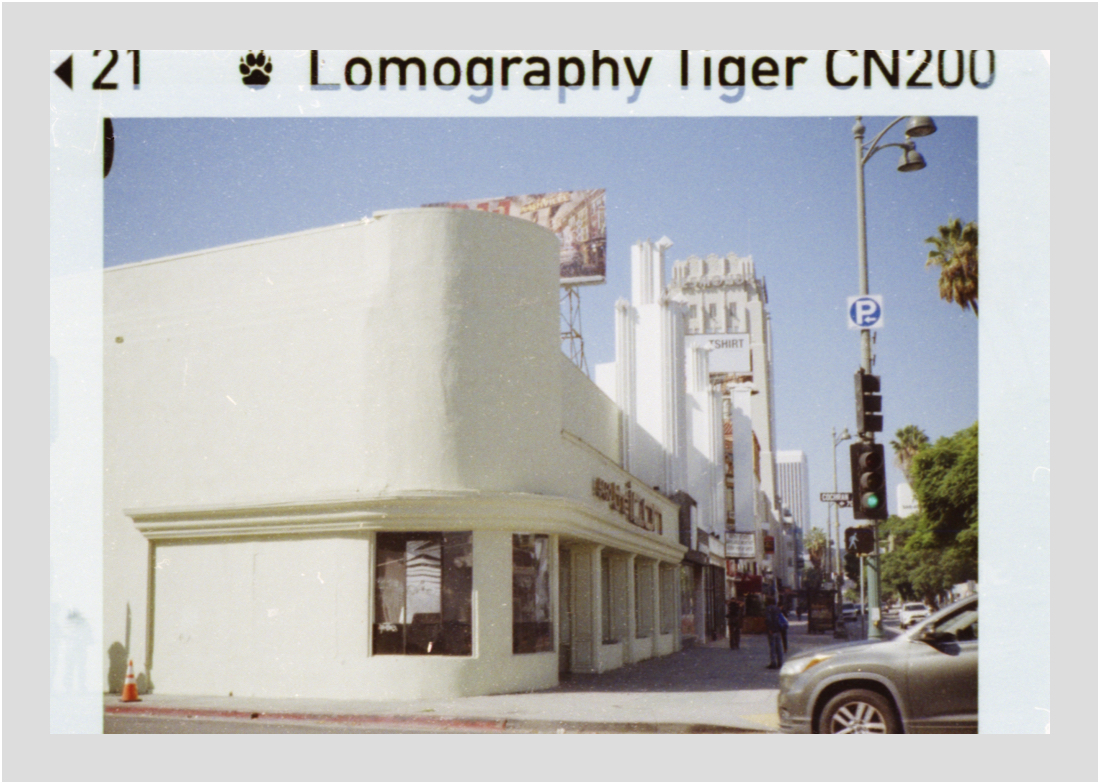
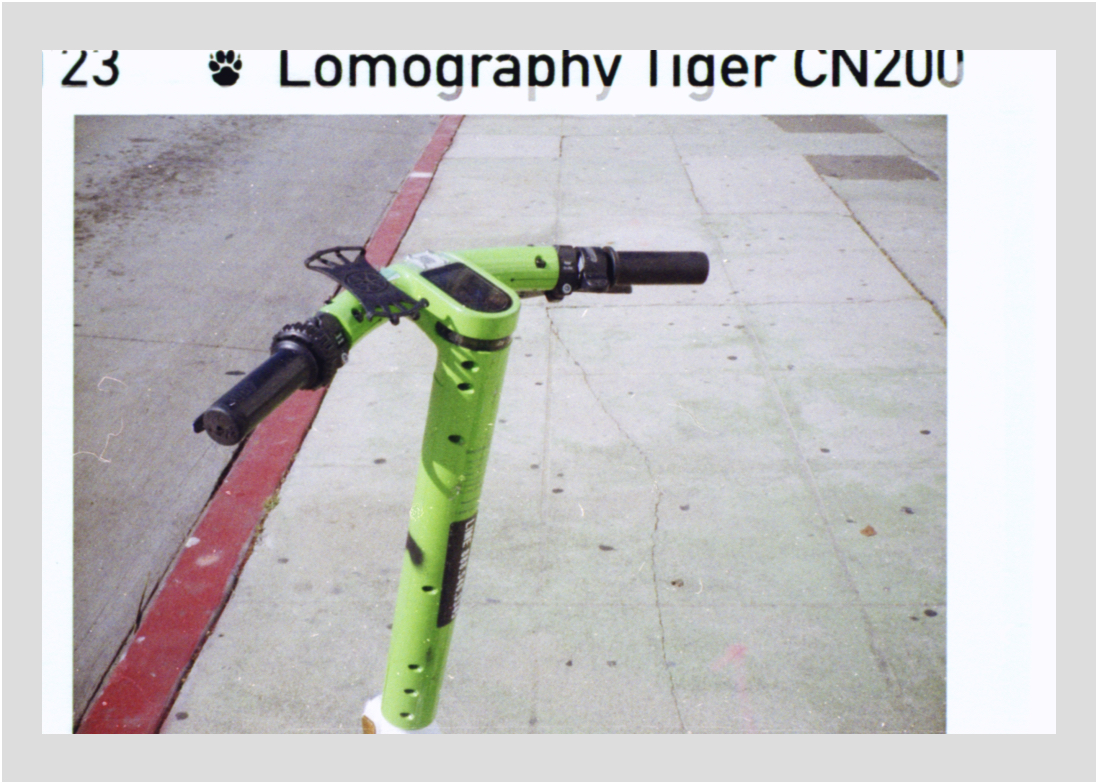
It’s an easy carry – a good purchase, and a success from the auction site, thanks in part to taking my time and doing the due diligence!
Share this post:

Comments
Bob Janes on Some thoughts on Sourcing Vintage Cameras and Lenses
Comment posted: 09/12/2025
My interest in cameras has led to my being given a number of cameras (and lenses) - some have been gems.
Comment posted: 09/12/2025
Jim Hofweber on Some thoughts on Sourcing Vintage Cameras and Lenses
Comment posted: 09/12/2025
Comment posted: 09/12/2025
Gary Smith on Some thoughts on Sourcing Vintage Cameras and Lenses
Comment posted: 09/12/2025
Bob Janes on Some thoughts on Sourcing Vintage Cameras and Lenses
Comment posted: 10/12/2025