

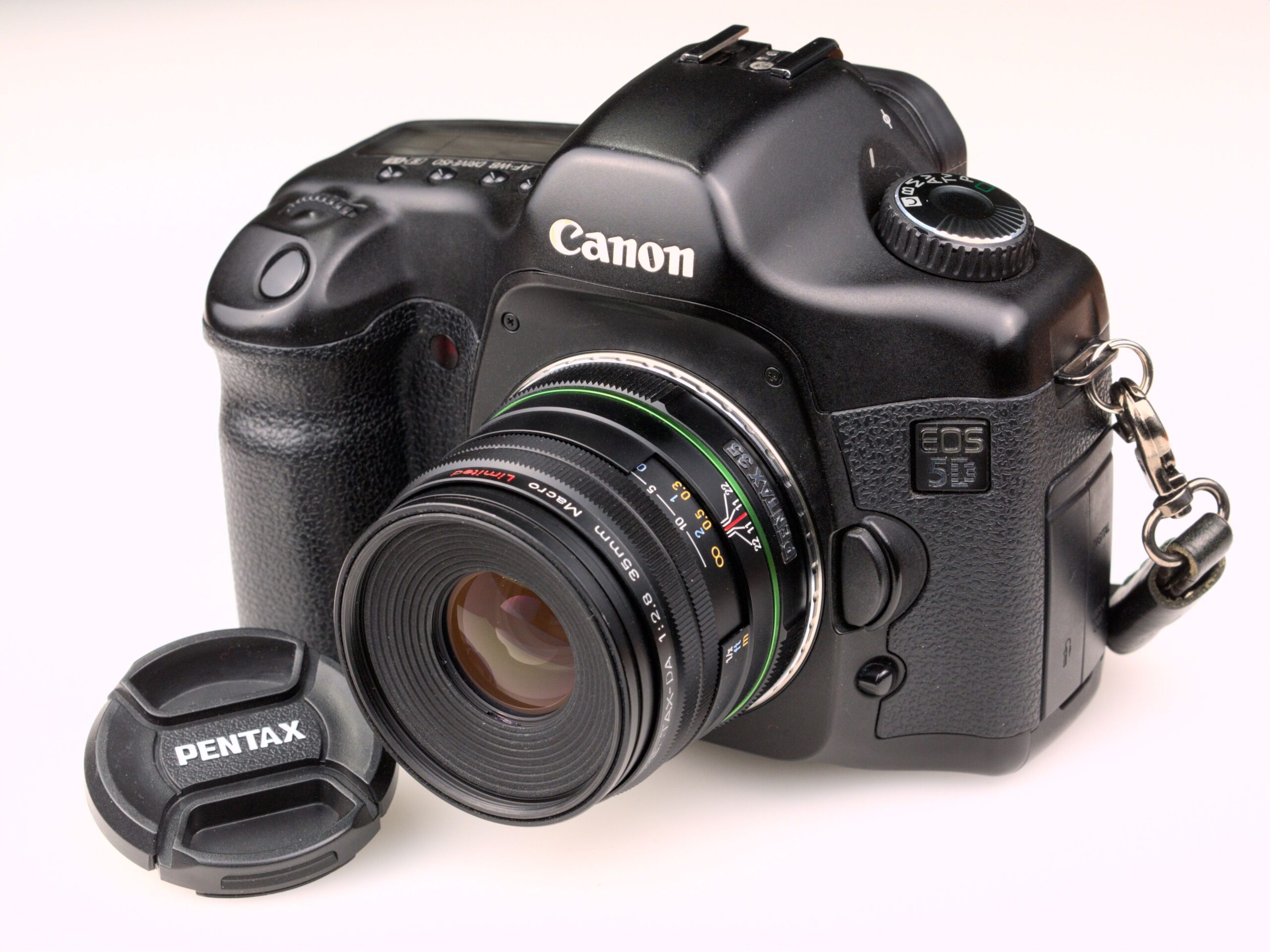
In December 2025, I documented a crafty little project of modifying a cheap Pentax K to Canon EF adapter so the aperture of a DA 35mm/f2.8 macro lens (no aperture ring) could be used on a Canon 5D. My son is in college far across Canada studying goldsmithing and I wanted to let him know I was frivolously using his tools to make something pointless but interesting. So that is where this video came from:
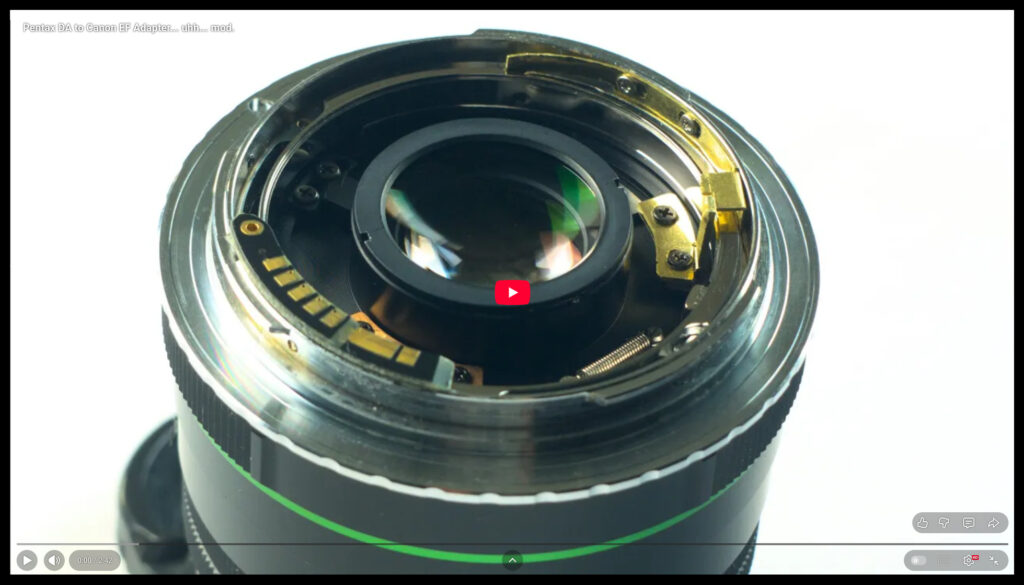
Well maybe not quite pointless but as I write and rewrite this article trying to explain why I did it, I can’t even appeal to my own sensibilities much less those of others.
The reasons I wanted to continue using my Pentax DA 35mm macro are:
-
- my K10D developed acute problems
- I already own the lens
- I already own a Canon 5D
- I like the output of the lens
- I don’t want to buy another crop body
- a K1 costs several multiples of my 5D
- we use the macro capability quite a bit for my digitizing film and print and documenting my son’s goldsmithing work
no need for accessories like extension tubes to go from infinity to 1:1, so no mucking about whether I’m shooting an 8×10 print or one frame of 135 film. - it is known to work very well on full frame at close distances without crop
- I like the close working distance when digitizing film and print
- it is known to work quite well on full frame at longer distances with a bit of crop; around 40mm FOV
- I like 40mm
- my son has all of the tools I need to do this
- since I started using chipped, focus confirming adapters, I quit caring about autofocus; something that didn’t happen with adapted lenses on mirrorless
- I pondered many inexpensive macro lenses that would work on a 5D but rationalized I would feel compelled to sell the Pentax if I rigged up something else, so why do things that are not fun when I can do something that is
- nothing wrong with a bit of pointless fun
So really no good reason but it seemed possible and I wanted to try.
I started by looking for a simple adapter, I swear I did. I knew there were adapters that could control apertures on Nikon G lenses on EF bodies and wondered why they didn’t make something similar for Pentax.
Eventually I came across a Rayqual adapter that had integrated to its flange, a tab that drives the DA aperture tang by simply over-rotating the lens when it is mounted. This was a bit of an “ah-ha” moment for me because I had a cheap eBay adapter in my drawer that was missing the stop screw so a lens would go around continuously on it. When I saw the Rayqual my first thought was “Mine turns like that. I wonder if I could make it work? …” And so it went.
I could have bought the Rayqual adapter but the Pentax aperture tang hits the mirror in a 5D. A new tang is required to keep the conversion non-destructive anyway, so why not make 2 parts?
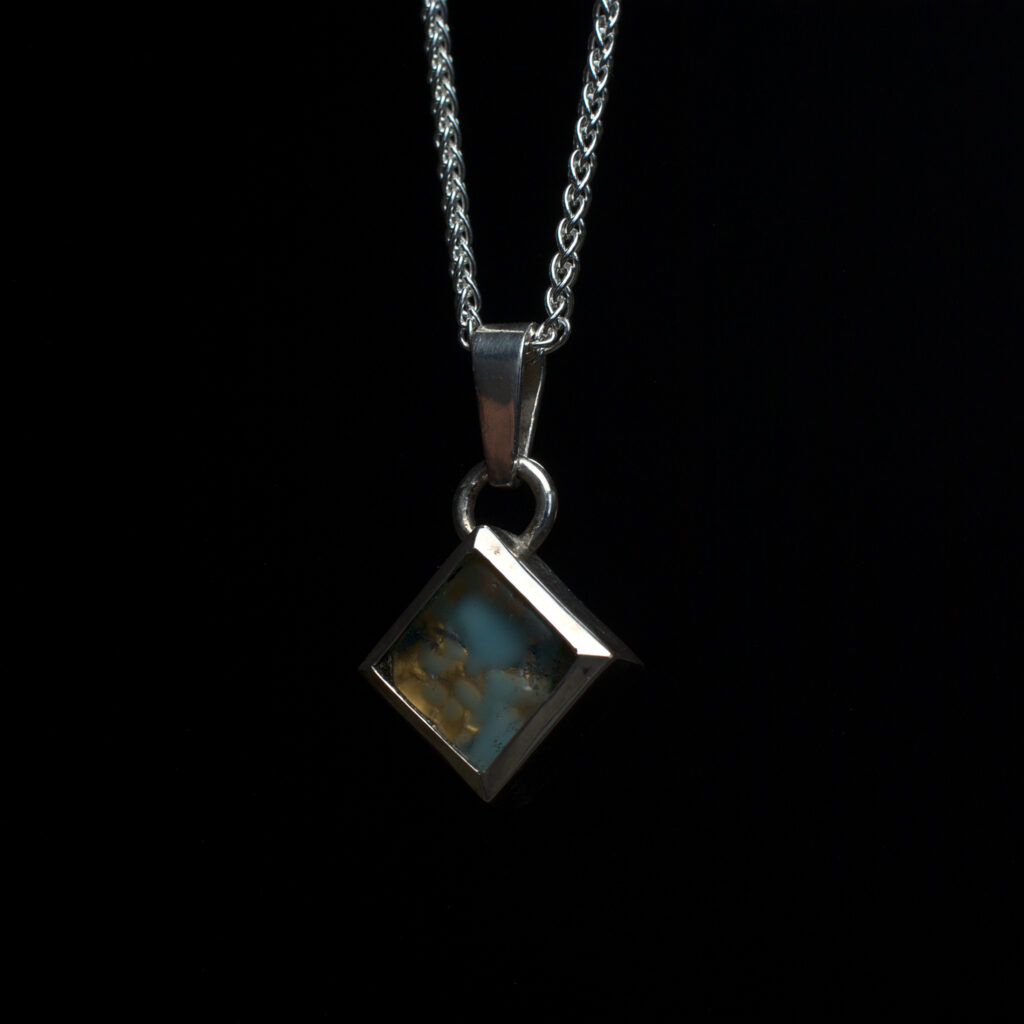
Since my son is practicing to be a goldsmith, we have a full complement of tools thanks to his master and us adding a few things in the last year or so. Being a semi-retired metal worker that used to own a welding and machine shop, I have to admit that parts this small are out of my comfort zone. It really is thanks to my son’s work with small detailed metal things that I would even try this.
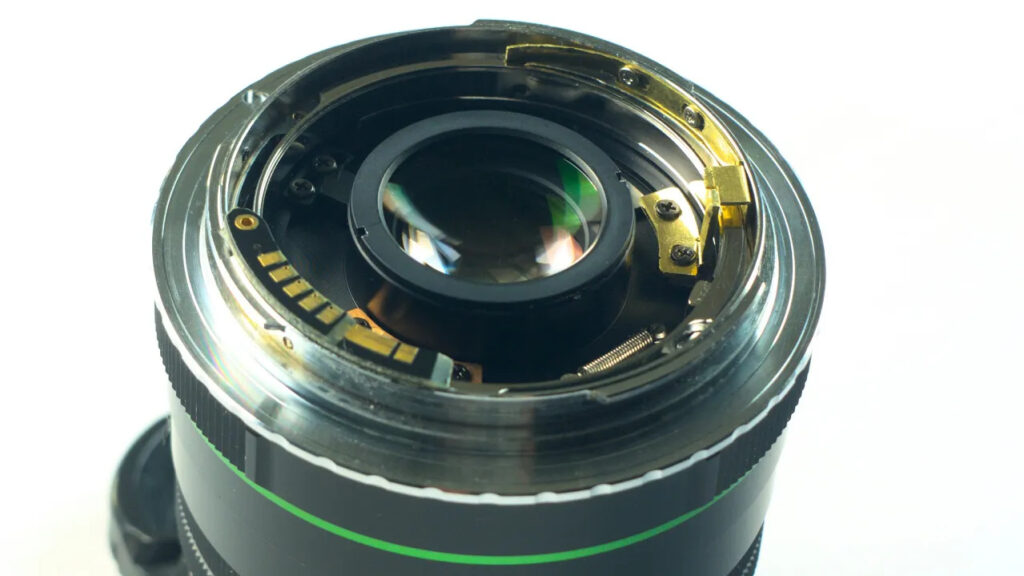
Setting the aperture approximately accurately now requires a process of zeroing the meter with the lens wide open, counting off over exposure stops with any combination of ISO and shutter speed and then zeroing the meter with the lens. Eyeballing the aperture is also an option and I’m getting better at that. So it indeed works.
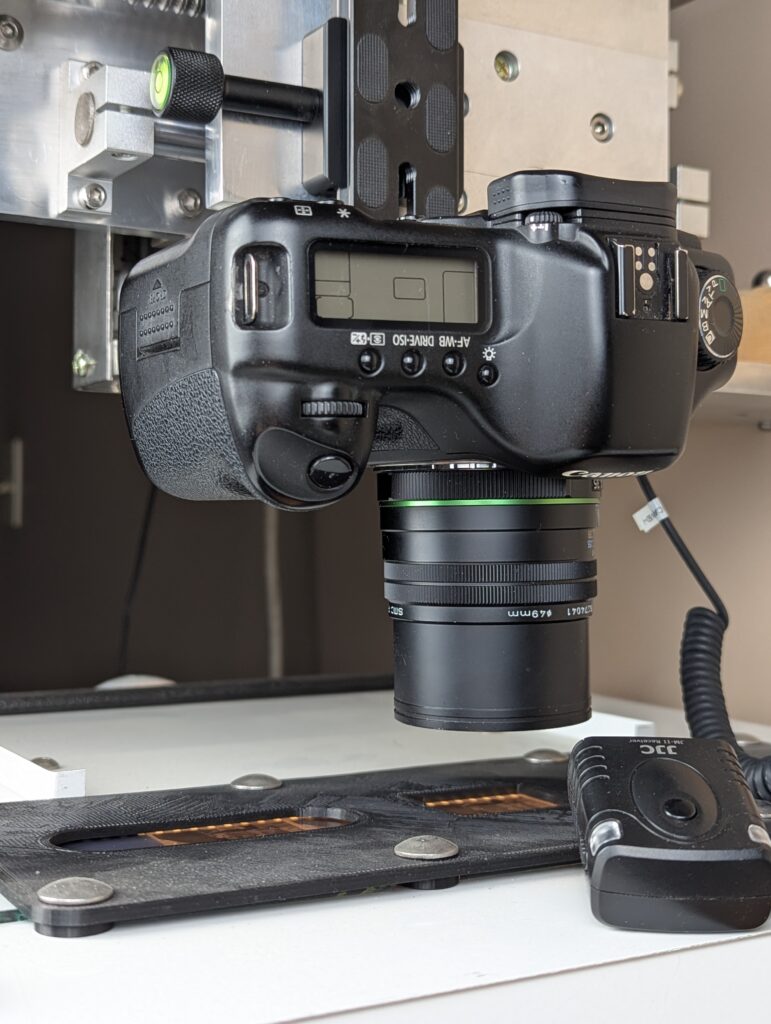
This is about as close as I frame before cropping to suit.
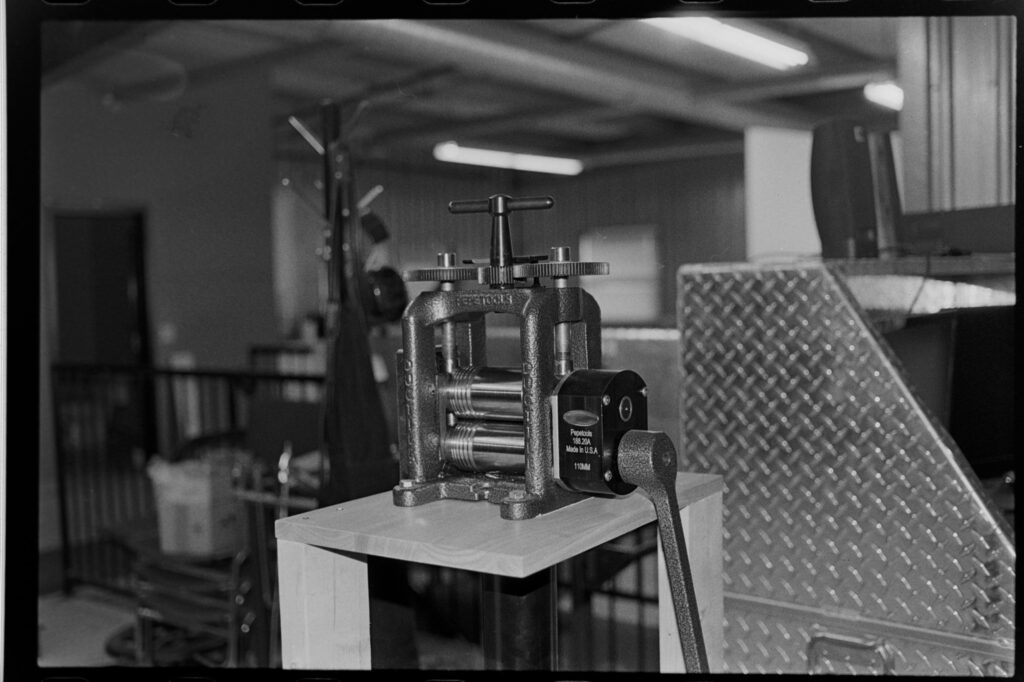
On a closing note: this is just a fun, one off project and I am not prepared to make parts if other people want this. I believe a 3D printed aperture tang will break but if anyone wants to try, I will monitor the comments and can make a file available for it.
Well maybe not a one off… I’m a sucker for tiny lenses. Soon after I finished this, I realized the tiny DA 40mm/f2.8 is also a play I can have with the Canon…
Share this post:








Comments
Marcus Gunaratnam on Pentax DA to Canon EF Adapter Hack
Comment posted: 12/02/2026