

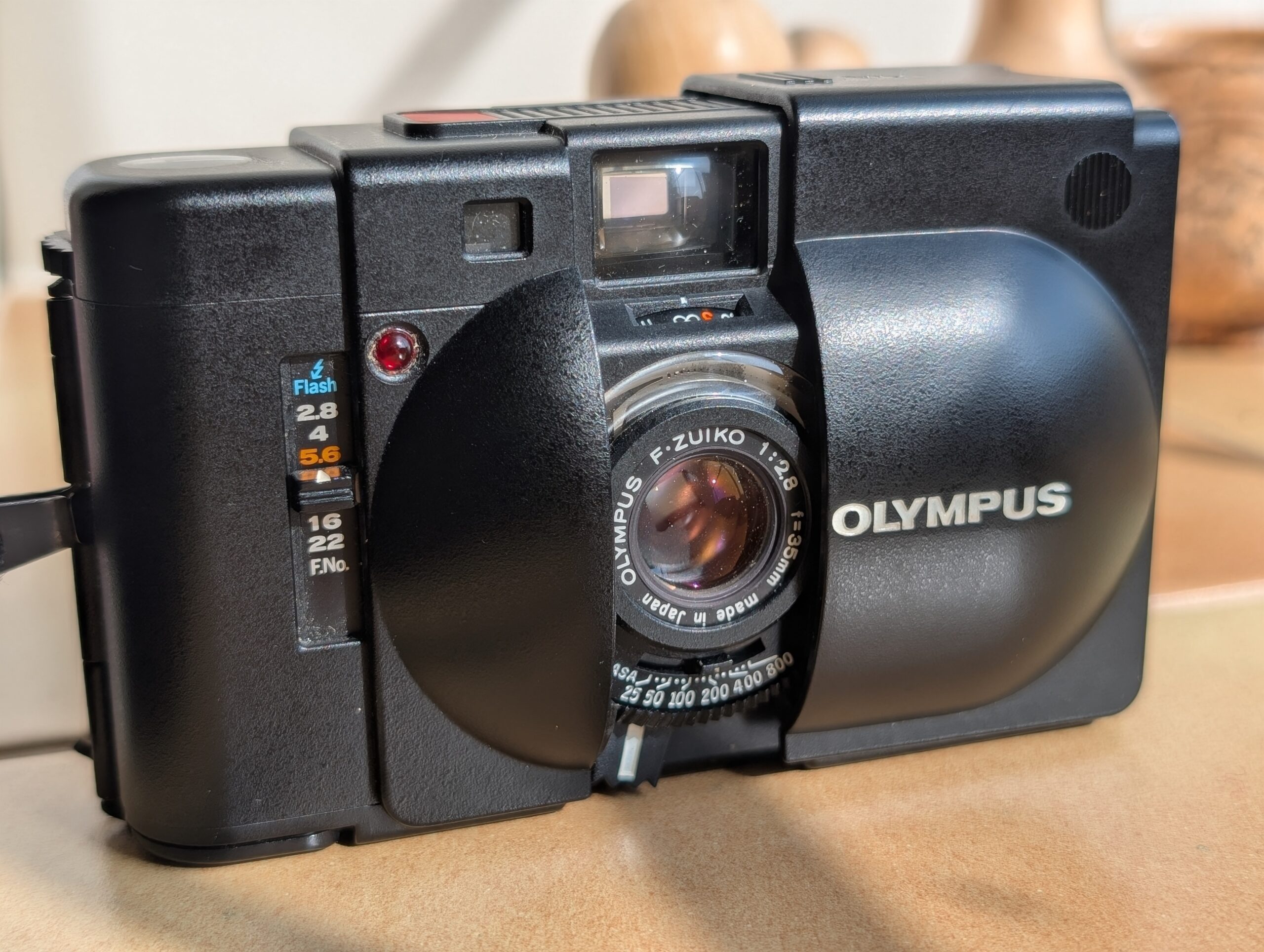
Although I have been back into film photography for a year or so, I only recently became aware of the Olympus XA rangefinder camera. Introduced in 1979, with production ceasing in 1985, this camera has now become something of an icon. It features a 35mm f/2.8 lens, a true rangefinder patch (as opposed to the zone focusing of the Minox 35, for example) and has aperture priority metering. Models introduced after 1985 included the XA2, XA3 and XA4, but these were zone focus cameras. The lenses also changed to a slower f/3.5 at 35mm and then 28mm for the XA4.
The camera features a sliding clamshell design, a thumb wheel advance, with aperture and focus controls on the front. A small lever on the base allowing exposure compensation. There is also a facility to choose the ASA rating of your film. In essence, it is a highly pocketable and very respected camera, with many reviewers praising a “tack-sharp” lens.
As with a number of cameras which are becoming popular again, prices can be high, and I often see them for sale for between £150 and £200 if in working order. I decided I would like one, as I love the Minox 35GT, (see one of my previous “Five Frames with…” posts) but not at that price.
Forgetting all about it, and browsing Facebook Market Place one day, I saw a small number of cameras being sold by the brother of someone recently passed away. An Olympus XA was advertised for £20 with no indication whether or not it was working, but with some damage to the rear shutter door. I dropped the seller a message to ask if he knew if it was working or not. He didn’t know, and having acquired a number of “untested” cameras that didn’t work, I politely said I would not go ahead.
The next day I received a message from the seller offering me the camera for free if I covered the cost of postage! I thought that £5 for postage was worth the risk, and the deal was done. The camera arrived a few days later. When it turned up, the damage to the camera door was quite bad. It appeared that someone did not know how to open the back (by the standard lifting of the rewind handle) and had attempted to unsuccessfully prise the back door open with a screwdriver or similar! Thankfully, the back door is made of metal, and a trip to my workshop enabled me to carefully bend the door back into shape, almost perfectly. I popped in a battery and the camera appeared to work correctly! I might have just landed a bargain!
A good clean and new light seals followed, along with a roll of Kentmere 200.
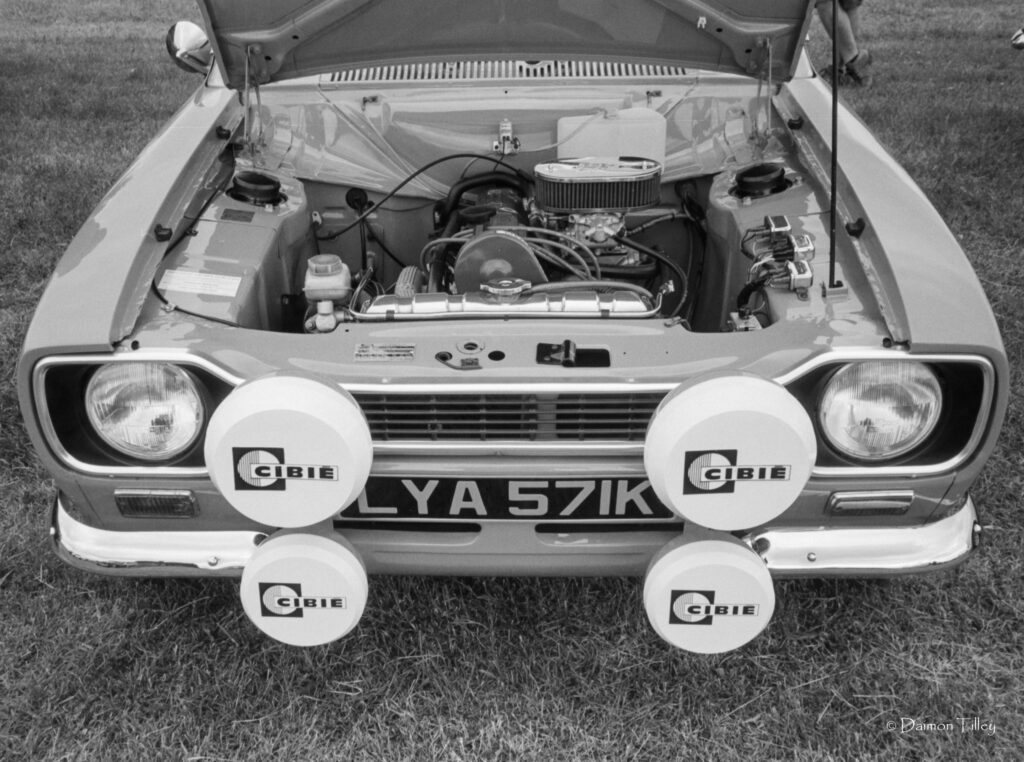
Two trips were made with the camera – the first was to a local Steam Fair in South Molton, Devon, UK. There were a number of classic cars, and this was my favourite, a 1971 Mk1 Ford Escort, which happened to be my very first make and model of car when I passed my driving test.
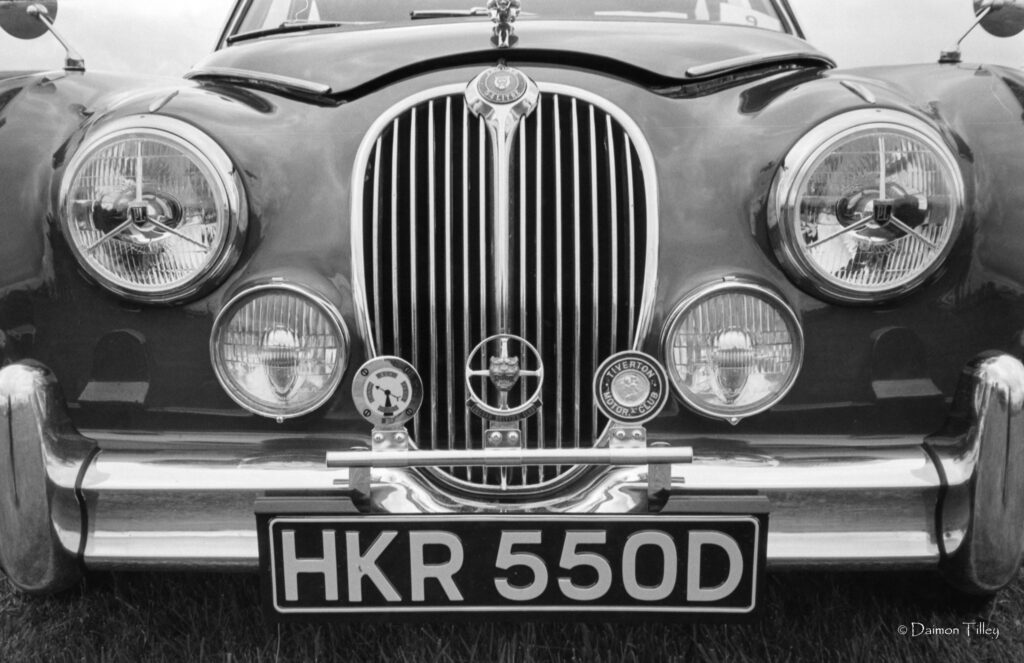
I was also attracted to this Jaguar from 1966.
A week or so later, my wife had to travel to Brighton for work, so I tagged along for a couple of days and took the XA on my travels around the town. In the 18th century, King George IV built a residence in the town, which over the years became grander and grander, known as the Royal Pavilion, and this formed the basis of my first few shots here.

Between 1896 and 1899, a new and very grand Pier was constructed. The Brighton Palace Pier is 1,722 feet (525 metres) long. It attracted worldwide attention with Charlie Chaplin and Stan Laurel both perfomred in the Pier’s Theatre. Funfair rides were added from 1932 and during WWII a section of the Pier was removed due to the fear of German ships being able to use it as a dock! It is now a Grade II Listed Building, which is designed to protect the Pier and its heritage by applying very strict rules about any changes. Still attracting may thousands of visitors, the Pier now costs about £1,000,000 a year to maintain and run.
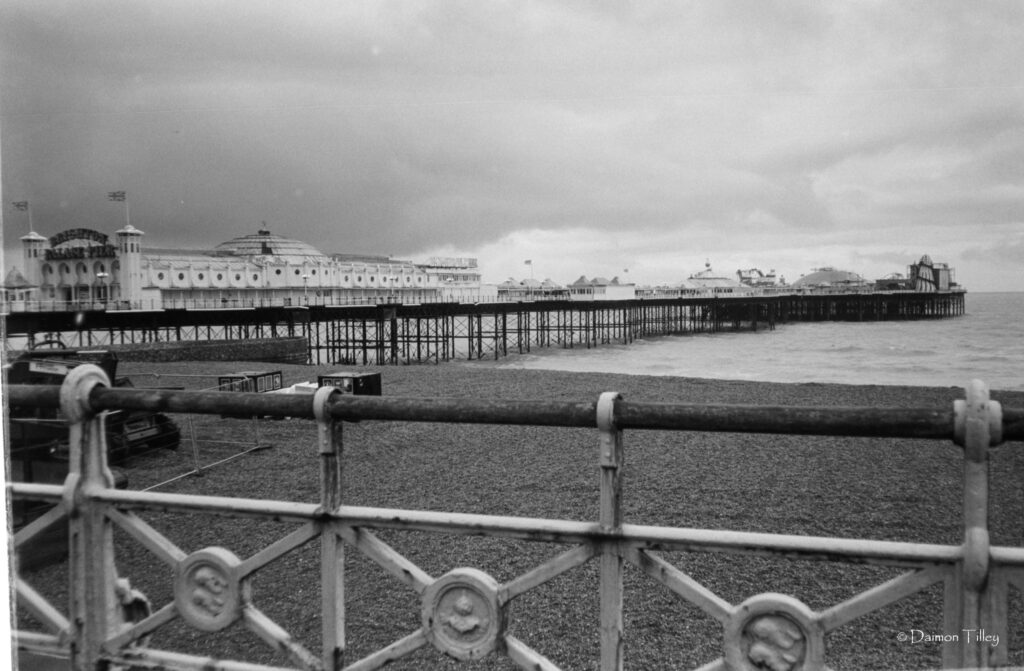
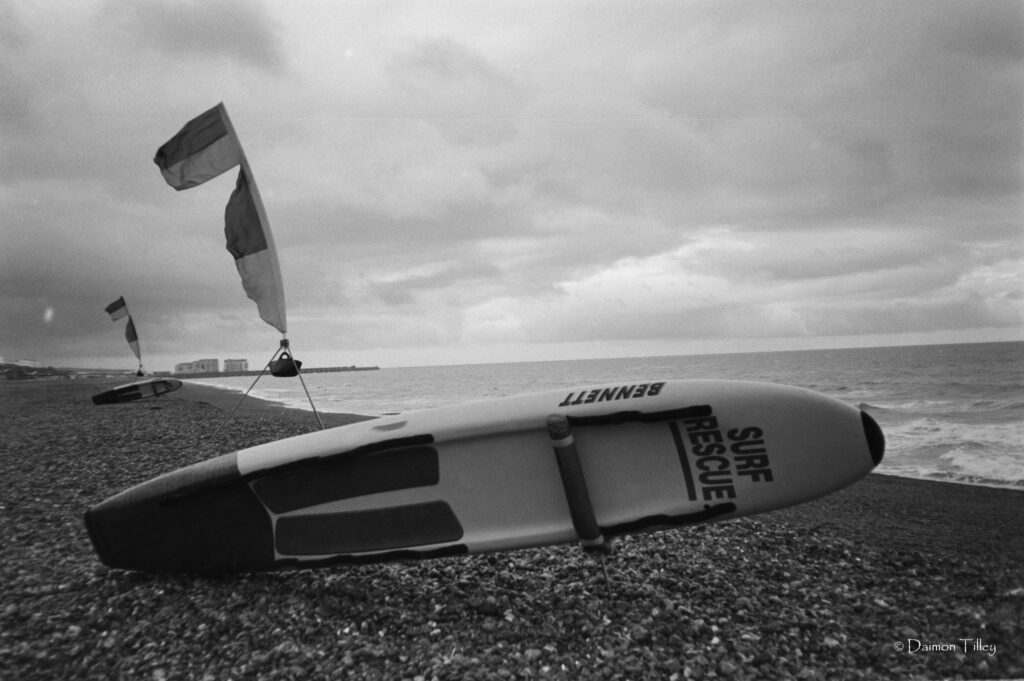
To finish off I took a walk along the beach. It was a grey, blustery day, but the RNLI (Royal National Lifeboat Institution) Lifegaurds were on duty ready and waiting for anyone daft enough to venture in the sea and get into trouble.
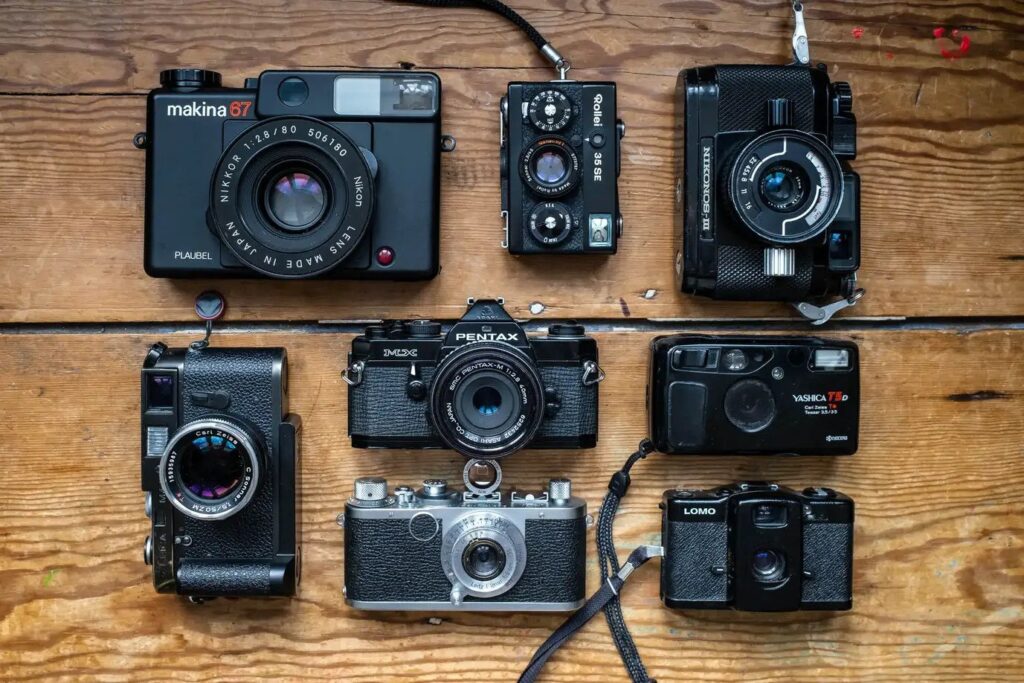
So, another internet bargain has once more added to my ever growing collection of film cameras. I wonder what might be next?
Share this post:





Comments
Martin on 5 frames with an Olympus XA
Comment posted: 12/07/2026
Thank you for the impressions from the classic car show and the wonderful Brighton photos! It was an entertaining and interesting read.
Comment posted: 12/07/2026
Walter Reumkens on 5 frames with an Olympus XA
Comment posted: 12/07/2026
Comment posted: 12/07/2026
Comment posted: 12/07/2026
Mark on 5 frames with an Olympus XA
Comment posted: 12/07/2026
Comment posted: 12/07/2026
Andrew Long on 5 frames with an Olympus XA
Comment posted: 12/07/2026
Gary Smith on 5 frames with an Olympus XA
Comment posted: 12/07/2026
Comment posted: 12/07/2026
Jeffery Luhn on 5 frames with an Olympus XA
Comment posted: 13/07/2026
You got a terrific bargain. Nice photos! The XA came out the year I graduated from Brooks Institute. Almost every photographer in my class and most of the pro shooters I knew in San Francisco bought one. It was an engineering marvel!!! When I would go to the color lab to pick up my film, most fellow photographers had one in their shirt pocket or purse. The ASMP held monthly 'contests' at the meetings, but it was only after they made a 'Kodachrome shot on an XA' category did people dive in and contribute. WOW, there were beautiful slides at those meetings!
My XA died a silent death after about a year and no local repair people would fix it. I should have sent it in to Olympus, but I didn't. I've been told that it's just the contacts on the shutter 'button' and a simple cleaning will fix it. I guess I should dig it up and try to take it apart. It is an amazing camera. THANKS FOR THE ARTICLE. HAPPY SHOOTING!!
Ibraar Hussain on 5 frames with an Olympus XA
Comment posted: 13/07/2026
Great lens on the Olympus
Comment posted: 13/07/2026
David Pauley on 5 frames with an Olympus XA
Comment posted: 14/07/2026
Comment posted: 14/07/2026
Stephen Barnett on 5 frames with an Olympus XA
Comment posted: 16/07/2026
Sneakerzoom on 5 frames with an Olympus XA
Comment posted: 25/07/2026