

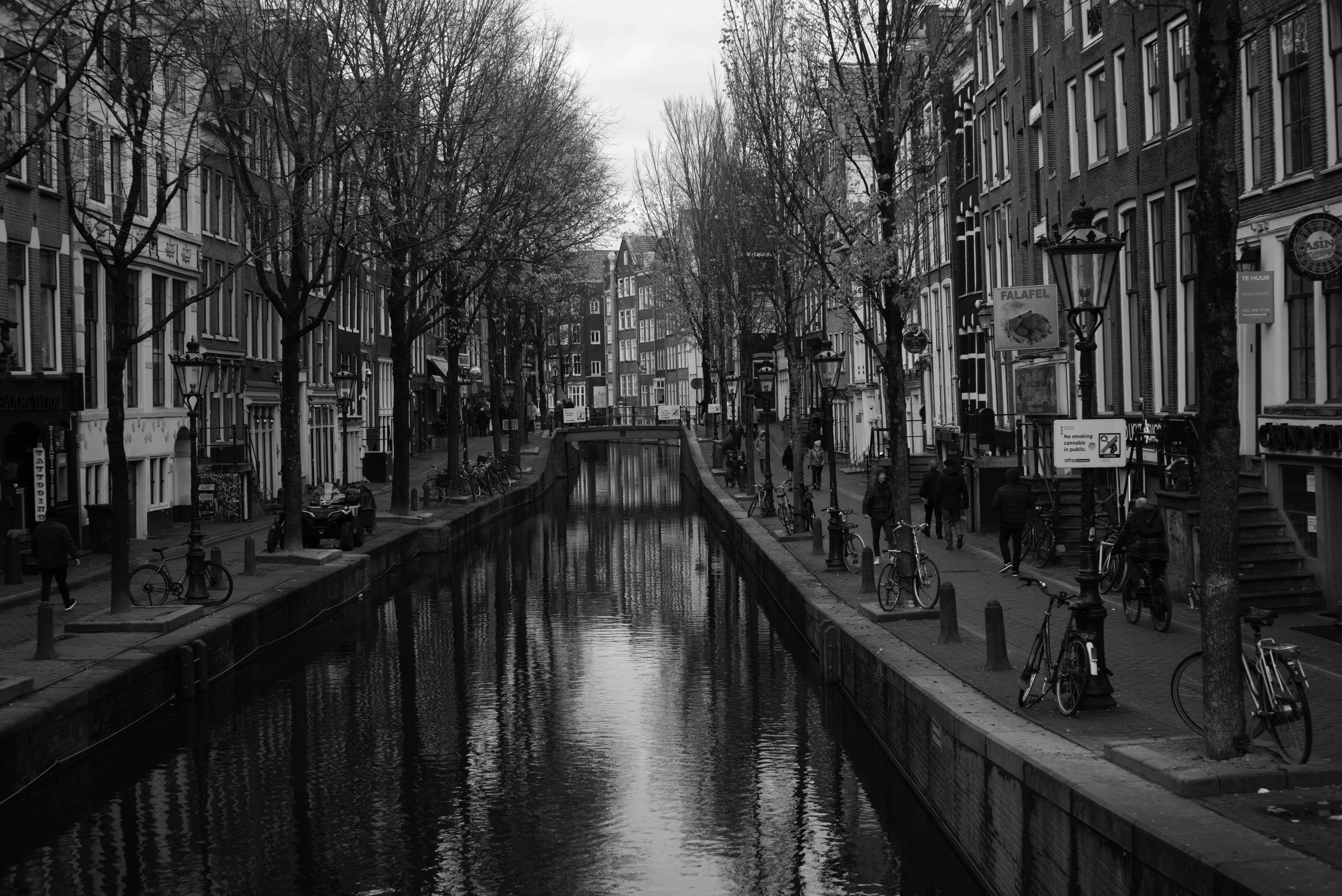
The game was to use my digital camera (Sony A7Riii) as if it was a film camera so I set myself the following rules for our nearly four day trip to Haarlem and Amsterdam.
A maximum of 36 frames per day, 100 frames for the entire period intended to force a thoughtful and selective approach to photography
One manual lens, the M-mount Zeiss Sonnar 50mm f1.5
Shoot entirely in manual mode (with IS on)
Shoot entirely in B&W (jpg) at 100asa in daytime and 400asa at night
The result
The weather was horrible; cloudy, windy and cold (3-7 degC, 37-45degF). Day one was spent visiting a long-lost and very good friend and his wife and because the weather was terrible we decided to spend day four in the Rijksmuseum (8000 works of art, after 6 hours you’ve just managed to scratch the surface). So all of the rules were easily met except daytime shooting was also generally at 400asa and the total number of photos was 55.
Haarlem
Haarlem has a beautiful medieval centre and is famous for its almshouses for impoverished old men. The Frans Hals Museum is housed in a former almshouse and contains paintings by local artists including by the master himself, mainly [16th century] group portraits of the managers and female staff of the almshouses.
We stayed with my friend, who’s an excellent host, chef and sommelier – I’ll leave the evening to your imagination. The following morning we went with him to a large pond in the nearby national park where he goes swimming in between the ducks and swans – it was 5degC, we politely declined the offer to join him in the pond, however he was not alone. There were about 10 others, all female, all stripping off in the freezing wind, donning costumes and going for a swim.
These photos and the bicycle photos further down were early morning shotsin dull light – I have left them “underexposed” to reflect the mood of the lighting.
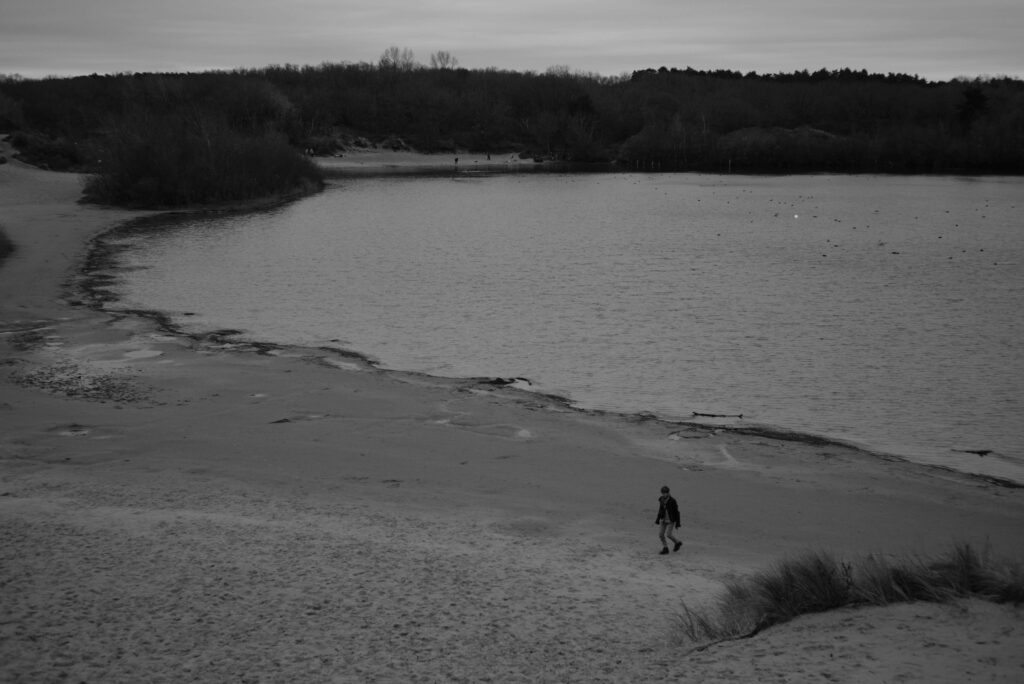
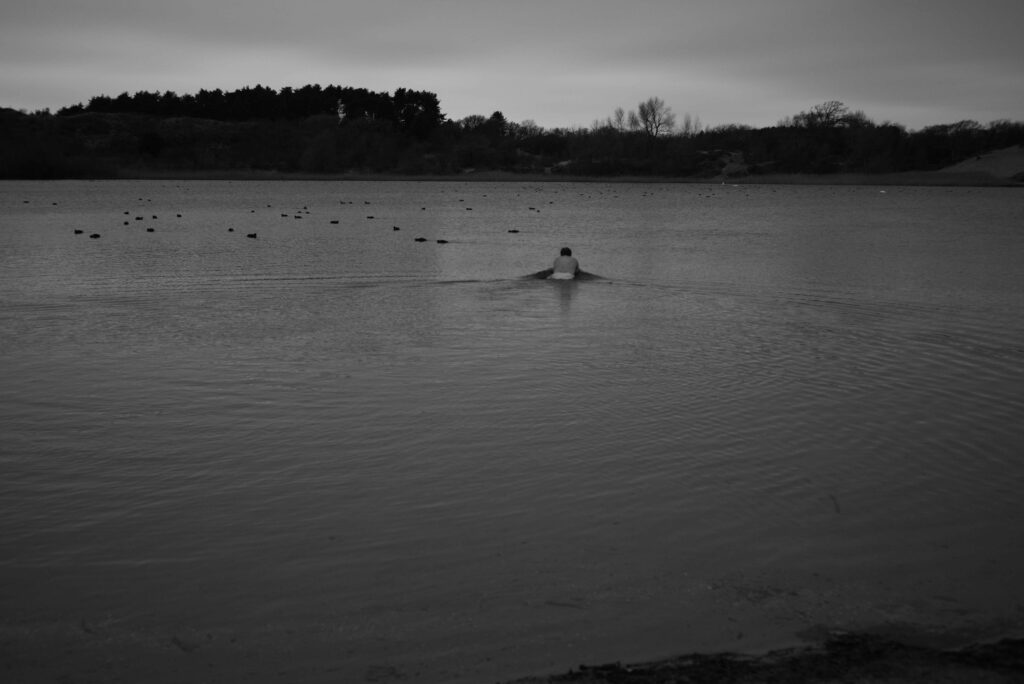
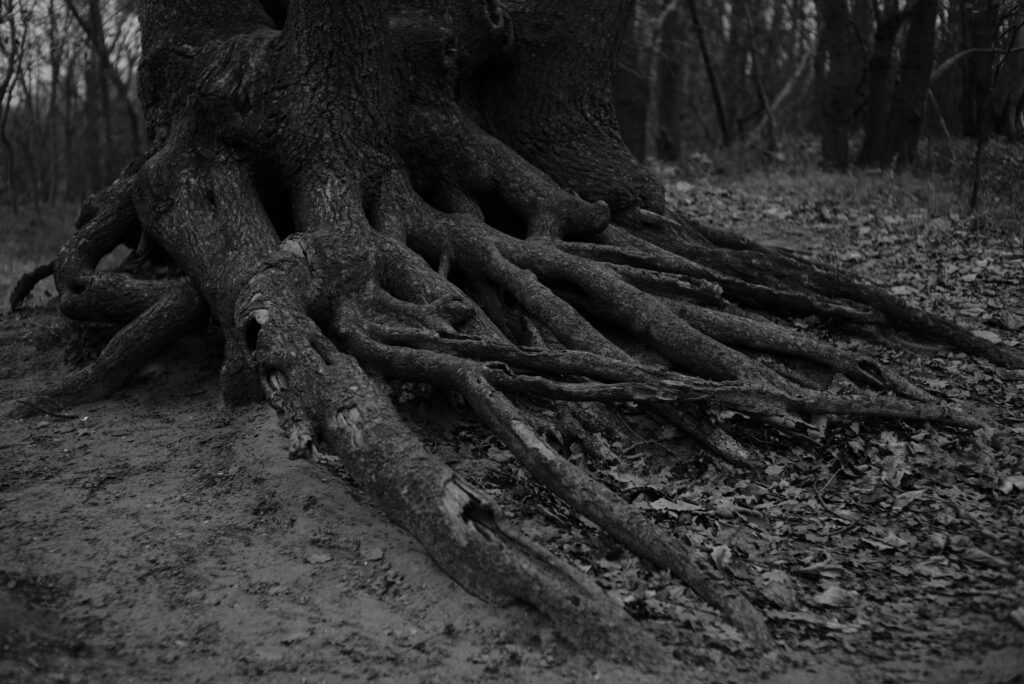
Apparently after the swim, apart from turning bright pink, the endorphins released last several hours and make it all worth while. So he said.
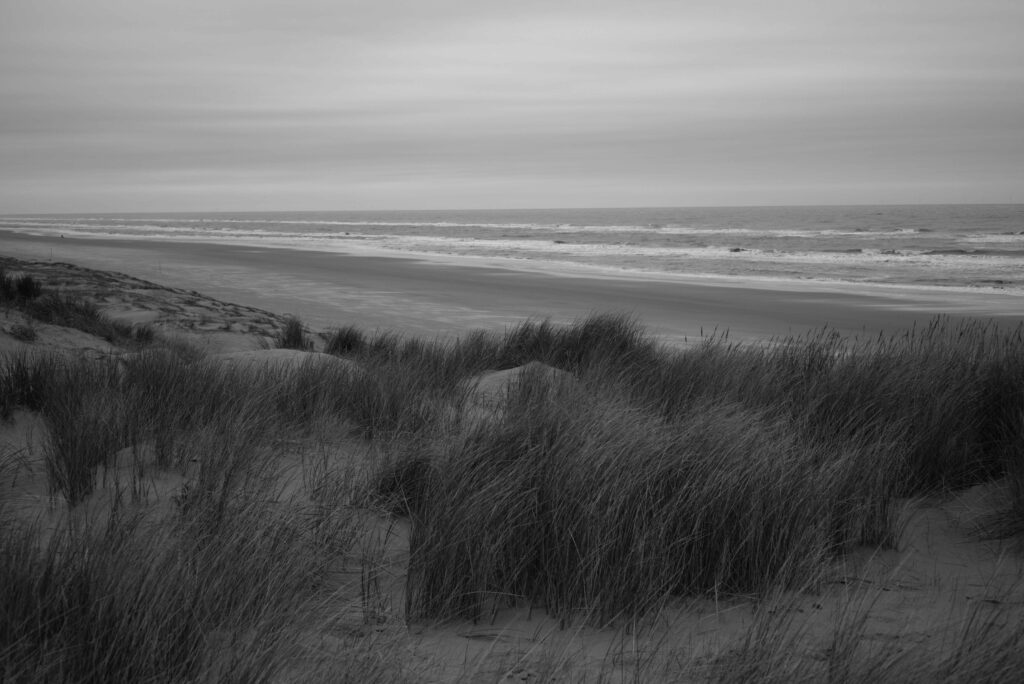
We then continued west a few kilometres to the edge of the bleak and bare North Sea before saying our farewells and heading east to Amsterdam. I’ll be going back in the spring when the weather is better to photograph the city.
Amsterdam
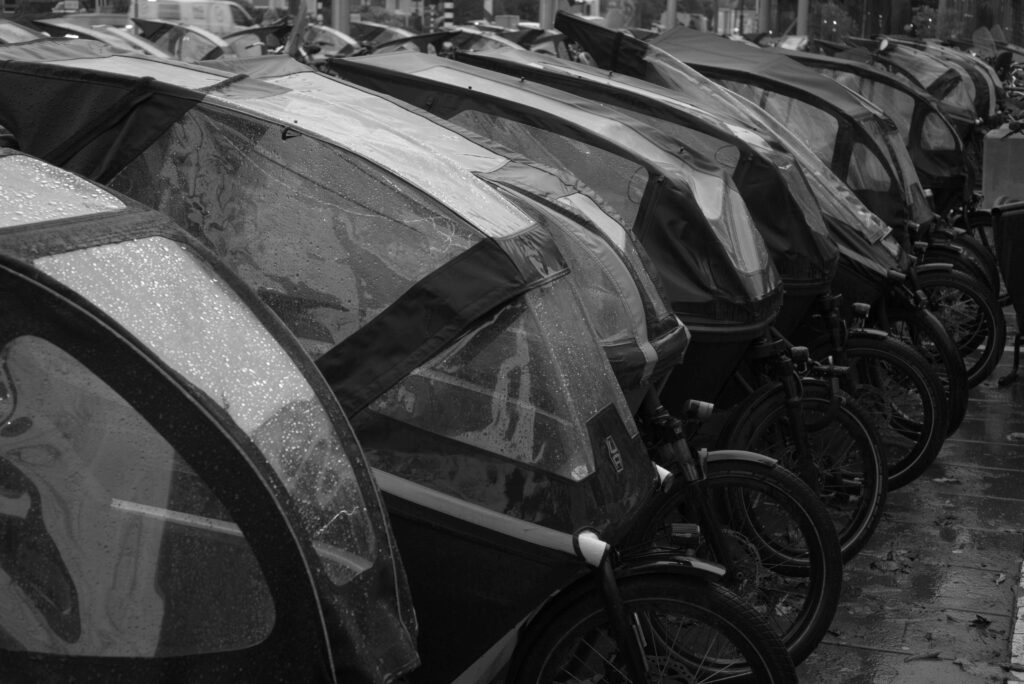
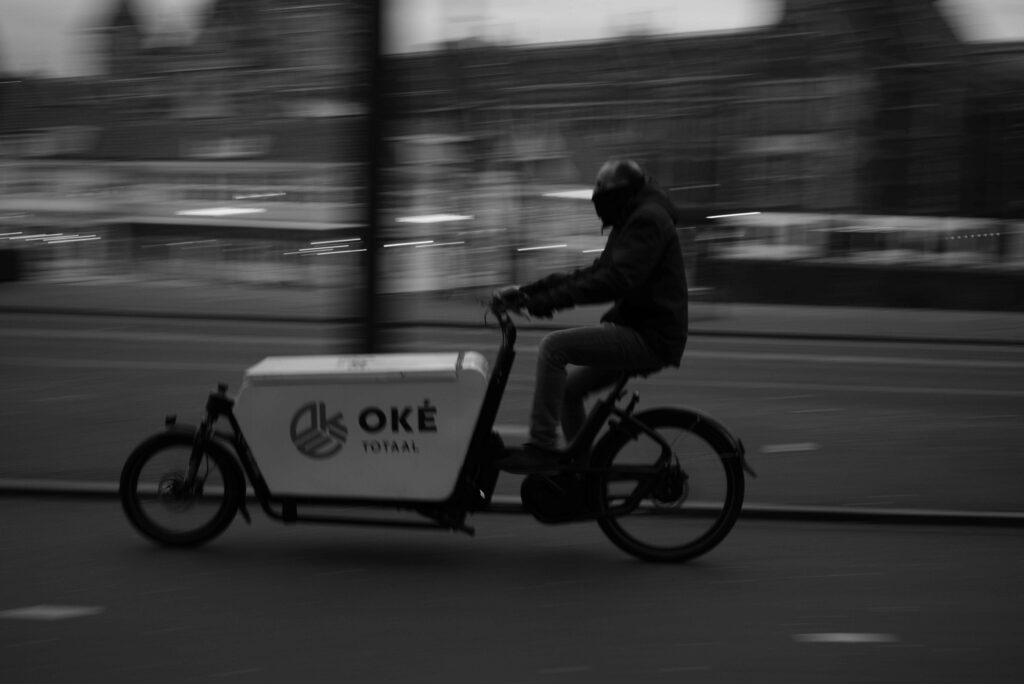
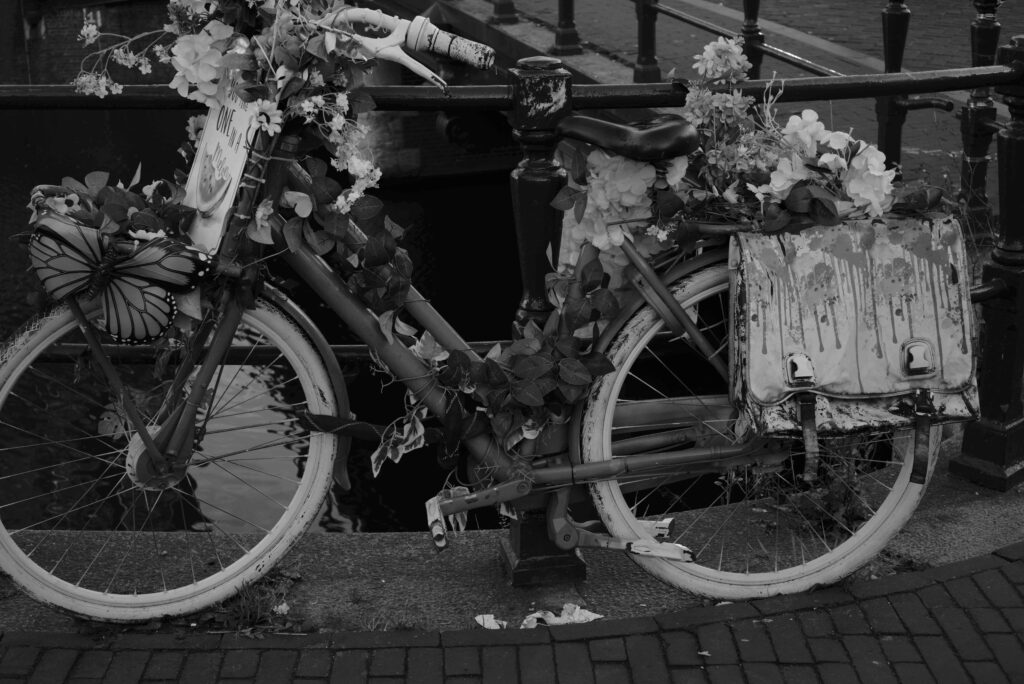
Bicycles, more bicycles, commuters on bicycles, bicycles as delivery vehicles, bicycles as ornaments. A station vehicle park covering maybe 2000 square metres contained a similar number of bicycles, standing upright but sometimes piled up on top of each other. Bicycles are a part of daily life in Holland and northern Belgium – where the land is flat. The majority are human powered rather than electric.

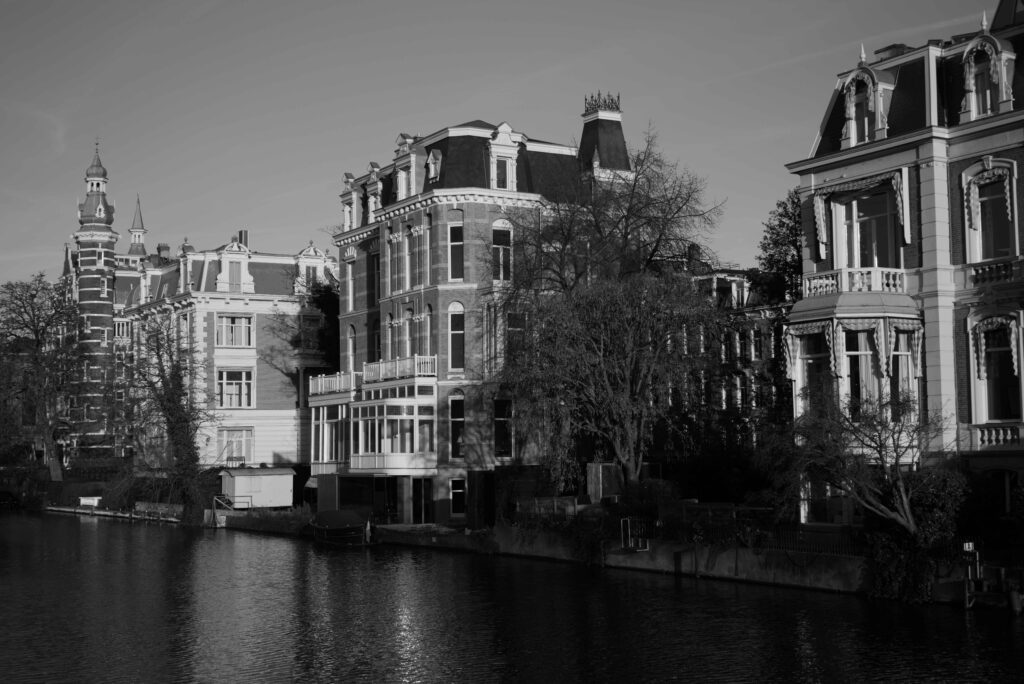
Canals (featured image): I’ve not been anywhere with so many canals. Arranged like half a sliced onion with a broad river on one side there are there are 8 or 9 roughly semi-circular canal ‘onion slices’ with around 10 canals emanating radially from the centre.
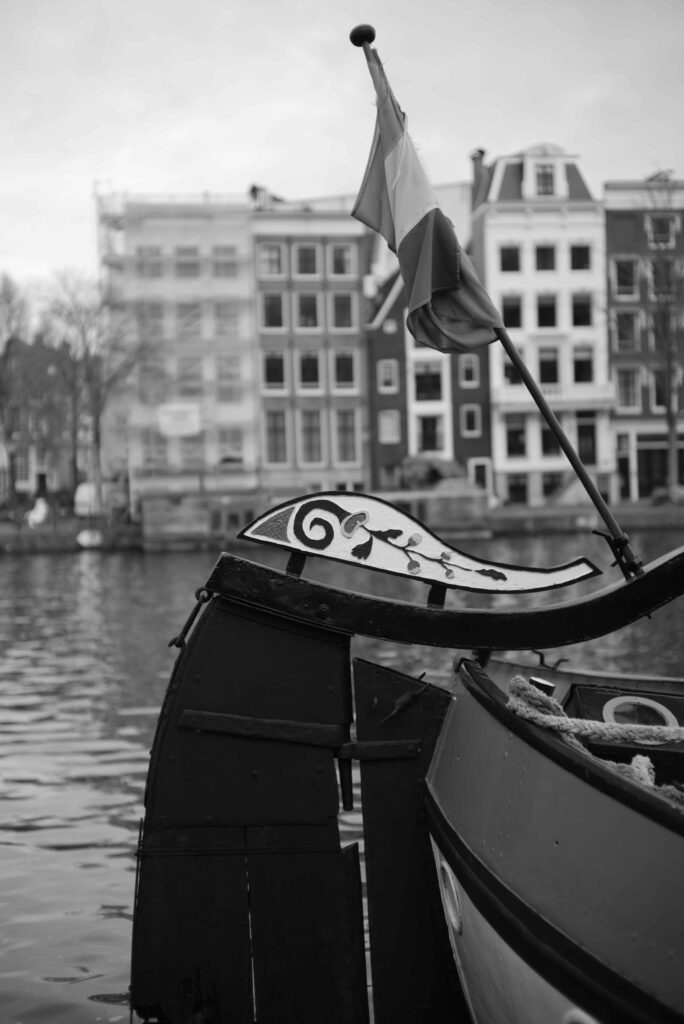
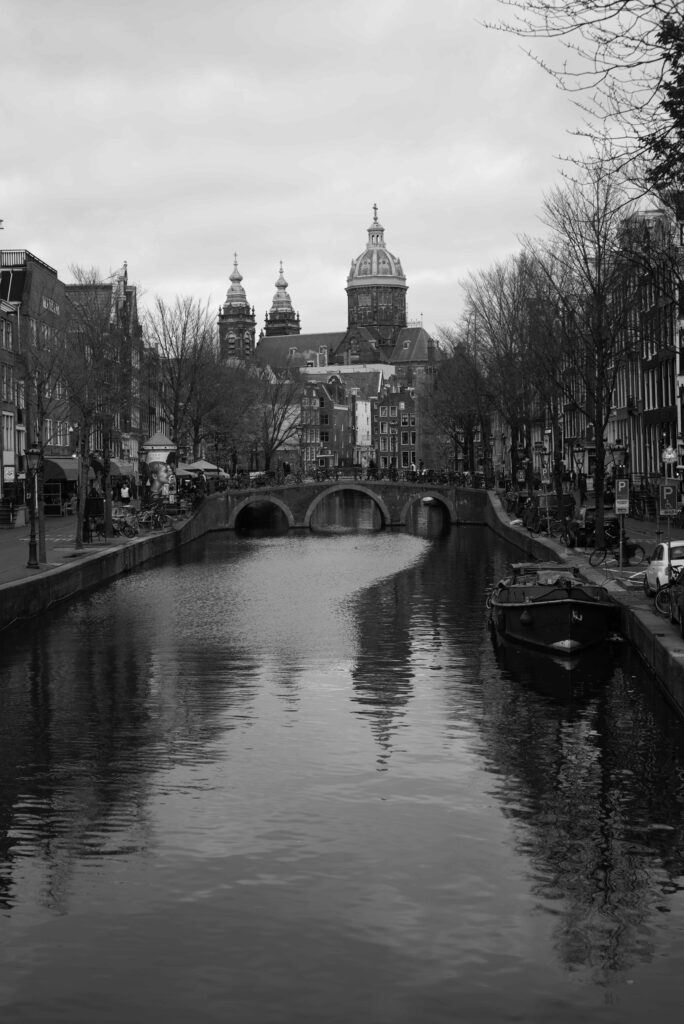
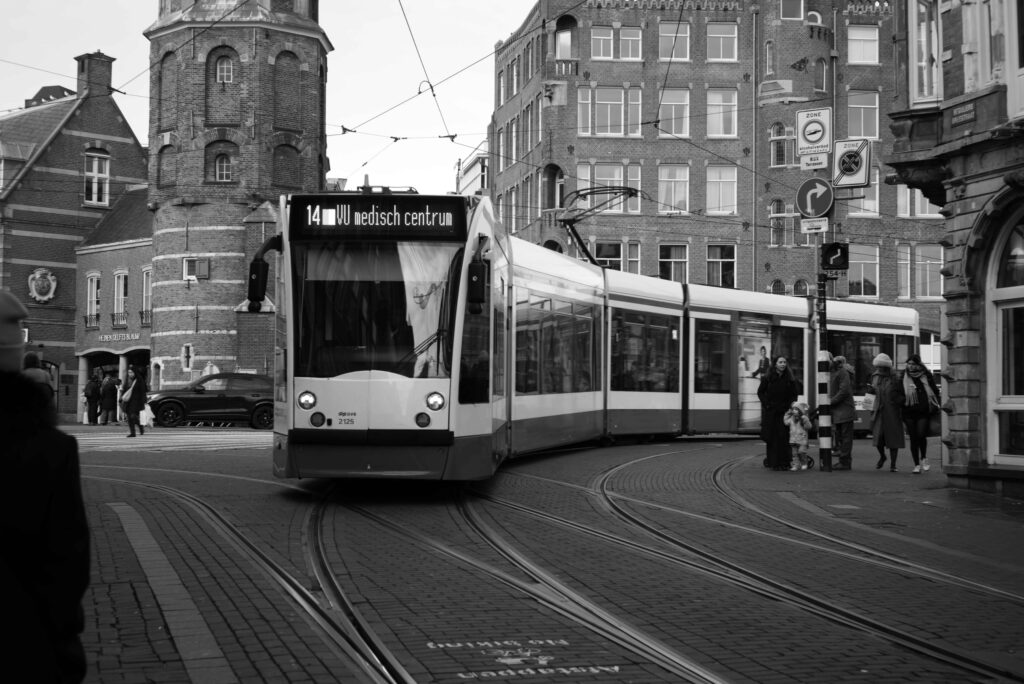
The typically Dutch architecture is of course arranged around and dictated by the layout of the canals. If you go observe the angle of the buildings carefully many are – or seem to be – leaning one way or the other. In some cases this may be a trick of the eye because the frontage is sometimes not a straight horizontal line, but often the lack of perpendicularity is confirmed by a tapered gap between adjoining buildings or by a clear lean towards the street at higher levels. Winding along the major routes and down some of the narrower roads are the tram lines.


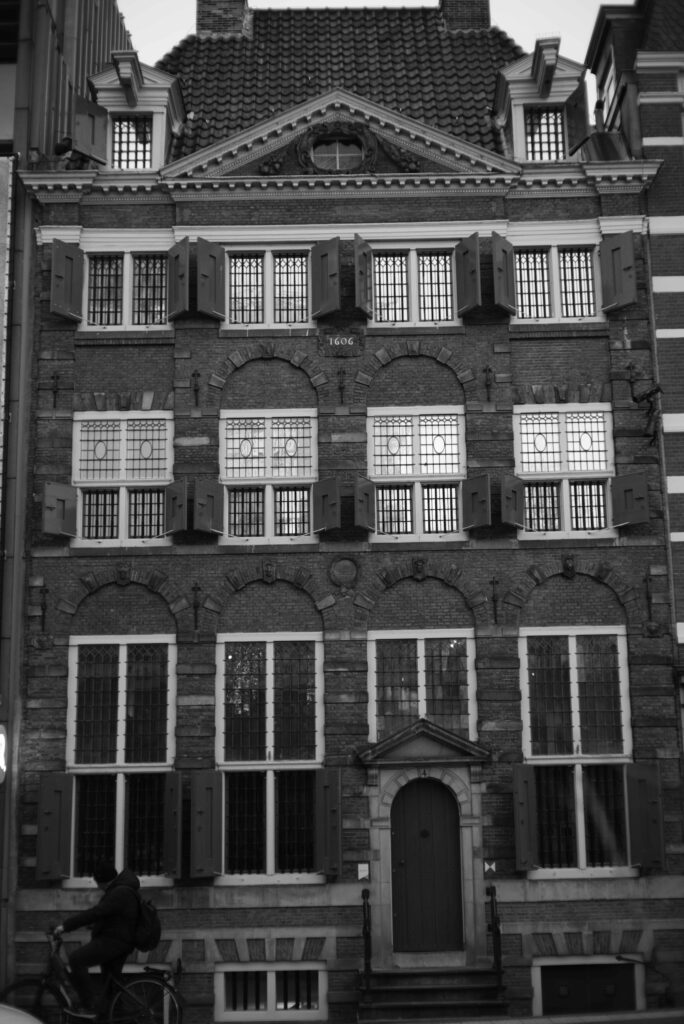
A small museum of interest to me is Rembrandt’s home. Restored to its original layout and with appropriate furnishings the building (working up from the basement) contained the kitchen and maids quarters with a small courtyard, the Rembrandt family living quarters and client reception area, Rembrandt’s north facing painting studio, a teaching studio, and Rembrandt’s eclectic collection of objects.
Leaving
Of course on the day we were leaving, and had booked tickets for the Rijksmuseum the weather improved dramatically.
Conclusions
So was the exercise of using a digital camera as if it was a film camera successful? As an exercise, yes, but did I enjoy it – emphatically no. I found my way of thinking changed, I’m not sure why, there seems no logical reason, but my search for images became unimaginative perhaps partly because I wanted a largely documentary record. I’m also generally not happy with the results. My Sony will remain as a film scanning tool and for occasional scientific photography where it excels.
Images processed to B&W from the RAW files using a yellow filter.
Share this post:

Comments
Walter Reumkens on Amsterdam, with RULES and a Zeiss Sonnar 50mm lens
Comment posted: 17/01/2026
Thank you for your comments and the photos. Please don't take my statements as criticism.
Amsterdam is an interesting city. I live only 220 km away from it, and the Dutch border is only 30 km away. I really enjoy being in the Netherlands.
Comment posted: 17/01/2026
Bill Brown on Amsterdam, with RULES and a Zeiss Sonnar 50mm lens
Comment posted: 17/01/2026
Comment posted: 17/01/2026
Art Meripol on Amsterdam, with RULES and a Zeiss Sonnar 50mm lens
Comment posted: 17/01/2026
Comment posted: 17/01/2026
Gary Smith on Amsterdam, with RULES and a Zeiss Sonnar 50mm lens
Comment posted: 17/01/2026
Thanks for the inspiration, Geoff.
Comment posted: 17/01/2026
Simon Sheldon on Amsterdam, with RULES and a Zeiss Sonnar 50mm lens
Comment posted: 18/01/2026
Comment posted: 18/01/2026
Comment posted: 18/01/2026
Cem Eren on Amsterdam, with RULES and a Zeiss Sonnar 50mm lens
Comment posted: 18/01/2026
As soon as I read the first few statements, I realized how I much I was off from understanding the RULES as I thought completely non-photographic rules in the time spent there :). Nice photos and experiment. You could have easily gotten me, if you had noted, hp5 ..., processed ..., scanned ..., light touches on the skies for texture. I have got the feeling of gloomy winter days. Thanks for sharing.
Comment posted: 18/01/2026
Scott Ferguson on Amsterdam, with RULES and a Zeiss Sonnar 50mm lens
Comment posted: 18/01/2026
That was interesting. I have shot with a couple of pretty decent digital cameras using my Leica M lenses in the last couple of months, including an M10 and a Sony A7III, as well as a Monochrom about a year ago. So far the experience has left me a little cold -- the images have a different 'feel' to me, that are a little analogous to the difference between cinema and tv, and I really don't like using a screen based interface with all kinds of options that I don't fully understand or have the time, energy or inclination to master. There are times when I might need to shoot digitally to document my wife's fine art, but when I'm shooting for myself, there's no contest. While there are only a few controls you need to work with on a film camera there are endless creative ways to use them. Shooting film bit of mystery because you have to wait to see what you got and when it works well, a quality of visual poetry.
Comment posted: 18/01/2026
JC on Amsterdam, with RULES and a Zeiss Sonnar 50mm lens
Comment posted: 19/01/2026
show us the Netherlands with an analogue camera the next time.
Thanks, Jens
Comment posted: 19/01/2026
Ibraar Hussain on Amsterdam, with RULES and a Zeiss Sonnar 50mm lens
Comment posted: 19/01/2026
Comment posted: 19/01/2026