

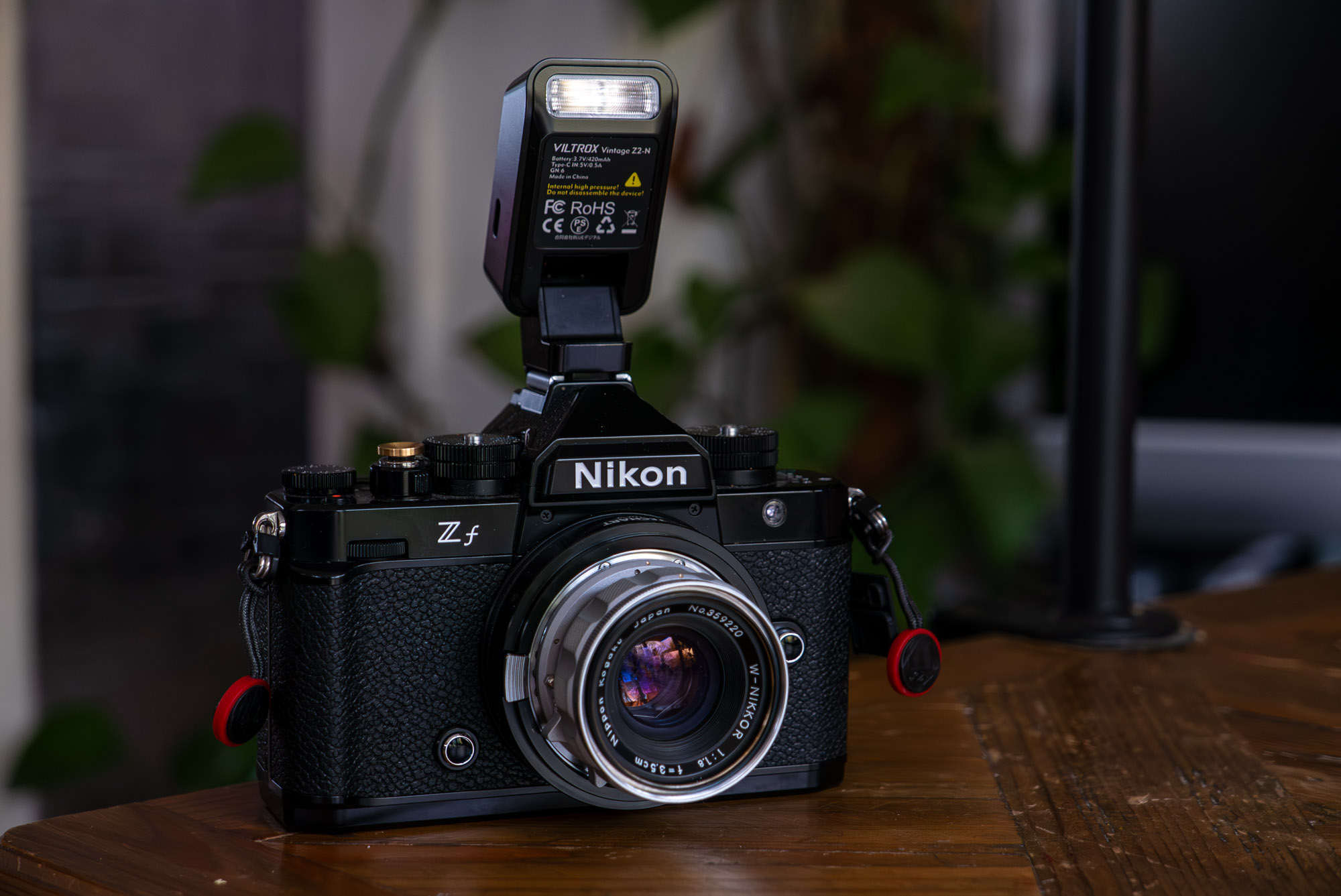
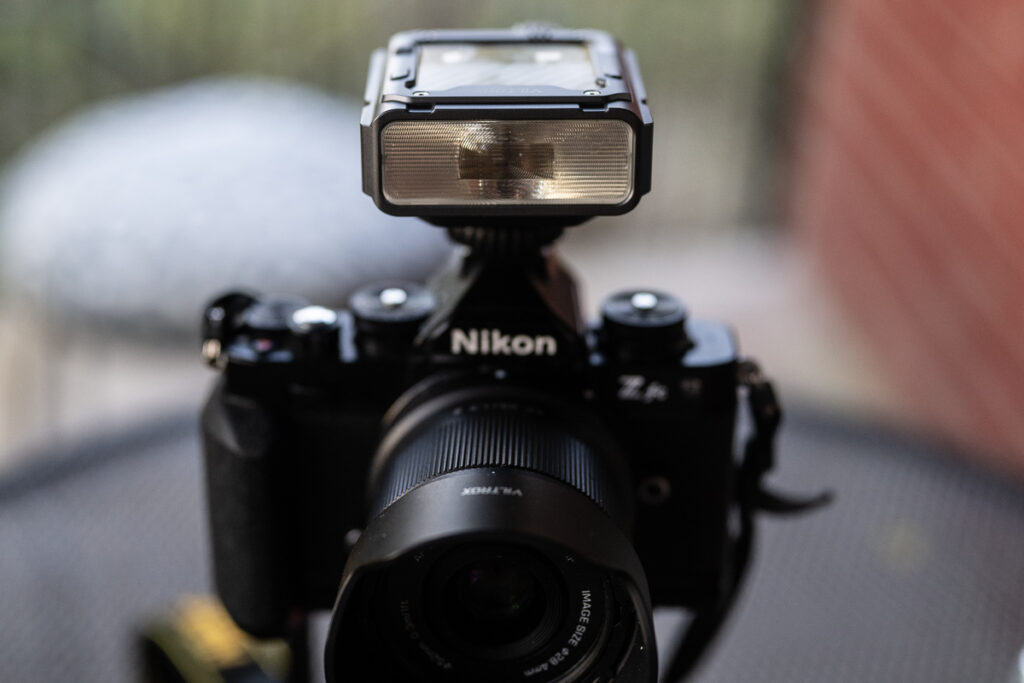
I don’t shoot flash very much, but I had been on the look out for a little one for the Nikon Zf when my contact at Viltrox asked me if I’d be interested in trying their new Vintage Z2 TTL on camera flash. Being honest, I must have not really taken in the information on their little press release info sheet very well, as when it arrived I was quite surprised at just how small it is. It’s tiny, but for what it is, for someone like me who doesn’t shoot much flash, it’s pretty spot on.
A low budget solution
First things first, I think it’s important to note that this thing is very much at the budget end of the market. There’s a couple of little things about it that I will get to which make this quite obvious in use, but I think at the $35 usd they’re charging for it it’s also quite easy to forgive these issues – I’ll come back to this point at the end.
Personal background/context
As I’ve said, I’m not a frequent user of flash. I bought a fairly nice Godox for our work Sony kit for one job a little while ago expecting I might end up using it more, but haven’t so far. So when contemplating a flash for my shift back to Nikon I thought I might as well go very much budget-end of the marketplace just so I had something for emergencies more than anything else.
With that said, I hadn’t really gotten very far in my thinking. The Zf doesn’t have a built-in pop-up flash. It’s not the sort of camera that would really, I suppose, but that’s the level of flash that I’d need. Because of this, the level of thought I’d put into this was limited to thinking about getting something that was cheap and potentially small enough to stow in my bag on a near-permanent basis. I’d also considered that fact that I could just use Keks flash I already had if I absolutely needed something. But beyond those two thoughts, I’d pretty much shelved the idea until Viltrox got in touch.
When they did get in touch to ask if I’d like to review this flash, I actually didn’t put much thought into it. I glanced at the info sheet they sent me and just figured I’d give it a go. All the lenses I’ve been trying from them have been great, so I had no reason to think this flash wouldn’t be anything other than workable for me. As I’ve said, I hadn’t really clocked how small it is – though looking back at the info sheet again, it is obvious both from the design of the thing in pictures and the fact that it listed the dimensions. I did grasp a couple of things from the pictures and info though. One factor was the design/shape of it which I thought looked like it might work with the Zf, the other factor was the inclusion of both TTL and manual flash power modes. Actually, frankly, the TTL bit was all that interested me. As I’ve said, the flash I’d imagined would work best for me was one that would have a similar level of functionality and capability to a pop up flash, so TTL control is key for me.
The Viltrox Vintage Z2
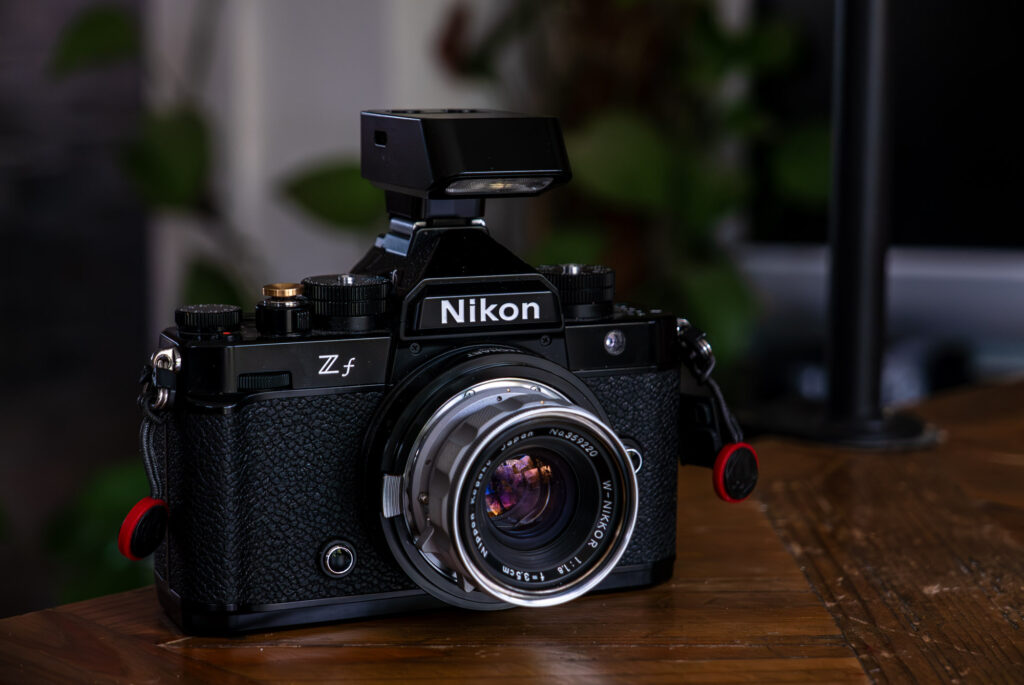
As I’ve alluded, when it arrived I was quite surprised. The Viltrox Vintage Z2 is a very small flash indeed. I was quite pleased really – it’s about as close as I could imagine to being a pop-up flash for the Zf. In fact, once I had it on the camera, that seemed to me to be exactly what it is designed to be too. The finish on the plastic shell of the thing quite nicely matches the camera, and even the shape of it feels complimentary to the Zf. This is great for someone with a Zf or Zfc, of course, but I don’t think it would look quite a good mounted on the more rounded body shape common to the rest of the Nikon Z range. Not that it matters much – if it works, it works, I just feel like it’s quite clearly designed for the two more “Vintage” styled Nikon cameras.
Build quality
With that said, it might look the part, but it’s not quite Zf standard in terms of how it feels. It’s not even Zfc standard. In fact, it’s very light weight and a little plasticky feeling – it’s not a disaster and I wouldn’t say I was even disappointed by how it felt, but, this is why I wanted to make that caveat at the beginning of the review. It feels a little bit plasticky, but it has a price point to match. In fact I might even argue that it feels better quality than its price point might have you imagine, but that’s trespassing a little too far in to the subjective that I like to go when talking about value/price.
It’s worth noting also that this has advantages and disadvantages too. Yes, I have been worried about catching it on my coat or something and snapping it, but at the same time it’s also very light weight so barely noticeable when mounted on the camera. And actually, I have caught it on the inside of my coat a couple of times, and chucked it in my camera bag still mounted on the camera and it’s survived fine so far. It might just not be as hard wearing as some more expensive alternatives out there.
Folding design
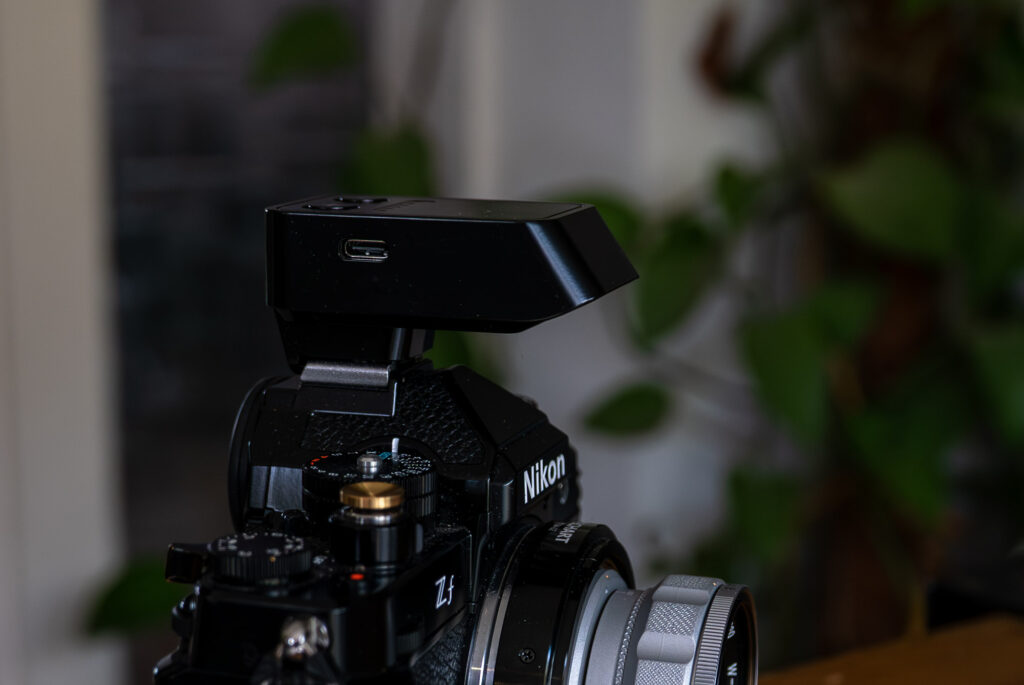
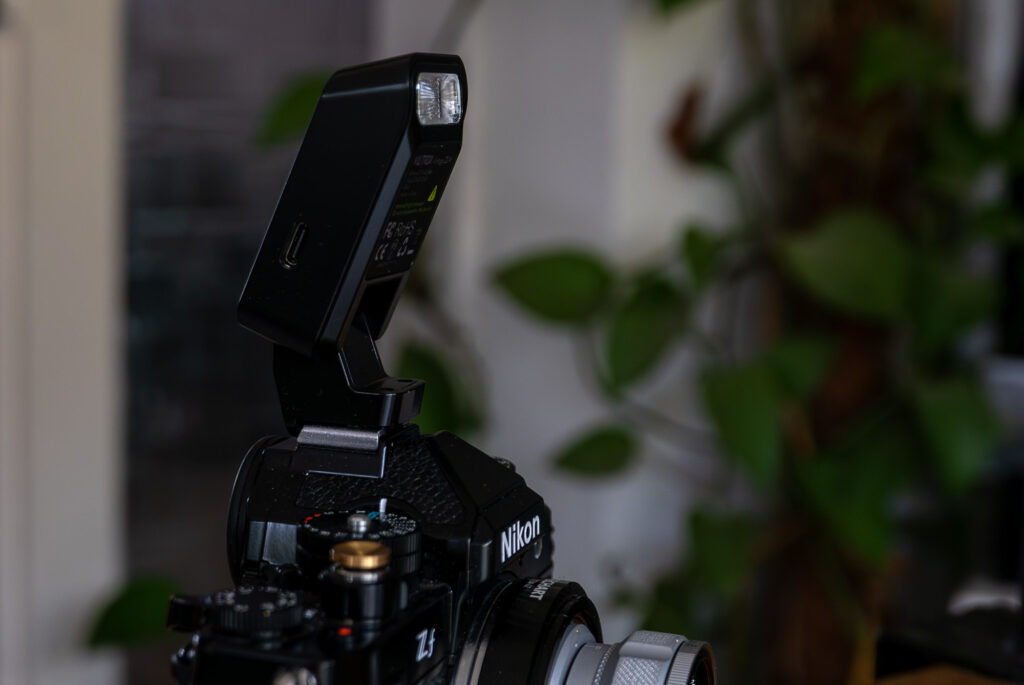
It’s also worth noting that it folds down too which makes it even lower profile on top of the camera. The folding action also actually feels pretty smooth/good quality. One feature I would have liked to have seen though is the power switch being connected to the folding action. I used to have a little Sony flash that worked like this – when folded down it switched off, then when flipped up, it switched back on again. Not having to press a button to switch it on made it feel quick and easy to use and shoot with. Unfortunately the Viltrox Vintage Z2 doesn’t have this feature – it will even still flash if it’s folded down.
Speed of use
Once it’s on and in use, I’ve found it to be pretty quick to use. It seems to have a pretty decent flash recycle time. The info sheet says two seconds, which I guess is if it fires at full power because when I’ve been using it, it seems to take much less time than even that. I’m honestly not sure how that compares to other similar sized flashes, but it’s been fine for me and my snaps.
What does take a little bit of time is the initial switching on of the flash. You have to press and hold the power button for a second or so. As it’s powering up, the indicator lights on the top cycle from the left to right, then once it’s done that it displays the battery level. The more of the lights it lights up, the more battery power it has left. After it’s done that, it’s ready to shoot… or at least, most of the time it is. Once in a while, I’ve found it can still need to cycle the flash power up to being ready to shoot.
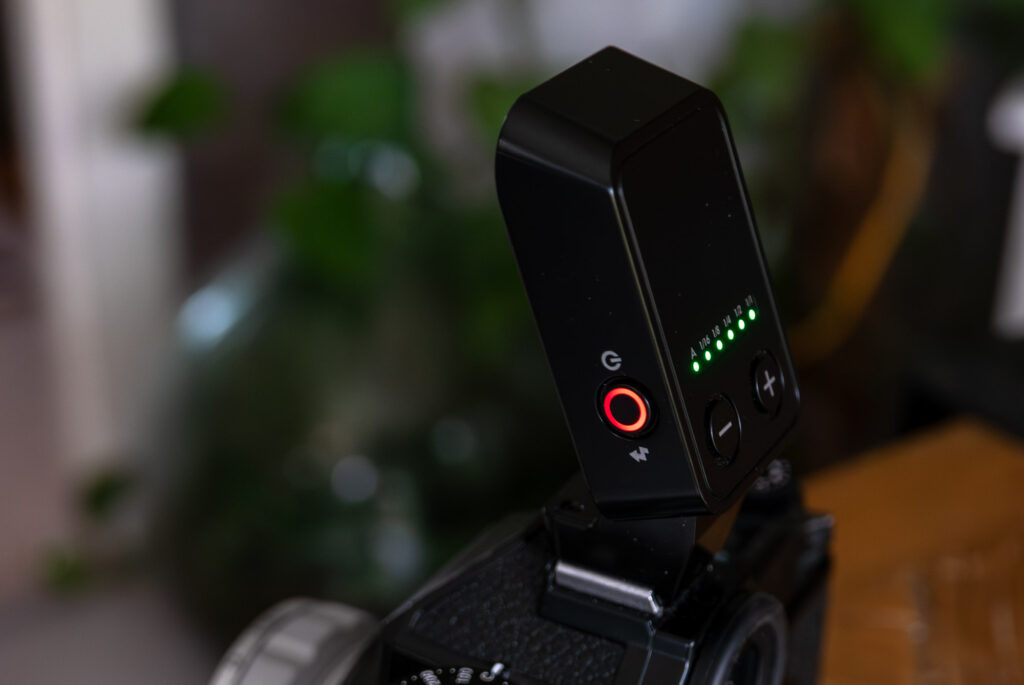
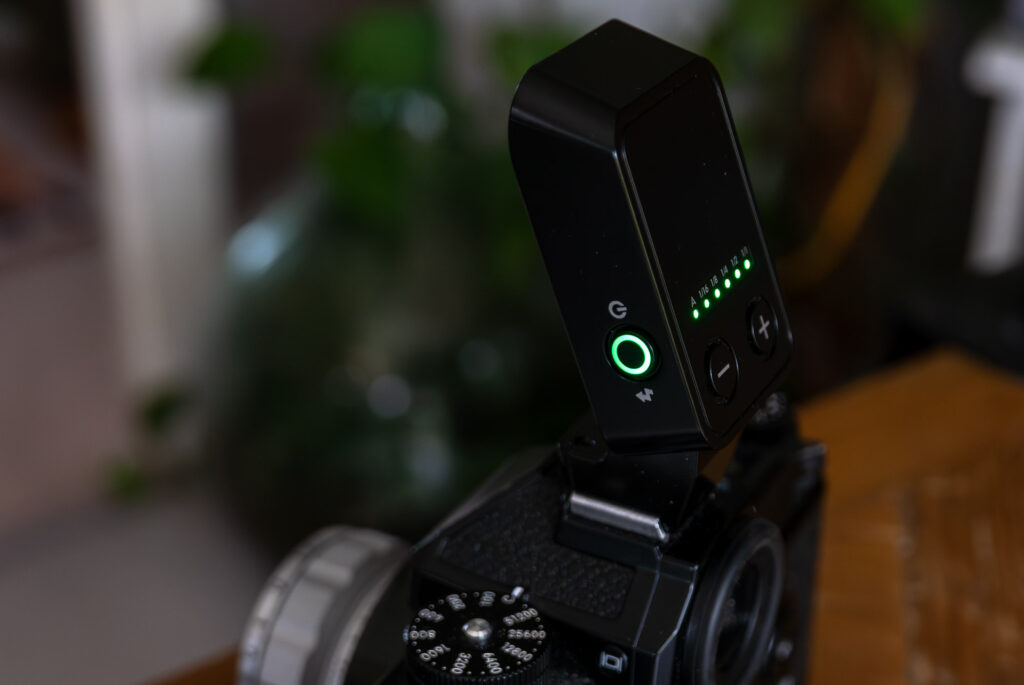
This is indicated by the ring shaped light on the power button. Red means it’s still cycling, green means ready to shoot. As I say though, once it’s on, I’ve not found the recycle speed too slow for my casual shooting.
Modes
As mentioned, it has two modes: manual and TTL. The manual mode has 5 stops of control: full power, 1/2, 1/4, 1/8, and 1/16. I haven’t used it in manual, though I have no reason to think it wouldn’t work perfectly adequately. I’ve not used manual override, though I definitely like the idea that it has it as an option.
There’s also the TTL mode which seems to work perfectly with the camera’s flash settings, ie the power can be controlled by the flash exposure compensation. Otherwise it just works exactly as you would expect giving pretty well exposed images.
To switch between the two modes, once powered up, you just press and hold the ‘-‘ button. In manual mode the ‘-‘ and ‘+’ buttons control the flash power. When in TTL mode it still displays the power the flash would be set to if switched back to manual, but the buttons don’t do anything. I’d probably have preferred them to just all light up when in TTL mode, but I suppose having an indication of the manual mode is potentially useful. Perhaps this is even how some other flashes work – I’m perhaps not familiar enough with flashes to comment here…?
It’s also probably worth noting that from the Vitage Z2’s normal output triggering secondary flash guns, there’s no other features – wired or wireless – for triggering external flashes.
A few more specs/features and notes thereon
Guide number: 6
It’s a pretty low powered flash with a GN of only 6, but then that’s pretty much what I’d have expected from a built-in flash. I actually googled this, and google’s AI search results lead me to an article on EOS magazine that notes that a GN of 6 is about right for a built-in flash on a mirrorless camera. It seems DSLRs often had more powerful ones. No idea why, but there’s a nugget of info for you. And a tip here too – if you want sites like 35mmc to survive, also click on the source of the AI’s information in Google’s results…!
Focal length: 28mm (fixed)
It’s a basic flash, so I’d not have expected any zoom control on the flash. To my knowledge, there aren’t any built in flashes with a focal length adjustment, so I’d not expect such a feature here even at a higher price point.
Battery/Charging/Power saving
The battery is built in and doesn’t seem to be user-replaceable – this will be a issue for some, I’m sure, but I’d hope for an occasional user, it should last a good while.
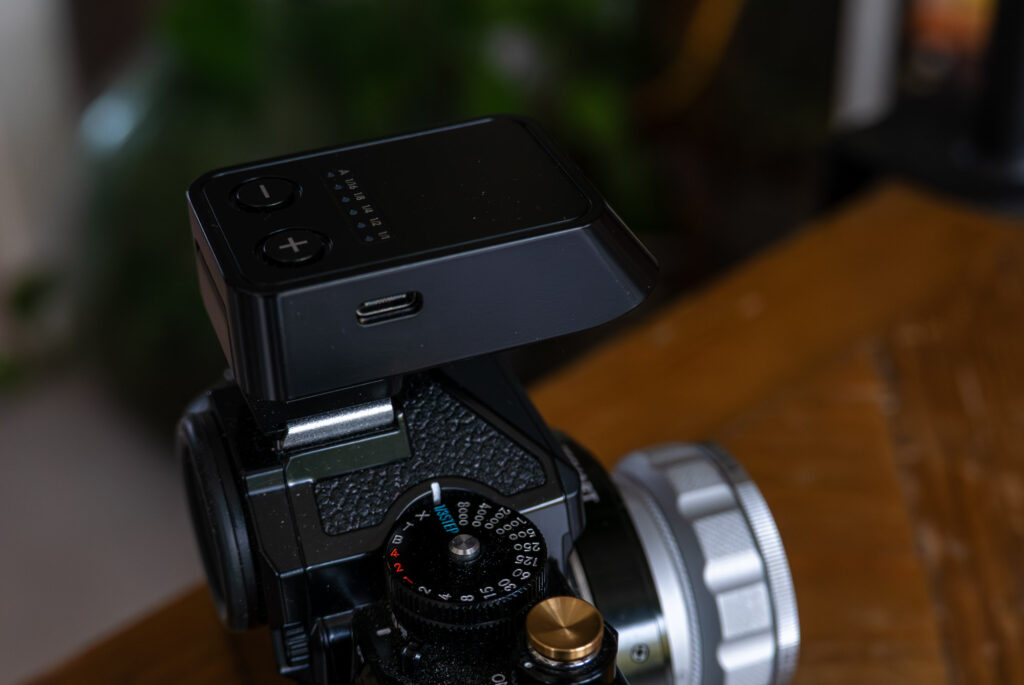
It’s charged via a USBc port on the side and according to the spec sheet takes 70mins to fully charge, and will last for 700 full power flashes.
To save power, it will turn off automatically after 15 minutes. This isn’t a sleep mode as such, it seems as needs to be powered up as if it was turned off using the button.
A few sample shots
Having recently had a minor op, I’ve been in recovery, and so haven’t been out the house much. This did give me the chance to write this review, but not as much of a chance to get sample images. With that said, here are a few. As mentioned, I’ve not been given any reason to doubt the capabilities of this flash within the boundaries of its use case. In short, I’ve been happy with the results!


Final thoughts
I’m not really a fan of judging products by price or value really – it just feels like a redundant personal/subjective stance to take since everyone else’s perception of value is different. Pretty much everything Viltrox has sent me to review though has pushed me into a corner when it comes to this stance, and this Vintage Z2 flash is no exception. It costs next to nothing; $35 USD is the price they’ve told me at the point of writing this review, but even if it’s £35 it’s still a tiny amount of money for an albeit small, but nonetheless totally functional TTL flash.
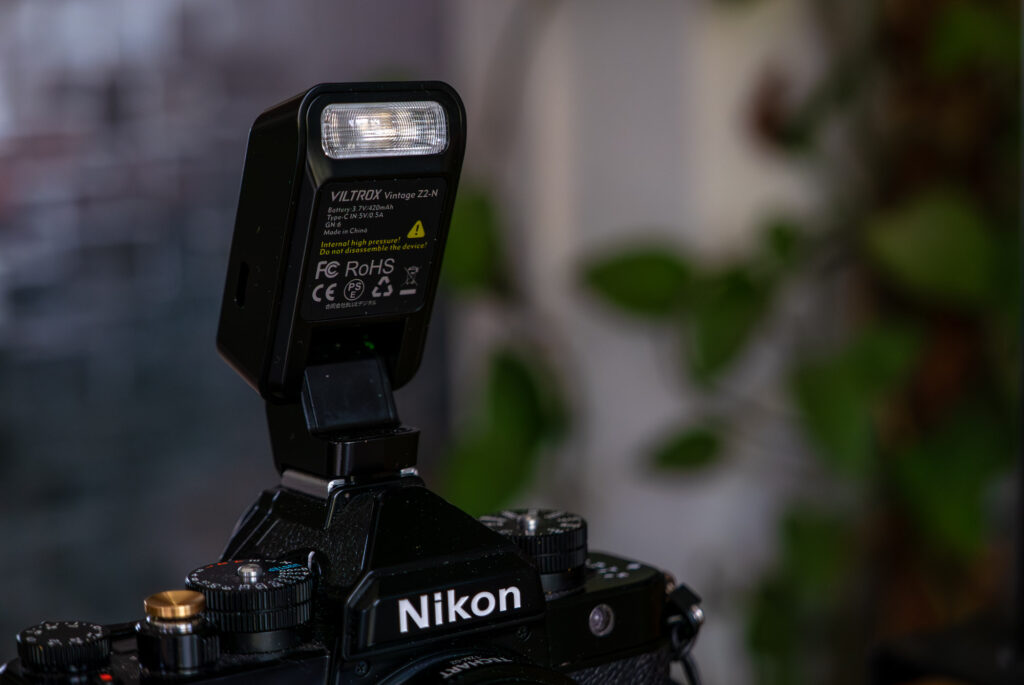
I’m fortunate in that Viltrox have given me this flash to keep, but had they not, I’d be buying one for sure. I just don’t need a big fancy, powerful flash with loads of features. For what I occasionally use flash for, a little low-powered unit that I can store in a little zip-pocket in my camera bag for the occasional emergency is ideal for me. That said, clearly it isn’t perfect – the fact that it takes a little while to turn on might frustrate some. The plasticky build might feel cheap to others. But for the money, neither of these issues bother me for the light use it will see in my world. It also, specifically, looks great on the Nikon Zf – in fact, I think it might be designed to match it. And, ultimately, at least within what I perceive as its use case, the Viltrox Vintage Z2 seems to work very well too!
Price: $35.99 USD / €36.99 EUR / £31.99 GBP / $49.99 CAD / ¥6200 JPY
There is a launch discount offer of 8% off for the first 5 days after launch, 5% after that using this (affiliate) link: https://geni.us/VintageZ2HG
Share this post:


Comments
Jeffery Luhn on Viltrox Vintage Z2 TTL Flash (on a Nikon Zf) Mini-Review
Comment posted: 18/03/2026
People have donated several studio strobe kits to my college and this little strobe seems like the ideal economic solution for wirelessly triggering them. Many cameras have no pop-up flash and the popular Canon Rebel models have no manual flash mode, so their 'trial flash' always triggers slave units out of synch. Ugh. Thanks for the review.