

Growing up, my family would spend a few weeks in the summer on Long Beach Island, New Jersey. My first job was at Fantasy Island, the amusement park in Beach Haven. It’s also where I shot film for the first time. One morning in July I woke up thinking about film and went “wait, how long has it been?” and realized it had been more than three years. So at the end of the summer I decided to get back to it.
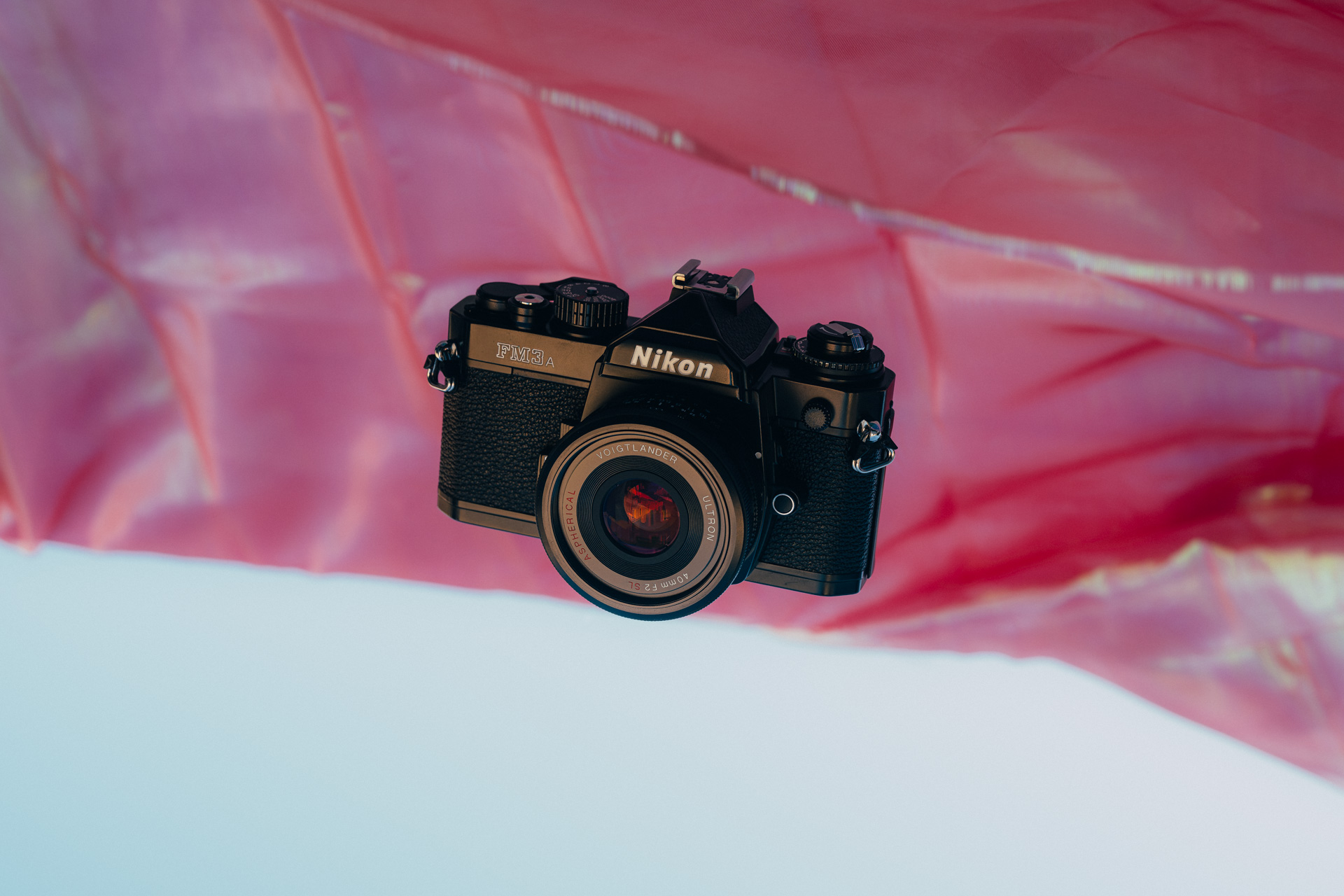
I looked into a camera that had been on the top of my list for years, the Nikon FM3A, and paired it with a Voigtländer Ultron 40mm SL II-N. I wanted to play around with stacking filters, and the FM3A’s metering would help with that. I ran nine rolls and four stocks through it. A circular polarizer went on for most of them. On the Ektachrome E100 I stacked an 81C warming filter under the CPL; on the HP5 400, an orange. The polarizer was always on the outside of the stack. I shot everything at box speed and aperture priority, letting the FM3A pick the shutter speed. The Voigtländer has a 52mm thread, though it becomes 39mm if you’re using the dedicated hood (which I wasn’t).
All these filters really cut down on light. My math might be off, but I think the Ektachrome was running at an effective ISO somewhere near 20, the HP5 near 25, the Gold 200 near 50. In the years since I’d last shot film, I’d lost my shutter release cable, and by lost, I mean broke it. So I planned to only shoot on extremely sunny days. The FM3A meters through all of the glass, which is great, but it also led to some situations I didn’t expect. The polarizer darkened the sky, but the meter read the frame as darker and opened up to compensate, undoing what the polarizer had just done. Looking back, I wish I’d done some manual exposures to compare.
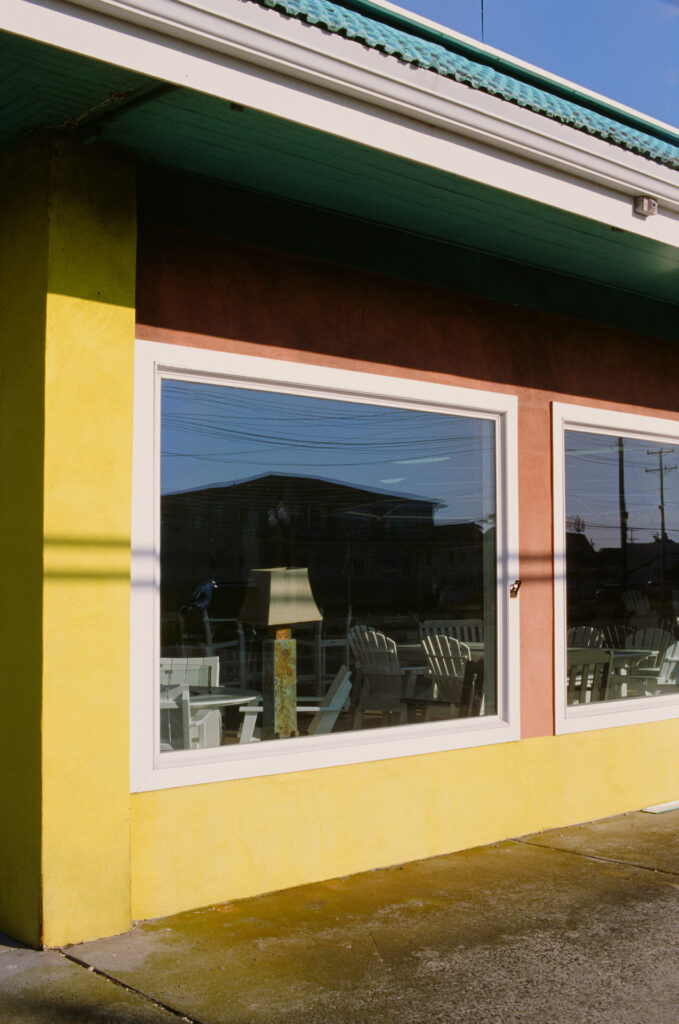
I wanted to see what the polarizer would do to a window in direct sun with objects clearly visible behind the glass. My initial intention for the CPL was skies, since I don’t shoot many storefronts. It kept the houses and power lines reflected on the surface, and the chairs and the lamp inside at the same time.
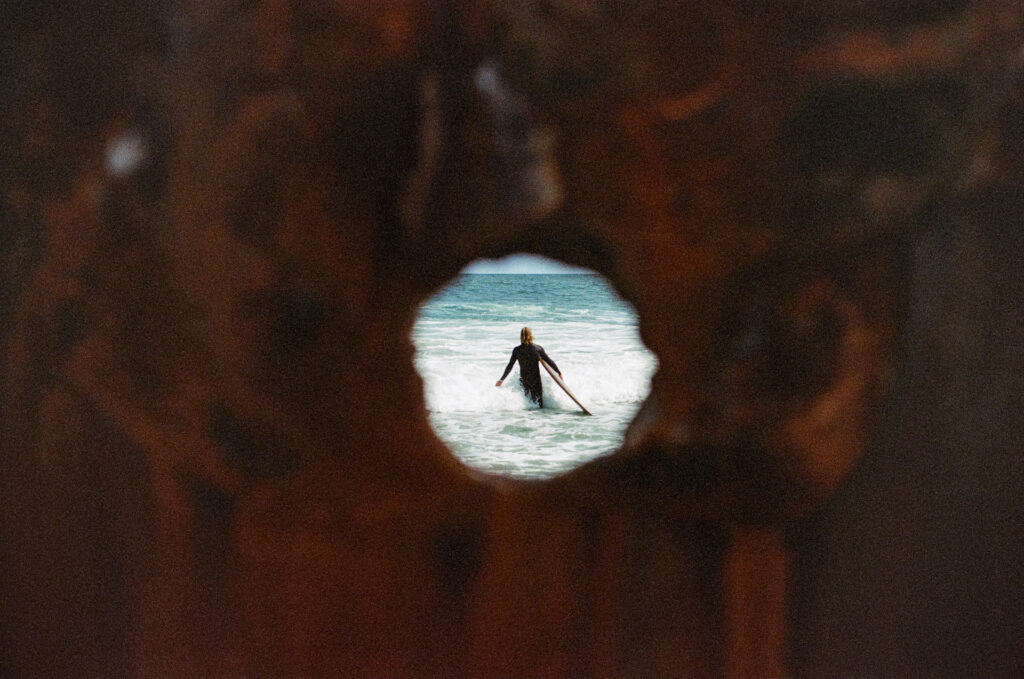
This was with Portra 800 expired by four years, CPL on, shot through a bolt hole in a rusty seawall. I wasn’t doing myself any favors with this one. I could see the surfer on the beach and knew he’d be going in, but the thing about the ocean is that it’s the ocean. It’s kinda big, so I wasn’t sure if he’d even come by. I was looking through a small hole through another small hole. I can’t remember if I metered off the water and used exposure lock, or let the meter read the metal taking up 90% of the frame.
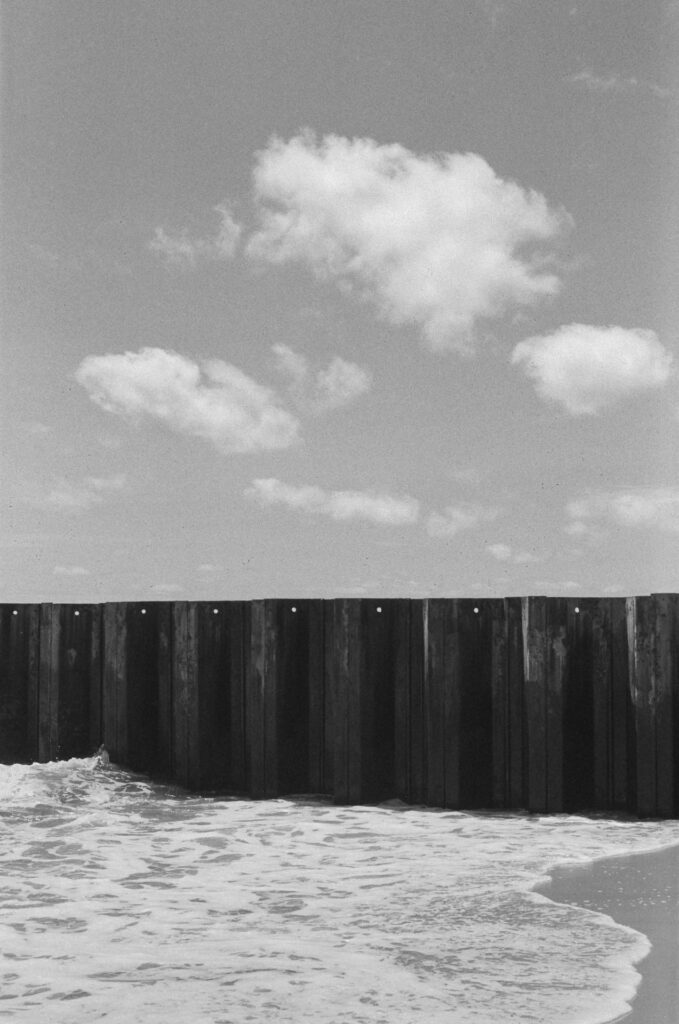
I was really excited to use the orange filter, as I had never used one before. I wanted the clouds to stand out, but I wasn’t sure what would happen with the CPL stacked on top. On most of the black and white frames the sky pulled down and left the clouds white and puffy. On plenty of others it did nothing at all. The orange filter’s results depend on how blue the sky is. On a hazy day it won’t work as well. Which makes sense. If film’s taught me one thing, it’s to learn from the frames that didn’t work and enjoy the ones that did.

The most mundane of the five and my favorite. Before sunrise I walked to an empty red house for sale down the street and loaded up Ektachrome E100 with the warming filter and the polarizer. Once the sun fully covered the house, I took way too many photos of it. The other ones came out alright, but the red didn’t look the way I remembered. With this one the color came closest to how I saw it that morning.
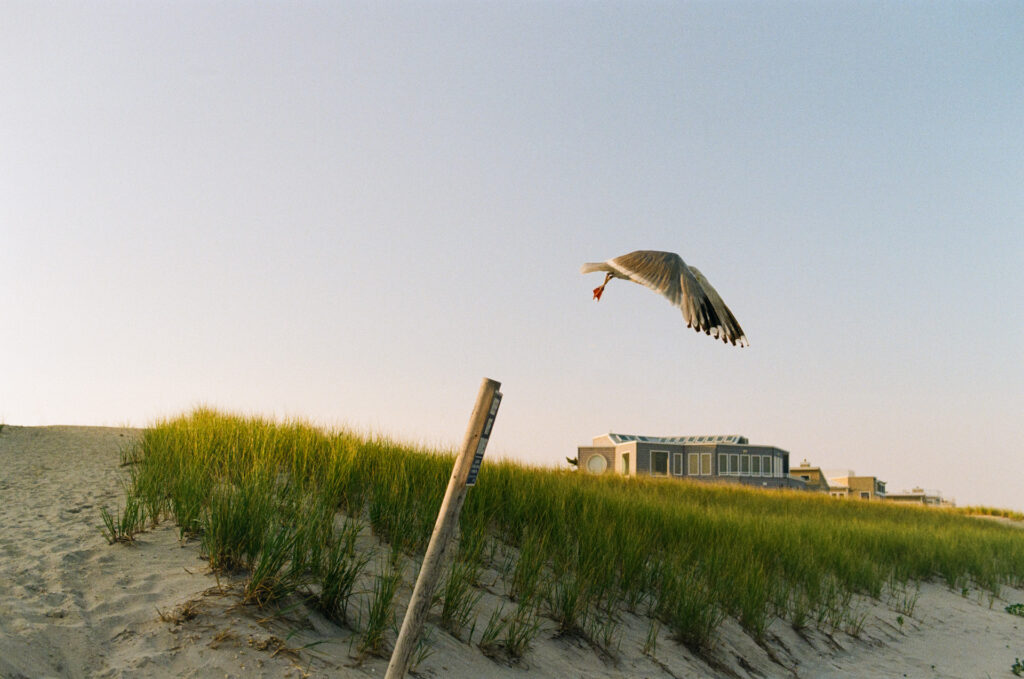
I was walking slowly toward a seagull minding its own business as the sun was setting. I took this earlier in the nine rolls, so I was still getting the muscle memory of where the focus ring sits on the Ultron and how sensitive it is. I was continuously focusing while walking forward, until I got too close and took the photo as we scared each other. I was pleasantly surprised when I got this one back.
When there’s enough light, I wouldn’t hesitate to stack filters again. To be honest about the Ektachrome though, slide film is expensive and very particular with the light it needs. So that’s the only one where I’d really weigh the pros and cons, and then end up doing it again anyway.
I’ve since been printing these at home in a makeshift corner I’m sure my dogs would love to get into. Even if you’re not doing it for anyone but yourself, I’ve found the act of printing, especially film, to be cathartic.
Thanks for looking at a house and a seagull. You can see more of my work at jonathangrado.com.
Share this post:

Comments
Gary Smith on 5 Frames with a Nikon FM3A and Three Filters on Long Beach Island
Comment posted: 18/11/2026
I like your shot through the bolt hole and the one of the seagull.
Thanks for your post!
Jeffery Luhn on 5 Frames with a Nikon FM3A and Three Filters on Long Beach Island
Comment posted: 18/11/2026