

So there was this guy who took it upon himself to hike from the Atlantic Ocean all the way down to the Mediterranean, following the Pyrenean long-distance mountain trail, all of 850 kilometres in 48 days. In his backpack he had made room for a panoramic pinhole camera, nine rolls of 120 film and a mediocre little tripod. His aim was to shoot a frame a day, capturing his impressions in the most basic version of photography he could think of. The story of his hike, along with a selection of the pictures that he took, made it into a feature article in the German newsmagazine DER SPIEGEL.
The story and the images captured my imagination. I did a little research into the equipment our hiker had used: a LeRouge 612. I felt that this would be a welcome addition to the homemade 4×5 pinhole camera that I already owned and couldn’t stop myself from ordering a copy.
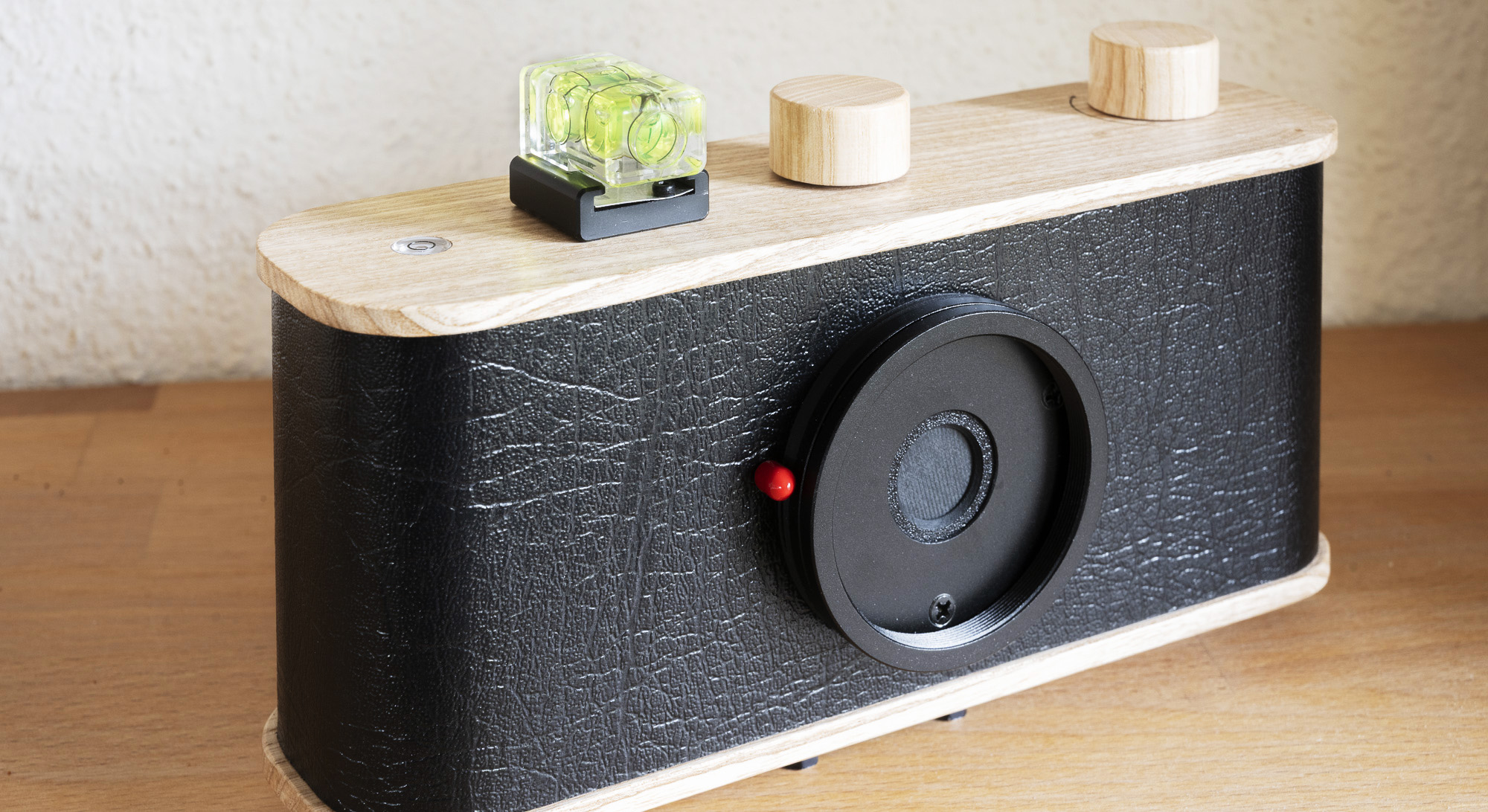
The original version of the LeRouge looks very much like a toy from the Barbie catalogue in terms of colour (pink!), style and the most basic functionality. But the more recent release, the LeRouge 612 MK2, comes across more like a Barnack Leica on steroids: elegant black leatherette meets stylish wood, complete with the famous red dot on the shutter release.
The camera is made by Philippe Leclerc from Bayeux, France. It exudes an air of minimalist design and solid precision manufacturing and is a joy to handle. The negative format has an aspect ratio of 2:1, the focal length is 45mm and the pinhole measures 0,25mm in diameter. This translates into an effective aperture of f/180 and the equivalent of a 12mm wide-angle lens on a 35mm full format camera. It features a 58mm screw mount for any filters you might want to use (a step-down ring makes it possible to use the more widely used 52mm filters), a tiny spirit level and a thread to attach the camera to a tripod.
In practical use it turns out, however, that the 612 does come with some quirky design features. For starters there is the very tiny spirit level. I am used to handling LF cameras, feeling more comfortable with a larger spirit level, and so I took the liberty of adding a standard cold shoe to the camera and popping on a decently-sized spirit level, as I do like my photography, when it involves architecture, to be properly levelled out.
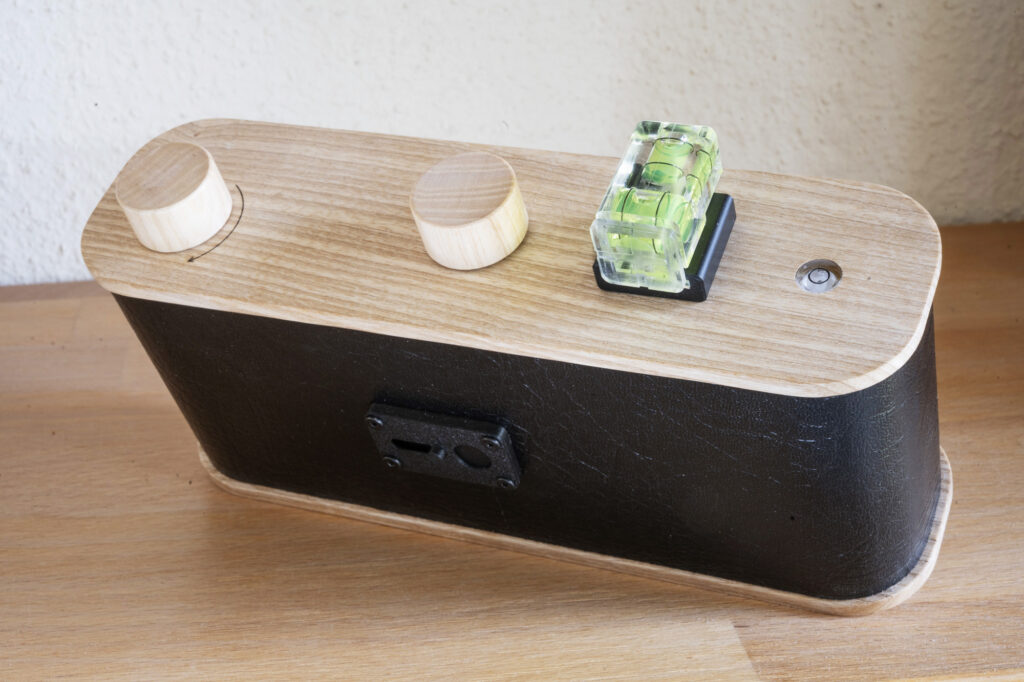
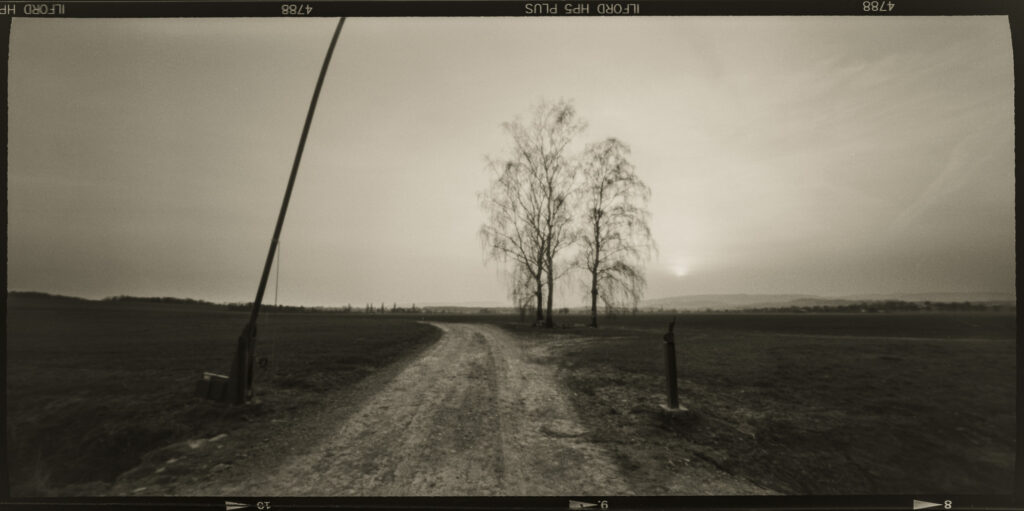
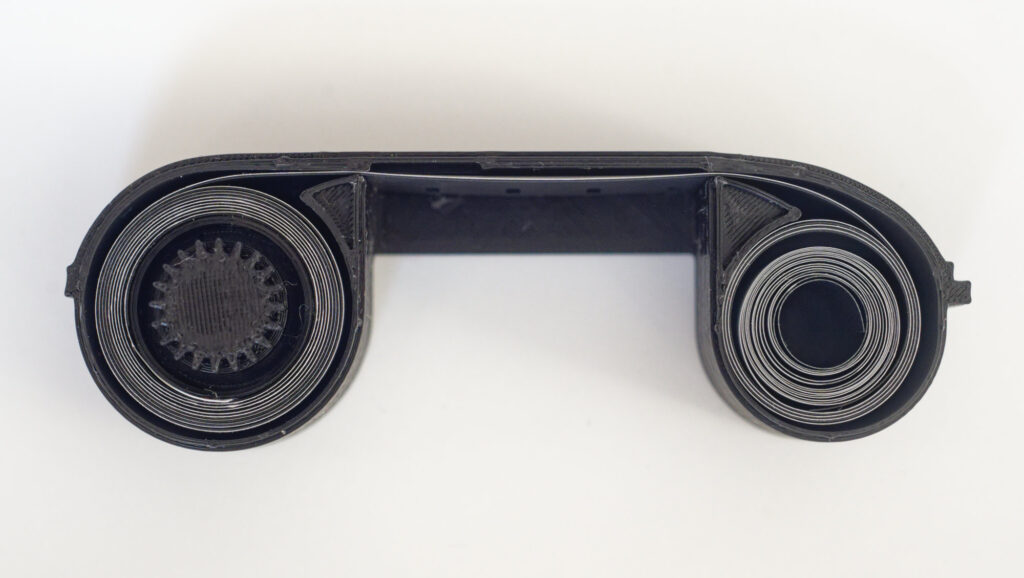
Glancing down at he camera from above I noted that the take-up spool is counterintuitively placed on the left – when it is normally placed on the right. Not really a problem, of course, but as a result the image numbering on the film turns out to be up side down.
And then there is the location of the window to the frame counting marks on the back paper of the film. Philippe suggests that users wind the film forward with reference to the even numbers. This works well – but only just. The last frame will be placed right at the very end of the film, making it impossible to attach a film clip to weigh the film down for drying after development. The workaround is that when winding the film on, you just stop at the first of the four markers BEFORE you reach the even number on the back paper of the film. In the meantime Philippe has already announced a slight modification of the 612 in which the window will be moved slightly to the right. Problem solved for all new customers.
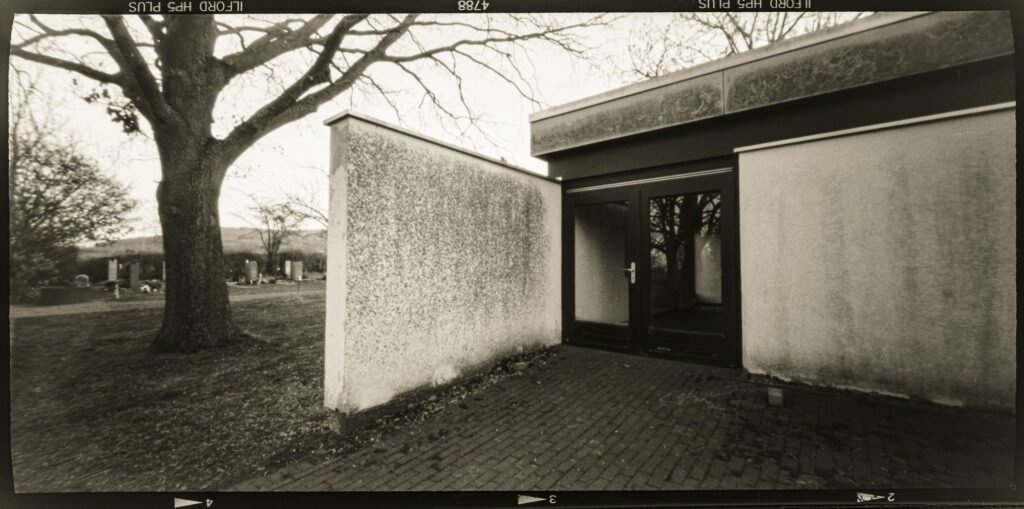
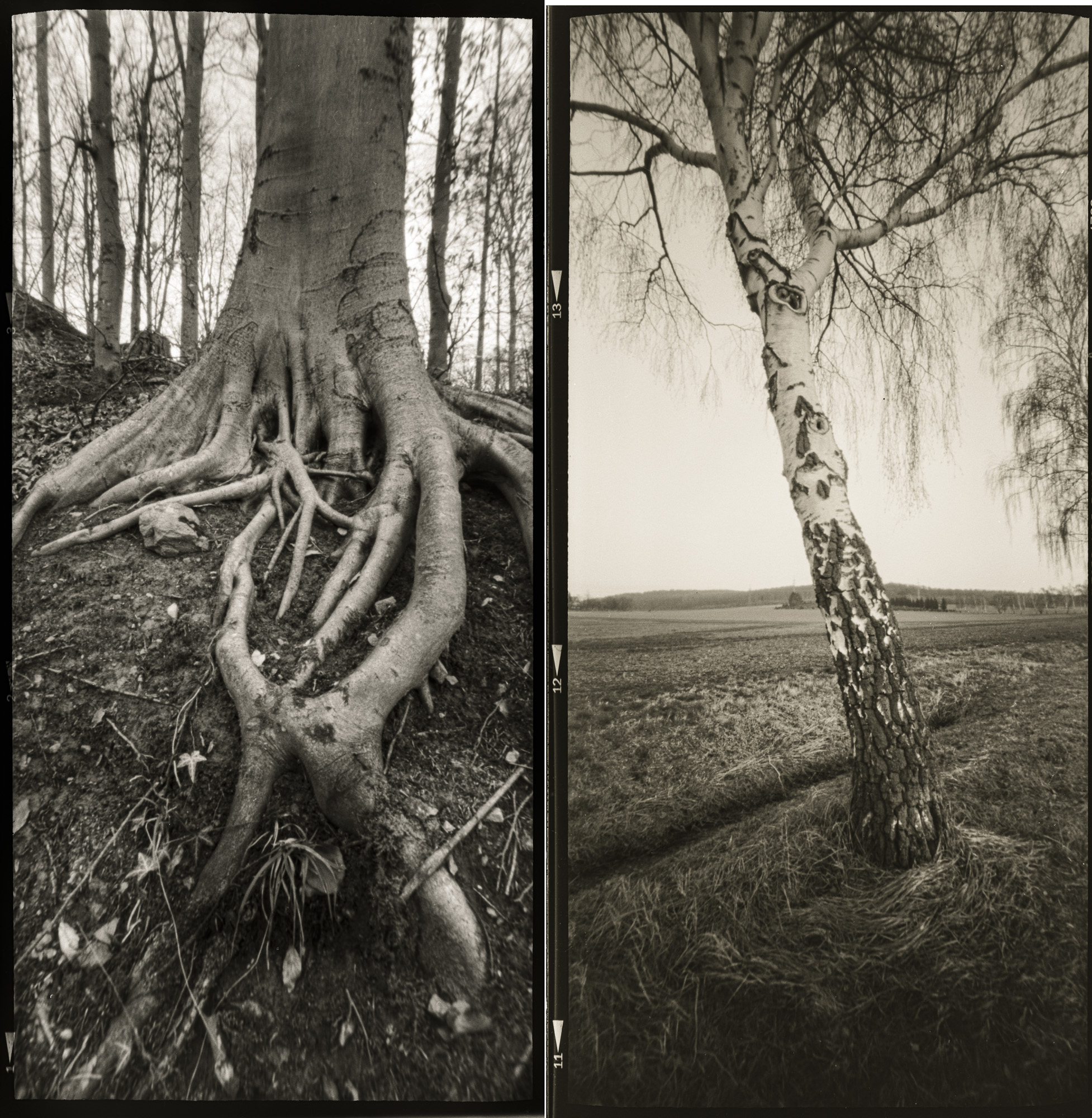
OK, so none of these quirks seriously get in the way of enjoying pinhole photography with the 612. I find that its compact size makes me want to take it along on shootings much more often than is the case with my rather boxy 4×5. Also, there is no need to carry a supply of film holders. Pop in a 120 film and you can shoot six frames without having to reload the camera. The ultra wide angle panoramic format stimulates my creativity and the results are often quite pleasing.
Kudos to Philippe for bringing this product to market, an embodiment of what Leica’s PR calls “das Wesentliche” – the essential. I guess photography doesn’t get any more essential than when using a 612 or one of its pinhole cousins. And although the LeRouge 612 MK2 doesn’t quite fit into a vest pocket, I feel that Oskar Barnack would have approved of it.
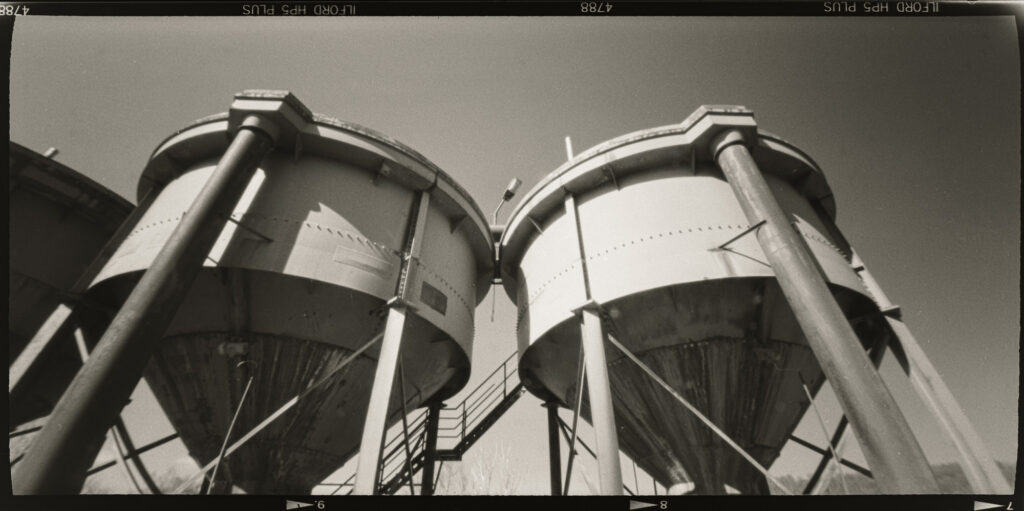
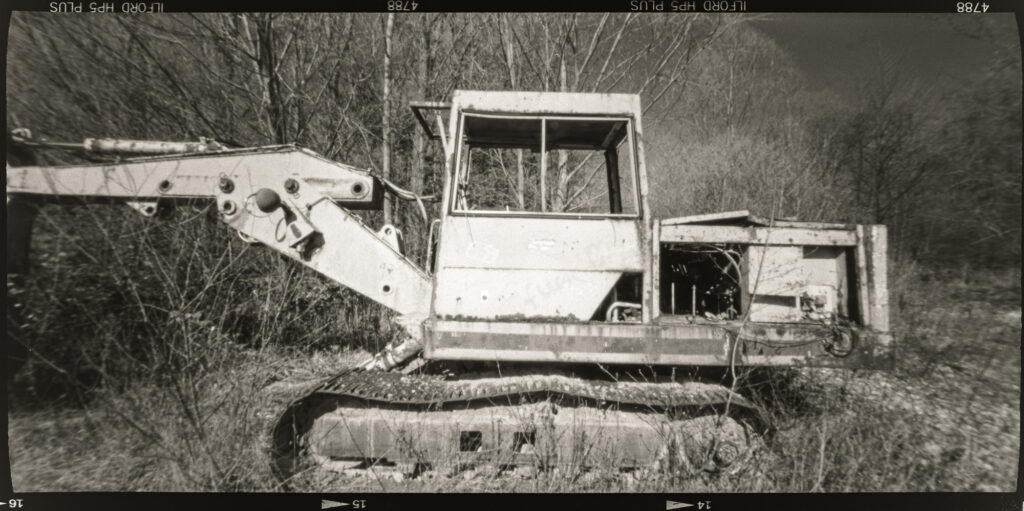
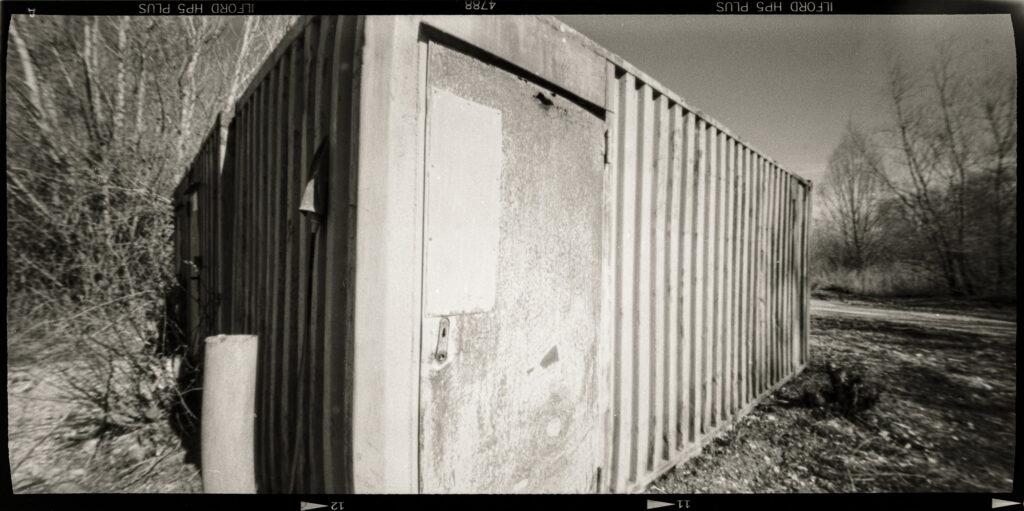
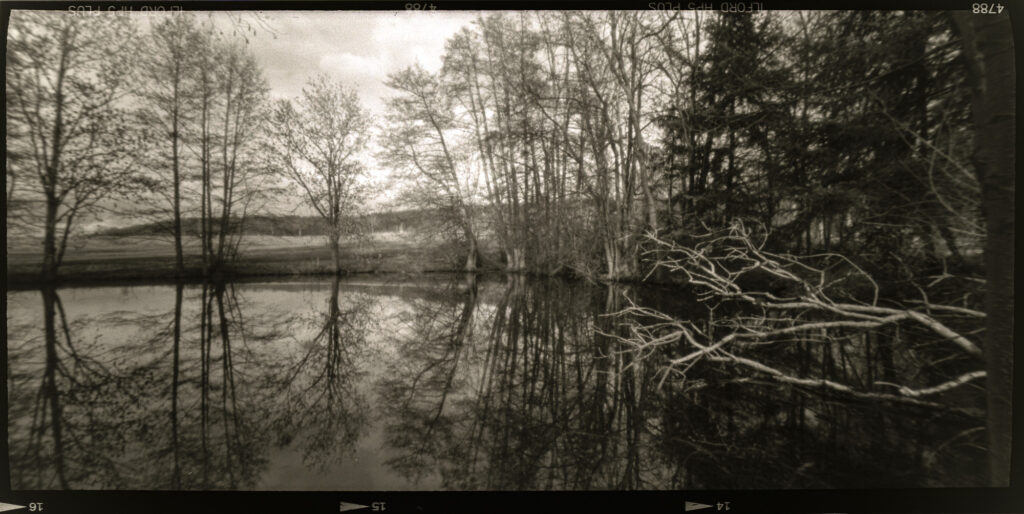
Thanks for reading, Jens
Share this post:


Comments
Martin Siegel on LeRouge 612 MK2 – Portable Panoramic Pinhole – Why Barnack would have approved of it
Comment posted: 22/04/2026
Thanks again and good light always
Martin in Austria
Comment posted: 22/04/2026
Bob on LeRouge 612 MK2 – Portable Panoramic Pinhole – Why Barnack would have approved of it
Comment posted: 22/04/2026
Is the Der Spiegel article online somewhere? I was unable to find it via google.
Comment posted: 22/04/2026
Gary Smith on LeRouge 612 MK2 – Portable Panoramic Pinhole – Why Barnack would have approved of it
Comment posted: 22/04/2026
Chuck on LeRouge 612 MK2 – Portable Panoramic Pinhole – Why Barnack would have approved of it
Comment posted: 22/04/2026
Comment posted: 22/04/2026
Tony Warren on LeRouge 612 MK2 – Portable Panoramic Pinhole – Why Barnack would have approved of it
Comment posted: 22/04/2026
Comment posted: 22/04/2026
Comment posted: 22/04/2026
Walter Reumkens on LeRouge 612 MK2 – Portable Panoramic Pinhole – Why Barnack would have approved of it
Comment posted: 23/04/2026
Comment posted: 23/04/2026
Simon Foale on LeRouge 612 MK2 – Portable Panoramic Pinhole – Why Barnack would have approved of it
Comment posted: 25/04/2026
Comment posted: 25/04/2026
Comment posted: 25/04/2026
Jeffery Luhn on LeRouge 612 MK2 – Portable Panoramic Pinhole – Why Barnack would have approved of it
Comment posted: 28/04/2026
Really amazing quality for a pinhole camera!! Thanks for posting!
Jeffery