

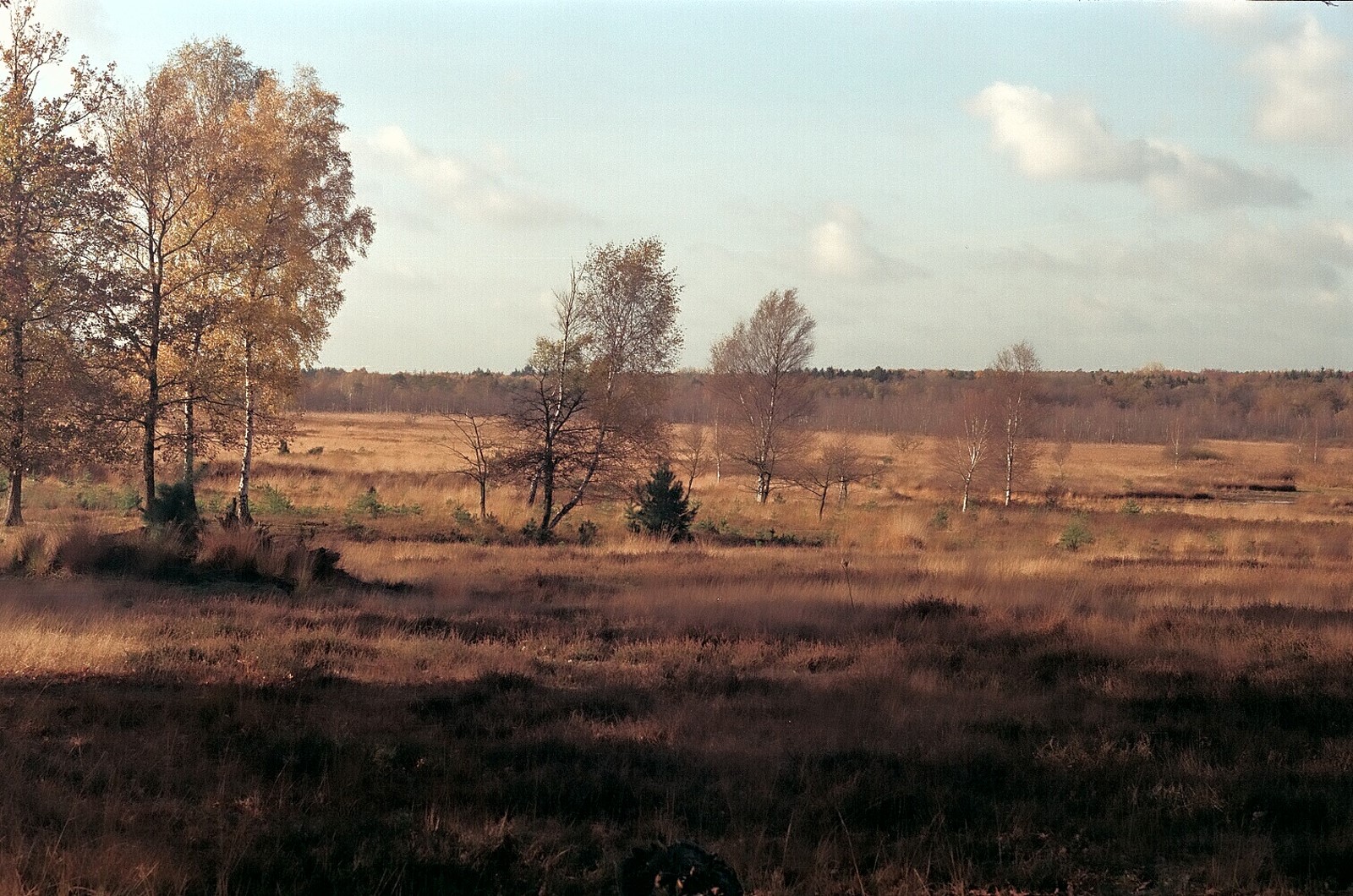
A discussion with a community member here on 35mmc led us to cameras “Made in Germany”, and we soon found ourselves talking about Carl Zeiss Jena and the “Contax D” with the Biotar 2/58mm lens from the same manufacturer. I bought it a good 10 years ago from a house clearance dealer who knew little about photography and was more interested in the business side of things. I got it cheaply, though, even though it turned out after the first roll of film that it would be better to have it serviced.
I’m writing about this camera, which is engraved with “CONTAX D” ZEISS IKON VEB – that is, a state-owned enterprise of the GDR.
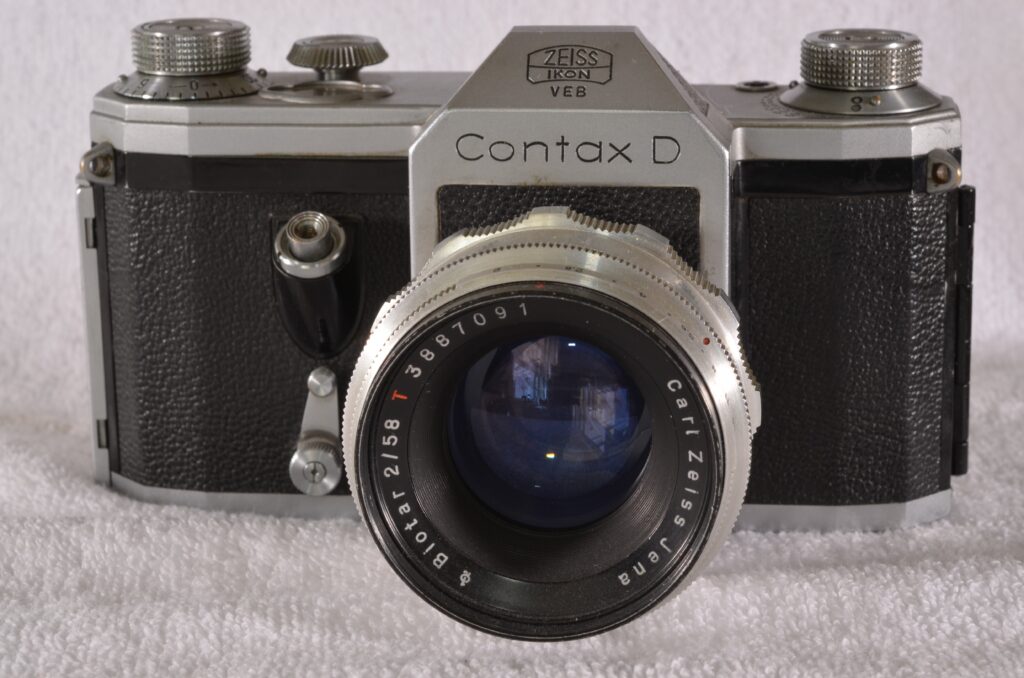
The photo was taken before the camera was serviced at Foto Olbrich in Görlitz, Saxony – the town on the border with Poland where ‘Meyer Görlitz’ lenses used to be designed and manufactured. I believe the specialist shop is now run by the third generation of the family; it’s a small family business that I can highly recommend for servicing cameras and lenses from the GDR era.
The camera is considered a classic: robustly built, good quality, with a huge viewfinder, a great, powerful shutter sound, and a legendary lens.
I took the photo shown above in the Maas-Schwalm-Nette Nature Park in Germany, on the border with the Netherlands. The border runs virtually right through the middle of the picture here. It was my first roll of film with such an old camera. As it has no light meter, I had a Gossen Profisix with me, though I had little experience using it. The film was called ‘Paradies 400’, the own-brand of a large chemist’s chain in Germany. The origin of the film is unknown. I shot at ASA 400 on a late autumn afternoon. At box speed, there shouldn’t really be any pastel tones, so the character of the photo must be down to the film, the lens or the exposure.
I still don’t know to this day. Perhaps someone can help me.
.
Share this post:


Comments
Gary Smith on In the nature reserve in the Netherlands / Germany – A One Shot Story
Comment posted: 24/06/2026
Walter Reumkens on In the nature reserve in the Netherlands / Germany – A One Shot Story
Comment posted: 24/06/2026
Comment posted: 24/06/2026
Comment posted: 24/06/2026
Comment posted: 24/06/2026
Comment posted: 24/06/2026
Ibraar Hussain on In the nature reserve in the Netherlands / Germany – A One Shot Story
Comment posted: 25/06/2026
Made in west Germany or Wast Germany - the cameras were and still are beautiful
This is a wonderful camera and one which is in my list!
Ive a soft spot for Contax cameras. And Zeiss derived ones.
I had a couple of Pentacon Six medium
Former cameras but both were faulty which was a shame.
There was one camera labelled Carl Zeiss Jena - that was the Werra series.
A shame what happened after the war when Germany was plundered (and genocided) by both East and West and after unification as well when DDR businesses were broken
Comment posted: 25/06/2026
Comment posted: 25/06/2026
Comment posted: 25/06/2026
Comment posted: 25/06/2026
Comment posted: 25/06/2026
Comment posted: 25/06/2026
Comment posted: 25/06/2026
Comment posted: 25/06/2026
Comment posted: 25/06/2026
Gerard on In the nature reserve in the Netherlands / Germany – A One Shot Story
Comment posted: 25/06/2026
One even invented special bacteria to get rid of the millions of plastic Trabant cars, once the pride of the people in the DDR.
Walter Reumkens on In the nature reserve in the Netherlands / Germany – A One Shot Story
Comment posted: 25/06/2026
Omar Tibi on In the nature reserve in the Netherlands / Germany – A One Shot Story
Comment posted: 30/06/2026
Would love to give it a try! It's not a Contax, but the one DDR era camera that I would seriously love to own would be a Werra 3, in the original Thuringian green. It has such a beautiful, Bauhaus style design.
Comment posted: 30/06/2026