

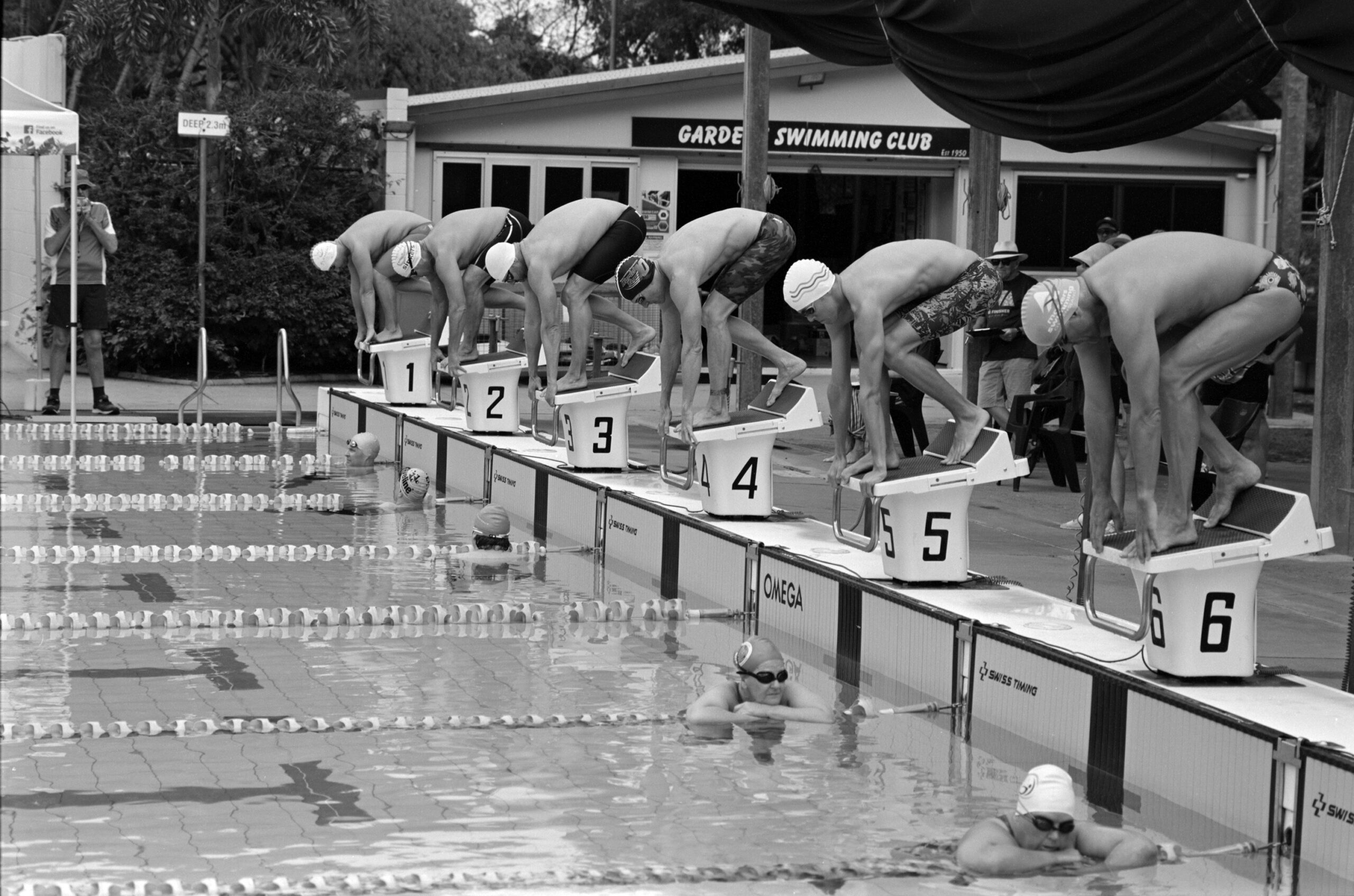
I have chosen swimming pools as the main subject for this post, since swimming is an important sanity maintenance activity for me (in addition to photography of course!). Swimming keeps me aerobically fit, provides mental clarity and balance, and connects me to a wonderful community of swimming enthusiasts of all ages and backgrounds. Diving into a crystal clear, uncrowded pool on a sunny Sunday morning, and letting my mind unspool as I lap is one of life’s simple pleasures that I have long cherished. The embrace of both water and light is relaxing and uniquely transcendent. It often reminds me of scenes from the observation deck of the Icaraus II in Danny Boyle’s wonderful 2007 movie, Sunshine.
In her fascinating book, ‘Why We Swim’, Bonnie Tsui notes that while most land mammals can swim instinctively, humans and other large primates have to be taught. But what we lack in instinct we make up for in ‘cumulative cultural learning’. This resonates strongly with me, having grown up in the Solomon Islands, but lived most of my life in Australia, because the ‘Australian Crawl’ (AKA ‘front crawl’) was actually practiced pre-colonially by Solomon Islanders (and Native Americans, among others), and introduced to settler Australians by western Solomon Islander Alick Wickham in the early 20th century.
I can’t say swimming pools are my favourite photographic subject (I’m more interested in nature and landscapes), but they often feature a lot of strong highlights and shadows, so photographing them with the high resolution, high contrast films that have captured my imagination since returning to analogue photography really tests what the developers I want to talk about here are capable of.
In the introduction to the second edition of ‘The Film Developing Cookbook’, Bill Troop writes: ‘Silver photography has always been a manufacturing miracle, in that, to this day, a lot of what happens in the manufacture and subsequent exposure and processing of film is still unknown. I can’t think of another manufacturing or engineering or scientific field where there are as many unknowns as there are in photography.’
So I want to reflect on some of that photographic alchemy here, in relation to four very sharp, fine-grained and high contrast black and white films (Adox CMS20, Agfa Copex Rapid, Kodak Technical Pan and Agfa Aviphot Pan 80), when they are ‘tamed’ with ‘compensating’ or ‘soft’ developers. Adox CMS20 and Copex Rapid are copy films, designed to image text in black and white with no grey. Tech Pan is originally a scientific film used commonly in microscopy, and Aviphot Pan 80 is an aerial photography film (sold as Rollei Retro 80S and RPX25, and in a slightly modified form as Adox HR-50). The developers I have mostly been testing with these films are H&W Control (originally developed for Kodak Technical Pan) and FX1, which is a slight modification of the well-known Beutler formula (NB: I no longer bother with the Potassium Iodide in the FX1 recipe). These are both widely touted as having strong compensating properties without the cost of any speed loss. ‘Normal’ developers, when used with some knowledge and care, can produce good tonal gradations with Aviphot Pan 80 and Tech Pan, but the other two are perhaps a little more of a challenge.
Let’s have a look at the images first and I’ll provide some reflections on the films and developers below. Negatives were developed at home in a small tank and scanned with a Nikon Coolscan LS-9000 ED using Vuescan. These images were made on the unceded lands of the Wulgurukaba, Djirbal, Irrukandji, Djabugay and Kuku-Yalanji peoples.
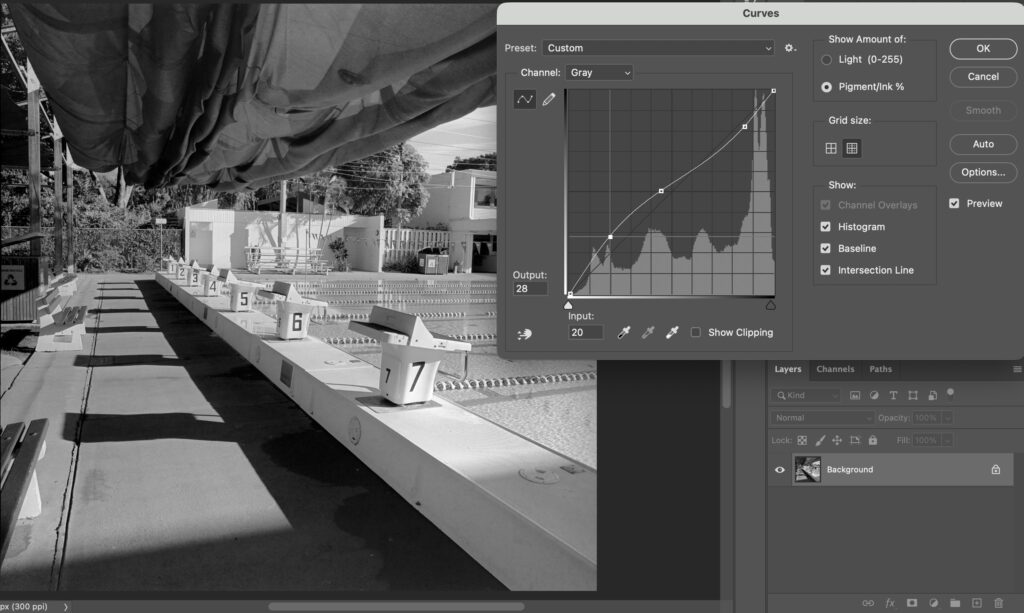
Featured Image: Swimmers on blocks at a masters swim meet, Long Tan pool, Townsville. Adox HR-50 exposed at 50ASA with a Nikon F801S and Ai-s Nikkor 85mm F2 lens. Dev: FX1, 15 mins at 20C; agitation 10sec/3mins. The day was overcast so managing contrast was not a challenge.
This was the image that got me thinking about doing this post. You can see how contrasty it is, yet there is no loss of detail in shadows or highlights. Rollei Retro 80S exposed at 50ASA with an Olympus XA. Dev: FX1, 15 mins at 20C; agitation 10sec/min.
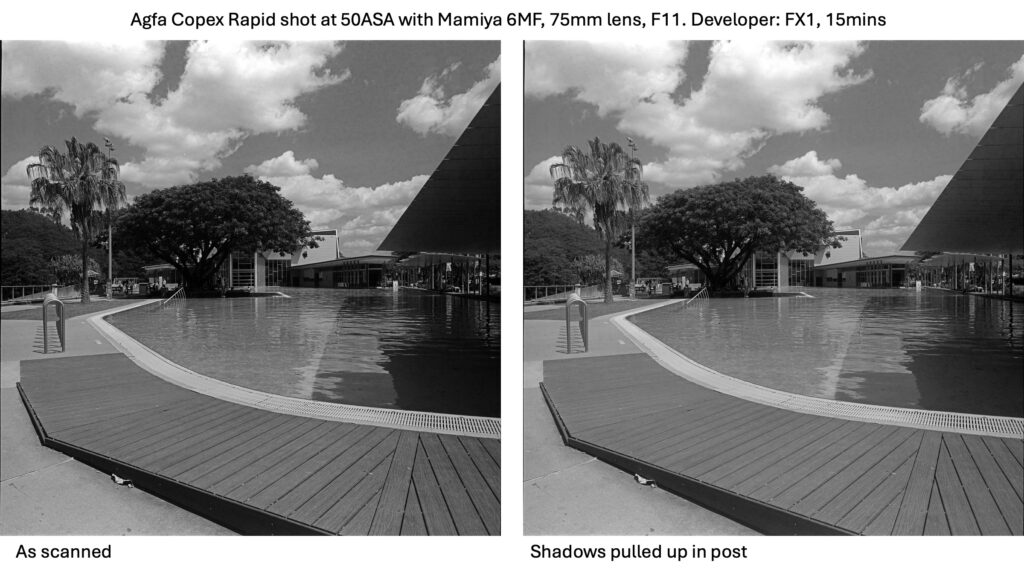
Agfa Copex Rapid exposed at 50 ASA with a Mamiya 6MF and 75mm lens at F11. Developed with FX1 for 15mins at 20C; agitation 10sec/min. I bracketed at 32, 50 and 80ASA using the camera’s in-built centre-weighted meter. The 32ASA image has irretrievably blown highlights while the one at 80 has very dark shadows. The one at 50 had the best compromise. I’ve pulled the shadows up in post in the image on the right.
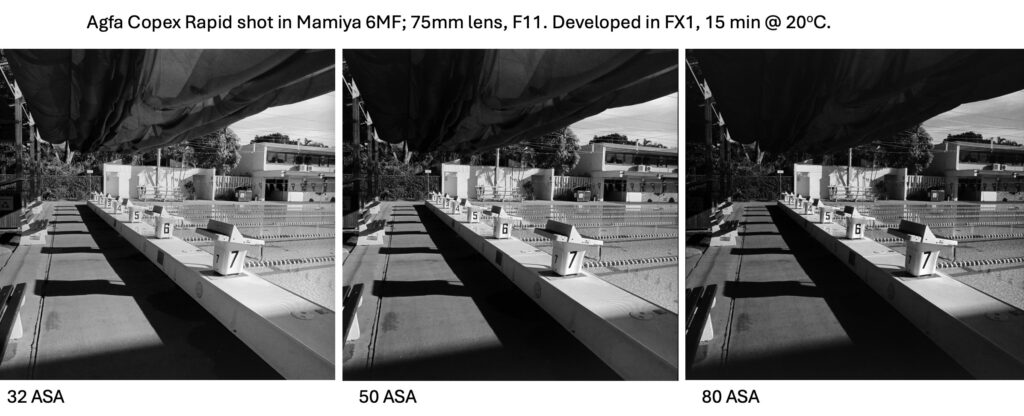
Agfa Copex Rapid exposed at 32, 50 and 80ASA with a Mamiya 6MF and 75mm F3.5 lens at F11. Metered using the camera’s centre-weighted meter. Dev: FX1, 15 mins at 20C; agitation 10sec/min. For me the best exposure is at 32ASA – shadows have the most detail and highlights are all preserved. 50ASA is also acceptable, but 80ASA isn’t.
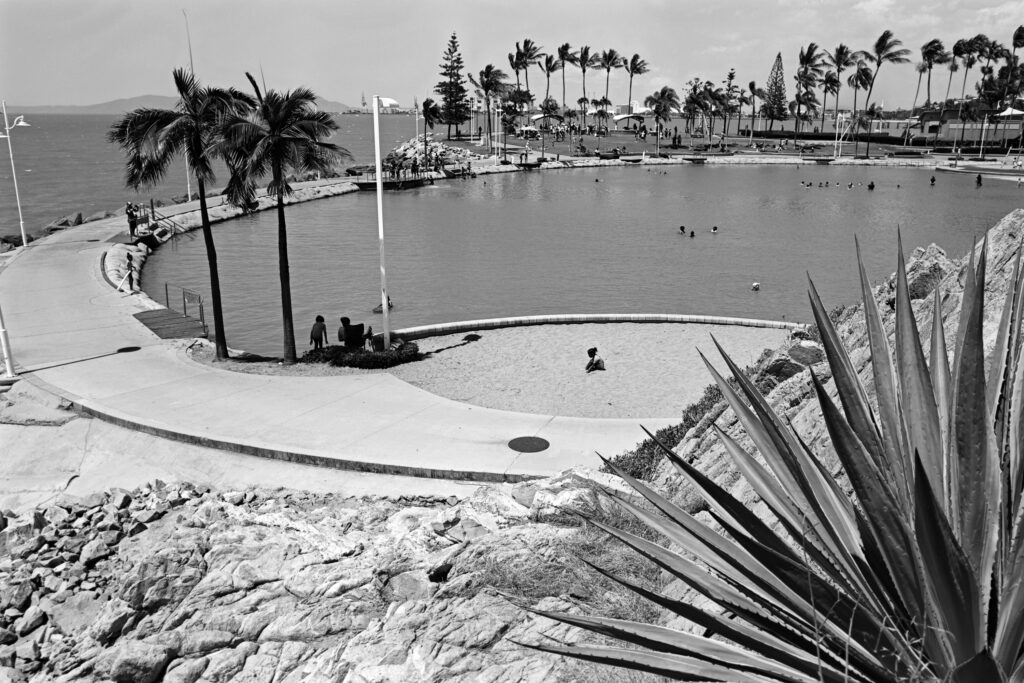
Adox CMS20 exposed at 10ASA with a Nikon F801S and Ai-s 28mm F2.8 lens. Dev: H&W Control, 11 mins at 20C; agitation 10sec/3mins.
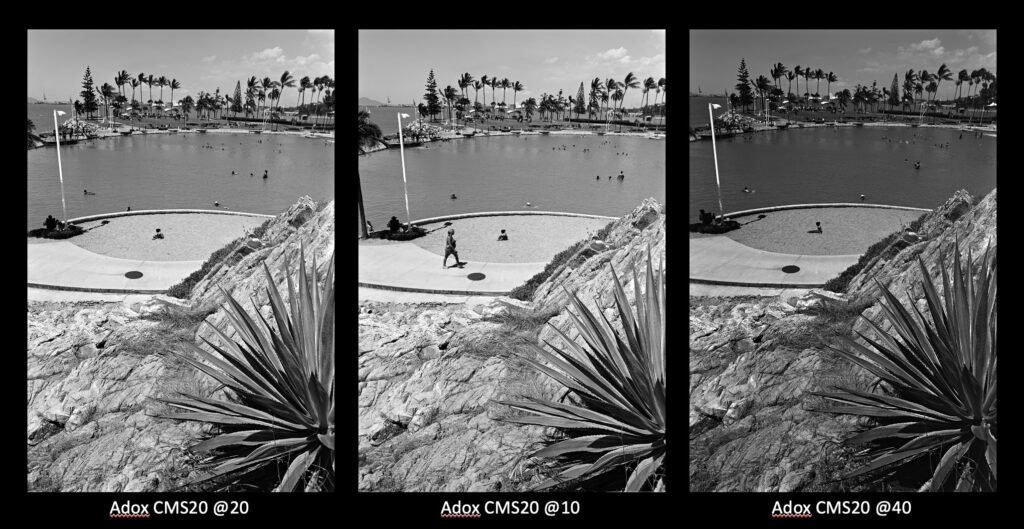
The Rock Pool on the Strand in Townsville. Adox CMS20 exposed at 20, 10 and 40ASA. Camera and development details as for the above image. I think the best image is 10ASA, though 20ASA works, but with less shadow detail.
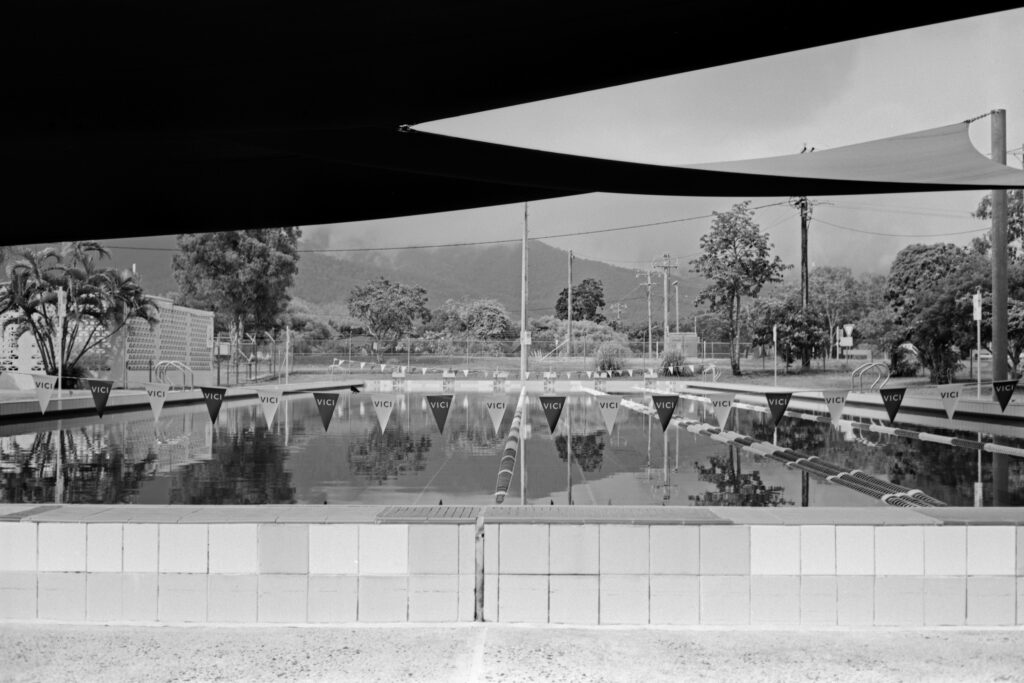
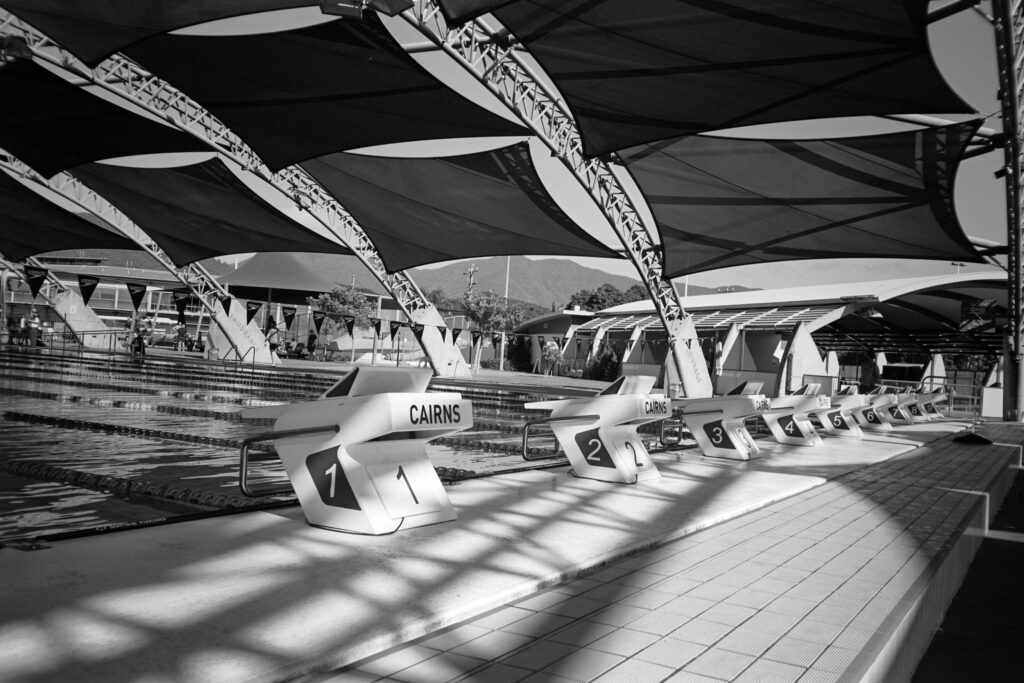
Adox CMS20 II exposed at 25ASA with an Olympus 35-SP. Dev: FX1, 20 mins at 20C; agitation 10sec/5mins. I’ve darkened the highlights a smidge in post in this shot. There is some loss of shadow detail on the undersides of the sails. Cardwell is a small coastal town between Cairns and Townsville that seems to regularly get hammered by cyclones. I am sure the Cardwell pool proprietor is good at taking those sails down quickly.
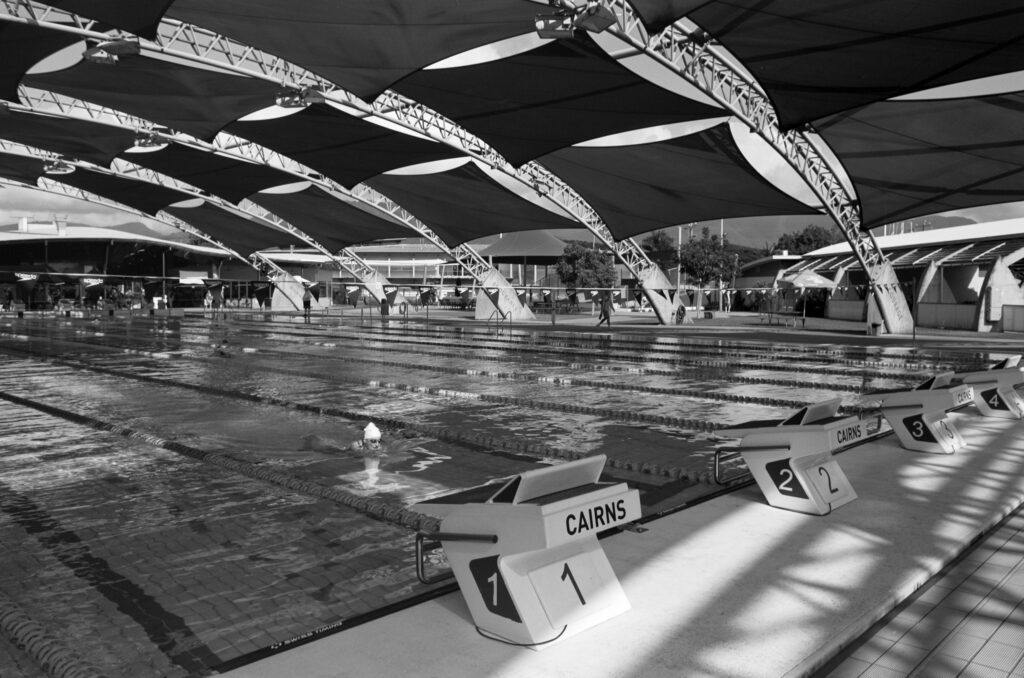
Kodak Technical Pan exposed at 25ASA with a Nikon FM2 and Ai-s 28mm F2.8 lens. Dev: Tetenal C41 developer (7th use); 9 mins at 20C; agitation 10sec/min. Fixer was Berfix Neutral black and white film fixer. This result is similar to what I got with Rollei Retro 80S and FX1 developer.
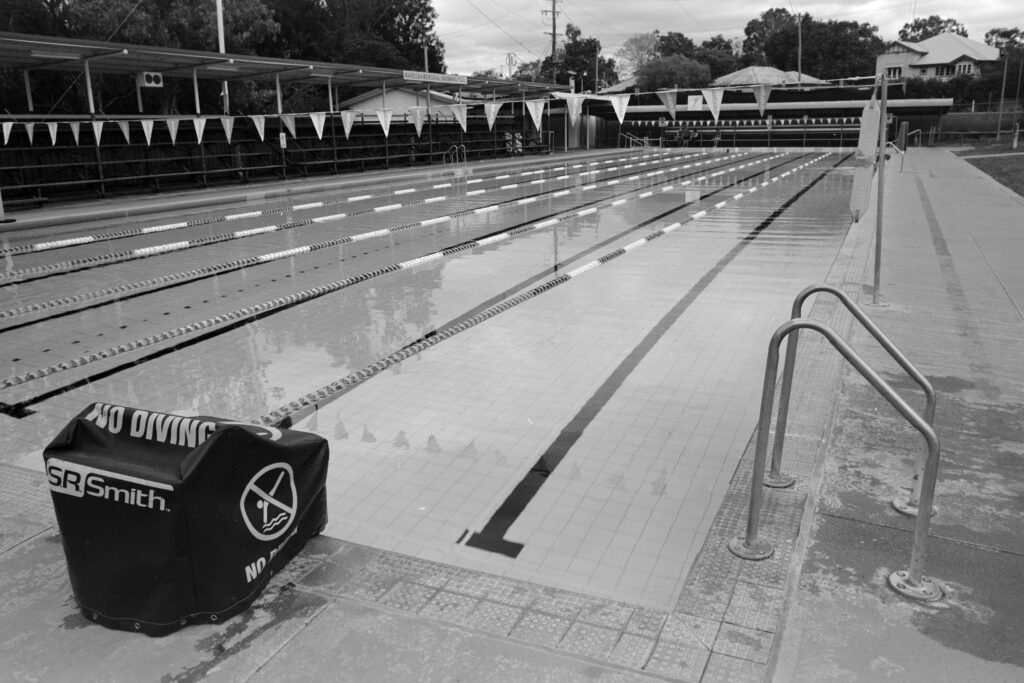
Kodak Technical Pan shot at 25ASA. Camera and development details as for previous image. I was inducted into competitive swimming in this pool as a youngster in the early ‘70s, after having moved to Australia from the Solomon Islands. Mareeba is west of Cairns, on the Atherton Tablelands. This image was made in mid-2025 on a pilgrimage to Mareeba with my parents, who now live in Southeast Queensland. The only noticeable change to the pool is the upgraded diving blocks.
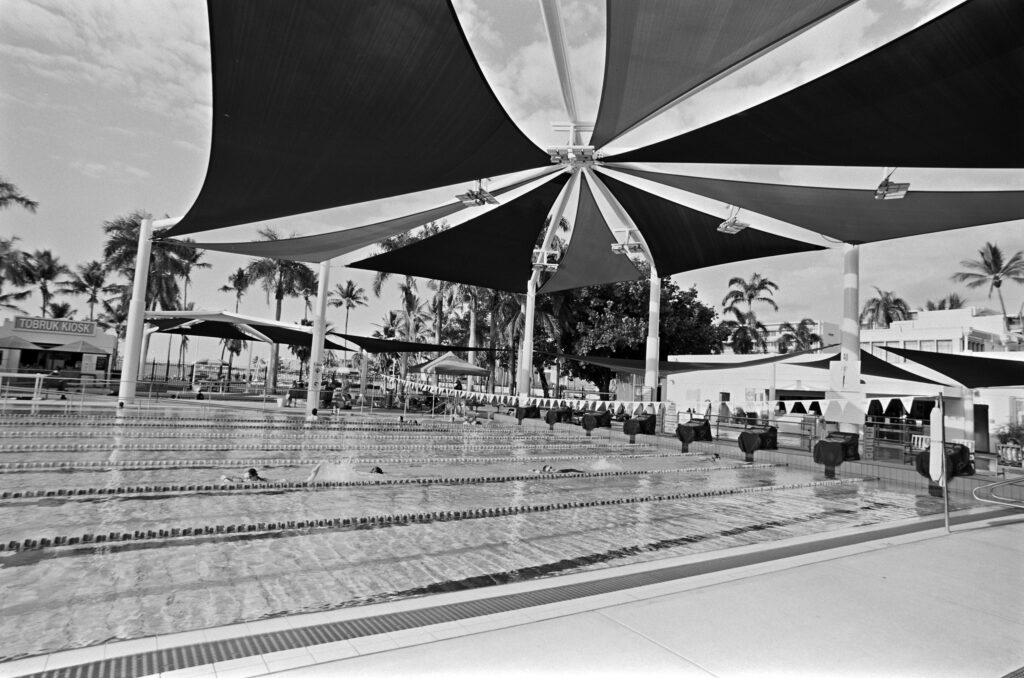
Adox HR-50 exposed at 50ASA with a Nikon F801S and Voigtlander 20mm F3.5 lens. Dev: FX1, 15mins at 20C; agitation 10sec/3mins.
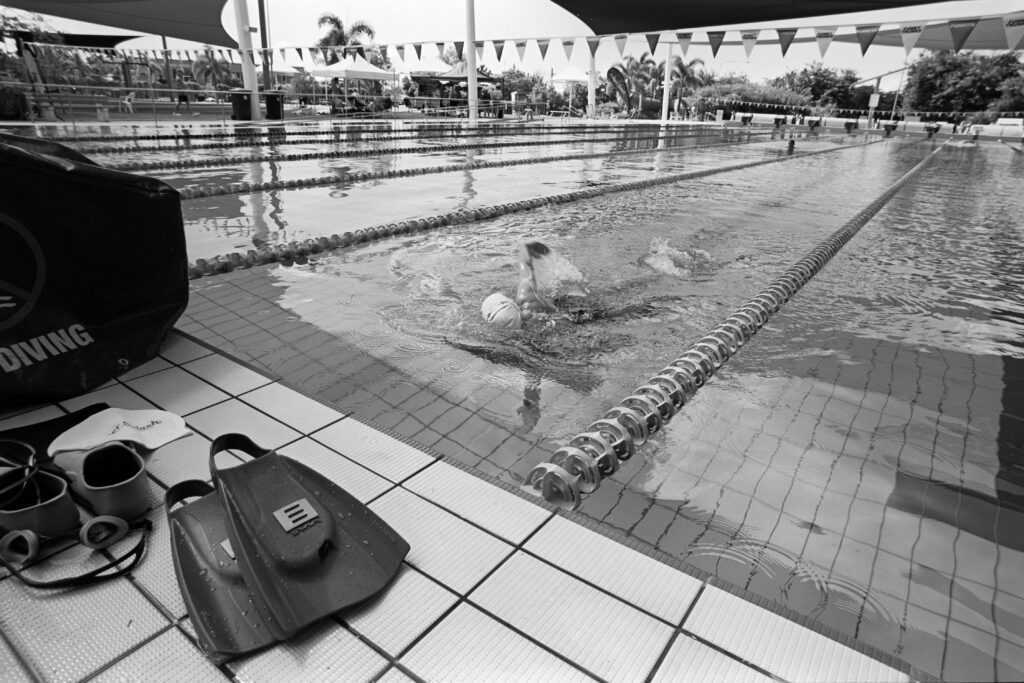
Rollei Retro 80S exposed at 80ASA shot with a Nikon F801S and Voigtlander 20mm F3.5 lens. Dev: FX1, 15mins at 20C; agitation 10sec/min.
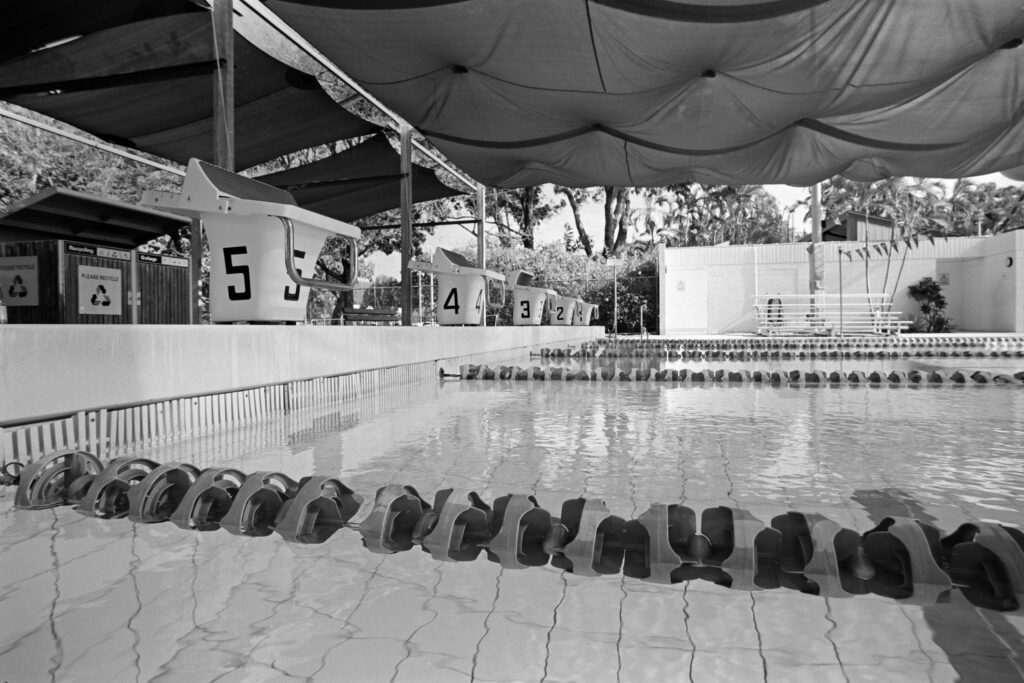
Rollei Retro 80S exposed at 100ASA with a Nikon FE2 and Ai-s 28mm F2.8 lens. Dev: Pyrocat-HD 1:1:100, 24mins at 20C; agitation 10sec/3mins. I later discovered the FE2 was over-exposing by at least two thirds of a stop, and the development time was definitely way too long in hindsight, even with reduced agitation. I’ve darkened the image a little in post, but the highlight detail, especially on the white painted building in full sun in the background, is all there.
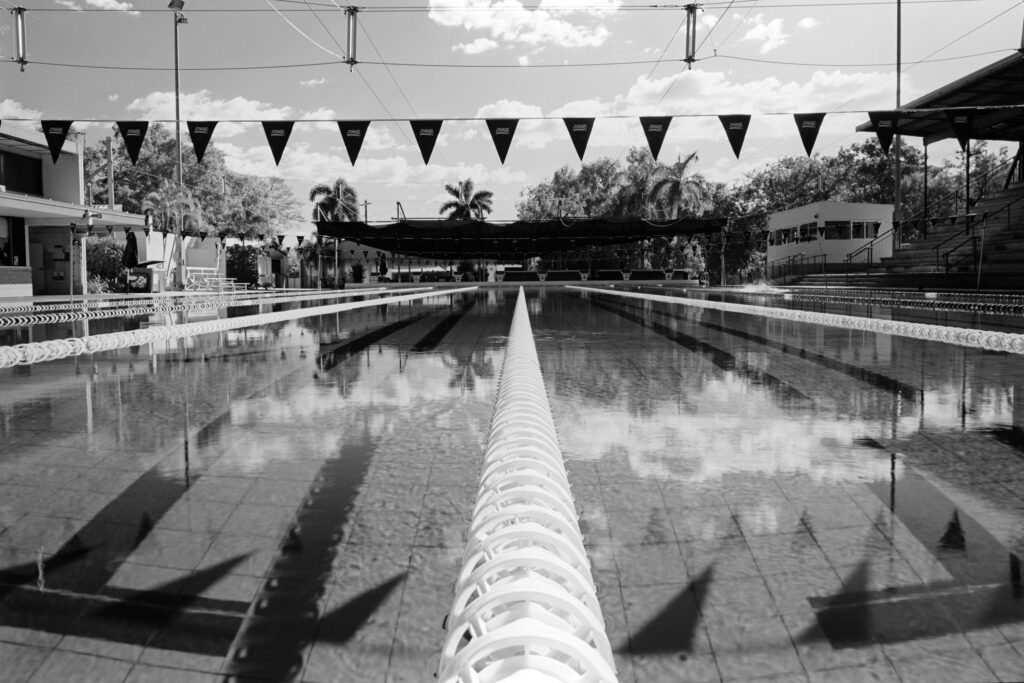
Rollei Retro 80S exposed at 80ASA with Nikon F801S and Ai-s 28mm F2.8 lens, with R25 red filter and polarising filter. Dev: FX1, 15mins at 20C; agitation 10sec/min. I planted the camera on the end of the pool to steady it for this shot, since it was so heavily filtered and stopped down to maximise depth of field. The red lane ropes become pure white with the red filter.
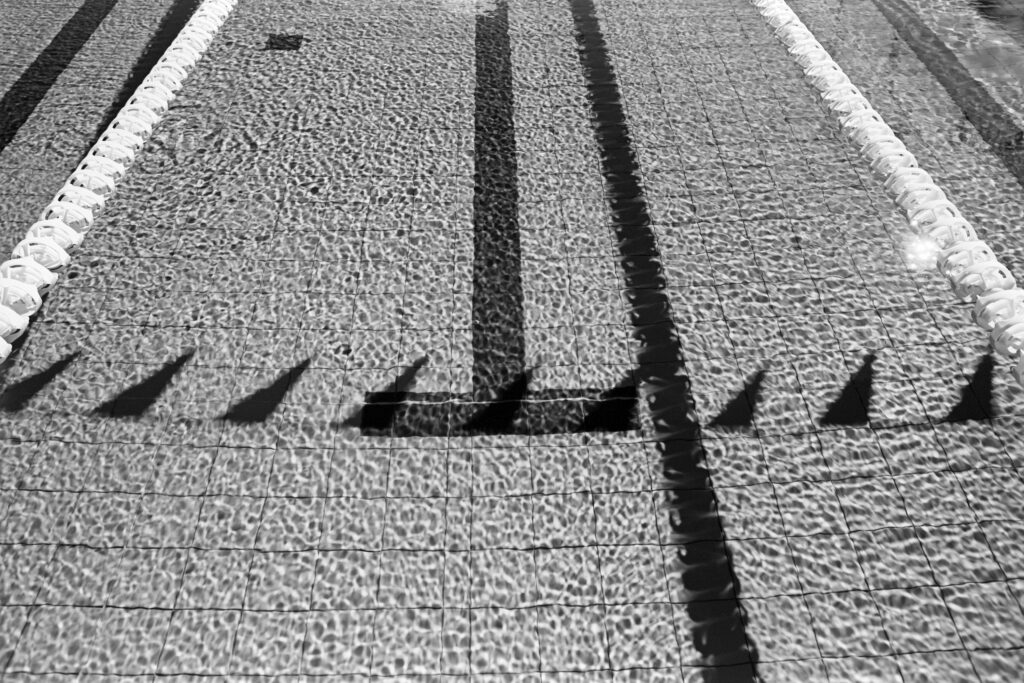
Rollei Retro 80S shot at 80ASA with Nikon F801S and Ai-s 28mm F2.8 lens, with R25 red filter and polarising filter. Dev: FX1, 15mins at 20C; agitation 10sec/min. This setup really shows off the beautiful patterns on the bottom of the pool made by the light refracting off the ripples on the surface. The stark contrast between the (apparently) white lane ropes and their very dark shadows is fun too.
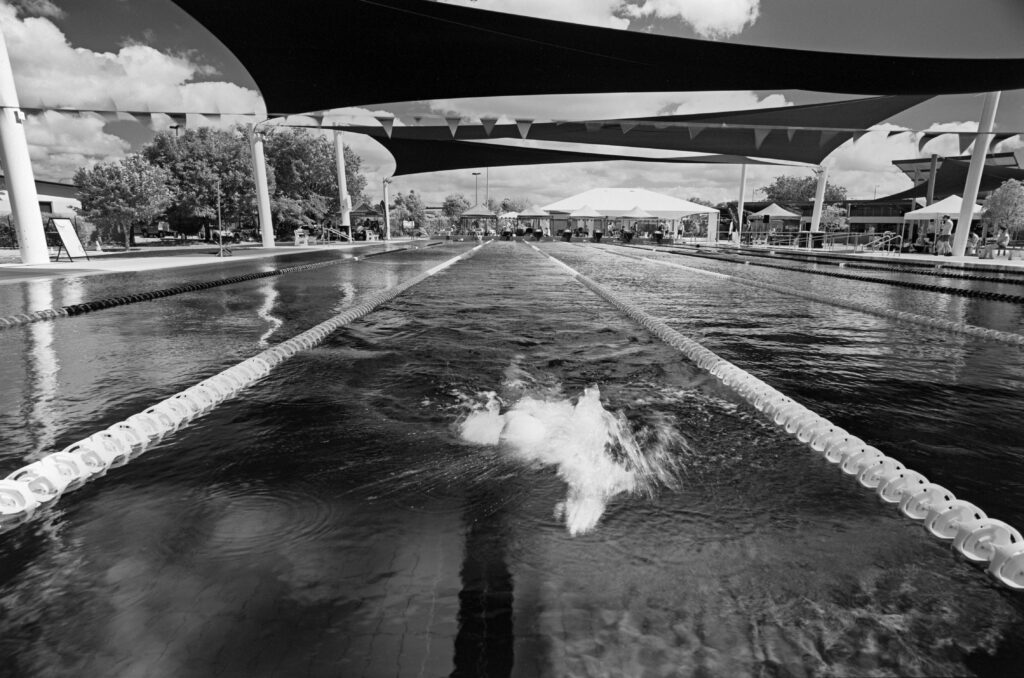
Rollei Retro 80S shot at 80ASA with Nikon F801S and Ai-s 28mm F2.8 lens, with R25 red filter and polarising filter. Dev: FX1, 15mins at 20C; agitation 10sec/min. I love the contrast here – again the histogram in Photoshop shows there are no blocked-up shadows or burnt-out highlights in this image. Even the sails have retained some detail.
Here are my primary take-aways from this not very scientific exercise:
1. Adox CMS20 II is the least forgiving of the films I have tried here, closely followed by Copex Rapid. But you can often retrieve quite a lot of shadow and highlight detail in post, especially from a 16-bit scan. Aviphot Pan 80 appears to have more dynamic range and I will probably stick mainly with that in the future. It also has the extended spectral sensitivity (to at least 750nm) which means you can play with red and infrared filters for a lot more creativity.
2. The additional resolving power of CMS20 does not make much, if any, material difference for my photographic purposes, mainly because I am scanning at 4000dpi max and not making wet prints with an exotic (read: very expensive) ultra-high resolution apochromatic enlarger lens. So the scanner effectively bottlenecks the information I can get out of a negative, which means the remarkable resolving power of CMS20 is not realised in my workflow.
3. I don’t think that H&W Control, a hydroquinone-phenidone developer which is a bit of a pain to make from scratch, is any better than the metol-based FX1, which is super easy to make.
4. I know it’s possible to get reasonable results from Copex Rapid using some other developers including dilute Rodinal. I am not so sure about CMS20, though I might try dilute Rodinal and maybe even dilute Xtol/XT-3 with it. Or even Pyrocat-HD at 1:1:200 or thereabouts (but see point 7 below). Rodinal and many other developers work fine with Aviphot Pan 80 and Kodak Tech Pan, but you do still need to be careful. I did develop a roll of Aviphot Pan 80 with Rodinal stand development (1+100 for 90 mins) and got great results for exposures from 12.5 to 100ASA.
5. Interestingly I haven’t seen any significant differences in results with FX1 using reduced agitation – it seems to produce great results every time regardless of agitation regime! But I have not done a controlled experiment to properly test this (and probably won’t!).
6. In case anyone is wondering, I don’t believe that the proprietary developer offered by Adox for CMS20 (Adotech IV) is likely to be all that different to H&W Control – both are hydroquinone-phenidone based, although Adotech IV has a couple of other ingredients that might give it an edge. But since I have not tried it I won’t dismiss it out of hand.
7. Now that I have finally tested these developers and films as much as I have the patience for, I think I’ve at last gotten this nerdy preoccupation off my chest! So I reckon it’s time to move on, and I will likely not be spending quite so much time with CMS20 or Copex Rapid in the future! Make no mistake, with the right subjects and the right light (and of course the right developer!), both of these films can produce beautiful and insanely sharp images. However I’m definitely looking forward to using more Aviphot Pan 80 and the few rolls of Kodak Tech Pan I’ve been able to hoard.
I hope this has been useful for some of you and I would appreciate any reflections, criticisms or suggestions if you have any.
Share this post:





Comments
Erik Brammer on Pools of Light – Aquatic adventures in contrast management.
Comment posted: 30/01/2026
Comment posted: 30/01/2026
Geoff Chaplin on Pools of Light – Aquatic adventures in contrast management.
Comment posted: 30/01/2026
Your processing methods deserve extrnsive study so i won't comment other than to say the results speak for themselves - inspiring!
Have you tried Soemarko? Something I tried so far back i cant remember the results, so I'm going to try again. 1.5gr metol with a pinch of sulphite, then about 12g sodium sulphite in 1ltr. 40 sec agitation the 40min stand development.
HR50 is Aviphot 80 with "speed boost technology" ? I must try exposing at 160 and developing normally - it should produce good results.
Photography? I fear lots more playing with chemicals and testing coming on again!