

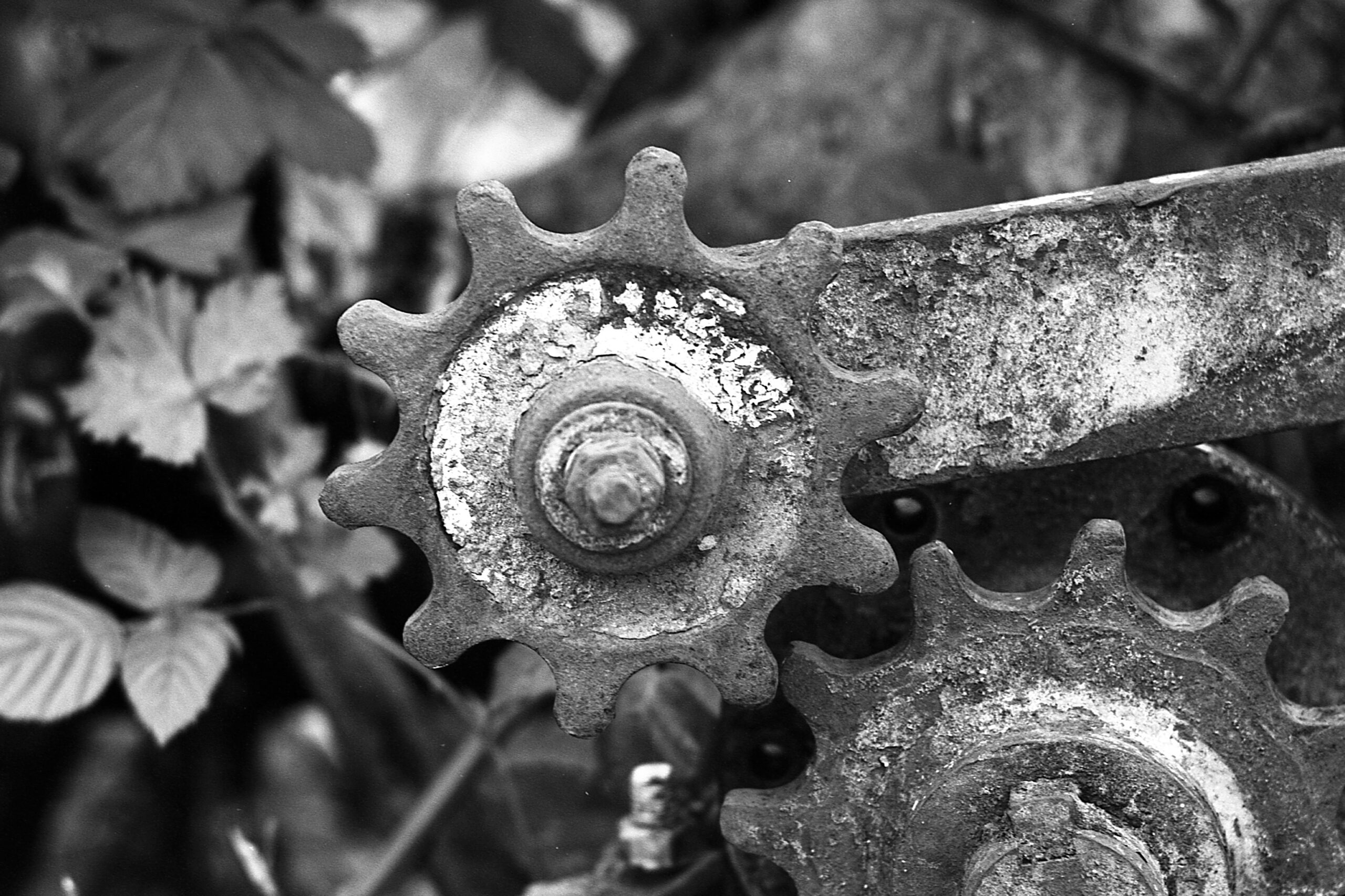
Most all vehicles and heavy machinery come to an end of useful service, recycled for parts and valuable metals. It is an efficient reclamation process involving distant scrap metal yards and global logistics. There are, however, some machines that skip the commerce of recycling. Some are selected for museums where they can be cared for. Others are just parked and left waiting for repair. I find that last group visually interesting and worthy of a small photo project. Living in a prosperous area, I easily found some subjects within a 10 km radius from my residence. The project gave me opportunities to explore different neighborhoods and to brave a bit of innocent trespassing.
I will acknowledge here that these are photographs of junk. This junk is not appreciated here in my suburb. It is a stain on our respectability, to be removed from our neighborhoods just as weeds are pulled from the manicured garden lawns. Relocating any of this junk to my own front yard would put an end to my current domestic tranquility.
Two cameras were used for this project:
– A 1948 Leica IIc with a Nikkor H 5cm f/2, a collapsible Elmar 5cm f/3.5, & an Elmar 9cm f/4
– A 1970 Rolleiflex SL35 with a Schneider Kreuznach 50mm f/1.8 Xenon & a Carl Zeiss 85mm f/2.8 Sonnar
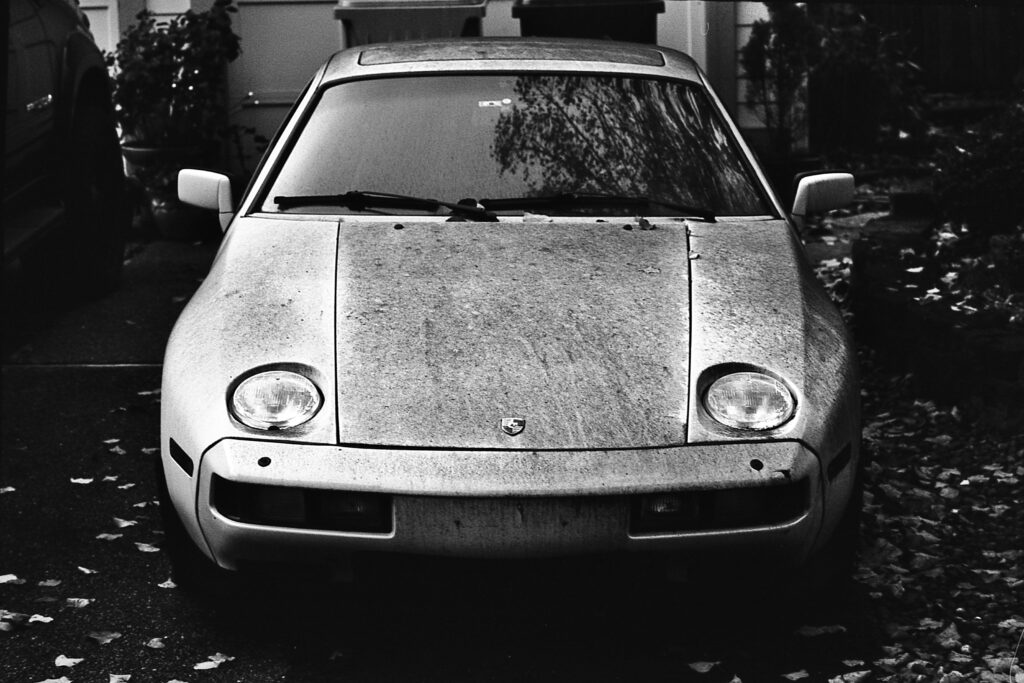
Here we have a sporty coupe built and marketed for high-speed motoring in style. Forty years ago, this was a motorcar requiring deep pockets for its initial purchase and subsequent maintenance. It was a car for executives and moneyed motor enthusiasts. This particular example has sat immobile in a suburban driveway for the past five years. The tires are now flat. Mold has taken residence on its exterior surfaces. Does the owner have plans to restore it to its original glory? Perhaps the owner has the necessary financial and mechanical resources? Or, perhaps, the owner just gazes at it and dreams?
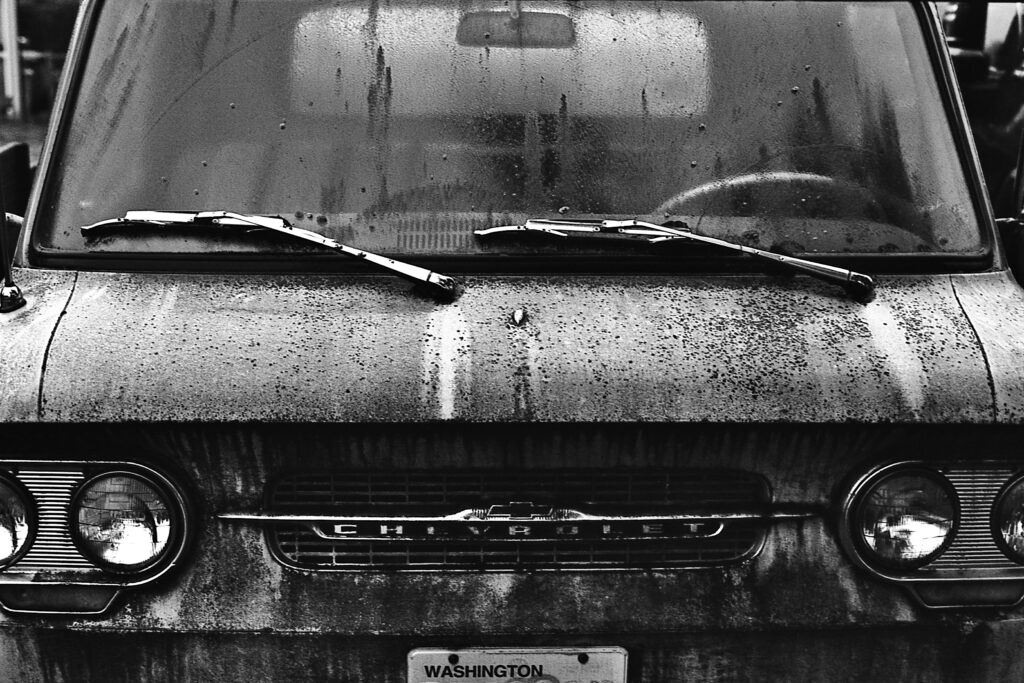
Here is another dormant vehicle. Our north coastal climate is damp and the mold is rather thick. It appears to have been parked for a few decades. While it is older than the glamorous coupe, it is a simple machine that has a chance to be returned to road-worthiness. All it would require is a person with enthusiasm, mechanical skills, and perhaps the protection of a tetanus shot.
What happens when the mold is left undisturbed in a shaded spot? It becomes a fertile location for moss to grow. I have always admired moss, especially in classical Japanese gardens. Here the moss is accompanied by blackberry vines and English ivy. A decade from now this team of living plants will have fully enclosed their host.
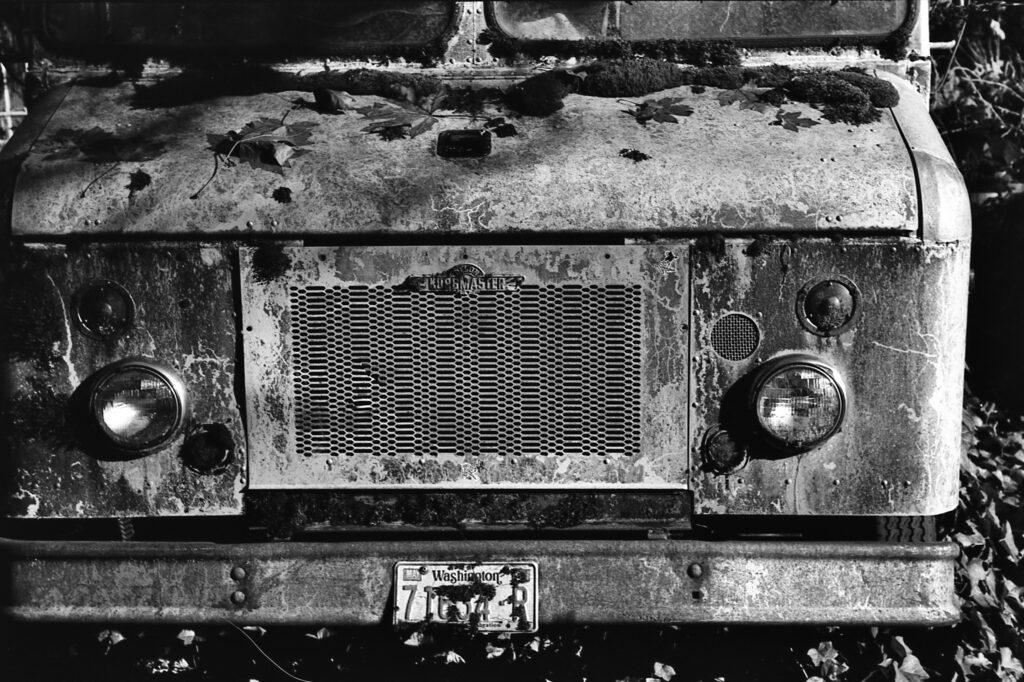
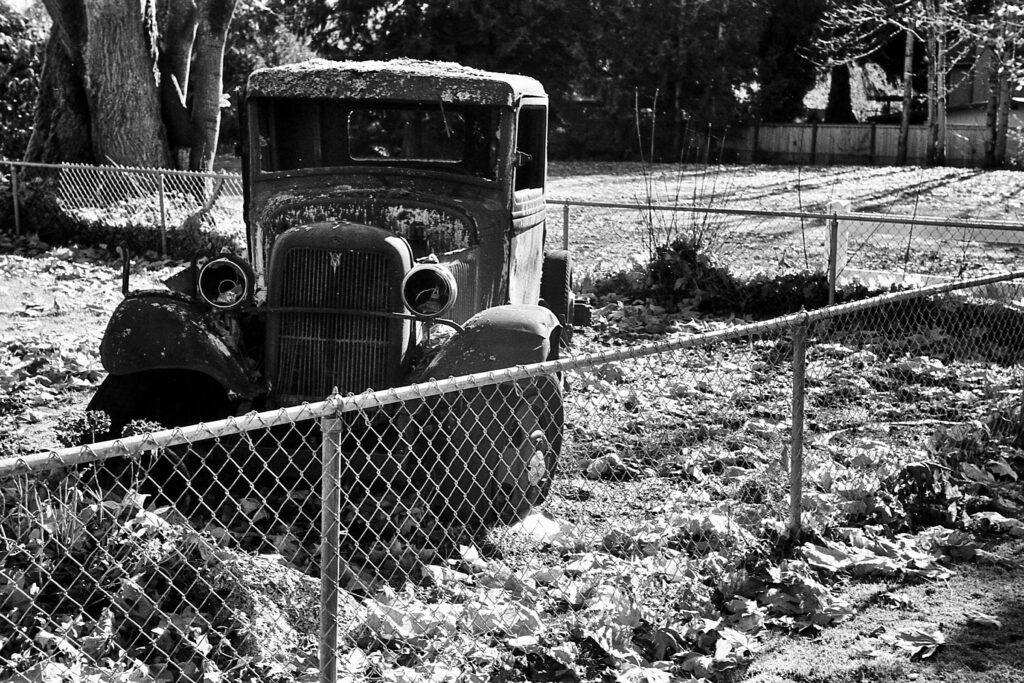
This truck is parked in the front yard of a house facing a rural road. It has a prominent spot where it can be admired by passing motorists. It was a work vehicle built almost a century ago, and certainly used for a very long time. It may have a sentimental value and I can understand why the owners cannot simply discard the thing.
There are no prospects of rejuvenation with this device. It is a large pumping machine that rumbled down the steep approach to a local stream, moving on tank tracks and put to work until it broke. The top of its engine is gone. Removed, perhaps, for repair? This industrial machine is now a scaffold for blackberry vines while it sinks into the wetlands.
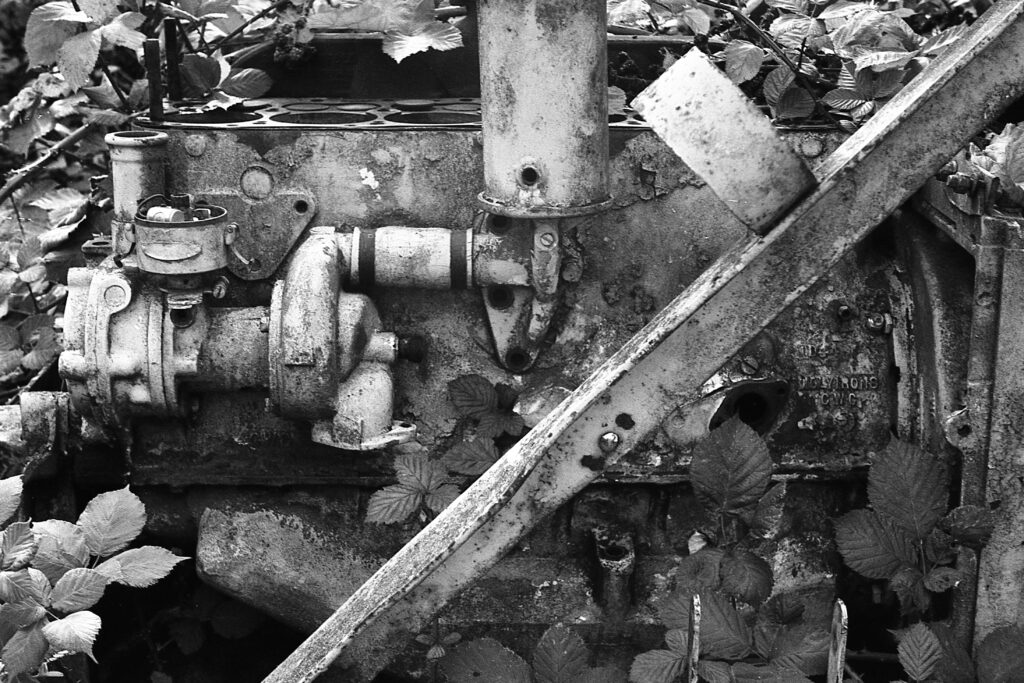
Standing proud of the strangling vines.
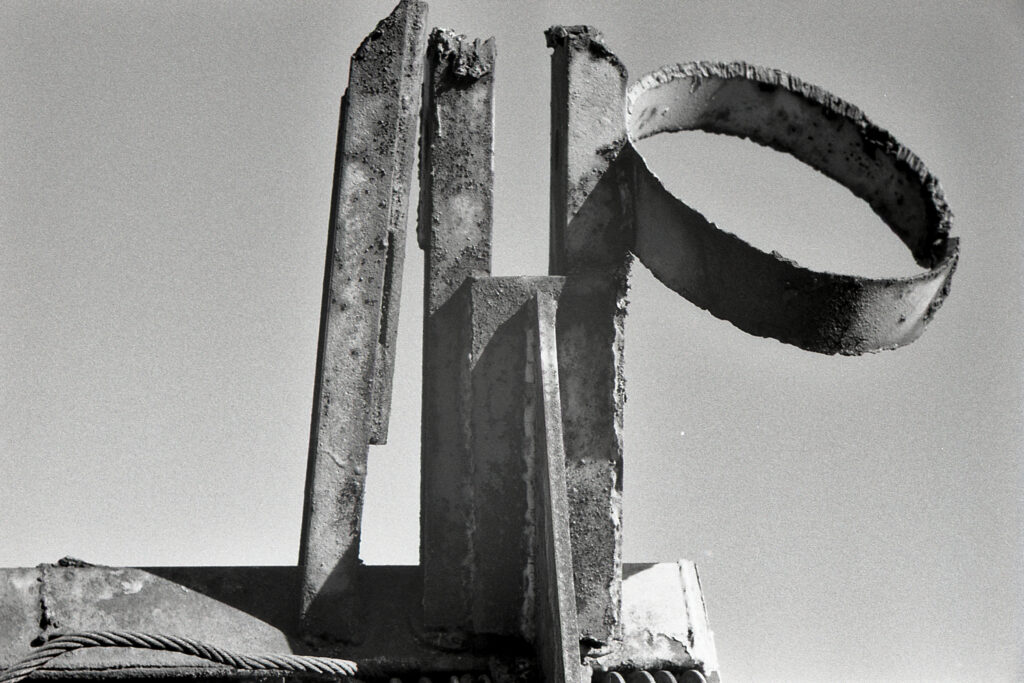
Down in the belly of the beast.
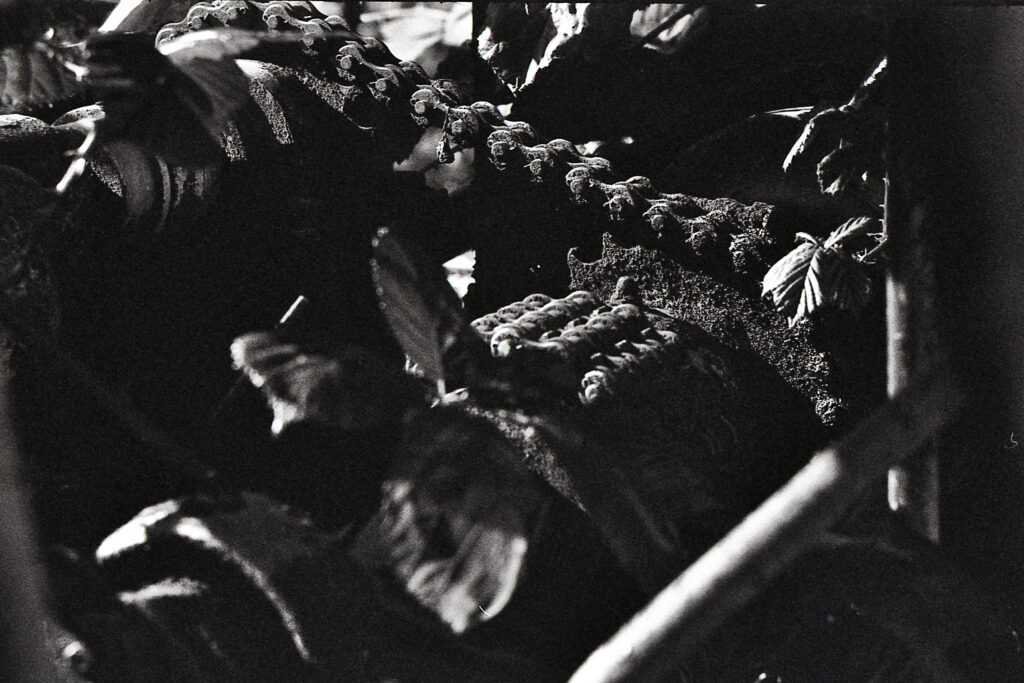
The growing vines soften the rough edges of this decrepit machinery, making a pleasant arrangement.
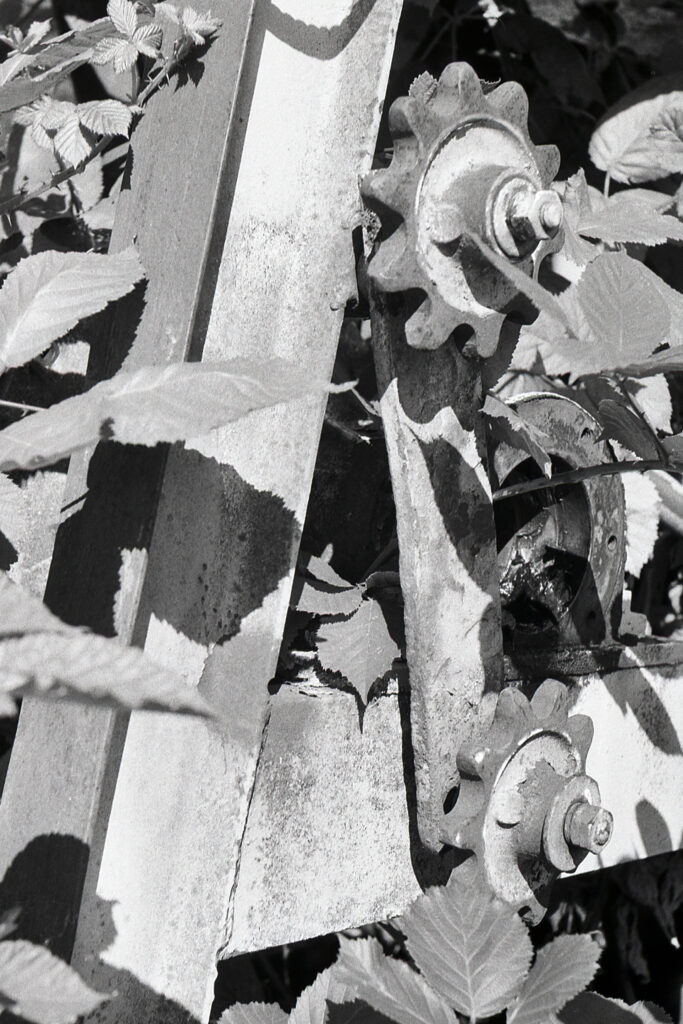
The cameras and lenses used for this project all show heavy signs of use. I classify my equipment as pre-CLA and post-CLA. All images have been developed with Rodinal. My Rodinal bottle has been used for four years and although the solution is stained dark brown, it gives me predictable results.
I do have a fondness for patina.
Share this post:

Comments
Charles Young on Broken Machines – A Photo Project
Comment posted: 28/01/2026
Chuck
Comment posted: 28/01/2026
Walter Reumkens on Broken Machines – A Photo Project
Comment posted: 28/01/2026
Thanks for sharing, Richard!
Comment posted: 28/01/2026
Michael Murray on Broken Machines – A Photo Project
Comment posted: 28/01/2026
A layer you've added here in most of your images in the natural element dirt. The presence of the dirt as a symbol of the natural world, to me, speaks to the temporary nature of mankind and even our most long-lasting creations. The poem Ozymandius by Shelley is a great perspective on this very theme.
Comment posted: 28/01/2026
Paul Quellin on Broken Machines – A Photo Project
Comment posted: 29/01/2026
Comment posted: 29/01/2026
Bill Richardson on Broken Machines – A Photo Project
Comment posted: 15/07/2026