

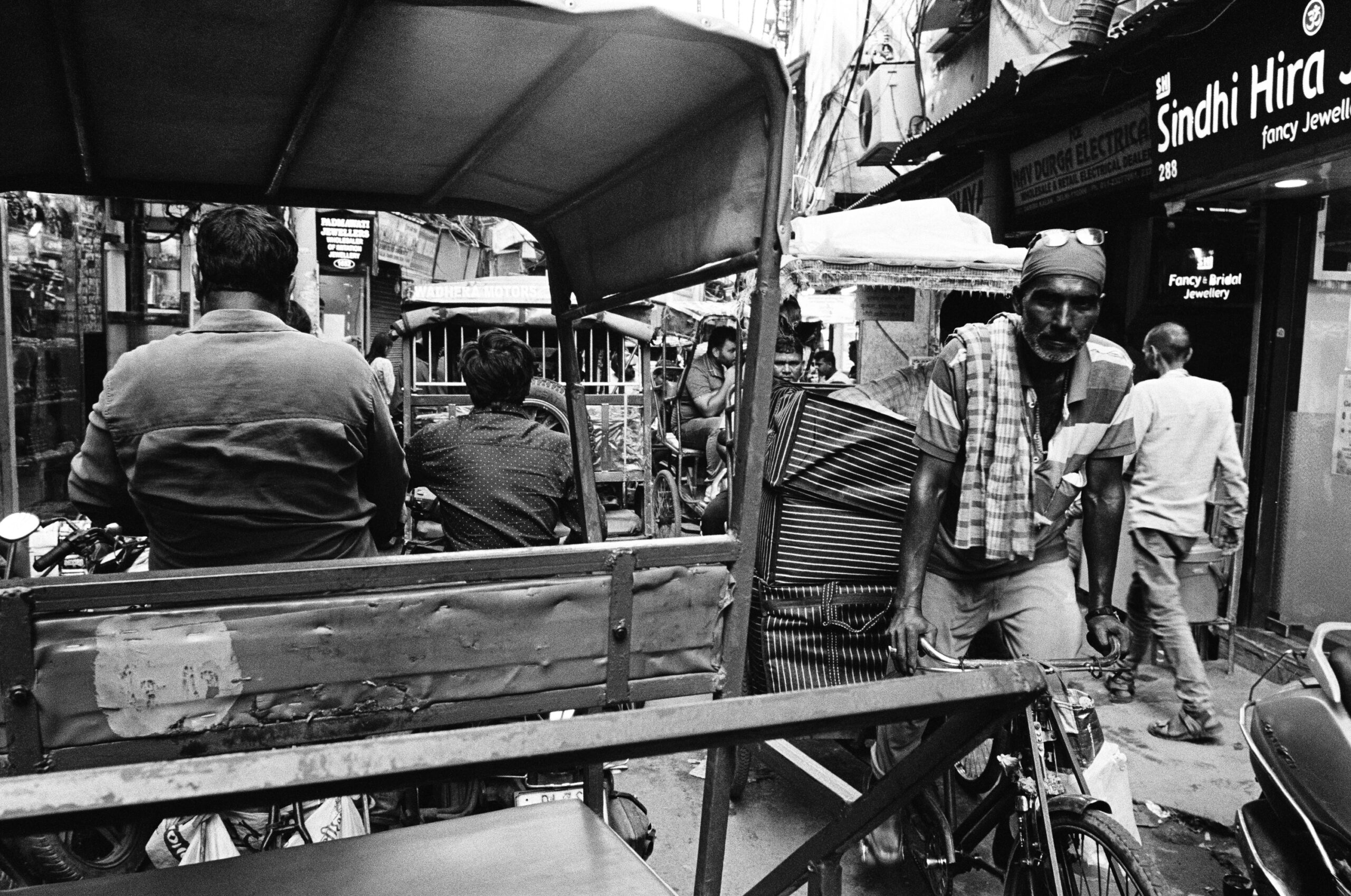
I found myself traveling to New Delhi for a conference a few months ago and was able to squeeze in a couple days of leisure before the business part of my trip. India is an extremely target rich environment for street photography, but describing street photography in India as a leisure activity is most definitely antithetical to the actual experience of shooting in a crowded market in Old Delhi.
In my research before my trip, I decided that visiting the Chandni Chowk market in Old Delhi would be a good place to start my photographic exploration. Chandni Chowk is one of the oldest and most bustling markets in Old Delhi. Meaning “Moonlit Square,” it was established in the 17th century by Jahanara Begum, the daughter of Mughal Emperor Shah Jahan, as the center of the walled city of Shahjahanabad. Today, it’s a dense network of narrow lanes filled with rickshaws, vendors, and shoppers.
Feeling confident in my experience as a seasoned world traveller, I opened the Uber app and ordered myself a taxi to take me to the Chandni Chowk market in Old Delhi. It was a short wait and before long I was on my way. The roads leading out of New Delhi are lined with large majestic trees. The serenity of the drive was soon forgotten as we crossed over into Old Delhi. I arrived at Chandni Chowk market in Old Delhi just before sunset. The taxi drive over from my hotel was painfully slow and chaotic at best. The chaotic traffic was something that I have only ever experienced in India. However the scenes unfolding outside my window started to excite the photographer in me. I tried to take a few photos along the way through the glass window of my taxi with limited success. It was a rare double holiday and there was gridlocked traffic and crowds at the market far beyond anything I’d experienced anywhere else in the world.
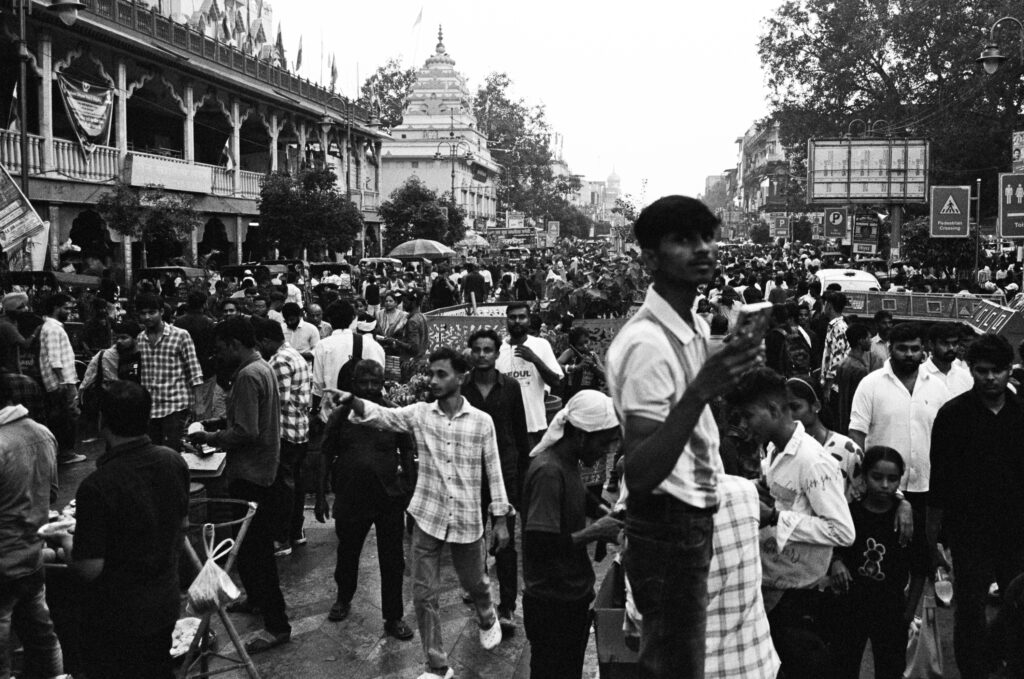
Finally it looked like we had arrived and even though we were still in the middle of the road my driver basically kicked me out of the car and pointed in the direction I needed to walk to get to the market. As I dodged the pedestrians, motorcycles, and rickshaws to the gate of the market my mentality went from tourist to survivor mode. As I started to explore the market I wasn’t so much as walking where I wanted to go but I was being pushed in the same direction as the crowd.
For this trip to India, I had my Zeiss Ikon ZM and my 28mm f/2.8, 35mm f/2, 50mm f/1.5, and 85mm f/4 Zeiss ZM lenses with me. I was still trying to get a feeling of the place and had only snapped a few photos when suddenly, a tropical rainstorm poured down on me. Desperate to keep my camera gear dry I saw a row of rickshaws waiting for passengers. One of the rickshaw drivers/peddlers caught my attention and gestured to see if I wanted a ride. I had no idea where to go but the small roof on the rickshaw seemed like a good place to keep my camera gear safe until the rains subsided. My rickshaw driver/peddler didn’t speak English and I was unable to figure out where he was taking me. Eventually after what felt like a couple kilometers we came to the end of the busy road which the market was built on and only then did I realize how vast the place really was—not just the length of the market running along a major road, but also the countless side alleys branching off in every direction. I was unceremoniously dumped onto the street with a demand for payment. I hid under a roof with several others before the rain finally subsided and I was able to start exploring again. By now the crowds had significantly thinned due to the rain. However the rain hadn’t completely stopped, there was still a light drizzle. I was able to pick up a small umbrella from one of the vendors in the market. In an effort to keep myself reasonably dry and my camera safe, I came up with an improvised shooting technique: tilting my neck to the left to pin the umbrella against my shoulder, to free up my left hand to focus, allowing me to start shooting in the rain with an umbrella.
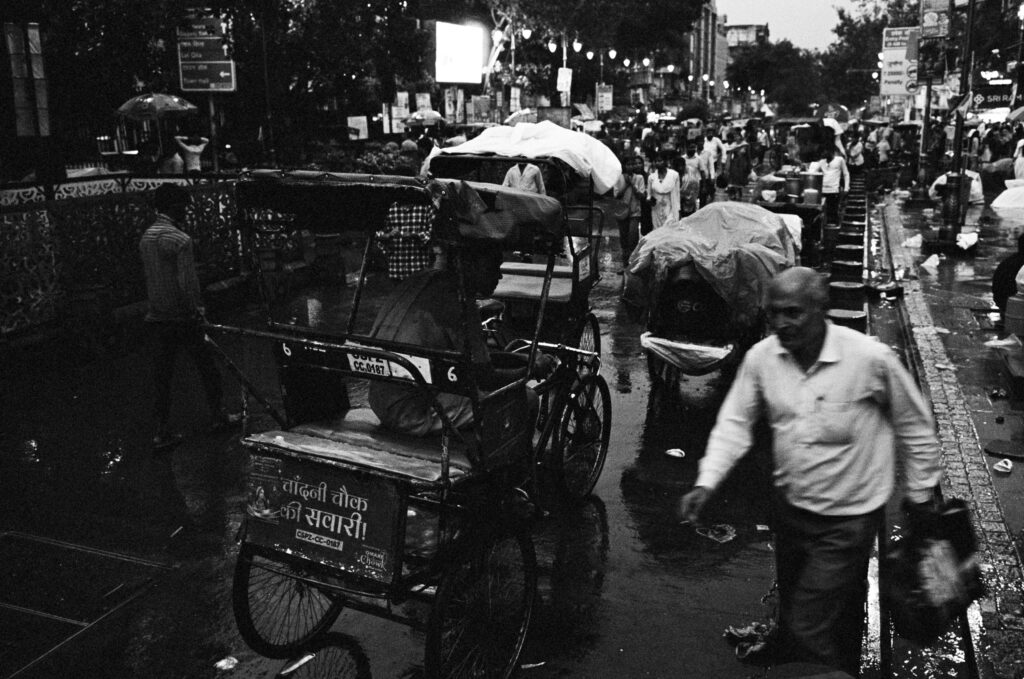
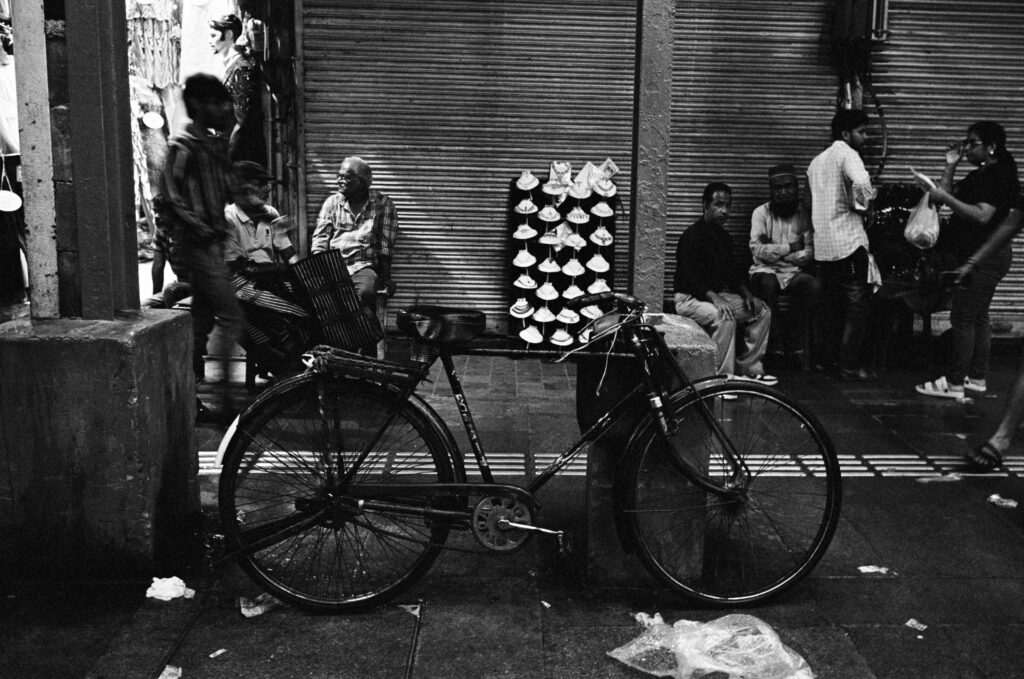
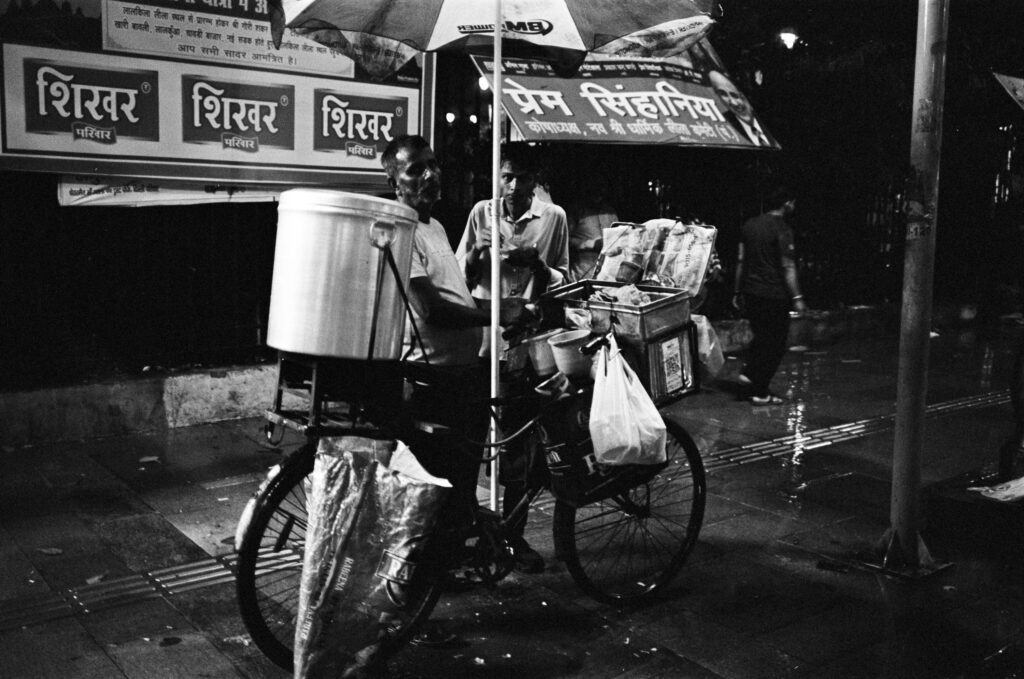
Eventually I veered off into the alleys in search of more interesting photographic opportunities and an Uber pickup point since the main road on which the market is built is closed to motorized vehicle traffic. This turned out to be a great idea for pictures but a terrible idea for finding an Uber pickup point. The narrow alleys were keeping my phone from getting good GPS reception and I kept getting lost. I eventually found my way back to the main road and found a vendor who spoke enough English to send me in the direction of the train station on the main road. This turned into a somewhat scary walk on a dark rainy night that must have taken me around 20 minutes. I finally found the train station, and it was indeed an Uber pickup point. But due to the traffic it took me another 20 minutes to be picked up by the Uber driver. As we crawled back to the hotel, I was definitely feeling quite a bit more humble. I’m tired, I’m wet, I’m muddy, but I’m also hopeful that I was able to get a few good shots.
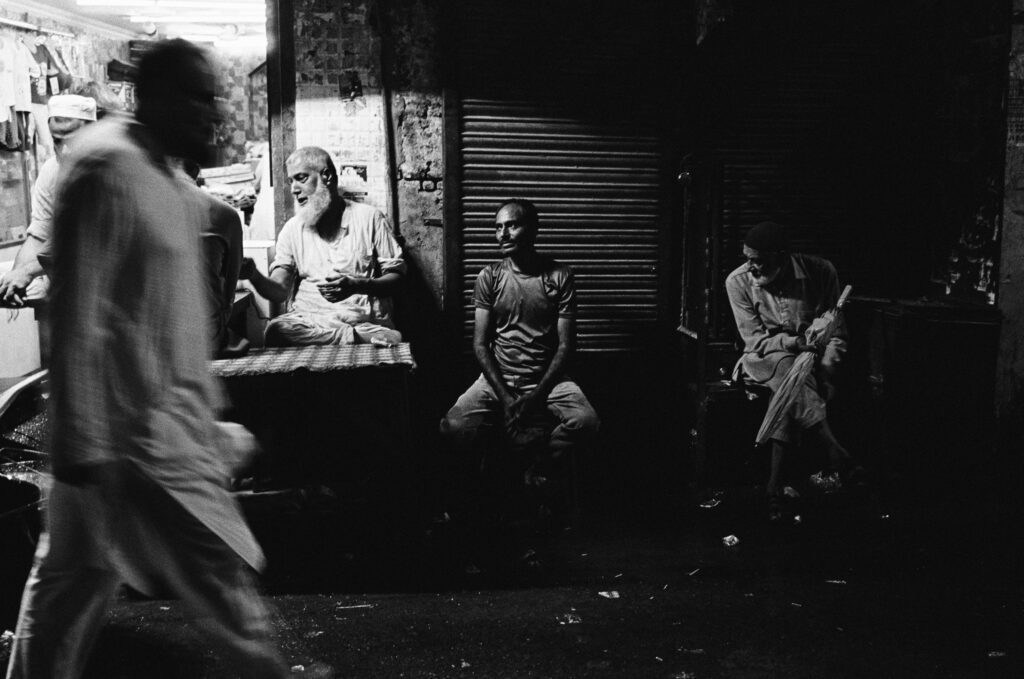
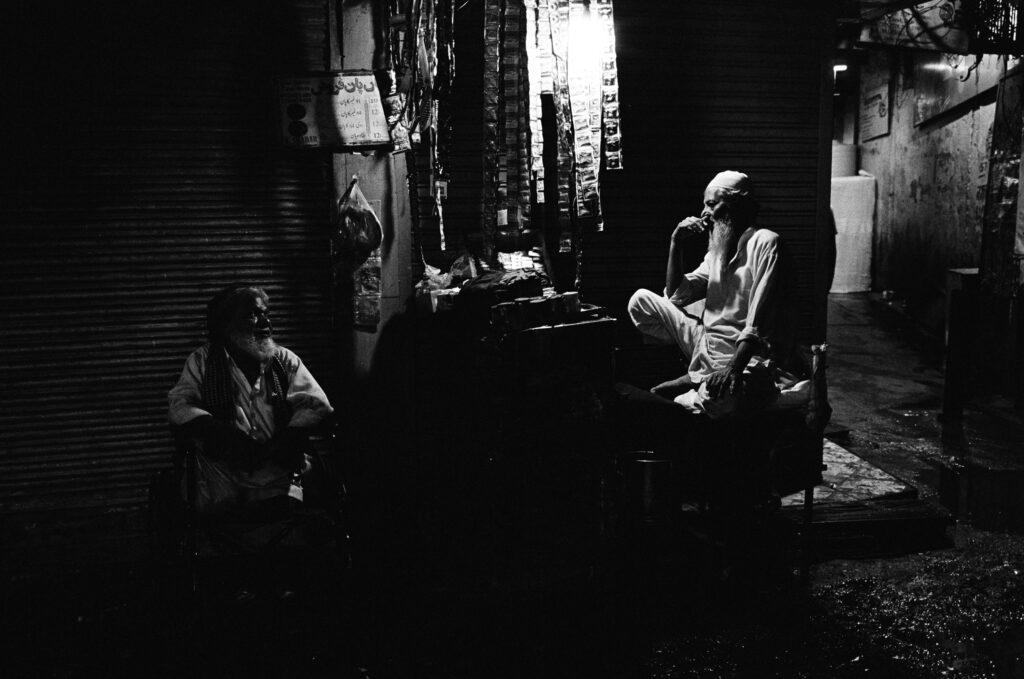
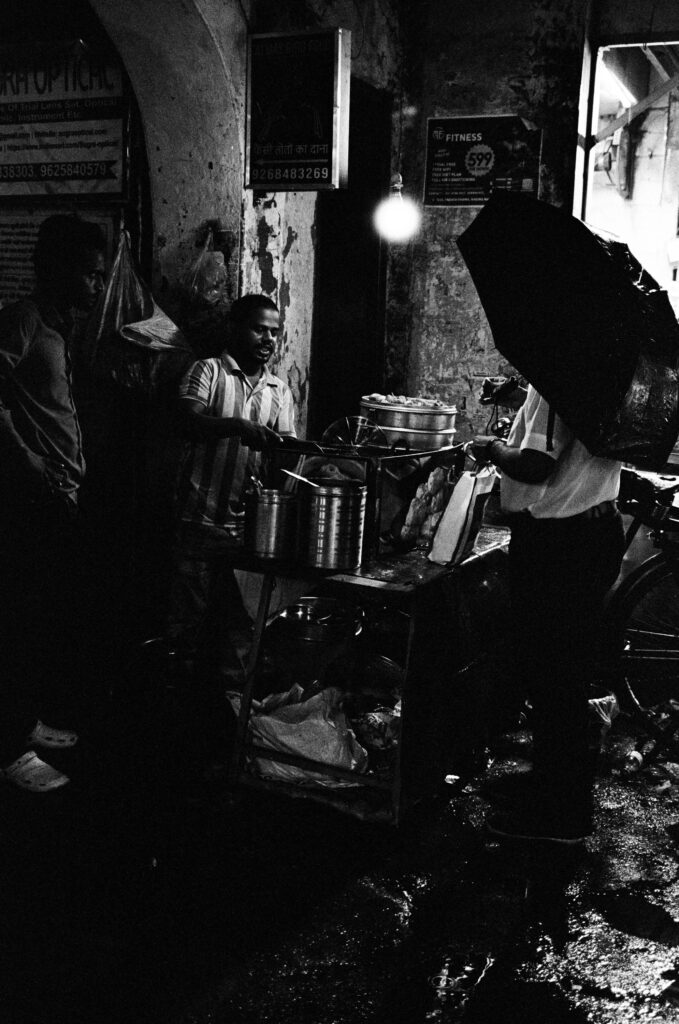
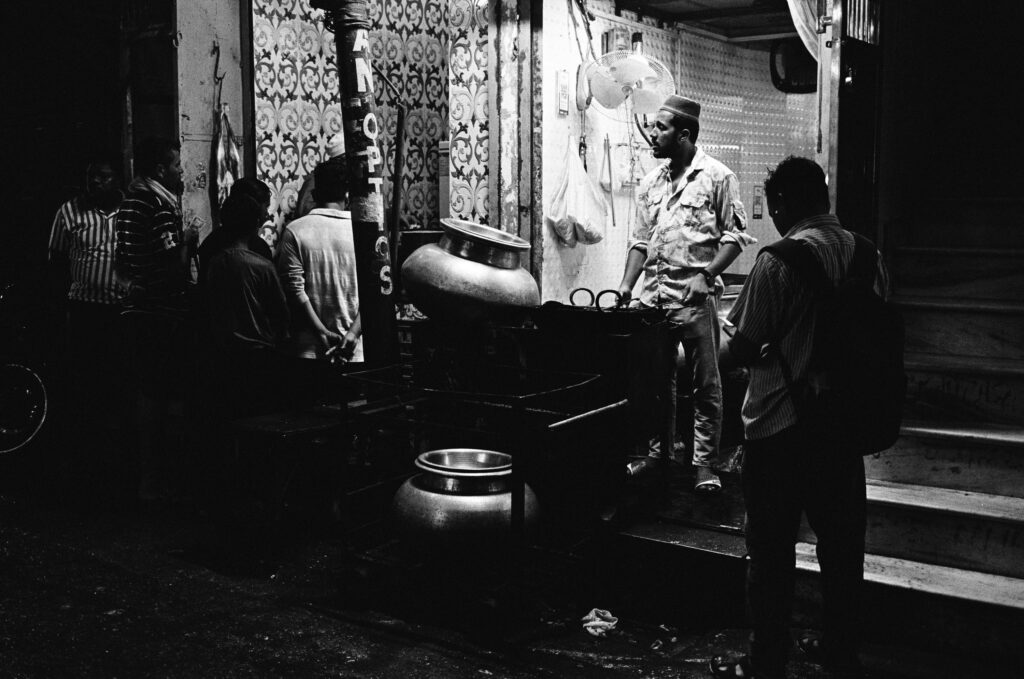
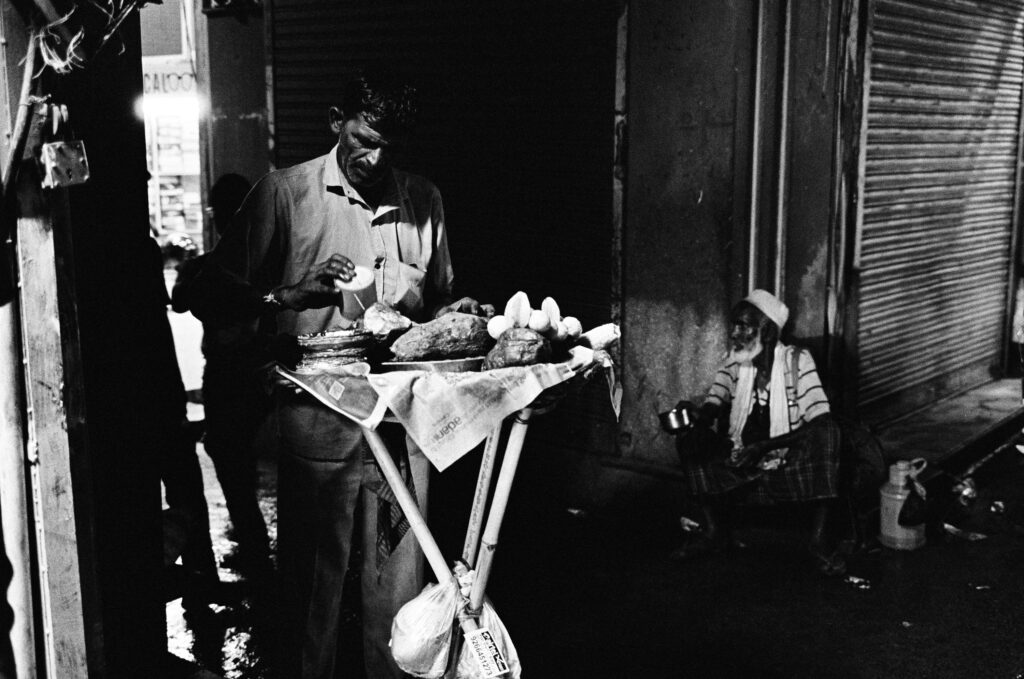
The next afternoon, I returned to Old Delhi to visit Khari Baoli, the wholesale spice market that forms part of the larger Chandni Chowk area. Often described as the largest spice market in Asia, Khari Baoli dates back to the Mughal era in the 17th century. It remains fully operational today, with spices, herbs, nuts, and dried fruits traded in bulk and moved through narrow lanes by handcarts. Most transactions are conducted face to face and in cash, and the market functions much as it has for generations.
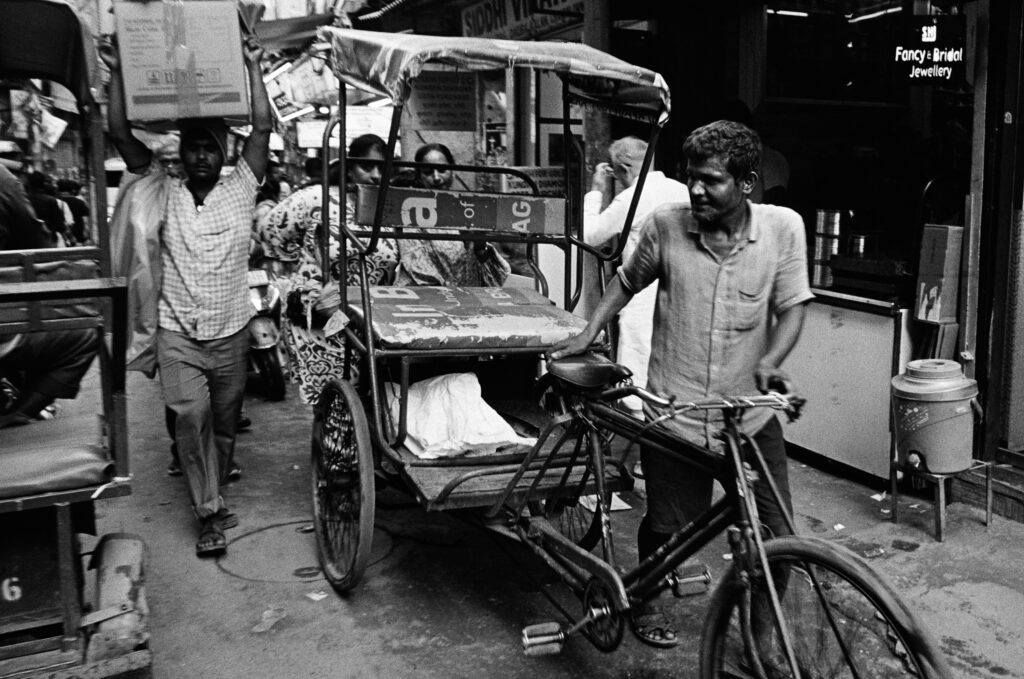
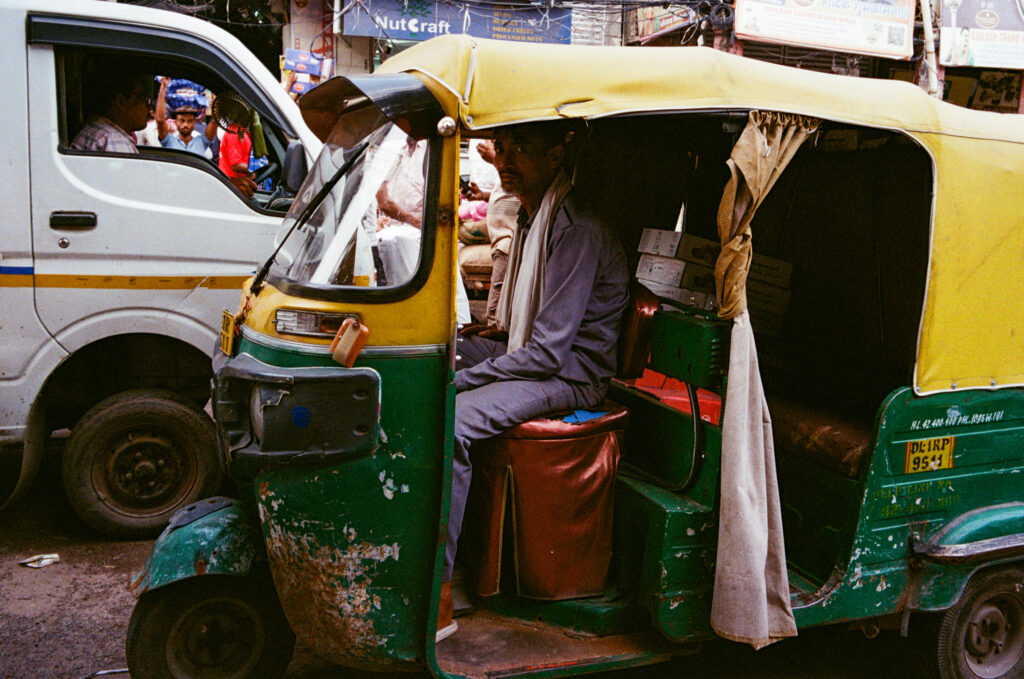
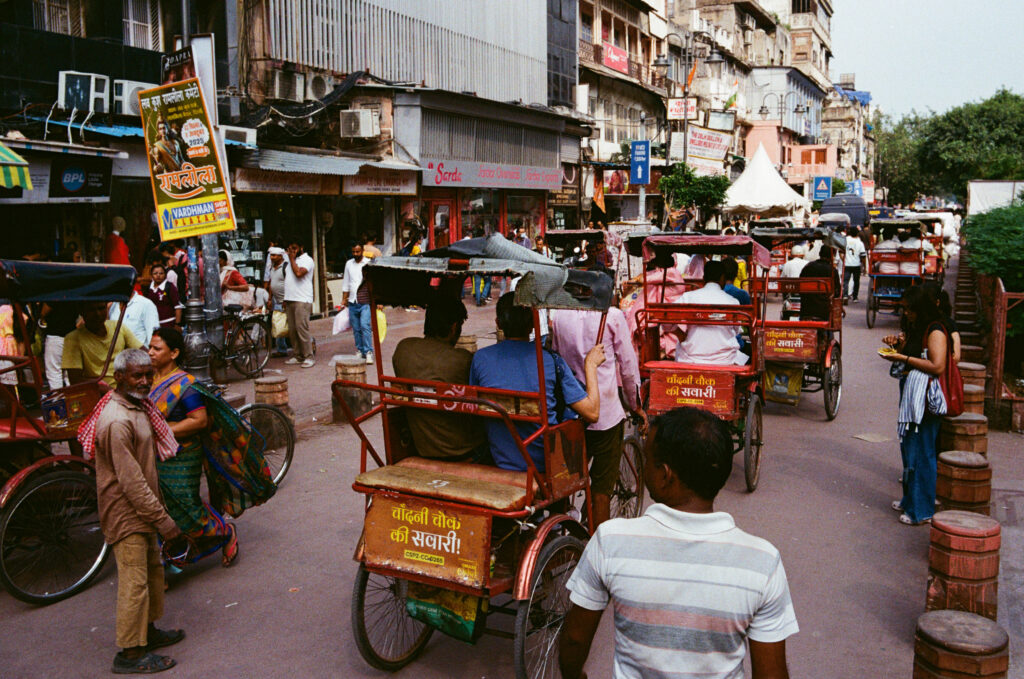
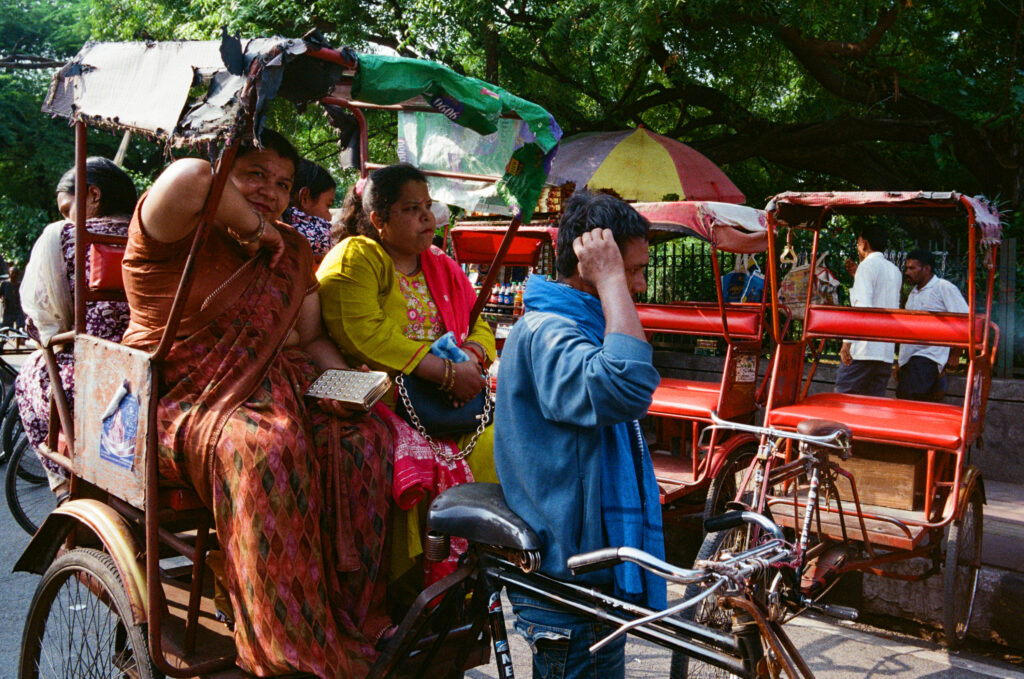
On this second visit I was feeling a little less adventurous and I decided to book a car from the hotel. My chauffeur walked with me and became my ad hoc tour guide. We picked up a ride with a rickshaw and I got to experience the market during the day. The rickshaw ride in the dry conditions was much less hectic and provided opportunities to take a few more photos and finish the roll of Double-X film in my camera. Surprisingly this rickshaw ride ended at the same spot I was at last night. I had unintentionally discovered the start of the Khari Baoli spice market but had walked away from it in a different direction.
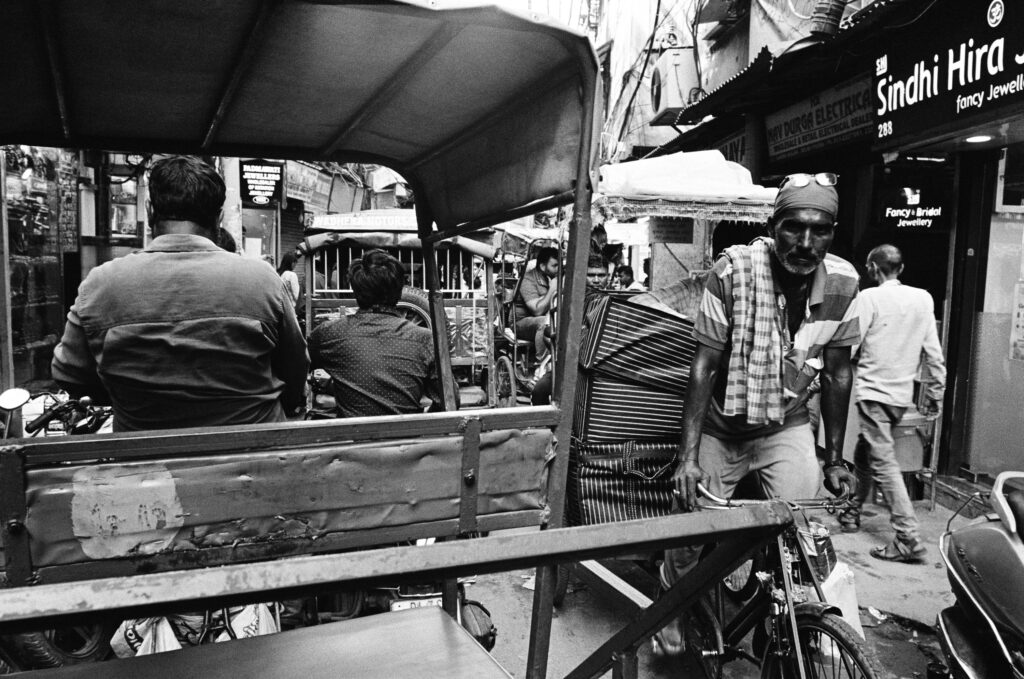
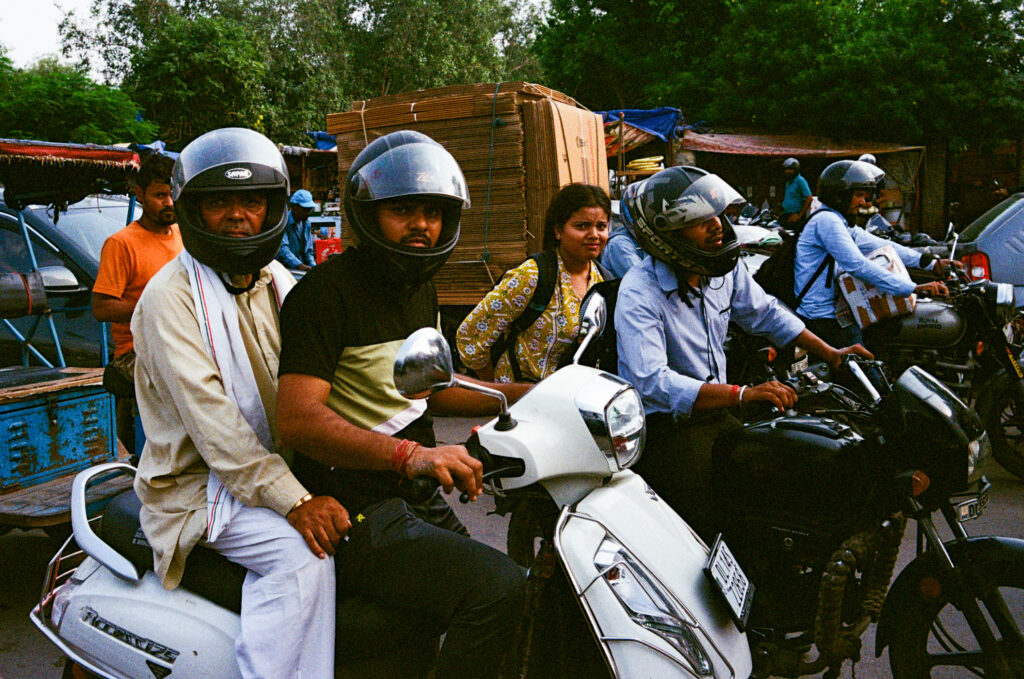
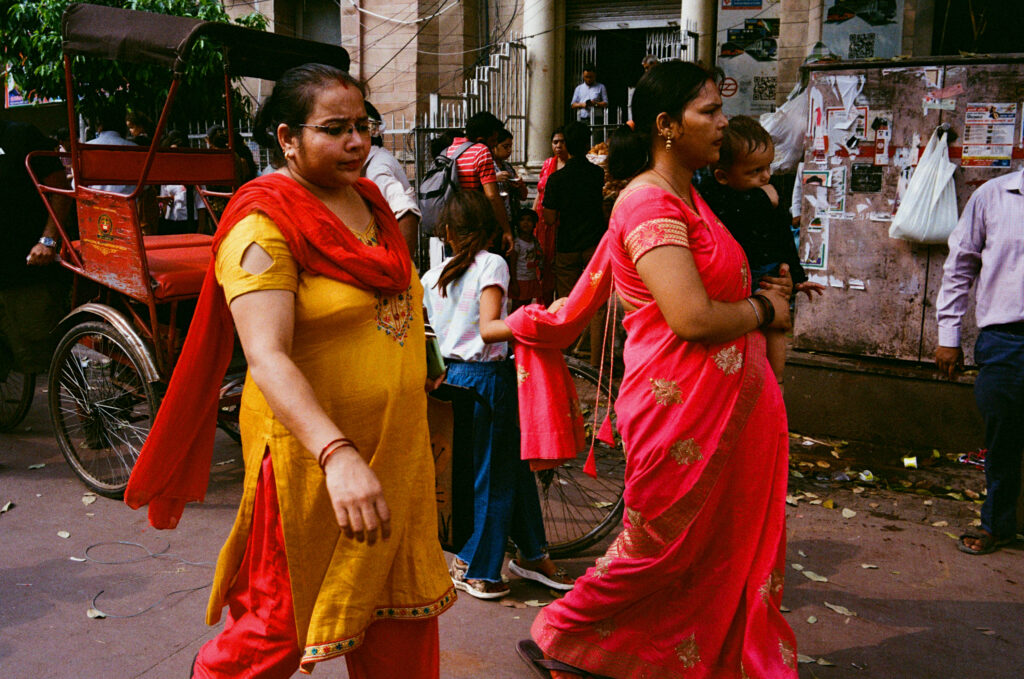
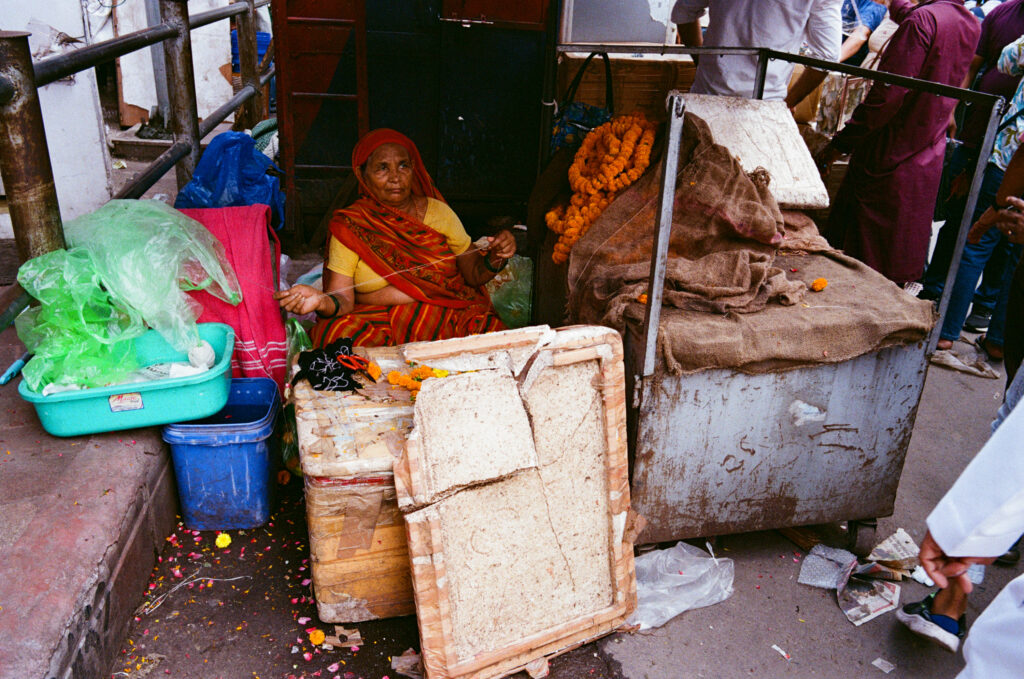
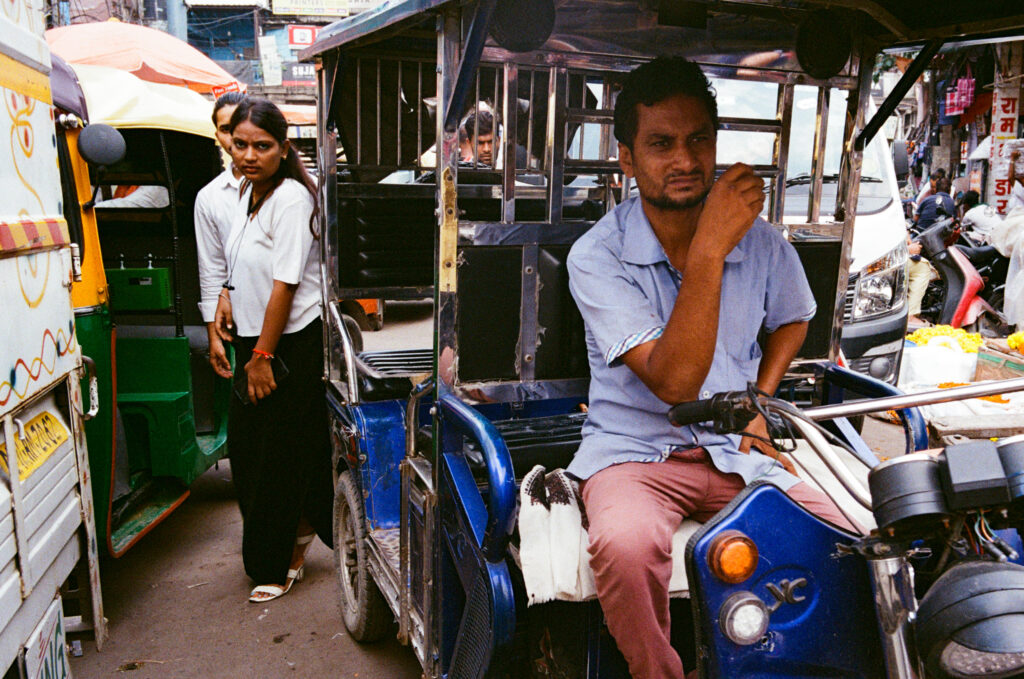
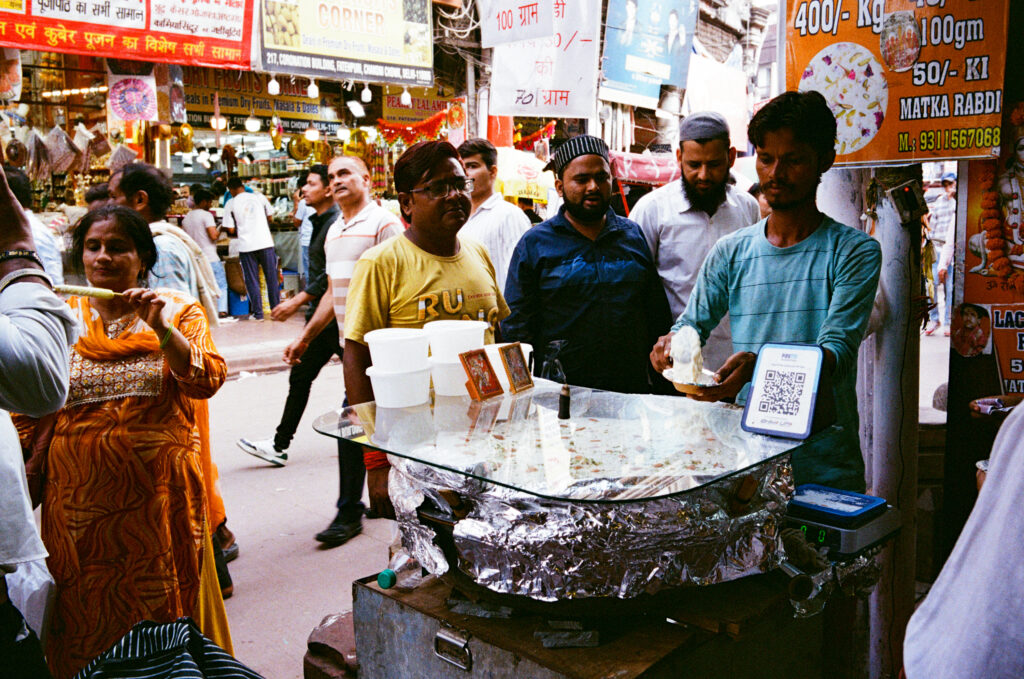
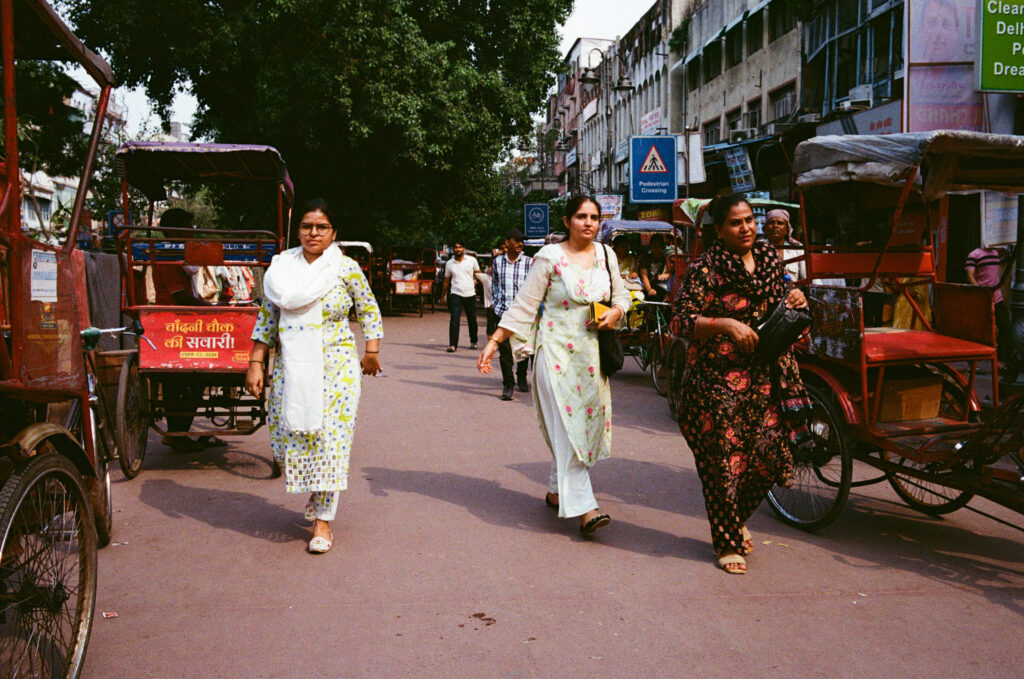
The market was just as crowded as the previous evening before the rain storm. Again I wasn’t so much walking as I was being pushed along with the crowd. Stopping to compose a shot was often out of the question. The extremely close working distance and lack of ability to pause to compose a shot made me choose to shoot with my 28mm f/2.8 lens. I found the colors of the market quite striking and decided to shoot color this afternoon. I had with me two rolls of Kodak Ultramax 400 ISO film which I pushed +1 stop to 800 ISO due to the late afternoon lower light levels. This allowed me to easily zone focus with a wide depth of field at f5.6 to f8. Shooting in the hot humid afternoon conditions was definitely preferable to the wet rainy conditions the night before. No longer did I need to endure my improvised shooting style to accommodate my umbrella! The afternoon light was great and before I knew it I had exposed both rolls of film.
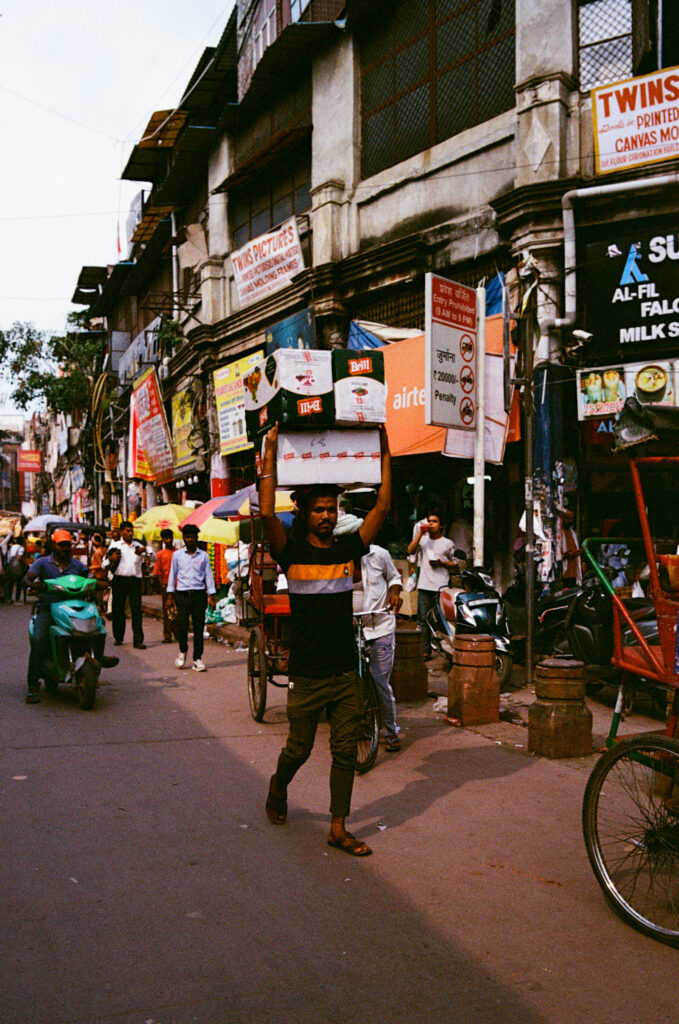
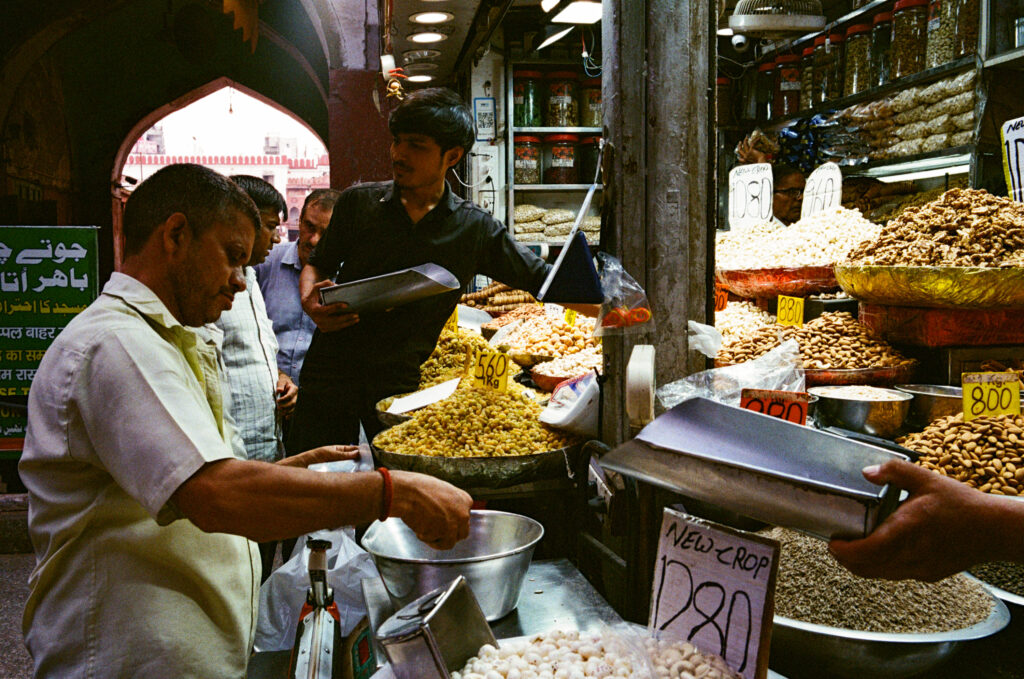
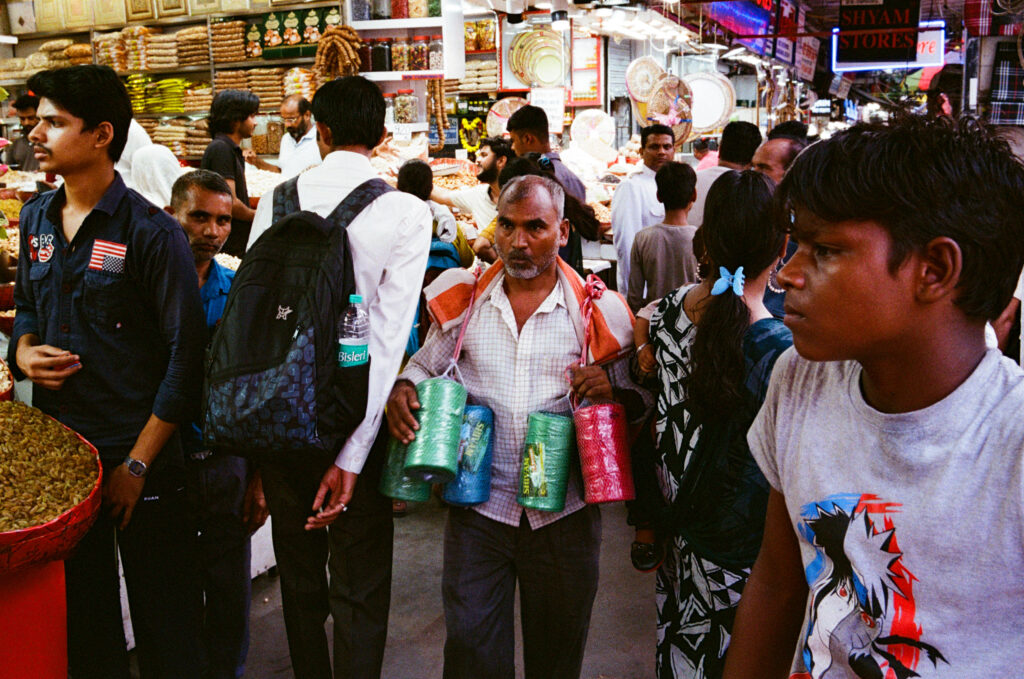
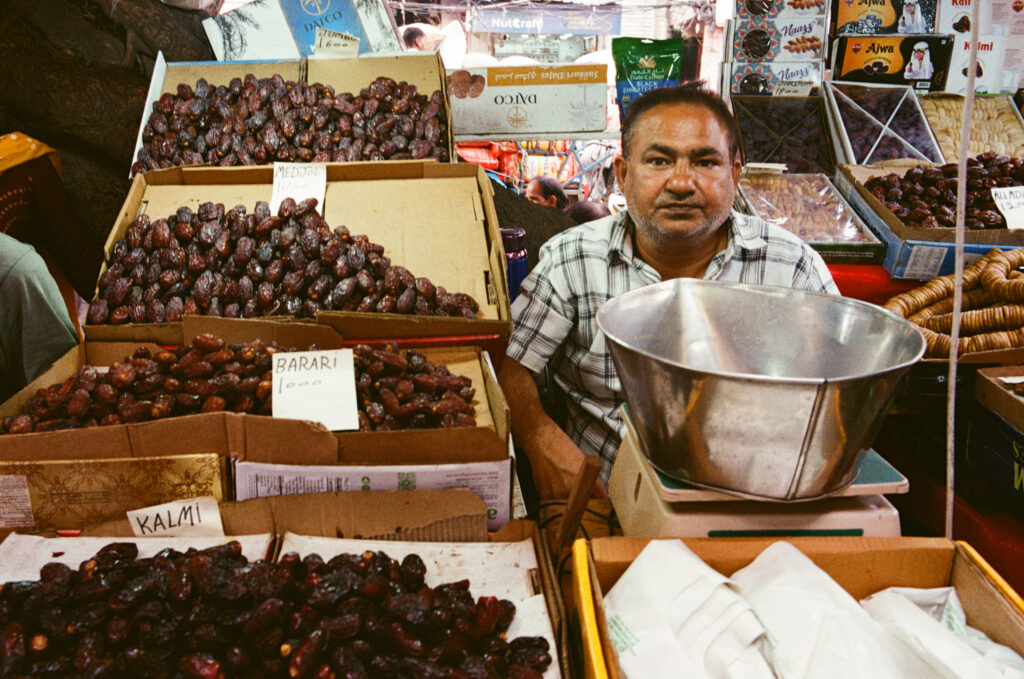
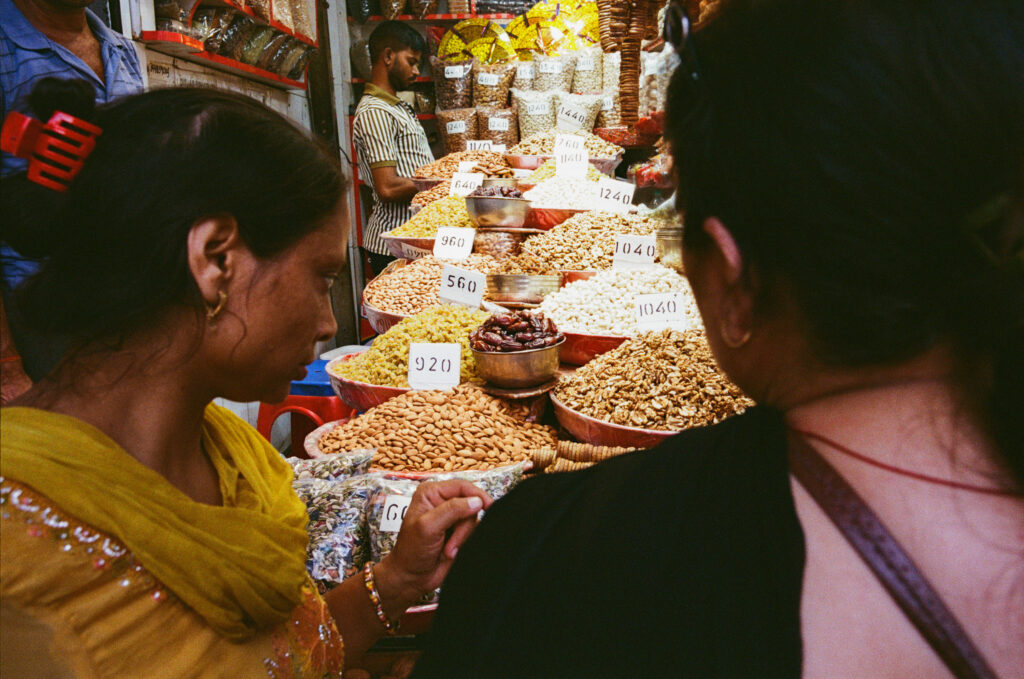
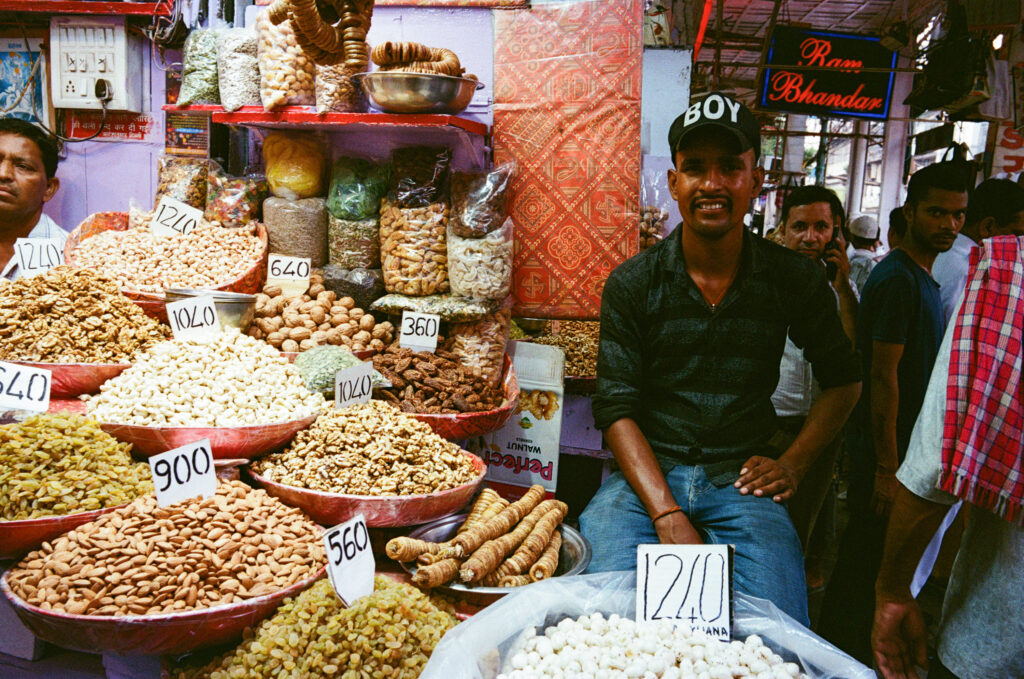
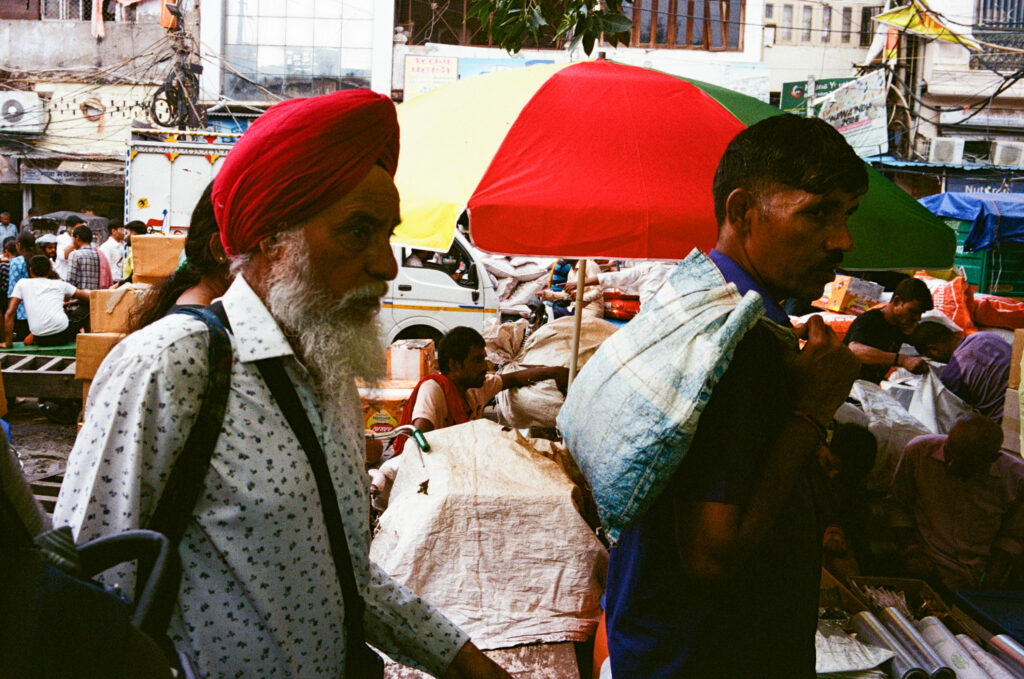
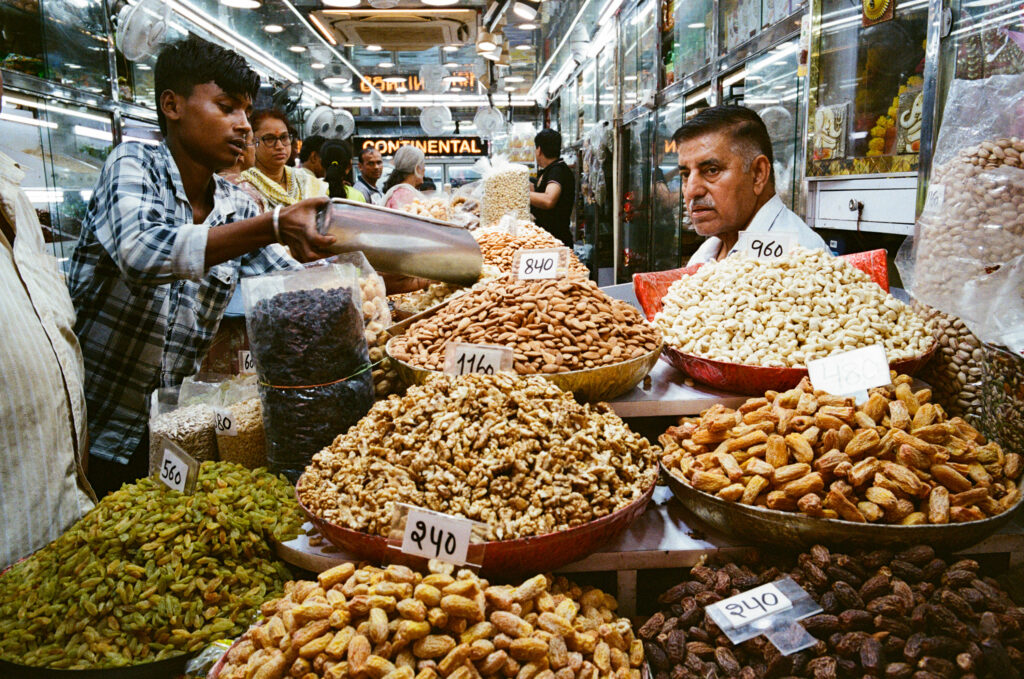
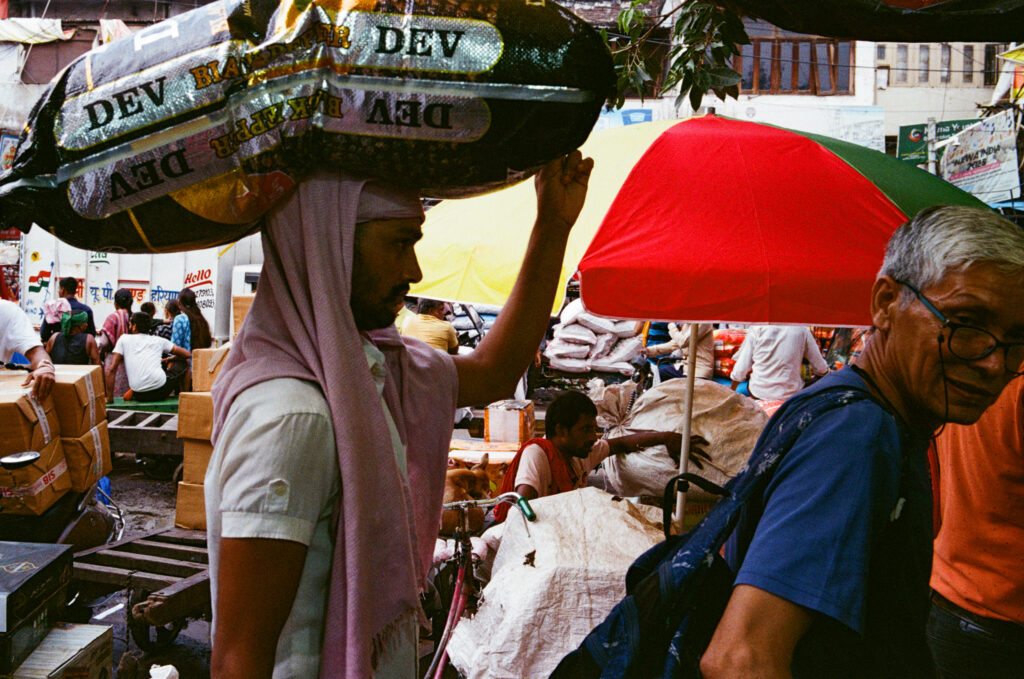
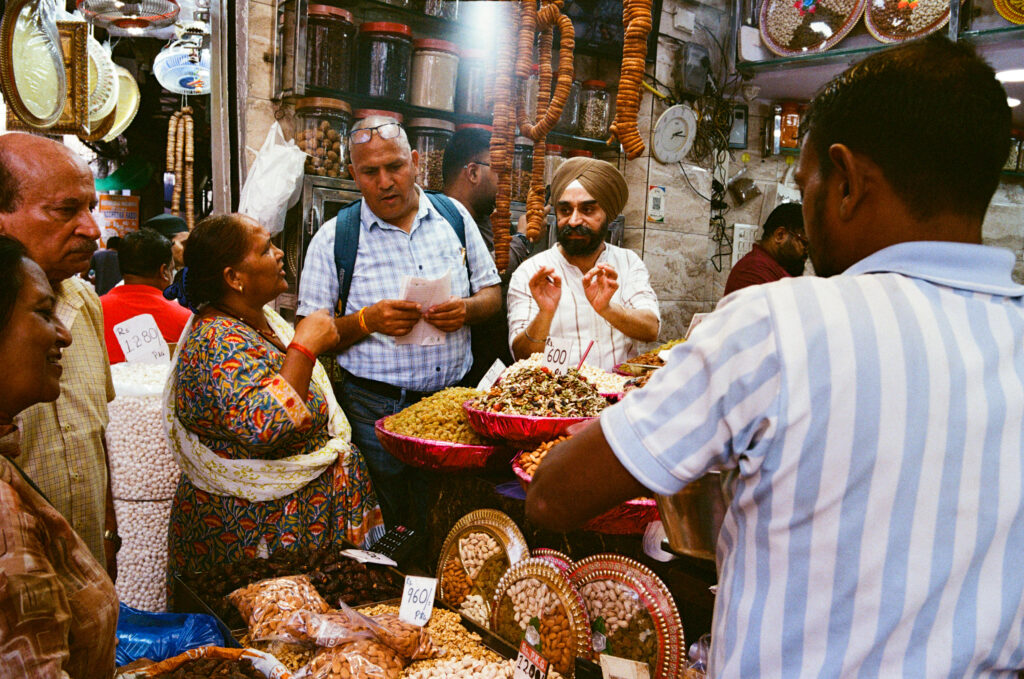
I’ve heard it said that “INDIA” stands for “I Never Do It Again.” This was my second visit to India, and after the first one I remember telling myself I wouldn’t be coming back. After returning home from this trip, I even told my wife to remind me that if I ever started talking about going back to India to remind me not to do it! And yet, writing this a few months later and looking back through the photographs I took, that sentiment has certainly started to fade. With some distance, the experience feels different now. Was it worth dealing with the traffic, crowds, rain, dark alleys, and then the heat and dust to photograph Old Delhi’s markets? I’ll let the photos speak for themselves. Time to buy more film!
Share this post:

Comments
Ian on Street Photography in Old Delhi with Double-X, Tri-X, and Ultramax
Comment posted: 08/02/2026
I'm interested in the effect of a 1 stop push to the Ultramax, which in the past is film I've dismissed as looking almost digital and not to my taste.
Here, the push seems to have taken that edge off in a pleasing manner. It appears to me to be very similar to the look I get from my Fuji X, particularly images I have from the old market in Dubai.
I tend to pull film for saturation, although it's mostly Kodak Gold these days.
I'm very intrigued and would be most grateful if you or anyone else has insight of the effects of pushing faster film.
Cheers
Ian
Comment posted: 08/02/2026
Michael Jardine on Street Photography in Old Delhi with Double-X, Tri-X, and Ultramax
Comment posted: 08/02/2026
Comment posted: 08/02/2026
Armando Reis on Street Photography in Old Delhi with Double-X, Tri-X, and Ultramax
Comment posted: 09/02/2026
Comment posted: 09/02/2026
Ibraar Hussain on Street Photography in Old Delhi with Double-X, Tri-X, and Ultramax
Comment posted: 09/02/2026
Get a good feel of the place
Thanks
Comment posted: 09/02/2026
Art Meripol on Street Photography in Old Delhi with Double-X, Tri-X, and Ultramax
Comment posted: 09/02/2026
Comment posted: 09/02/2026
Jeffery Luhn on Street Photography in Old Delhi with Double-X, Tri-X, and Ultramax
Comment posted: 09/02/2026
You really captured the frantic life of the place. I didn't see anyone with a smile, which conveyed the difficulty in surviving in such a crowded environment. Considering the challenge of being hemmed in by the crush of humanity, you did very well indeed. I've spent time in Hong Kong and Tokyo during rush hour and I didn't like being pushed around. Especially being forced into subway cars with the doors closing on my shoulder bag. Ugh! Delhi is more gritty than those cities, and your shots show it. Thanks for the reminder that urban India is a tough place to be. Better you than me! Great shooting!
Comment posted: 09/02/2026