

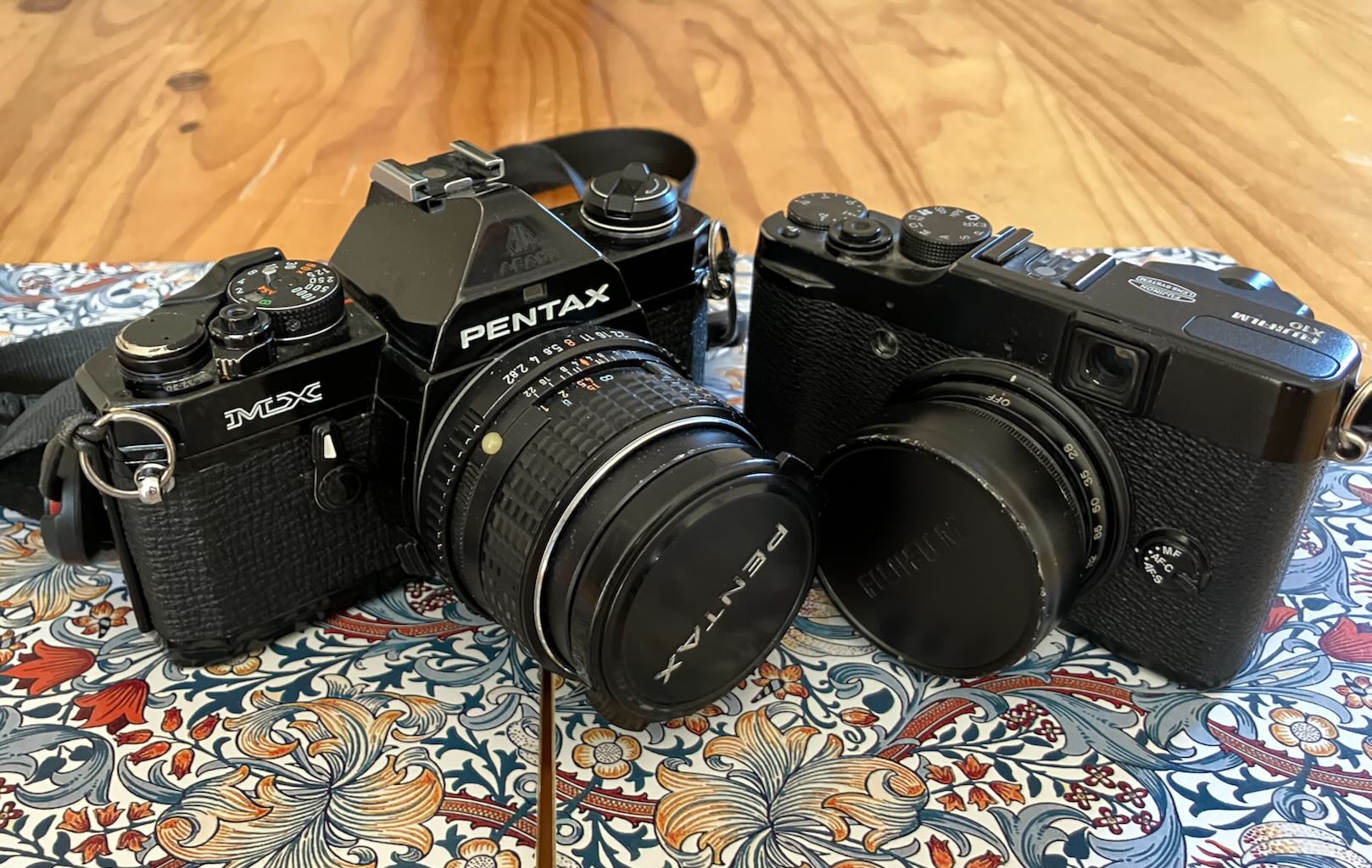
We see a lot of stories these days about digital camera users trying their hand at film photography, sometimes getting excited and frustrated in equal measure. Just for fun, this is the story of a fairly dedicated film photographer who found himself trying his hand (again) with a digital camera.
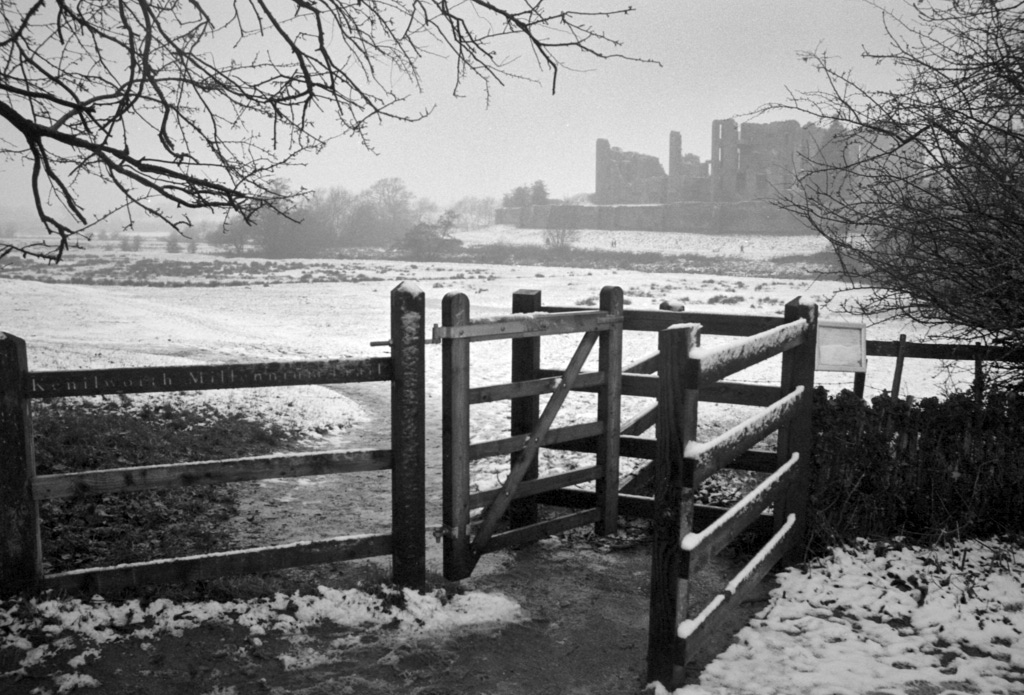
It was the week after New Year, and we had an overnight snowfall. Nothing ambitious, some big fat flakes and enough settling to make walking… interesting! Then a friend of ours who over-winters in Florida playing croquet contacted, asking if we could take a photo of nearby Kenilworth Castle in the snow, to show her American friends. Unfortunately that Friday was grey and dull, and by the afternoon a lot of the snow had gone, so I offered her a black and white film photo of the Castle in the snow from last year.
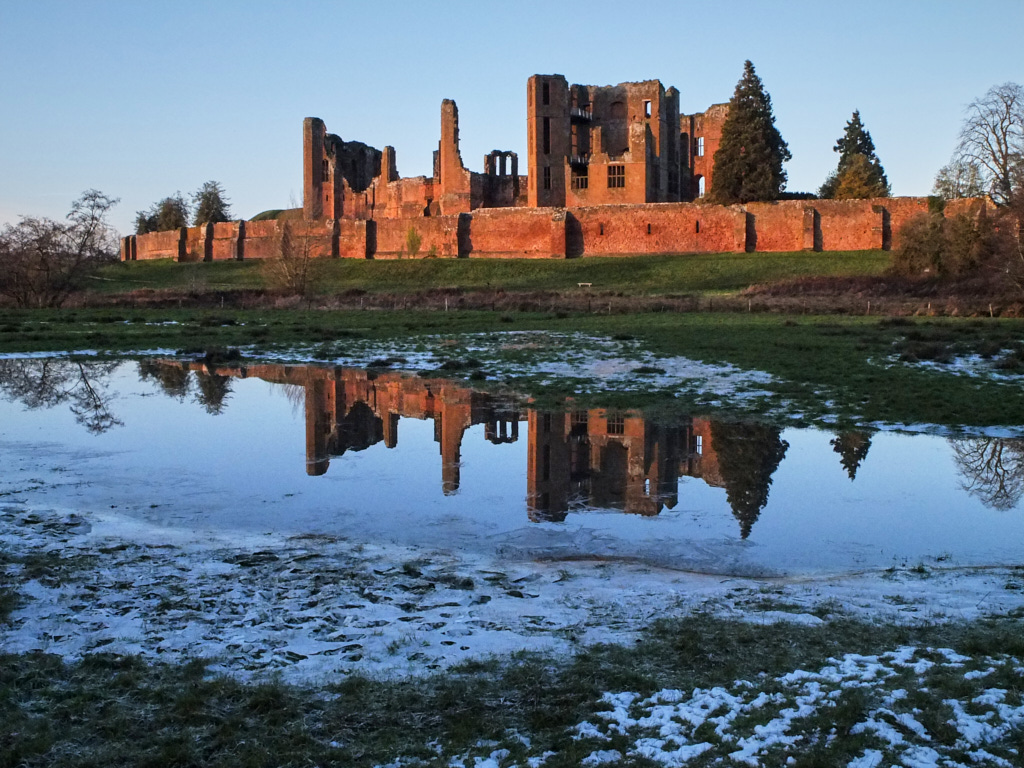
Very nice, she said, but she was hoping to get the contrast with the terracotta tones of the Castle, could we get one in colour?
Luckily the next day, Saturday, was going to be sunny. Much of the snow might have gone, but the melt should mean some floods behind the Castle, always interesting. I thought about trying to get something on my smartphone but quickly abandoned the idea: first, I hate taking phone photos, the ergonomics are all wrong, and second, I thought the very wide angle lens wouldn’t work for what I had in mind.
But I do have an old digital camera, so obviously I should use that. It is a Fuji X10, a fairly compact camera packed with Fuji’s wonderful colour science and a cracking zoom lens. Only 6 Mpixel the way I had it set up, but that’s only a little less than my film photos, the way I scan them. So I reached it down from the shelf, and had a look to see if the SD card was empty. No, it had half a dozen images there, of my grand daughter taken, let’s see, in August 2024! And then, in just a few seconds, a blank screen: the battery had gone flat. Of course it had. Never mind, I’ve got a charger… somewhere. Well, we’ve all played the game of hunt the charger! Not in my bedside table drawer, not in my desk drawer, not even in my accessories drawer (which had to be specially emptied for the occasion, sadly without revealing the location of my lost red filter). Not even, I was pretty confident, on my desk. I couldn’t even find the right kind of cable to charge from my computer (OK cable, wrong end!). I went to bed despondent.
Saturday morning, I suddenly remembered that last year I’d been forced into a super tidy up, for some reason, and a bunch of stuff got stuffed into… those boxes over there! And there it was. So at last we have a battery charging.
Bear in mind the X10 is a camera I bought new in 2012, before I got back into film photography; I used it extensively and with some success for many years. It was the only camera of mine that could keep up with the grand children in their younger years. I thought I knew it quite well. Turns out, not so much.
Down by the Castle I first tried taking photos framing with the viewfinder, but I’d forgotten the complete lack of information available, so I had to use the screen in what Kirk Tuck has referred to as the “stinky diaper” mode. The first obvious thing was a small red box with AF in it overlaid on the screen image. That didn’t seem good. I couldn’t make it go away.
So, nothing for it, I had to dive into the menus (I hate menus!). On the X10 they are relatively simple, but opaque. There’s certainly not one that says, get rid of the red AF box. After about 10 minutes of standing in the cold faffing around (NOT taking photos) I’d smehow changed things enough that the red AF box had vanished, and some of the images looked like they might be in focus. Some others looked like they might be reasonably well exposed. The trouble with auto-focus and auto-exposure, I find, is that often I have no idea whether either have worked. The screen at the back helps give some sort of idea, but it’s tiny (though no doubt things have improved in the last 14 years!). Oh dear, do they still call checking that screen “chimping”? Me, chimping?
At about this point I was getting confident enough to explore the available compositions. I wanted the Castle, obviously, glowing in the afternoon sun, with some foreground snow and ice, and preferably a decent reflection in the small flood pool. In this case, that lovely zoom was a big help (I almost never use a zoom on my film cameras). Half an hour later I had around 30 as yet un-deleted images, mixture as before. Almost a whole roll of film!
Later at home I managed to import those mages into Capture One Pro, and have a decent look at them for the first time. Half went straight away, and soon I was left with half a dozen that I and the camera had made a reasonable fist of. And then finally down to one, to send to our friend, who seemed well enough pleased. I’d have preferred a bit of something going on in the sky, but my philosophy is, take what you find.
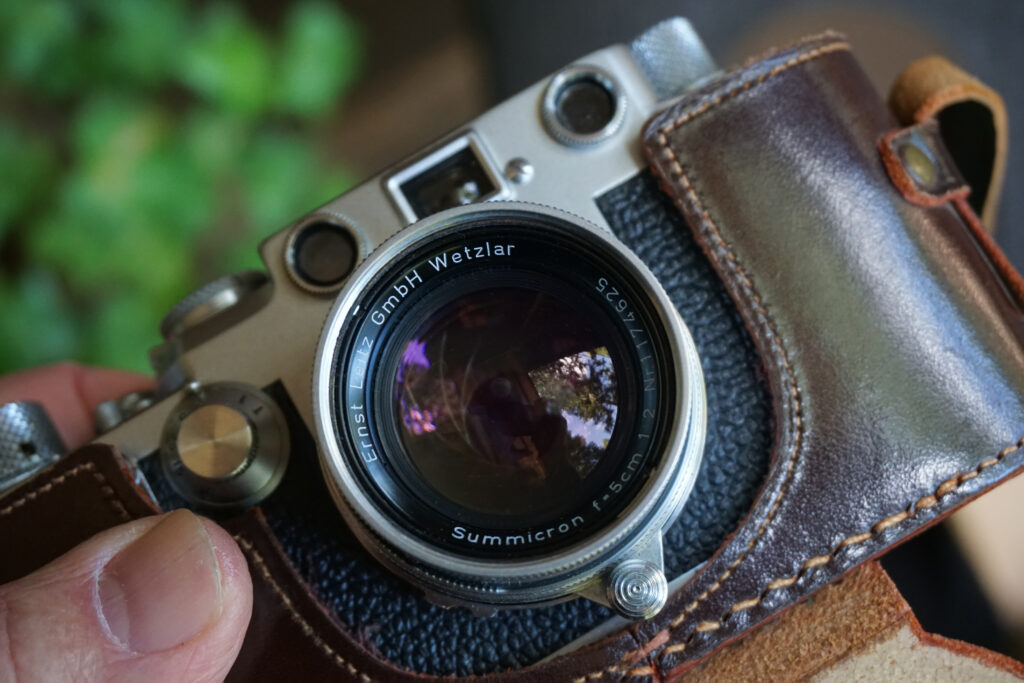
Oh, before leaving that scene earlier, I had pulled my simple 60 year-old metal, manual, metered film camera round, looked at the beautiful clear image through the viewfinder, waved it about a bit to check exposure, focused, click, that should do nicely. One frame, that I have quite a bit of confidence in. But I can’t show you that, of course. It’s still on the roll, in the camera.
Now, this little piece isn’t really another salvo in the endless film versus digital wars. This is much more about knowing your camera, really knowing it, after long hours, days, months, even years of practice, so you don’t have to fight it, so the camera helps you make your images, almost effortlessly.
Happy New Photo Year!
By Chris Rusbridge, on Mastodon (@ca****@******on.scot) and Talk Photography.
Share this post:


Comments
Stephen O'Raw on A Filmie goes Digital
Comment posted: 14/02/2026
Comment posted: 14/02/2026
pessoist on A Filmie goes Digital
Comment posted: 14/02/2026
Comment posted: 14/02/2026
David Hume on A Filmie goes Digital
Comment posted: 14/02/2026
Cheers
Comment posted: 14/02/2026
Jeffery Luhn on A Filmie goes Digital
Comment posted: 14/02/2026
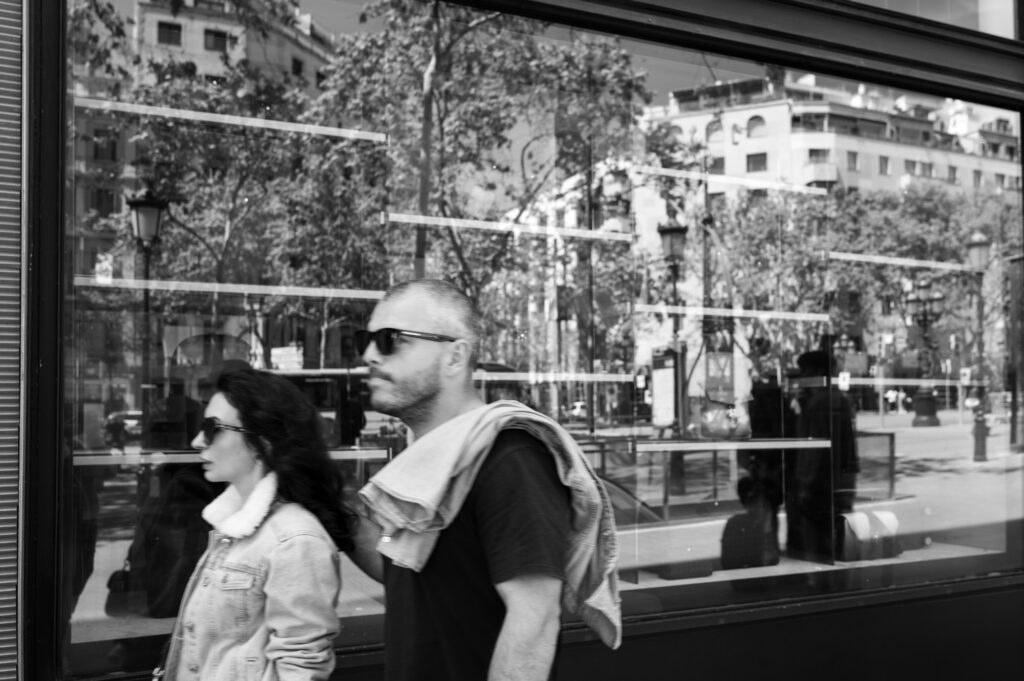
I liked both photo compositions. Two good shots per day is a good crop.
I agree that familiarization of the camera is key to making it work for you. I have a collection of about 25 various film cameras, 4x5s, lots of Zeiss Folding cameras, Nikon 35mms, Pentax 645N, and several TLRs. All working...but each with their own idiosyncracies. I try to cycle through them to keep them exercised and happy. It's impossible (for me) to stay current. There is something to be said for having 2 or 3 cameras max. Good theory, but hard to stick with.
Comment posted: 14/02/2026
Comment posted: 14/02/2026