

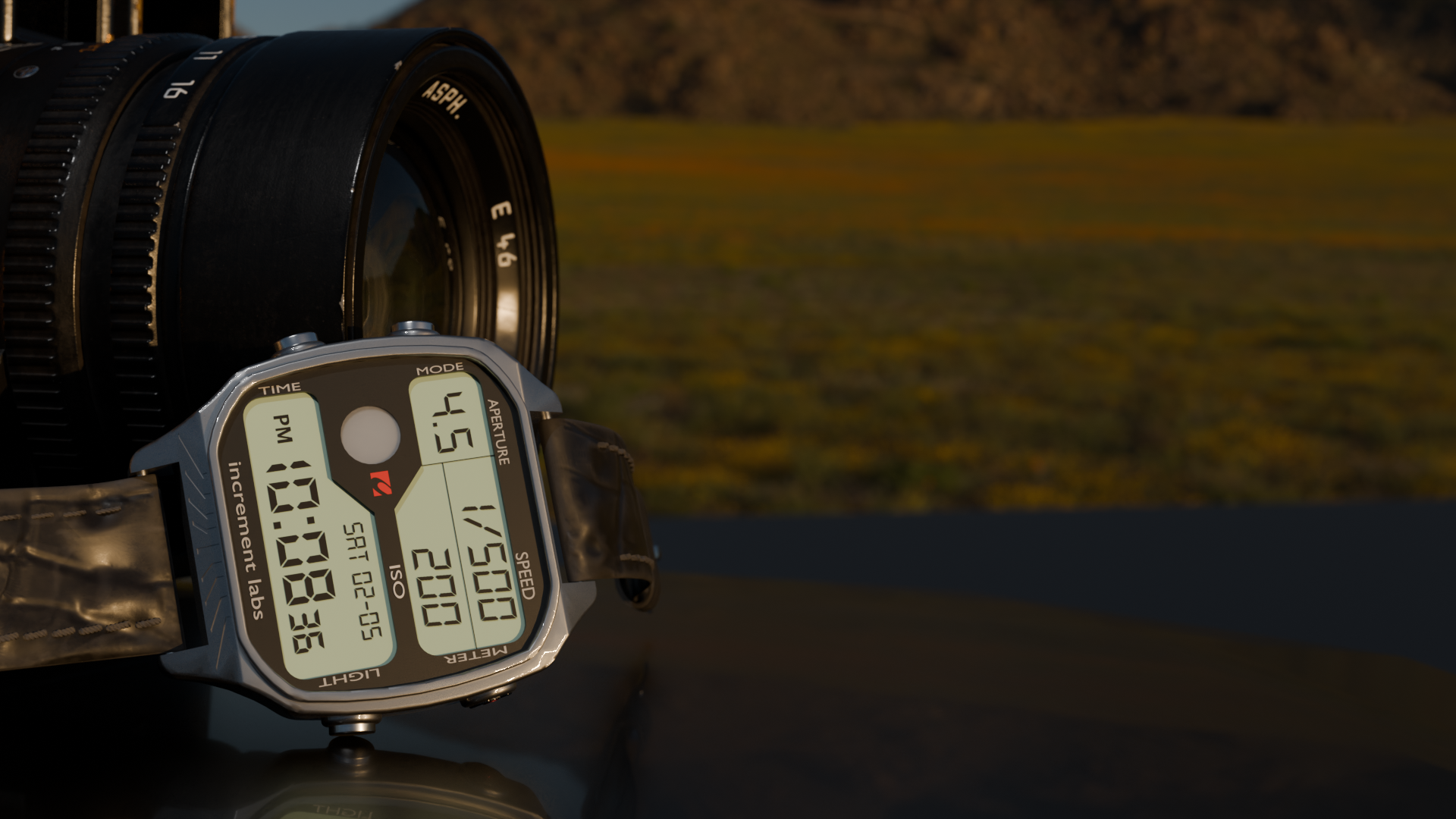
Ever wondered if you can learn manual exposure without having a camera in your hand? It’s an odd question and to be honest I wouldn’t blame you if you hadn’t. But it’s a question I asked myself once I realised that learning manual photography was a much slower process than expected.
The Problem:
Let’s be real, getting to grips with shutter and aperture isn’t exactly rocket science. It’s a fairly simple set of rules to follow and to be honest, sunny 16 gets you 80% of the way there. However, it’s still a skill nonetheless and unless you’re shooting consistently every day, you need to ‘re-learn’ the right aperture/shutter every time you pick up the camera. Besides, who here hasn’t used their best judgement for a picture just to find your intuition was wildly off-piste.
This was my problem. To be honest, it’s hard to find a regular schedule for photography when you’re already occupied with work, family and other life obligations. See, as a 20-something living in London, it’s hard to dedicate consistent time to really being ‘at one’ with my camera. Often, I’d bring my camera out on the odd weekend when the weather was nice, finding myself back at square one getting to grips with my settings. Honestly, I don’t even want to go into the amount of rolls I’ve developed where the results resemble an 18% grey card. This struggle was repeated constantly which led me to question whether there is a more efficient way of learning manual photography.
The Inspiration:
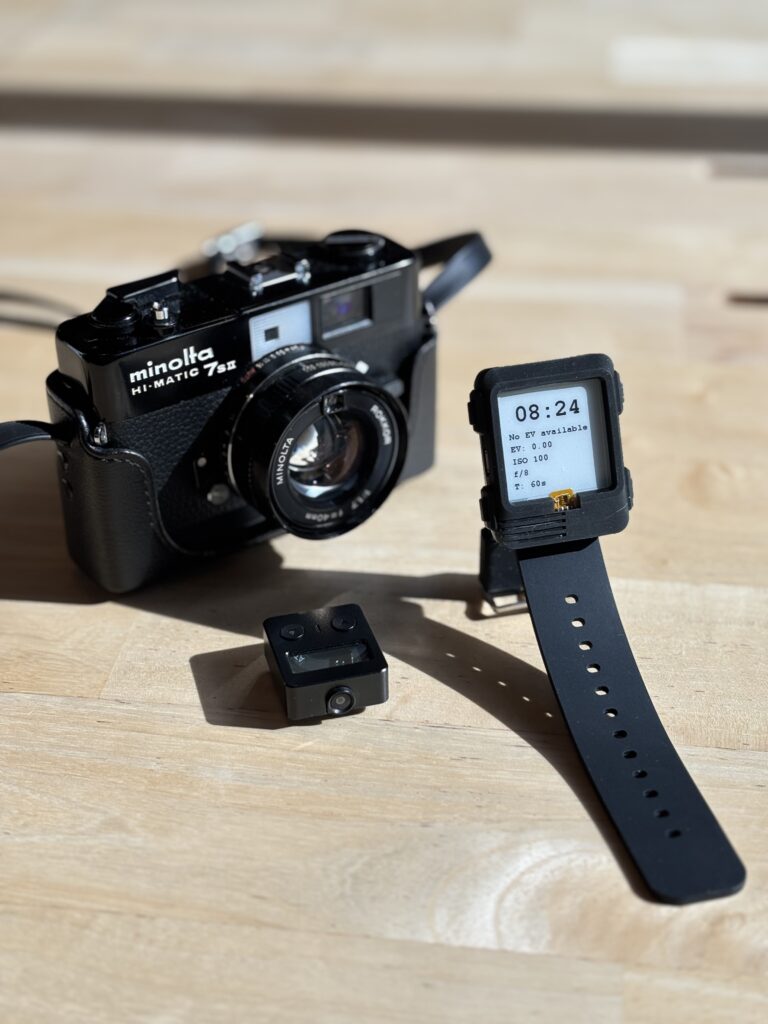
It was a slow afternoon of daydreaming in the office when I had my lightbulb moment. Ta-da! What if there’s a light meter integrated with a wristwatch? The idea is simple: Integrate a light meter with a digital watch, so you have access to light readings 24/7 everywhere you go. This way, you can take readings with or without the camera. Let’s say you’re on the way to work and you spot a nice scene; you can guess the light readings and use your light meter watch to let you know if you’re correct or not. Our theory is that with time and practice, you’ll have a much more acute sense for manual photography. The beauty of the idea being that you have immediate access, a level of on-the-move speed and instant demand that regular metering apps can’t compete with.
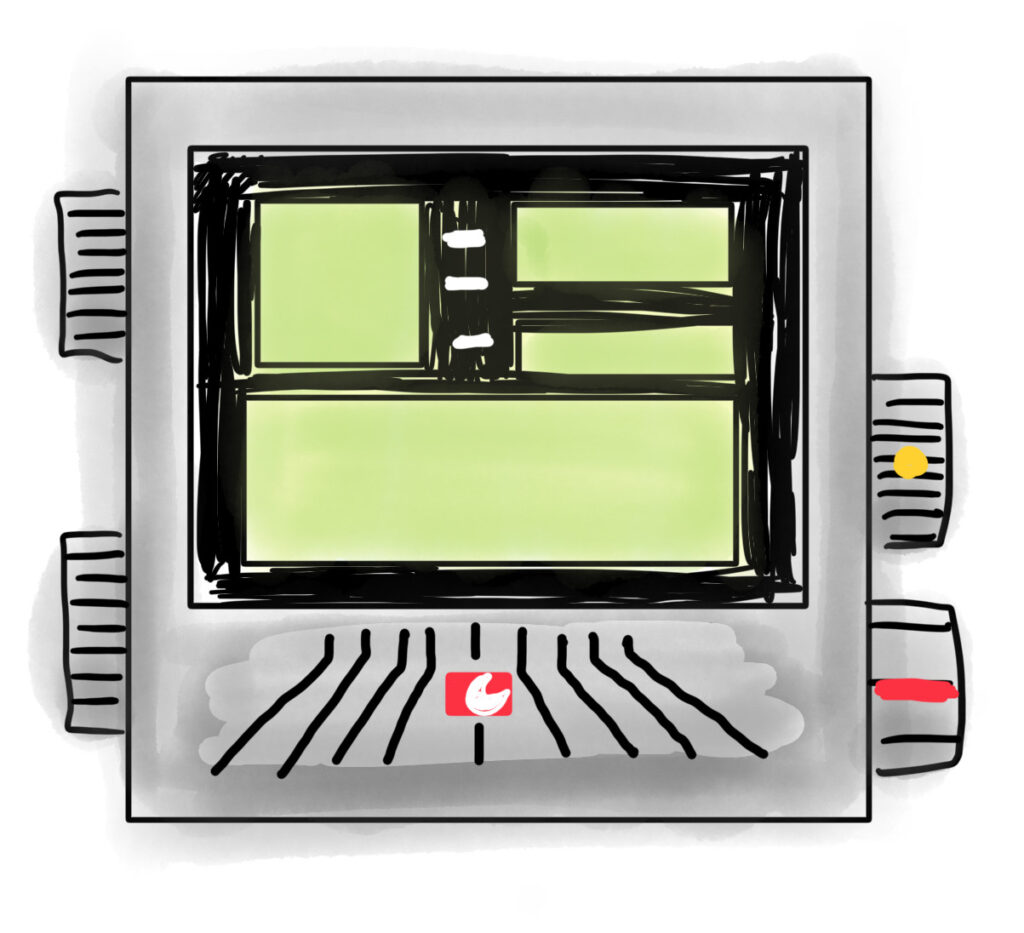
The idea had formed but that wasn’t enough, I knew I couldn’t do it alone. Enter Eddie, long-time friend from uni with the engineering know-how to navigate the technical side of this project. After a couple pints and a crash course in manual exposure, we shook hands and Increment Labs was born.
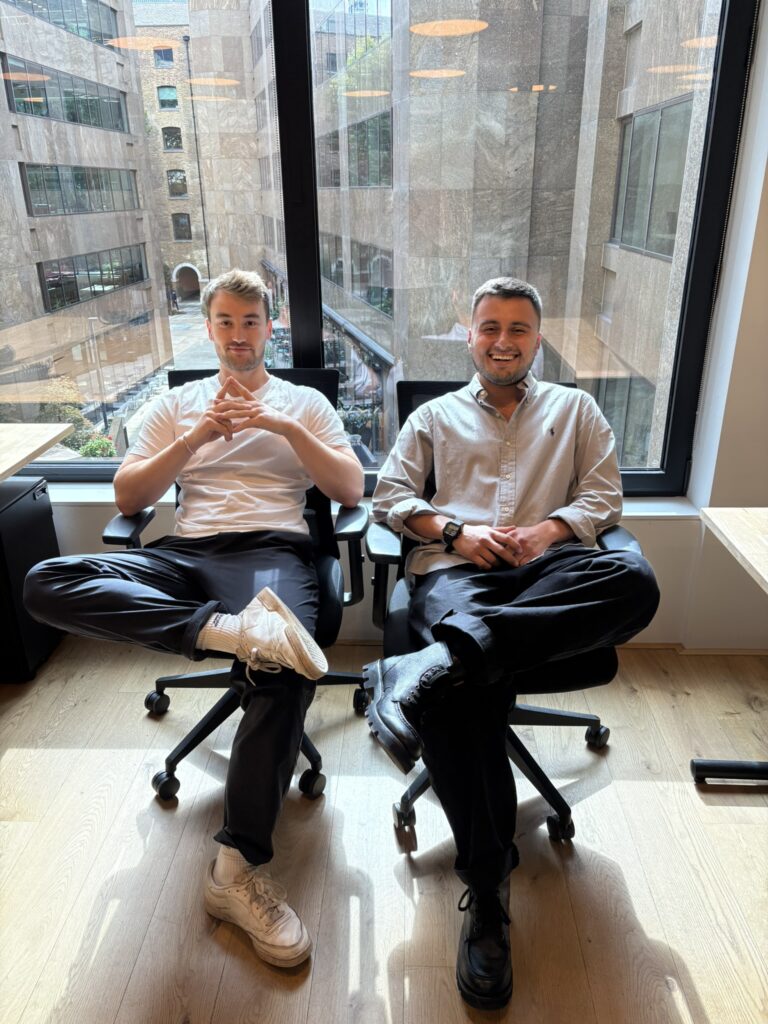
Of course, we had to give ourselves a sense-check if this was actually a good idea or if it was all a pipedream. We spoke with photographers of all types, slowly refining our idea and getting feedback on how our product would be received. Thankfully, the problems I experienced were shared with many other people in the field. Not only that, but photographers of all levels had something to share. Street photographers are in a constant battle to stay out the limelight, and so a chance to accurately meter light without bringing a camera to your face is a welcome addition. For the analog photographers, I’m sure we’re all aware of the graveyard of expired and broken light meters that exist on otherwise perfectly functioning cameras. Even professionals had something to benefit: Many of the working pros were fed up with bulk from all the gear they had to carry. A simple light meter on their wrist would certainly help to alleviate that. At the very least, people were just excited about a watch that was tailor made for photographers, the first true digital watch designed exclusively for the photography market.
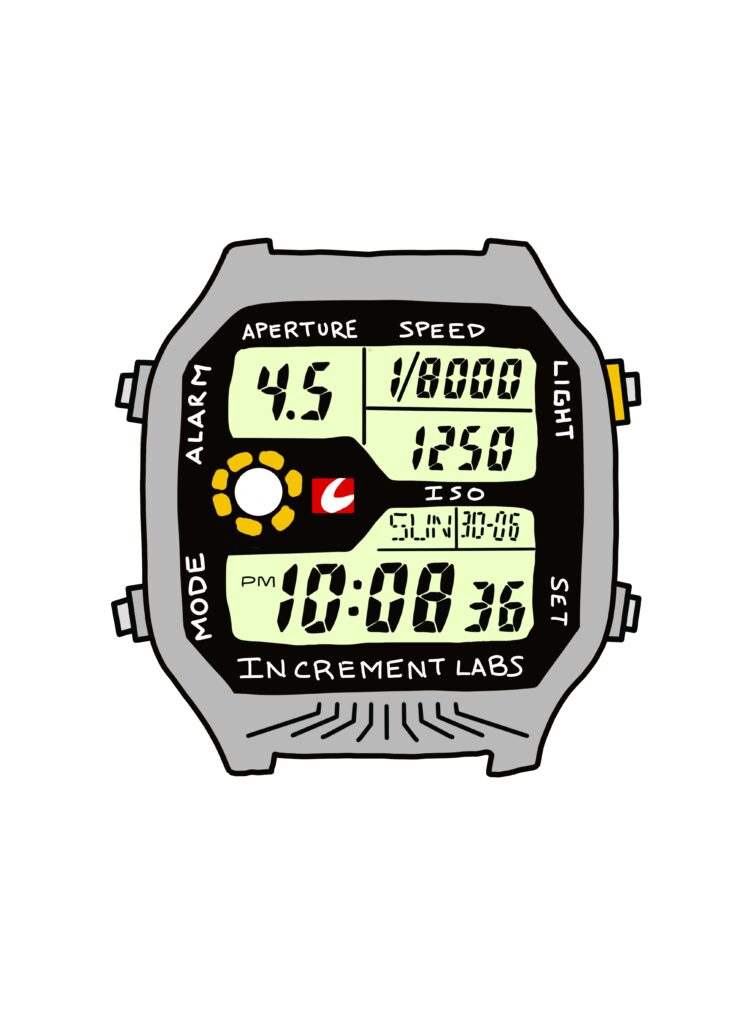
Making it Real:
We knew we couldn’t let this idea go, so we’ve been plugging away over the past two years to bringing our concept to life, pouring not only our time but more scarily our life savings into our idea (much to the horror of our respective girlfriends). The fun thing about making a watch for photographers is there is so much inspiration you can lift ideas from. So many nods and references that adapt perfectly to watches. Think about the brushed aluminium body of a vintage SLR camera reimagined as the material for the case of a watch. The pebbled leather grip of old rangefinders adapted to form the straps. The shutter release button being reimagined as the button that ‘fires’ the light sensor. One of our favourite features is we’re including a custom alarm, so instead of ringing on a set schedule, we’re programming it to notify you when the next golden hour is around the corner.
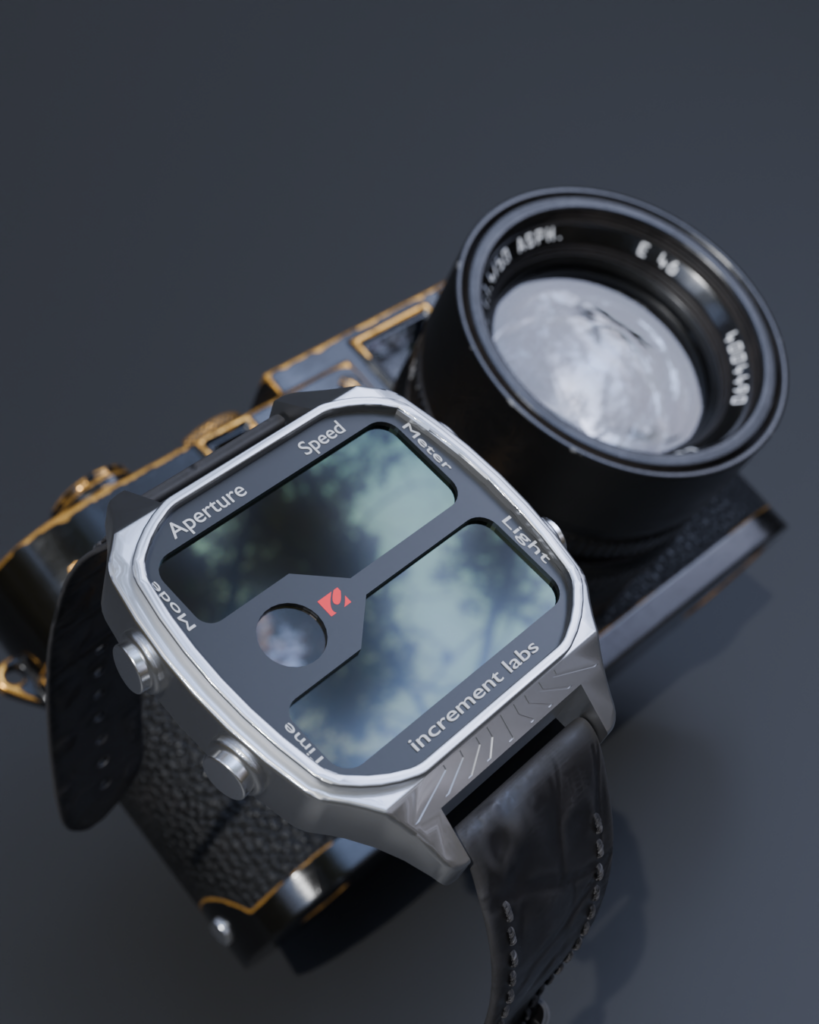
We’ve partnered with a UK-based engineering firm to refine our idea and make it a reality. Right now, we’re starting with reflective metering, but an incident meter variety is also in the works. There’s also lots of extra features we can add including flash sync, remote triggers and white balance. This is all yet to come, but right now we need to get our feet on the ground and have our operation up and running. The possibilities are endless and there’s still so much more we can develop for the tech. We’re launching our Kickstarter campaign with the hope to raise enough funds to launch our first model.
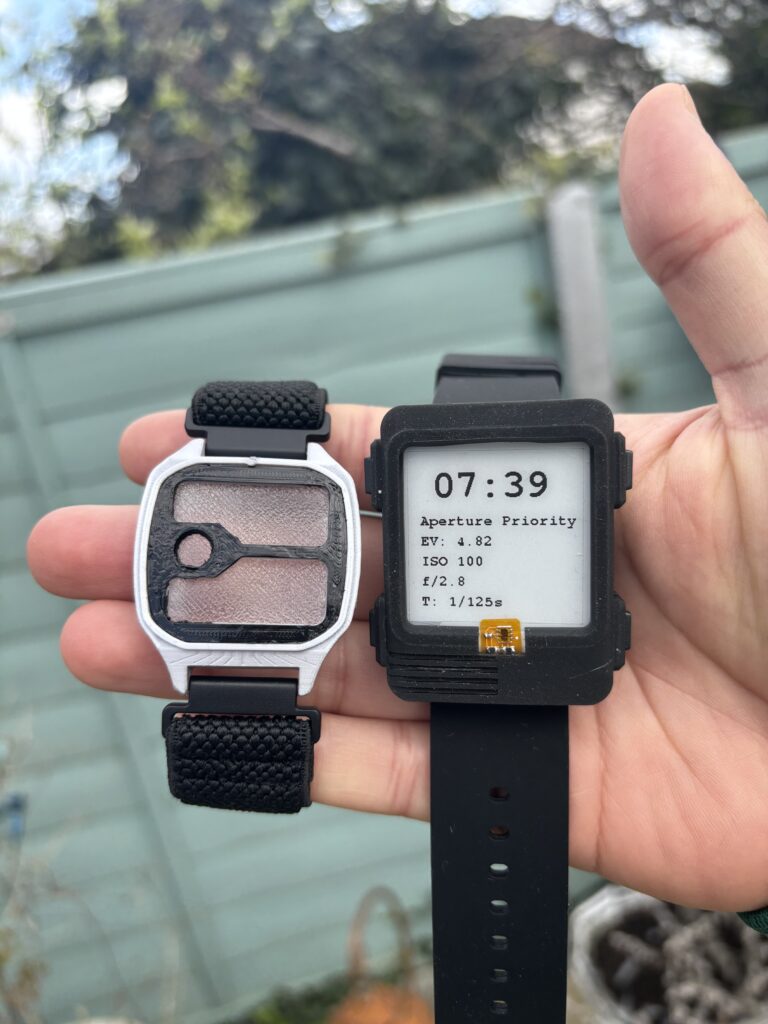
If this watch sounds like something you’d be into, follow our Instagram and visit our website! To secure the best price (and have a chance of becoming a product tester!) feel free to join our Increment Labs VIP community where you’ll be first to hear about special promotions and behind the scenes updates on how we progress. We really think our light meter watch will be a game changer for the way people learn photography and we can’t wait to make it available for everyone.
Thanks!
– Rich
Share this post:

Comments
Reinhold Graf on Why being bad at photography led me to create the world’s first digital ‘light meter watch’
Comment posted: 12/04/2026
Comment posted: 12/04/2026
Sneakerzoom on Why being bad at photography led me to create the world’s first digital ‘light meter watch’
Comment posted: 12/04/2026
Comment posted: 12/04/2026
Adrian Riu on Why being bad at photography led me to create the world’s first digital ‘light meter watch’
Comment posted: 12/04/2026
Comment posted: 12/04/2026
Charles Young on Why being bad at photography led me to create the world’s first digital ‘light meter watch’
Comment posted: 12/04/2026
I had some good advice over the years.
1.A friend told me to follow the exposure guidelines from the little piece of paper in the film box (or printed on the box.
2. The "sunny 16" rule worked fine for me. Made beautiful informal portraits of my college time girl friend 60 years ago. Shoot in the shade! (No shadows!) Girl friend left me. Oops ... Mislaid the prints.
3. My selenium exposure meters work real good. Favorite was made in Russia.
4. My dad told me... Before leaving the house, set the exposure to match the outside lighting conditon. AND set the distance to about 15 ft.
Comment posted: 12/04/2026
Richard Rothaus on Why being bad at photography led me to create the world’s first digital ‘light meter watch’
Comment posted: 12/04/2026
Comment posted: 12/04/2026
Chuck on Why being bad at photography led me to create the world’s first digital ‘light meter watch’
Comment posted: 12/04/2026
1. Buy film in 100 ft rolls and learn to load the cartridges.
2. a bit of bracketing helps. It has worked well for me to use ASA 400 film but set my light meter to ASA200. Maybe take one more shot one stop over exposed.
Comment posted: 12/04/2026
David Mackay on Why being bad at photography led me to create the world’s first digital ‘light meter watch’
Comment posted: 12/04/2026
I like the design and think there is a market for this sort of thing. I recently bought Reveni Labs Lumo and like it a lot - it's small and means I don't have to take out my phone to meter a scene. To have something like that on my wrist would be ideal.
I am concerned however that you are deciding to only do reflective metering in v1. I understand there may be a solid reason for doing this, however it would put me off buying this altogether. Incident metering makes an abundance of sense for a wrist-worn light meter. You say that incident metering will come later, however are you sure that people will buy more than one watch when there are alternatives out there that offer both in one package?
Its a nice idea and hope you raise the money necessary to see it come to fruition.
Comment posted: 12/04/2026
Gary Smith on Why being bad at photography led me to create the world’s first digital ‘light meter watch’
Comment posted: 12/04/2026
Actual interest (as in might purchase) would depend on the final price and what it would cost to get one on this side of the pond.
Comment posted: 12/04/2026
Tony Warren on Why being bad at photography led me to create the world’s first digital ‘light meter watch’
Comment posted: 12/04/2026
Comment posted: 12/04/2026
Jeffery Luhn on Why being bad at photography led me to create the world’s first digital ‘light meter watch’
Comment posted: 13/04/2026
Comment posted: 13/04/2026
Maynard L Hershon on Why being bad at photography led me to create the world’s first digital ‘light meter watch’
Comment posted: 13/04/2026
Comment posted: 13/04/2026