

I’m constantly seeking good mentors to help me advance my photography. After a recent conversation with Bronisław (www.kozka.com) he asked me to make a survey of the work I’ve done over the last five years so he could become familiar with what I’ve been up to.
I’ve just finished this survey and it’s already been a very valuable experience. It’s been fascinating to see connections and themes in my work that I would not have been aware of if I had not been asked to go through this process of self-examination.
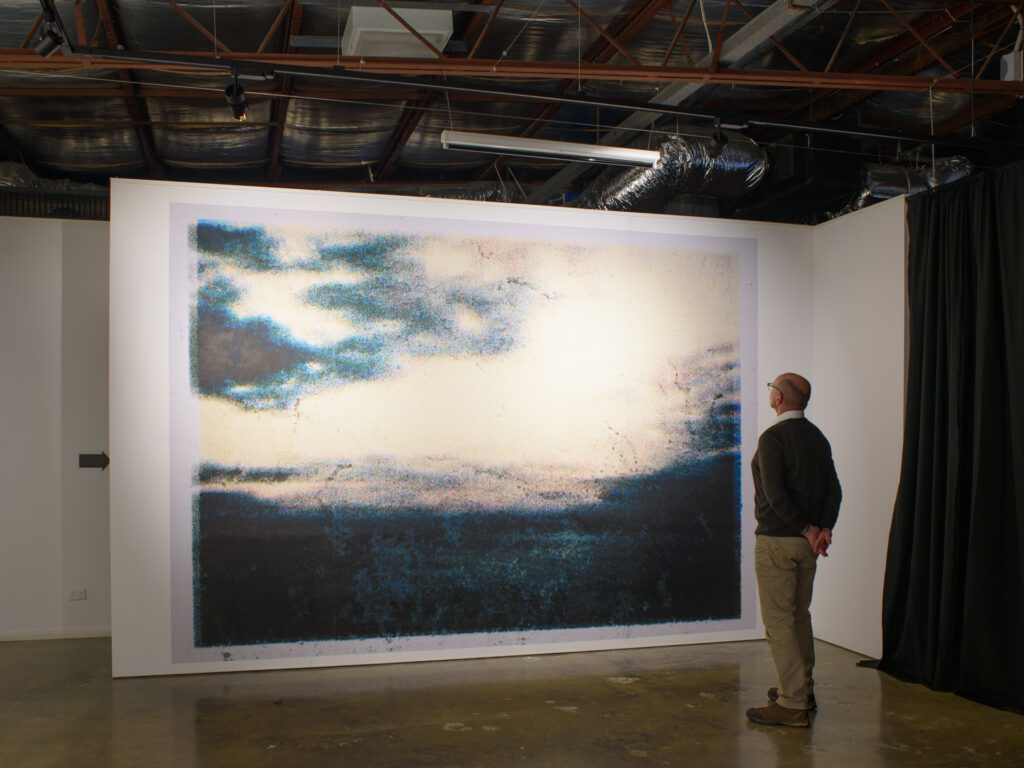
There was one picture in my portfolio that had me scratching my head a bit. It’s the biggest photographic work I’ve made and I certainly remember the process of making it, but the thoughts and rationale that led to it had become a bit blurred. So I decided to go back and see if I could rediscover the story behind it. I think I was hazy about it because I made it as part of an exhibition and there were a lot other things going on at the time.
Anyway, I thought that sharing the photo and the story behind it would be interesting because of how collaborative the process was. Often in these One Shot Stories, it’s about the photographer working by themselves, but in this case the image that started the process was only the very first step in the final work. I had a lot of help along the way, so what ended up on the wall was a very collaborative piece and I thought that process would be interesting to share.
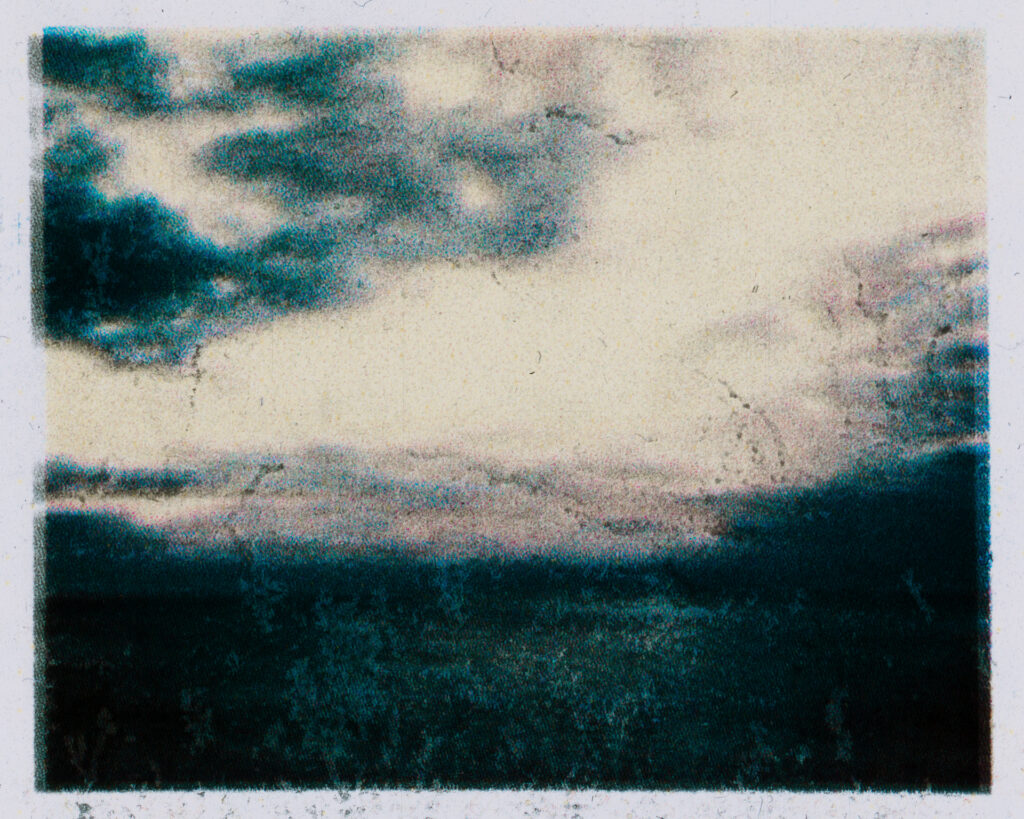
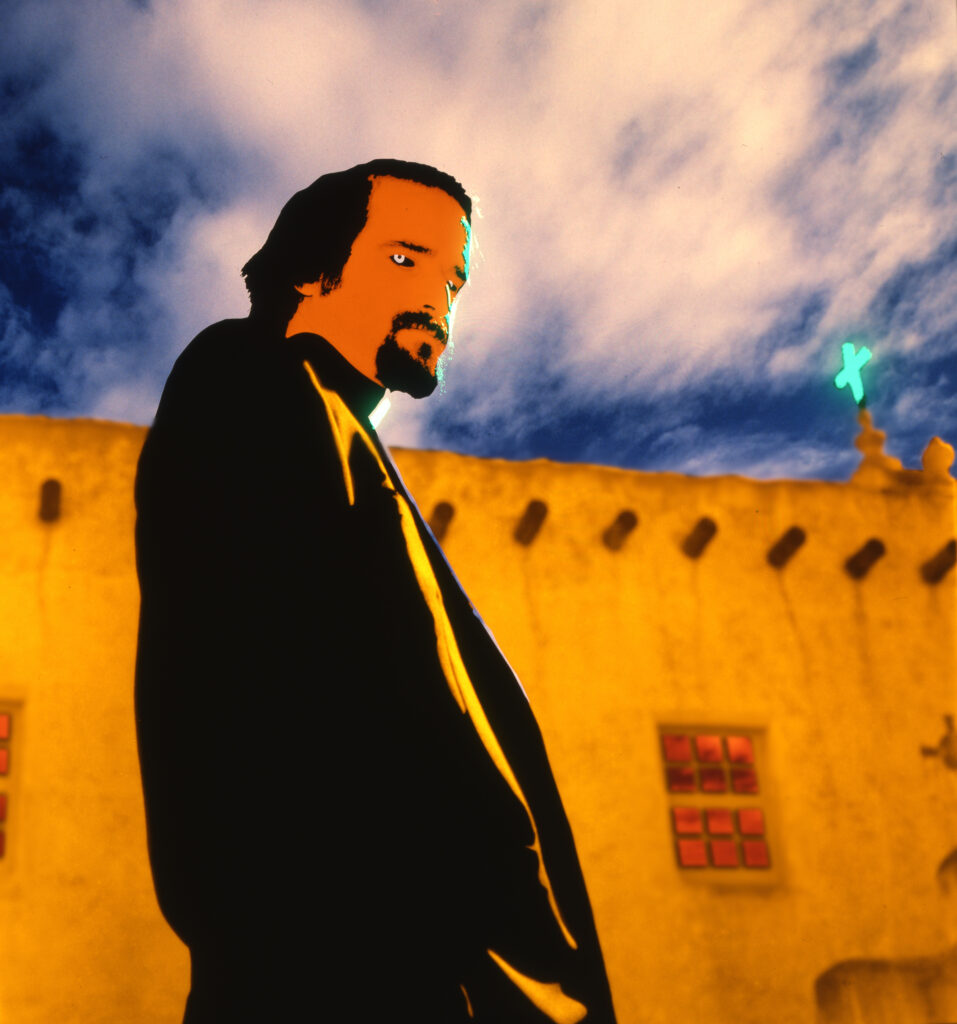
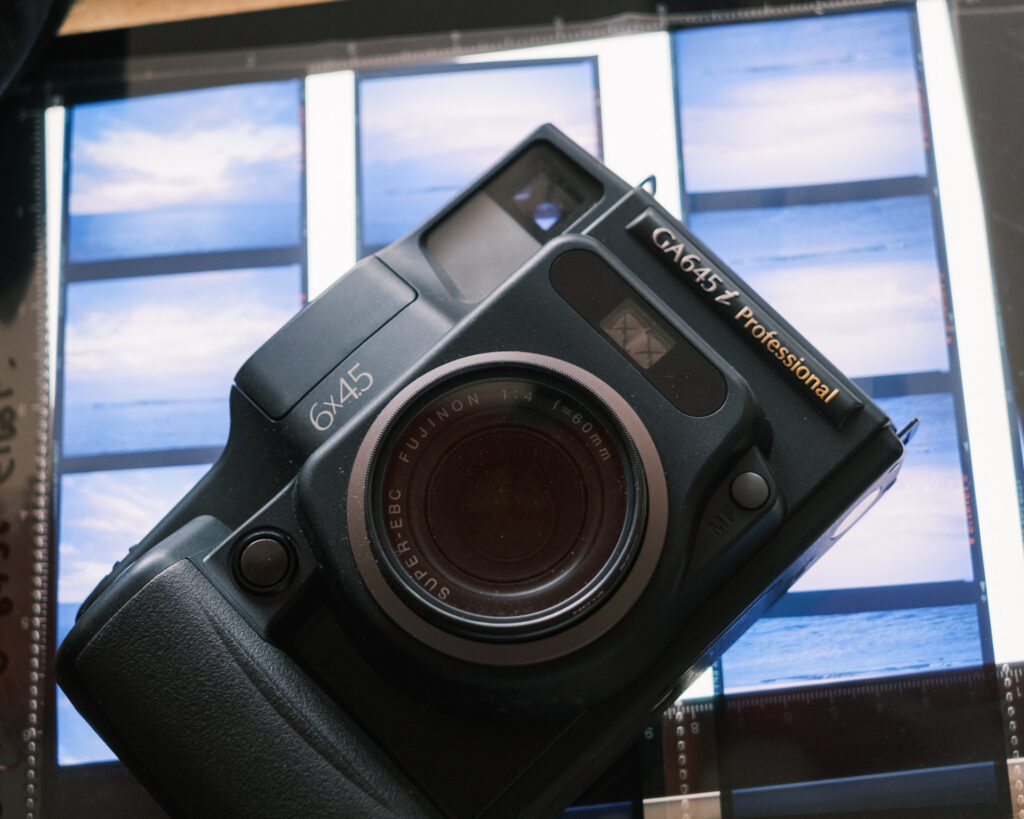 It all began on a marvellously stormy day in 2021 when I was standing on a cliff by the beach with a Fuji GA645i loaded with 20-ish years expired transparency film. The clouds came in and over the course of half an hour or so I made a sequence of captures that have been the foundation of several works.
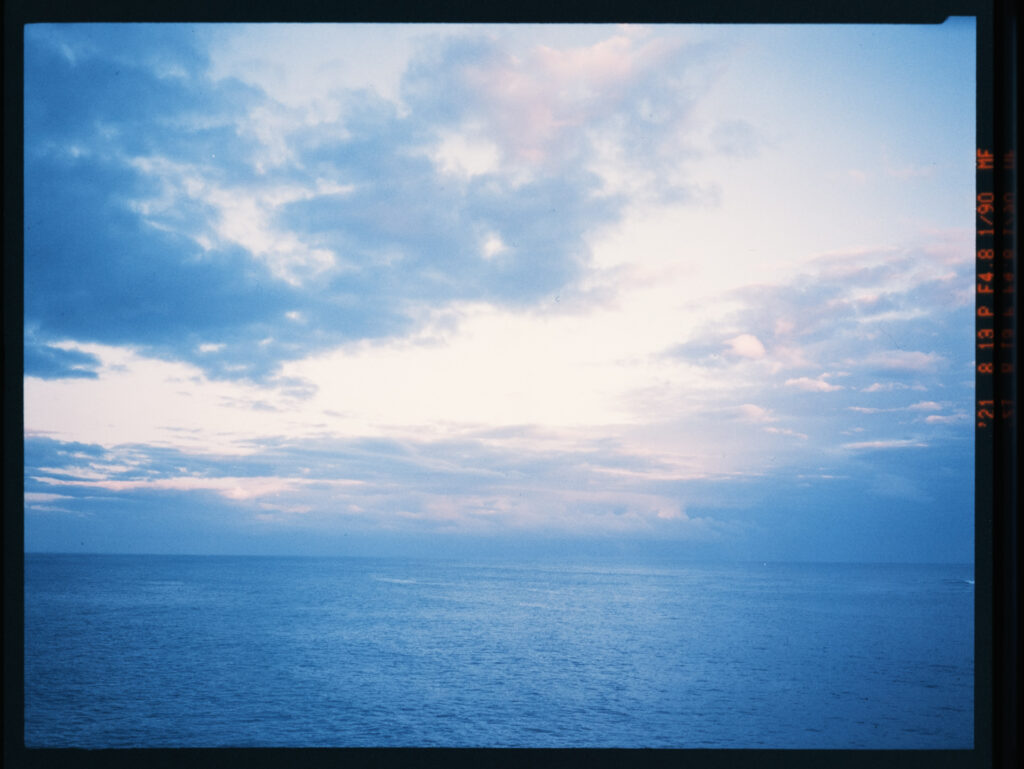
Here is one of the frames from the sequence that I ended up using in different ways. It found its way into an animated video, a series of lenticular prints, and the large work that is the subject of this piece.
The collaboration had started already because a friend had given me a whole bunch of very old expired film, and that is what I was shooting on the day. This was EPT – a Kodak tungsten balanced E6 transparency film that had not been fridge stored and was about 20 years expired.
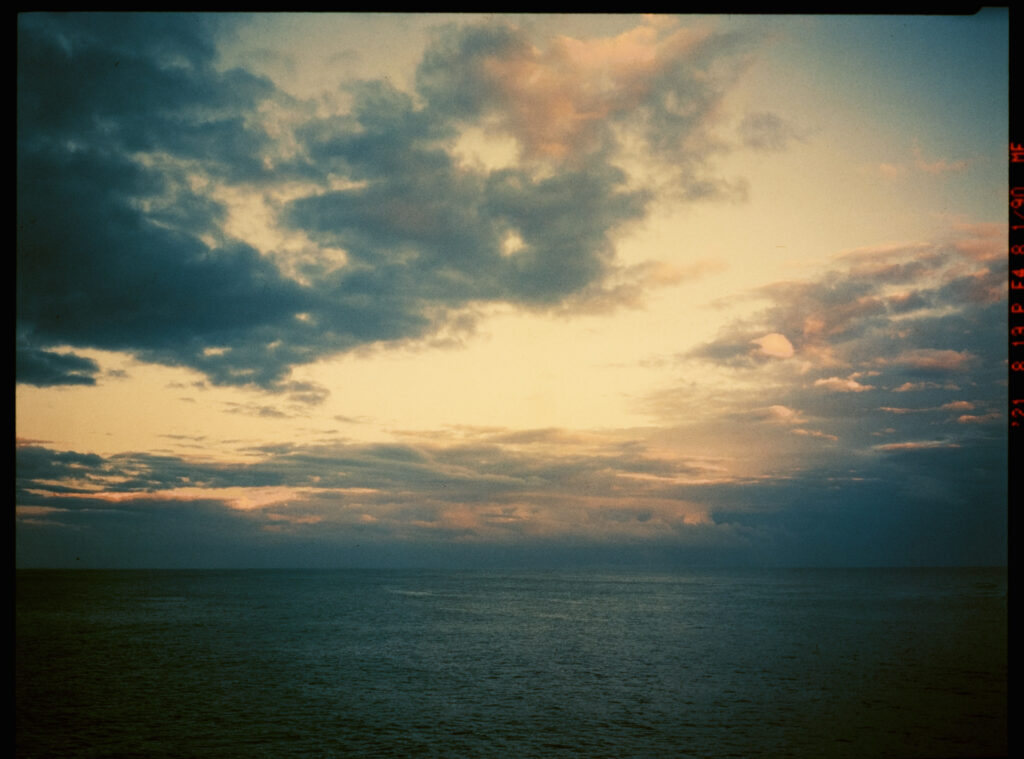
I did not have any real use for these until I was very fortunate and was awarded a prize by SALA – an Arts Festival in my home state which meant that I would be given a large solo exhibition as part of the festival.
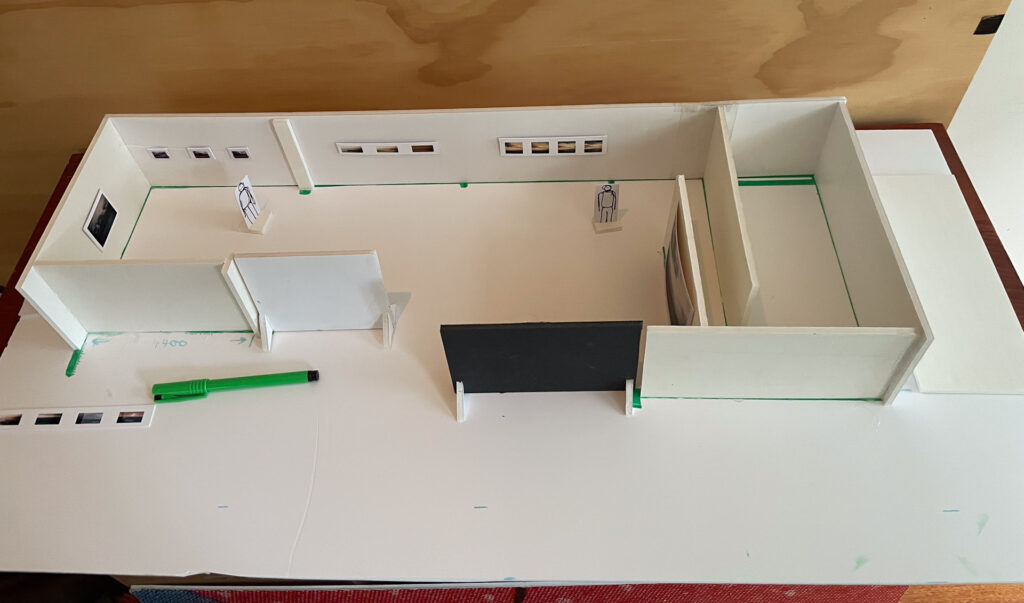
There would be many collaborations as a as parts of this process. As well as SALA I had mentorship from Gavin, the director of the Centre for Creative Photography in my town. I had the support of Patty, the gallery director of Praxis, where the show would be held, and I had technical support from Paul, as well as a generous production budget from his photographic company Atkins Lab so I was able to do things that I would not otherwise have been able to do.
I knew the theme of the show would centre around the coast near where I lived, but part of the purpose of the prize was to challenge me to take my work to new level, and I was eager to push myself to do this.
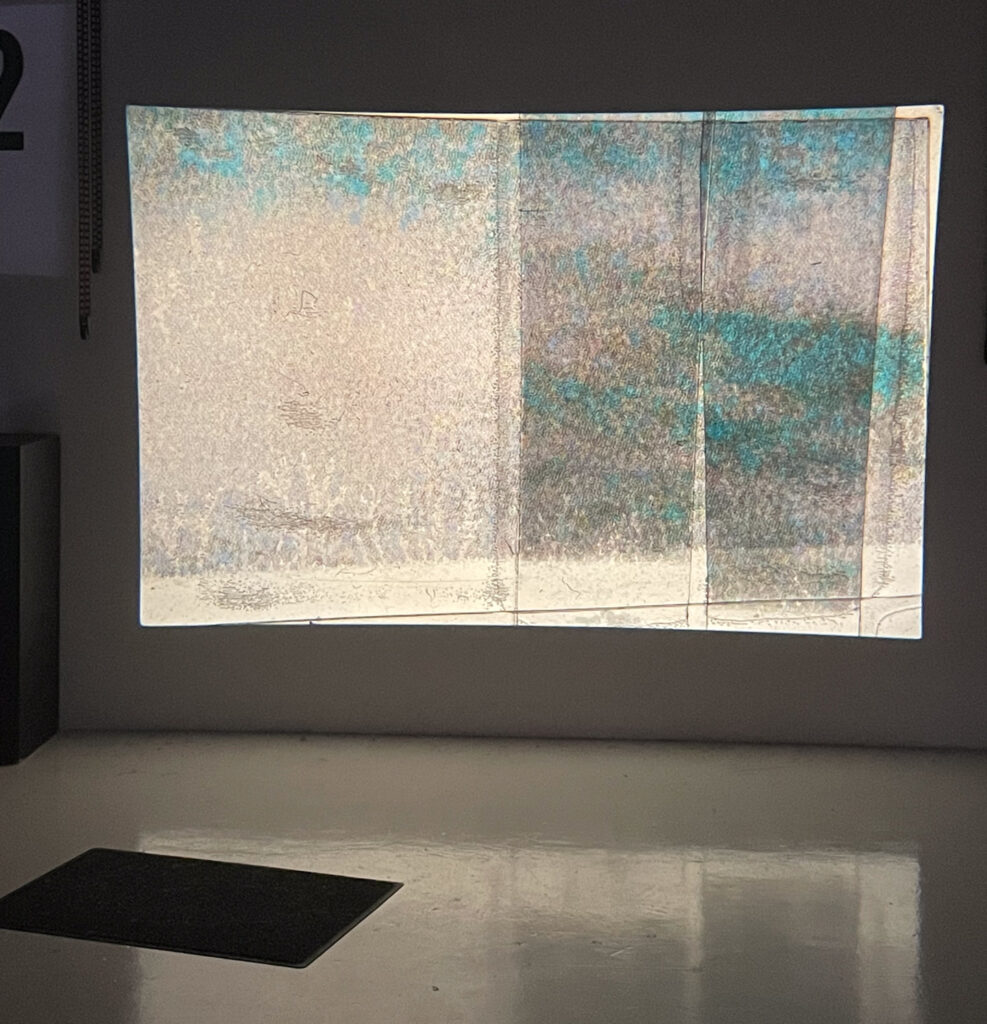
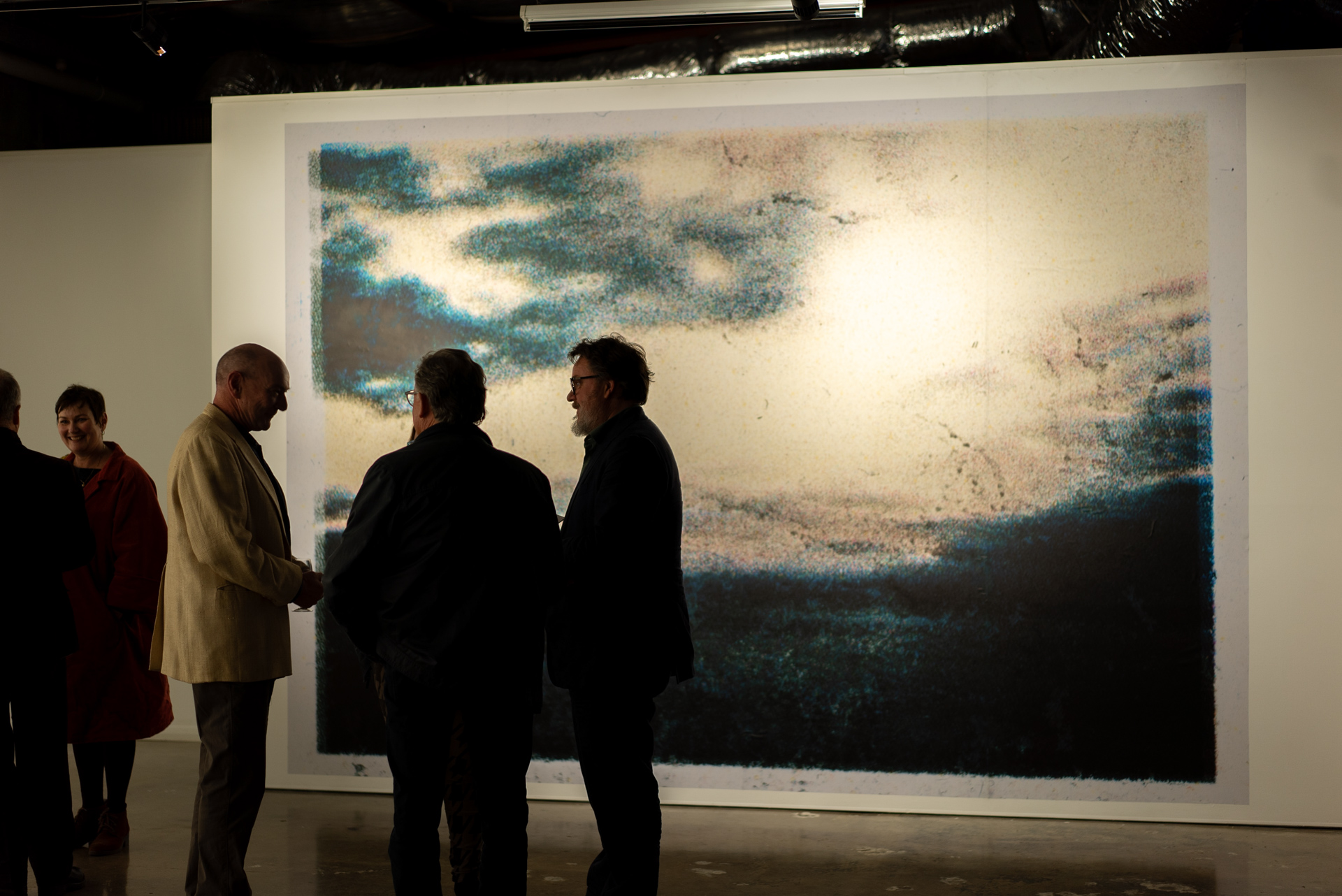
I went along to classes at the CCP and sat in with the students. One day we were looking at projections through a 35mm slide projector, and I had the idea of projecting my own image and seeing what I could get out of the surface detail when it was vastly enlarged. I printed some images out on transparency sheeting in a laser printer and popped it in a 35mm slide mount, and by a happy accident had put the wrong type of sheet in the printer, so the surface was degraded in a way I found very engaging.
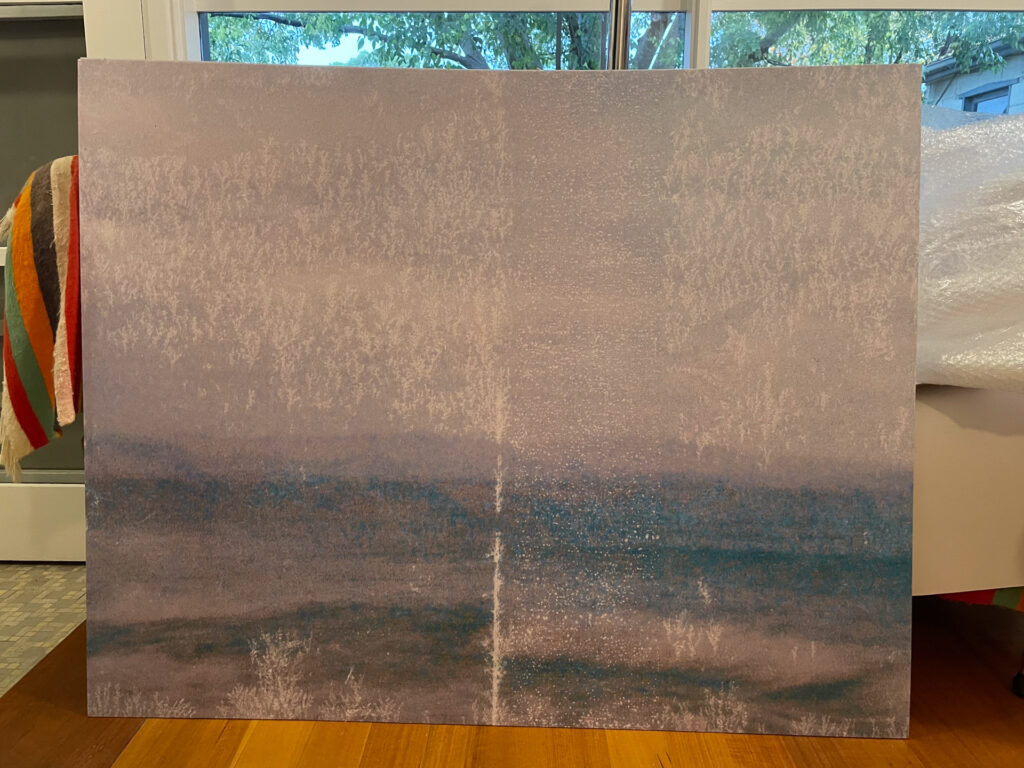
Over the following weeks lots of scanning and printing followed, and when I felt I was getting close to what I was after I had a couple of final images printed up on PVC sheeting at about 1.2m wide as proof of concept.
I was unsure of my final choice… I knew which one I preferred but I figured it was more of a difficult choice of work rather than perhaps a popular choice. I asked the gallery director Patty and she came down firmly in alignment with my choice, which gave me the confidence to back my vision. So away we went.
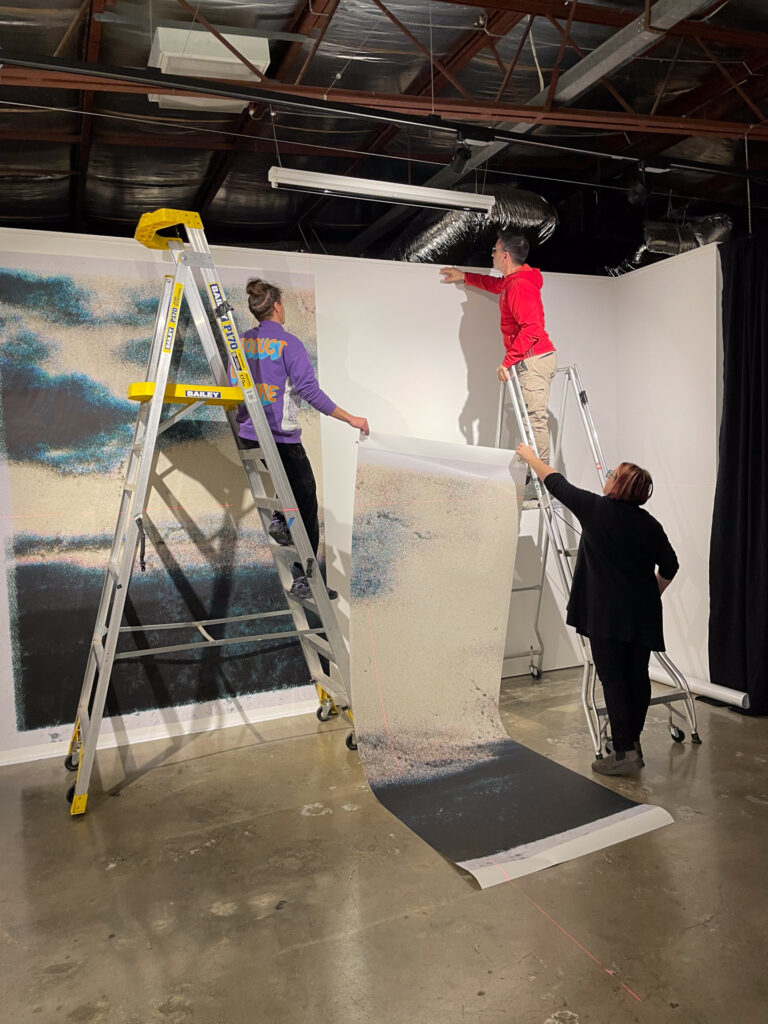
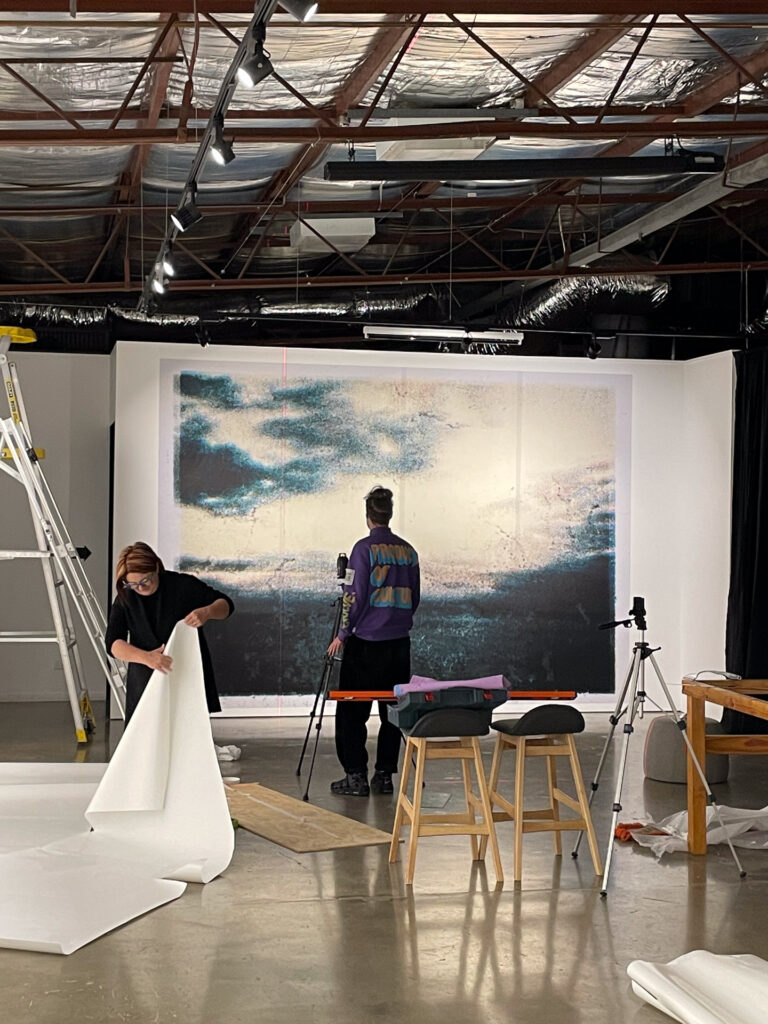
I had a chat to Paul about the budget and thanks to his generosity we got it all to work. The printing was done and the installation was a really fun day. It was great to see Patty, Mark, and Dre all working together doing a wonderful job. It was very satisfying to see it up on the wall.
It was less satisfying when one of the panels fell off overnight and was a crumpled mess on the ground. I was too traumatised to take any photographs of that at the time, but now I wish I had one. Anyway, it was either a reprint or a salvage, Dre and I very carefully pulled the tangled sticky mess apart and laid it out on the ground. We then got the ladder out and stuck it back up on the wall; almost as good as new. Then pins were tacked across the top of the work to ensure that it didn’t happen again, and I brought in a bunch of coloured felt pens and touched up any slight gaps in the join of the panels.
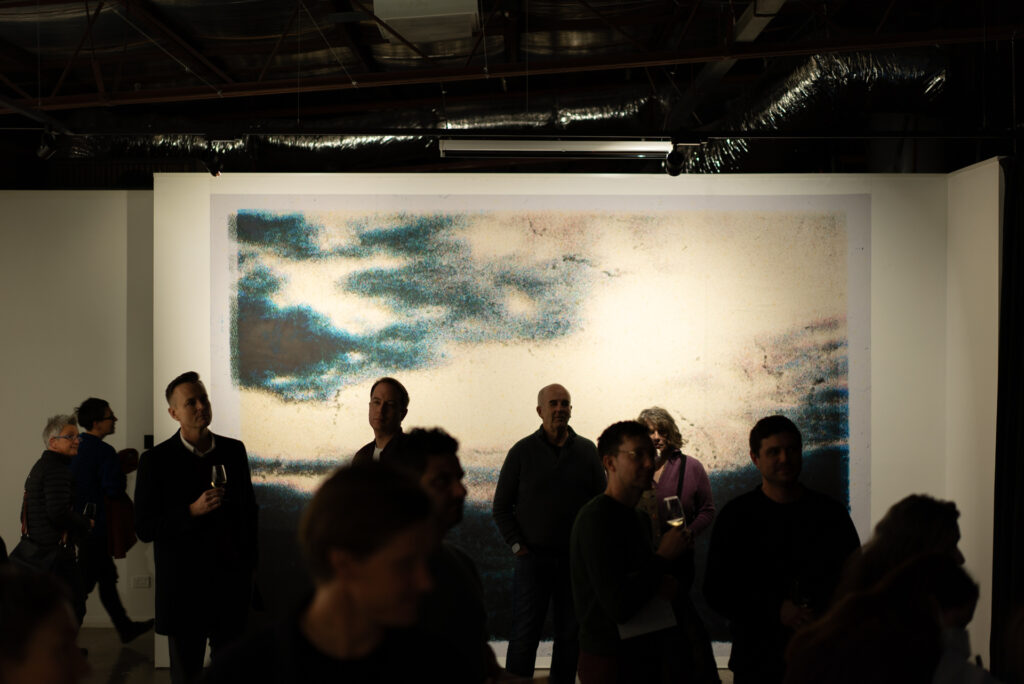
And there was the opening. The show was a success – but just as we’re all a long time dead, any exhibition is a long time over.
So with the passage of time and looking back on it all now, what was all this about? Something that I have always been interested in is the nature of the photograph and how the original capture relates to the final work. As well, I’m interested in different reprographic methods, and what happens when an image breaks down – be that in film grain, half-tone dots or whatever. And there is also the mystery of how our work relates to an audience and how the wonder we experience in creating it can be communicated. Why print so big? Why print at all, you might ask… especially these days when everything can be seen on a screen anyway. Part of it is to do with the experience of the viewer. I felt that for this to be worthwhile there would have to be some point in a visitor coming to the gallery. So the physicality of the print was important; approaching a work of this size and seeing the surface and detail as part of a much larger whole is very different from seeing it on a screen.
I hope the story of the processes and collaborations that led to the making of this piece is interesting. As an aside, all the works in my exhibition were shot on film and I used a range of printing techniques, from lenticular prints through C-Types and inkjet. Some works in the show I overpainted with acrylic or oil or worked with pencil. Here’s a link to the show if anyone wants to know more.
I’d like to think that the visitors to the show enjoyed it, but really, all I can be sure of now is the documentation. I would say to anyone who is themselves making any sort of a body of work, the documentation process is very important and it’s great to have a record to go back to for inspiration after the event has passed and to allow the ideas to be shared.
Thanks for reading.
Share this post:

Comments
Gary Smith on The Big Picture – A (Collaborative) One Shot Story
Comment posted: 05/05/2026
It's great to be able to hear from those here who are so much better at this whole "photography thing" than I am. Reading articles like your David are the reason I spend time here daily.
Thanks!
Comment posted: 05/05/2026
Comment posted: 05/05/2026
Comment posted: 05/05/2026
Erik Brammer on The Big Picture – A (Collaborative) One Shot Story
Comment posted: 05/05/2026
It encourages me to be more daring when playing around with the output of my photographic work.
Comment posted: 05/05/2026
David Pauley on The Big Picture – A (Collaborative) One Shot Story
Comment posted: 05/05/2026
Thanks for letting us into your world and vision. Glad you're also getting mentoring which hopefully is a lifelong possibility.
Cheers.
Comment posted: 05/05/2026
Ibraar Hussain on The Big Picture – A (Collaborative) One Shot Story
Comment posted: 05/05/2026
Comment posted: 05/05/2026
Comment posted: 05/05/2026
Bill Brown on The Big Picture – A (Collaborative) One Shot Story
Comment posted: 06/05/2026
On a completely different note I recently had the opportunity to participate in the final production of a Sydney, Australia photographers work for an exhibit currently on view in Dallas. Her name is Leila Jefferys. Are you familiar with her work? She was in Dallas for the opening and was a delight to meet. Here's a link to her instagram post of the opening. She loved my black cowboy hat! https://www.instagram.com/p/DXbDSwOk8WT/
Comment posted: 06/05/2026