

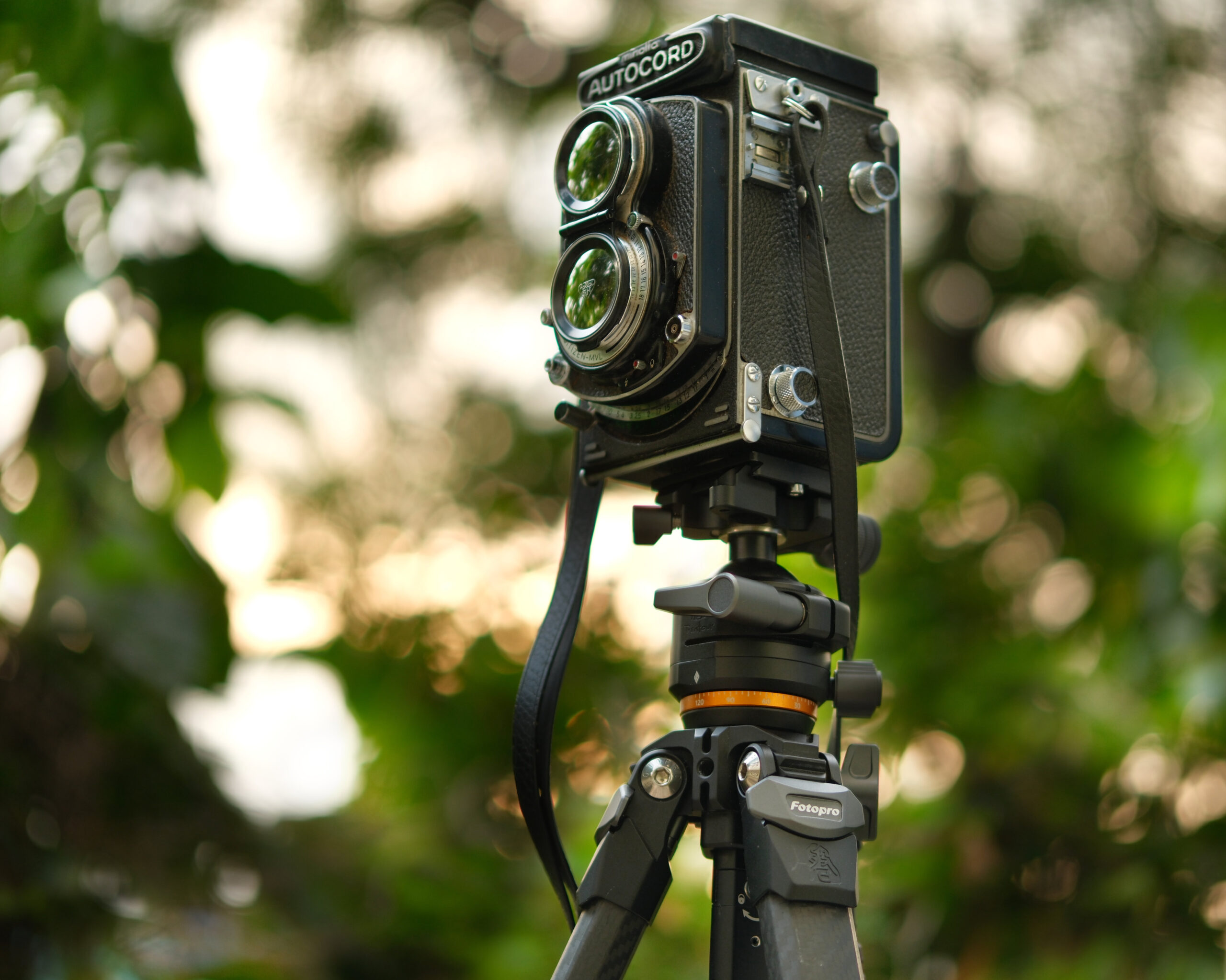
Tripods, I feel, are among the less glamorous photography accessories. They don’t have the technical wizardry of gimbals and drones, nor the whizbang street-cred of flashes and strobes. Lenny Kravitz has a photobook called Flash, but it’s hard to imagine a photobook titled Tripod.
Yet, precisely because they are relatively simple devices, a well-built tripod can last a lifetime. And because tripod technology evolves slower than, say, camera technology, there is less temptation to upgrade when a newer model is released.
I had a perfectly good tripod which I’d been using for over a decade, and I never felt the desire to acquire a new one. Last year, Fotopro contacted me asking if I would like to review their Origin Travel Tripod. I agreed because I hadn’t used any Fotopro products before, and I’m always keen to try new gear. But I didn’t really think that the Fotopro Origin would offer me that much more compared to the Manfrotto tripod that I already had.
After all, how many features do I even need in a tripod? Extendable legs, a decent ball head, perhaps a reversible column for macro photography? Turns out, a tripod can have many other features too – features which, although I might not use them on every shoot, are nevertheless nice to have. The Fotopro Origin is sturdy, cleverly designed, and really pleasing to use.
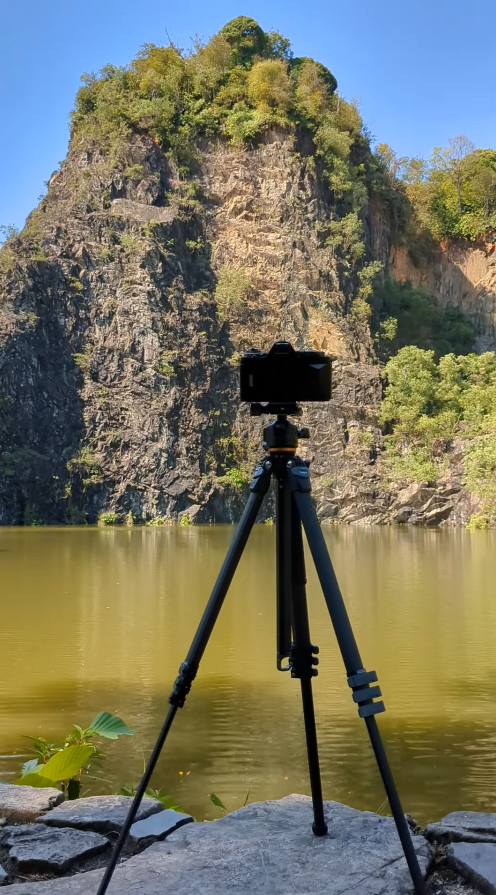
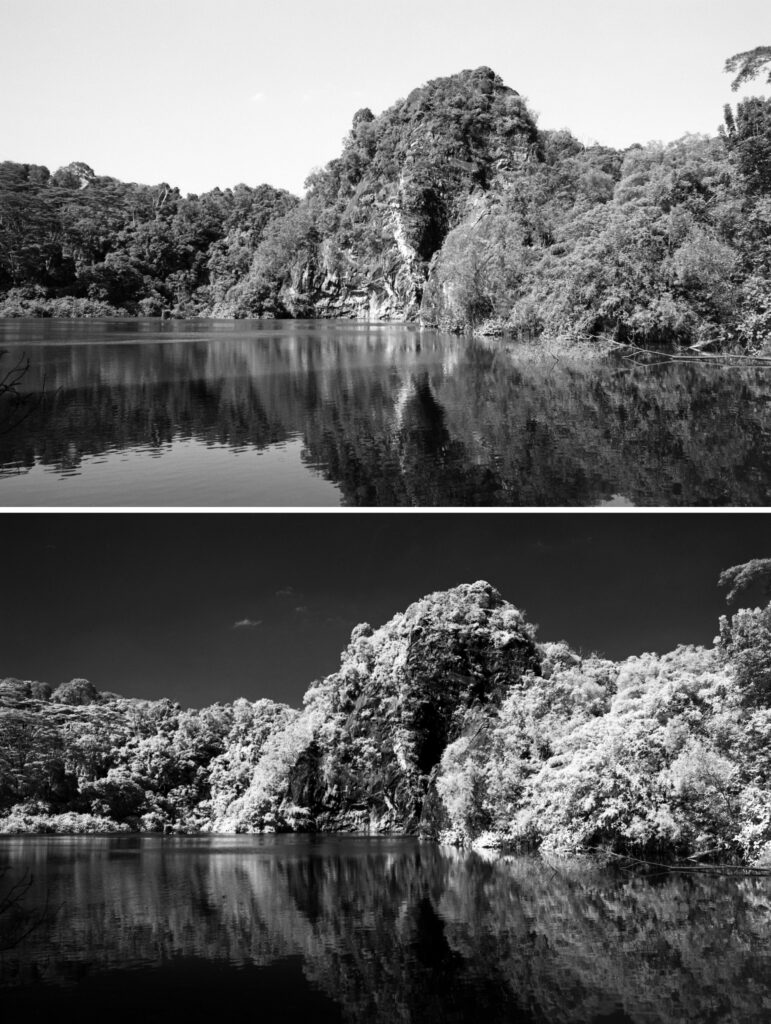
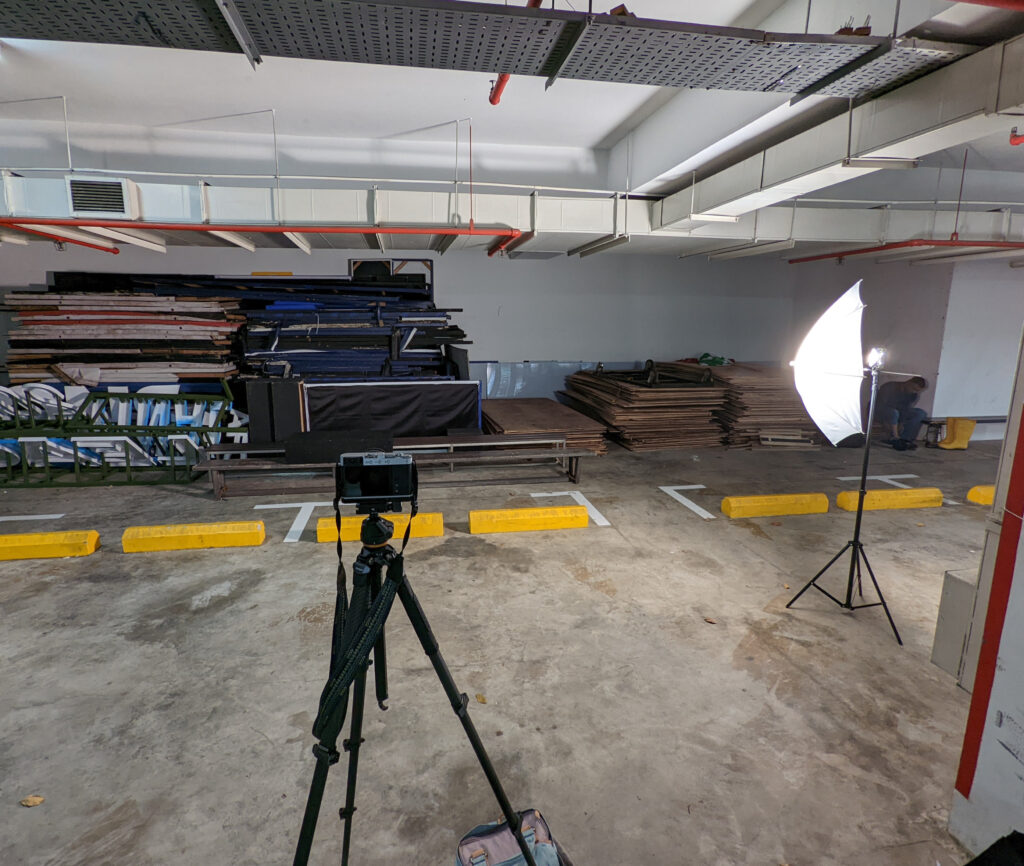
After a year of using the Fotopro Origin extensively for film and digital photography, as well as videography, I decided it was a keeper and sold off my old tripod. In this review, I’ll share my reasons why I like the Fotopro so much, and also share some photos and videos that I shot with the tripod.

Disclosure
Fotopro kindly sent us the Origin Travel Tripod for review, but I wasn’t paid for this article and there are no affiliate links. Fotopro did not have any input into its content.
In my reviews I always try to be honest and objective, and to also provide lots of image samples so you can decide for yourself. If you have any questions or doubts, just let me know in the comments and I’ll be happy to address it.
With all that out of the way, let’s get down to the review.
Fotopro’s Pantour Origin series
Fotopro has a mind-boggling range of tripods. Some are not even for photography, e.g. tripods for outdoor observation, hunting, surveying and measuring. Then there are phone tripods, table tripods, lightweight travel tripods, and heavy-duty tripods for studio photography and videography.
Their Pantour series of tripods, according to the website, “is a high-end brand designed for outdoor adventure photography.” It includes the Origin series, which in turn includes the Origin Travel Tripod (which I am reviewing), plus the Origin Plus, O-9 and O-10 tripods. There are some differences between the models, e.g. the O-9 and O-10 don’t have a centre column, some have ball heads while others have fluid heads, and so on.
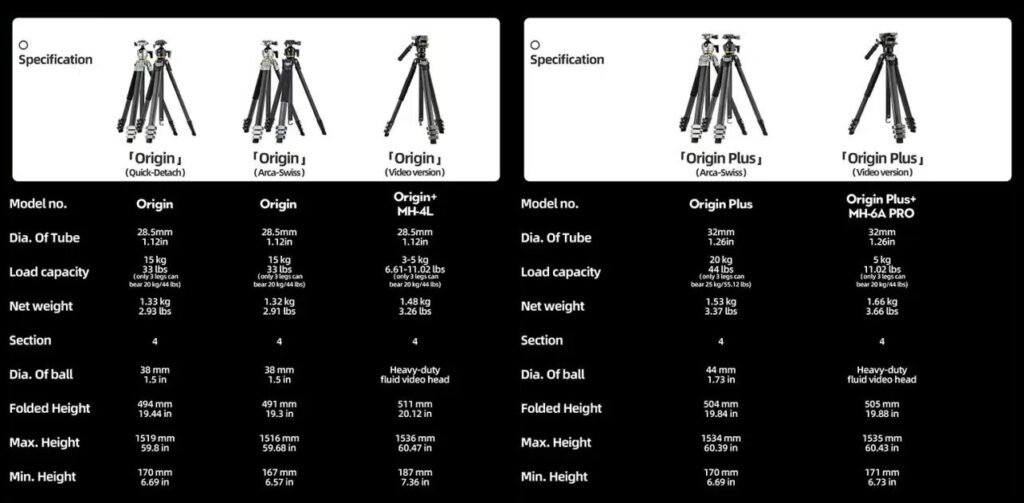
For this review, Fotopro asked me to choose between the Origin and Origin Plus. These two models (see above) have essentially identical features and functionality. The only real difference is that the Origin Plus has a greater load capacity – 20 kg compared to the Origin’s 15 kg. As you would expect, the Origin Plus is therefore slightly bigger and heavier too.
I opted for the Origin because I prefer light gear, and a 15 kg payload is more than enough for my needs. For context, the tank-like Pentax 67 medium-format film camera with 105mm lens weighs less than 3 kg, and Fuji’s £14,000 Eterna 55 cine camera weighs less than 7 kg with lens. I have many things to worry about in life, but maxing out my tripod’s load capacity is not one of them.
As the previous graphic shows, the Origin has three versions: Quick-Detach, Arca-Swiss and Fluid Head. I got the Arca-Swiss version. In the “Mount” section below, I’ll explain why I chose it, and how it differs from the other two.
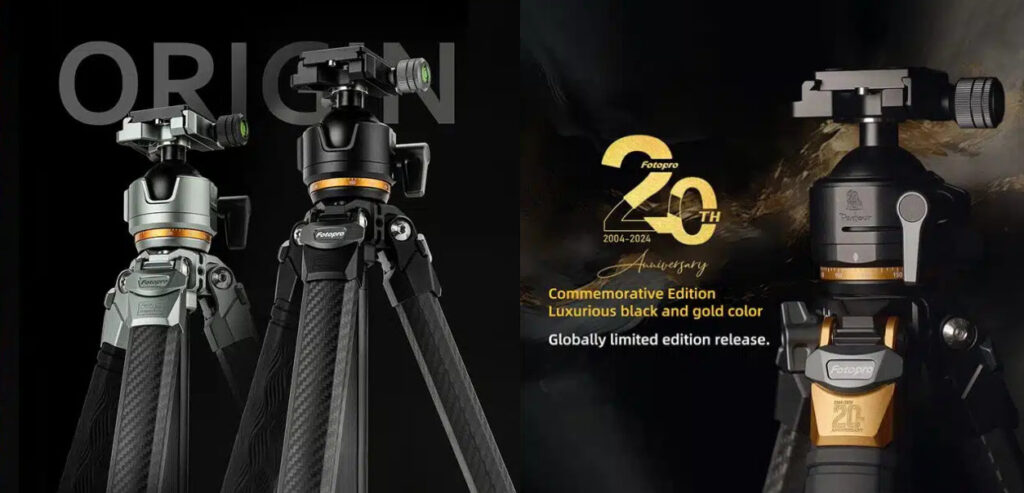
The Origin tripod comes in three colours: black, grey and a 20th Anniversary Edition with gold accents. I chose the black, but you can see all three colourways in the image below which is from the Fotopro website.
Specs
The following specs are for my model, which is the Origin Travel Tripod with Arca-Swiss plate (code: Origin O-7HS). The other Origin series models have slightly different specs,which you can see on the website.
| Net weight | 1.32 kg / 2.91 lbs |
| Folded size | 49.1 cm / 19.30 in |
| Max. Height | 151.6 cm /59.68 in |
| Min. Height | 167 mm / 6.57 in |
| Tube Diameter | 28.5 mm / 1.12 in |
| Extendable sections | 4 |
| Max. Load | 15 kg / 33 lbs |
| Plate | Arca-Swiss quick release |
| Price | £249 (on Amazon UK at the time of writing) |
What’s in the box
The Fotopro Origin Travel Tripod comes in a nice cardboard box, and a waterproof bag.
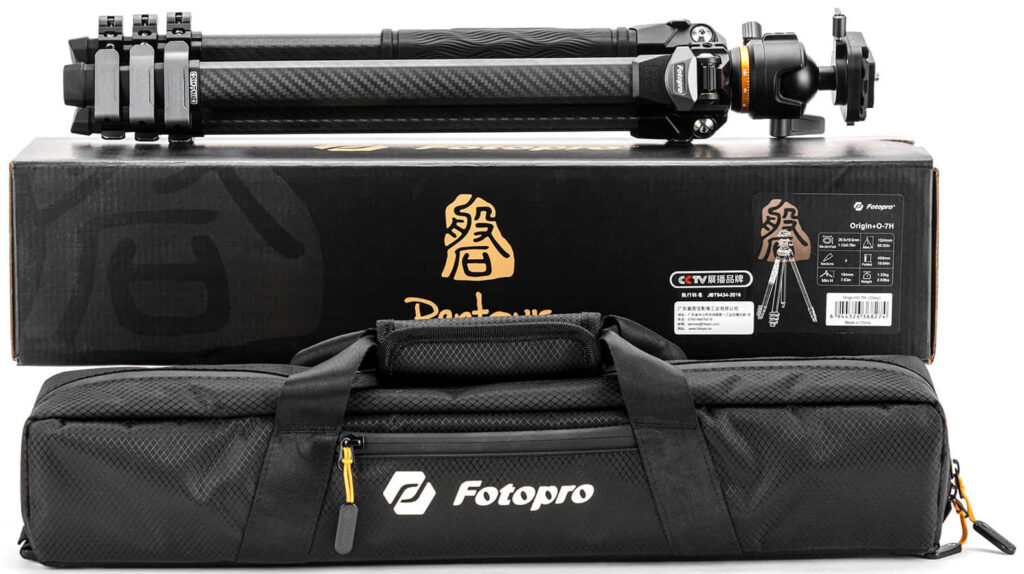
The bag is of better quality than other tripods I’ve used, and creates a good impression straight out of the box (literally). It’s light, but the material feels premium. It has a bit of padding, which is great for a travel tripod that is likely to get bumped around. There are one internal and two external pockets, and the zippers have rubber pullers. The bag has shorter straps for hand-carrying, and a longer adjustable shoulder-strap. The straps are padded too. It really feels like Fotopro have put a lot of thought into minor details that can make a tripod – and the photography experience in general – more convenient and enjoyable.
The bag also includes two extra Allen keys a.k.a. hex wrenches (more on this later), and three extra rubber feet which are great to have in case the original feet are lost or damaged.
Did I just write over a hundred words about a tripod bag? Yes, but these little things matter, and I also feel the same way about the tripod itself.
Portability and build quality
Most tripods have round tubes. The Origin series is somewhat unusual in having a more polygonal structure. The legs are variously described as triangular, trapezoidal or diamond-shaped, but on closer inspection they are more like an irregular octagon. The centre column is roughly triangular with bevelled edges.
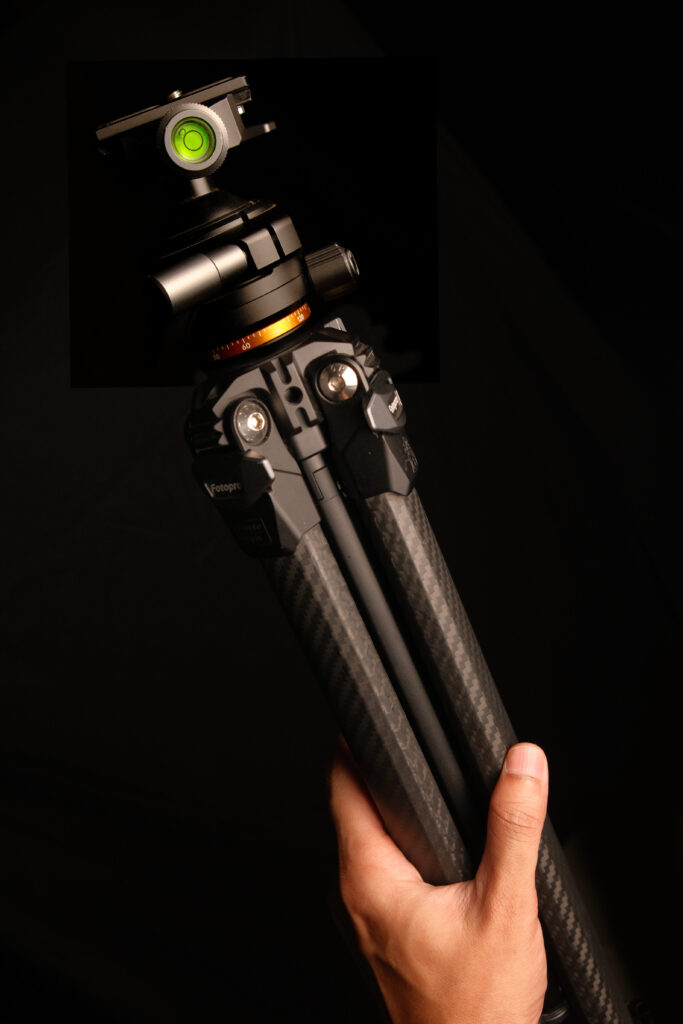
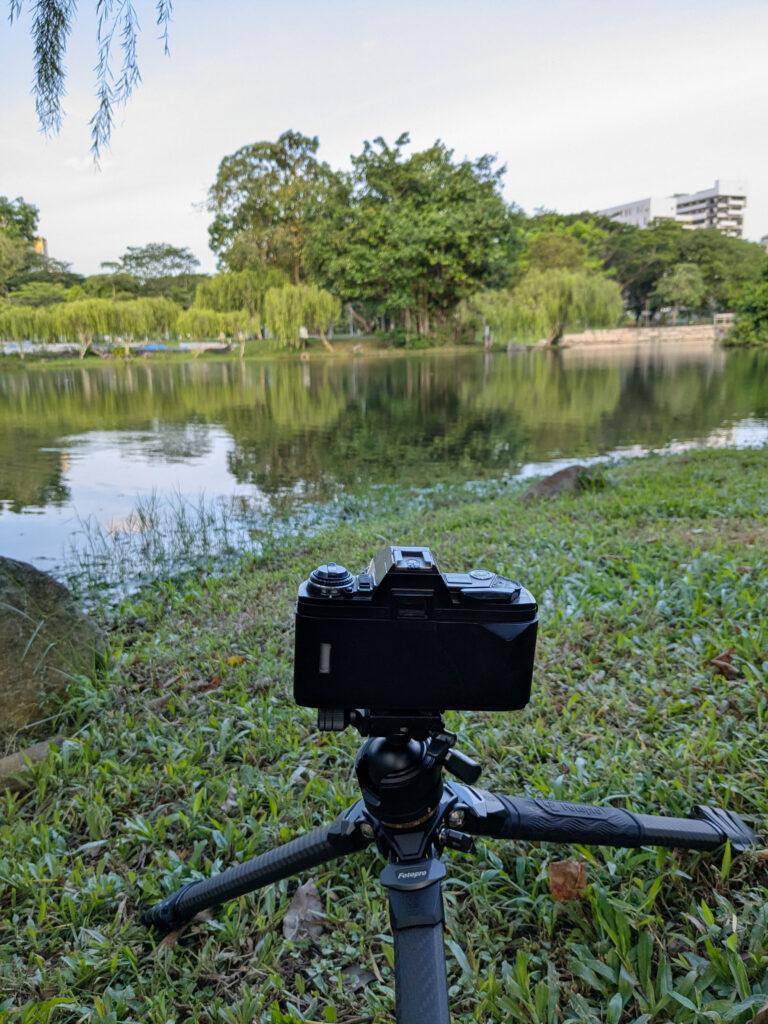
According to Fotopro, this makes it stronger than standard round tubes, and also makes it more compact when folded. I can’t test the first claim, but the second is true – it folds up surprisingly small. I often take my tripod on hikes, public transport and budget flights, so being able to fit the tripod into my rucksack and cabin luggage is essential to me.
Some tripods, like Fotopro’s Sherpa series or my old Manfrotto, have reverse-folding legs which make them even more compact. But I prefer non-reversible designs like the Origin series, as I find them faster and simpler to set up.
The tripod legs and column are made of carbon fibre (Japanese Toray 3K diagonal-weave carbon fiber, according to their website). Carbon fibre is more expensive than aluminium, but generally preferred for outdoor and travel tripods. To quote The Center Column (independent tripod testing website), “Carbon fiber is clearly the better material from an engineering and design perspective.”
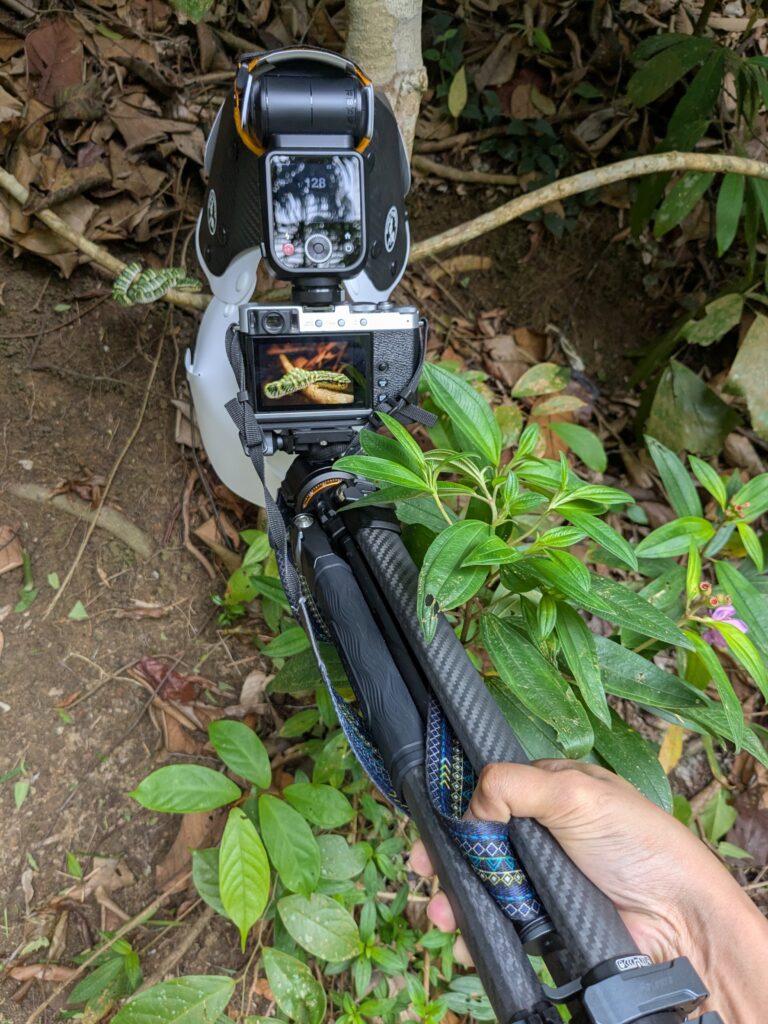
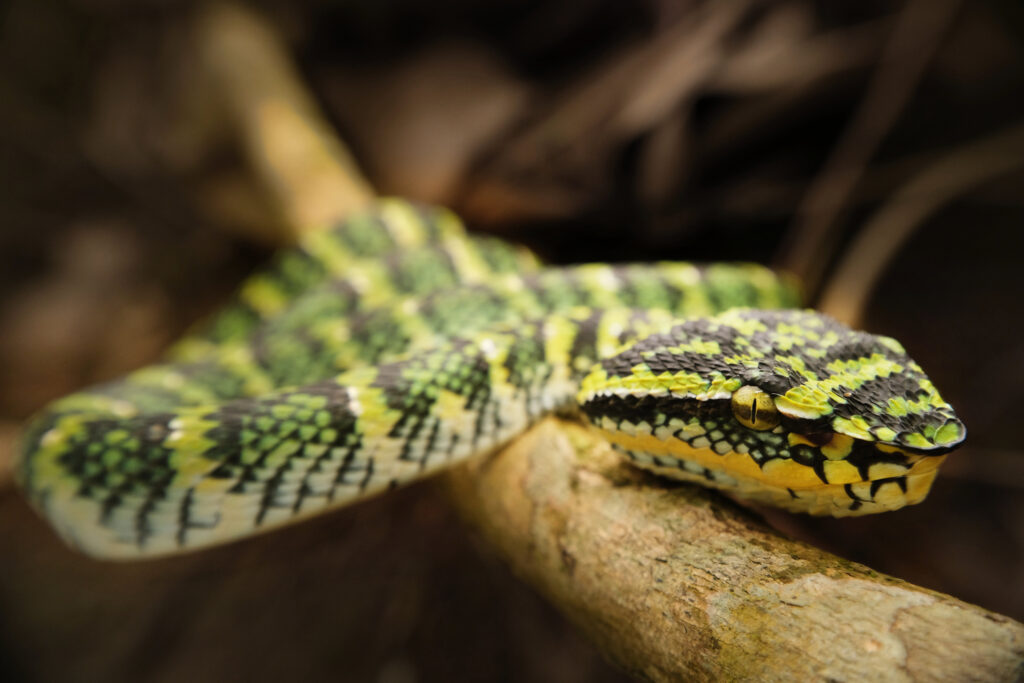
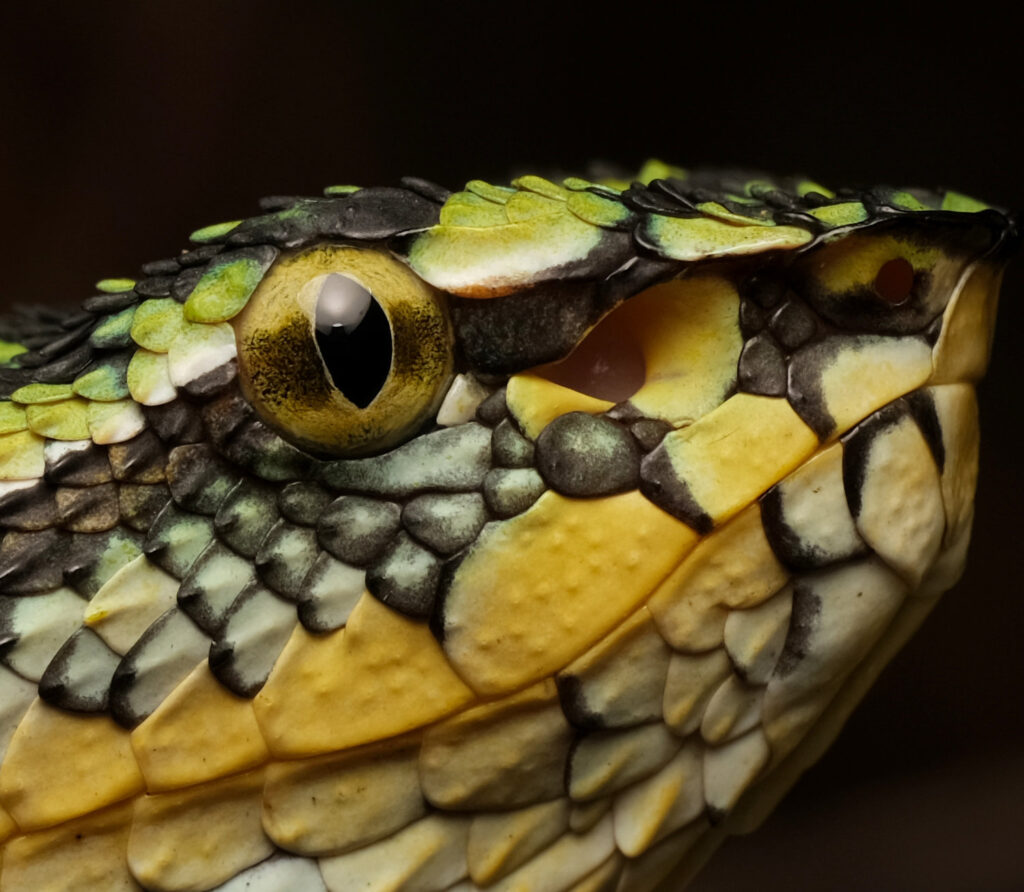
Carbon fibre has a higher strength-to-weight ratio than aluminium. In the photo below, I’m using it like a monopod to get close-up shots of a venomous snake (Wagler’s pit viper) while remaining well outside of the snake’s strike range. Turns out, the viper was unbothered – but better safe than sorry! Anyway, a heavy tripod would have made this manoeuvre a lot harder.
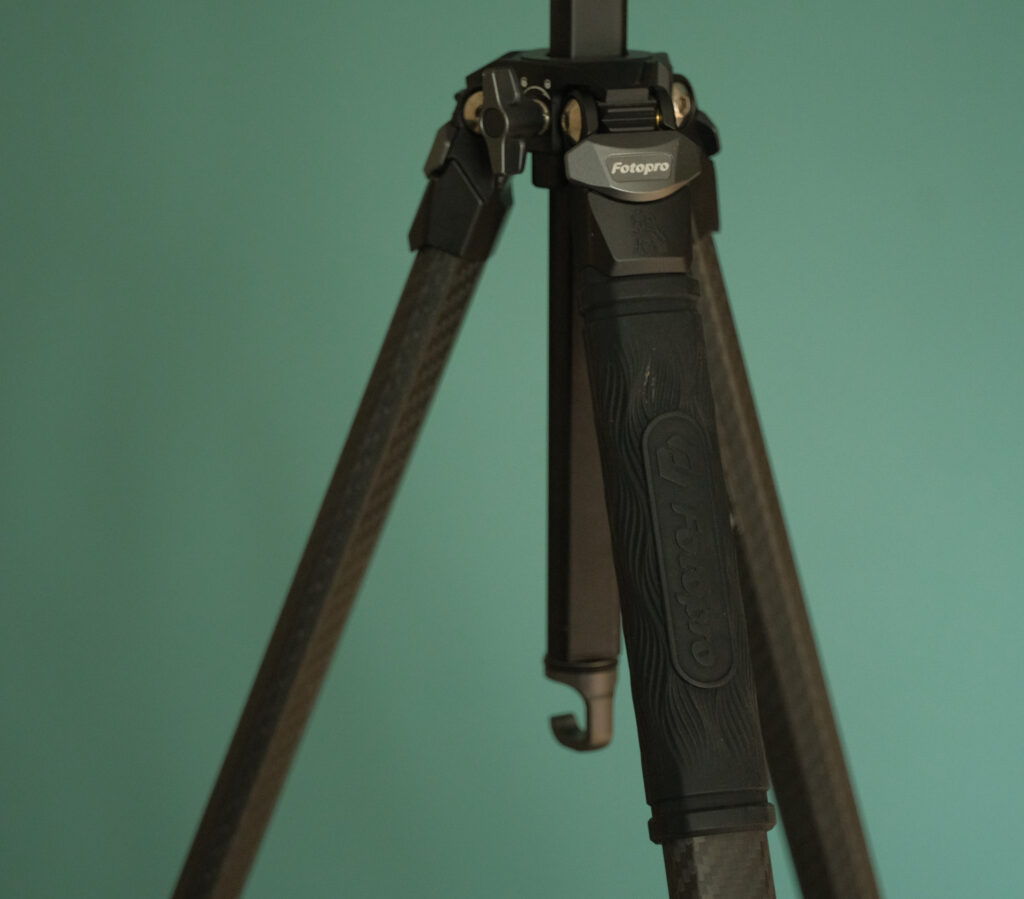
The Fotopro’s matte carbon-fibre surface has a premium feel, and one of the legs has a rubber comfort grip which can be handy if you’re using tripod in cold conditions. I also like how it looks, with the gold ring at the base of the ball head, and the neon green bubble levels.
Despite weighing only 1.3 kg, the tripod feels extremely well-made and stable. I’ve used it in moderately windy conditions, and there were no tremors at all. I even used it to string up a fairly heavy projector screen, for an outdoor screening with my friend. The photo is a bit dark, but the two “poles” on either side of the screen are actually tripods.
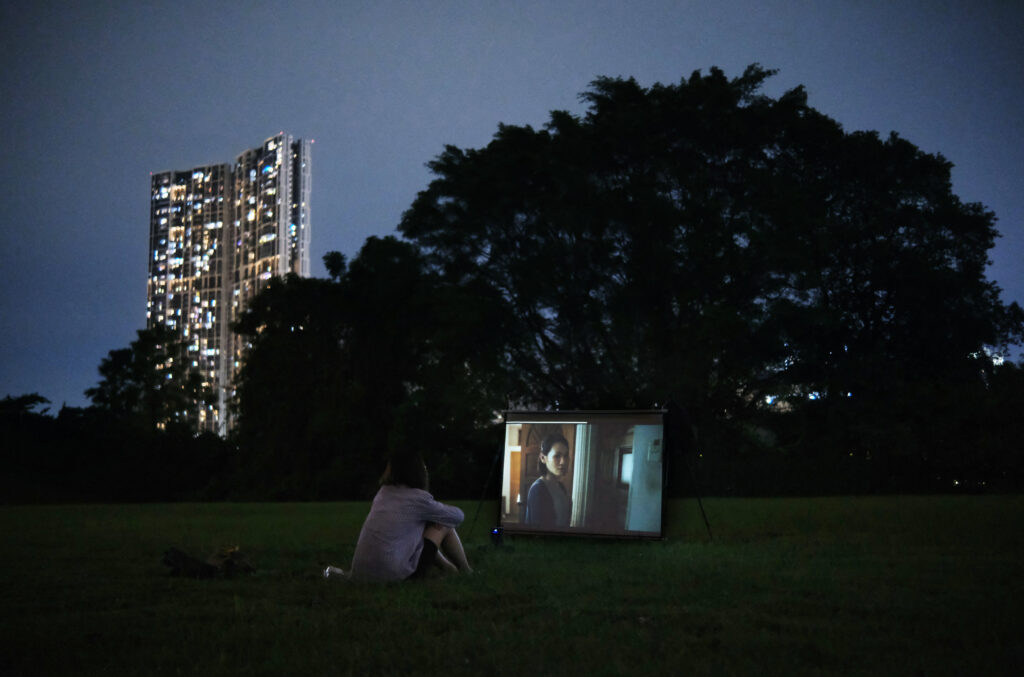
It seems pretty weather-proof, which again is important for a travel tripod. My tripod legs have been subjected to fresh-water, seawater, sand and mud. Afterwards I do a bit of quick cleaning if necessary, and after a year, it still looks as good as new.
For the long exposure below, the waves were lapping at the tripod feet.
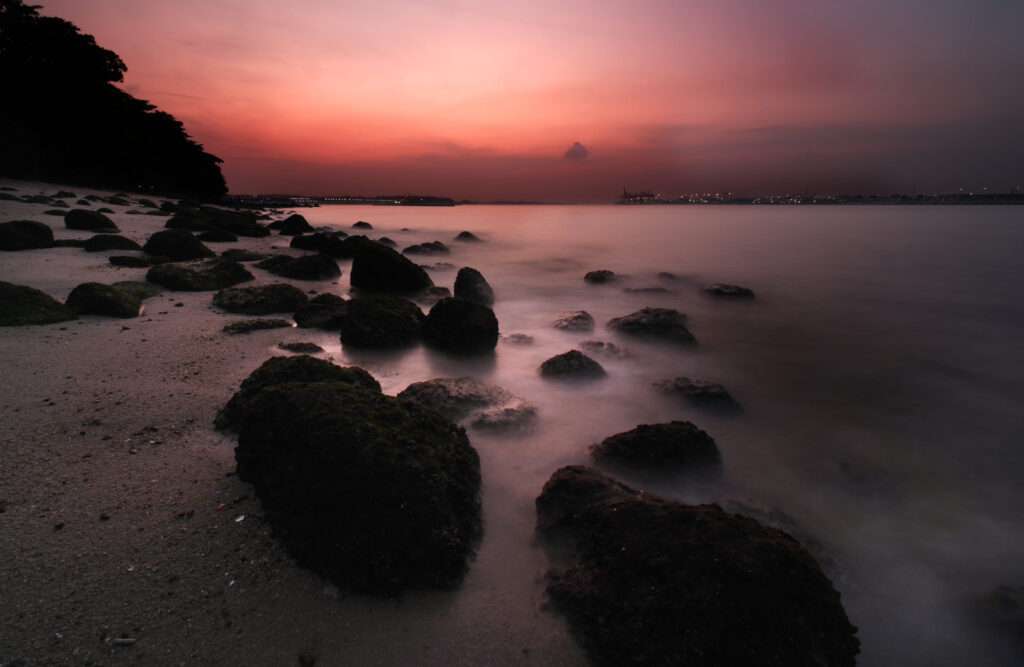
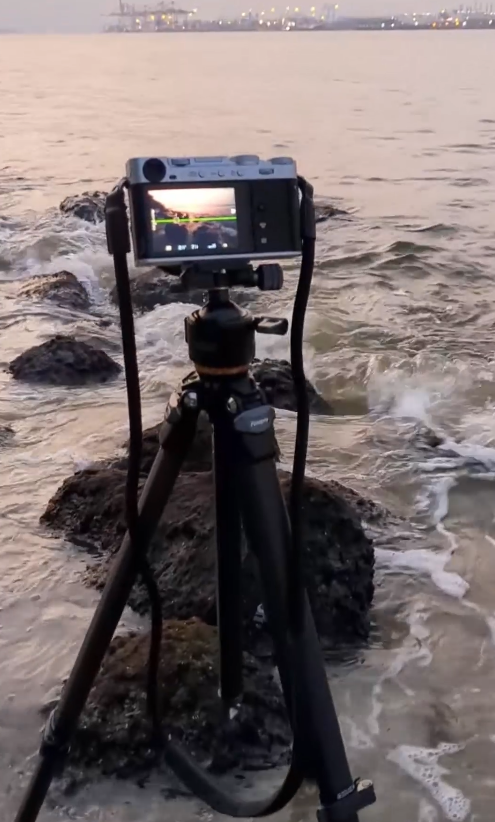 When I got home, I rinsed the legs under a tap to get rid of the saltwater. A bit of sand got into the leg clamps, but was easily brushed off later.
Speaking of which, the spring-loaded clamps which are used to lock the extendable legs are also very well made. According to Fotopro, “the all-metal flip lock components have passed durability tests with over 5,000 opening and closing cycles, ensuring long-lasting spring tension.” They are designed such that all three clamps on each leg can be flipped open (or closed) in a single thumb movement, so the tripod can be set up very quickly.
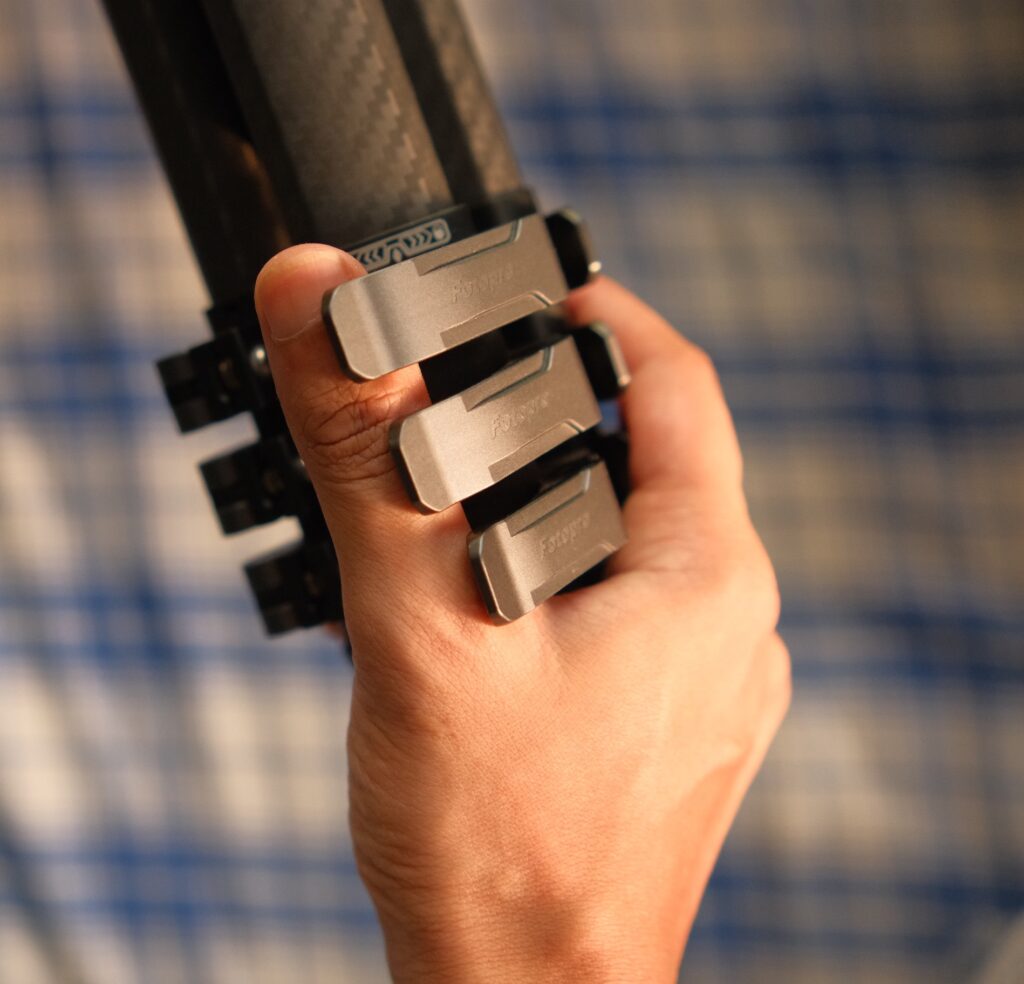
Flip locks versus twist locks is a big debate in the tripod world. I prefer flip locks, but if you belong to the rival camp, Fotopro also has twist-lock offerings such as their X-Go and T-Roc series.
On some cheap and even mid-range tripods, after the ball head is locked in place, it tends to “drift” slightly. This is not a big deal in most situations, but it can be annoying if you’re doing macro photography for example, where every millimetre matters. In fact, drift is one reason why some photographers prefer geared heads over ball heads.
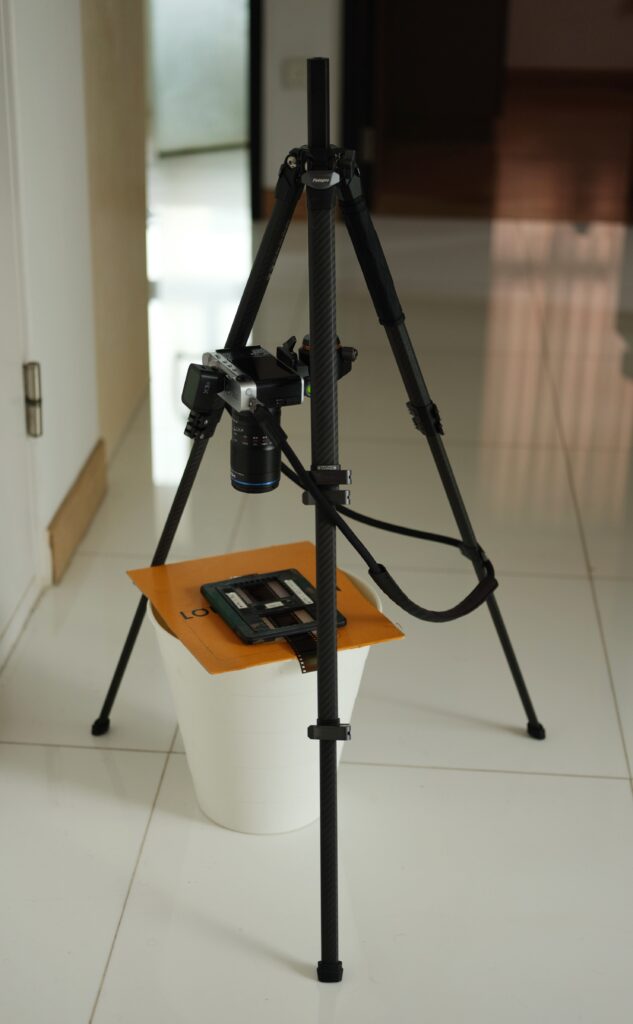
The Origin has a ball head, and I used it for digitising film – a process which requires accuracy and where drift is immediately obvious (I’ve written about my setup and workflow on the Pixl-latr website, if you’re interested). I was happy to see that there was no drift at all, which is another testament to the tripod’s build quality and tight tolerances.
Ball head
Build quality aside, the ball head is a very clever piece of design. To understand why, you need to know a bit about tripod heads, specifically ball heads and pan-tilt heads.
Ball heads are the most popular type of tripod head, because can be moved freely in any direction. But that freedom can sometimes be a problem. Say you’re photographing architecture, and have painstakingly oriented your camera to avoid a skewed horizon and converging verticals. But now you want to recompose – to turn the camera slightly to the right, let’s say. With a ball head, it can be difficult to pan horizontally without also moving the camera along other axes, thereby throwing off your horizontal orientation.
With a pan-tilt head, you can swivel along one axis at a time, with the other two axes locked. This allows for more precision, e.g. perfectly horizontal panning without any tilt or roll. The downside is that they are typically bigger and heavier than ball heads, and slower to use.
Some higher-end ball heads try to combine the best of both worlds by incorporating a panning base. This allows you to turn (pan) the camera horizontally, even after the ball head is locked. And yes, the Origin has a panning base with an independent locking knob. It even has degree markings if you want to move your camera through specific angles, e.g. for multi-shot panoramas. I also find the panning base useful for videography, e.g. when tracking a moving subject.
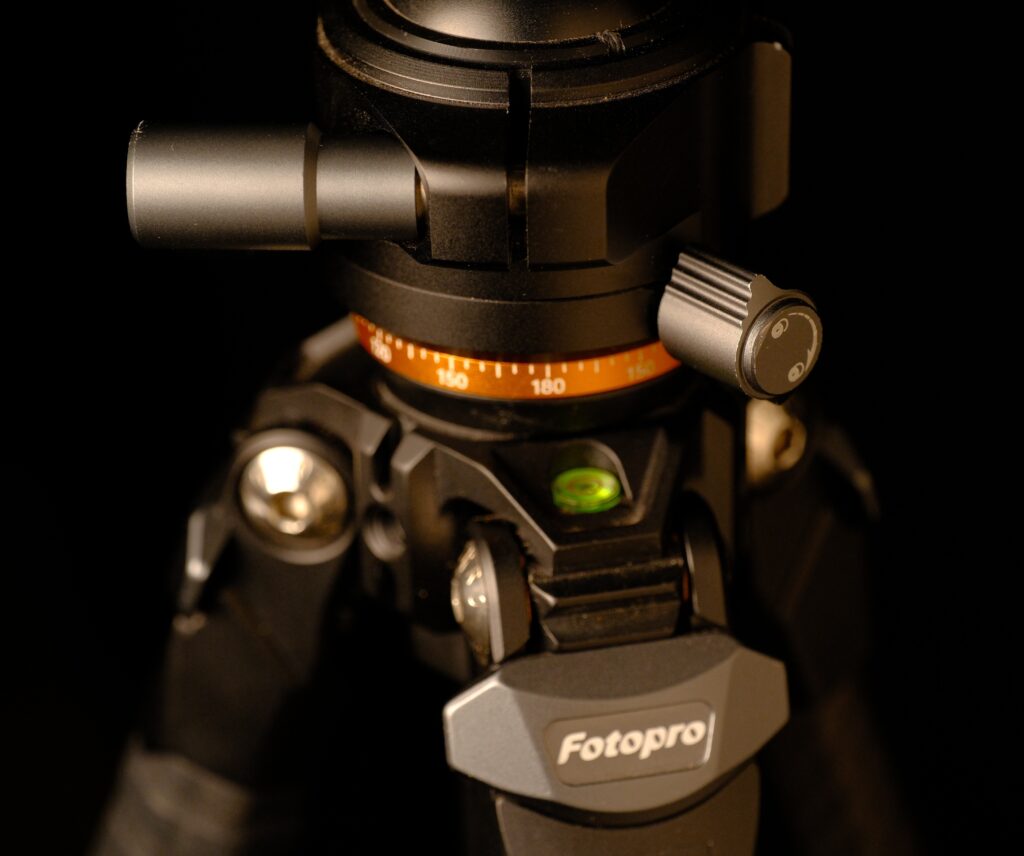
So – problem solved? Not quite.
Oftentimes when we use a tripod in uneven terrain, e.g. if one tripod leg is higher than the others, the panning base itself is not horizontal. Instead, we use the ball-head to level the camera, which is faster and easier than individually adjusting the length of the tripod legs. But now, if you rotate the camera using the panning base, it will no longer be horizontal.
One solution is to add a levelling base, like the Fotopro LY-60, which sits under the ball head and can be levelled independently – but that adds more weight and complexity. The Fotopro Origin solves the problem differently, using a panoramic platform – a feature which I have not seen before. Basically, the platform which sits above the ball head can also pan horizontally.
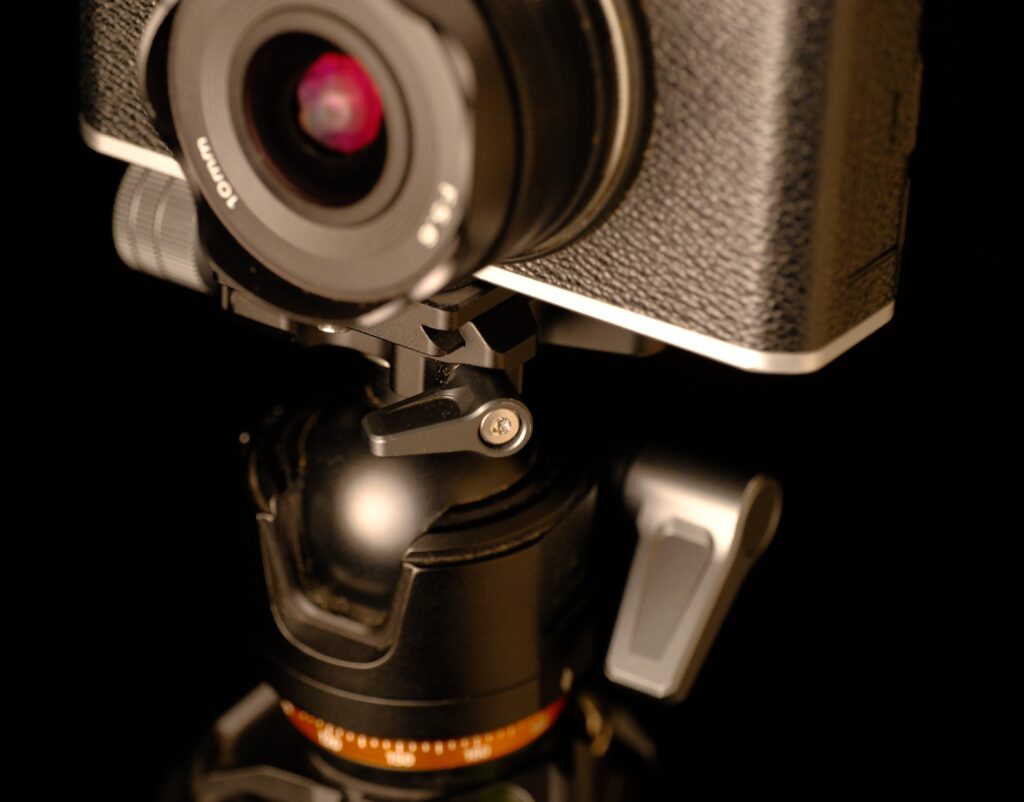
When the base of your ball head is horizontal, e.g. on a horizontal surface with all three tripod legs extended equally, you can simply use the panning base to pan. When the base of your ball head is not horizontal but the top is – e.g. as long as the camera is level – you can pan using the panoramic platform, and your horizon will be preserved.
Then why not use the panoramic platform all the time, you might ask? Well, it only works if the camera is level. If the camera is tilted up or down, using the panoramic platform to pan will throw off your horizon. So if you are on a clifftop looking down, shooting a panorama of the beach below, you still need to make sure that the panning base is level and then use it to pan.
I personally use the panoramic platform to pan, except when the camera is titled up or down, in which case I use the panning base. But that’s a matter of preference; you can use the panning base in all situations as long as it is level.
If levelling is important to you – which it probably is, if you read all of what I just wrote! – you’ll be happy to know that the Origin tripod has three (!) built-in bubble levels. There is one on the tripod collar to check if your panning base is level, one on the panoramic platform to make sure your camera is level (even if the panning base isn’t), and one on the plate locking knob for vertical photos.
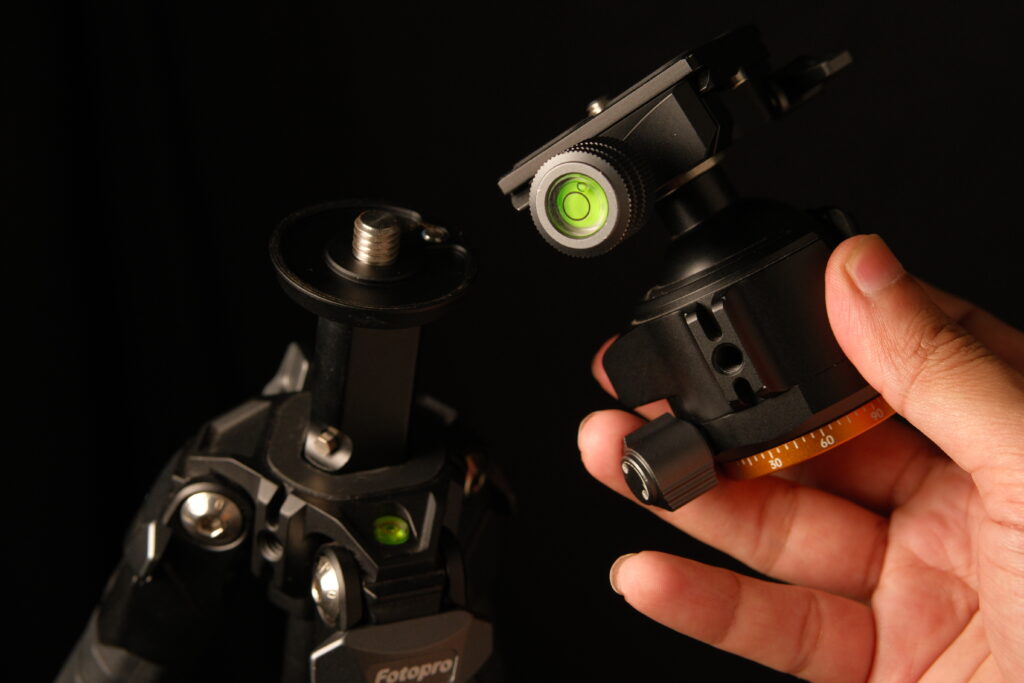
Finally, the ball head can be unscrewed completely as shown above, and replaced with some other type of head, e.g. a geared head, fluid head or gimbal head. Fotopro is a flexible and modular system, which is great if you dabble in different genres of photography and videography.
Should you wish to dig deeper, this article and this video are excellent overviews of the different types of into tripod heads on the market, and the pros and cons of each.
Mount
As I mentioned, the Origin has three versions: Quick-Detach, Arca-Swiss and Fluid Head. The Fluid Head (MH-4L) is also sold separately (i.e. without the tripod legs).
I got the Arca-Swiss version because it’s best suited to my own current needs. I’ll quickly run through all three types, so you can choose the one which works for you.
Fluid heads are more for videography; they use hydraulic fluid to dampen camera movements for smooth panning and tilting. I use tripods for still photography, and for static shots in videography – if I’m moving my camera, I tend to use a gimbal – so I don’t feel the need for a fluid-head tripod. In general, I prefer a ball head with panning base, which is what the other two versions have.
Quick-Detach and Arca-Swiss refer to the type of plate that comes with the tripod – the rectangular metal piece which you screw into the bottom of your camera before mounting it on the tripod.
In short, the Quick-Detach is faster, while the Arca-Swiss is more versatile.
The Quick-Detach plate can be slid onto the platform, where it automatically locks into place – as seen at 1:28 of this video. To take it off, you simply press a release button and slide it out.
The Arca-Swiss plate, on the other hand, is screwed on with a locking knob. The knob needs just a single turn to lock or unlock, so it’s not inconvenient by any means – just a touch slower than the Quick-Detach.
The benefit, for me, is that Arca-Swiss – developed by a Swiss company of the same name in the 1990s – is a versatile and widely compatible standard. For example, some long telephoto lenses have an Arca-Swiss foot, which allows them to be mounted directly on a tripod.
My Weebill S gimbal has also an Arca-Swiss Quick Release plate. So if I want to switch from gimbal to tripod, I can take the camera and plate off the gimbal, and mount them directly on my tripod platform. There’s no need to detach the camera from the gimbal plate and screw it onto the tripod plate.
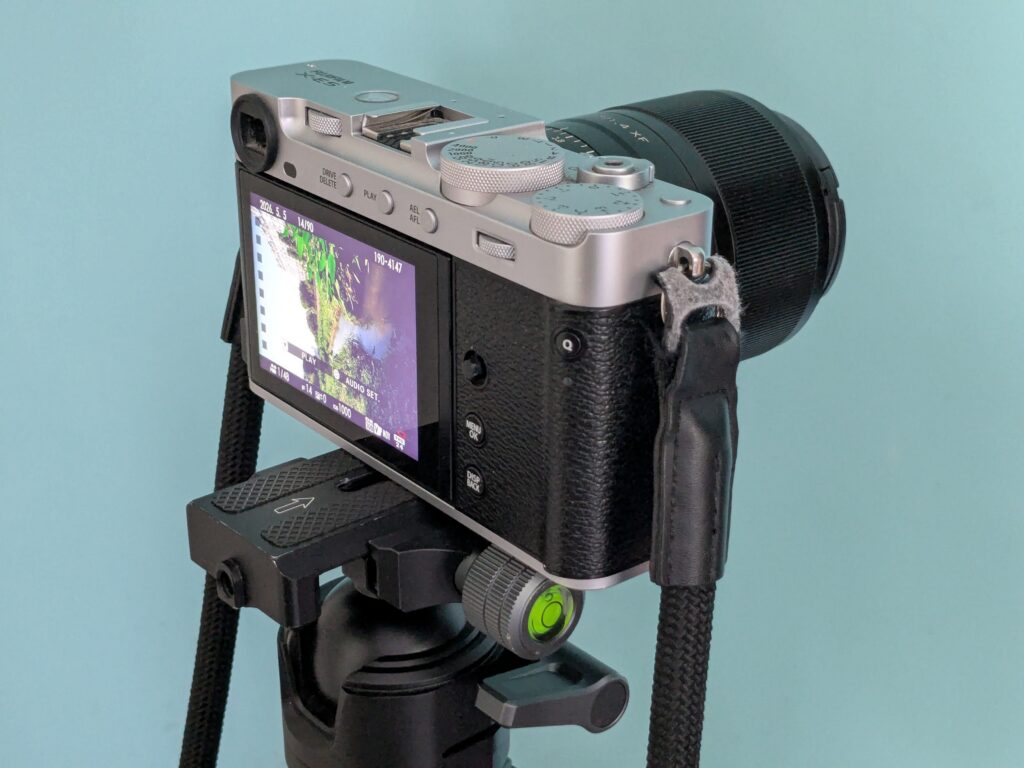
More importantly, if I want to switch back to the gimbal, I can quickly remount the plate without having to rebalance the gimbal.
Fotopro also kindly sent me the RZ-3 Quick Release (QR) Plate (a.k.a. i-Speedy Locker), which is sold separately. This nifty little thing comes in two parts. The top part screws into the camera’s tripod socket with a standard 1/4″ screw. That part then slots into the bottom part, which is a bracket. On the bottom of the bracket is a 1/4″ threaded socket, so the whole assembly can be screwed onto my Arca-Swiss plate.
Alternatively, the QR bracket has an Arca-Swiss flange, so it can also be mounted in place of the Arca-Swiss plate.
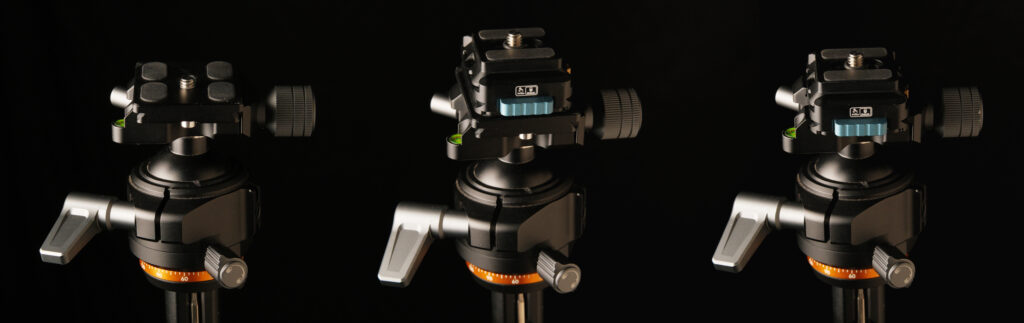
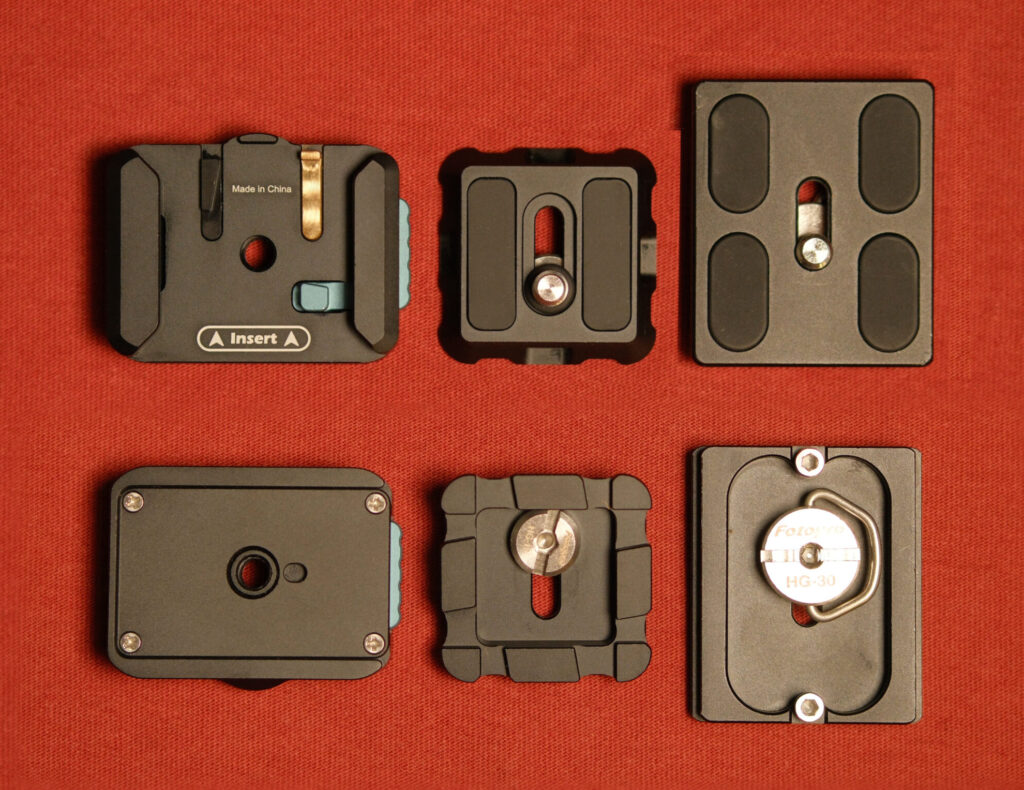
With the QR plate attached, I can mount and dismount my camera just as quickly, and in the same way, as I would with the Quick-Detach model (which I did not get). My only quibble with the QR plate is that I wish its 1/4″ screw on its top half (the one which attaches to the camera) had a D-ring, like the screw under the Arca-Swiss. That would have made it much easier to attach and remove the RZ-3 Plate from the camera. As it stands, the screw needs to be tightened or loosened with a coin or Allen key, which seems unnecessarily fiddly. As a result, I don’t really use the QR plate, just the Arca-Swiss. On the plus side, mounting or removing the Arca-Swiss, as I mentioned, is also quite fast.
Features
Incredibly, we still haven’t covered all the features of this tripod.
The tripod has three 1/4″ expansion holes – one on the ball head and two on the collar – for attaching microphones, monitors and other accessories.
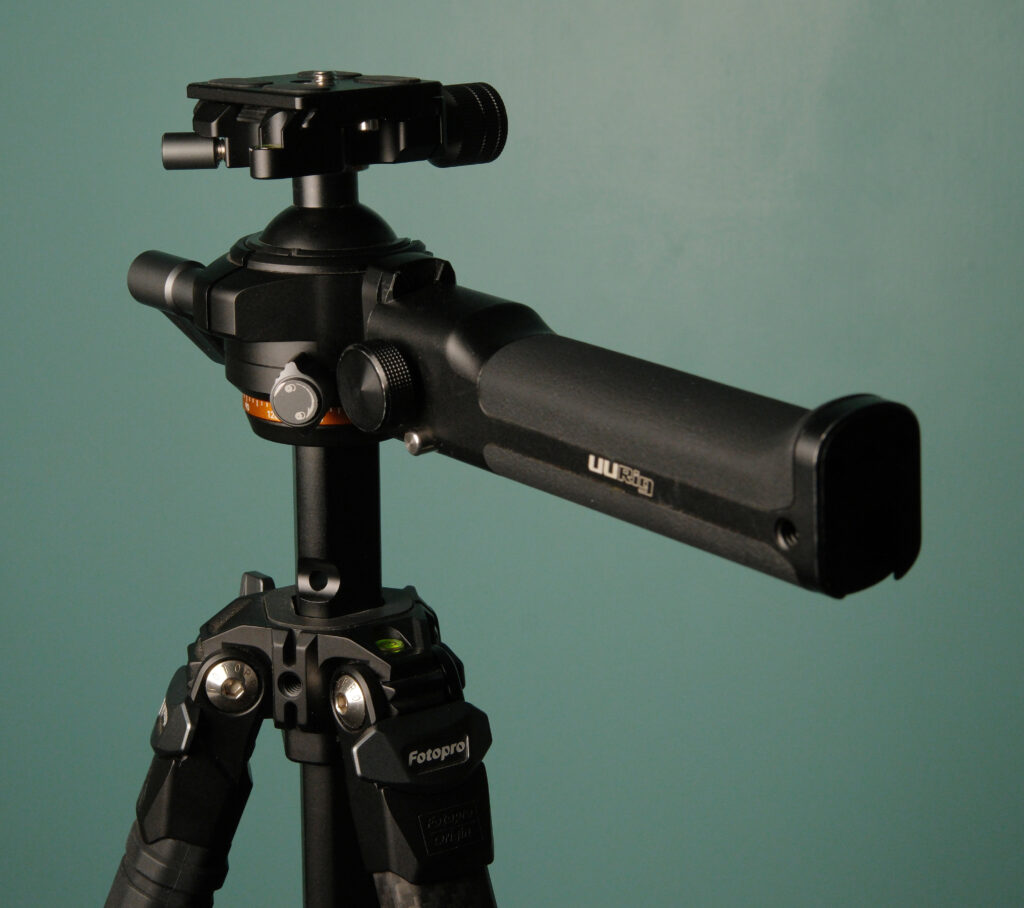
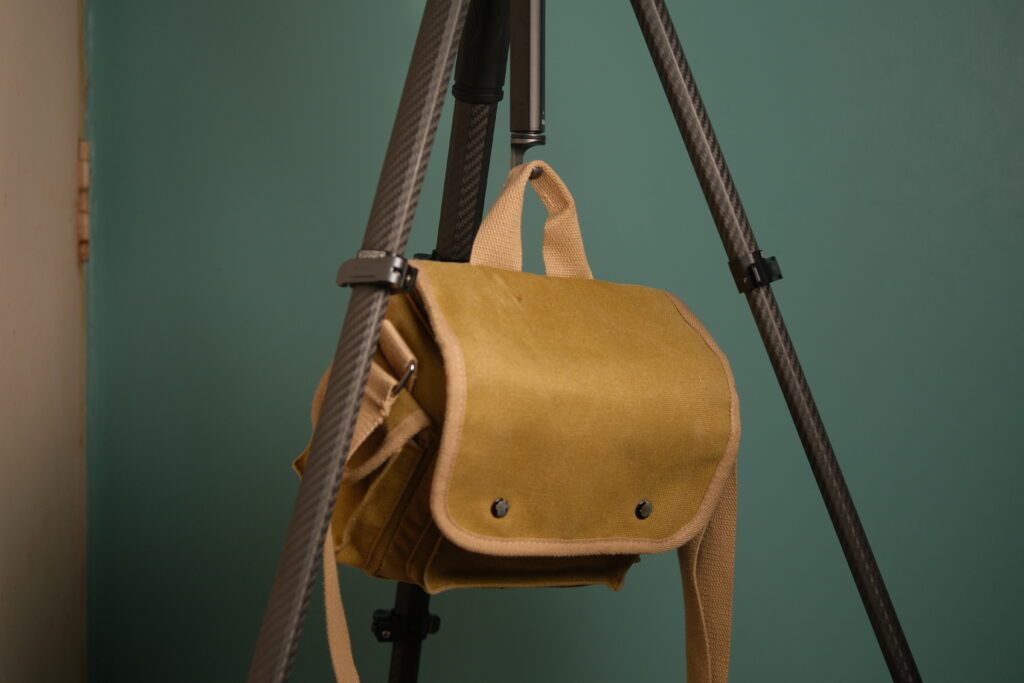
The tripod, in my experience, is pretty stable, but it has a hook below the centre column if you want to hang weights for added stability. Sometimes I also use it to hang my camera bag. This hook can even be positioned at four different angles, which is a ridiculous level of customisability.
The centre column is reversible, so the camera can be positioned “below” the tripod, e.g. for macro photography or flat lays.
The legs can be locked at three different angles (and of course, collapsed for storage). The angle-selector tab, which locks the legs at each angle, is a nifty design. You lift the tab slightly if you want to change the angle, but when you collapse the legs, the tabs lock automatically – as seen at 1:41 of this video.
At the lowest angle, the centre column gets in the way. Fotopro made it so that the bottom half of the column can be taken off, allowing the camera to sit just 16 cm off the ground.
To separate the two sections, you use an Allen key which is hidden inside the centre column and held in place by a magnet. This is a truly ingenious touch, which several reviewers have mentioned as one of their favourite features of the tripod.
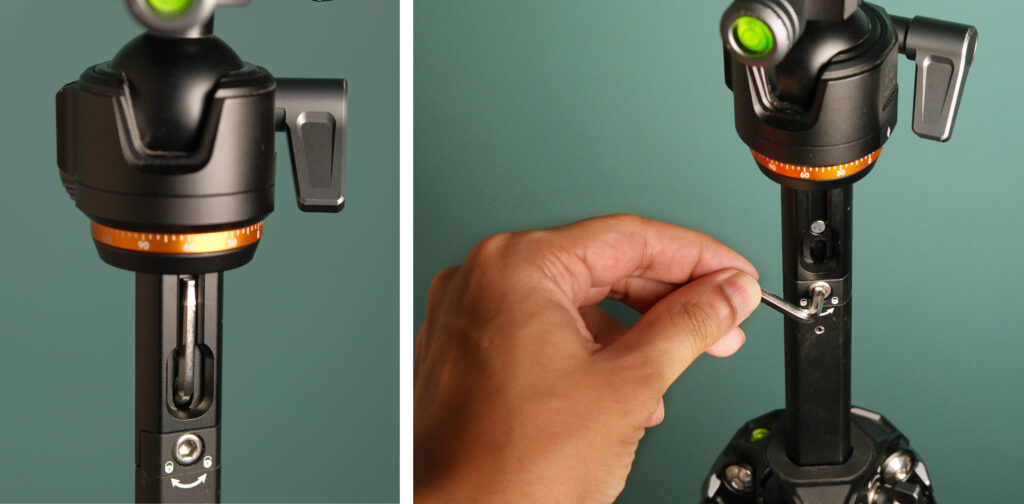
The other end of the Allen key can be used to adjust the tension of the legs.
Finally, the rubber feet come off to reveal alloy spikes, which can be used in tricky terrain such as ice, mud or snow.

Room for improvement?
One of my favourite things about the Fotopro Origin is that despite its long list of features, it’s not too complicated or over-engineered. I only have a couple of minor criticisms – or suggestions for improvement, you might say.
The first is actually a request for yet another feature! I would love to have a phone clip integrated into the centre column, like on the Fotopro Sherpa.
Second, to reverse the centre column (e.g. for macro photography), the hook below the centre column must be taken off. The hook takes quite a few turns to unscrew, so I for one would welcome a faster system – perhaps a quick release, or just fewer turns.
The third is more like a caution. I recently took the tripod in my hand luggage on a flight. Turns out I had forgotten about the two spare Allen keys that come in the tripod bag, and security made me discard them. Not a big deal – Allen keys are cheap – and luckily they didn’t discover the clever little Allen key hidden in the centre column, which I mentioned earlier as one of my favourite features. It would have been a real shame if they made me discard the hidden key too. The incident made me think that, especially since this tripod is positioned as a travel model, maybe Fotopro could put a reminder in the instruction booklet to take out the Allen keys if we are planning to take the tripod in our hand luggage.
The Arca-Swiss and Quick-Detach plates both have a D-ring on the screw, but as I noted earlier, I would also like a D-ring on the scew of the RZ-3 QR Plate (sold separately).
My final point is not about the Fotopro tripod per se, but more about their product range, which is impressive but at times also confusing. For example, they have what seem like two separate categories called Professional tripod and Pantour series, but certain models like the GEP TL-64C appear under both categories, which suggests that these two categories are not exclusive.
Each series have multiple sub-series; for instance the Pantour series includes the Origin series (one of which I reviewed), the Eagle series, T-Roc series, and many more. I for one would welcome a clearer typology, and perhaps an overview of their product range to help us choose the best tripod for our needs. A website filter would be great too – for example if we are only interested in tripods below a certain size, or if we want specific features like a geared head, reversible column, etc.
Final thoughts
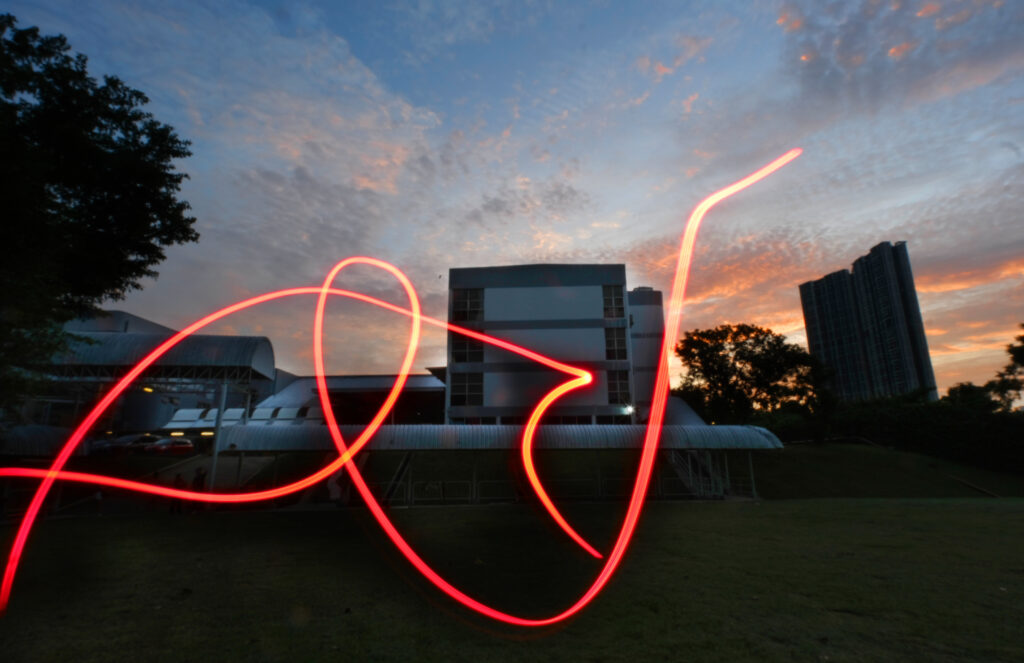
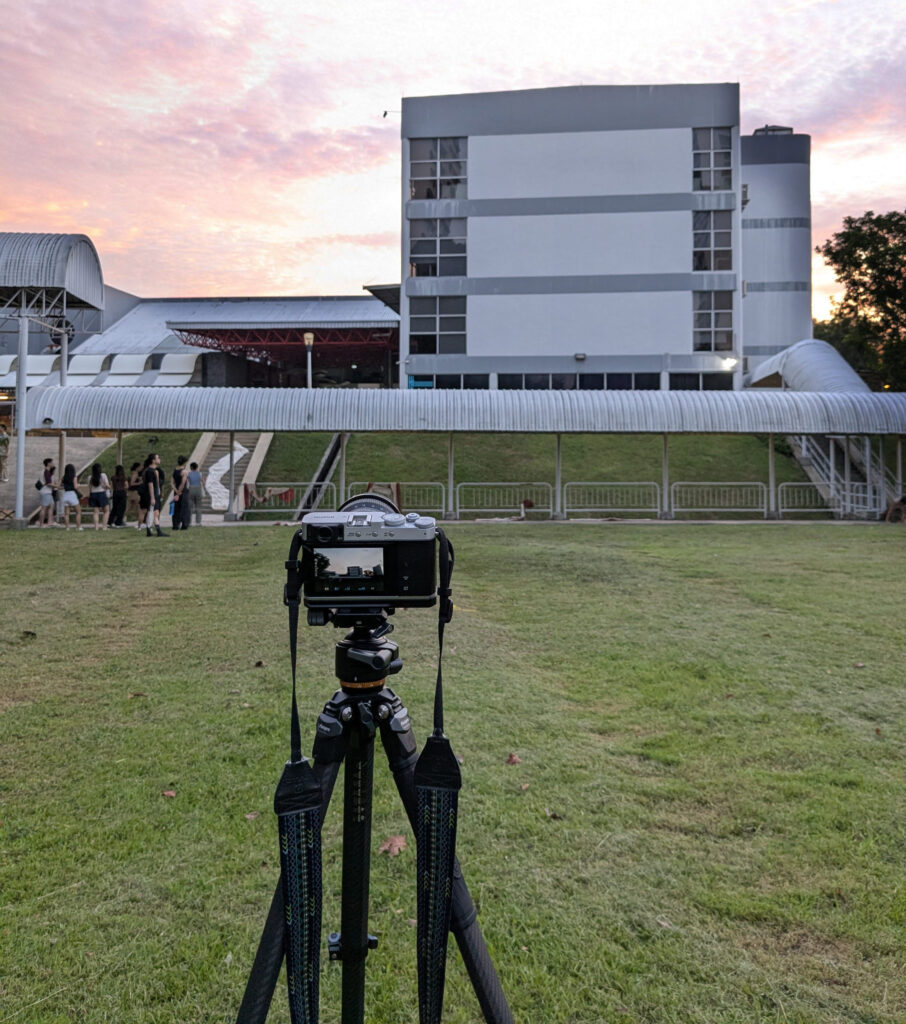
All that said, I’ve been using the Fotopro Origin tripod for over year, for both paid work and personal projects, and I couldn’t be happier. I’ve used it with both digital and film cameras, and for stills as well as video. I’ve shot landscape, wildlife, portraits, dance, and even used it as a makeshift projection screen stand. I really like it to the point where, as I said, I recently sold off my old Manfrotto.
This is not a reflection on the Manfrotto. It served me well for years, and its new owner is happy with it. And in a way it’s an unfair comparison, because while Manfrotto are known for their tripods, mine was a cheaper aluminium model, while the Fotopro is a professional carbon-fibre tripod.
In fact, my point is that I was happy with the Manfrotto, but the Fotopro Origin still won me over. At £249 (Amazon UK), it’s not exactly cheap, but a tripod is a long-term investment. Besides, there are aluminium tripods by some established manufacturers which are similarly priced – and the Fotopro is carbon fibre. It’s sturdy while being relatively lightweight and compact, it has features that I didn’t even know I needed, and is just a pleasure to use overall.
For more of my work, check out my Instagram. Thanks for reading.
Share this post:

Comments
Roger on Fotopro Origin Travel Tripod – Long-term Review
Comment posted: 10/06/2026
What I find hard to believe is that you cannot take an Allen key in your hand luggage.
Comment posted: 10/06/2026
ian bromehead on Fotopro Origin Travel Tripod – Long-term Review
Comment posted: 10/06/2026
Comment posted: 10/06/2026
Simon Foale on Fotopro Origin Travel Tripod – Long-term Review
Comment posted: 10/06/2026
Comment posted: 10/06/2026
Art Meripol on Fotopro Origin Travel Tripod – Long-term Review
Comment posted: 11/06/2026
Great use of it as a monopod for reach at that snake too. And I’m with you Simon, let’s hear about that flash.
Comment posted: 11/06/2026