

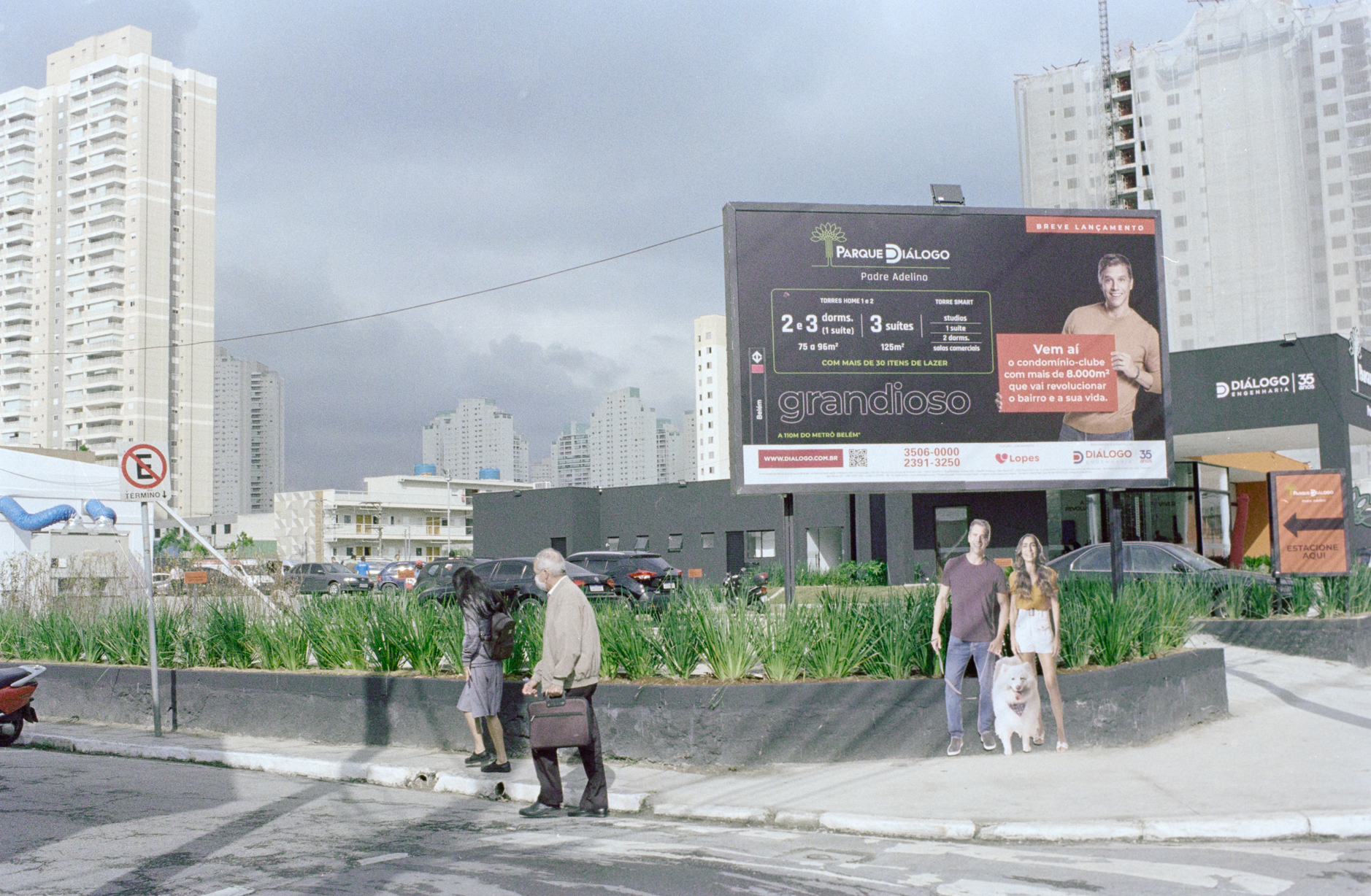
Between 2019 and 2025, I worked at a company located in the Belenzinho neighborhood, in the East Zone of São Paulo, Brazil. Along with the neighborhoods of Mooca and Brás, also in the same region, Belenzinho was part of one of the city’s largest industrial hubs in the early twentieth century, when it concentrated factories from a range of economic sectors.
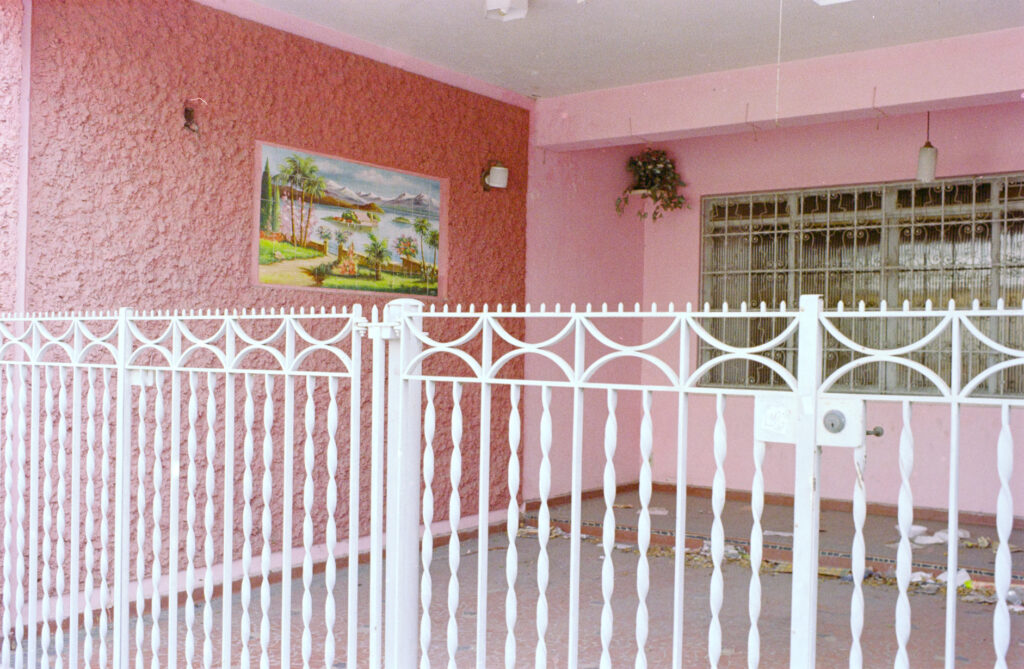
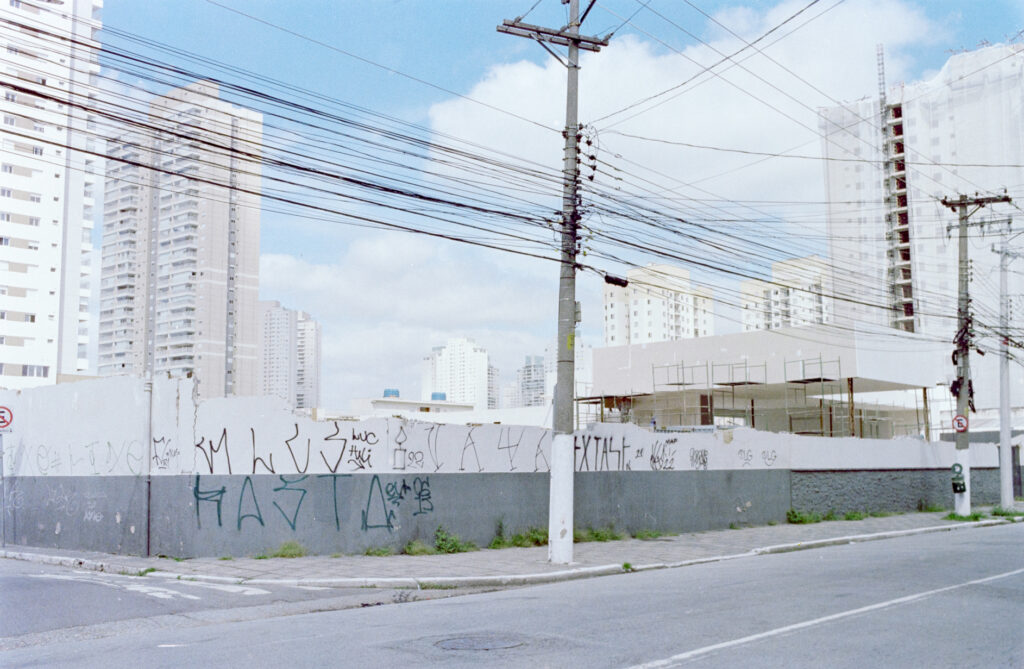
I hold photography as an everyday practice. Between 2019 and 2025, I regularly photographed the path I walked between the Belenzinho metro station and my workplace, as well as walks around the neighborhood after lunch.
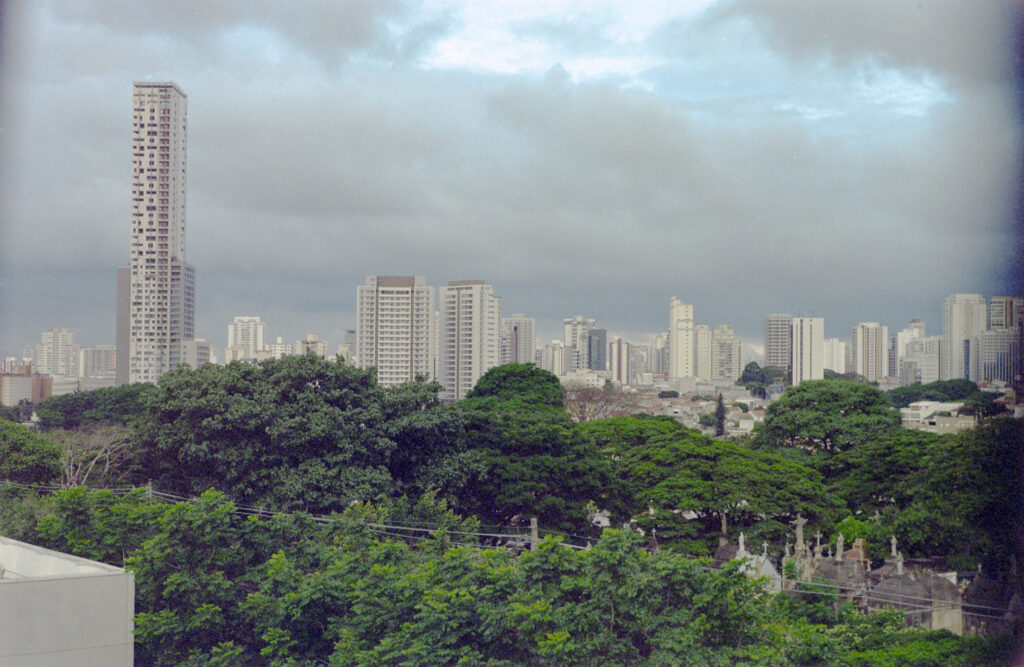
During this period, São Paulo went through an intense process of real estate speculation. After decades of economic decline brought on by deindustrialization, Belenzinho has been the stage for countless residential real estate developments.
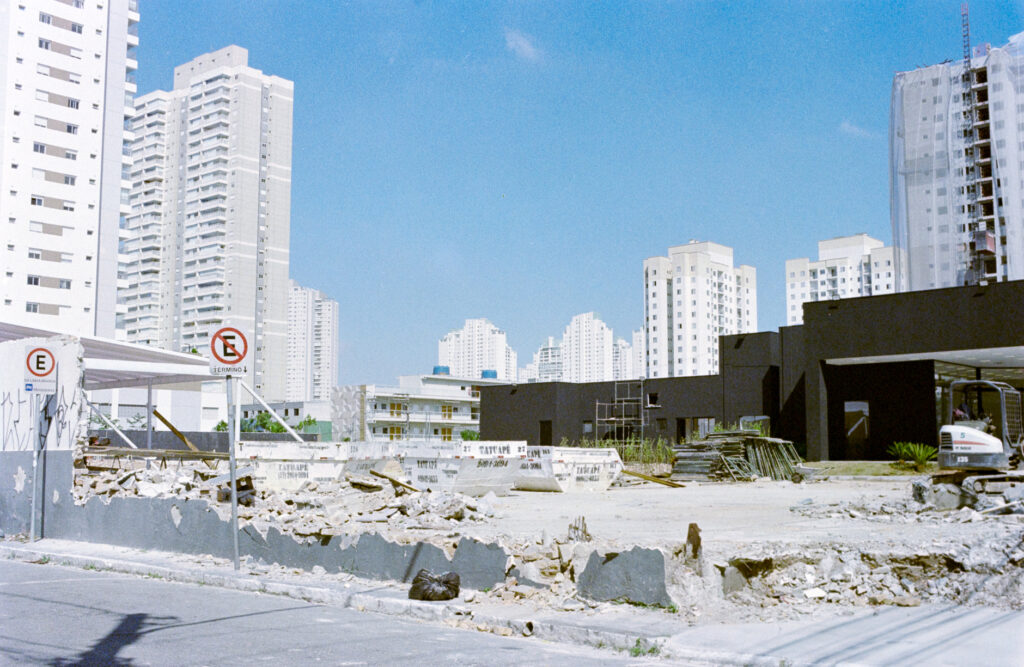
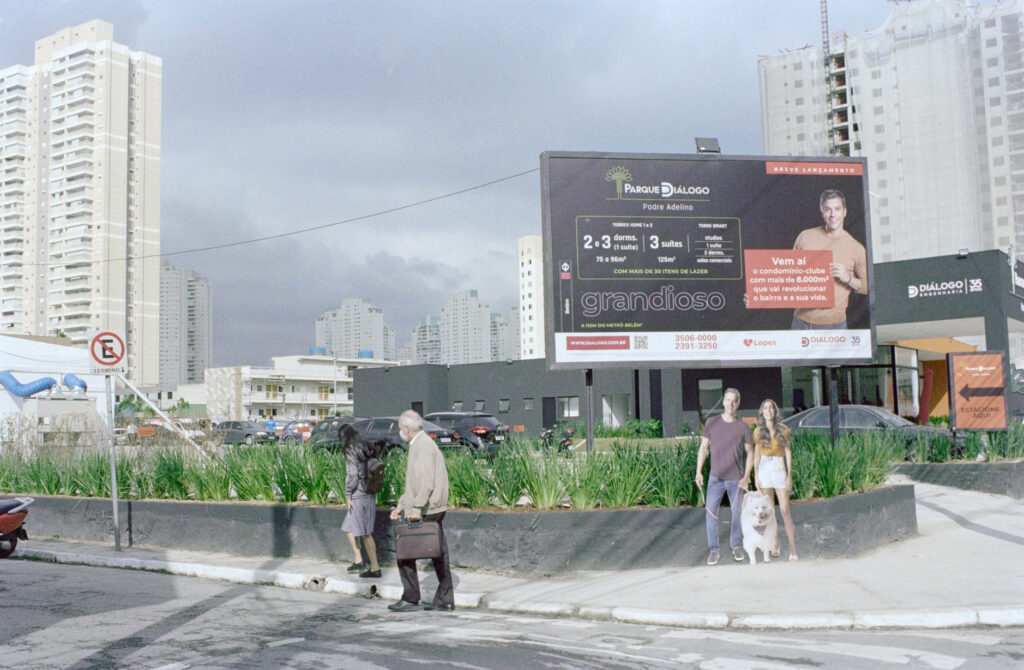
As a consequence of this process, large factory complexes – their walls painted in somber colors and covered in graffiti – vanish without a trace. This opens up broad spaces, giving rise to an unusual perspective for São Paulo, a dense city where it is rare to see the horizon.
At the same time, one notices the relentless multiplication of the same – standardized buildings that suggest a way of life grounded in a private understanding of the city, with parking garages, gourmet balconies, leisure areas, and so on. The presence of these condominiums in the neighborhood strikes me as dubious; it reminds me of a collage – enormous, generic elements inserted into a neighborhood that, until recently, contained only small houses and abandoned factories.
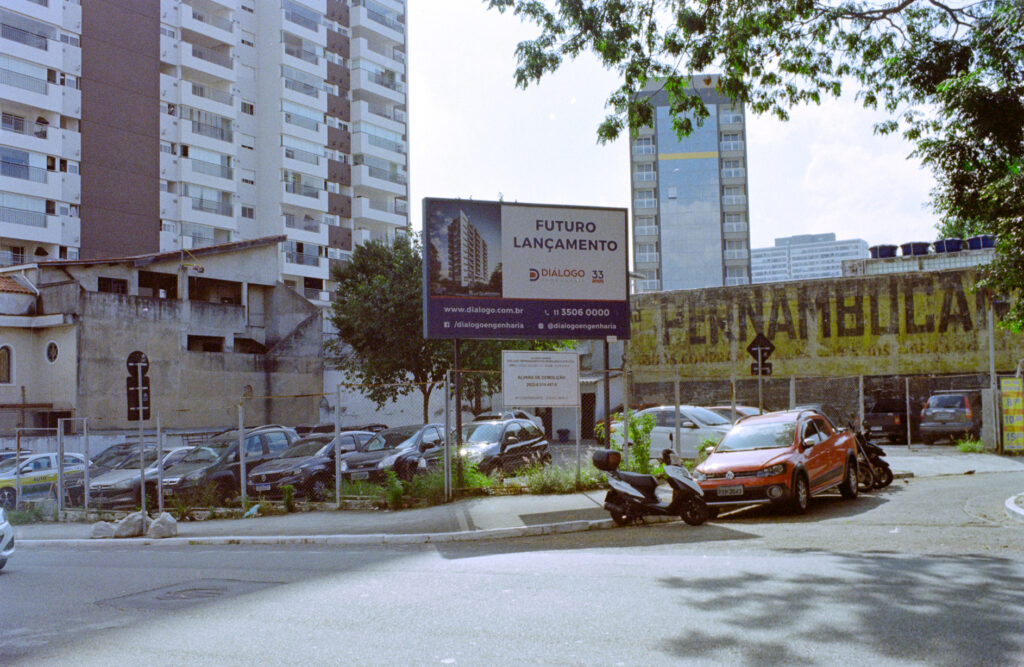
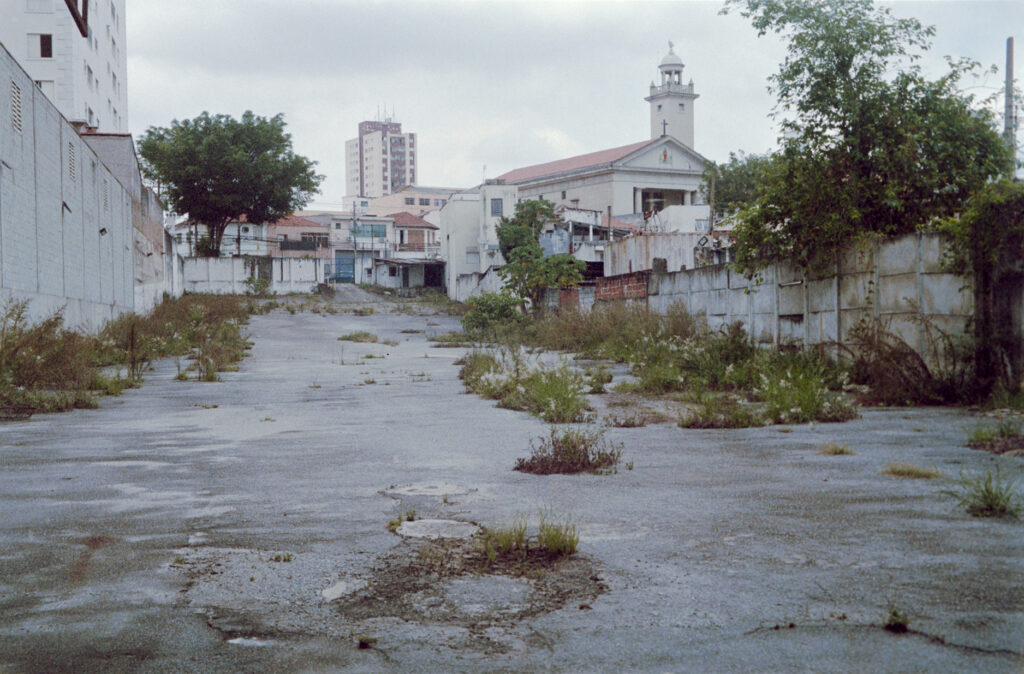
This transformation follows well-defined stages. Everything begins with demolition. Next comes an improvised parking lot, exposing the backs of neighboring houses and buildings – walls and traces of former structures. This stage can last for years.
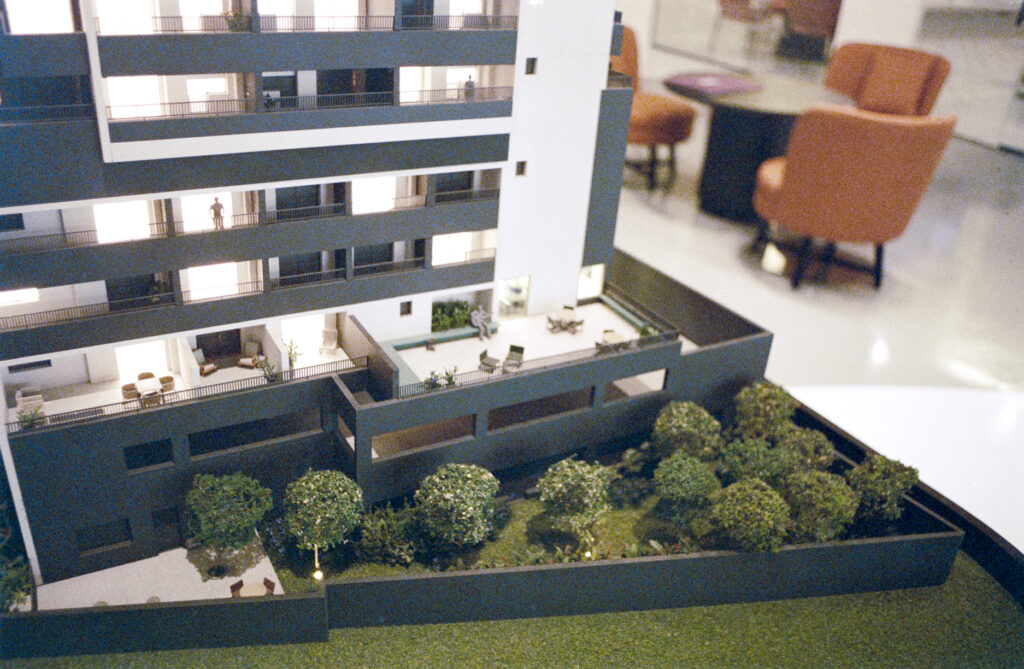
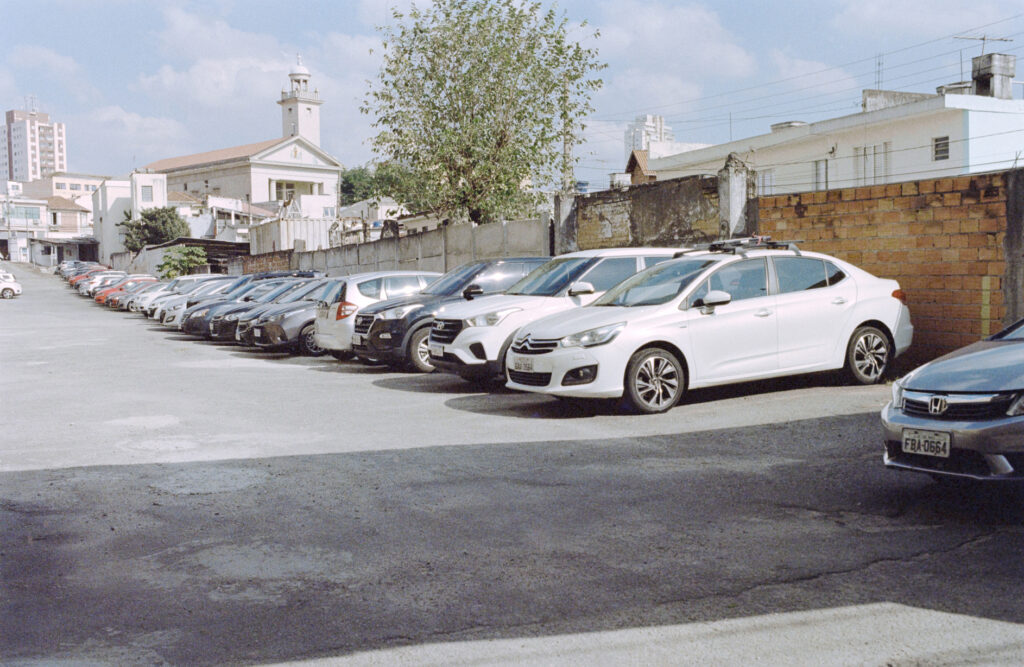
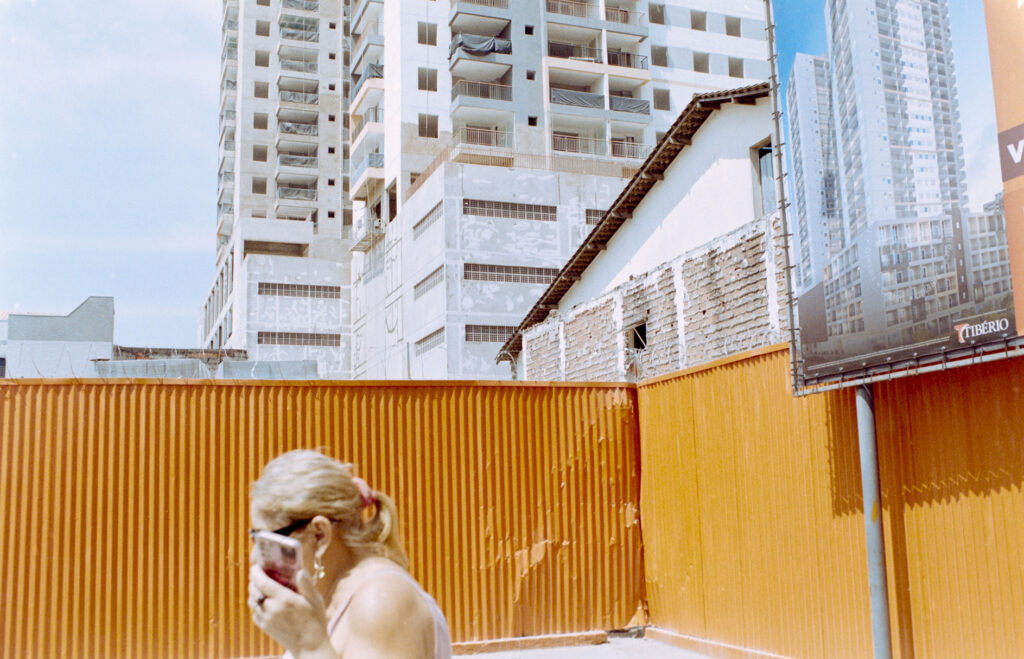
Just as we are about to grow used to the sales stand, it disappears without a trace – demolished even faster than the old building was. At this point, metal hoardings try to conceal the excavation and the drilling of the towers’ foundations. There is a sense that the building already begins in ruin: its finishes just a half-hearted attempt to hide that fact.
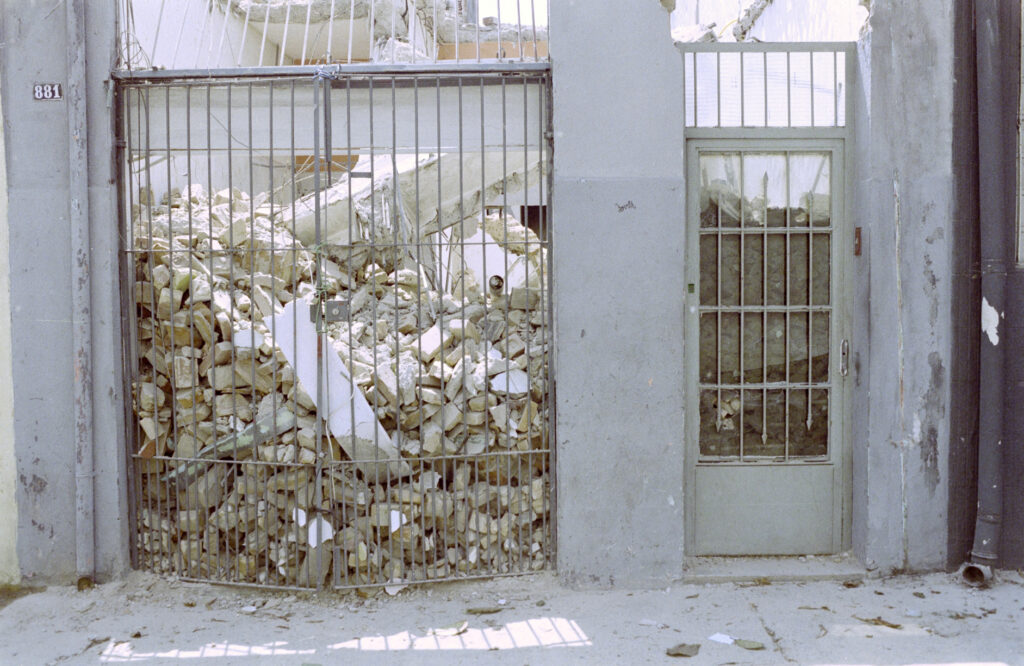
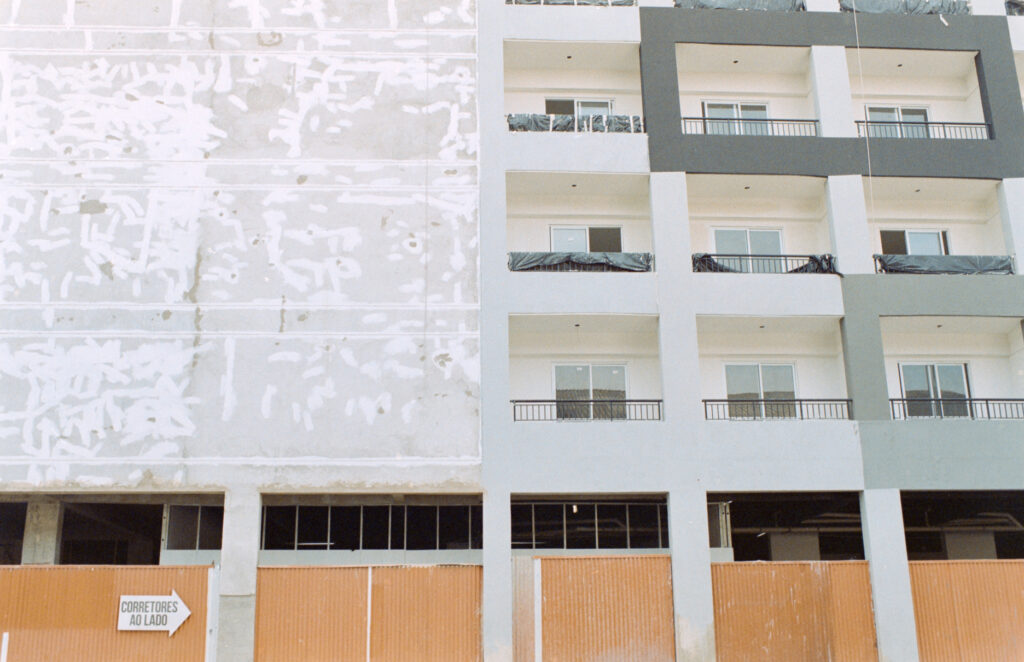
Little by little, still hesitant, the building takes in its residents. During the day, it remains impenetrable. At night, however, its windows turn into small illuminated holes. Inside, one can glimpse families having dinner, children playing video games.
About the author
André Leite Coelho is a visual artist, educator and researcher. His artistic work explores the relationship between technology, perception, memory, and the interplay of text and image. As a researcher, he focuses on the history of photography and contemporary visual culture. He is a professor in the Department of Visual Arts at ECA-USP (University of São Paulo’s School of Communications and Arts), specializing in Photography, Multimedia, and Intermedia.
Share this post:







Comments
David Pauley on Homogenization of Belenzinho, São Paulo: Real Estate Transformation 2019–2025
Comment posted: 13/08/2026
Comment posted: 13/08/2026
Gary Smith on Homogenization of Belenzinho, São Paulo: Real Estate Transformation 2019–2025
Comment posted: 13/08/2026
Comment posted: 13/08/2026
RichardH on Homogenization of Belenzinho, São Paulo: Real Estate Transformation 2019–2025
Comment posted: 14/08/2026
The neighborhood has lost its factories as industry has moved away, possibly overseas. Now you have a building boom on a massive scale. Perhaps financial credit has come because São Paulo is a safe place to invest?
Comment posted: 14/08/2026
Reinhold Graf on Homogenization of Belenzinho, São Paulo: Real Estate Transformation 2019–2025
Comment posted: 14/08/2026
Besides that, it is always welcome, documenting reality.
Best regards
Reinhold
Comment posted: 14/08/2026
Jeffery Luhn on Homogenization of Belenzinho, São Paulo: Real Estate Transformation 2019–2025
Comment posted: 19/08/2026
I visited Brazil for the first time last year on a business trip. Only two stops: Rio and Sao Paulo. I had a guide drive me around Sao Paulo so I could get an idea of the layout. It seemed that the new construction formed a circle around the center, which had a lot of old abandoned buildings. Some were being demolished. Not many people on the streets. There was an area of busy shops and street performers that reminded me of San Francisco 1970. Positive energy. I visited a HUGE indoor market with endless food stalls. Great food. Obviously a city of contrasts!
Jeffery