

Early October, autumn in Germany. Sunny, dry weather with mild temperatures. I got into my car and drove to two places, each 20 km away from where I live. Both places are in the western federal state of North Rhine-Westphalia, near the border with the Netherlands. I took my Mamiya 645 1000s with me, fitted with the Mamiya Sekor C 2.8/55mm lens and loaded with a roll of Ilford XP2 Super 400 film.
I don’t wish to say any more on the subject. The camera kit and film should be well known in the 35mmc community. There’s no story to tell either; not a single shot was staged – they were photographed exactly as found. I determined the exposure using a Gossen Variosix F (with a dome light meter), slightly overexposing at ISO 320. Development and 4K scan to JPEG were carried out at a specialist lab. The image files were lightly edited in Lightroom Classic (tone correction). Nothing more – all done within reason and without much effort.
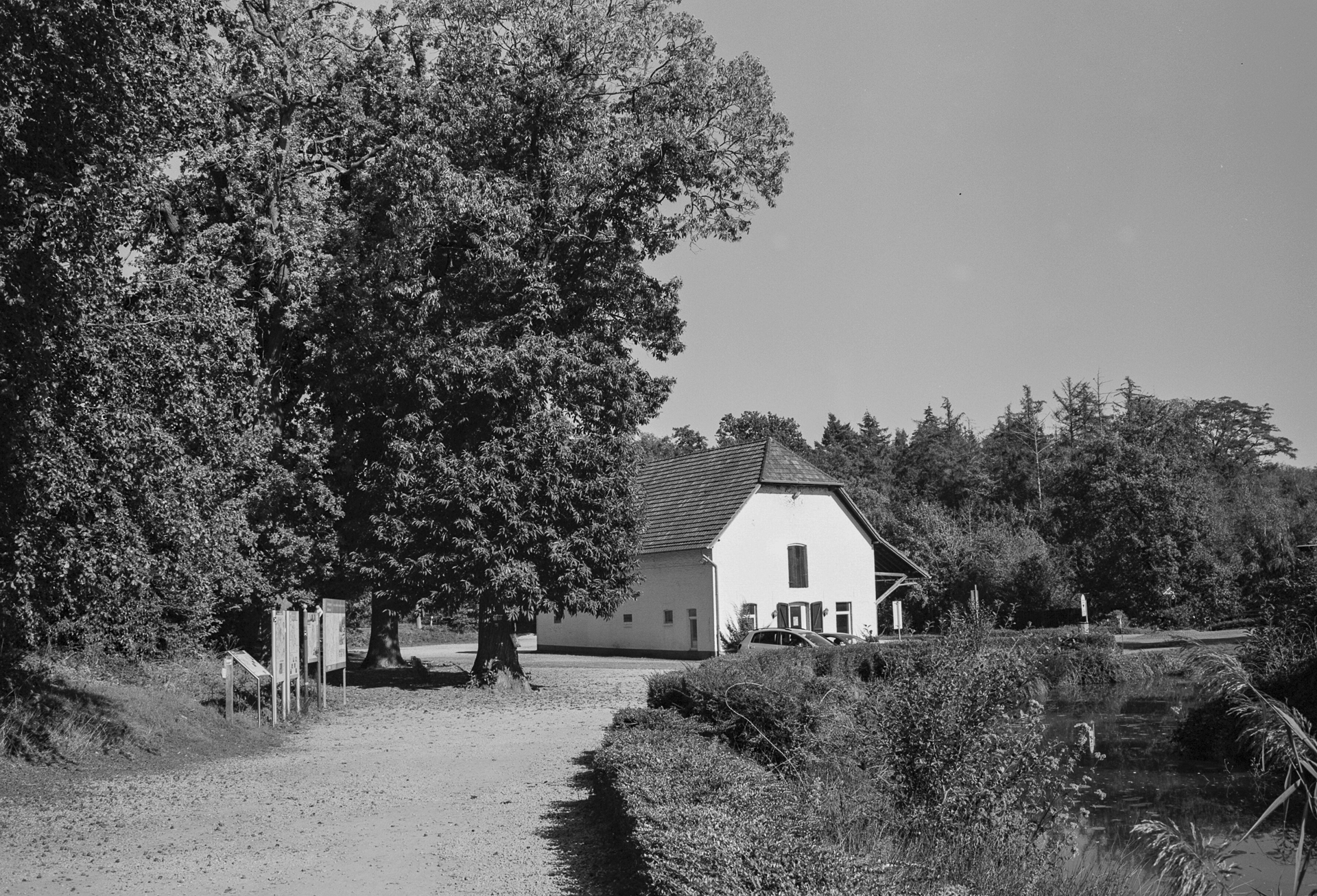
My short trip took me first to Tüschenbroich Castle, situated in a district of the town of Wegberg on the edge of the Maas-Schwalm-Nette Nature Park. The cover photo shows the visitors’ car park, where I had parked my car, with an old outbuilding of the castle. I walked a little further and found myself standing in front of the main building, Tüschenbroich Castle, which is privately owned and inhabited.
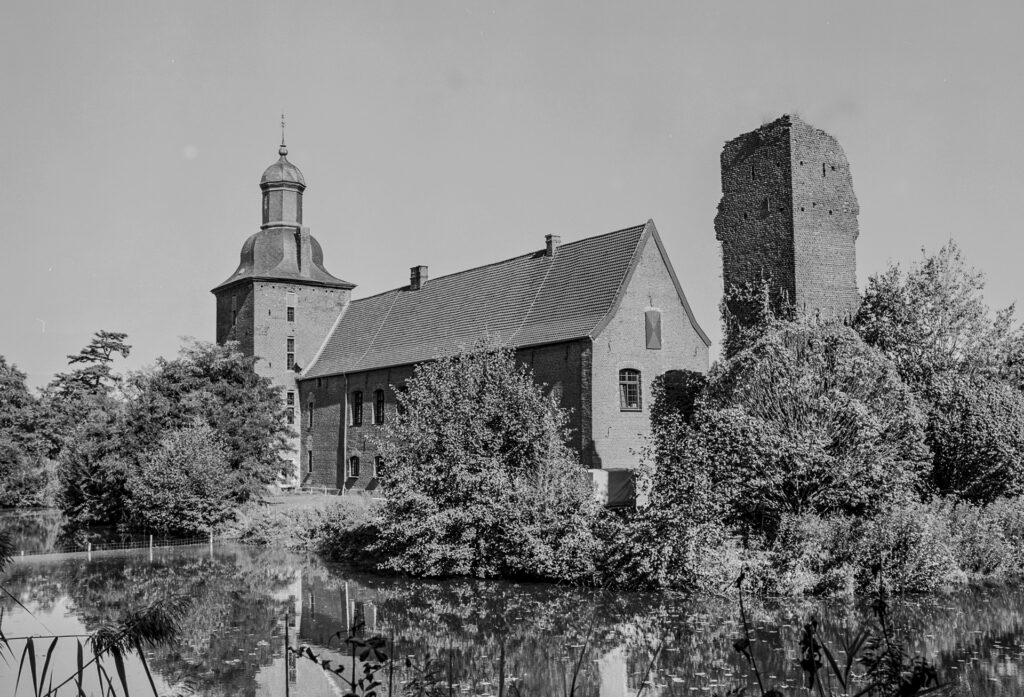
The castle is surrounded by a body of water, which was also used by the nearby Tüschenbroich oil mill, which can be seen here:
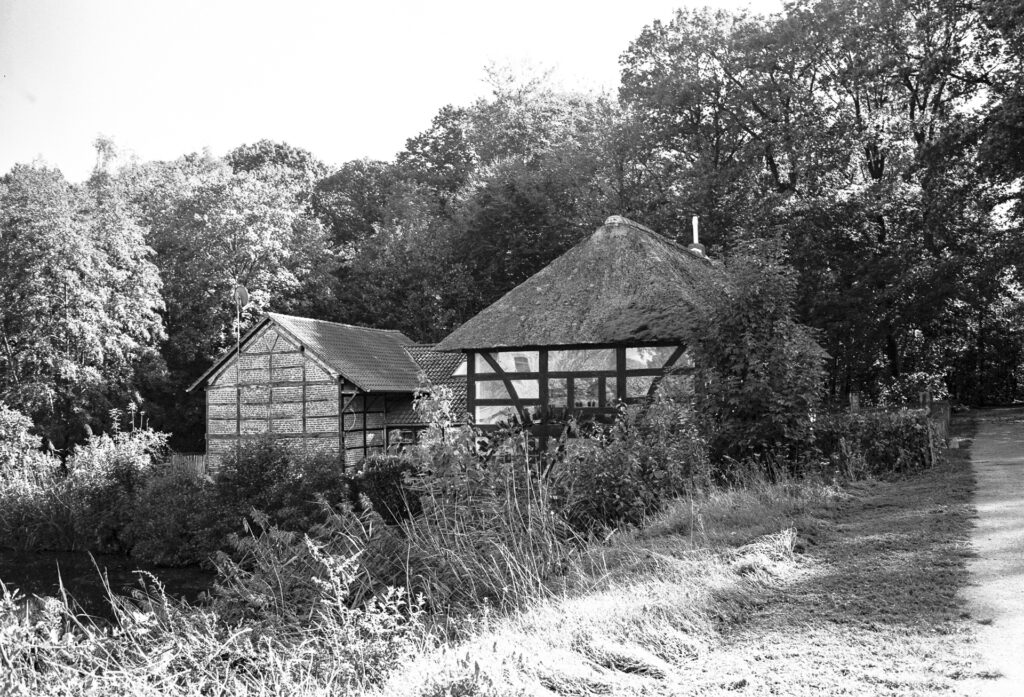
The main building, complete with a waterwheel and barn, was constructed using half-timbered architecture; it is privately owned and is currently occupied by a ceramic artist. Following the renovation, the open spaces in the half-timbered structure of the main building were filled with glass panes.
After a short walk around the castle, we continued on to Brüggen in the district of Viersen, where the castle stands right in the centre of the village.
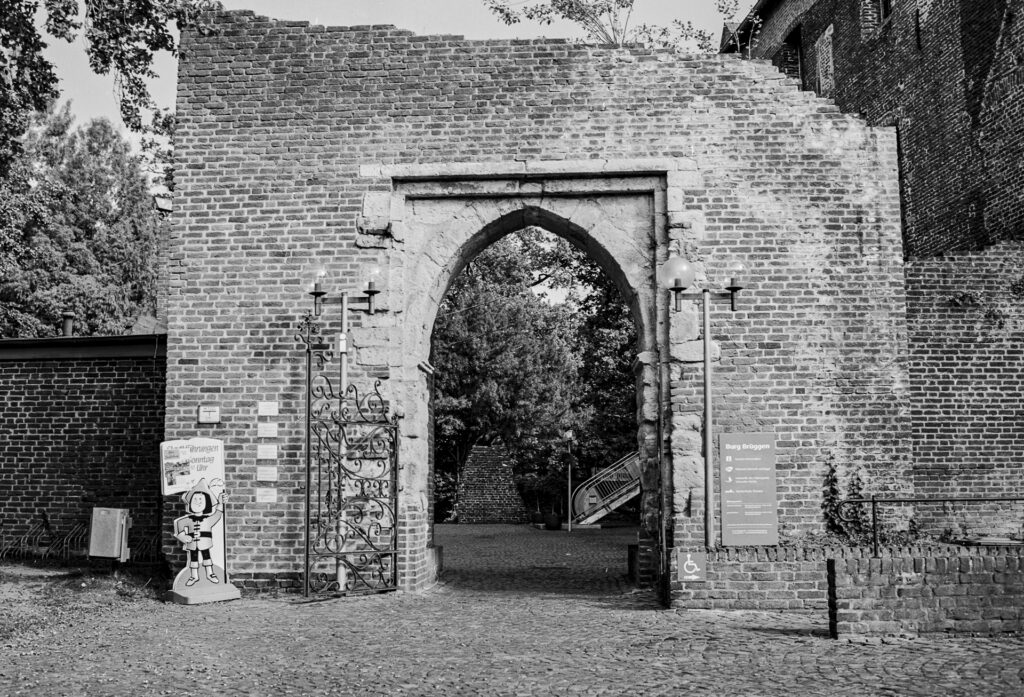
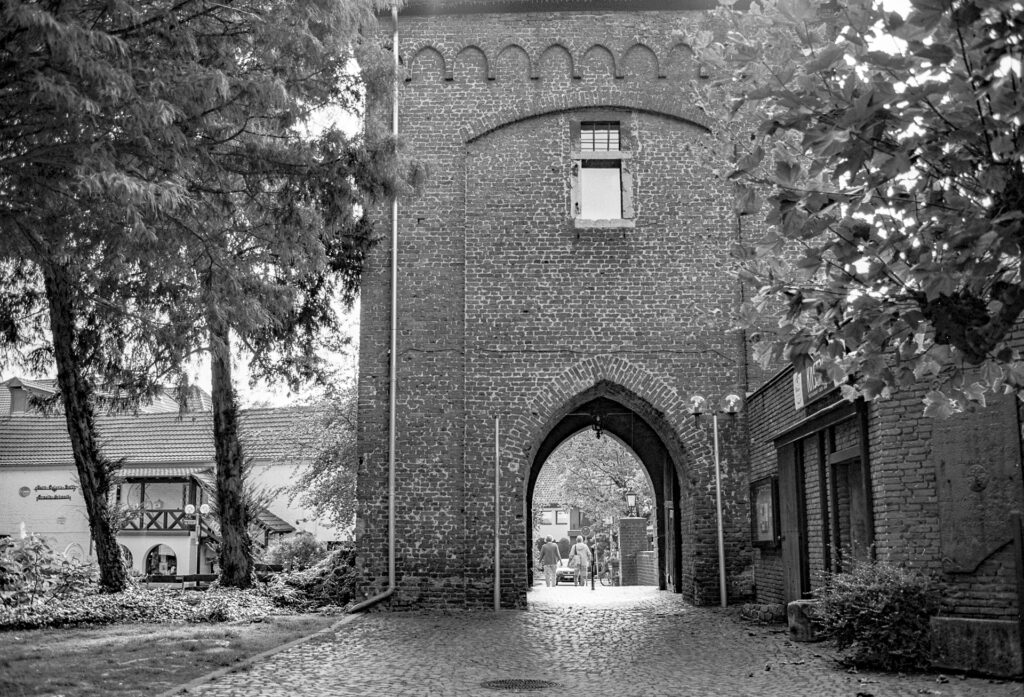
This surviving section of a ruined part of the castle complex leads into the inner courtyard of Brüggen Castle, which is open to the public and houses a local history museum.
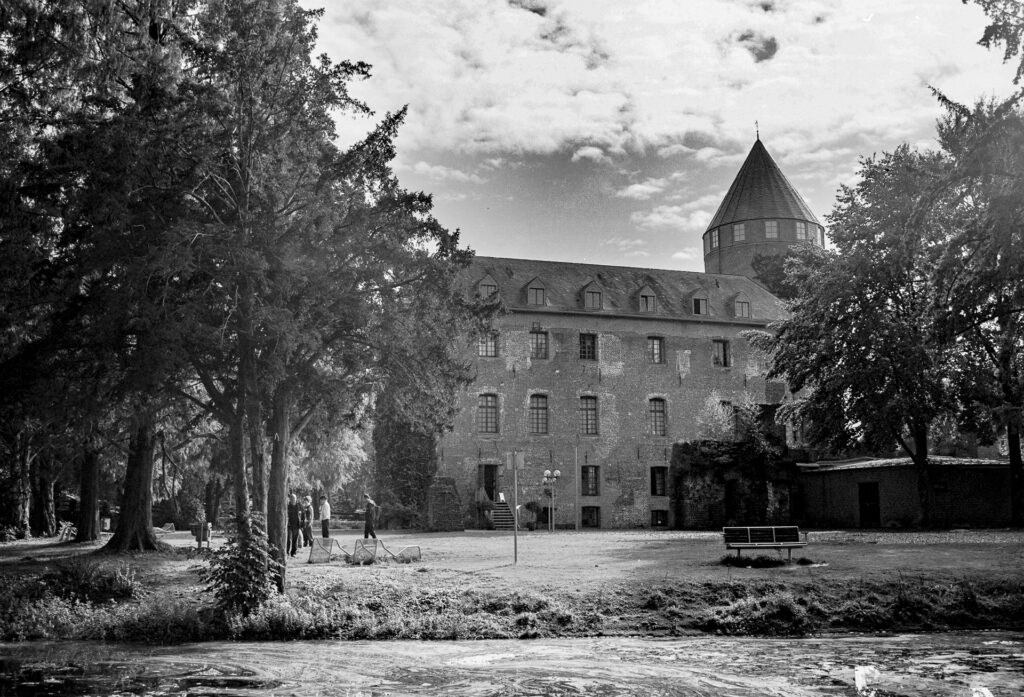
Brüggen Castle is partly surrounded by water, as you can see in the foreground of the picture, and it attracts numerous visitors even during the week. After their walk and tour, they relax in the many restaurants in the town centre and fortify themselves for the journey home.
I, too, am about to leave the castle grounds through this gate, walk to where my car is parked and set off on the 20-kilometre drive home. Without stopping at a restaurant.
The 15 exposures on the 120 roll have been taken, and to be perfectly honest, I’m growing to like the idea of being limited to fewer photos more and more. I won’t even get started on the brilliant handling of a medium-format camera like this Mamiya 645 with a light-well viewfinder and no exposure meter.
Thank you very much for your interest. I’d be delighted to receive any feedback.
Share this post:

Comments
Andrew on A Journey into the Past
Comment posted: 02/11/2026
Being a relatively “modern” formulation, XP-2 Super has great dynamic range, doesn’t it? Couple that with medium format and you have photos with wonderful impact and “presence”.
Jeffery Luhn on A Journey into the Past
Comment posted: 02/11/2026
Very nice compositions!! I love my Mamiya 645N. It seems to work well in your hands. You are fortunate to have great old buildings close by. Using XP2 creates stunning long range negatives.
I finally found a like-new normal lens at a decent price. I have four lenses now, two are auto focus. The 35mm is my favorite.
Keep shooting with that rig. Your photos look great. Jeffery
Gary Smith on A Journey into the Past
Comment posted: 02/11/2026