

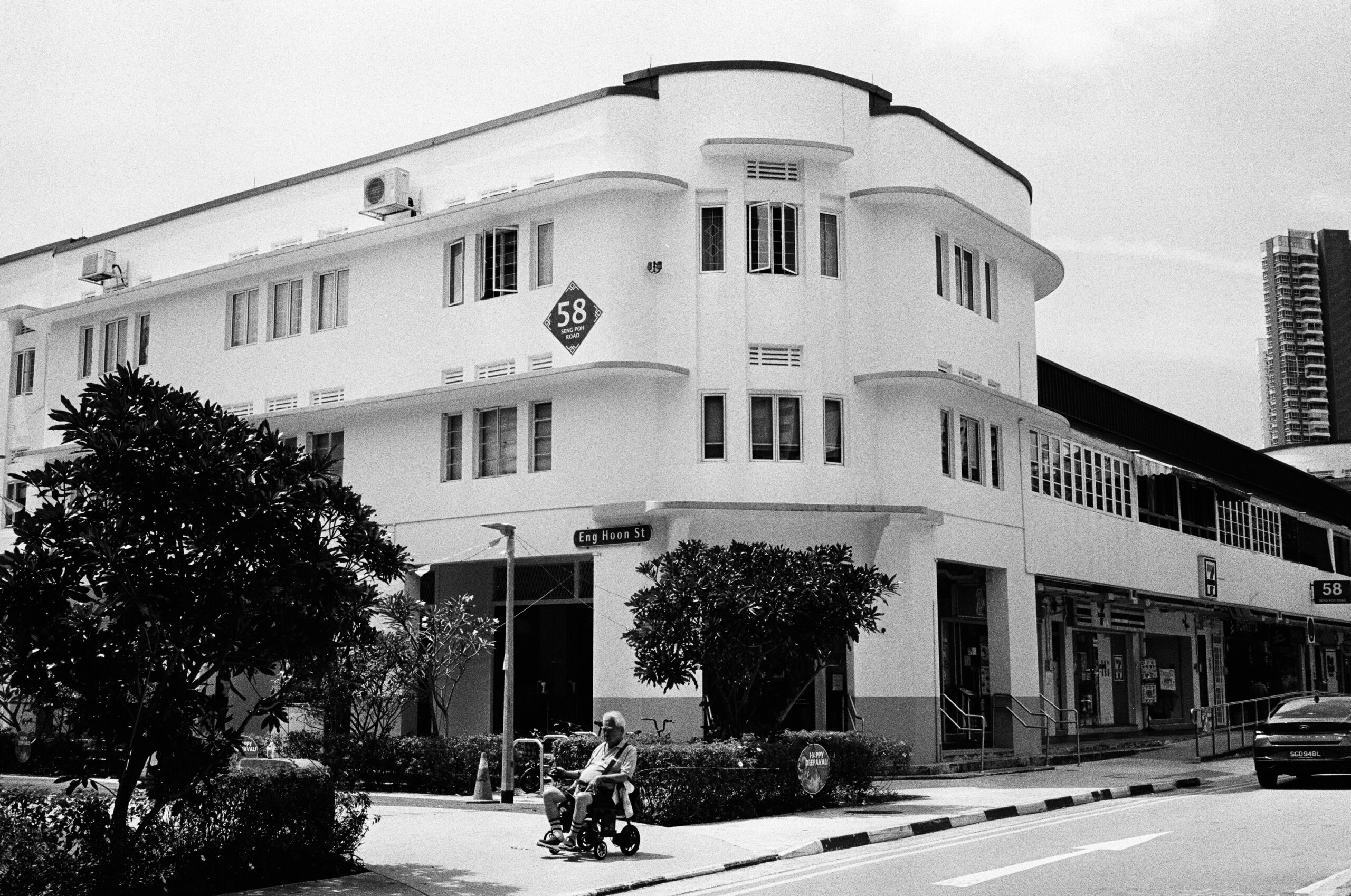
It was the last day of my trip to Singapore for a conference, and I was hoping to make the most of it photographically. After being stuck indoors for the past couple of days, I was eager to get out and explore. I’ve visited Singapore many times and always enjoy wandering the streets looking for photographic opportunities.
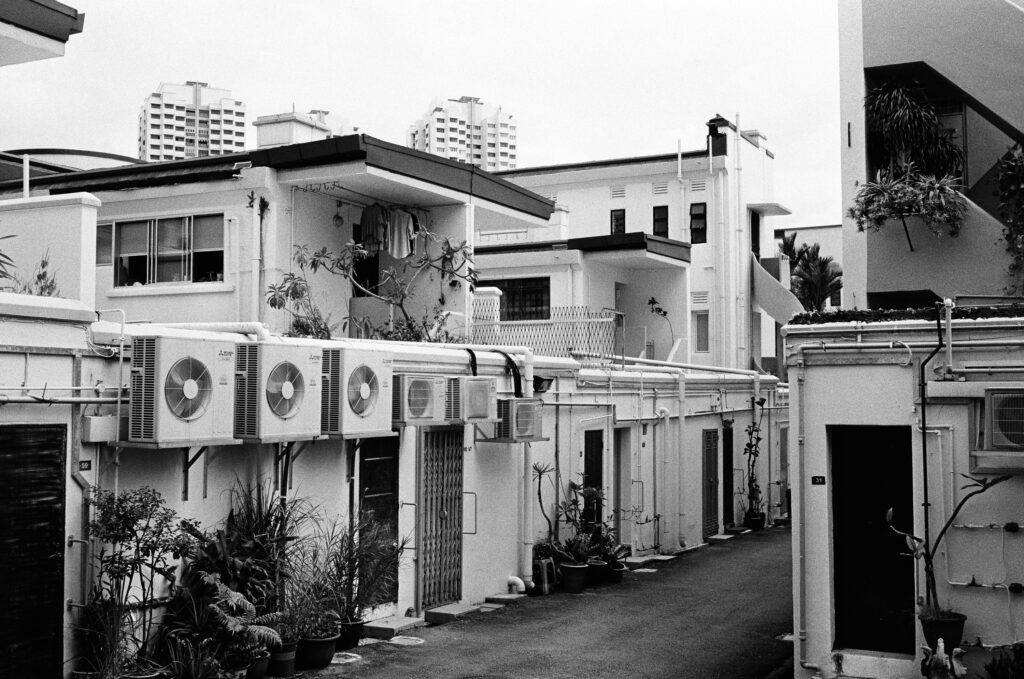
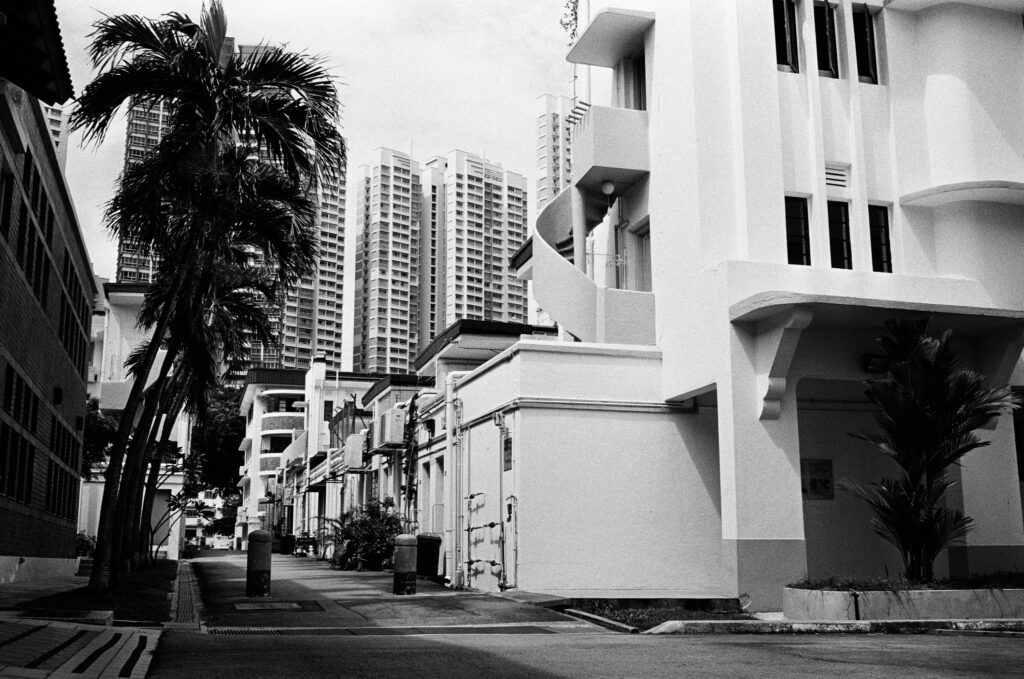
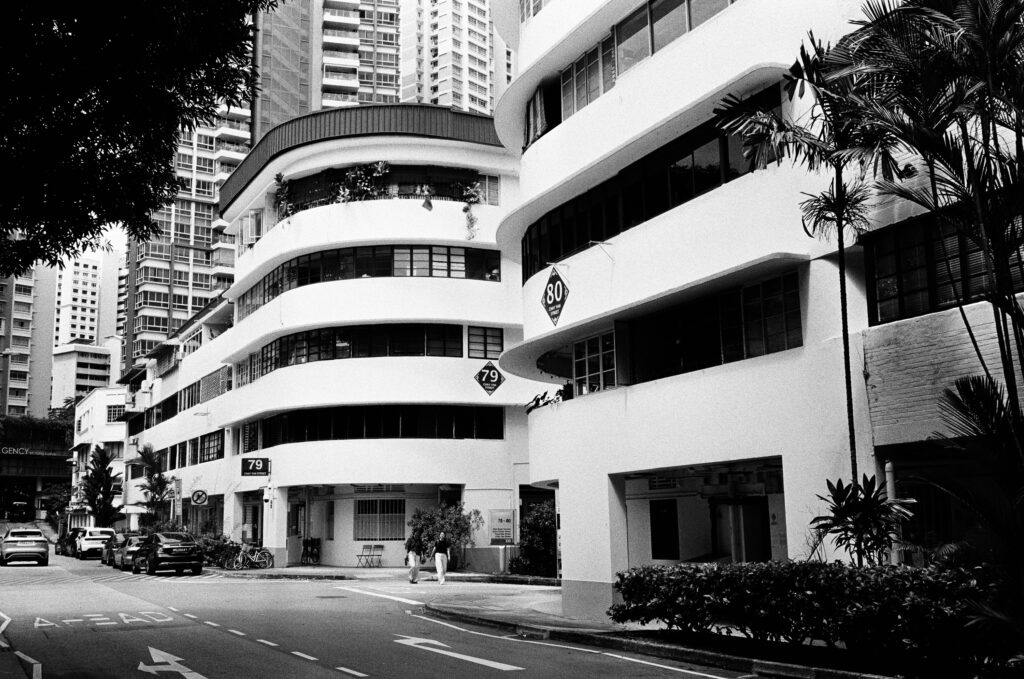
I’d never been to the Tiong Bahru neighborhood before. I stumbled upon it while reading a travel blog, where the photos immediately caught my attention—the architecture looked unlike anything else I’d seen in Singapore. Tiong Bahru is one of the city’s oldest residential estates and has in recent years become known for its trendy cafés and independent shops. Reading through Wikipedia, I discovered that the buildings were designed in the 1930s Streamline Moderne style—a later form of Art Deco—with long clean lines and curved facades that give the area a distinctive charm. Now I was on a mission to shoot a roll of film—and to get some good coffee and a croissant at one of the neighborhood’s famous bakeries.
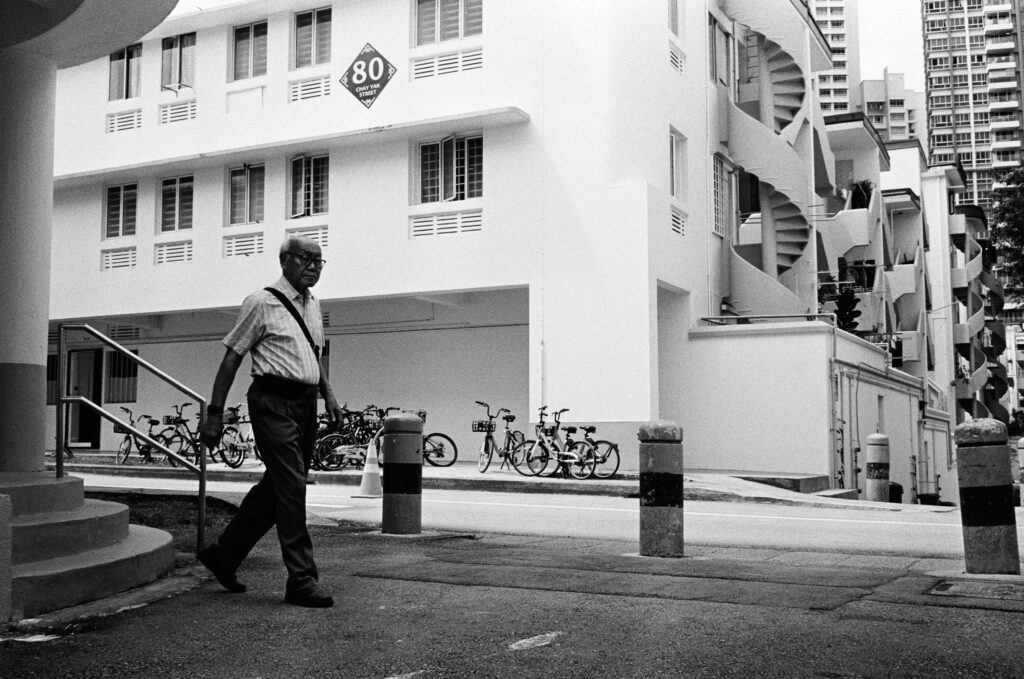
For this stroll, I was traveling light in terms of photo gear. I had with me my trusty Contax T compact rangefinder. Released in 1984, it features a superb Carl Zeiss Sonnar T* 38mm f/2.8 lens. Designed by Porsche Design, it has an understated functional beauty. It’s so compact it easily slips into my pants pocket, making it my go-to ultra-light travel camera that still delivers great images. I love its little quirks—the foldable flap that doubles as a lens cap, and the satisfying mechanism that extends the lens when you open it. The small viewfinder and faint rangefinder patch can make focusing tricky, but after shooting dozens of rolls through it, I’ve learned to trust it to deliver solid results. It uses aperture-priority metering with no manual exposure controls, though the +1.5-stop compensation button is handy for backlit scenes. Set to f/8 on a bright day like this, it’s essentially a pocket-sized point-and-shoot. What I love most, though, is how discreet it is; people hardly notice me taking photos, even though mine is the silver version.
My film of choice today is Kodak Double-X. It’s rated at ISO 250 in daylight and 200 under tungsten light, but I usually shoot it at 200 and often push it to 400 or 800 with great results. Originally introduced in 1959, Double-X has been a staple in Hollywood cinema for decades—used in classics like Schindler’s List, Raging Bull, and Casino Royale for its rich tonal range and cinematic grain. It’s also readily available in my hometown of Bangkok, conveniently bulk-loaded into 35mm canisters. Beyond its beautiful black-and-white rendering, it also happens to be the most affordable film option for me—color or monochrome.
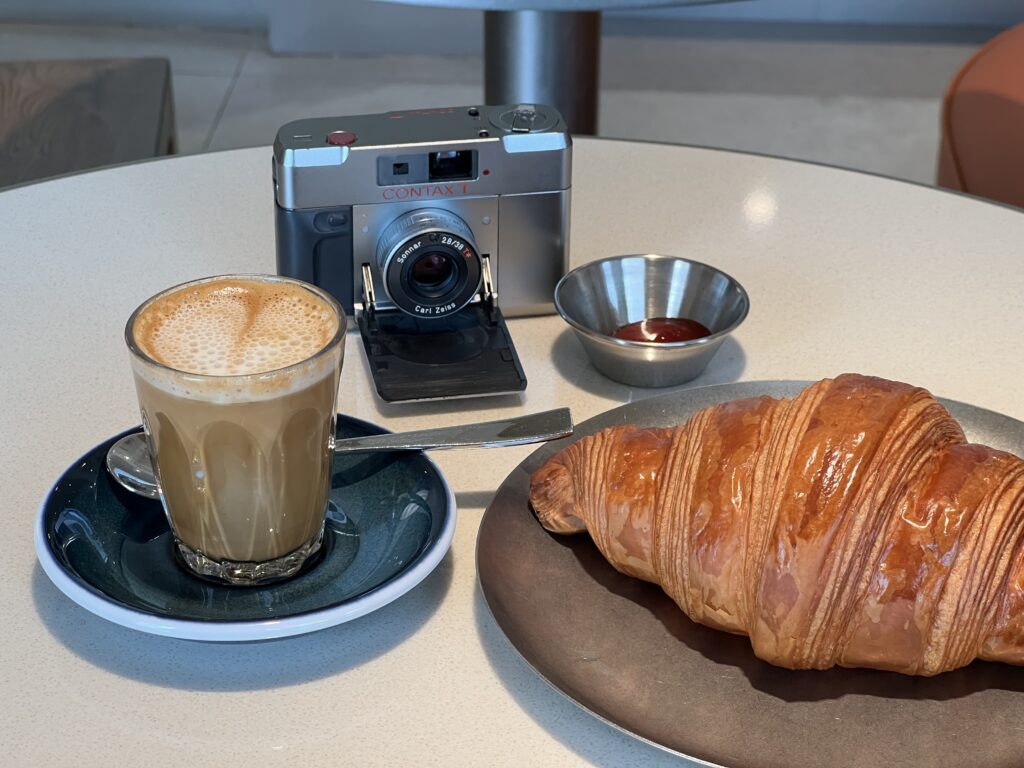
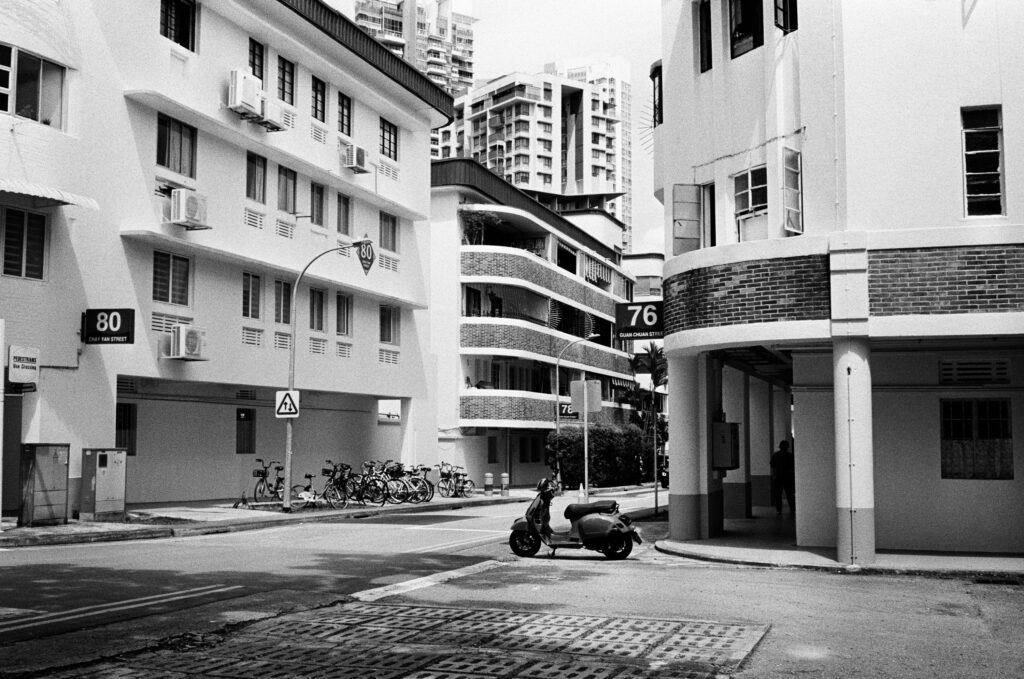
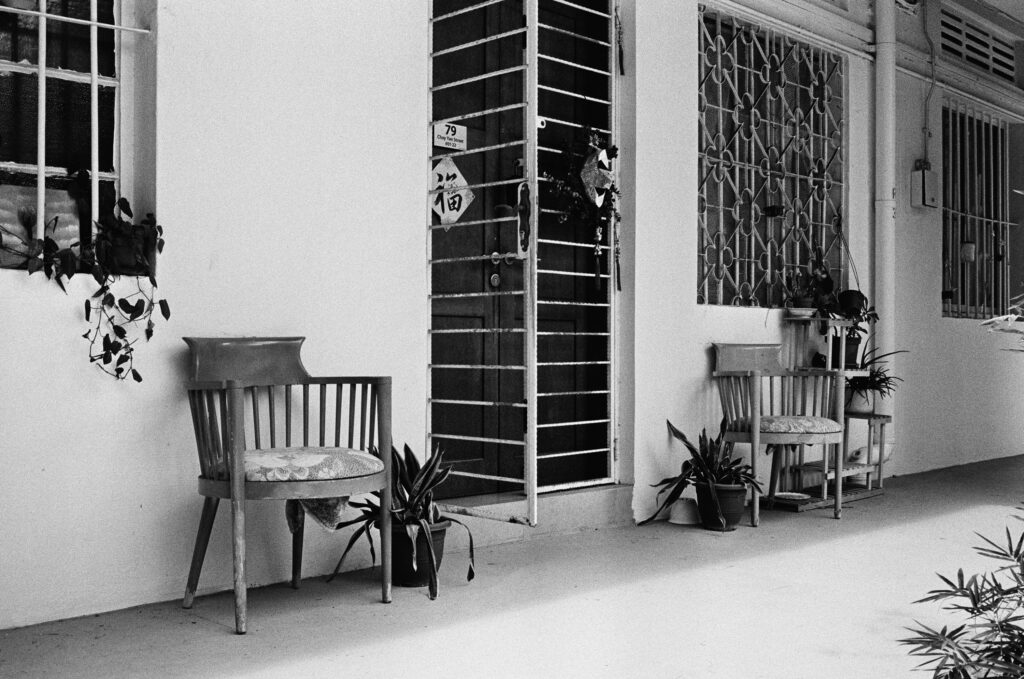
Strolling through Tiong Bahru felt like stepping into another era. The old pre-war blocks have graceful curved balconies and horizontal lines from the Streamline Moderne period—what locals affectionately call fei ji lou, or “airplane flats.” I was there late in the morning on a weekday, and the neighborhood was quiet, with most residents likely at work. I wandered lazily through the streets, chatting with a few construction workers on their smoke break and some older men out for their morning stroll. After about an hour of wandering, I found the bakery I’d been looking for. The coffee was just what I needed, and the croissant was every bit as good as promised. As I sat in the cool, air-conditioned bakery, I felt that quiet satisfaction that only comes from finishing a roll and knowing I’d gotten a few good shots. My photo walk ended with a well-earned break before heading back to my hotel to pack for my flight home. Is Tiong Bahru worth visiting as a photography destination when you’re in Singapore? I’ll let the photos speak for themselves. Time to buy more film!
Share this post:


Comments
Neil Lloyd on A Stroll Through Singapore’s Tiong Bahru Neighborhood with a roll of Kodak Double-X
Comment posted: 10/12/2025
Comment posted: 10/12/2025
Alexander Seidler on A Stroll Through Singapore’s Tiong Bahru Neighborhood with a roll of Kodak Double-X
Comment posted: 11/12/2025
Comment posted: 11/12/2025
Khürt Williams on A Stroll Through Singapore’s Tiong Bahru Neighborhood with a roll of Kodak Double-X
Comment posted: 11/12/2025
Keen to know—are you finding Double-X more forgiving on a second outing, or did you just dial in your approach differently this time round?
Comment posted: 11/12/2025