

For one reason or another (and one reason more than any other), I’ve neglected photography for some time, only bothering to grab a camera whilst on holidays or weekends away, and even then relying mostly on my phone’s camera. I’d managed to maintain other creative interests in the past year or so, mostly related to music and a little writing, but I just couldn’t motivate myself to get out and shoot film again.
The ‘one-reason-more-than-any-other’ for this dereliction is my mental health. I have been suffering for some time with anxiety and stress, eventually leading to depression and things coming to a head towards the back end of 2025, culminating in a breakdown and the handing in of my notice at my place of work. Having been a teacher for nearly 19 years, the decision to leave the profession was not arrived at lightly; it was ultimately one of self-preservation. Having always held a firm belief that being creative is vital in maintaining mindful well-being, I found myself suddenly bereft of any inclination to do, well, anything. All motivation deserted me, exacerbating my feeling of hopelessness.
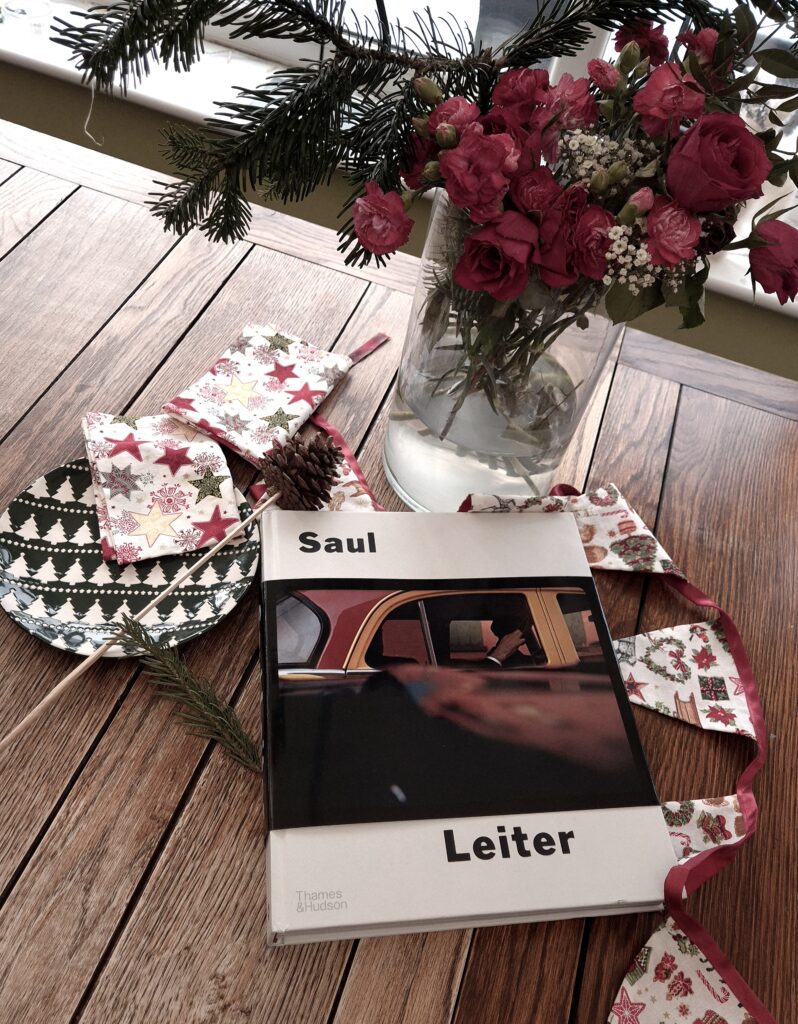
Then Christmas arrived, and two things happened to give me the kick up the creative derriere I so desperately needed. The first came in the shape of a beautifully wrapped, quite weighty gift, given to me by my daughters, which revealed itself as a stunning tome on the work of Saul Leiter. Now, whilst Leiter’s influence on photographers could be considered cliché, there can be little doubt that there is good reason for his popularity and impact. He embodies the idea that art should be separated from the artist—that he is a mere conduit for the work—and his avoidance of fame and the late celebration of his work has a certain romance to it. And his pictures are beautiful: simultaneously cinematic and painterly. Perusing the book, poring over every word and image, reminded me that photography has the power to infiltrate the mind, the body, and the soul.
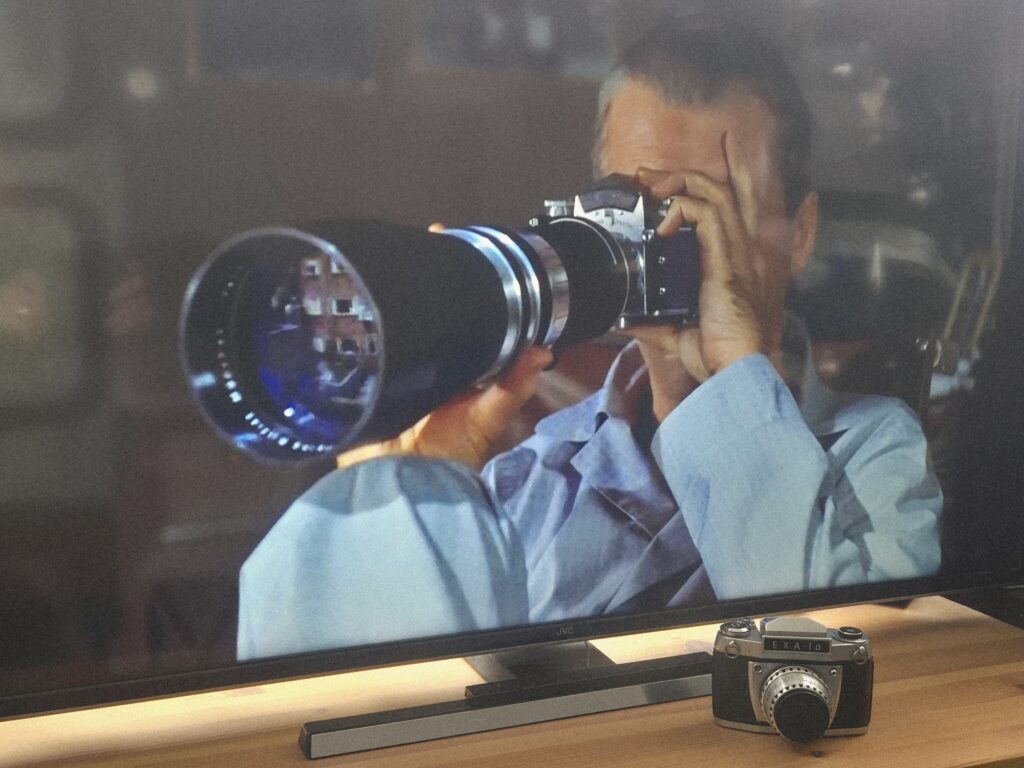
The second thing that happened was watching a rerun of Alfred Hitchcock’s Rear Window. Seeing James Stewart wielding his Exakta VX reminded me that I had an Exa Ia languishing in one of my camera drawers. I fetched it and once again felt that connection with the past that had brought me back to analogue photography in the first place, imparting as it does a feeling of great privilege in handling a piece of equipment from a bygone era, with its own unknown story. It is a beautiful camera and one that I had, up until then, never used. The germ of an idea began to form.
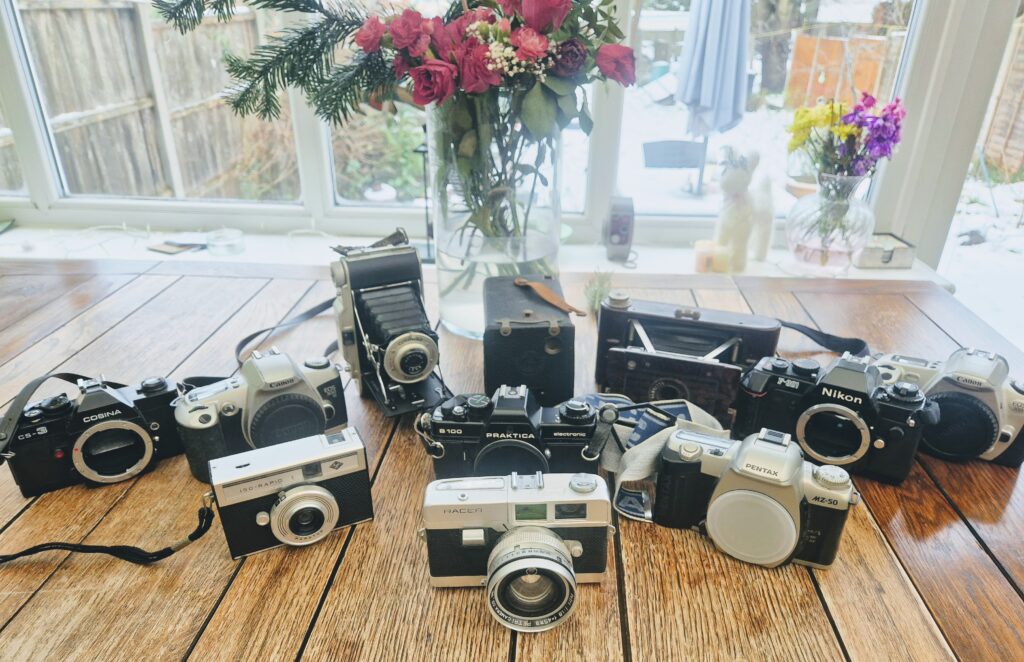
I kept the camera next to my seat and, over the Christmas period, I would open its musty-smelling leather case (this one really has that vintage aroma), take the camera out, and just admire it. I don’t quite recall where I acquired the camera, but it was either gifted to me or, most likely, picked up on one of my old eBay camera trawls. I began to ponder all the other cameras that were lying pitifully in the drawers. I suddenly felt an affinity with them and a sharp pang of guilt at neglecting them. I know all too well how it feels to be in darkness, and the fact that the raison d’être of these poor souls is so inherently linked with light made their plight all the more pathetic.
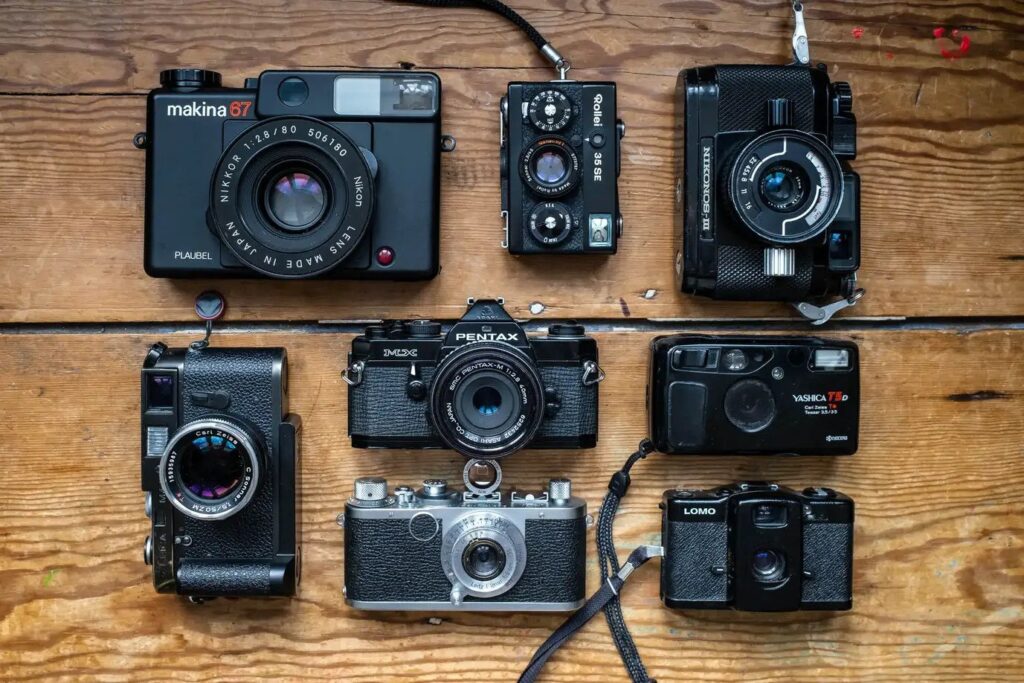
My wife always tells me I have too many cameras and, during my ‘acquisition phase’, would sigh meaningfully when there was a knock at the door, the postman handing over another camera-sized package. She is, as ever, absolutely correct, and I do need to thin them out—but why not test them first before deciding whether to move them on? And so my little project was born: a roll of film through each redundant camera. I began to feel a frisson of excitement at the idea, something I’d not felt for quite some time, and I even began to search for analogue-based websites, which is when I happened upon 35mmc, and the idea of documenting the project was developed.
These articles will be my reviews of the abandoned cameras, as well as a journal of the creative process and its effect on my mental health. There will be no Contax or Leica, no Hasselblad or Mamiya; they will be consumer level, cheap and cheerful kits and compacts. I will use the same film, which will have to be affordable, considering I’m going to be out of work very soon! I’ve decided on the excellent and very affordable Ilford FP4 Type 517 from Analogue Cameras for the 35mm cameras; although shooting at ISO 100 will be a tad limiting, it will be an interesting challenge. For the few medium format cameras I have, I will use Fomapan 200. For consistency, I will self-develop all film in Bellini Hydrofen and scan it on an Epson V600, with minimal adjustments made in post-processing, limited to dust removal and the odd tweak in shadows and highlights.
That the Exa Ia would be the first camera on the list was obvious to me, but first let’s pause and take a moment for the ones that didn’t make it: the cameras too far gone, the ones beyond my skill set to repair… may they rest in peace.
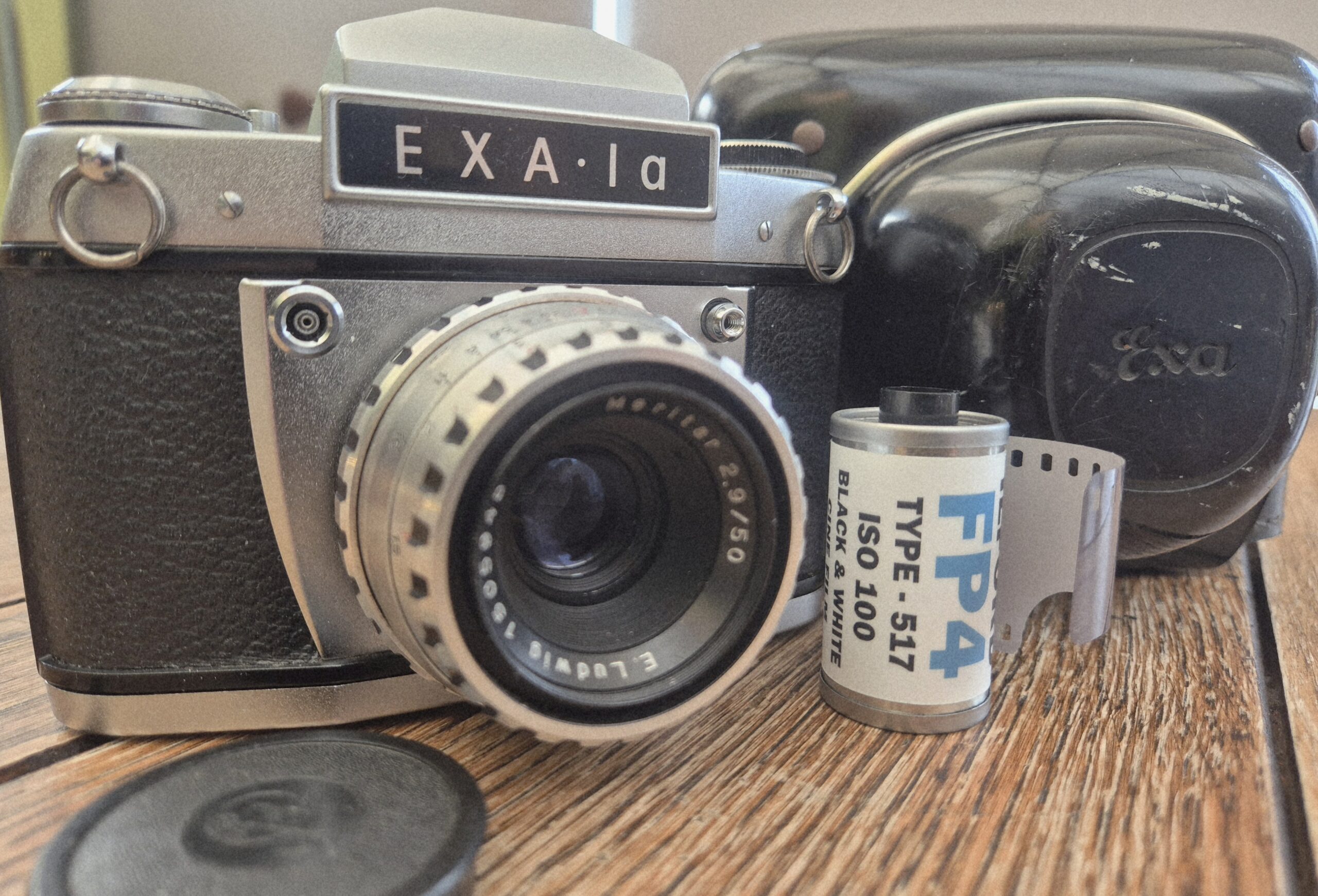
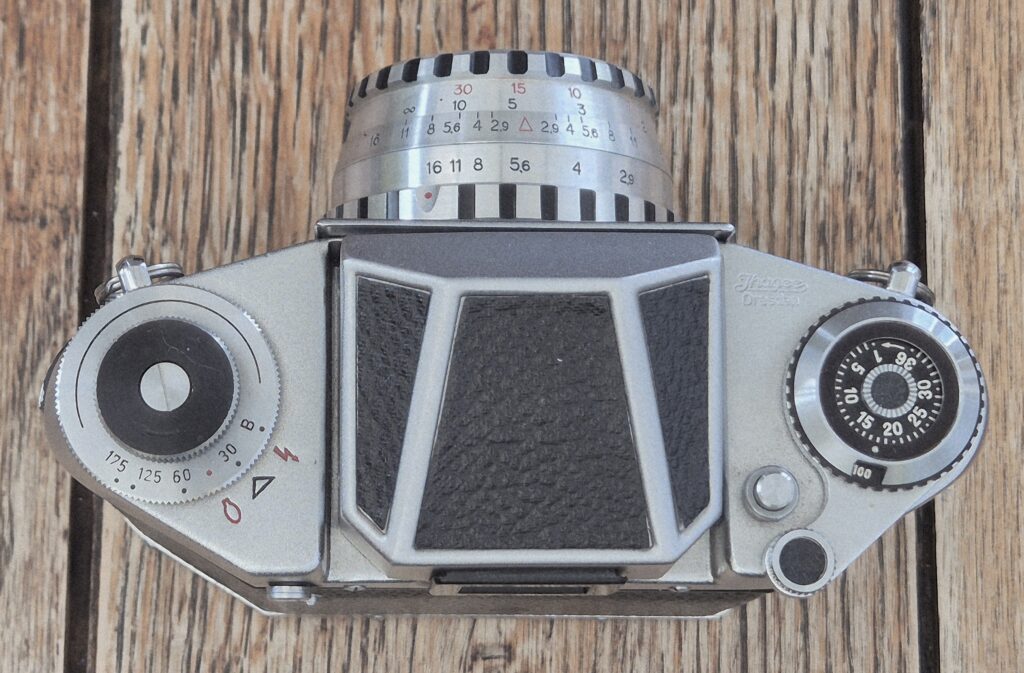
And so to the Exa. The Exa Ia models were made between 1964 and 1977 by Ihagee Dresden and were released as an entry-level version of the more professional Exaktas. A quick search on the excellent archive of Andrej Wrotniak’s website revealed that my camera was of the second iteration, manufactured between 1967 and 1977—probably late ‘60s judging by the serial number (237270).
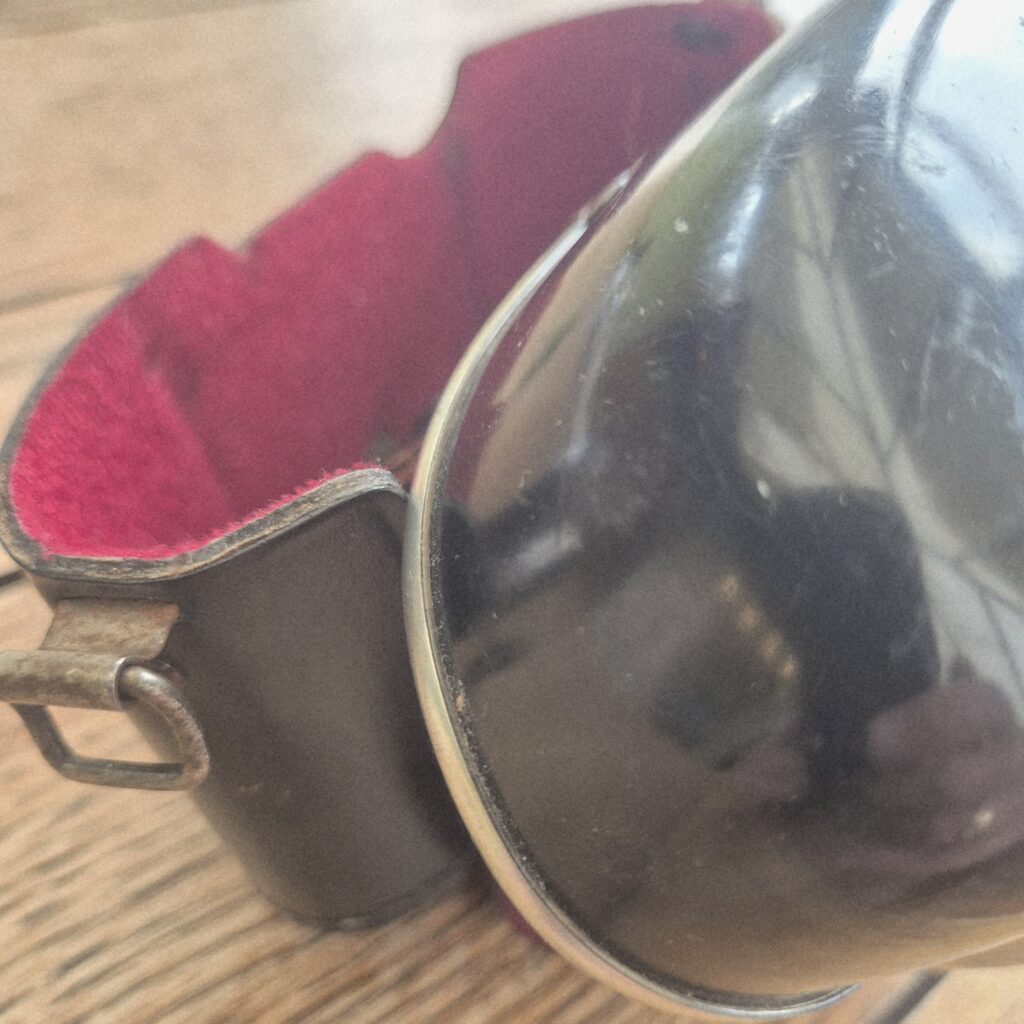
The leather case, apart from being rather stinky, is very well made and tough, offering good protection to the camera. It has the usual screw attachment in the bottom to hold the camera firmly in place via the tripod thread. The interior is a red velvet-like material, which is in surprisingly good condition.
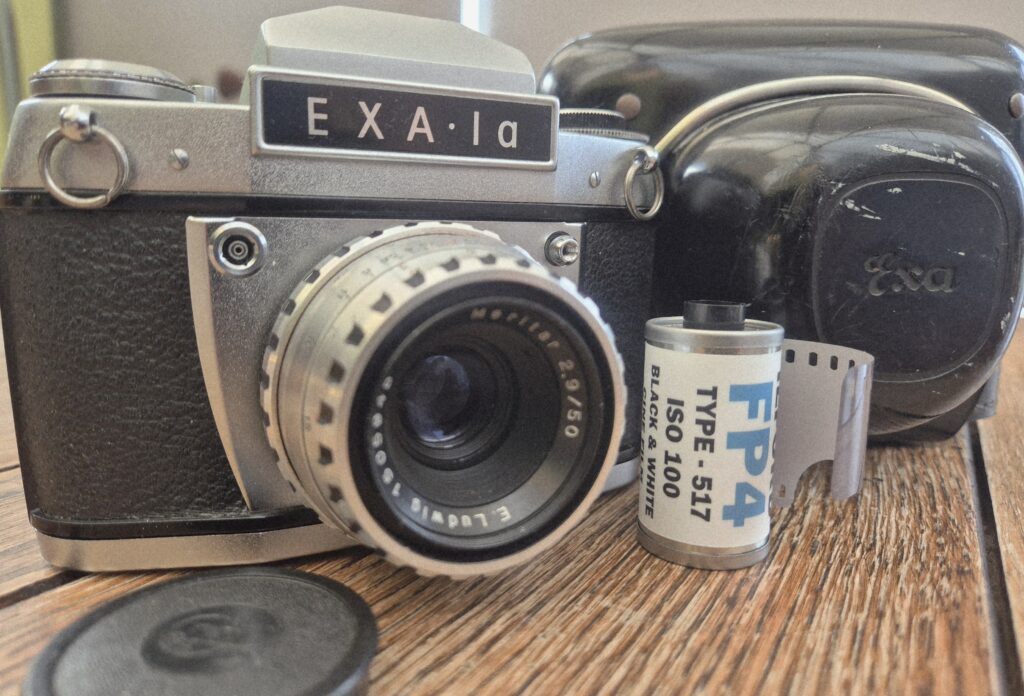
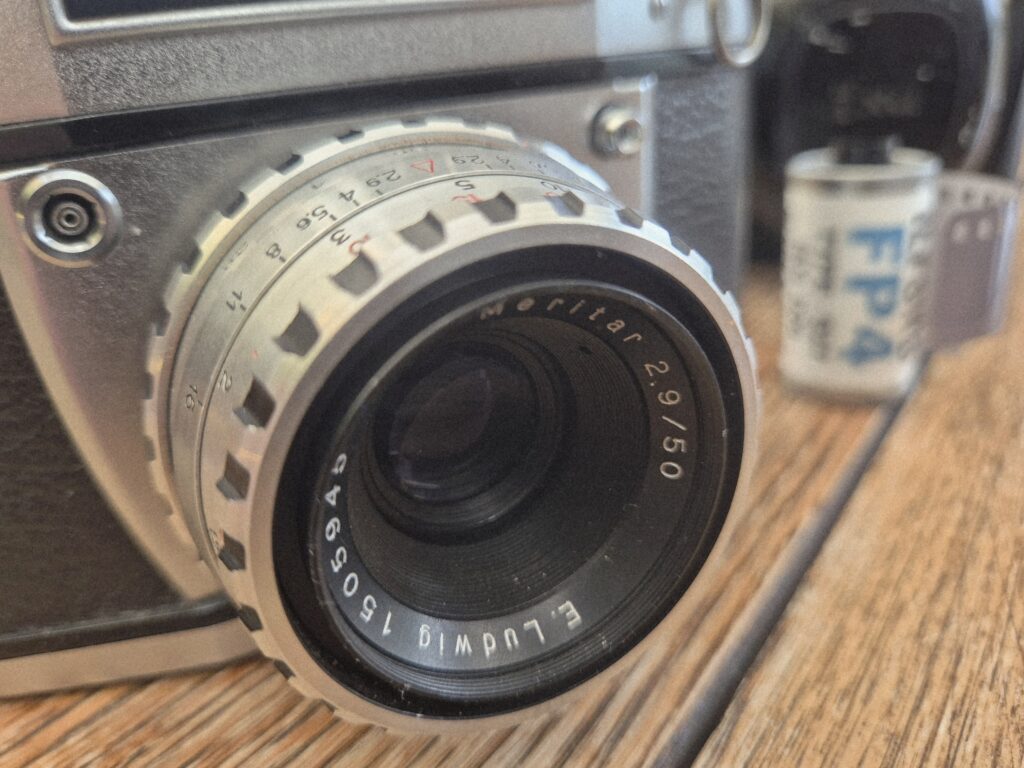
The Exa Ia originally came fitted with a waist-level viewfinder. At some point over the past 50-odd years, this was replaced on mine with an eye-level prism finder, which is not particularly bright but is perfectly usable. It is equipped with an E. Ludwig Meritar 50mm f/2.9 lens – ‘a tiny gem with a big personality,’ according to Pentax Forums – which I believe was bundled with the camera. The fact that this lens ceased manufacture in 1968 is another reason I suspect the camera is a late ‘60s model. It is a triple lens design, the ‘Cooke Triplet’ from the late 19th Century, with three elements in three groups. Mine does not have the red ‘V’ imprint, which would indicate a coated lens.
The camera is a quirky little fella, and it took me a while to figure out how to remove the back in order to load the film. Instead of a hinged back, there is a circular plate at the base of the camera that needs to be rotated, then the whole back slides off. Loading the film is likewise a little unfamiliar, with the take-up spool needing to be completely removed in order to wind on the film leader.
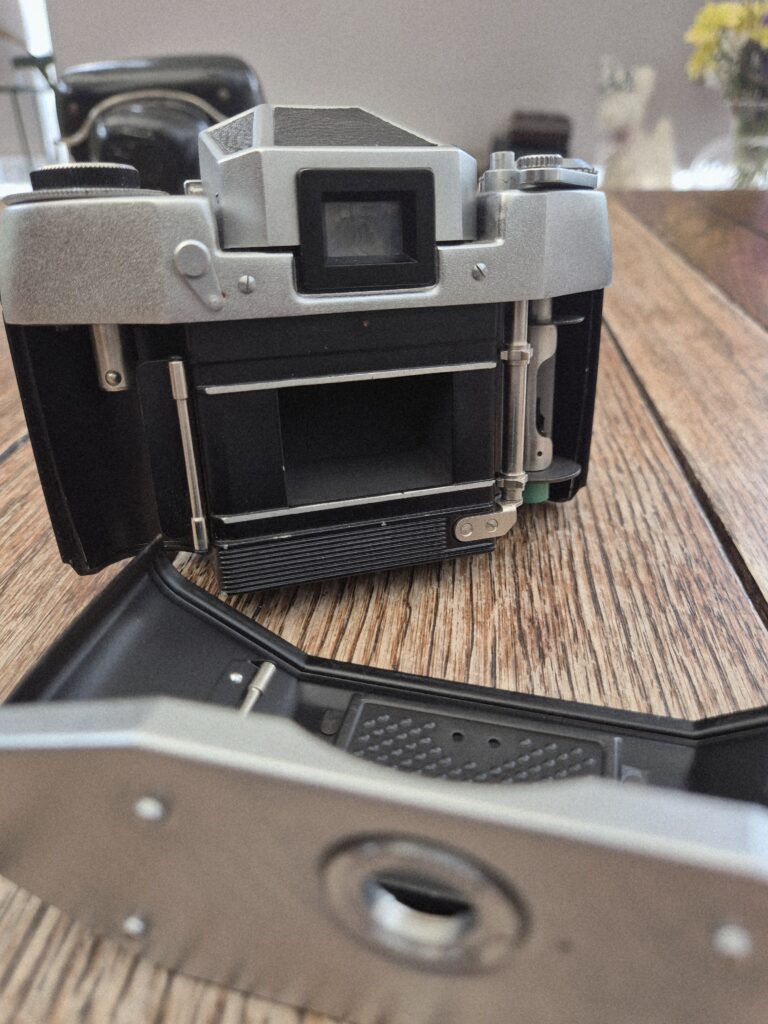
With the film loaded, the back slid into place and the frame counter reset, I felt a strange sense of purpose. It is a very small thing to load a camera with film, but it had been some time since I’d felt that anything I did was worthwhile. Up until the point of my resignation, even my teaching was devoid of meaning as I felt so useless, so inept, so utterly incapable. Anxiety, stress, depression… they strip away any sense of self-worth, any notion of doing something beneficial and positive. But just taking this tiny, once-familiar step gave me a thread of meaning to which I could cling.
The Exa now felt different in my hands—no more a musty relic of a neglected hobby, no more a long-forgotten whimsy of a drunken eBay bid, but a tool for recovery. Analogue photography forces one to slow down, to think, to be present in the moment. For someone trying to quiet a noisy mind, that focus is a gift. I just hoped that both me and the camera could maintain our focus…
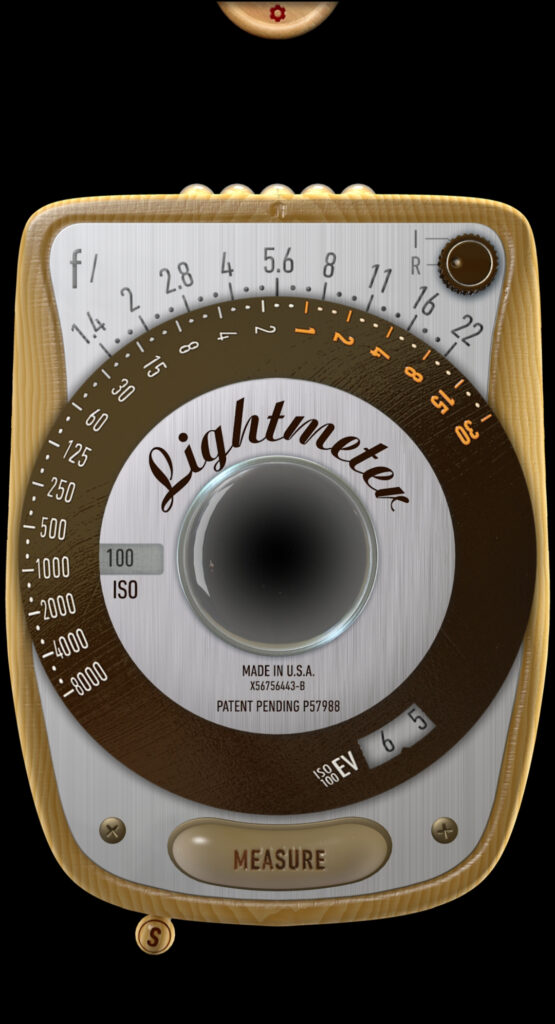
There is no metering system, so I used the Light Meter app by David Quiles on my phone. The vintage look of the app seemed fitting, and although I’d toyed with the idea of using my old Gossen Super Pilot meter, I felt it was a little untrustworthy and was perhaps one variable too far.
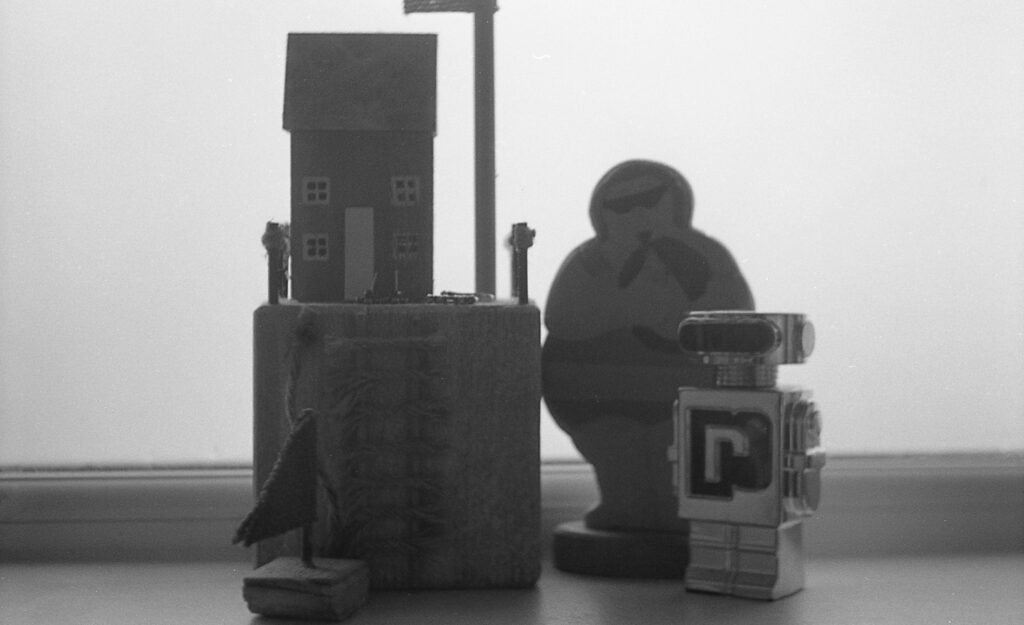
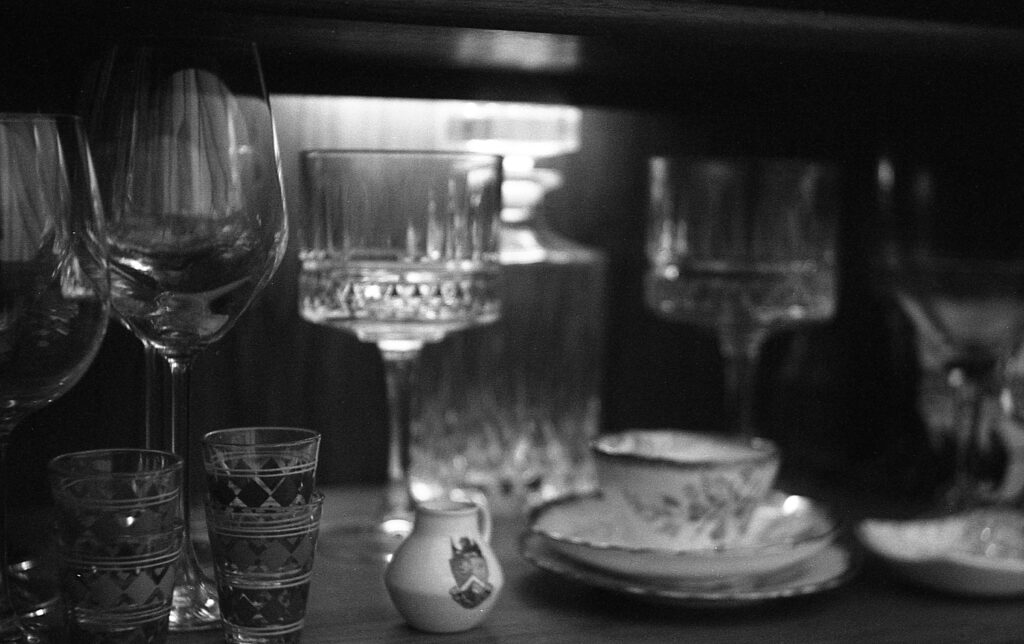
I had a problem, however. At this stage, my paranoia and anxiety were actively playing the role of gaoler, keeping me pretty much confined to my house. My immediate vicinity offers little in the way of inspiration, so what to photograph? I searched the house for subjects and came up with a few options.
The limited shutter speeds and apertures were proving a challenge, as was the idiosyncratic layout of the Exa. The shutter release is on the left of the body, which is very counter-intuitive, particularly if one is used to focusing with the left hand. It requires a nifty little flip of the fingers to get into position; the idea of focusing with my right hand never occurred to me until this very moment! Old habits indeed die hard.
On the subject of focusing, there seems to be little leeway with the Meritar and I found it difficult to ascertain whether my subjects were in focus; everything seemed to err towards infinity. The lens itself is quite loose on the body, and whether that is the norm, a quirk of my particular model or a misfitting of the lens on my part I am unsure, but I was concerned that it may not be correctly coupled. The choosing of an aperture is likewise very loose, having expected a nice solid click. Nothing I tried seemed to fix the issue, so I decided to go with it and see what happened. After all, this exercise is about process rather than outcome, and I have referred to myself as wobbly over the past few months, so I felt a natural bond with the Meritar. The lens has a reputation for softness, but is one that ‘embraces its flaws’ (Pentax Forums). Perhaps it could teach me something in this field?
I had some fun taking a few snaps around the house, but quickly ran out of ideas and seemed to hit another wall. But it was a start, and my use of the word ‘fun’ is a big step forward.
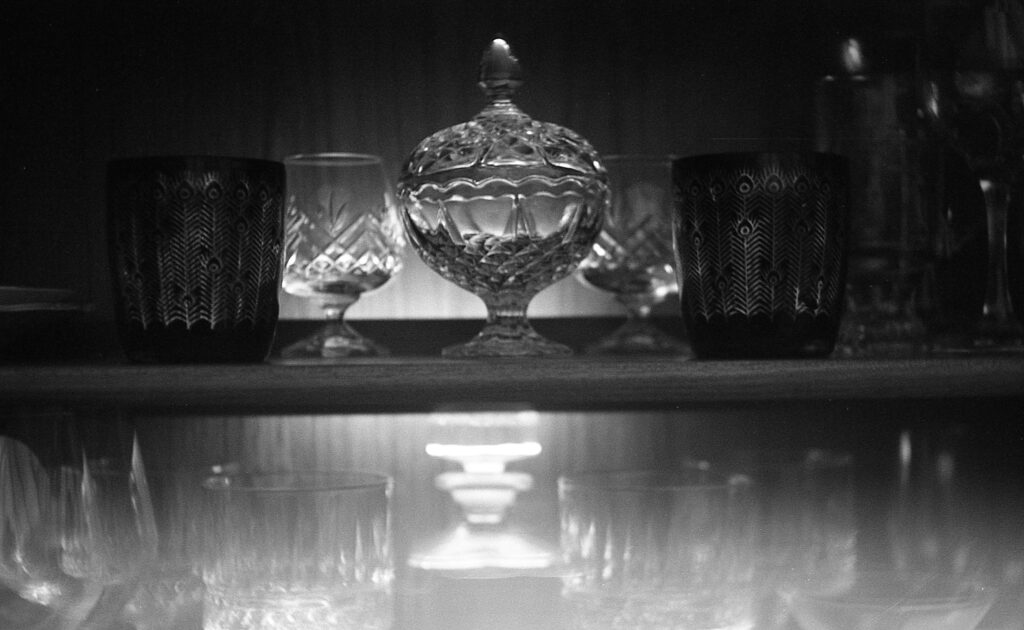
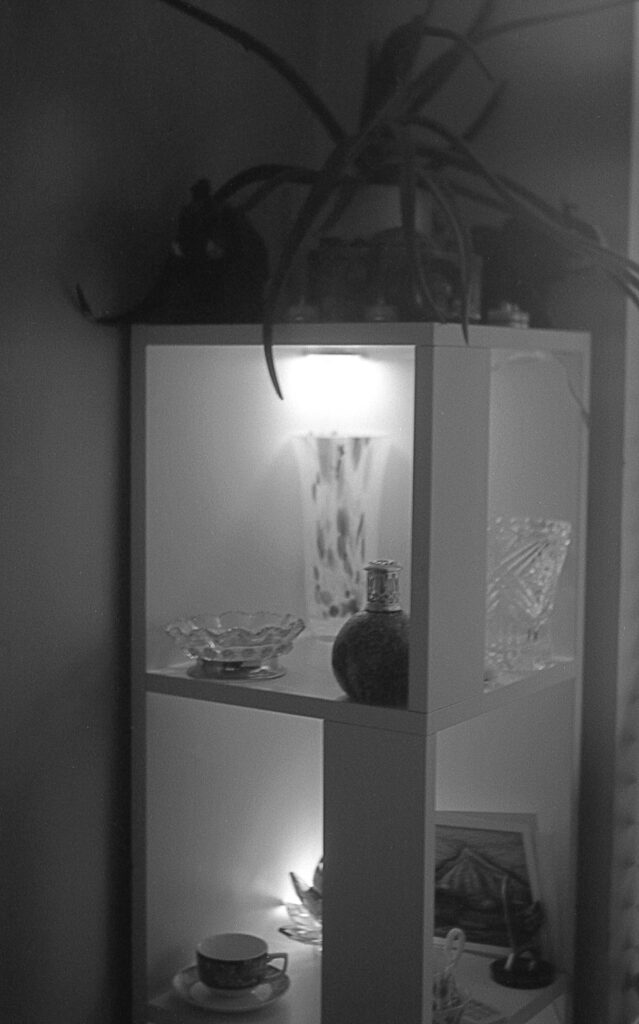
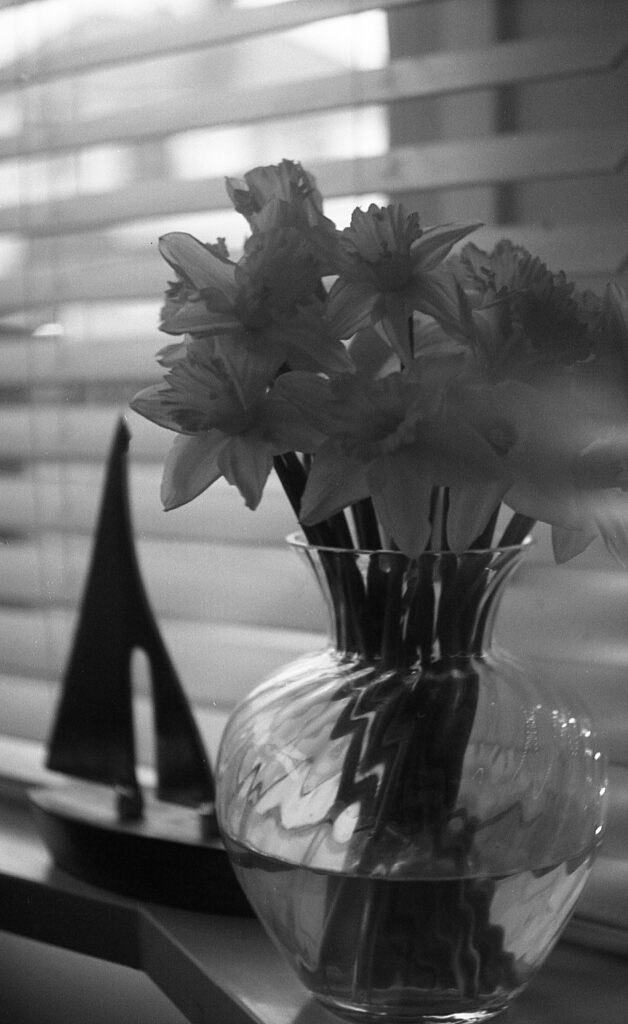
I won’t go into what other steps I am taking in my rehabilitation, but suffice to say I awoke one morning in the middle of January with a desire to get outside. It was a cold, frosty morning and the sky was clear and blue. I decided to try to play golf – just nine holes – and, of course, the Exa found a space in my bag.
My golf game was not great, but as with the camera experiment this was not the point. It was a significant moment in dragging myself out of the pit into which I’d crawled. There were few people around, members sensibly choosing a warm bed over frozen fairways. As my lungs filled with the crisp air on the first tee of the Hampton course, Stonebridge Golf Club, Meriden, I experienced a sense of well-being I’d not felt in some considerable time. With no golfers following me, I felt no pressure or compunction to hurry, which was exactly what me and the Exa needed. Each shot I took, both with club and camera, brought me into the moment, forcing me to slow down, to concentrate on just the matter at hand, something on which I have been urged to work in my therapy.
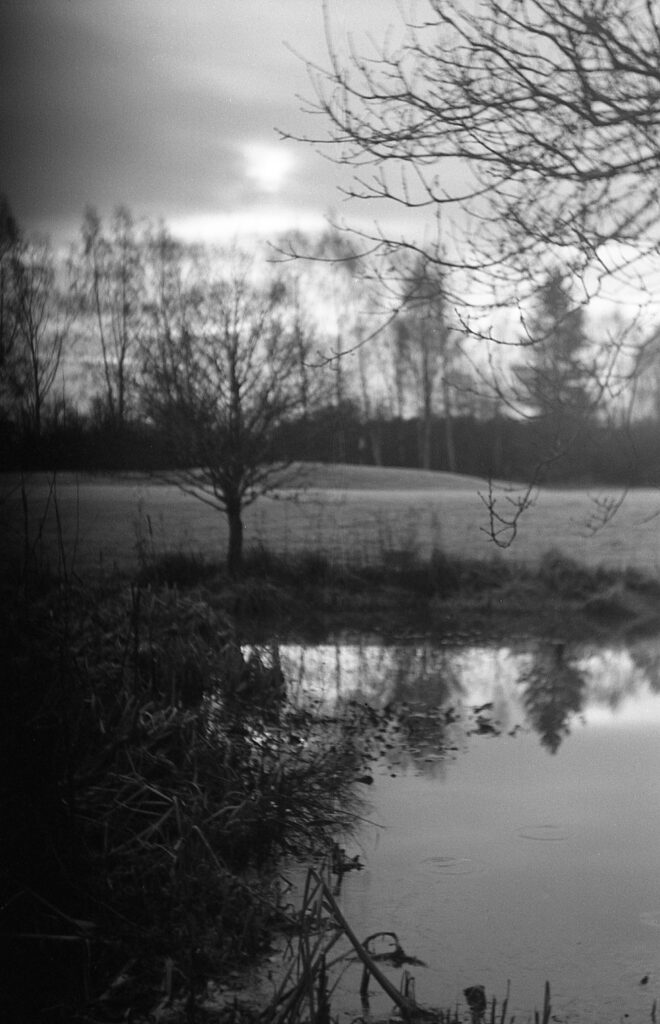
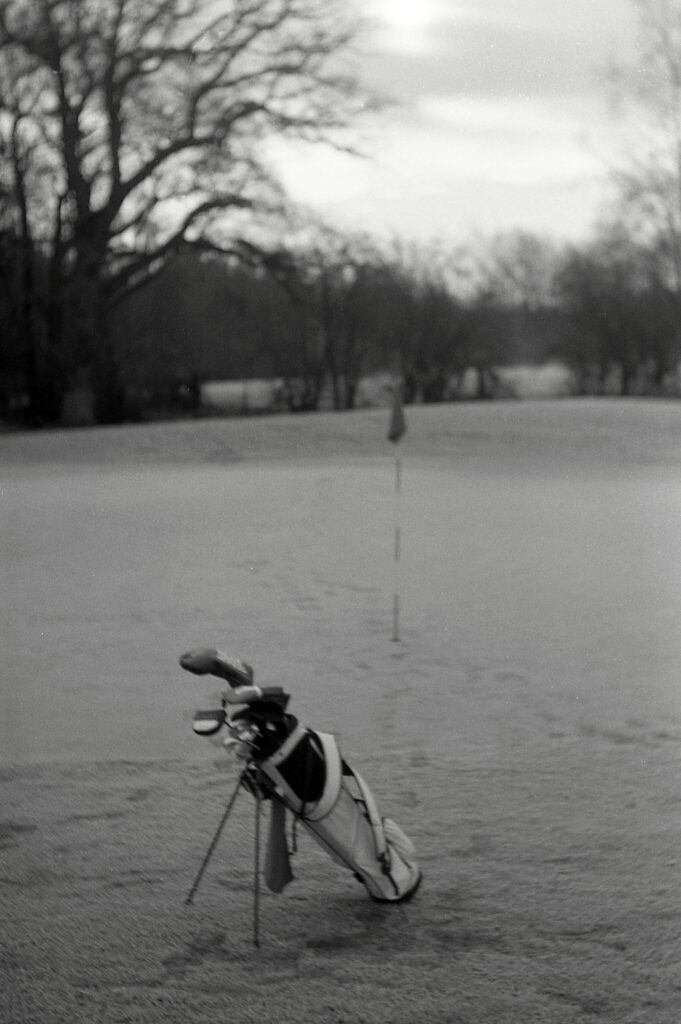
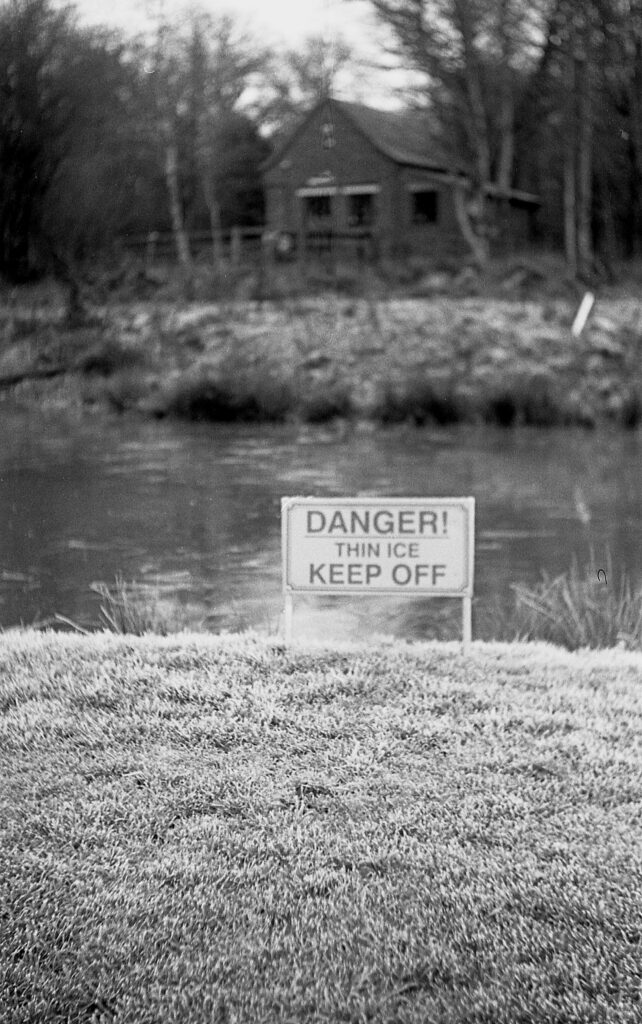
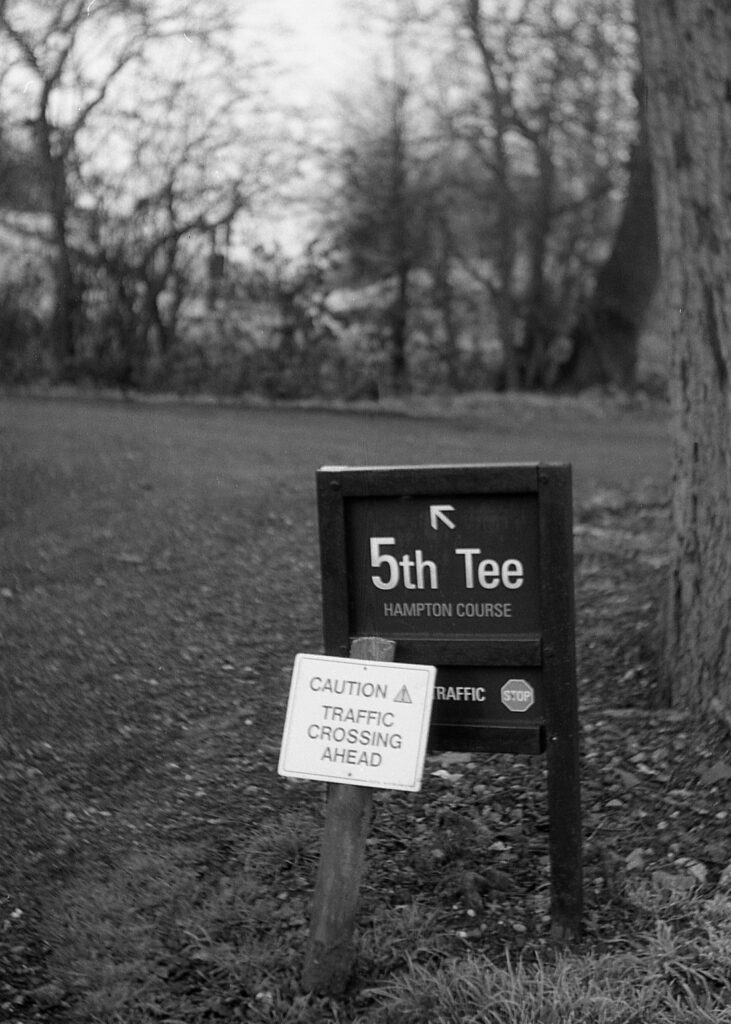
With the roll finished, I was keen to develop it to see what I had. I hadn’t realised, however, how low I was on Hydrofen! A panic order made for the next batch of film, I was pleased to find there was a mere 2 ml more in the bottle than I actually needed. Phew!
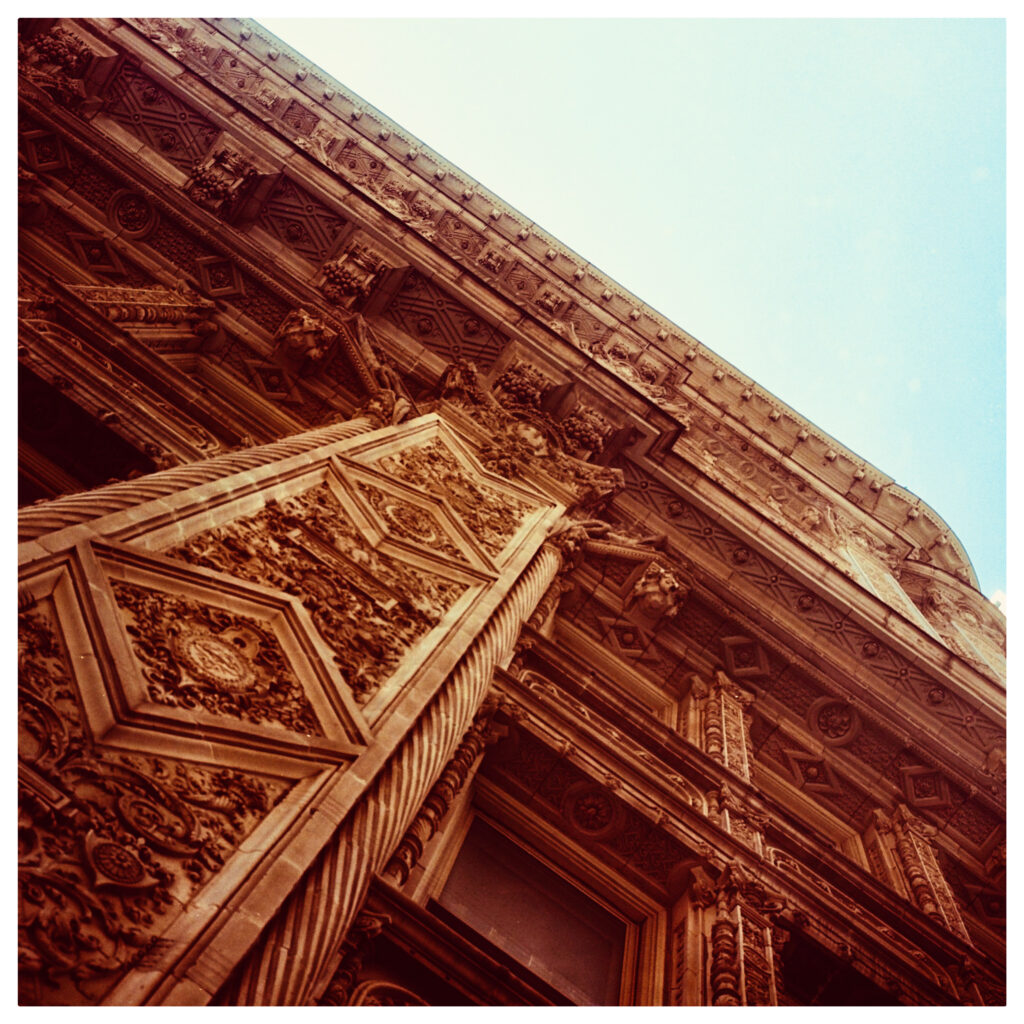
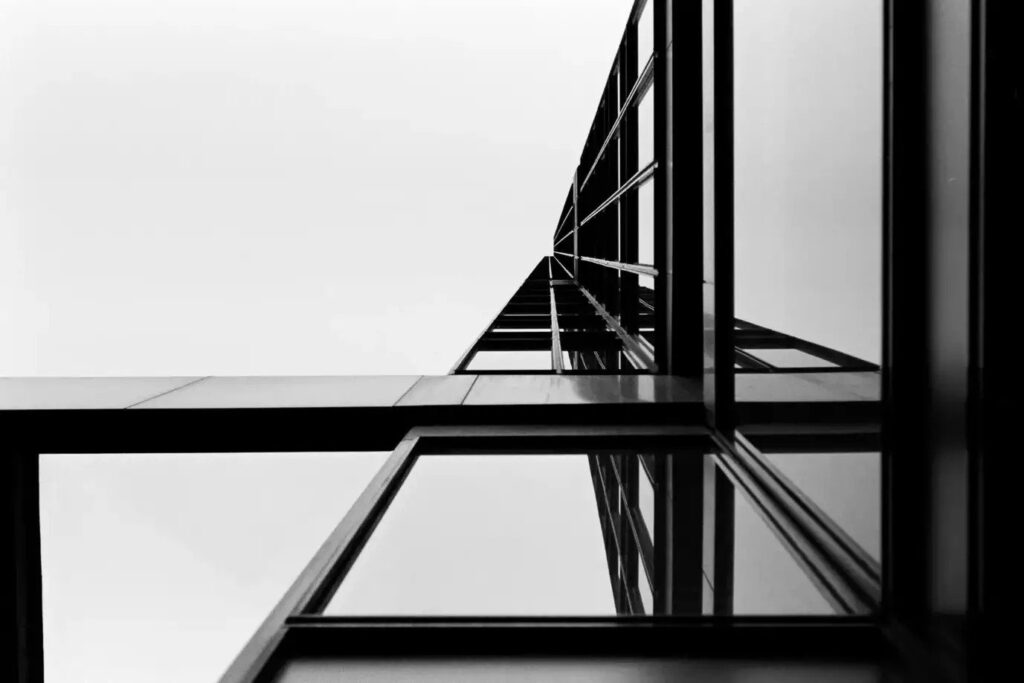
I used the Massive Dev Chart timings for FP4 at 100 ISO, which is 5’ 15”, with agitation for the first minute, and every 30 seconds thereafter for 10 seconds. I was very pleased that the great excitement I always felt when I open the Paterson tank and look at the roll for the first time remained. At first I thought I had a blank roll, as there were no visible frames, and my heart sank a little. Strangely, although I was disappointed, I was able to contextualise it as part of the process and accept it as such. However, on unrolling the film I saw that although there were quite a few frames that hadn’t come out, there were certainly some images. Whether this was a fault of the camera or my operation I am unsure, but I suspect it was in the metering of specific frames and in overexposure. I also noticed some light edges on some of the negative frames and, sure enough, in scanning there were some that had a very dark edge on the left hand side. Overall, however, I was pleased with how they developed, and it shows that the camera has some life in it yet.
Whether I keep the little Exa is something I am yet to decide, but I am extremely grateful to it. The lens embraced its flaws, as promised, and it helped me to do likewise; it may have been wobbly, but it was able to deliver what was expected of it to the best of its ability. The camera itself, despite of or because of its quirks, helped me to slow down, to consider. This is not the greatest set of photographs I have shot or will ever shoot, but they are of significant importance to me.
Did my experiment help? Am I fixed? Of course not. I feel I still have a long road ahead of me towards recovery, and there is certainly no magic wand to bring me back to ‘normality’. But I strongly believe that being in touch with something creative, rediscovering an activity I’d previously loved, forcing myself to be in the moment, to discard external thoughts even if just for a short while, will undoubtedly be a support to me as I move slowly forward. The writing of this article has likewise forced me to focus (look out for the photography puns throughout, gentle reader), and I hope you will indulge me in further reflections and reviews in the future.
Share this post:

Comments
Stephen J on Out of the Drawer and Into the Light: A Journey of Recovery and Rejuvanation
Comment posted: 03/03/2026
Seriously though, keep going squire and your depression will abate eventually.
Good luck.
Comment posted: 03/03/2026
Ralph Turner on Out of the Drawer and Into the Light: A Journey of Recovery and Rejuvanation
Comment posted: 03/03/2026
Comment posted: 03/03/2026
Comment posted: 03/03/2026
Paul Quellin on Out of the Drawer and Into the Light: A Journey of Recovery and Rejuvanation
Comment posted: 03/03/2026
Comment posted: 03/03/2026
Scott Ferguson on Out of the Drawer and Into the Light: A Journey of Recovery and Rejuvanation
Comment posted: 03/03/2026
Thanks so much for sharing your experience, both in terms of your re-entry into photography and for lack of a better word, re-entry into 'life'. I wish you the very best on both fronts, and I think it's not surprising that they are interrelated. My re-entry into film still photography was through a fortuitous gift to my son, but I ended up with some long out-of-use cameras that fell into my lap out of the blue and opened up a great passion for me. I too find that doing photography has wonderful benefits, both in terms of physical and mental health. For me, there is something meditative about tuning into the process and focusing my mind on trying to capture a 'telling moment' on film along with the attendant simple yet rigorous technical demands and decisions that go into making a good photo. I also find myself getting out and about and into the world far more now that I have a passion for photography than I did before I got the cameras, so it's good for mental and physical fitness. I also struggled with a lot of technical issues and lost frames when I first started shooting again, but I was working with fairly collectible gear that still has professional people out there who can service them. (I shoot with a Hasselblad and a Leica -- cameras that I would have never dared to purchase for myself, but how I came into them is a bit of a story chronicled in my first post here on 35mmc -- https://www.35mmc.com/16/02/2025/shooting-leica-ms-and-a-hasselblad-500-cm-in-the-canadian-rockies/) I think your approach is wonderful and I like your focus on the process as much or more than the results. I will be very interested to follow the other cameras from your collection as you bring them back to life and out into the light. I feel the same about you...
All best,
s
Comment posted: 03/03/2026
Comment posted: 03/03/2026
John Andrews on Out of the Drawer and Into the Light: A Journey of Recovery and Rejuvanation
Comment posted: 03/03/2026
Comment posted: 03/03/2026
Walter Reumkens on Out of the Drawer and Into the Light: A Journey of Recovery and Rejuvanation
Comment posted: 03/03/2026
Regarding the camera, I don't entirely share Andrej Wrotniak's opinion. The original goal of developing the EXA series was to design a robust but affordable, full-fledged SLR camera alongside the legendary Exakta, which would allow users with smaller budgets to get started in SLR photography. It succeeded in doing so. It was primarily intended for the citizens of the GDR/DDR.
From 1977, the Exa series was expanded to include the Exa 1b model, which featured the same technology but with the more familiar M42 screw mount. I have this camera, although it spends more time in a drawer than in use, but I am very satisfied with the results I get with the standard Tessar 2.8/50mm lens from Carl Zeiss Jena. Alternatively, the Domiplan 2.8/50mm from Meyer Görlitz was offered, all of which came from VEB Pentacon over time. I have never missed the exposure meter, as I usually expose with reflected light metering anyway and love the light shaft on the camera.
I look forward to further articles.
Comment posted: 03/03/2026
Comment posted: 03/03/2026
John Eaton on Out of the Drawer and Into the Light: A Journey of Recovery and Rejuvanation
Comment posted: 04/03/2026
Comment posted: 04/03/2026
Niall Keohane on Out of the Drawer and Into the Light: A Journey of Recovery and Rejuvanation
Comment posted: 05/03/2026
David Pauley on Out of the Drawer and Into the Light: A Journey of Recovery and Rejuvanation
Comment posted: 06/03/2026
Echoing what others have said, I really appreciate your piece and can absolutely relate to the struggles you describe. My own "desert places," which will always be with me, are definitely more bearable when I have a camera in hand and a community of like-minded photographers to share my efforts with. Though I am the world's worse golfer, your post reminded me of a morning routine I developed during the first year of the pandemic when I would shoot nine holes each day just after dawn (before the real players arrived). There was definitely something peaceful and Zen-like about that routine. I enjoyed your photos and commentary on the camera, and look forward to reading more in the future.
Comment posted: 06/03/2026