

What started as an experiment out of curiosity has apparently become serious, or at least a lot more expensive: I’ve bought a “proper” Soft Focus lens, and I have a slight unease about the prospect that it might not be my last.
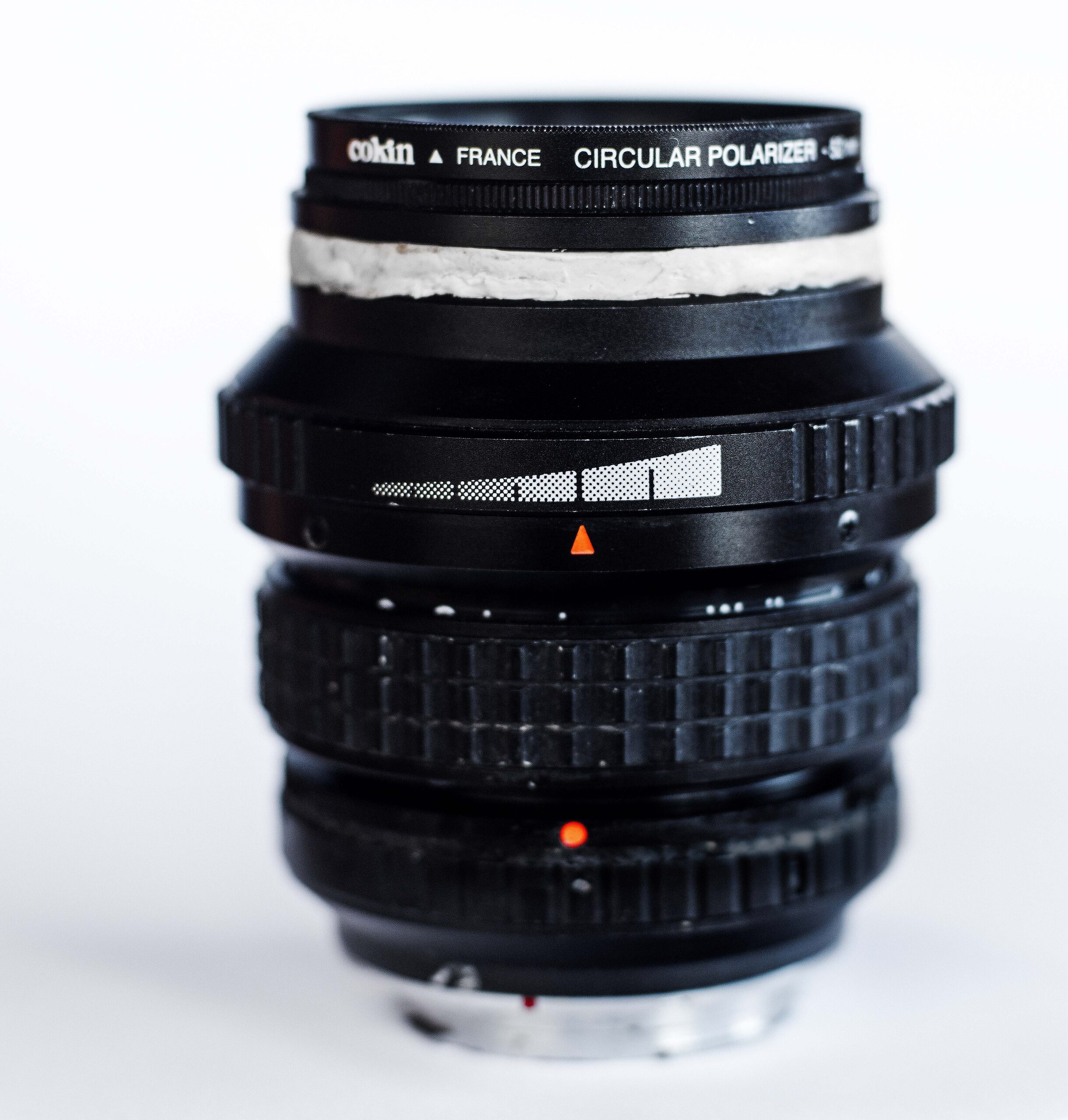
It’s the Pentax SMC 85mm f/2.2 from their SLR era, specifically from 1986, thus in K mount, and bearing the distinction of being one of the lightest lenses in this focal length range at 230g (although certainly not the cheapest at 250 quid currently, owing to its rarity).
That lightness is not surprising, though, since the lens contains just two glass elements and only very rudimentary mechanics: no autofocus, the aperture only stops to f/5.6, and the rest of the body, including the focus helicoid, is as subtle (but seeming also as sturdy) as a soviet water pipe installation.


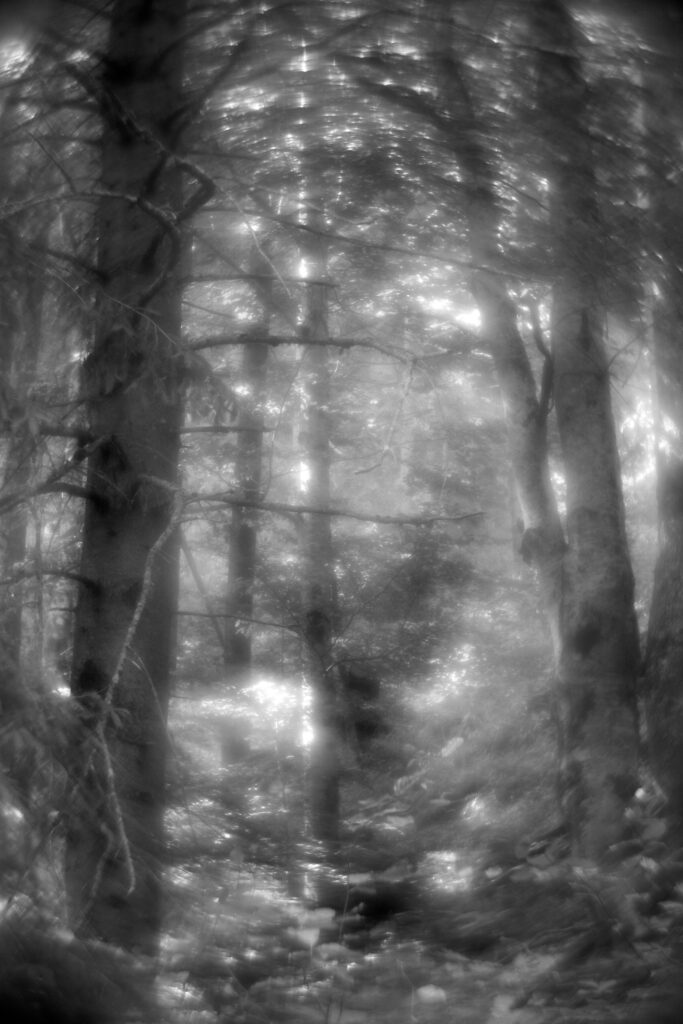
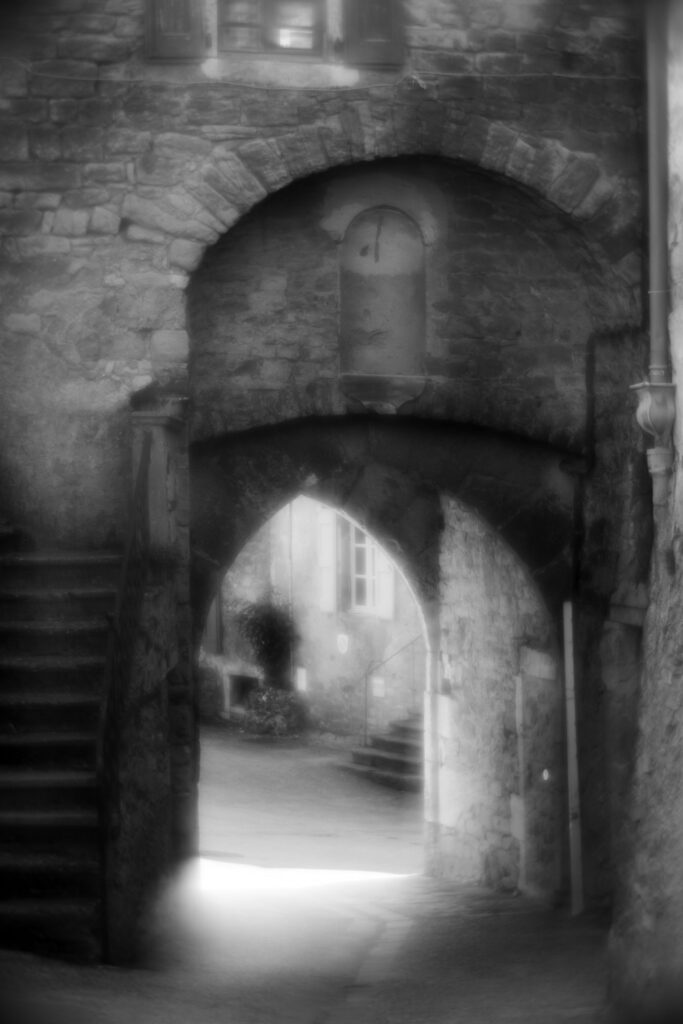
The aperture actually mostly serves to dose the softness, ranging from vast nebulous glow wide-open, to glorious swirl with glistening highlights by f/2.8, to a thinner glow mostly around bright objects at f/4, down to soft-vignette corners or what looks more like a bad regular lens at f/5.6. The travel between stops is wide enough to select any in-between values by sight.

And look at that rendition! There’s glow, swirl, reflection, abstraction, and an overall look reminiscent of a candy shop – love it or hate it. My personal favourite is around f/2.8, where the big wide-open sugar-rush-esque hit of sphero aberration is reduced – and complemented with actual character: We see a unique mixture of measured glow, veiled details, and indeed swirl! The latter is especially peculiar since (as elaborated in the linked article) soft focus lenses do not exhibit bokeh in the usual sense: subjects just show different degrees of detail and glow. But this lens manages to swirl this glow!
This character then changes further with selective focusing, as also demonstrated in the article: focus on, behind or in front of a subject yields three valid images (!!), yet with quite different renditions of the subject.
The Pentax’ rendition is the closest I have seen to the complex, pictorial, creative and outright ethereal softness qualities that were sought, and indeed found, by ancient soft focus photographers with their plethora of specialised lenses which proved that softness is a legitimate creative tool with infinite facets. Granted, due to sheer physics, these facets are much easier to obtain and elaborate on large format pictures than on the “small frame” 135 “full frame” format, and especially on digital sensors. Yet, most commercial full frame soft focus lenses (think Canon FD, Canon EOS, Minolta MD, Minolta AF, etc.) produce a glow character that I find boring and one-dimensional with no depth.
If only Pentax had given the lens a few more aperture petals to render round highlights even when stopping down! Instead, they turn pentagonal the moment you touch the aperture dial. Yes, one could build a Waterhouse style inlay, and given that the aperture freely sits behind the optics, one might actually succeed in shoving it up there permanently.
A more personal downside: due to flange distances, Pentax K lenses do not adapt to other SLR systems like my beloved Canon FD. It’s thus going to be a digital-only odyssey for me. Leica and Canon users should also be warned that all dials turn the other way! Focus from muscle memory thus is a disaster…
The lens itself, depicted above, is nothing like the ethereal beauty it is capable of depicting. I’ll admit that my own interference with it has not helped that impression, adding a polariser with putty because I happen to own four in 52mm but none in whatever the Pentax takes, and adding a Leica M adapter for use on my Evil where, for general compatibility, M has become the de-facto mount with a permanently attached helicoid adapter. My K-to-M adapter is not coupled, since even with coupling, it would remain impossible to judge the softness rendition on an actual rangefinder camera short of a digital Leica with live view. Since the lens does not even feature a distance scale or other orientation marks, any results would remain, ahem, lomographic, I guess.
The white wedge symbolises the aperture dial that doubles for softness dosing. On the other side of the lens is a scale with traditional numbers from 2.2 to 5.6; sadly they’re only printed on and have rubbed off. For reference: Sample 2 was taken at f/4, 4 at f/2.2, the others at f/2.8.
A final impulse for anyone tempted to participate in the Soft Focus Revival: try a polariser! It influences not just the reflections off of subjects, but thereby also the glow character around these reflections. As a result, it changes the picture even more dramatically than in regular photography. And as we have learnt, it can be affixed with putty.
Share this post:


Comments
Wim HH van Heugten on 5 Frames with the Pentax K SMC 85mm f/2.2 Soft Focus Lens
Comment posted: 03/12/2025
Christian Hogue on 5 Frames with the Pentax K SMC 85mm f/2.2 Soft Focus Lens
Comment posted: 04/12/2025
I have several spftfocus lenses large format and medium using the perforated ring inside the lens. My mamiya rb67 sf lens even has 3 different rings that can be inserted for various effect. But nothing as out as these images!!
I shoot a full frame,e nikon zf digital when not using film. Let's me see what im getting..
Good tip about the cpl I must try that