

This article is about three camera designs that all shoot 120 size film but look and feel totally different. These models produce top quality images at a cost less than Hasselblad. They are the Pentax 645N, Zeiss Ikon 6×9, and Rolleicord 6×6. Let’s look at the Pentax first.
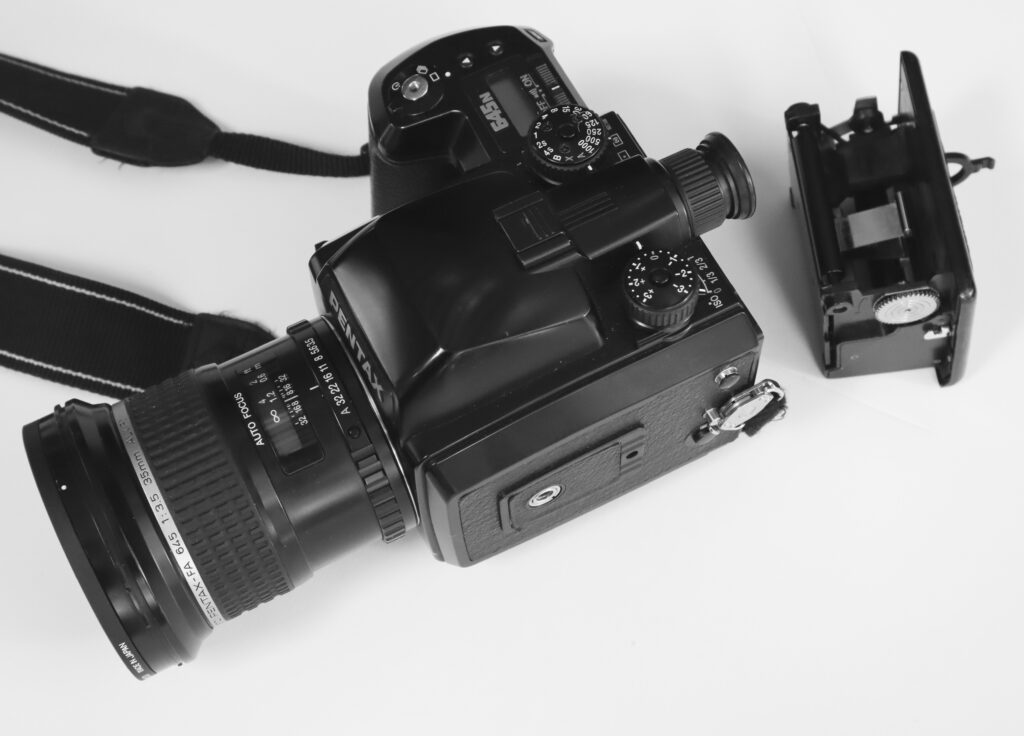
The Pentax 645N is the newest of the bunch, introduced into the US around February of 1998. It was a considerable upgrade from the earlier 645 because it offers autofocus lenses, intuitive top mounted controls, and more dependable construction. During the late 1990s I used Hasselblad EL cameras for my commercial work and was unaware that the Pentax existed. Now that I own a 645N, I realize I could have been happy with the Pentax 16 exposure 645 format, fast motor drive film advance, easy-to-load film carriers, accurate built-in light meter, and autofocus for moving subjects. There are a few minor drawbacks for the commercial photographer. You cannot switch film backs in the middle of a roll, so shooting several emulsions of the same shot isn’t possible. If you want a mirror lock-up you must upgrade to the 645Nii. On the bright side, a good light meter, 16 exposures to a roll of 120, and a variety of reasonably priced lenses is compelling. The prime lenses are SHARP. If you’re looking at a medium format system, include Pentax in your search.
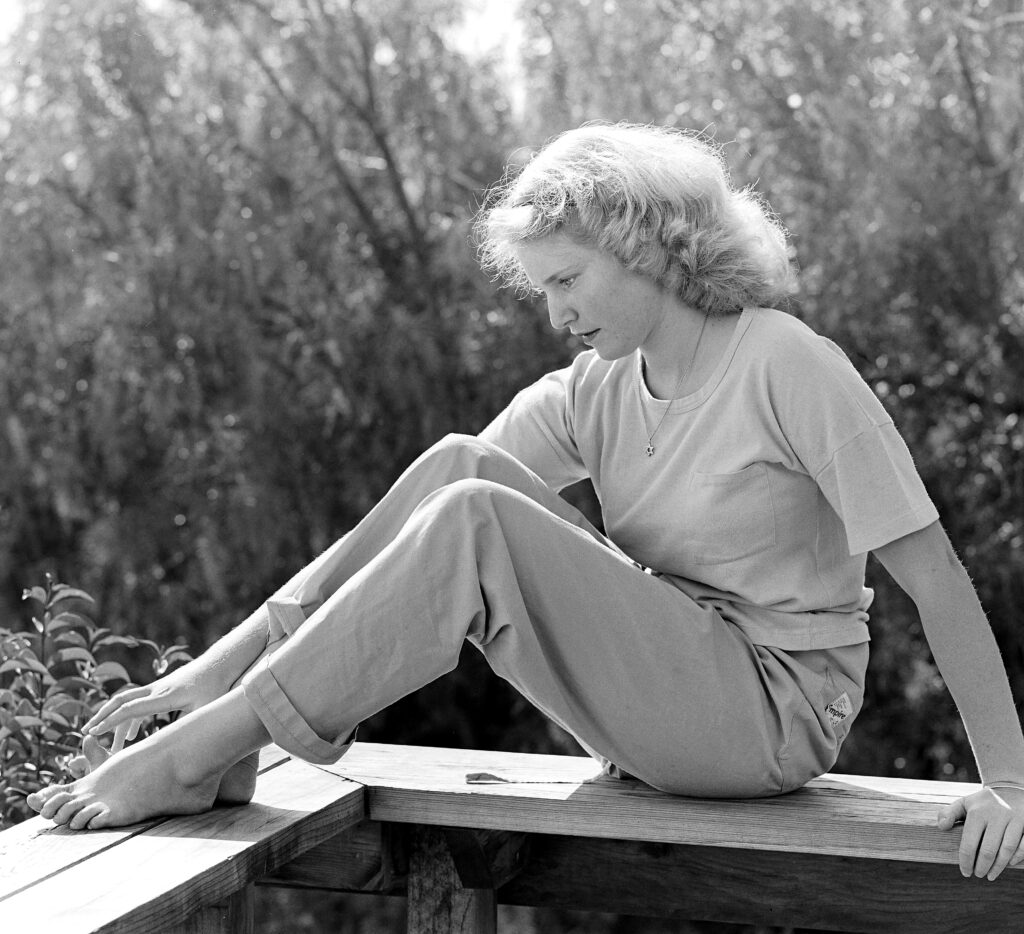
The following photos were shot on Ilford HP5 and processed in HC-110 dilution B. They were taken in May 2024 at ‘The 1852 Diggins’ event in Columbia, Ca. Some prints were sepia toned and colorized with oil paint. You’re looking at scans of prints.
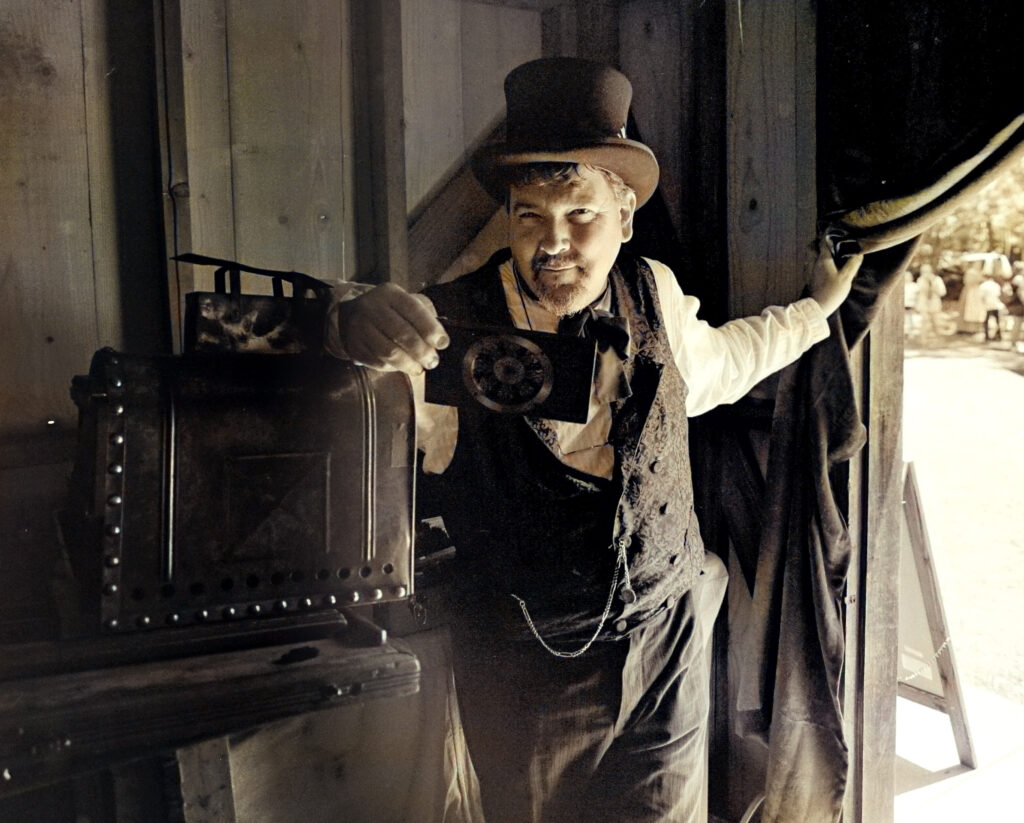
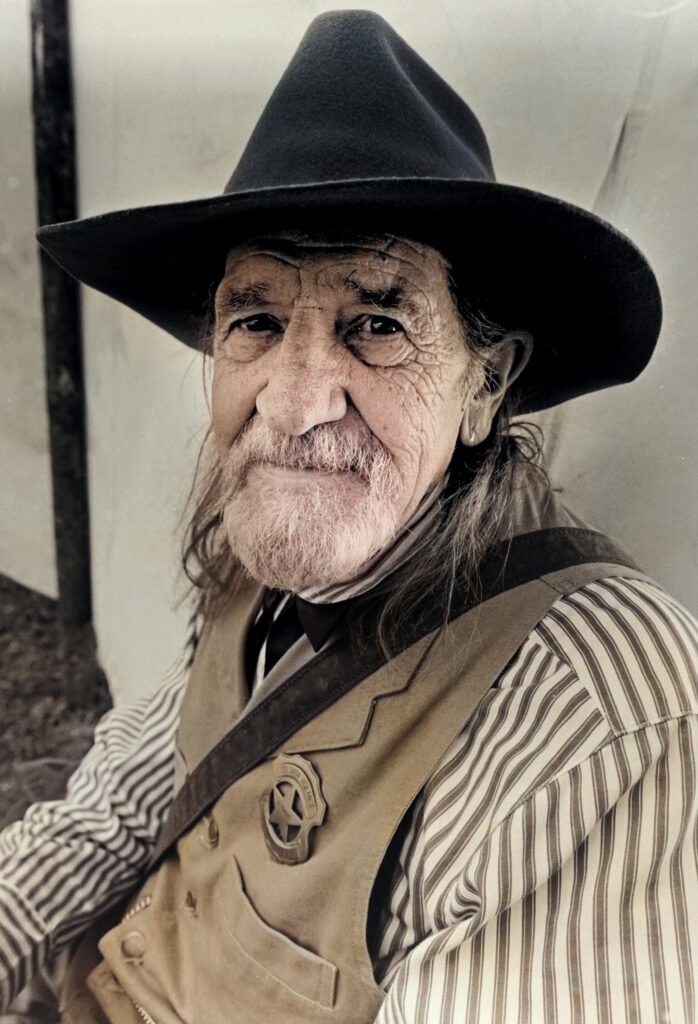
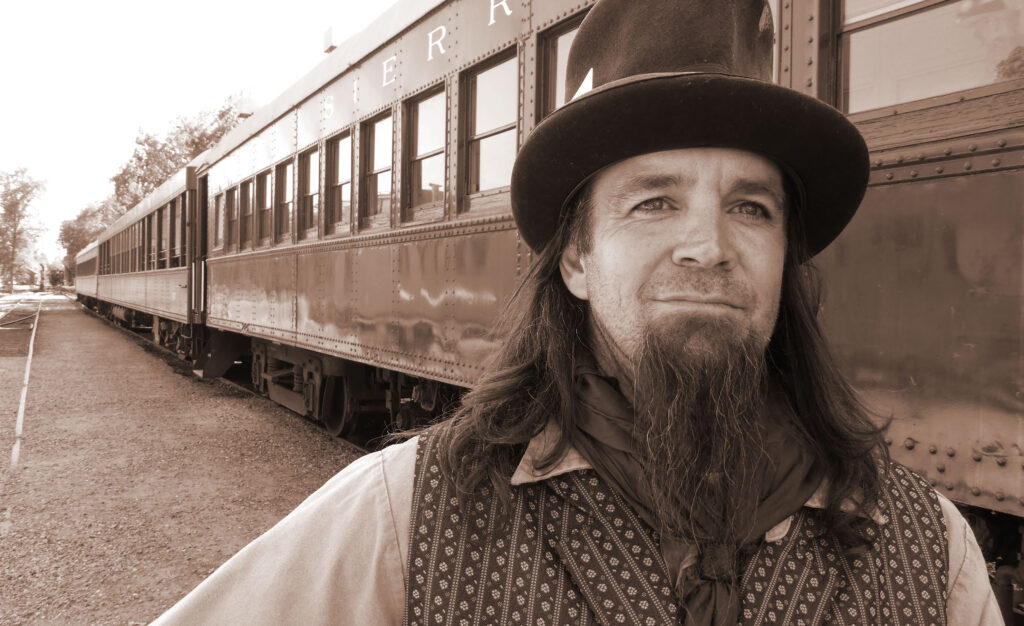
I love the look of the 35mm wide angle lens on the Pentax 645N. It’s a great combination for showing a face up close and also getting a look at the environment in the background. I’m just an arm’s length away from this model, so the big size and sound of the Pentax can be intrusive unless your subject is prepared. My strategy is to make contact with the subject and take three shots, moving closer each time while I coach them where to direct their eyes. “Just keep looking over my right shoulder,” works well. This shot was taken at the nearby Jamestown Train Station where popular films were shot including “High Noon”, “Back to the Future III”, “Unforgiven”, and many “Gunsmoke” episodes.
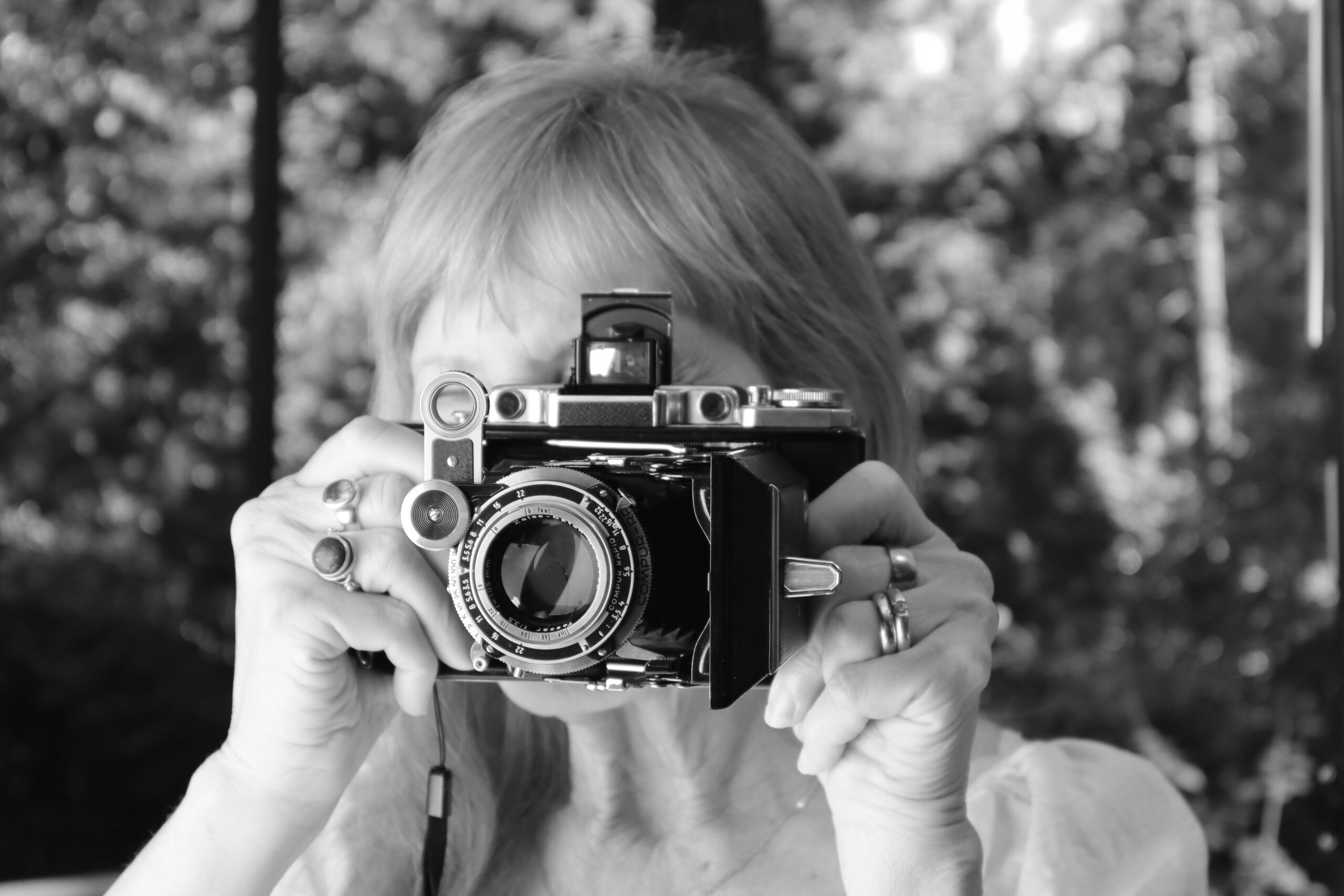
A year later, in May of 2025, I took two cameras to the same event at the Diggins and wandered over to the steam railroad station in nearby Jamestown again. One was a Zeiss Ikonta 6×9 (circa 1936) shown with my wife holding it.
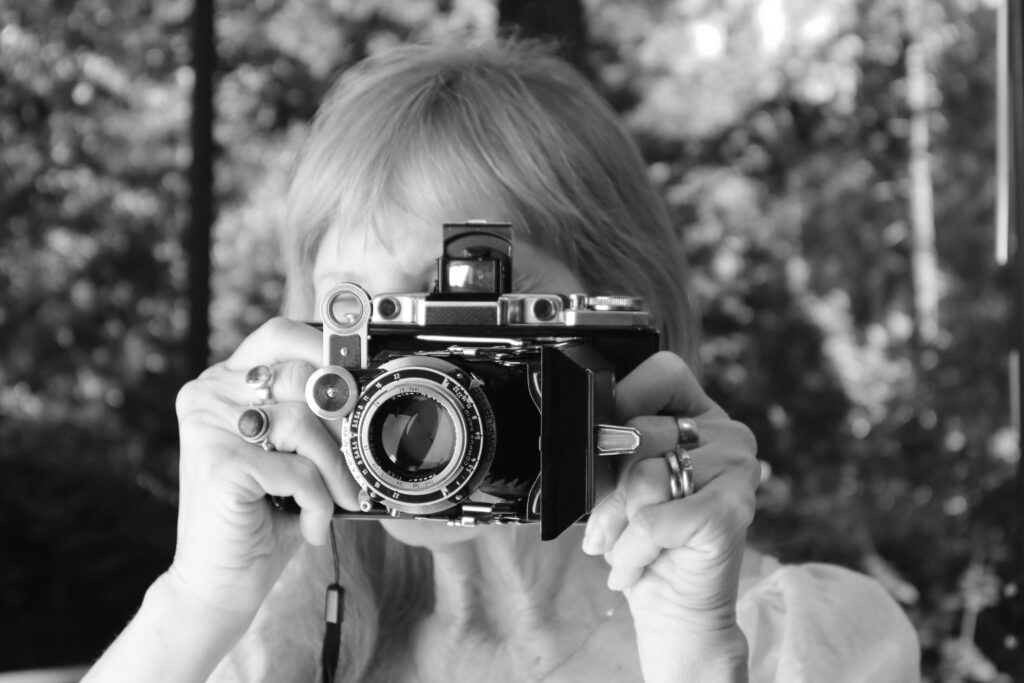
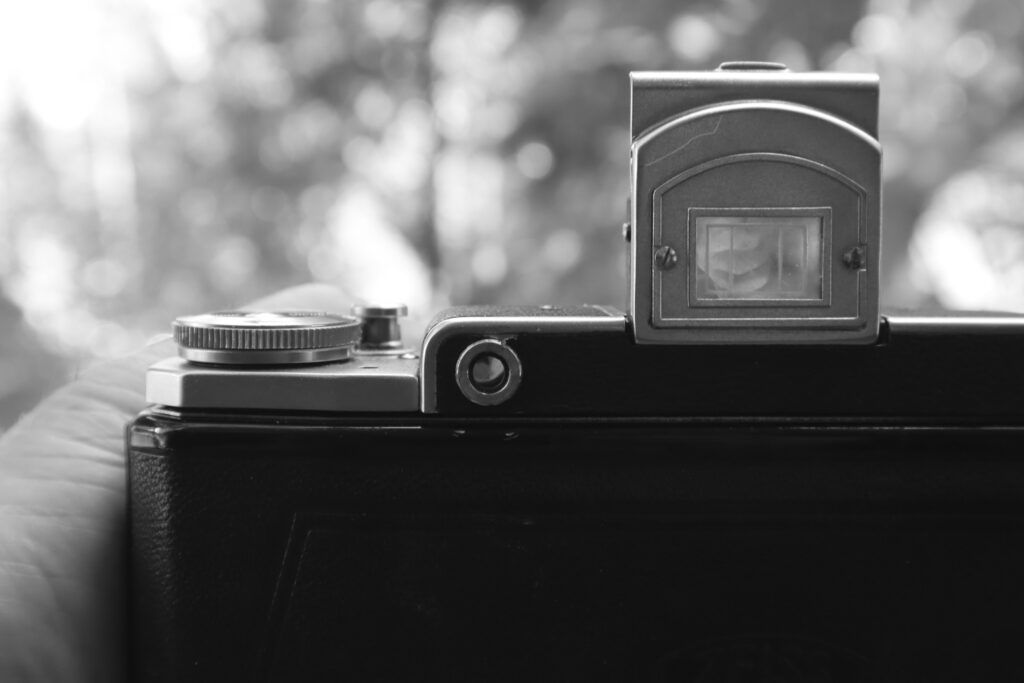
Lauren is looking through the viewfinder, which is used for framing after focusing is accomplished. It uses a 105mm Tessar lens. Film advance and shutter cocking are done separately. Focusing with the rangefinder is done through the tiny window, which is challenging in low light. Not as bad as a Leica IIIc, but difficult for fast shooting. I often depend upon zone focusing at f11-f/22 unless I’m on a tripod.
Here are some examples. All of these were outdoors and handheld. There’s no light meter, of course, so walking around with a meter to familiarize myself with the settings was necessary.
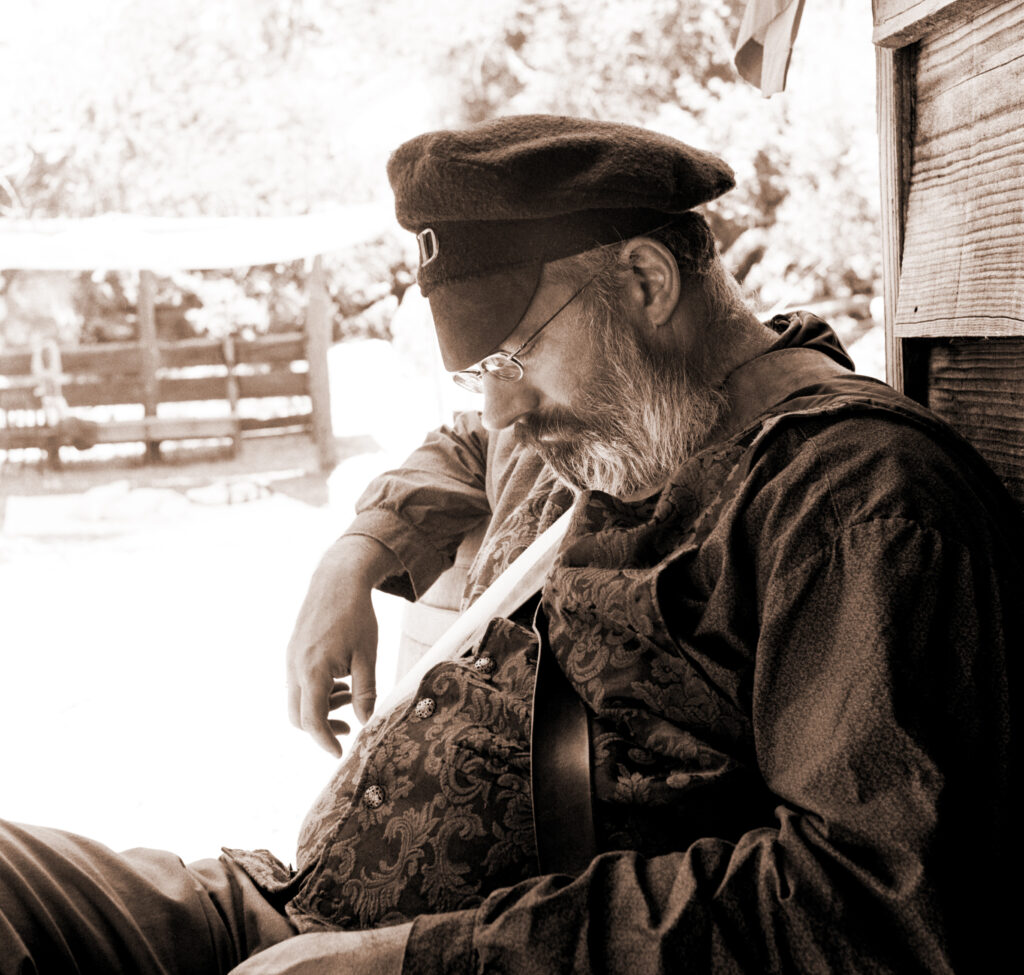
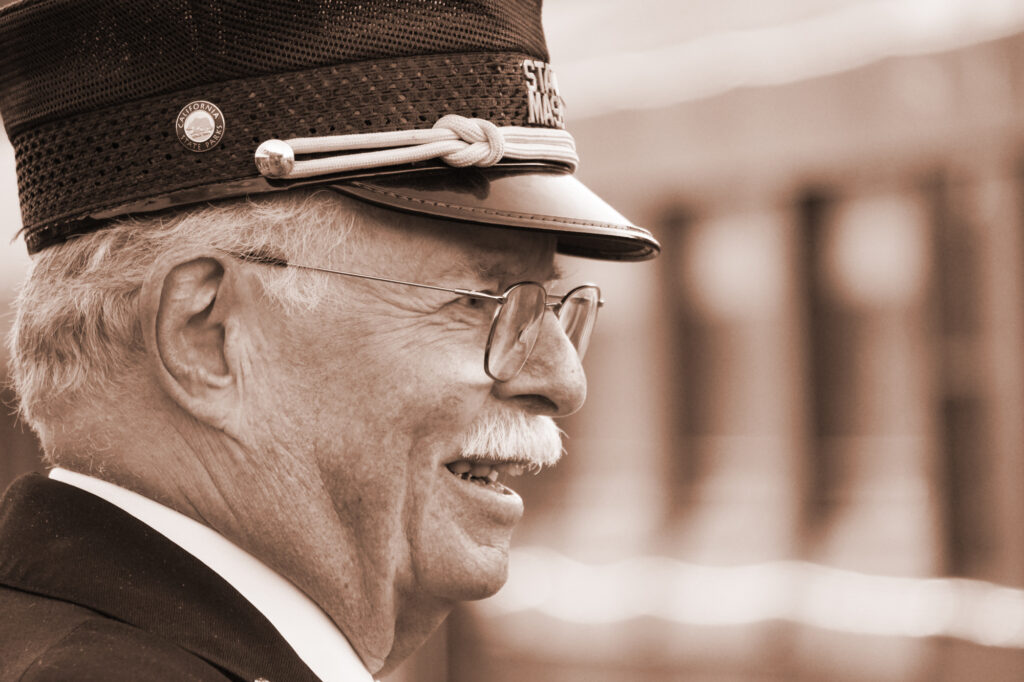
This is my friend and former photo student David Ethier, the station master in Jamestown. All the workers at the Jamestown station are dedicated volunteers. They’re all crazy about steam trains! This was shot with the Zeiss from about eight feet away. When I shoot this close, I set the camera distance first and then walk in until the rangefinder looks right. It’s a faster method for grab shots. This was a lucky shot at f/5.6! The negative was cropped quite a bit.
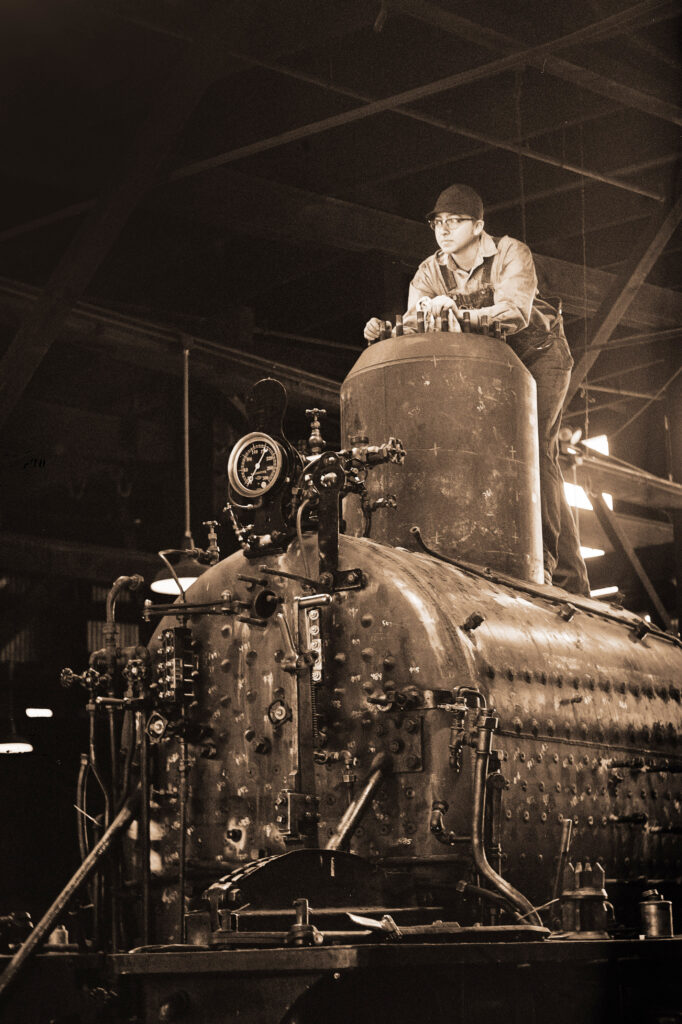
This next shot was done on a tripod with the Zeiss. This sharpness is typical of that Zeiss Tessar design lens. The model, Bill Farnsworth, held still for the ½ second exposure. Bill started working on steam trains at age 11 and is now the head maintenance engineer at age 30. Keeping these gigantic vintage machines takes determination and knowledge!
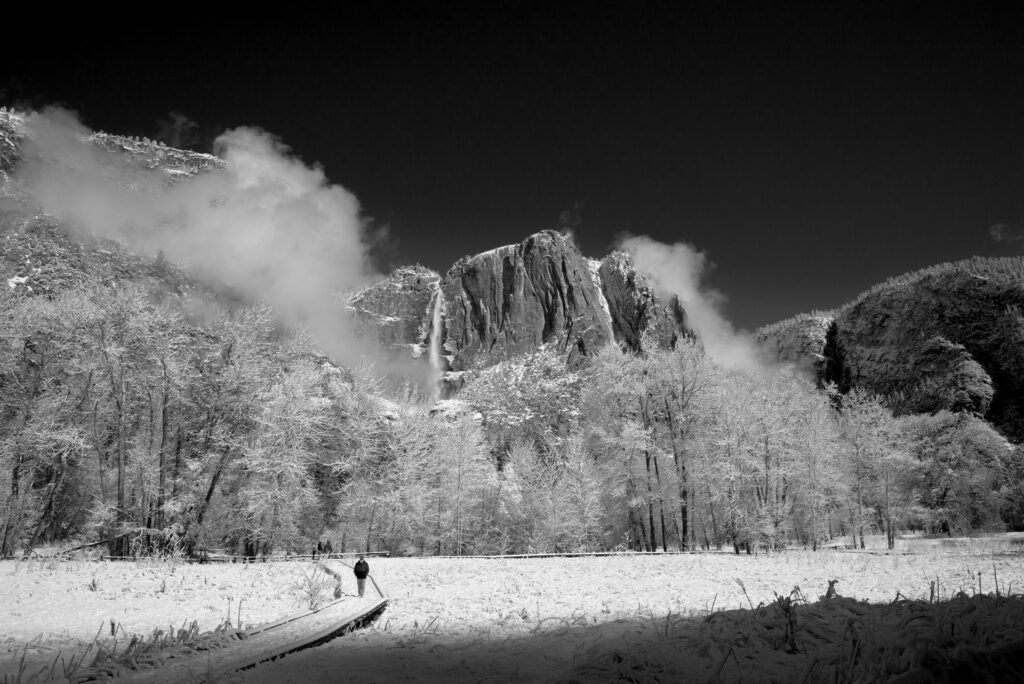
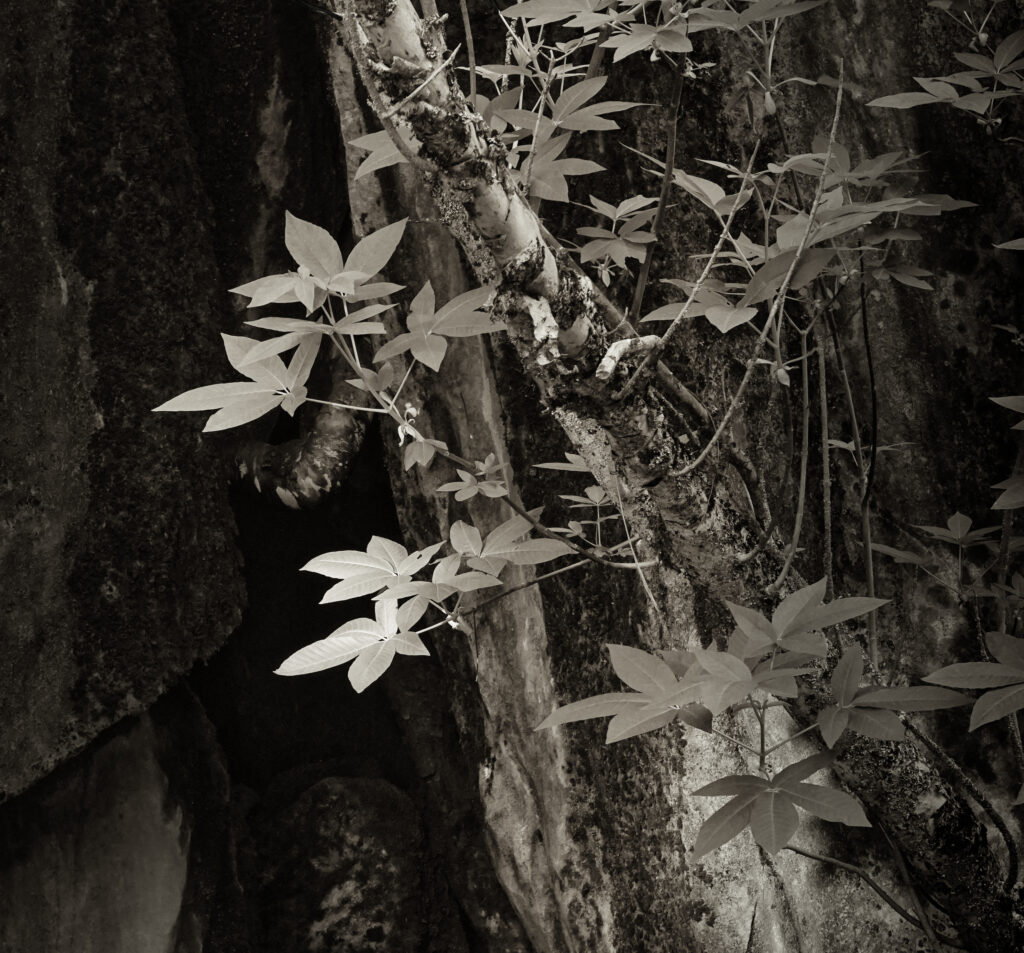
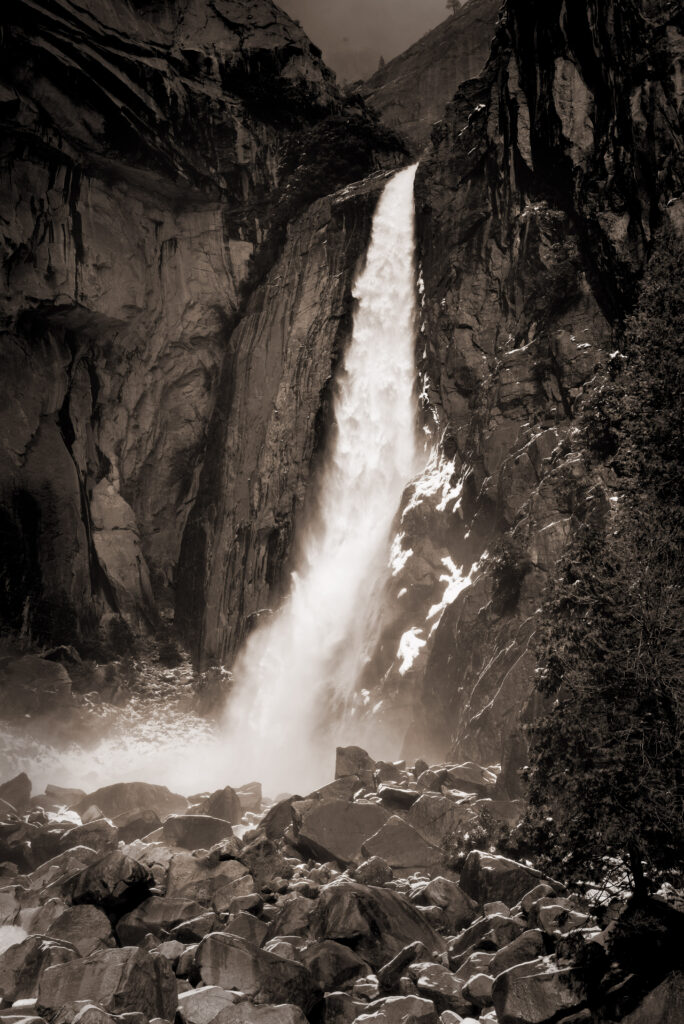
Here’s a shot done with the Zeiss using Rollei infrared film and an 87 filter. Our local camera club was poised to visit Yosemite on the last snowfall of 2025. It only takes 90 minutes to get to Yosemite from my house, so trips can be arranged on the spur of the moment. A few hours after this morning shot was taken the trees had shed their snow.
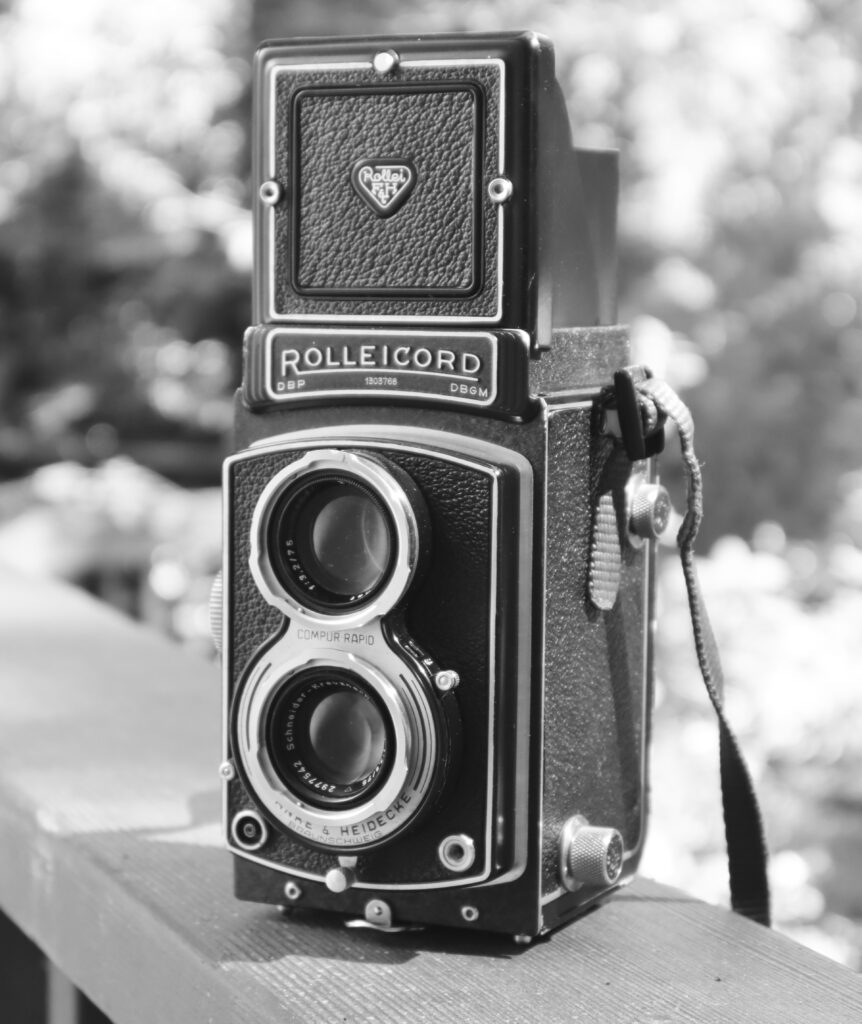
The second camera I used at the Diggins event was a Rolleicord twin lens reflex (circa 1953). I’ve owned Rolleiflex cameras in the past, but foolishly sold them when it seemed film would die. Getting back into the market for a Rolleiflex was too expensive, so I researched the difference between the Rolleicord and the Rolleiflex and felt the Rolleicord lacked some features, like a crank film advance, but the form factor, glass, shutter, and performance was equal.
Using the same HP5 film and HC110 in all three cameras informed me that I could achieve equally fine results while having very different shooting experiences.
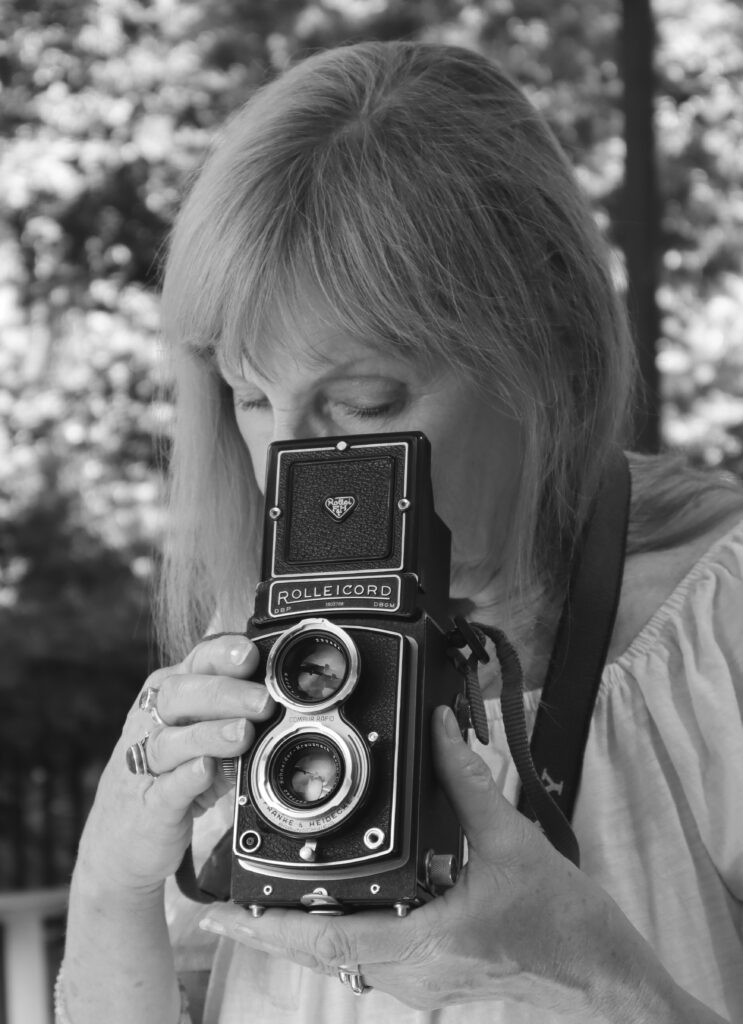
The Rolleicord, shown here, is fine focused by looking down onto the ground glass using the built in magnifier. This lower than eye level view will alter the look of the subject, so I often use the ‘sports finder’ to achieve a higher angle.
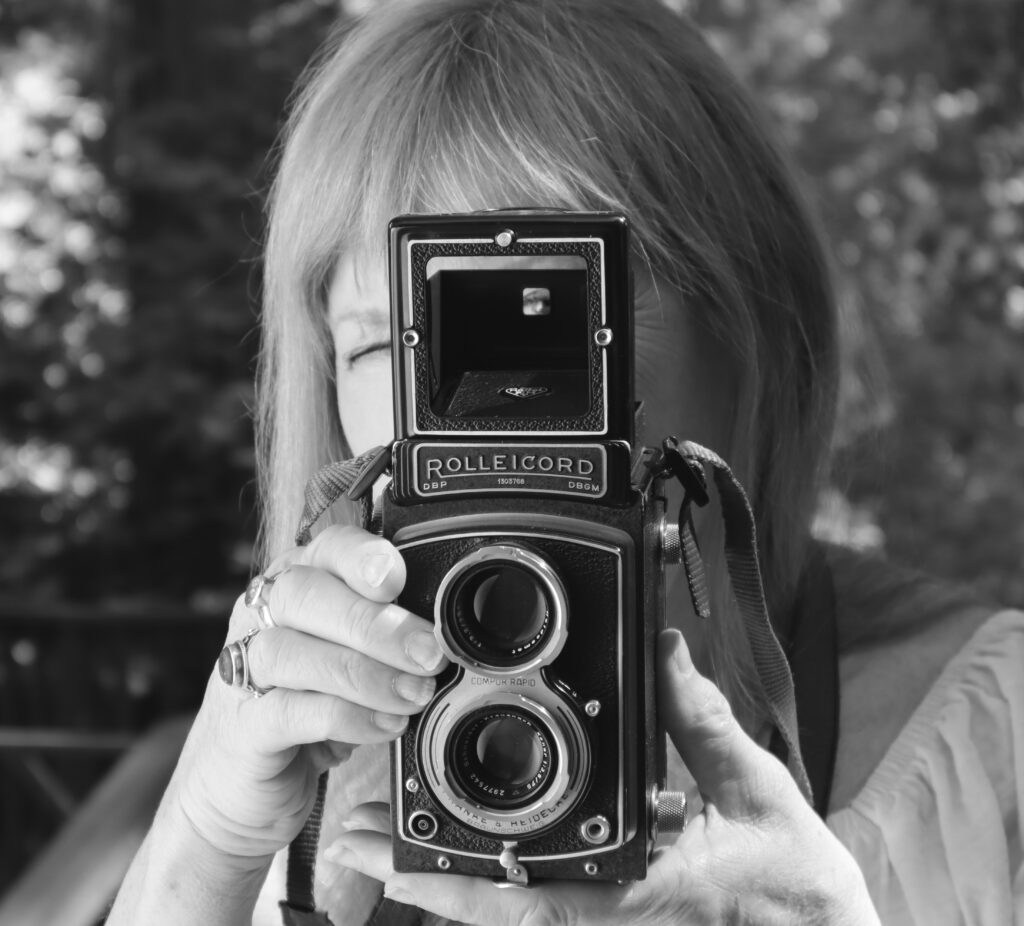
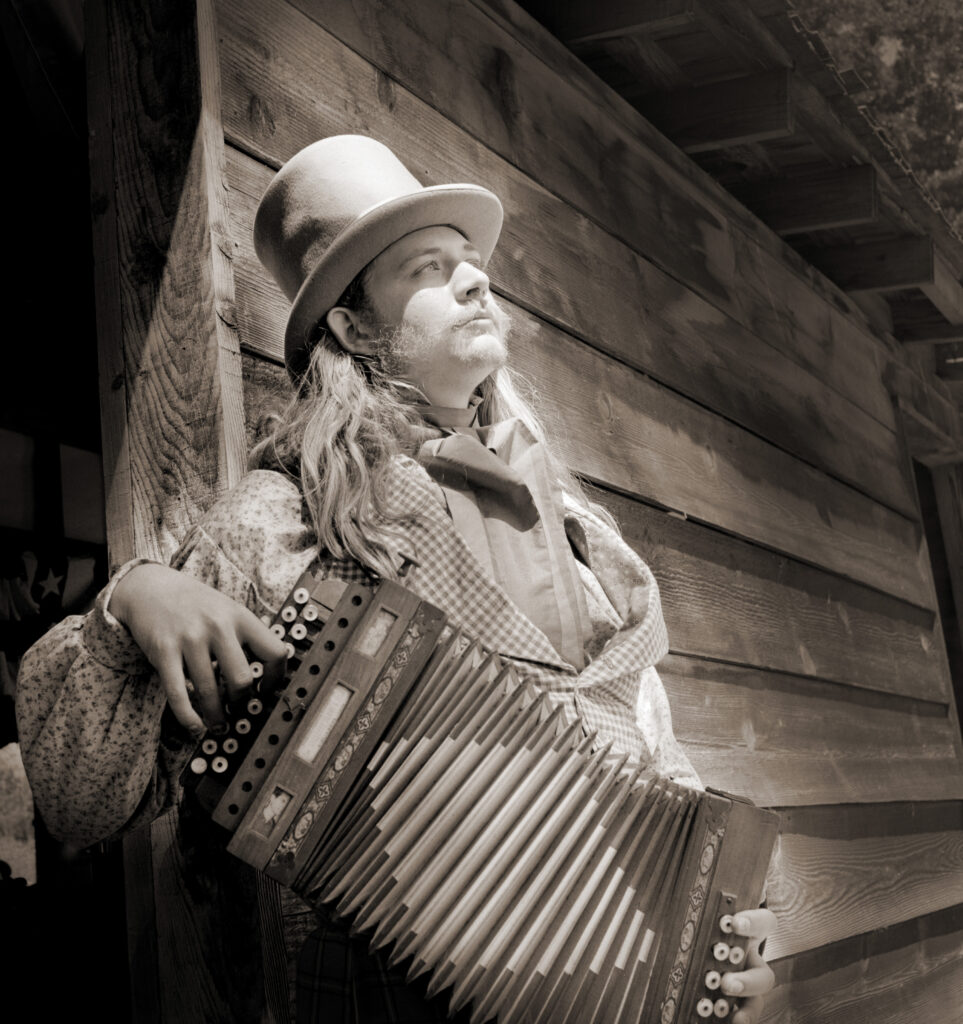
The accordion player was standing on a wooden sidewalk a couple of feet above me. If I hadn’t used the eye level sports finder feature the camera would have been much too low.
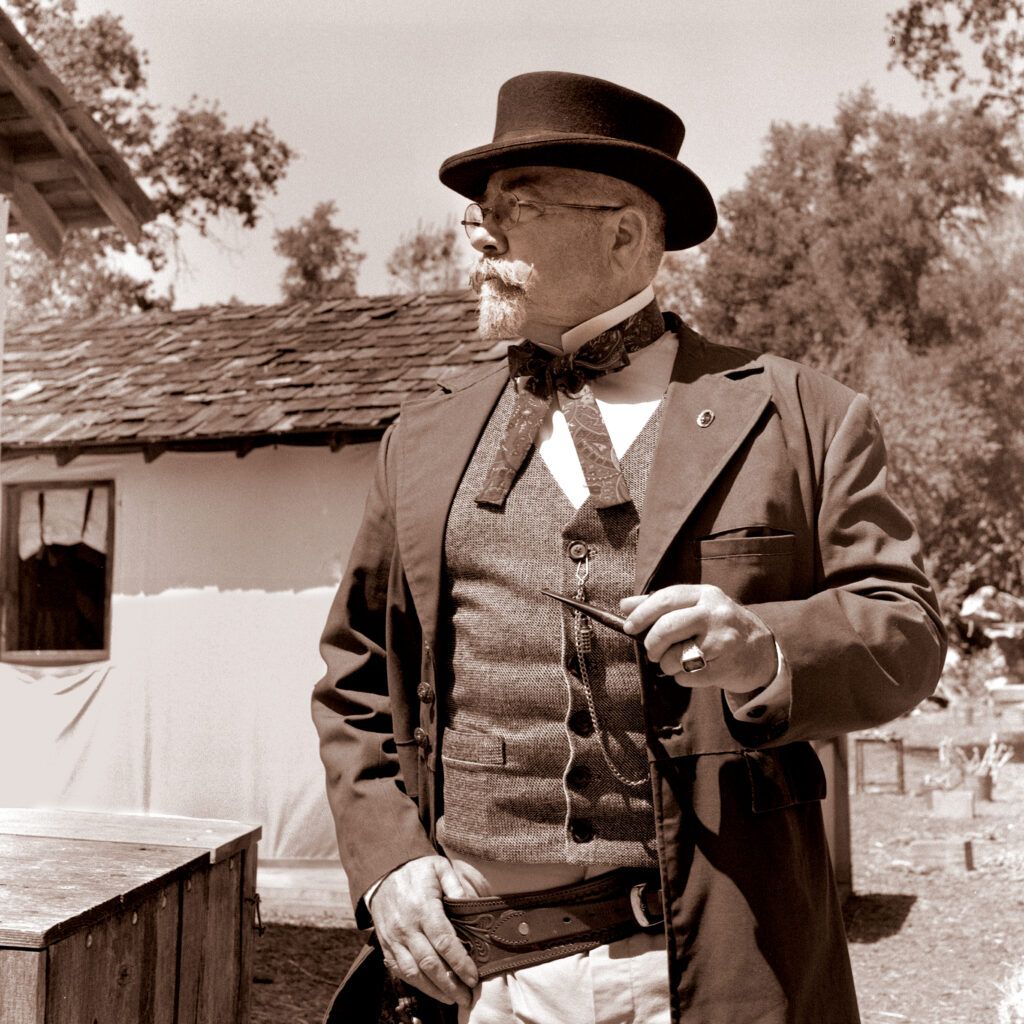
This well-dressed haberdasher shot shows off the sharpness of the Rolleicord and the range of tones that are possible when HP5 is shot at ISO 200 and pull processed to minimize contrast. The adage “expose for the shadows and develop for the highlights” works wonders!
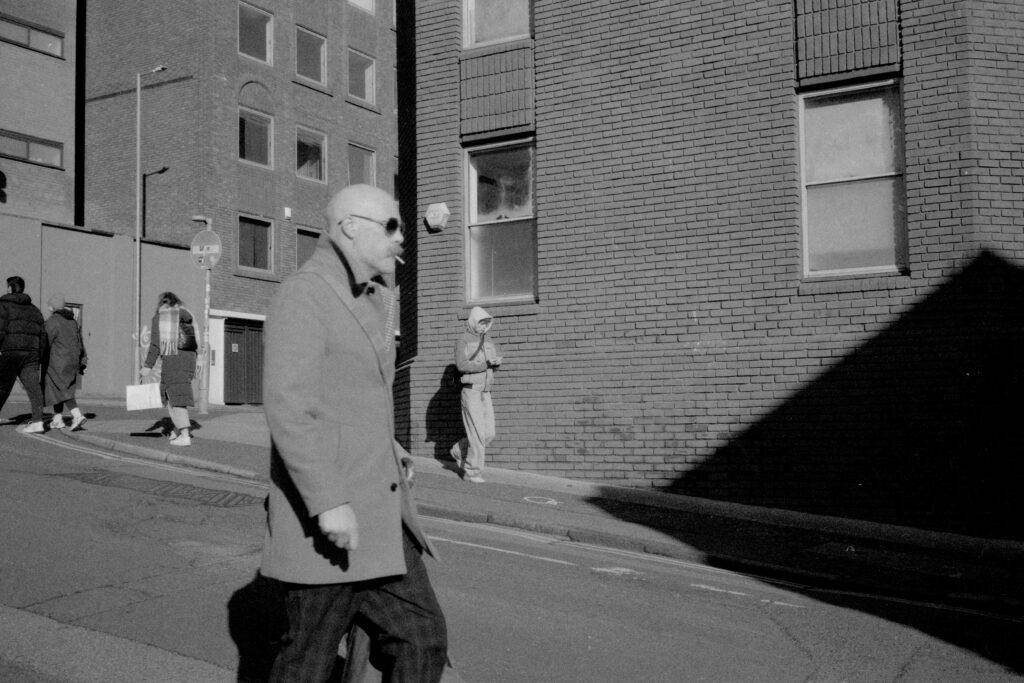
Here are a few more photos taken with the Rolleicord. I love using this camera for people shots. The square aspect ratio works well for singles or couples. It’s also light enough for hikes. Out of all my vintage cameras, this twin lens camera is my favorite.
Conclusions:
Pentax: This posting is not a review or in-depth comparison of any of the cameras. Each has their individual allure, and each is capable of superbly sharp images, but the Pentax can churn out great photos at high speed with more accuracy and less effort than any medium format film camera I’ve ever owned.
Zeiss Ikon 6×9: This camera produces the largest negative of the three and is certainly the slowest to operate. Old rangefinders are difficult to focus on close subjects, and they get more difficult for me to operate as I age. This is not my recommendation for quick street shooting of people, but as a hiking and general tourist camera for scenics, it’s great.
Rolleicord Twin Lens Reflex: The Rolleicord is a less expensive version of the Rolleiflex, but has the same 4-element Tessar design f/3.5 lens. In my opinion, there is no sharper lens than the simple Tessar design.
I hope this posting has been enjoyable, even if the details of the cameras have been redundant. I can’t stop talking about film cameras and taking the time to write about them gives my wife a well-deserved respite.
Share this post:



Comments
Paul Quellin on Comparing Three Great Medium Format Cameras
Comment posted: 10/04/2026
Walter Reumkens on Comparing Three Great Medium Format Cameras
Comment posted: 10/04/2026
Do you only use FA lenses on the Pentax 645N, or do you also have experience using A-mount lenses without autofocus on this camera?
I own three A-mount lenses which I use on the first Pentax 645 in the 1980s design, which takes some getting used to. Would you recommend buying a 645A in this case? With the subjects I photograph, I haven’t missed the AF so far. Thanks!