

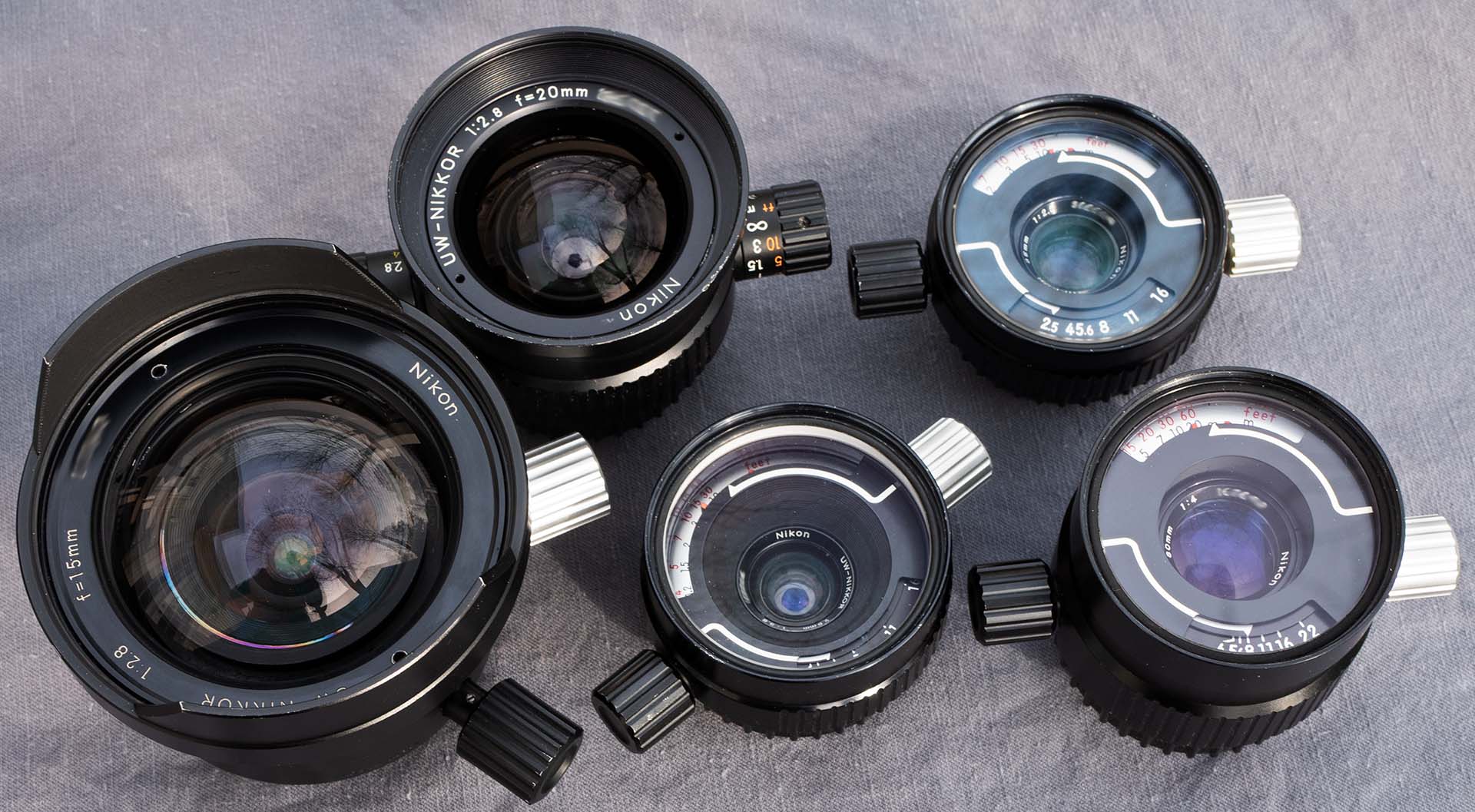
The Nikonos are a series of amphibious cameras that Nikon developed starting in the early 1960’s and discontinued in 2001. There were five models (the original, based on the French Calypso camera, followed by models II, III, IV-A, and V) that shared the same uncoupled, water-tight lens mount. There was also the short-lived “Nikonos RS” SLR in the early 1990’s that had a completely different lens mount. There is a whole section of 35mmc on rugged and underwater cameras, where various aspects of the Nikonos cameras have been discussed.
In this post, I want to show photographs taken with the different Nikonos lenses to provide a feel for these old optics as a whole. Over a nearly 40-year period, Nikon marketed seven different lenses for the Nikonos cameras. There were four underwater-only UW-Nikkor lenses (two optically different versions of the 15mm f/2.8, a 20mm f/2.8, and a 28mm f/3.5), two amphibious W-Nikkor lenses (35mm f/2.5, 80mm f/4.0) and one land-only lens (LW-Nikkor 28mm f/2.8). I have never seen the LW-Nikkor, and I have only used the second version of the 15mm. With those limitations, and the evident caveat that my comments are based on the specific copies of the lenses I have owned, here are some Nikonos photos.
The underwater lenses
Because the refractive indices of air and water are different, putting a flat piece of glass in front of a lens and taking it underwater results in both, a narrowing of the field of view, and considerable edge distortion. Nikon (as well as others) solved this problem by adding an additional “water-contact” element to the front of their UW-Nikkor lenses. The four lenses are very well corrected, but cannot focus in air, and are therefore exclusively for underwater use.

Akumal, México, Nikonos V, UW-Nikkor 20mm f/2.8 in air, Fuji Superia 400
The 15mm f/2.8 UW-Nikkor was manufactured in two versions. Up to the Nikonos III, the design was near-symmetric (Biogon-like, 8 elements in 4 groups, plus the water-contact element), and protruded deeply into the camera. The Nikonos IV-A and V have TTL metering, and to avoid blocking their sensors, Nikon designed a second, retrofocal version of the 15mm lens. This is an outstanding optic, and its only weakness is that it is quite large in relation to the camera. The springs on the Nikonos bayonet mount are not very strong, and judging by the number of damaged lenses on the secondary market, it is fairly common to knock the 15mm UW-Nikkor off the camera while submerged. The dedicated Nikonos accessory finders (which came in two version as well) are of very high quality.
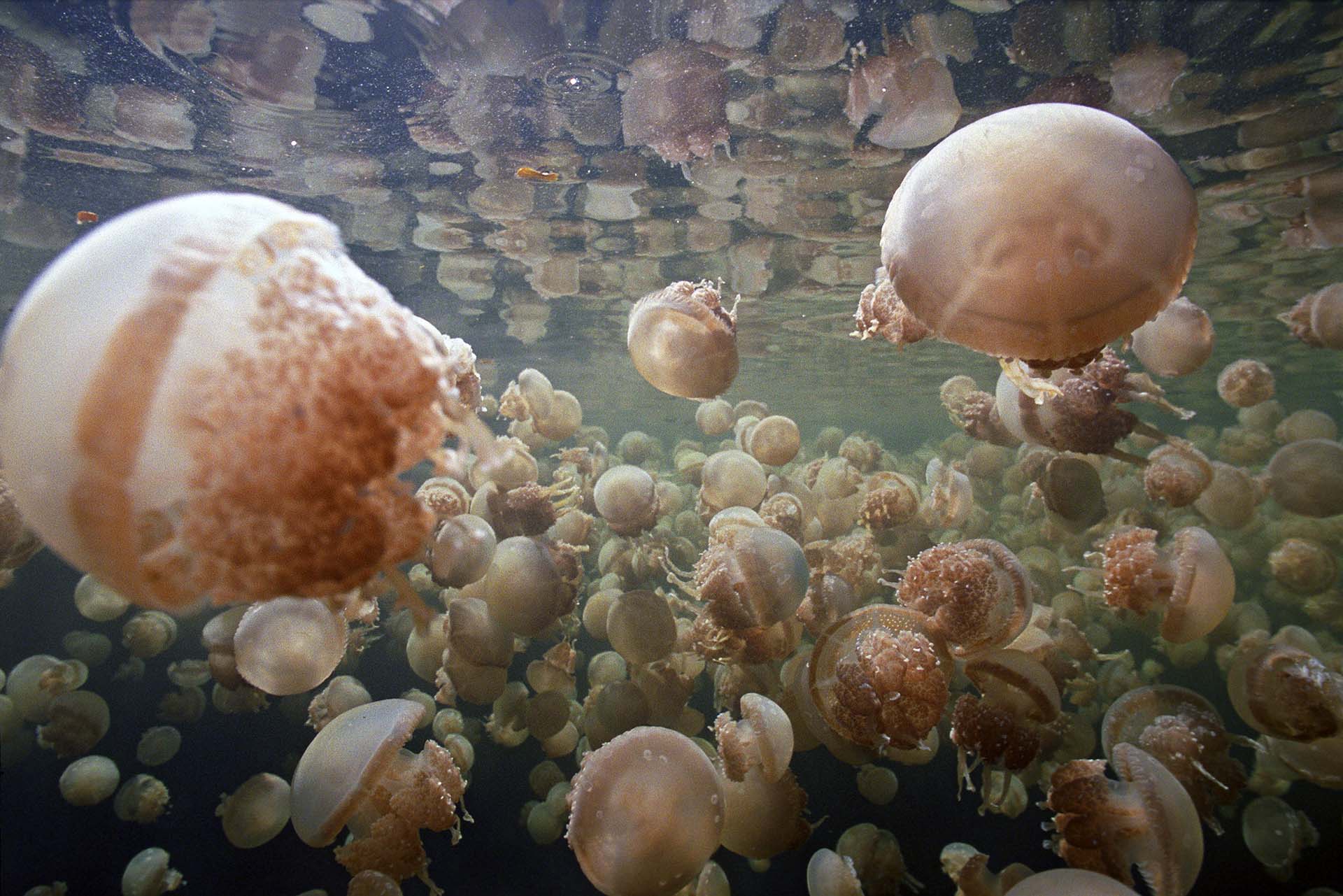
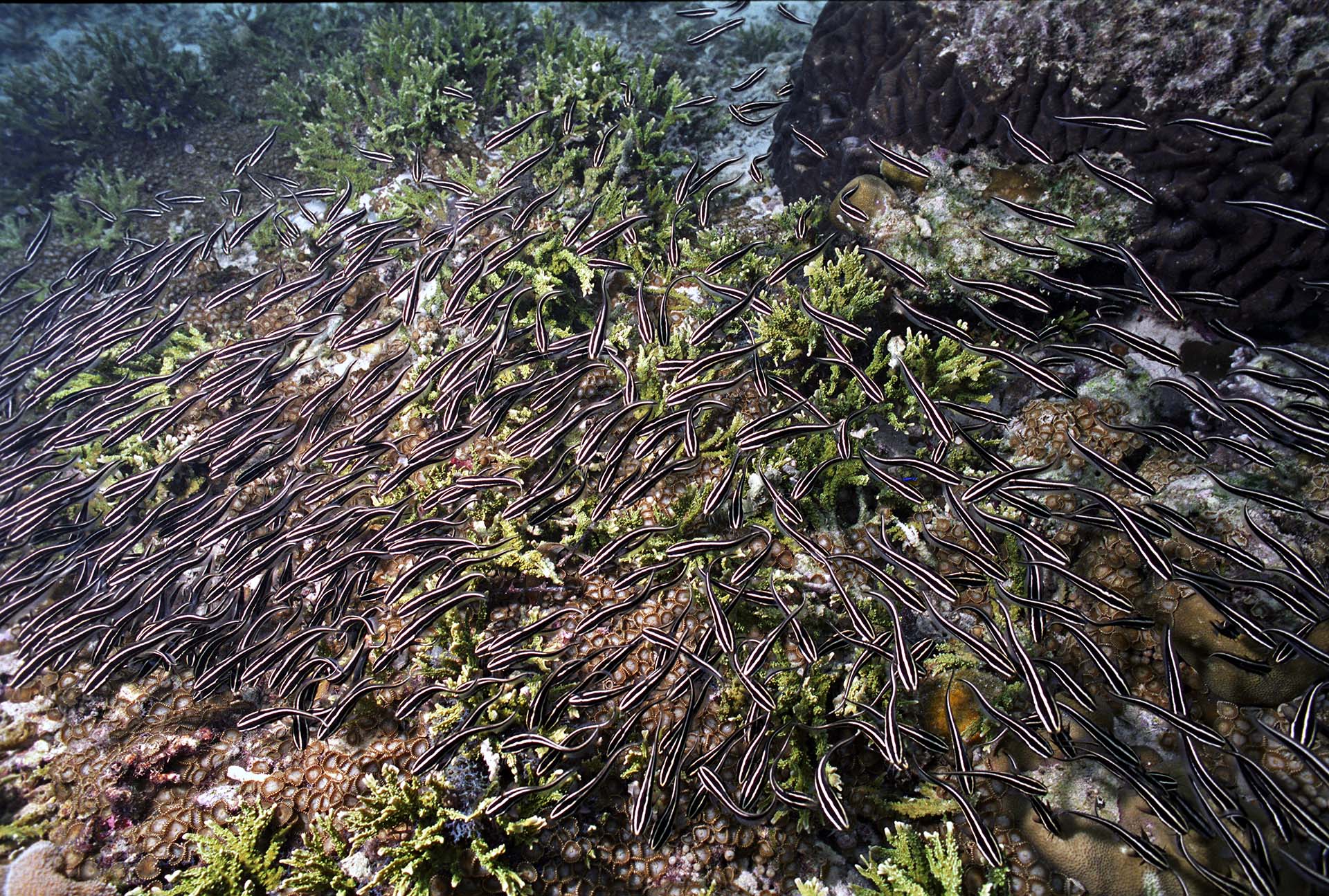
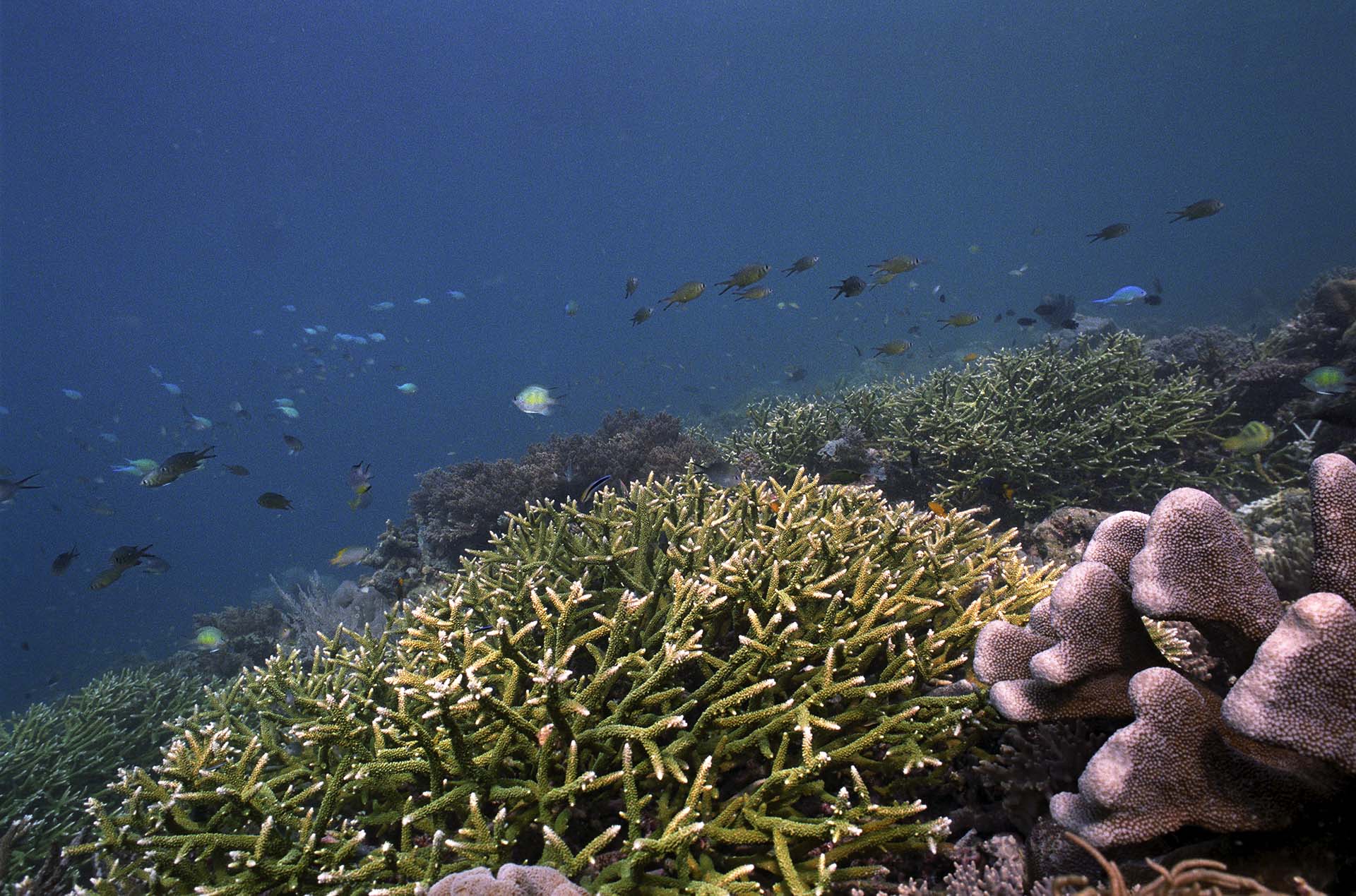
The 20mm f/2.8 UW-Nikkor is much smaller than the 15mm lenses, and while of more limited angular coverage (78° vs. 94°), also an excellent optic. It is a retrofocal design, and therefore can be used with any of the Nikonos cameras. Nikon made a dedicated underwater finder; this came with a removable mask, for use with the 28mm UW-Nikkor.
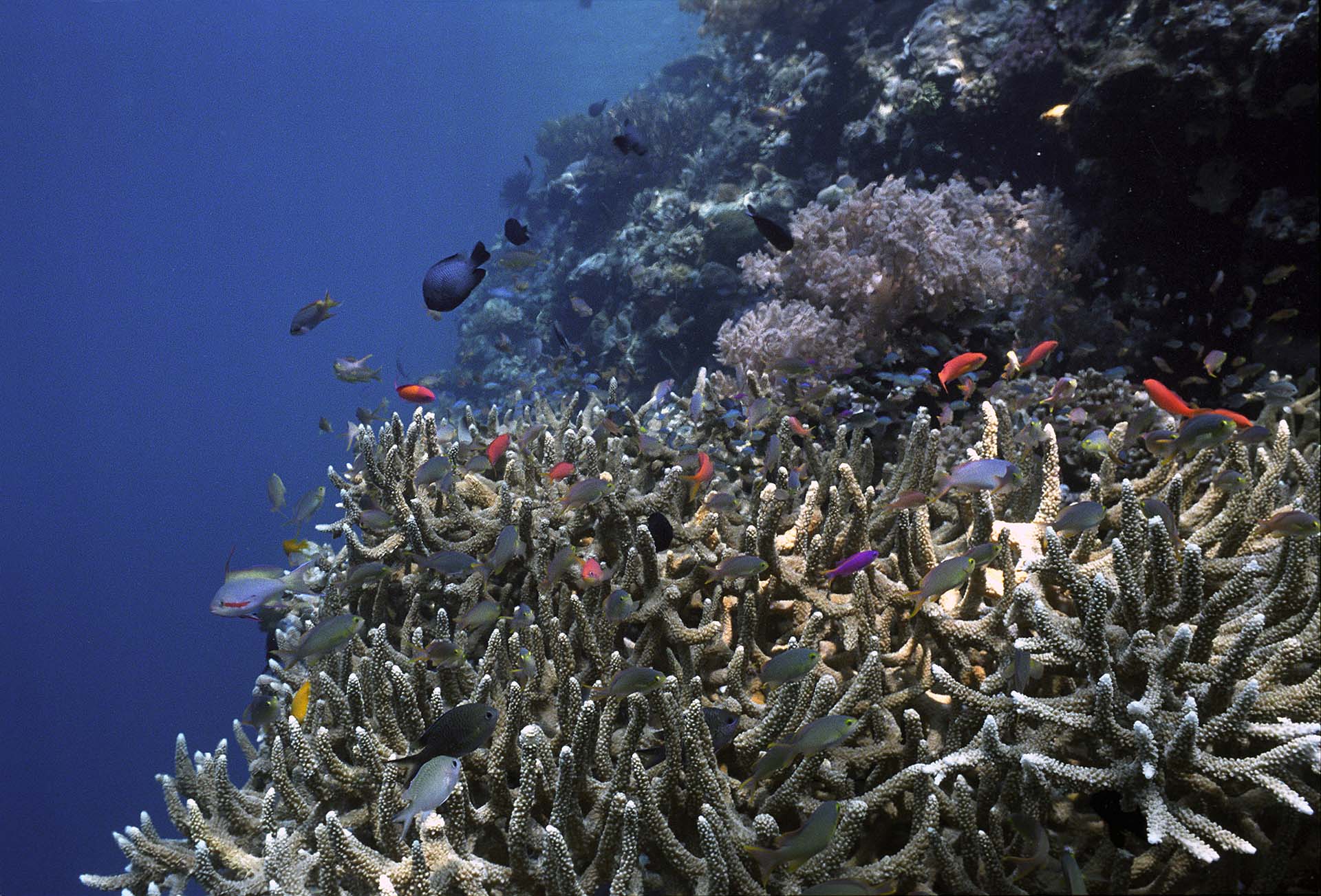
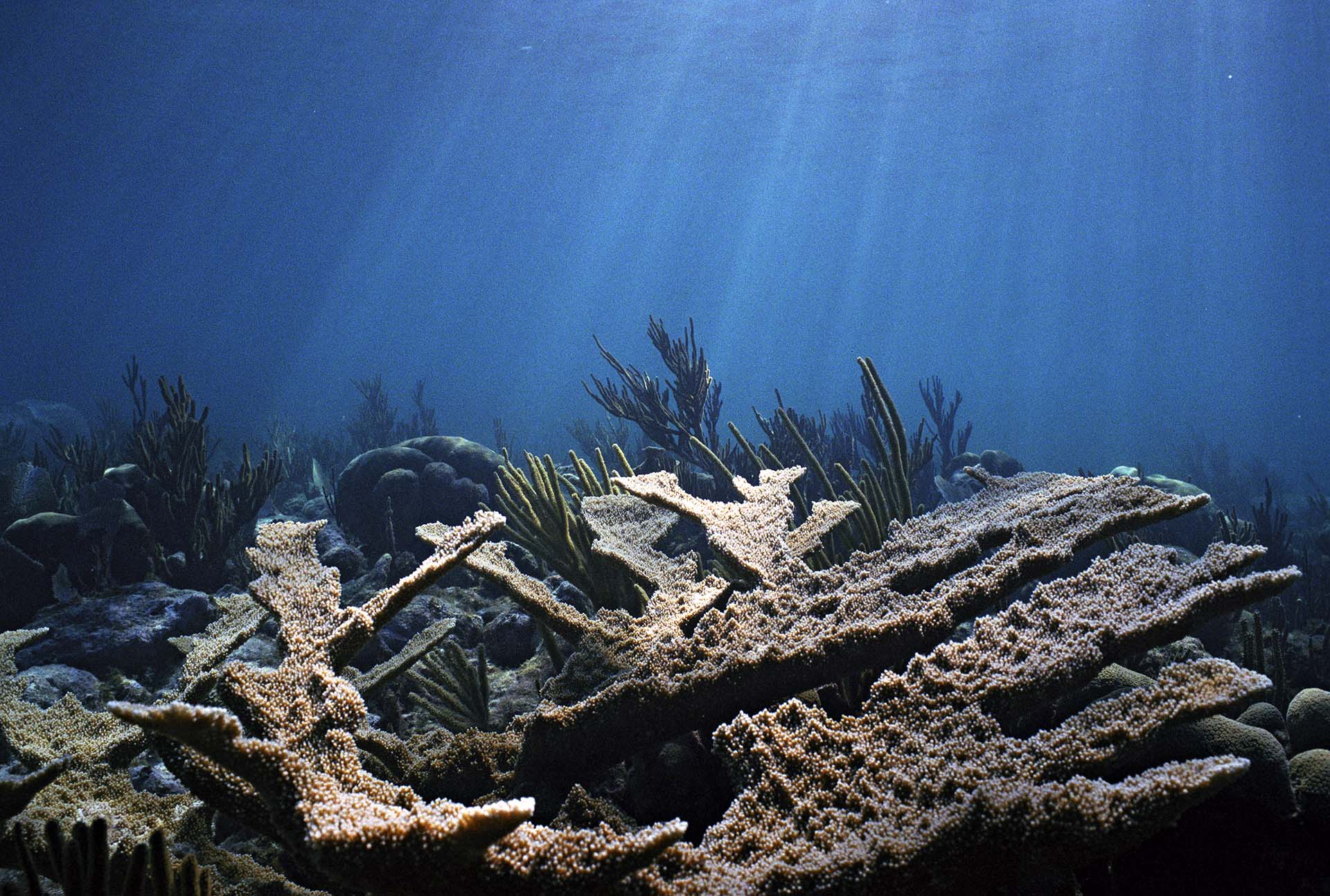
The 28mm f/3.5 was the least expensive of the UW-Nikkor lenses, and while of modest angular coverage (59°) compared to the 15mm and 20mm, can produce photographs of outstanding sharpness underwater. Nikon made an external optical finder for this lens that also had a detachable mask, in this case for use with the 35mm lens.
The amphibious lenses
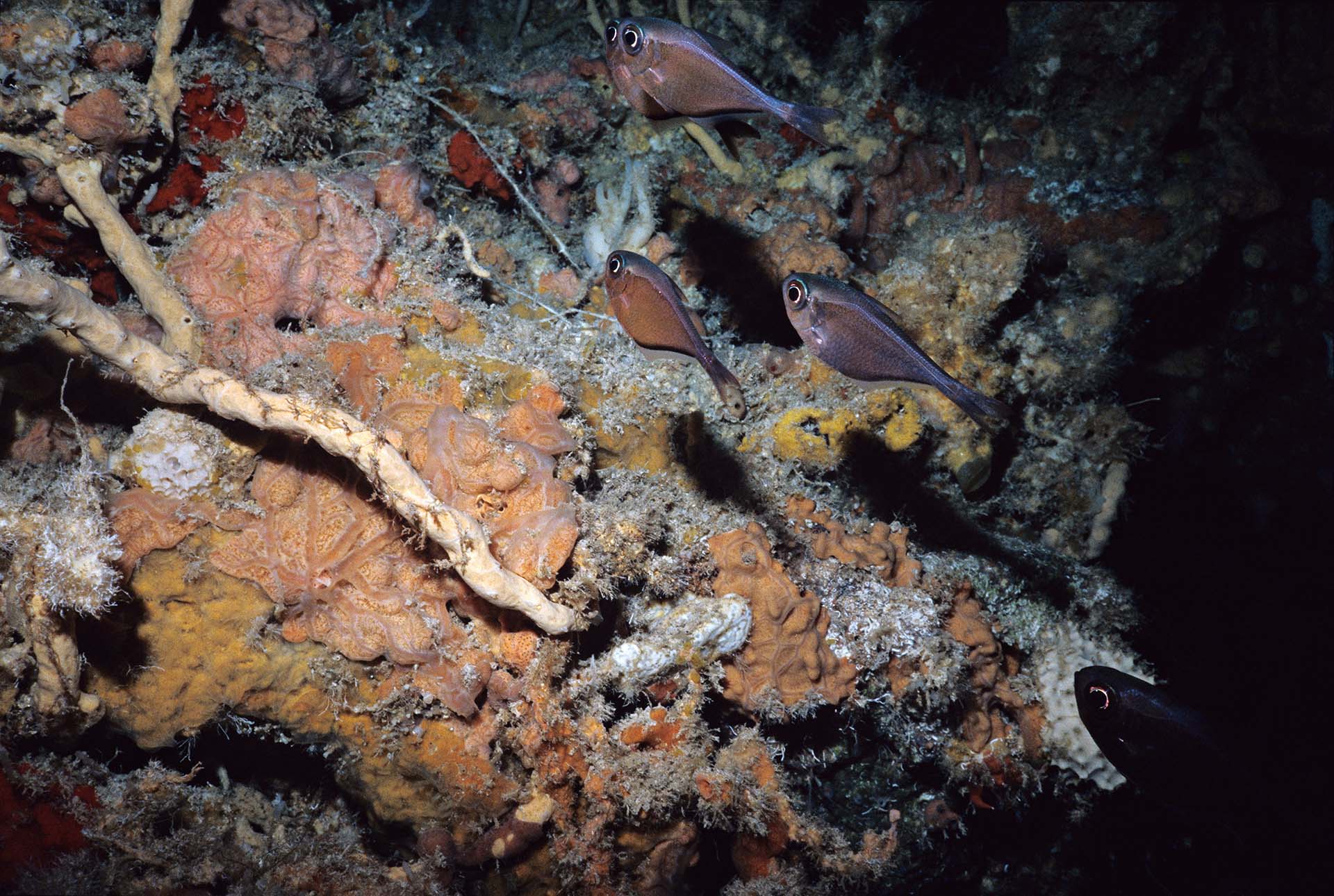
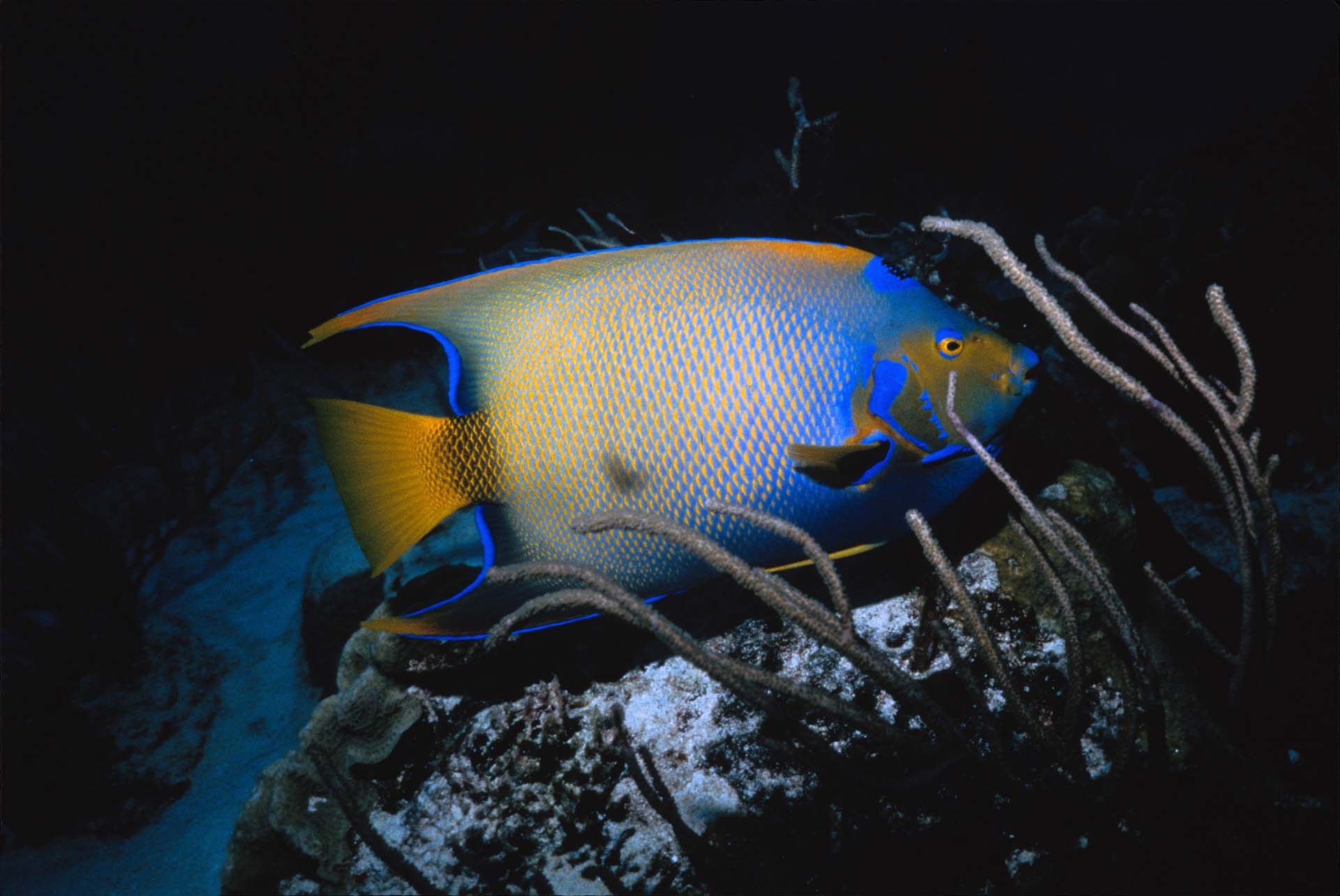
The 35mm f2.5 W-Nikkor was the first of the Nikonos lenses, and therefore an old design; Nikon never updated this Planar-type lens (with an optical flat added to its outside). Underwater, its field of view is like that of a normal lens (46.5°; the lens covers 62° in air), and depending on the subject, the distortion on the corners is not too distracting. The Nikonos cameras all had Albada finders with framelines for the 35mm. With a diving mask on, however, it’s difficult to squint through them, and the external finder that Nikon sold for the 28mm and 35mm lenses is a nice accessory to have. I find the 35mm acceptably sharp only when stopped down past f/5.6.
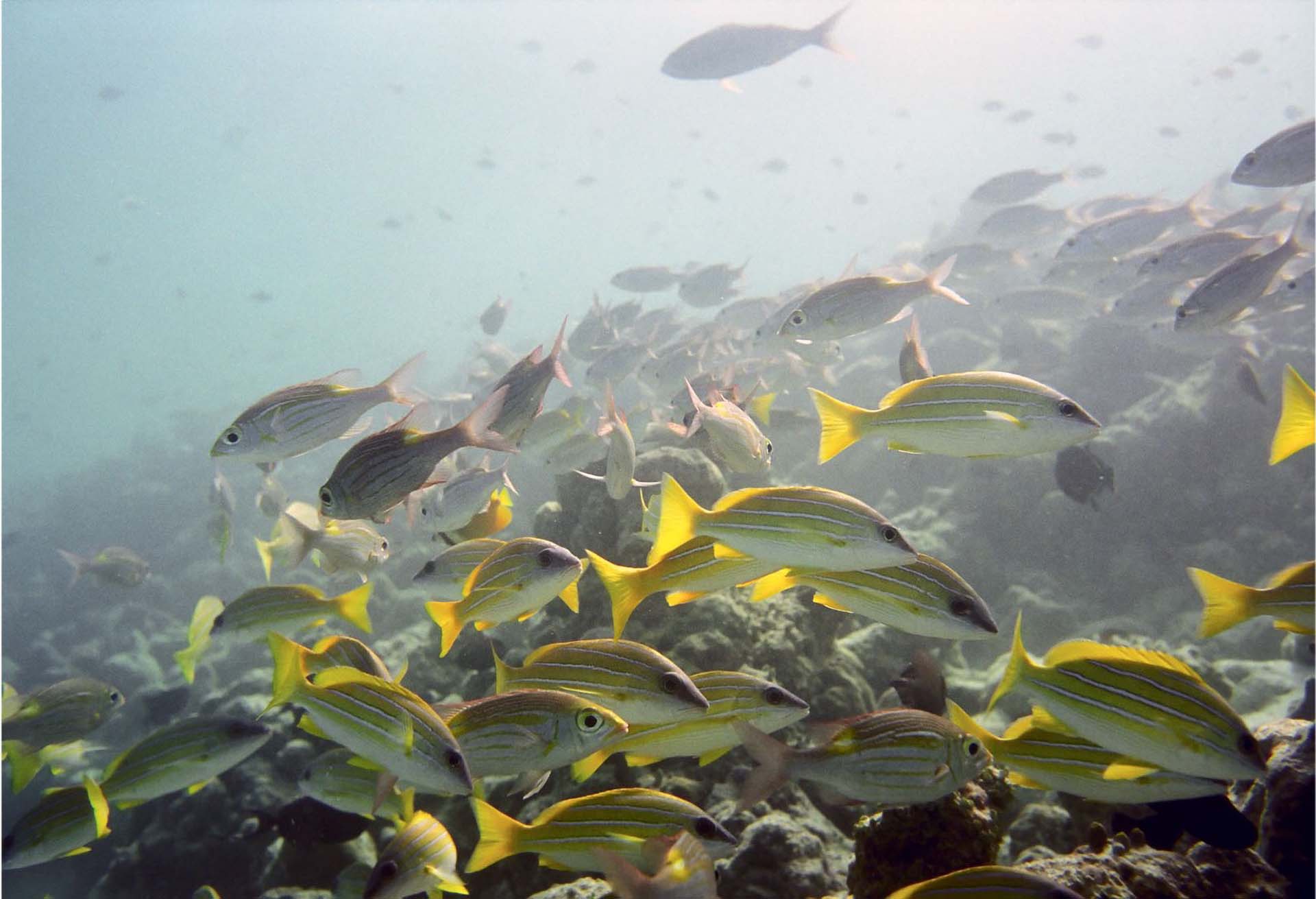

The longest of the Nikonos lenses is the 4-element 4-group 80mm f/4.0 W-Nikkor. I have never used this lens underwater. The Nikonos cameras do not have a coupled rangefinder, so the subject-to-camera distance has to be either guessed or measured using an external rangefinder. Nikon did make an accessory 80mm viewfinder (for use on land only), which itself needs to be adjusted for parallax depending on the distance to the subject. Thus, using the 80mm lens on the Nikonos is a slow process. The simple optical formula of this lens produces a not insignificant amount of chromatic aberration, limiting, for my taste, its use on color film. However, on black-and-white, I like its less-than-clinical rendering.

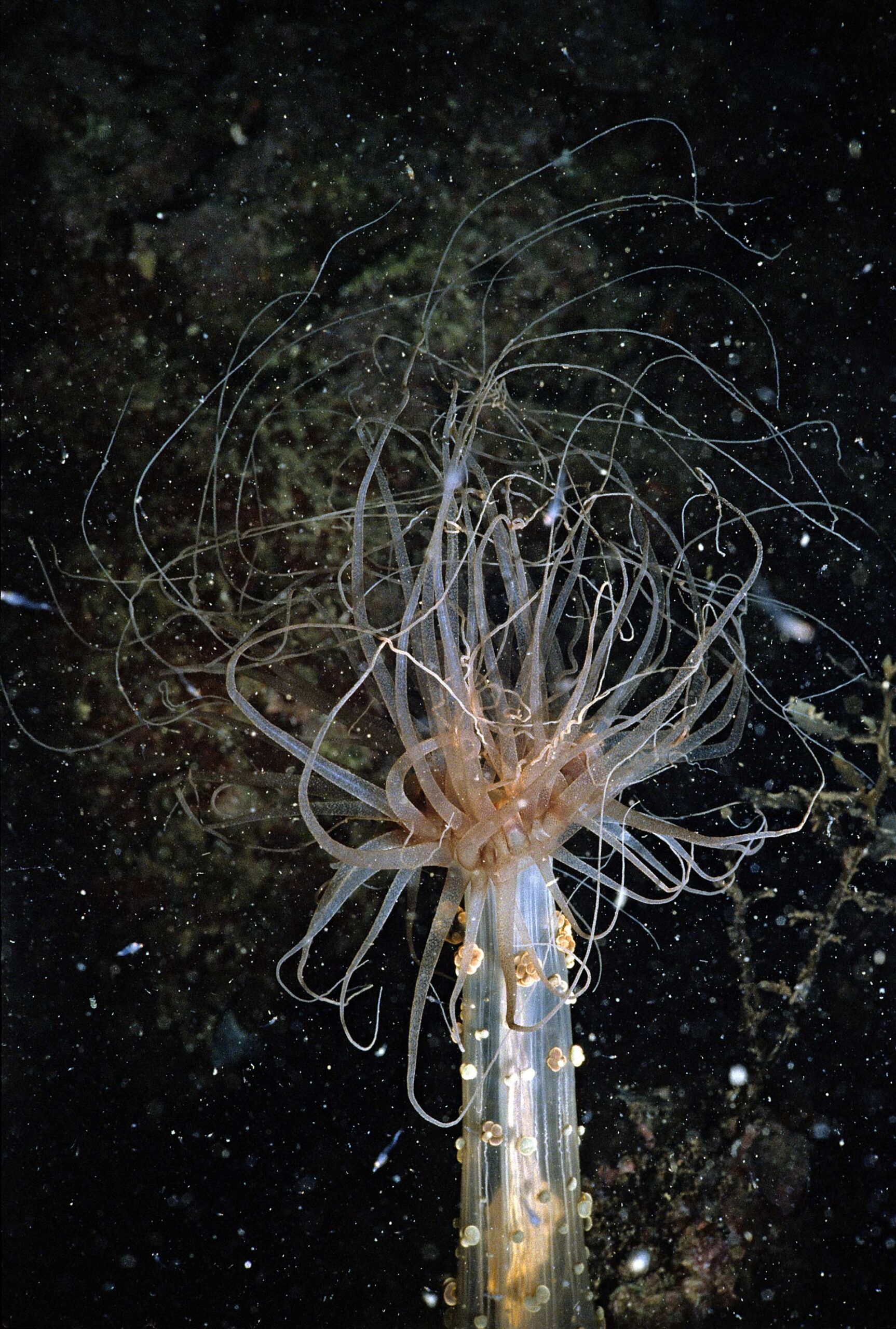
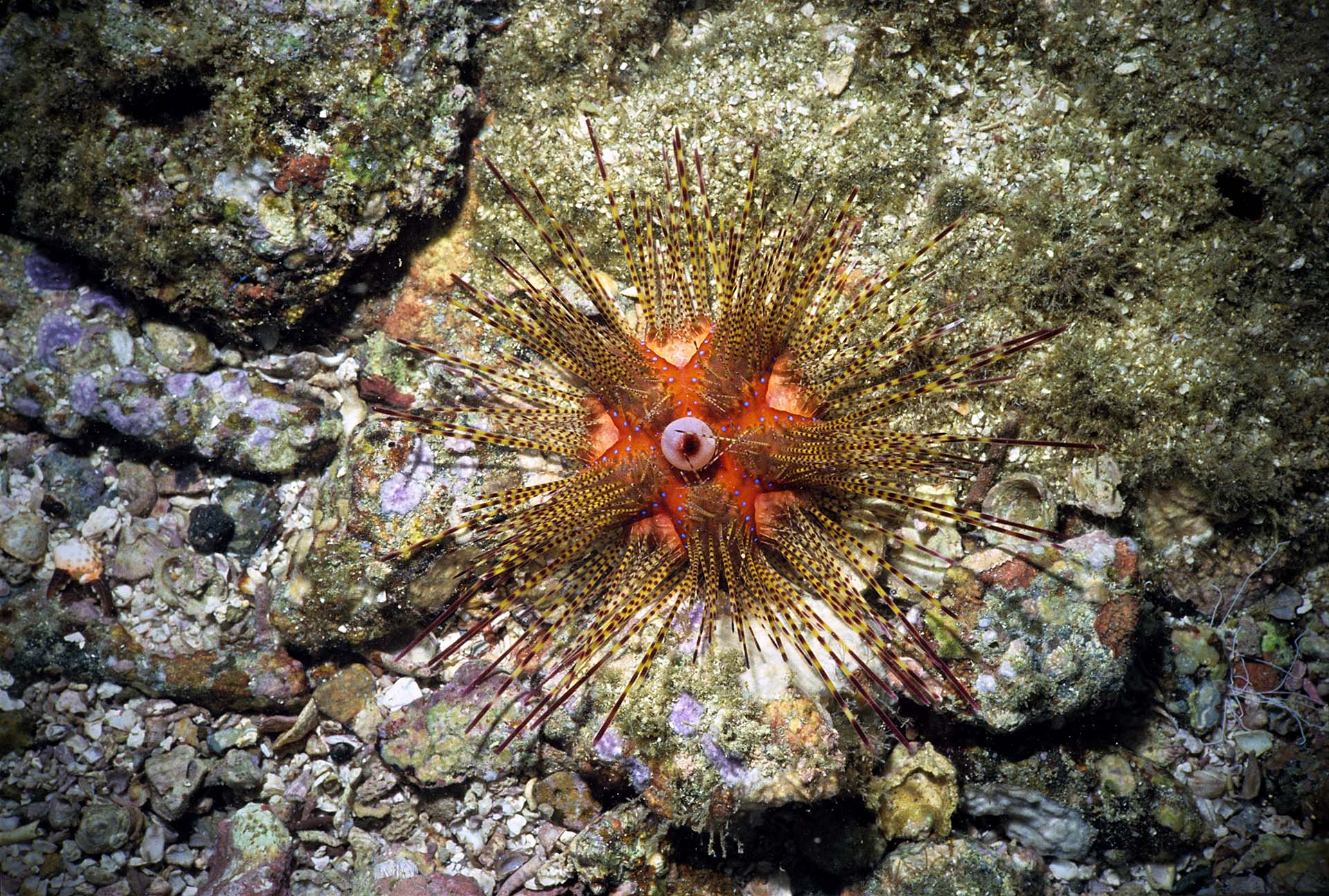
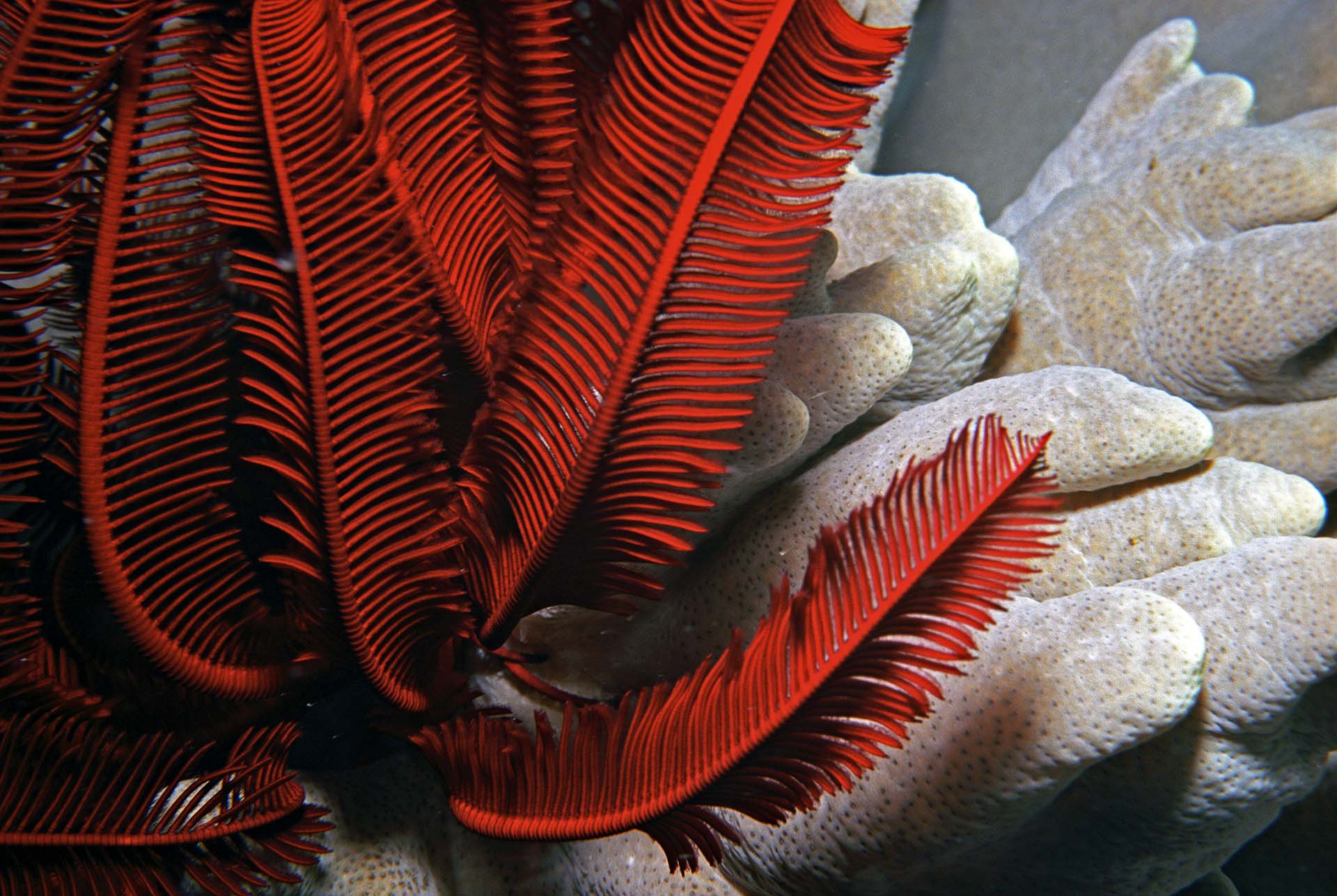
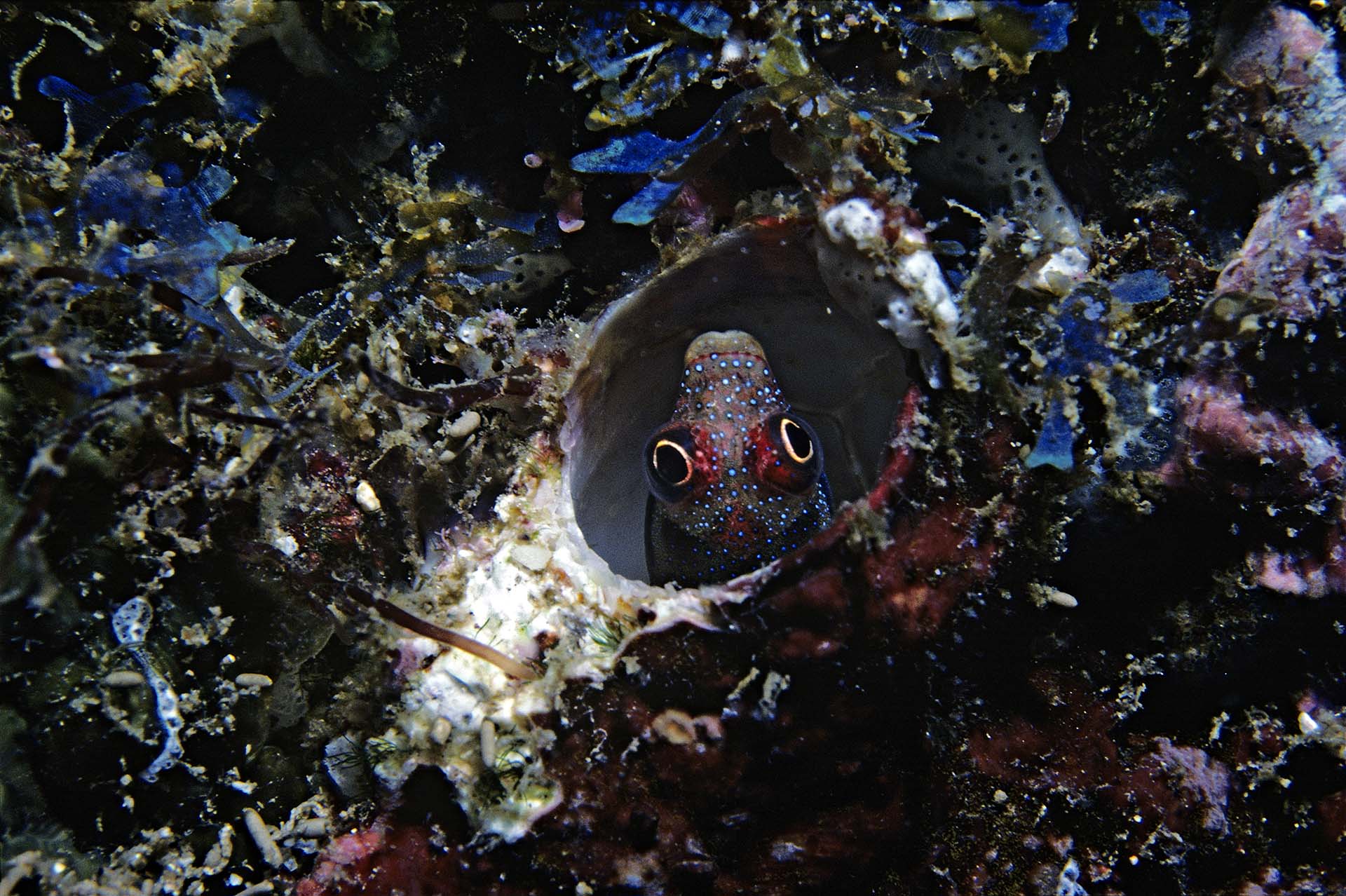
Nikon made a doublet close-up lens that works in front of its 28mm f/3.5, 35mm f/2.5, and 80mm f/4.0 lenses (focusing and framing were with a cumbersome external attachment). In addition, a huge variety of Nikonos accessories (including lenses) were sold by other manufacturers. That is for a separate post, but in closing, here are some macro photographs taken either with Nikon’s close-up adapter, or with extension tubes made by Sea & Sea.
Share this post:






Comments
No comments found