

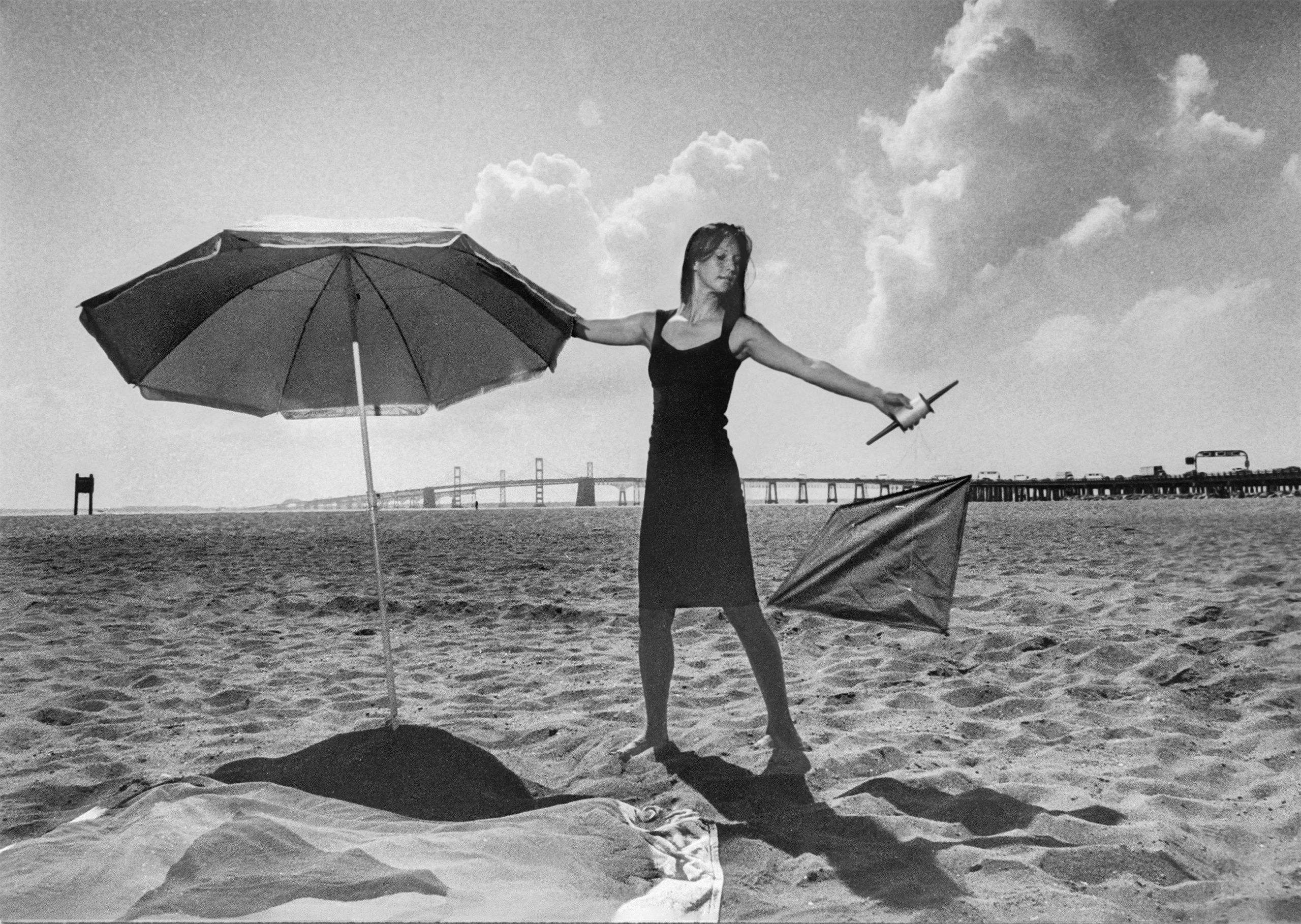
I’m relearning 35mm film.
I grew up shooting on film. I’m 55 now, so my first camera was around 1984, when I was sixteen: a Minolta X-700, which I still have.
Getting back into film hasn’t been smooth. Over the last two years, I’ve shot a brick of Shanghai GP3 100 and several rolls of Tri-X 400, experimenting more than seriously shooting. My X-700 died after a few rolls (I’ll get it fixed one day), and the cost of sending film out for processing discouraged me. So I returned to processing at home, picking up a CineStill Lab Box and using DF96 Monobath to make things simpler. I’ve realized that journaling and better notes are essential if I want to move past “happy accidents.” This writing is the beginning of that journey.
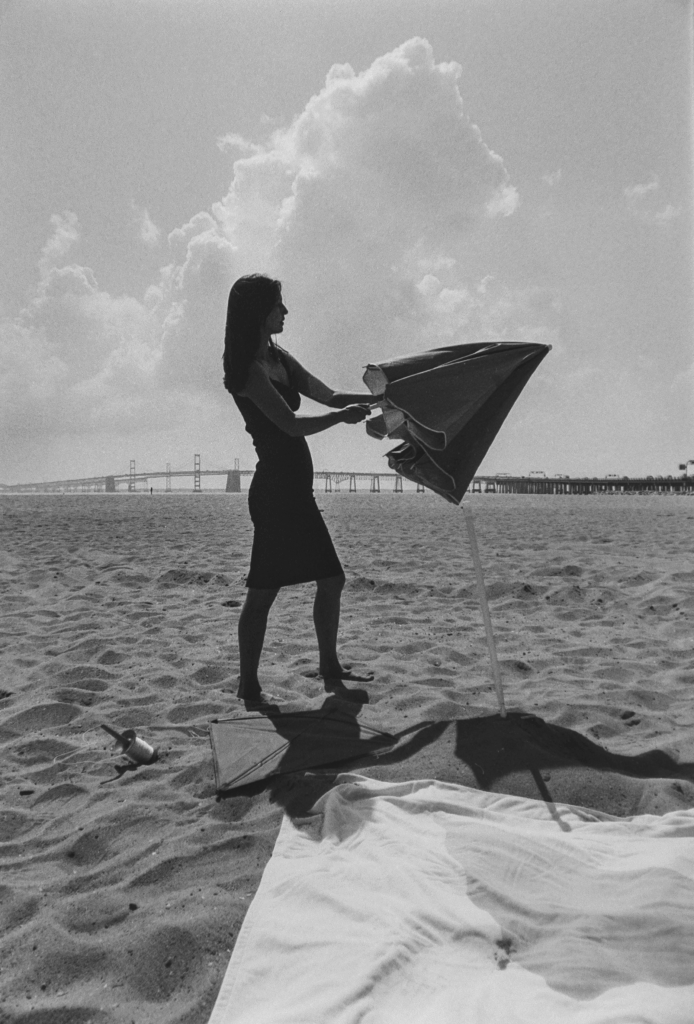
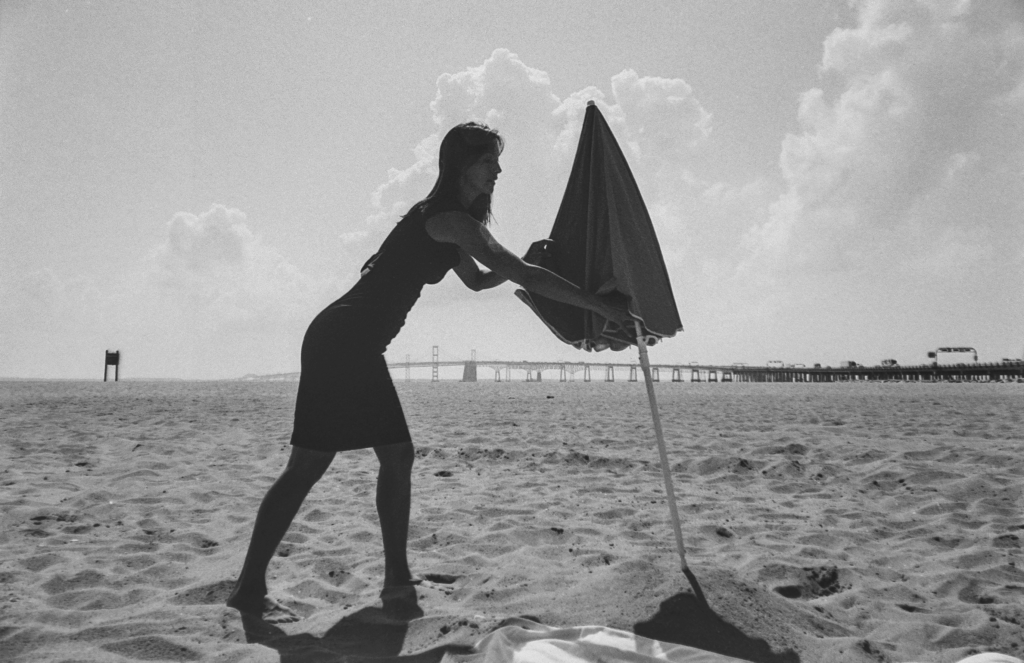
August 15, 2025- I shot a roll of Tri-X 400 at Sandy Point State Park. I worked with a wonderful actor who was game enough to wear a black dress on a blistering hot day. My kit that day consisted of a Minolta XD11 paired with a Minolta 24mm f/2.8 and an ND8. I love the O setting the camera offers, a mechanical shutter option that syncs with flash at 1/100 even if electronics fail (an Ebay purchase cheaper than repairing my X-700 that currently sits on the shelf). For lighting, I used a Godox AD200 strobe mounted on a 13-foot light stand. A Godox transmitter connected to the camera via a PC sync cable sat on a dummy hot shoe to break any connection that might fry any circuits. For behind-the-scenes footage, I brought along an Olympus E-M1 Mark II with the Olympus 8–25mm f/4, mounted on a small tabletop tripod. When I can I’ll replace this setup with an action cam to cut down on size and weight, and a more effective way to record the process.
I didn’t take detailed notes on my meter readings (ugh). I know I did a reflective reading on the sky and an incident reading for the flash hitting the face.I know I bracketed exposures at f/11, f/16, and f/22, but I don’t remember the specifics. Typically, I like the background to sit about one stop under the subject so the subject sits on top exposure-wise. But I honestly don’t remember what I did. If I were to do it again, I’d stack neutral-density filters so the sky read f/5.6 while keeping the strobe light’s intensity and distance set for f/8 on the face, and I’d bracket at f/5.6, f/8, and f/11 to minimize diffraction while still covering my bases exposure wise.
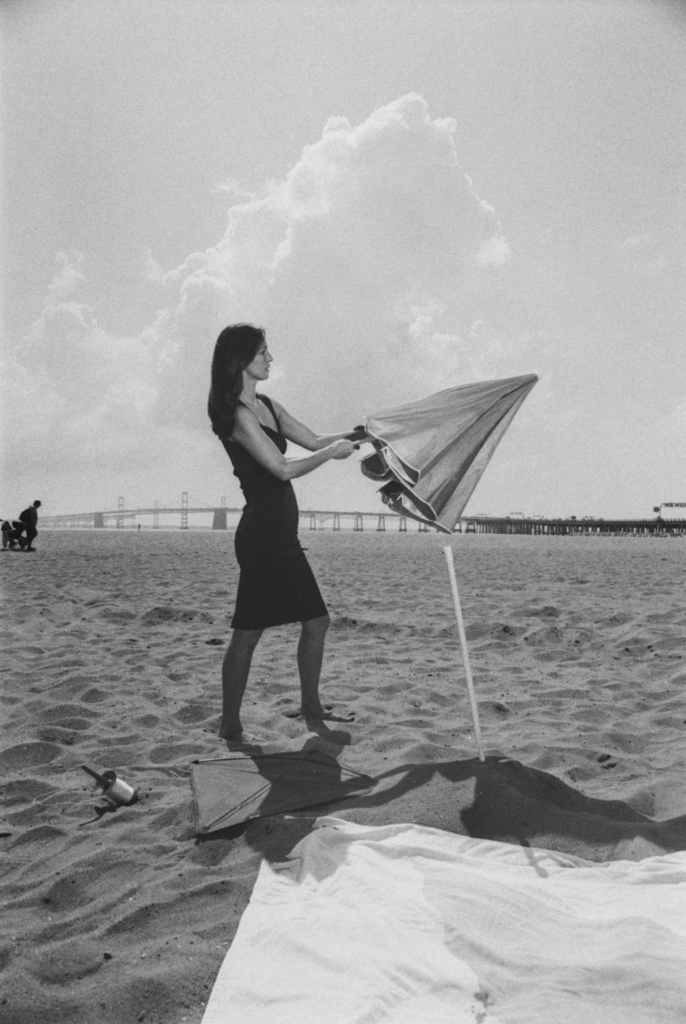
How did the roll come out? Focus is suspect. Exposure was inconsistent on the face, the black dress (perhaps beyond my current skill set) thin on the negative, and the clouds missing the detail I remember. We may have drifted from the strobe. I don’t remember if I took a reflective reading of the dress; if I did, I blew it. Looking back, a reflector on the AD 200 would have given me a larger spread of light to work with, and I could have brought a second Godox flash just for the dress. But I decided I wanted to go as light as possible. In the future, I want to clearly mark the subject’s spot and shield the lens when pointing towards the sun. Some of the images have lens flare, which I like except when it lands on or near the face.
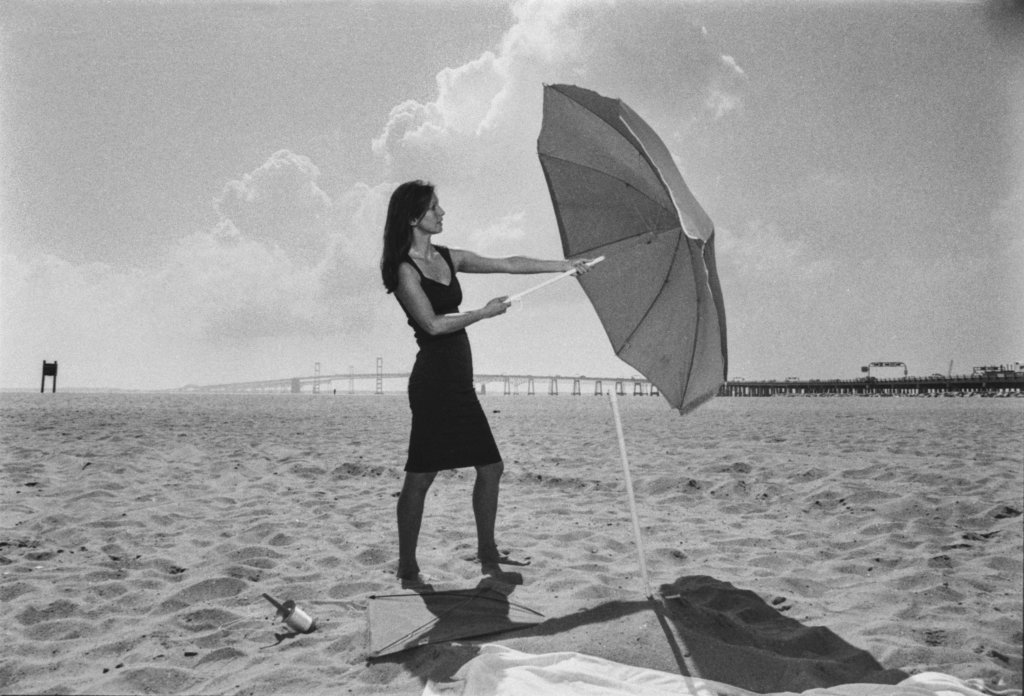
Processing the film is improving. I still need better temperature control. I may have been too hot, and there has been user error in loading film into the LabBox. There are scratches and dust spots from mishandling. And despite processing inconsistencies seen in the negatives this roll feels like the point where things are starting to click.
Digitizing negatives has been an ongoing experiment. I first digitized the negatives using a lightbox with a Sony A7RIII and Minolta 100mm f/2.8 macro, bracketing and merging exposures in Photoshop with isolated curves adjustments. A second time I used the Olympus E-M1 Mark II with the 8–25mm f4 lens, not an ideal setup, but I wanted to try the camera’s auto-HDR mode, having the camera bracket and merge files into a single JPG. So in the spirit of working with what you have at the moment, I let it rip. The results are smaller than the frame due to the lens’s limitation of not being a macro lens, but the captures got me thinking about creating collages to compensate (an essay for another time). My approach was unscientific enough not to bother with comparing the results of the two workflows.
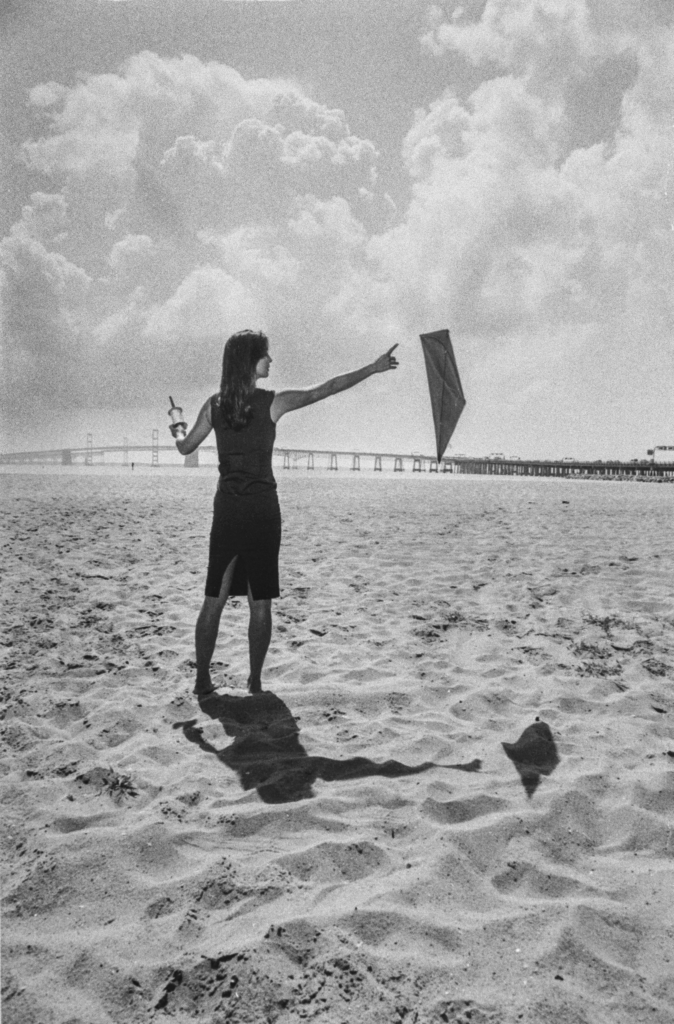
I wrestle with how much film should be manipulated in post. There is something about the medium that makes me think that whatever happens at the time of exposure is sacred and is not to be disturbed. There is precedent of course for film to be manipulated. Aubrey Bodine, for instance, would shoot clouds separately and combine them to enhance different images. Nonetheless, I felt a bit of an imposter taking a preferred exposure of the subject and inserting into a preferred composition of the background.
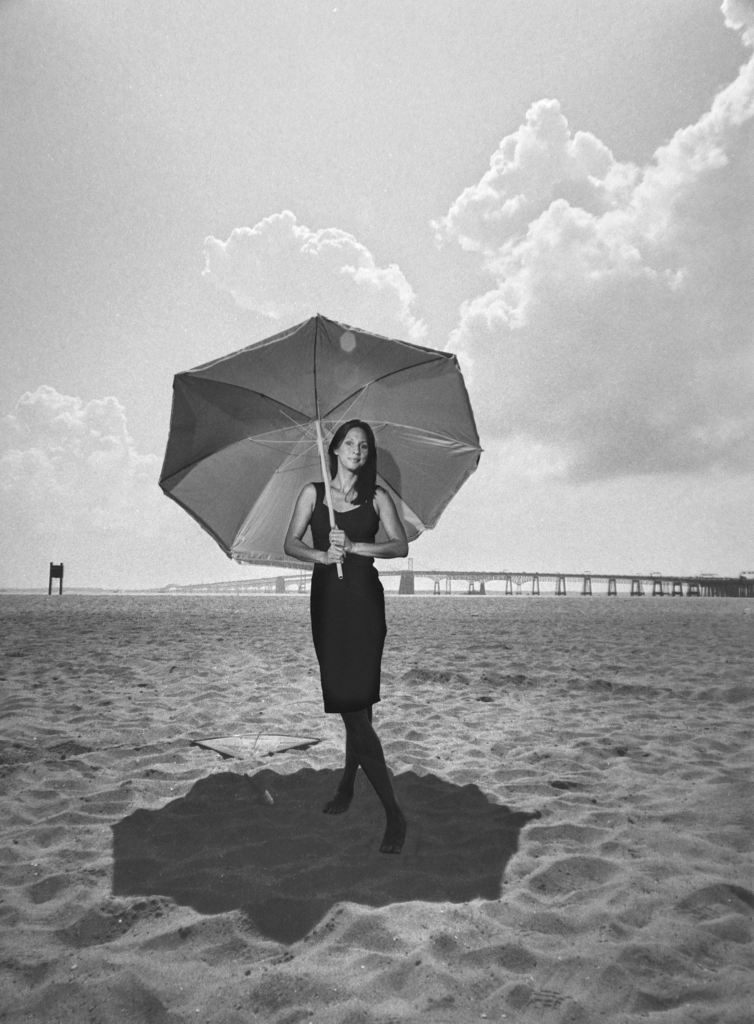
So, a lot of work to do. But I’m excited to see how things develop (insert smiley face here).
Thank you for reading!
You can find more of my snaps on Instagram.
Share this post:

Comments
Geoff Chaplin on Relearning Film – Notes from a Returning Shooter
Comment posted: 15/01/2026
Comment posted: 15/01/2026
Karen on Relearning Film – Notes from a Returning Shooter
Comment posted: 15/01/2026
Bob Janes on Relearning Film – Notes from a Returning Shooter
Comment posted: 15/01/2026
You mention a Minolta 100 Macro, is that an SR mount lens or A-mount? If A mount then a Minolta Alpha/Dynax/Maxxum 7 or 9 would be right up your street, as they remember the settings for the last 7 films you took....
Comment posted: 15/01/2026
Safiyyah on Relearning Film – Notes from a Returning Shooter
Comment posted: 15/01/2026
Comment posted: 15/01/2026
Scott Ferguson on Relearning Film – Notes from a Returning Shooter
Comment posted: 15/01/2026
Welcome back! I too am recently returned to shooting film, which I've similarly been chronicling here on 35mmc. I find your process fascinating, as it's very different from mine. I feel like you have a much more sophisticated knowledge of the technology from your early days shooting film, not to mention darkroom which I have yet to attempt. I'm intrigued that, right out of the gate, you are doing a pretty complex setup with a lot of gear and ideas on how to control all aspects of making an image from lighting to metering to post and even doing composite image to balance subject and sky. My approach, even when doing posed portraits, has been more about capturing moments in natural light. Often that means skipping the part of the day when you were shooting with the model to wait for more beautiful light, and trying to learn how and where to move the camera to take the best advantage of the angle of the sunlight. I think that might be an artifact of the fact that I started shooting in the Canadian Rockies doing landscapes on a Hasselblad, and a lot of the art of landscapes means waiting for the light. And now that I'm back in NYC shooting more people and street, my main camera is a Leica M3, which I think is a brilliant camera suited to shooting quickly in available light and less easy to use with modern flash technology. As I get better at shooting I have less 'sad accidents' per roll, but I think my orientation is much more 'street' and yours feels 'studio', even on a beach. In some ways we are approaching things from opposite ends, but both approaches are totally legit. Some day I'd love to do a studio session with the Hasselblad, but for now I'm more into hitting the streets of NYC and hunting for cool things to shoot.
In terms of this photo set, I think my favorite is your featured image because of the graphic composition with the shapes of the beach umbrella and the kit. The only thing I. might have done differently is to mix up the compositions and try some closer and further shots from the model, either by moving the camera, the model or swapping lenses. Also, would you consider a colored filter to get more out of what looks like a pretty dramatic sky? I love using a red or orange filter on days like that when I'm doing landscape, but tend to go with a lighter touch and use a yellow or yellow/green filter if I'm shooting people. If I had a flash to get enough exposure on the person's face, I might be tempted to go with a stronger filter to take advantage of the sky. In any event, I'll be excited to see your progress and learn from your process. Keep shooting and keep posting!
Comment posted: 15/01/2026
Comment posted: 15/01/2026
Comment posted: 15/01/2026
Alexander K on Relearning Film – Notes from a Returning Shooter
Comment posted: 15/01/2026
Comment posted: 15/01/2026
Gary Smith on Relearning Film – Notes from a Returning Shooter
Comment posted: 15/01/2026
Comment posted: 15/01/2026
xtalfu on Relearning Film – Notes from a Returning Shooter
Comment posted: 16/01/2026
Comment posted: 16/01/2026
Danai on Relearning Film – Notes from a Returning Shooter
Comment posted: 16/01/2026
Comment posted: 16/01/2026
CHRISTOF RAMPITSCH on Relearning Film – Notes from a Returning Shooter
Comment posted: 16/01/2026
Comment posted: 16/01/2026
Security Camera Installation Riverside, CA on Relearning Film – Notes from a Returning Shooter
Comment posted: 19/01/2026
Comment posted: 19/01/2026
Eagle Omomuro on Relearning Film – Notes from a Returning Shooter
Comment posted: 20/01/2026
Comment posted: 20/01/2026