

A Polaroid camera that works with Instax is the holy grail of instant photography. Why? Because today’s instant cameras are designed to be feature poor. Like point-and-shoot digital cameras, most instant cameras prioritize ease of use and affordability over image quality and creative control. For a photographer, that means using Instax in a camera equipped with a plastic fixed focus lens, a flash that fires regardless of the photographer’s wants or needs, and a viewfinder that’s reminiscent of a toy telescope you might find in a novelty store.
It wasn’t always this way. In the 1960s, Polaroid manufactured instant cameras that could be used by both novices and experienced photographers. Many of these cameras offered not only glass lenses but features which, at the time, had only recently become standard on 35mm cameras—like, for instance, a shutter coupled to a battery powered light meter. I’m talking about the 100-400 series Polaroid pack film cameras, which, to me, represent the pinnacle of Polaroid’s engineering achievements.
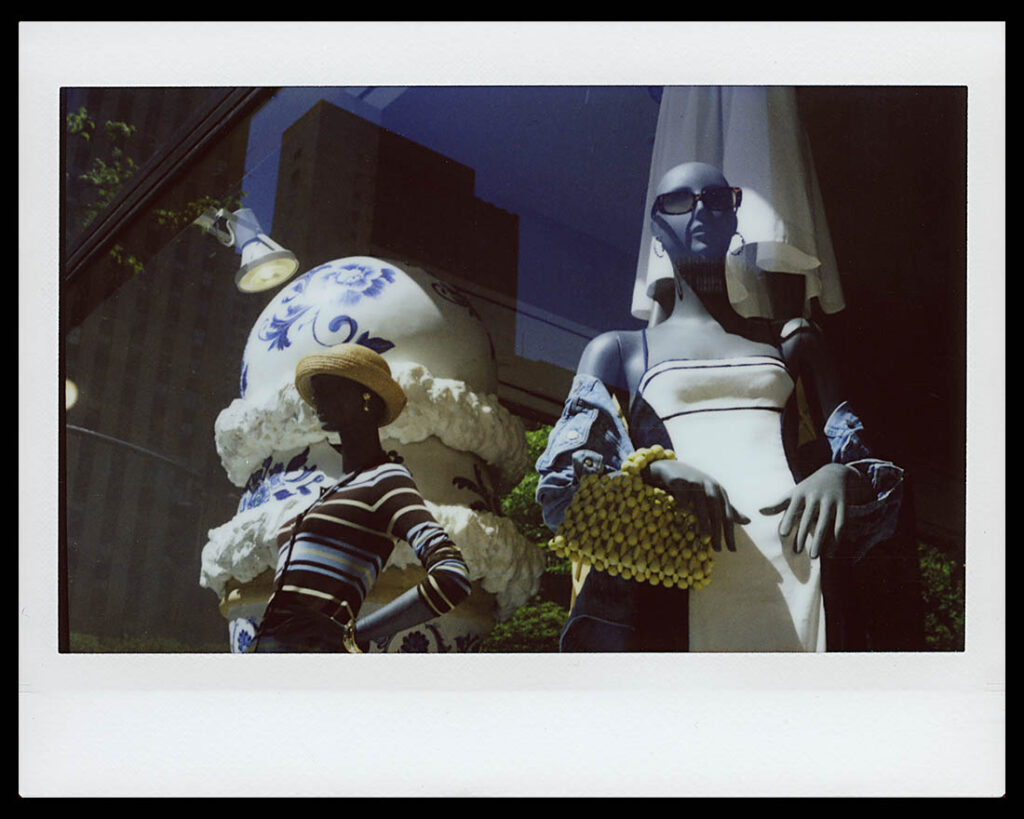
Photographers have been trying to find workarounds for shooting Instax in Polaroid cameras for nearly two decades. In addition to full Instax / Polaroid conversions, there are a number of “hacks” that do allow you to use Instax in a Polaroid, but these come with all sorts of compromises – or require so much time and effort to put into practice that they simply aren’t tenable solutions for the rest of us. A year ago, after exploring these options, I decided that there had to be a better way. Thus I set out upon my quest for the holy grail of instant photography, and was rewarded, after six months of research and development, with a system that actually works.
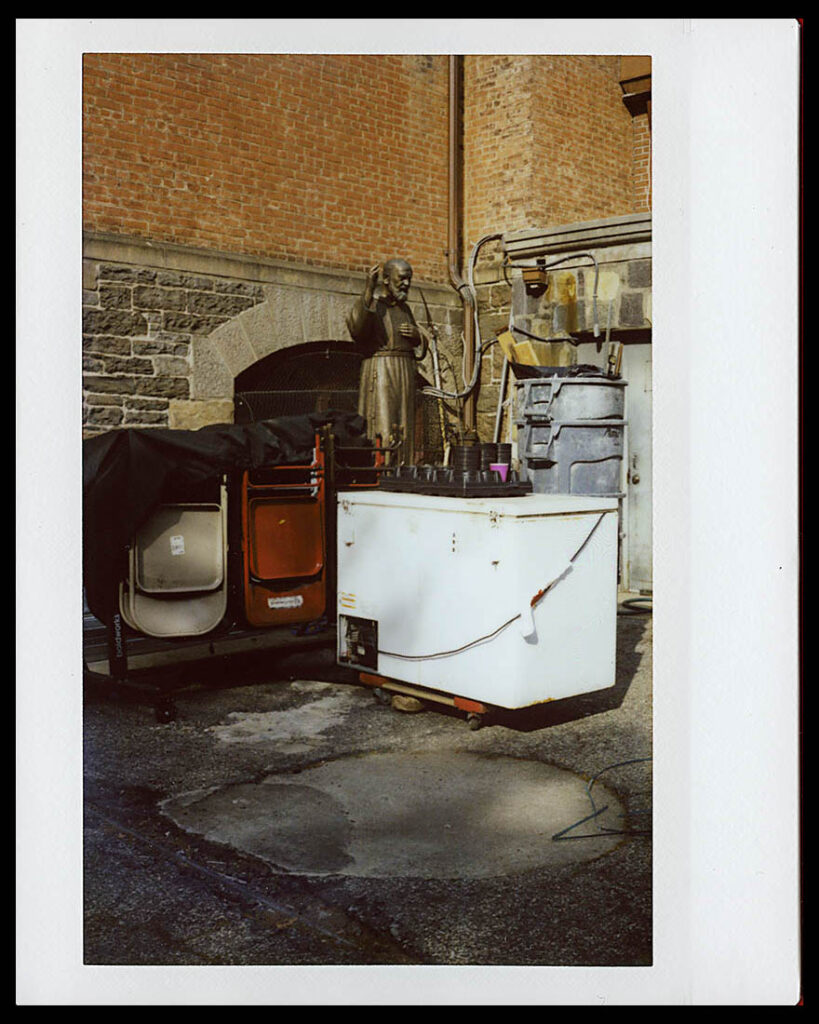
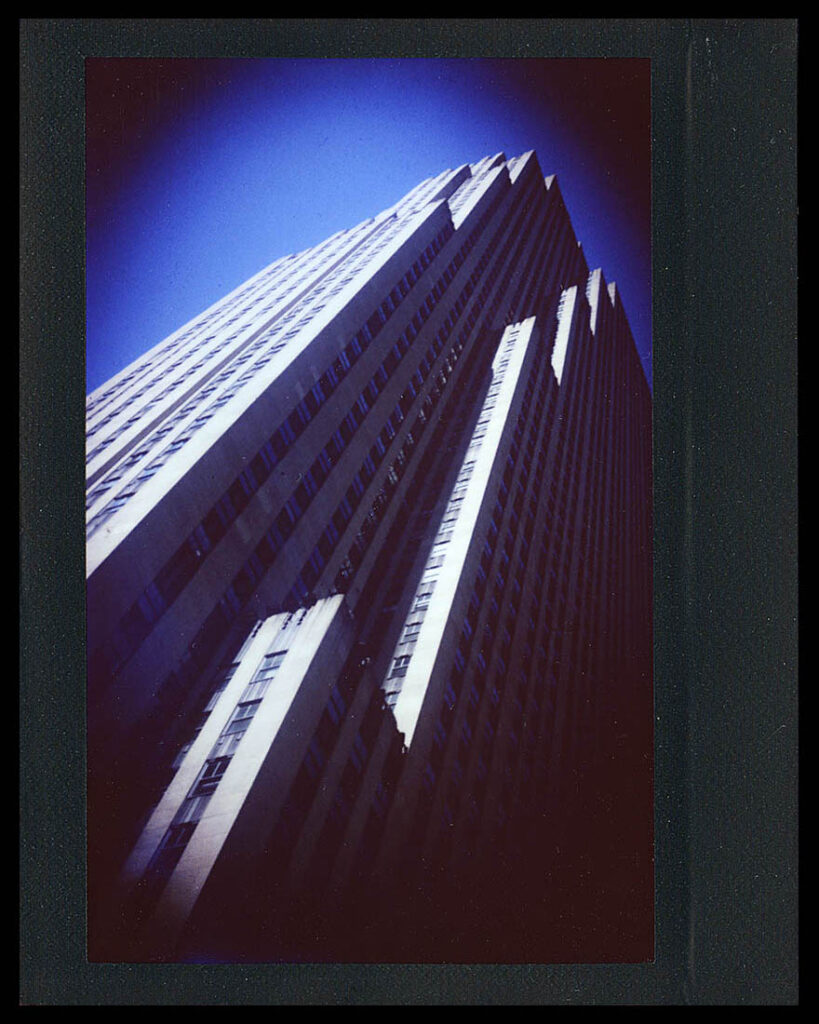
It’s not a perfect system: like those who came before me, I do have to load and unload my Instax film in a changing bag the same way I do my large format 4×5 film holders, and because it’s impossible to develop Instax Wide in a Polaroid Land Camera (the Polaroid’s rollers aren’t wide enough), I have to do my developing in either a rewired Instax 210 or a Polaroid 545 film back. But now I can use Instax Wide in a Polaroid 250 pack film camera that has manual focus, a three element f8.8 glass lens, a coupled rangefinder with parallax correction, and a tripod socket. And let me tell you, Instax Wide absolutely shines when it’s put behind a proper lens. It really is a magnificent film stock.
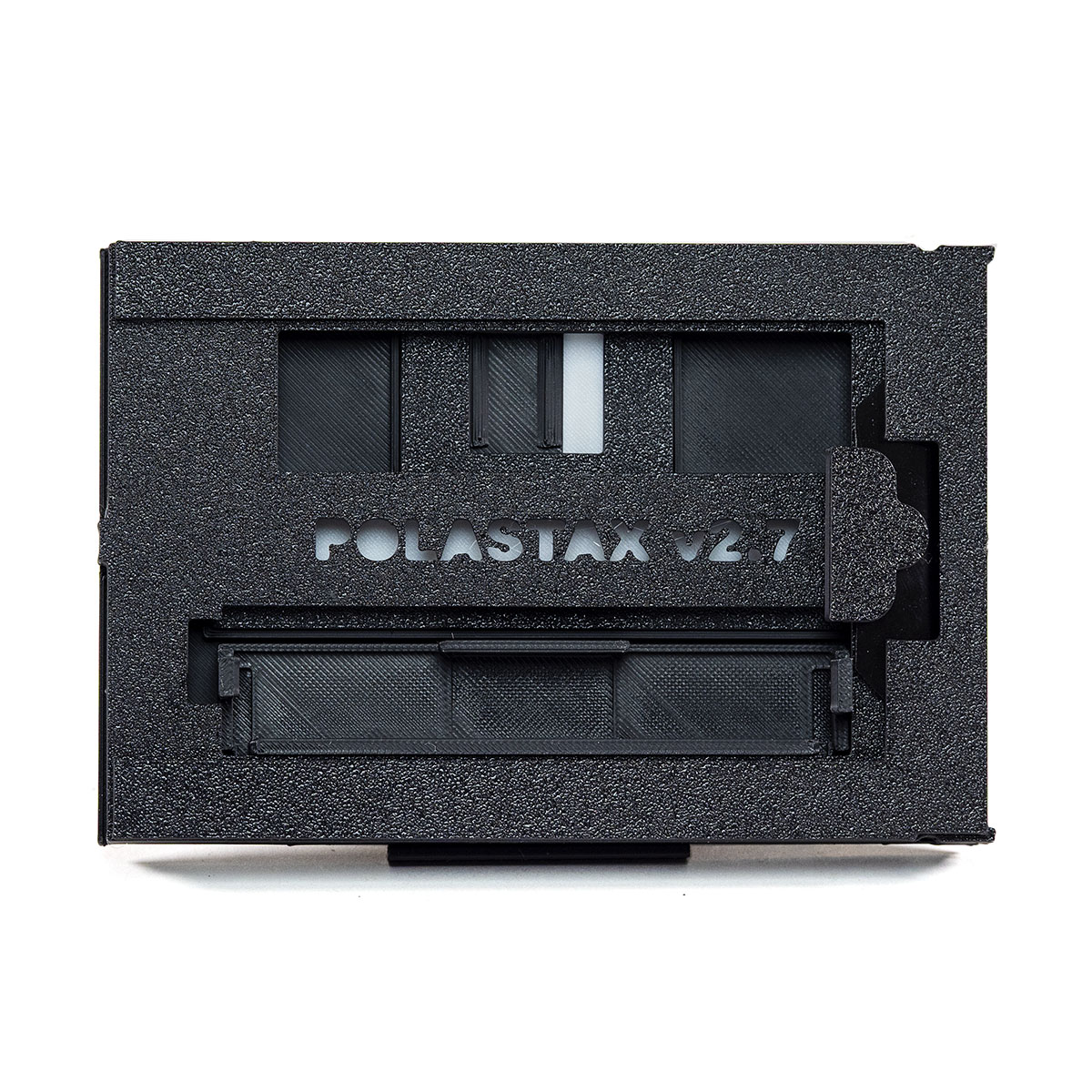
So how do you easily use Instax Wide in a Polaroid? Well, since I’m never going to shoot pack film again – it no longer exists – I can, in good conscience, modify the film lid of a pack film camera to work with my PolaStax Instax Wide film holder. This is a really simple mod that takes less than five minutes and can be performed by anyone who owns a screwdriver. You just have to remove the moving parts from the film lid; toss those metal bits and put either a piece of cut card stock or some light proof tape over the rollers and you’re good to go.
With that little bit of extra space carved out of the film lid, we have enough room for the PolaStax film holder, which is equipped with its own unique dark slide. Unlike a conventional dark slide that’s removed from the holder before you shoot, the PolaStax dark slide rolls from the front of the holder to the back. Why? Think of it this way: you put a film holder with unexposed film into the film compartment of a Polaroid camera, shoot your shot, and now you want to take the holder out of the camera. If the dark slide has already been physically removed from the holder, how are you going to put it back in again without ruining your film? This is why the PolaStax has the dark slide built in. You load film with the slide rolled to the front of the holder; you shoot with the slide rolled to the back, where your film sits. In this way, your Instax Wide film is always protected.
“Ah, excuse me,” you exclaim, “but how can you expose Instax correctly in a Polaroid Land Camera when the Instax is rated at 800 ISO and pack film was rated at ISO 3000?” An excellent question! The answer is that you need to reduce the light entering the light meter by two stops when you’re shooting on the 3000 ISO (really ASA, but don’t worry about that) setting and reduce the light entering the lens by three stops when you’re shooting at the 75 ISO setting.
I’ve designed a 3d printed light meter cap that holds a 0.6 ND gel and fits perfectly over the light meter on all of the 100-400 series Polaroid pack film cameras. I’ve also come up with an over the lens filter adapter that works with 40.5mm 0.9 ND lens filters. So you use the light meter cap when you’re shooting Polaroid’s 3000 setting, which gives you aperture choices, generally, of f8.8 and f52, and then you swap that cap for the over the lens ND filter when you’re shooting on the 75 setting, which gives you apertures of f8.8 and f12.5.
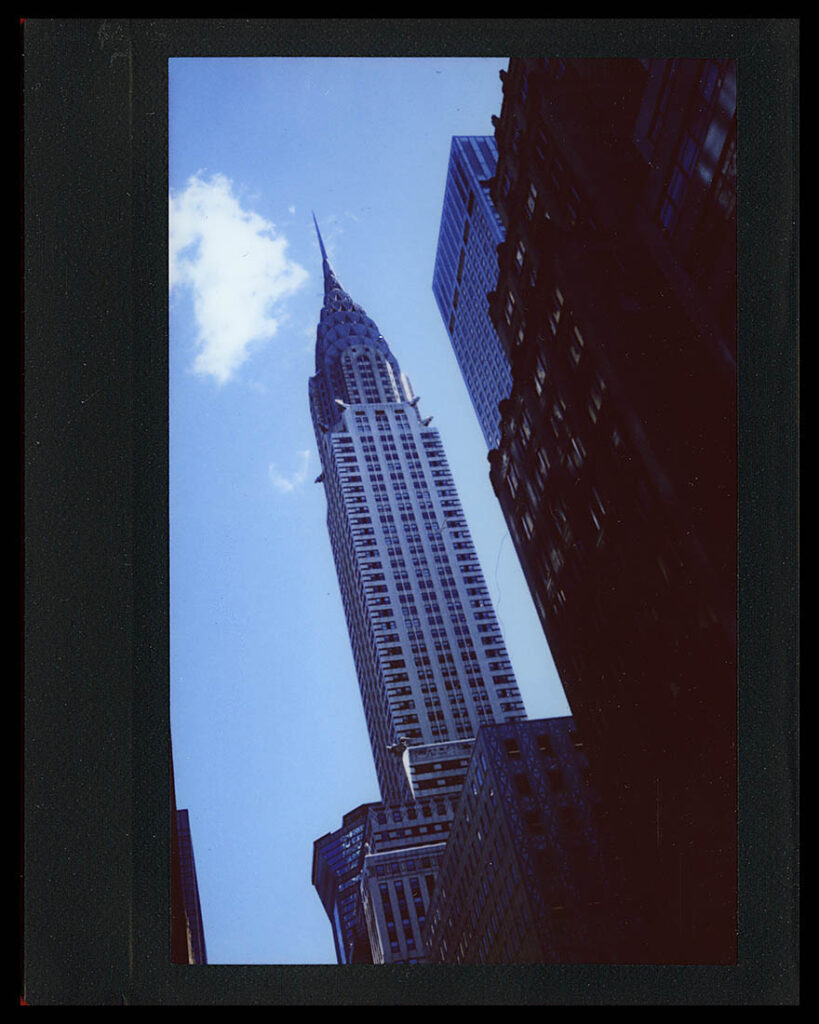
The PolaStax Instax Wide film holder is 134mm long by 89mm wide (sans safety cap) and is just 17mm thick. Thus carrying several of these in your bag, loaded with film, is comparable to carrying around 4×5 film holders. What’s more, they will also work with large format Polaroid 405 pack film backs (again, with slight modifications). So unlike those DIY hacks that are camera specific, the PolaStax holder lets you use Instax Wide in virtually any camera or camera back designed for pack film. This includes Polaroid adapters for Mamiya and Hasselblad medium format cameras.
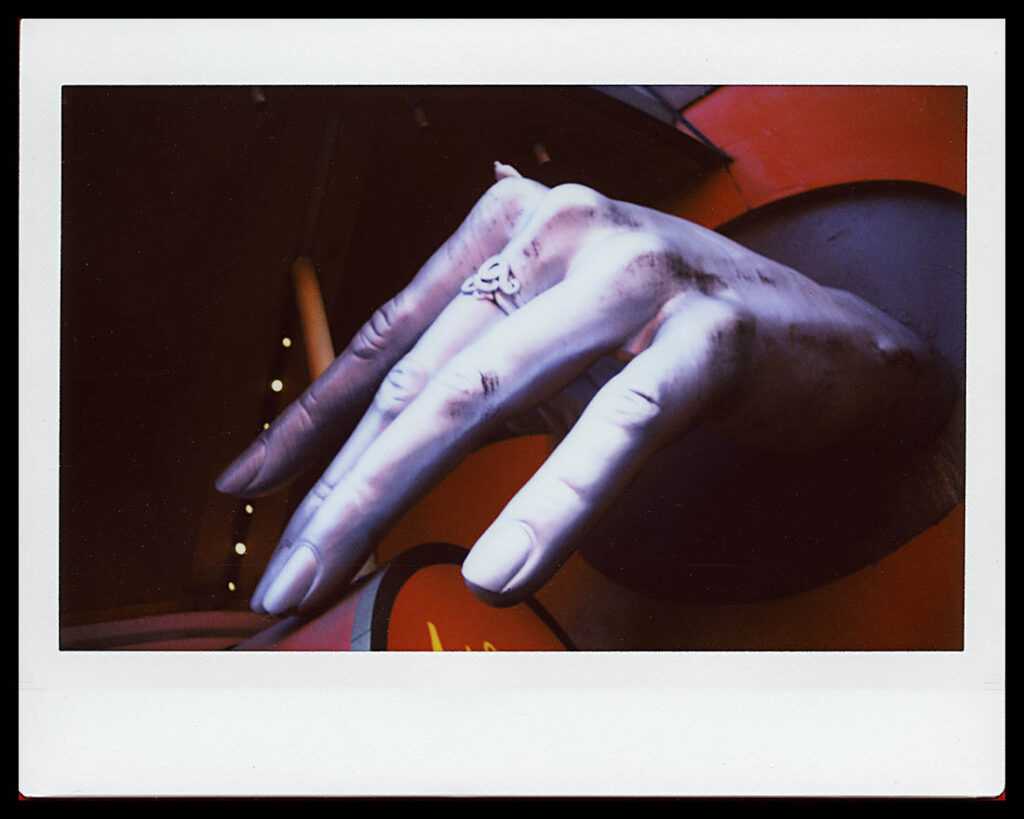
To learn more about this process, check out the PolaStax Instax Wide film holder at polastax.com, where I’ve also posted an article in the blog explaining how to use the holder with large and medium format pack film backs. Or visit the PolaStax YouTube channel for tutorials and more info.
Share this post:


Comments
Gary Smith on How to Shoot Instax in a Polaroid Camera
Comment posted: 17/06/2026