

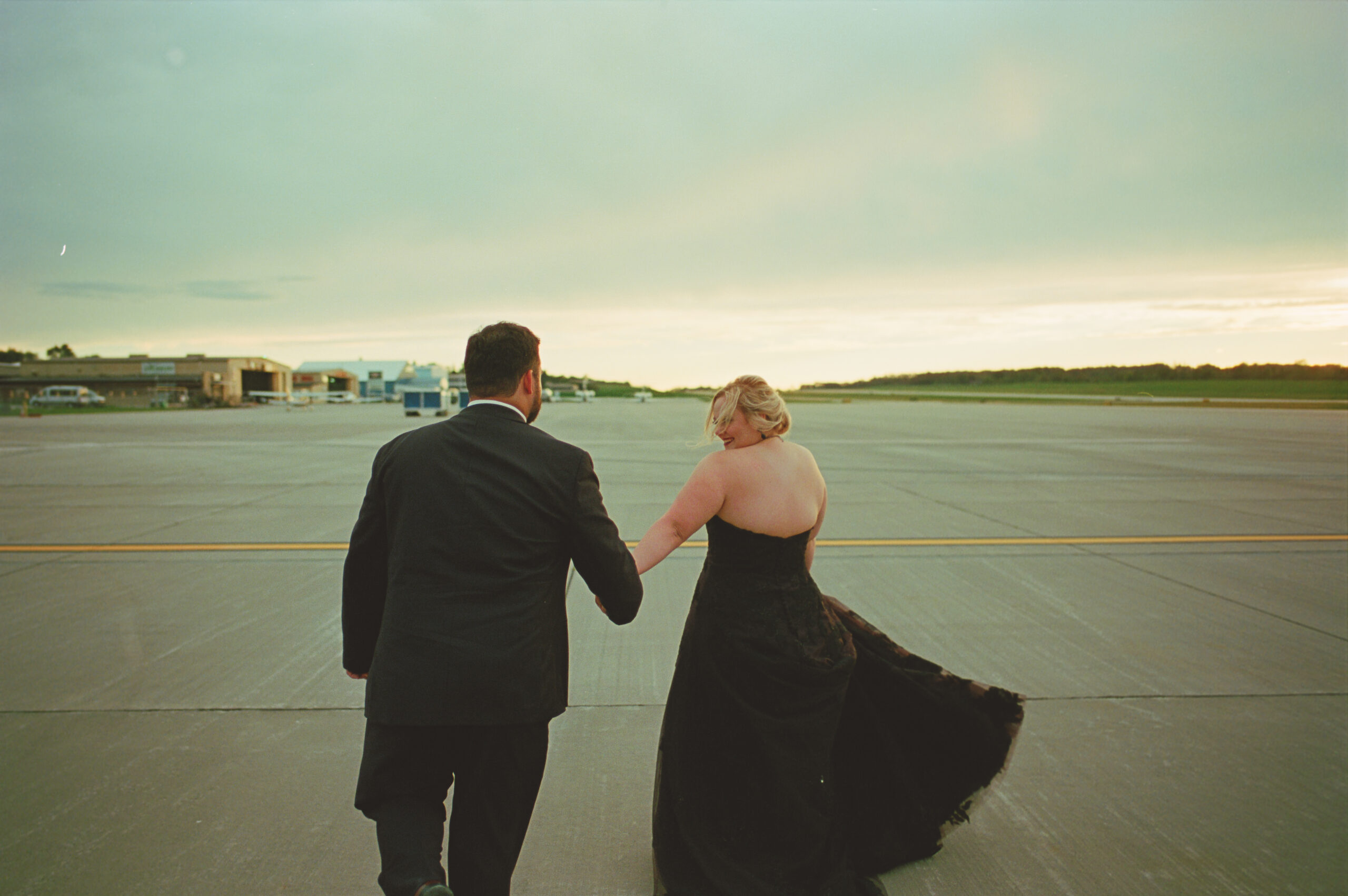
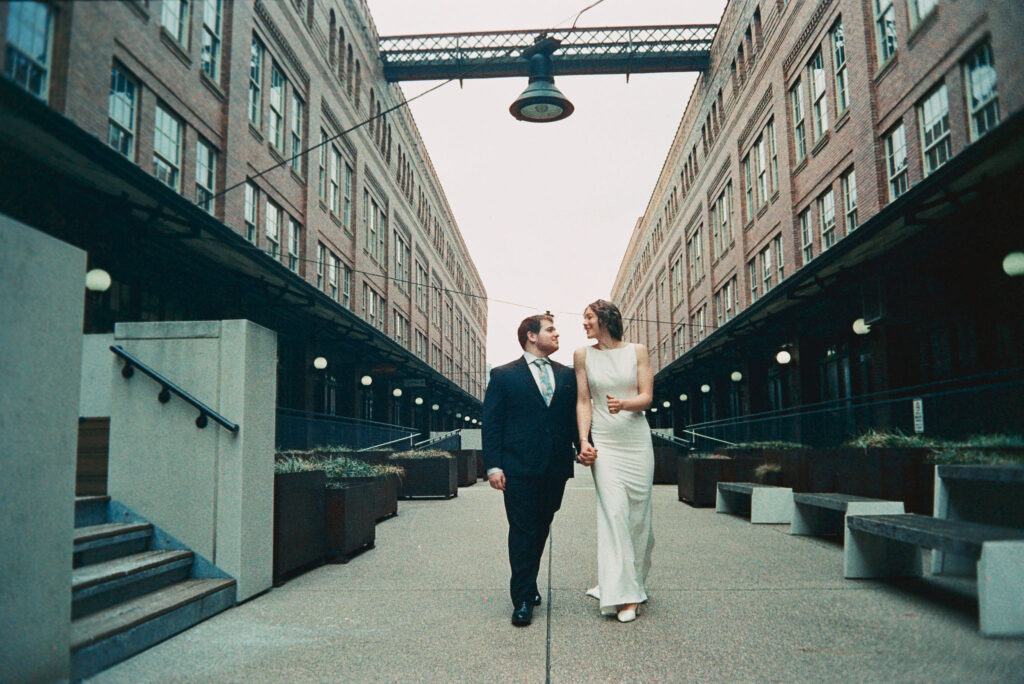
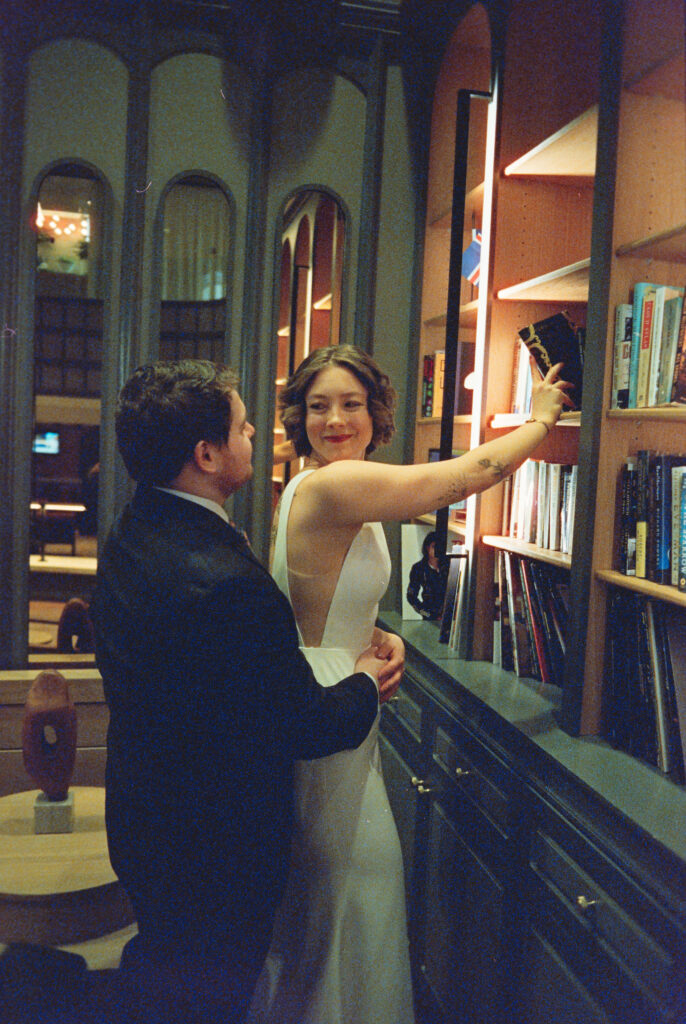
My wife, Ellie, and I photograph (and video) weddings around Pittsburgh through our brand Eternal Lens Media. We include film alongside digital photographs in every photography package. I want it to be a familiar part of our work, something that belongs in the gallery.
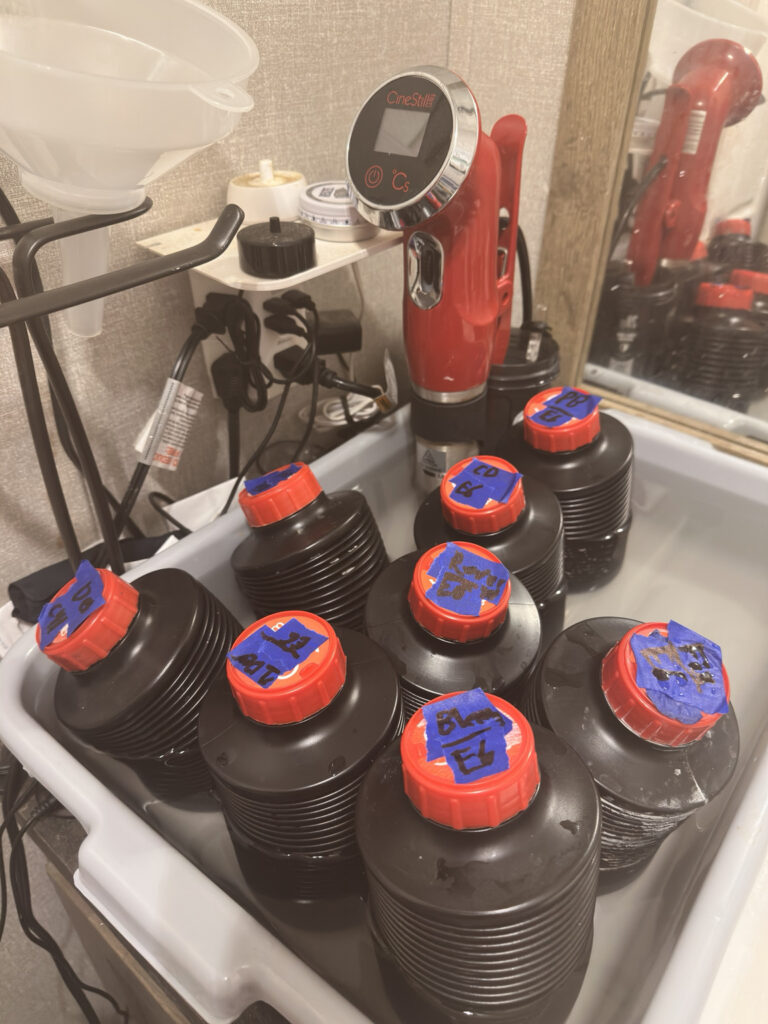
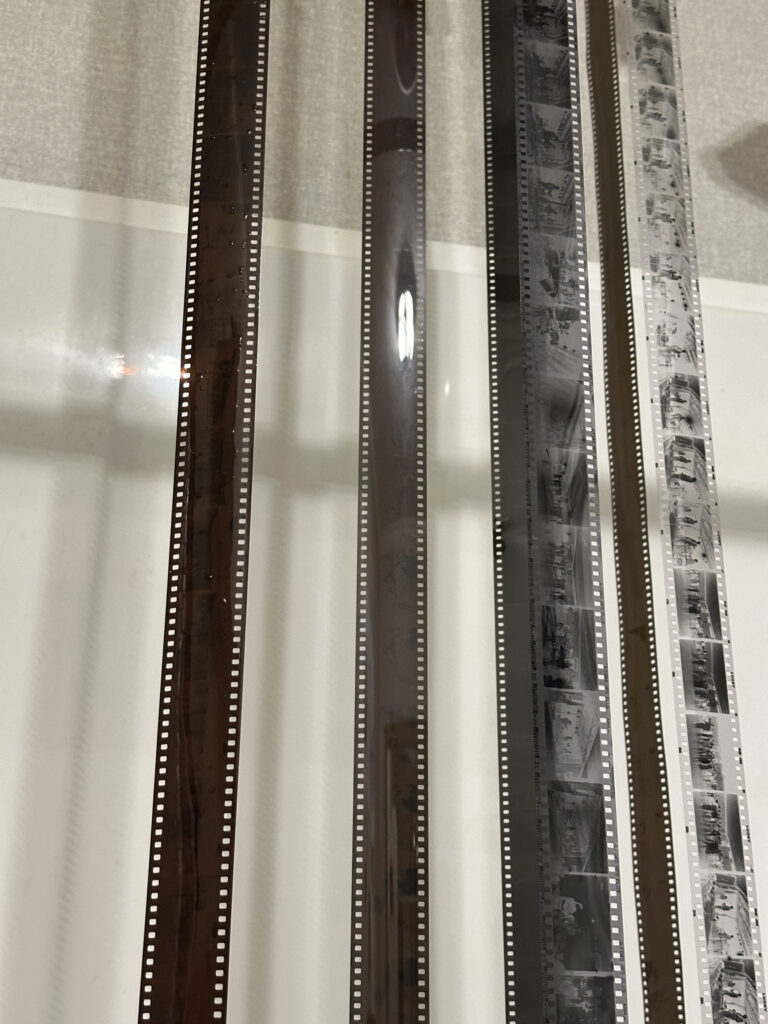
My darkroom is our second bathroom. The chemistry warms in a water bath beside the sink, and strips of film hang up to dry. It is a fairly ordinary room to find somebody’s wedding photographs in.
The reason they end up there is practical. During busy parts of the year, I’ve encountered local lab turnaround times stretching beyond a month. When you’re waiting to finish a couple’s wedding gallery, that is a long time to have part of their day out of your hands.
At home, I can develop three rolls in half a day, or six over a full day when I need to. There is still drying, scanning and editing to do, of course. But I can make room for that work in my own schedule.
That was the reason to bring development home. Handing the finished film to a couple has become a reason to keep doing it.
Film as part of the wedding
For Seth and Brittany’s wedding, I used a mixture of stocks, including CineStill 800T, KONO Color 200 and KONO Color 400. Their wedding gallery has a dedicated film section, which gives a fuller sense of the results than a single favorite frame could.
Using several stocks gives me different starting points when I get to the scans. It also means I have to pay attention to what each roll needs. “Film” covers quite a lot of ground. A color negative and a transparency ask different things of me, both when I expose them and when I prepare them for delivery.
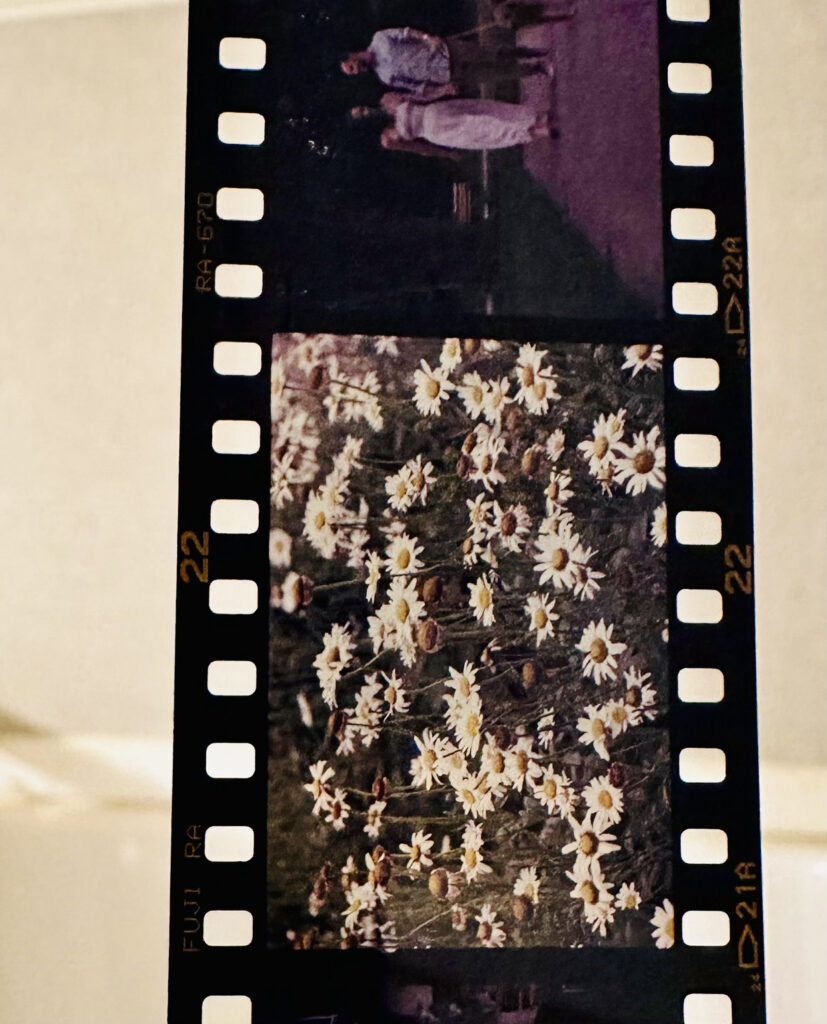
I try to shoot at least one roll of slide film during a wedding if the weather and light permit. There is a particular reason for that, and it has very little to do with how the photograph will look on Instagram.
Back in the bathroom
The photographs of my setup are probably the best explanation of its scale: bottles with handwritten labels on the caps, a temperature controller in the water bath, film hanging nearby. This is where the work happens after the cameras have been put away.
Developing at home gives me control over the queue. It also makes me responsible for the parts a lab would otherwise handle. A shorter turnaround is useful only if the film gets the attention it needs.
For anyone considering a similar arrangement, I would count the whole job before deciding how much time it saves. Development is one part. The film still has to dry, each frame needs scanning, and the scans need working through. Bringing the process home moves that work onto your own desk.
For me, that is a worthwhile trade. I’m already invested in these photographs, and I like following them through the process. There is something satisfying about seeing recognizable scenes on a strip hanging in a room at home: people I was photographing, now rendered in these tiny frames. Plus if we are being honest I like to have control even over this part of the process.
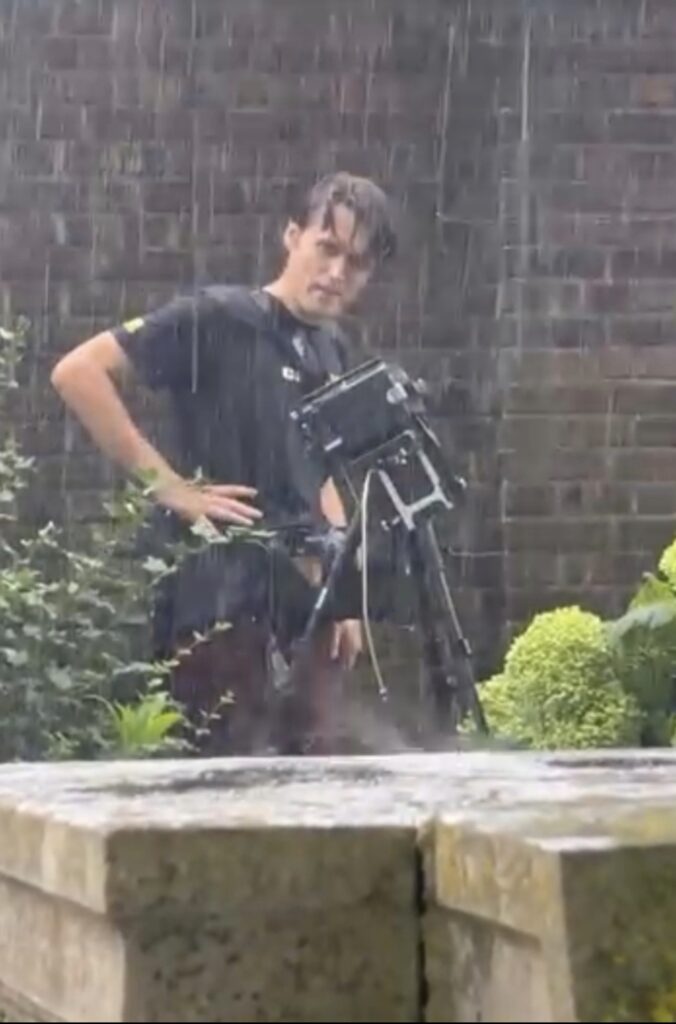
There is also a photograph of me standing in pouring rain with my Speed Graphic 4×5. Between that and the bathroom, I have supplied fairly good evidence that my enthusiasm for film occasionally gets ahead of my interest in comfort.
The negative still needs interpreting this is where scanning and converting come in.
I scan with a Nikon Z6III, a NIKKOR Z MC 105mm macro lens and a CineStill SpectraColor light source. The digital camera has a second job here, photographing the film so I can work on it and deliver it alongside the rest of the gallery.
Most of my negative conversions go through Negative Lab Pro. I also use the Ember film app and CineStill’s Lightroom tools, depending on the scan. So far, Ember has been particularly useful when I want a precise look from slower films. I sometimes find that grain appears more pronounced in those conversions, though. With more general-purpose stocks, I often get on better with Negative Lab Pro. Occasionally, a scan made under difficult lighting responds better to the CineStill tools. Those are observations from my own files. They aren’t a ranking of the software, and another photographer’s exposures, scanning setup and taste may lead somewhere else entirely.
The useful lesson has been to look at the photograph before deciding that a particular conversion is finished. The first result on screen is an interpretation. Color, contrast and the visibility of grain can all affect how I feel about it. I want the finished image to carry what drew me to the frame in the first place. That part takes judgment, even with a workflow I know well. Owning the scanner does not remove the need to make decisions. Letting go of digital perfectionism and perfectionism in my work in general has been an ongoing challenge but one I feel is making me a better creative photographer.
Something they can hold
After scanning, I sleeve the negative strips. They are either filed away or delivered to the couple, depending on their preference. When they want the originals, those can accompany their wedding album.
Slide film is especially enjoyable to share because the photograph is already there in positive form. The couple can look through it and recognize their day without needing me to explain an orange negative or open a file.
If they seem enthusiastic, I’ll sometimes cut and mount the slides and include a little viewer. How far I go with this depends partly on how interested they are. I am quite capable of becoming the person explaining slide film for longer than anyone expected. Still I’m surprised by the number of couples that specifically ask for it as a keepsake.
What I really want to explain is simple: this is the actual piece of film that was inside the camera at your wedding. Light from that day exposed it, and development made the image visible.
I think of it as keeping a little of that day’s light. That is a sentimental way to describe a chemical process, but I photograph weddings. I’m allowed a little sentiment.
As generated images become more common, I find myself caring more about these physical objects. An album can be opened together. A slide can be held to the light. The original film has a direct connection to the people and place I photographed.
Digital is an essential part of my work. Film often gets closer to how I remember a moment feeling. I’m glad I can give couples both, and, when they want it, send them home with the small strip of film that was there with us.
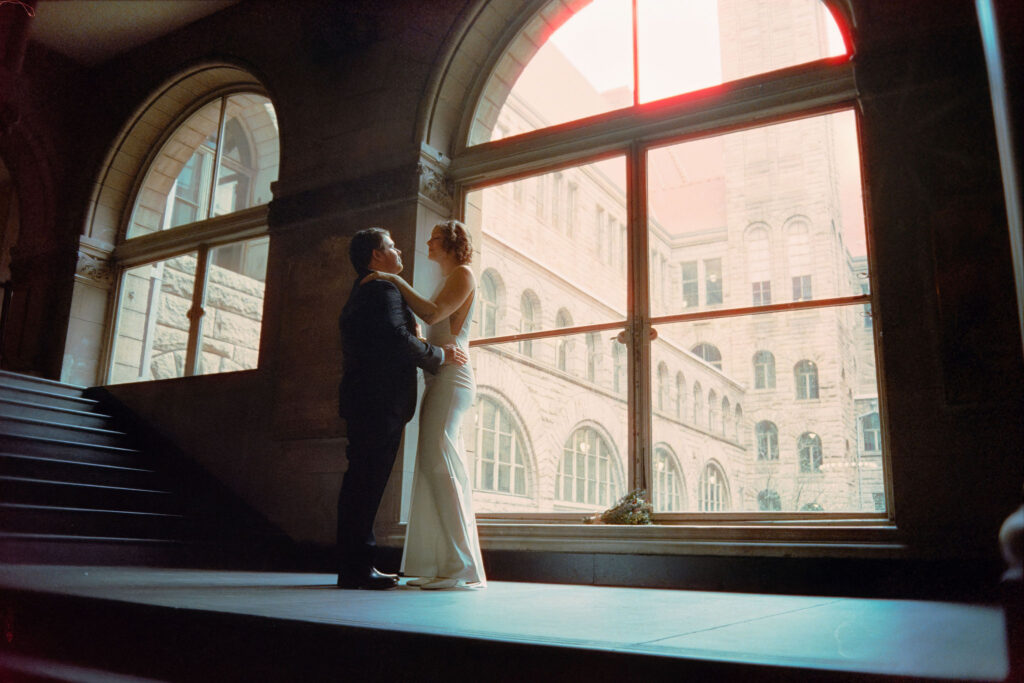
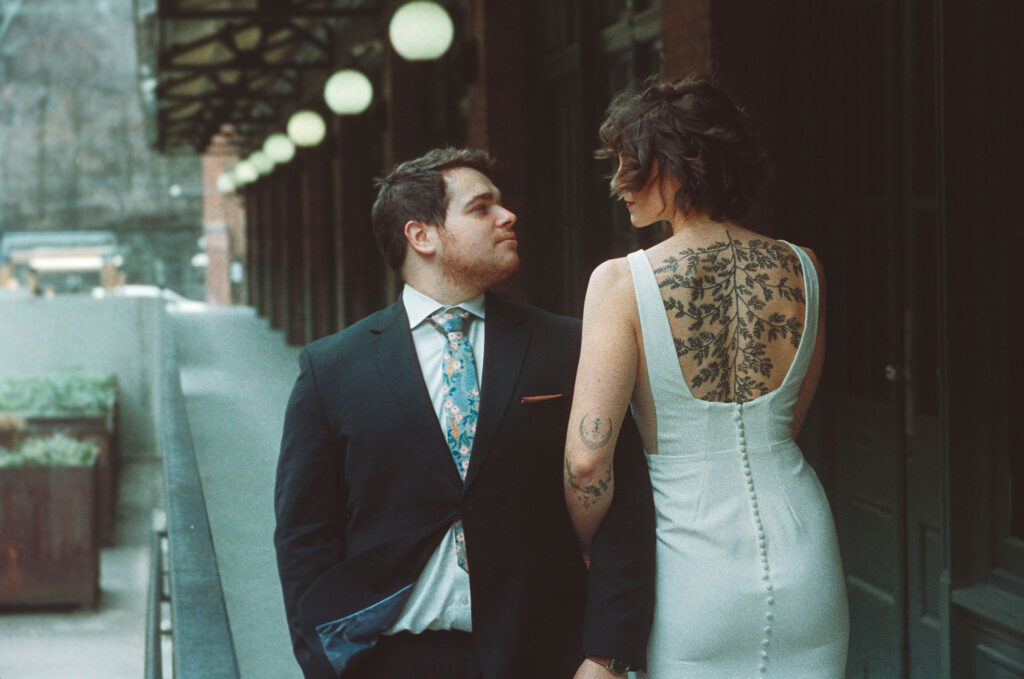
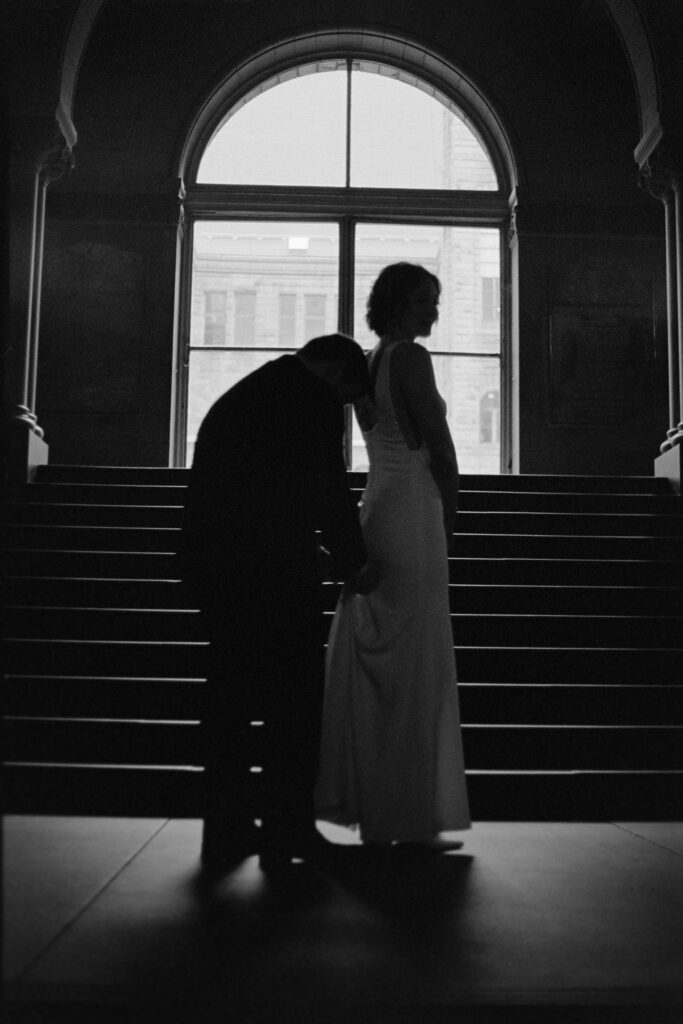
I also plan to write a few articles for other photographers who are getting into wedding and event photography on film. In those pieces, I’ll go into more detail about the equipment I use, my workflow and other practical considerations relevant to this particular niche.
Steven Kemerer is a wedding photographer based near Pittsburgh. He and his wife, Ellie, run Eternal Lens Media, working with digital and film photography. You can also find their work on Instagram at @EternalLensMedia.
Share this post:


Comments
No comments found