

As the only photographer many of my friends know, they have sometimes offered me their families no longer wanted old camera, usually another worn brownie of various odd lineage and quality. I have a couple already and don’t need more.
Over the last couple years as I’ve been winding down my digital-based career, my interest in shooting film again has blossomed. I find myself pouring over reviews of various cameras and film types I read about here on 35MMC and in other blogs. I have ‘restored’ some of my old film gear including my old Nikon and Olympus bodies from my 70’s and 80’s newspaper days. I’ve even bought a few new-to-me old film cameras.
I’m on the art and sculpture committee of a lovely public garden here that has a nice gallery space on site. Our committee arranges the gallery shows and I help hang them. A couple weeks ago, before the start of a meeting, another committee member brought in some ‘old family cameras’ she wanted to get rid of. She thought of me and I’m glad she did.
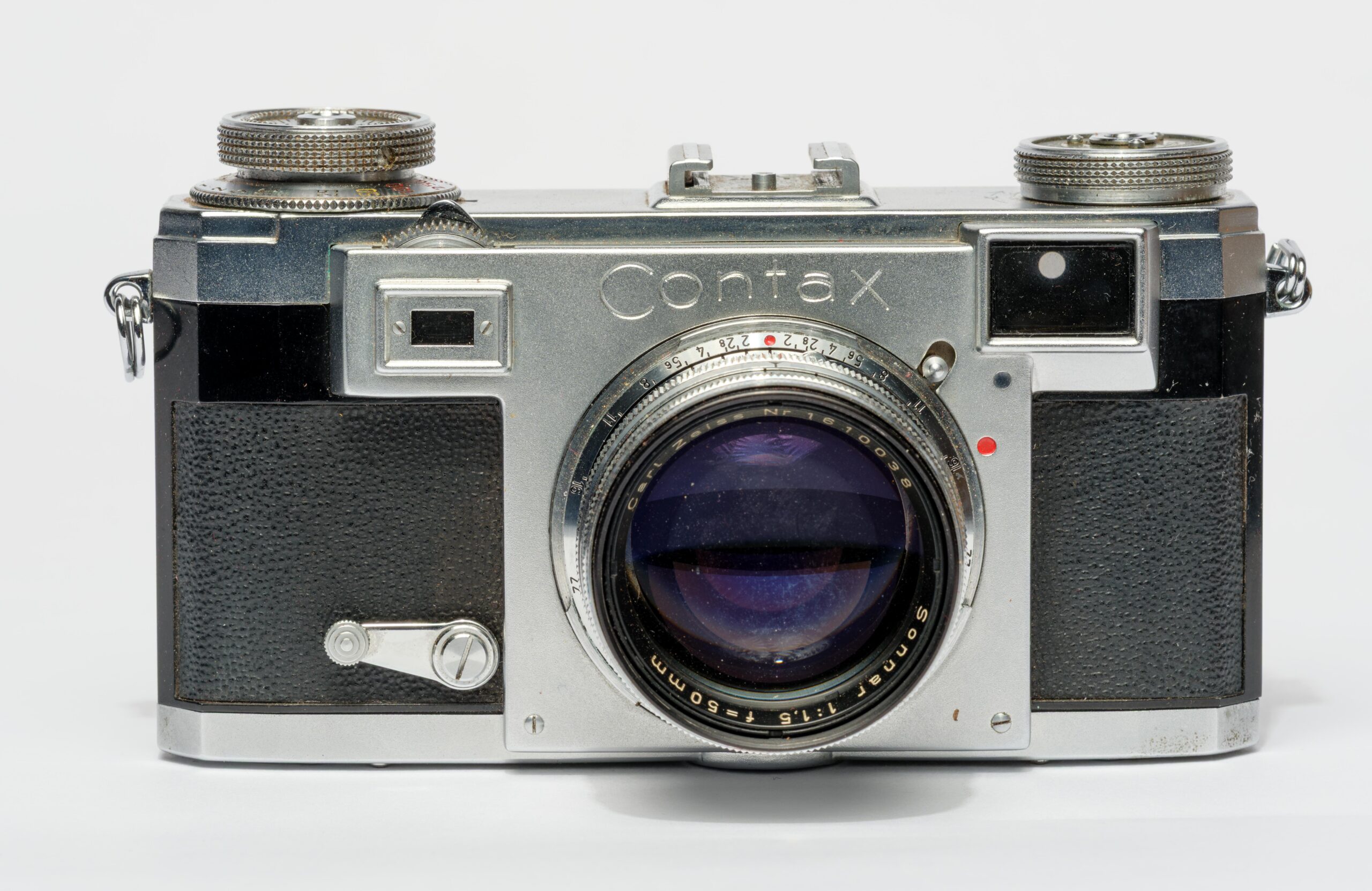
Her old distressed leather camera bag had promise. I watched her pull out a camera still in its leather case. My eyes surely bugged out when I saw a beautiful Contax Zeiss Ikon IIa with the 50mm 1.5 Sonnar. This I believe is the same model and lens combo Robert Capa used going ashore on D-Day.
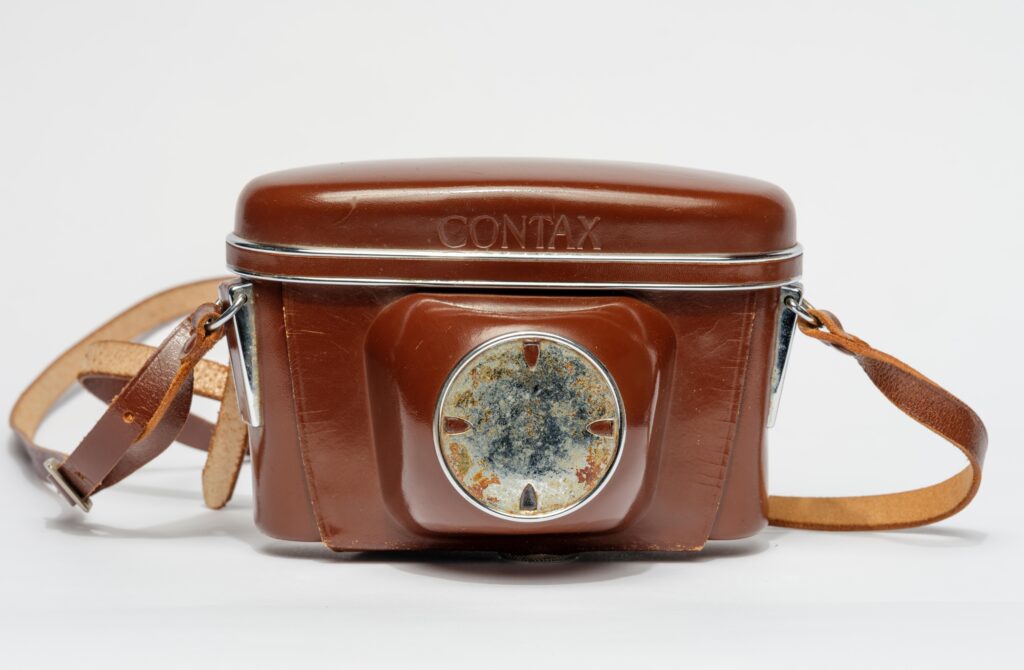
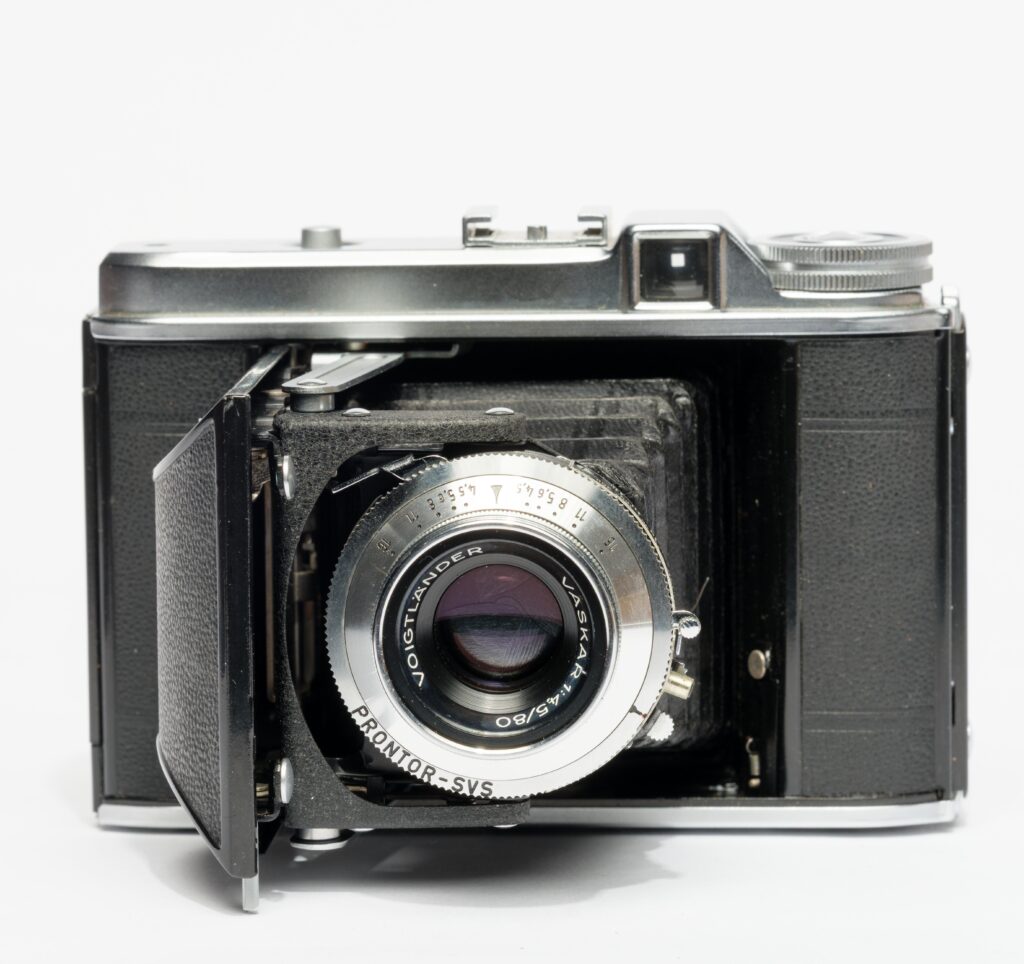
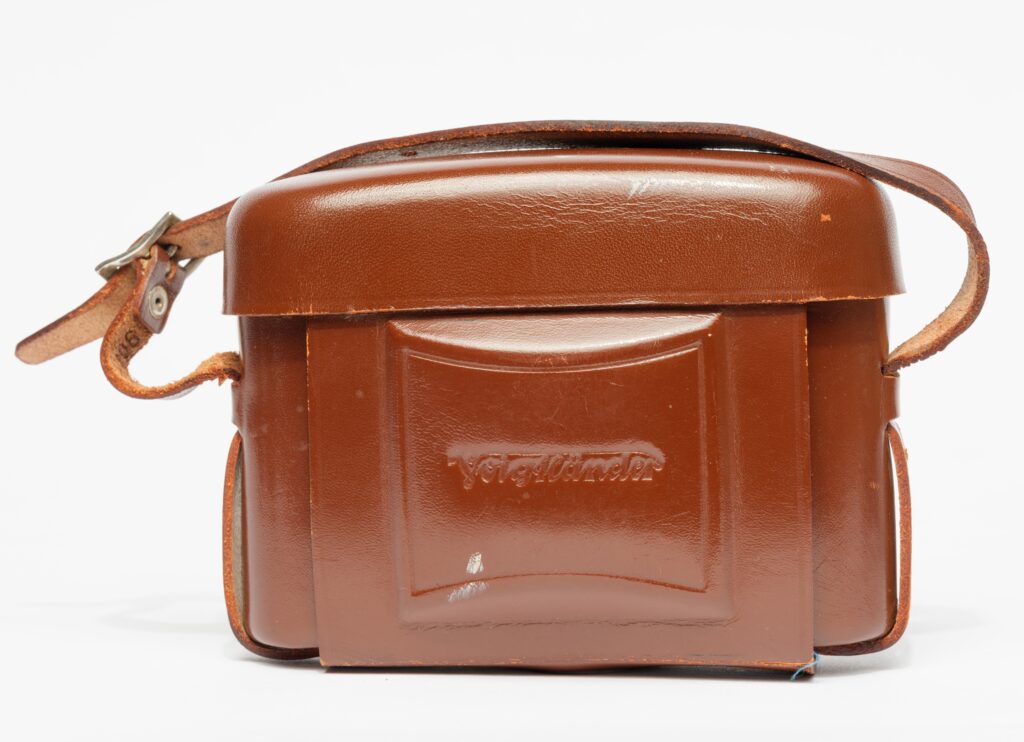
Digging further into the bag she lifted out a nice Voigtlander Perkeo I and two Nikkor S lenses, a chrome135mm from the 50’s and a 28mm. All the gear came in its original leather case which were in fine shape. There was even a cold shoe attachment viewfinder by Walz that zooms from 28mm up to135mm.”
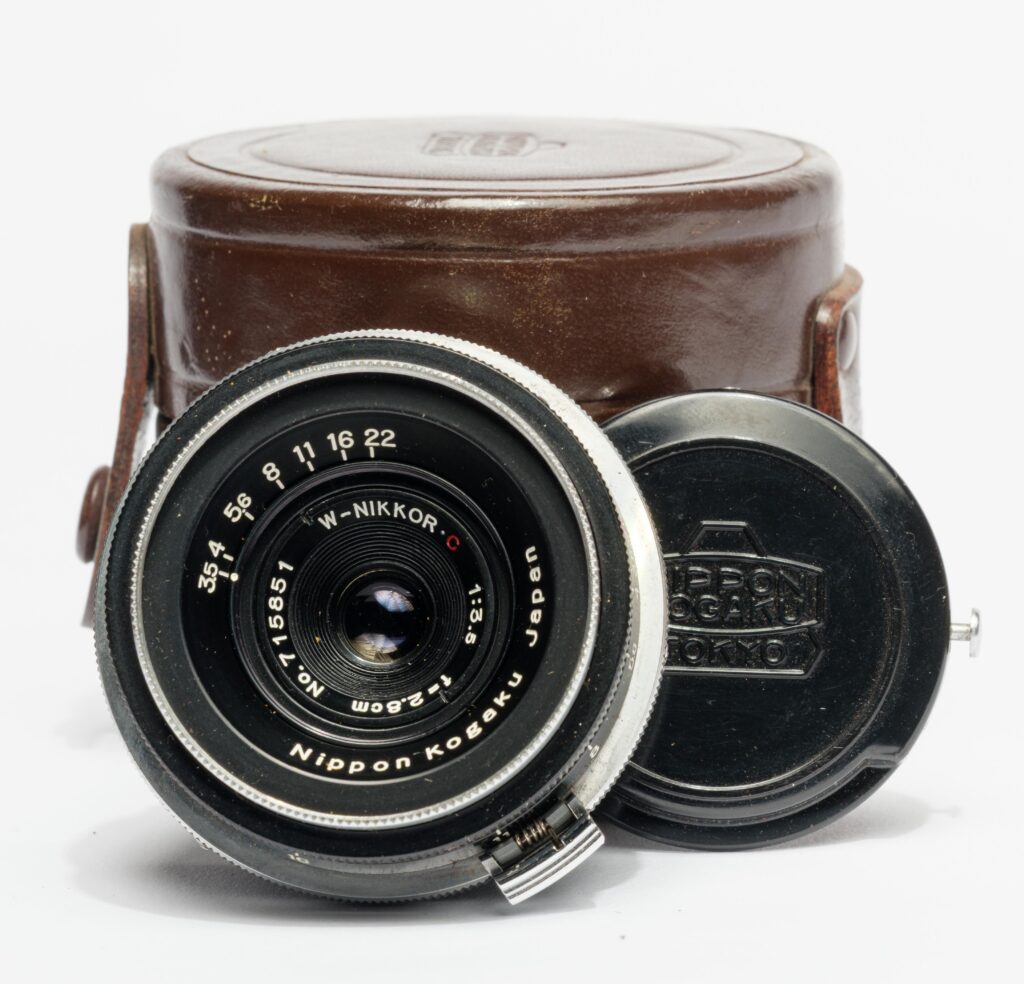
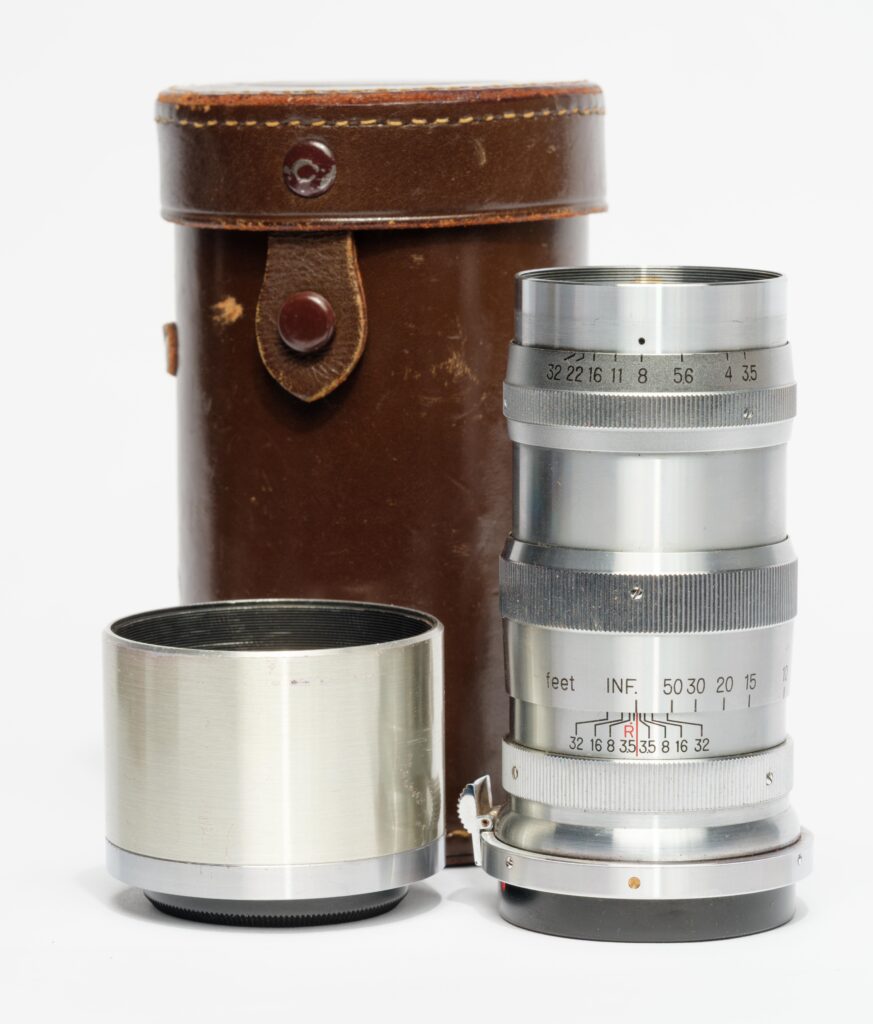
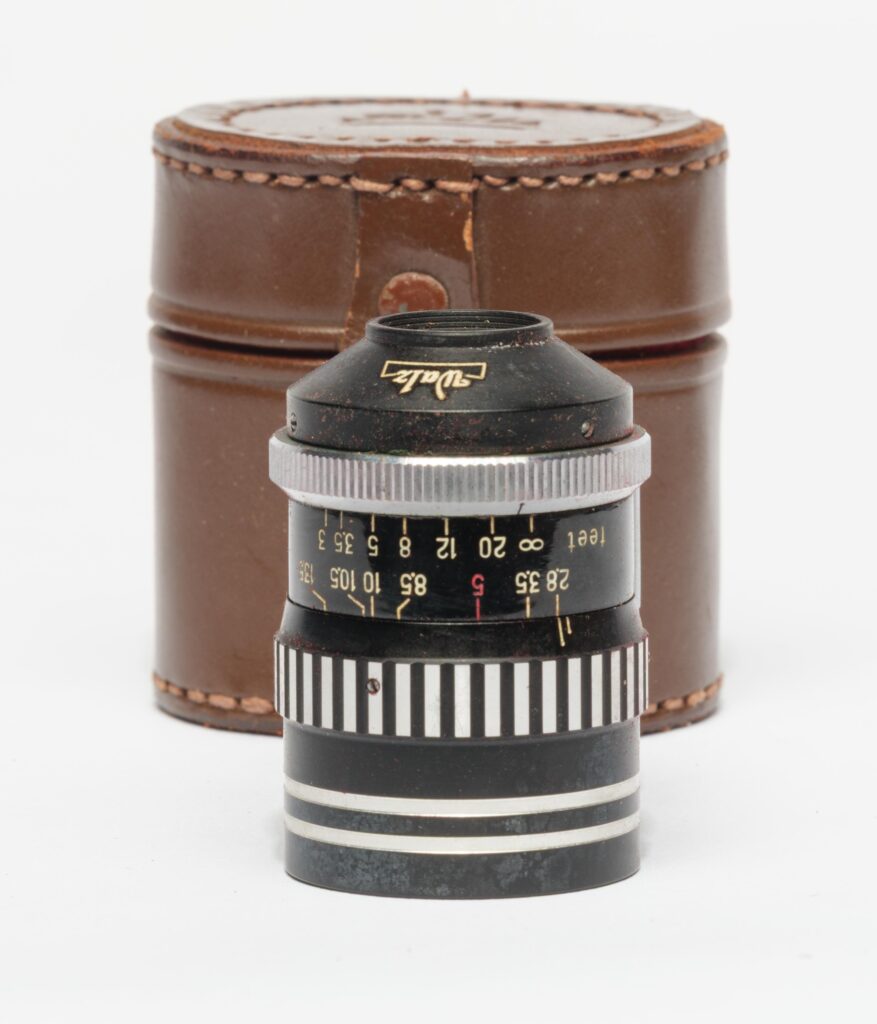
Grinning ear to ear I made her an offer for the bag and she accepted it. As soon as I got home, I immediately spread it all out and dove in to see what was working and what needed help. The Nikkor 135mm aperture blades were frozen and fritzed out. But that lens doesn’t hold much interest for me. I’ll probably sell both the Nikkor lenses.
The Perkeo looks good, shutter speeds seem right too. I haven’t had a chance to run a roll through it yet. But I love a good MF folder. That tiny jewel of a 50mm Sonnar on the Contax is clean and clear as it is on all the lenses she shared . The 28mm S Nikkor ‘C’ looks like it just came out of the box.
Sadly, the shutter on the Contax wasn’t lifting into the cocked position when wound forward. Back in the 1950’s when it was released that vertical traveling metal shutter was one of the selling points of the camera. The Leica focal plane shutter is made of cloth. Supposedly, leaving the lens pointed at the sun would burn a hole in it. The Contax shutter is built like a tank which appealed to many pros when it was released. A repair shop in Atlanta was willing to take it on the repair. I used them last year for my old Nikon F3 and was very happy. I shipped the Contax and the 135mm lens to them and both were returned in just a couple weeks working perfect.
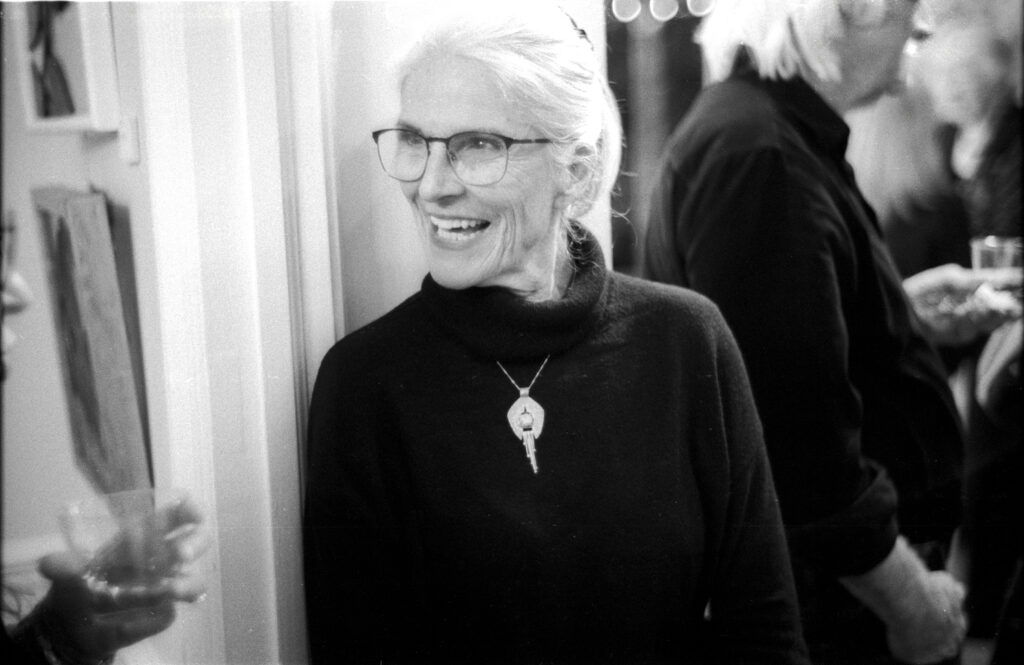
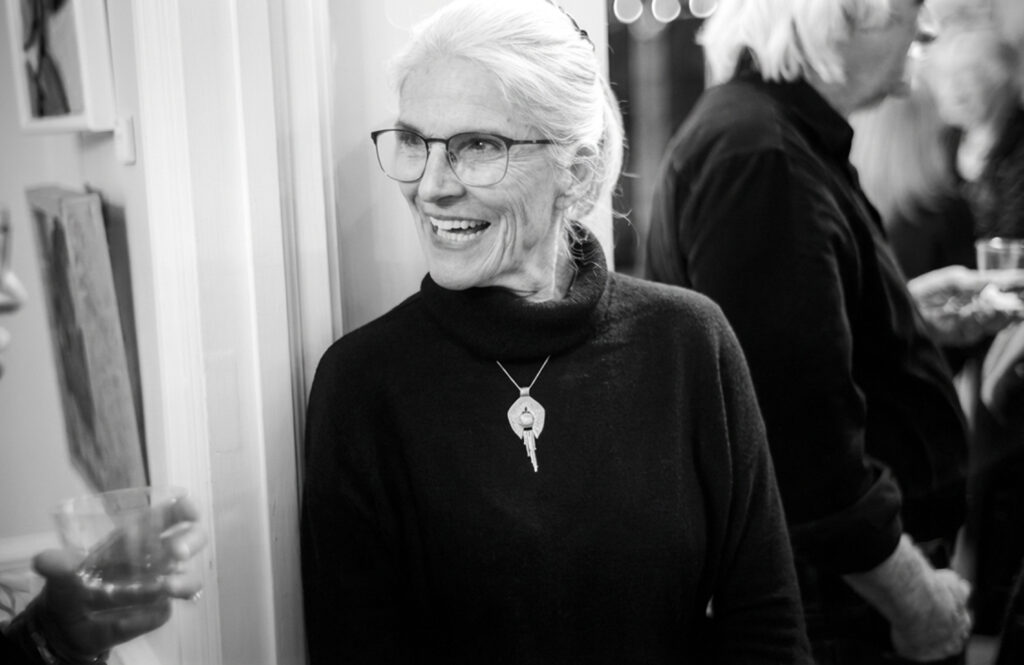
This week I took the Contax back to the gardens where I got it for its first roll, photographing a reception for the latest show in the gallery. I loaded a roll of Tri-X, my favorite film from my early days.
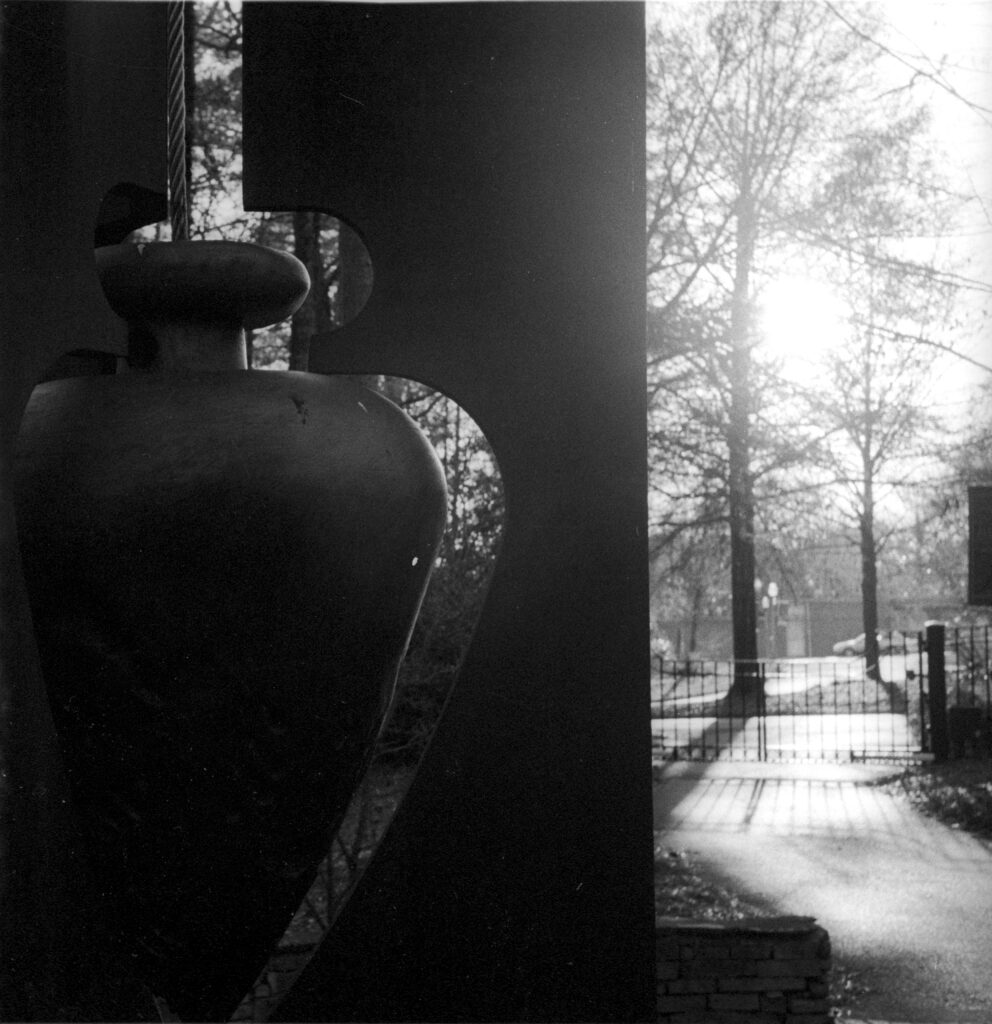
I arrived as the last rays of late winter sun were leaving the gardens. Outside, walking to the gallery, I grabbed a quick frame of a sculpture at 250 @ f8, testing the flair on the Sonnar. Inside at the reception I opened the Sonnar to f1.5, keeping my film at box speed and my shutter at 100th. The gallery is a tough place to shoot since the lighting is brighter on the walls than on faces thus making one decide between either shadowed faces or burned-out backgrounds.
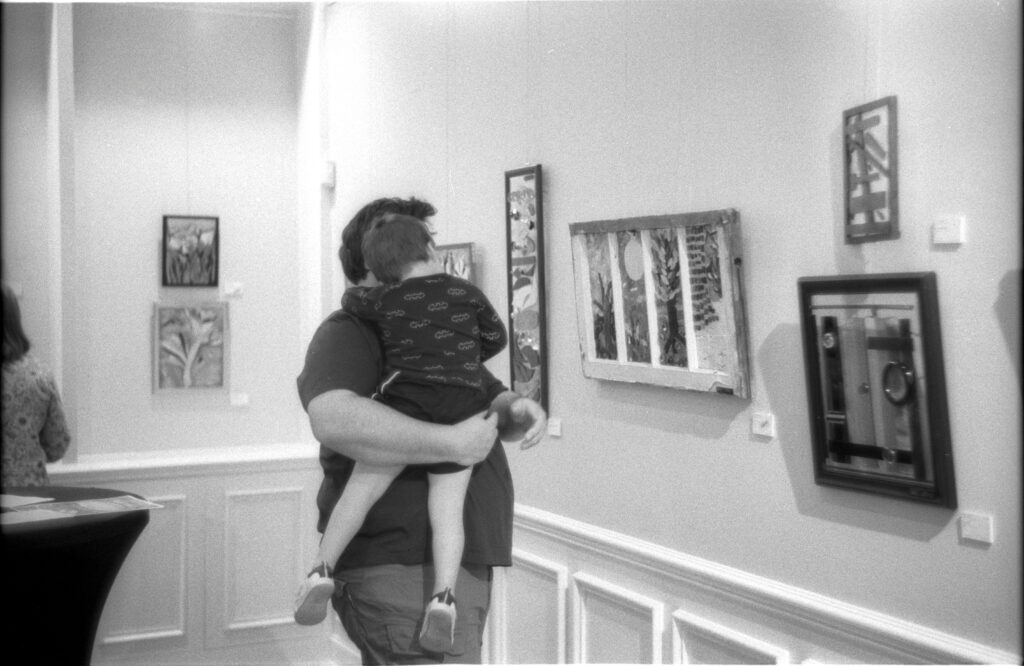
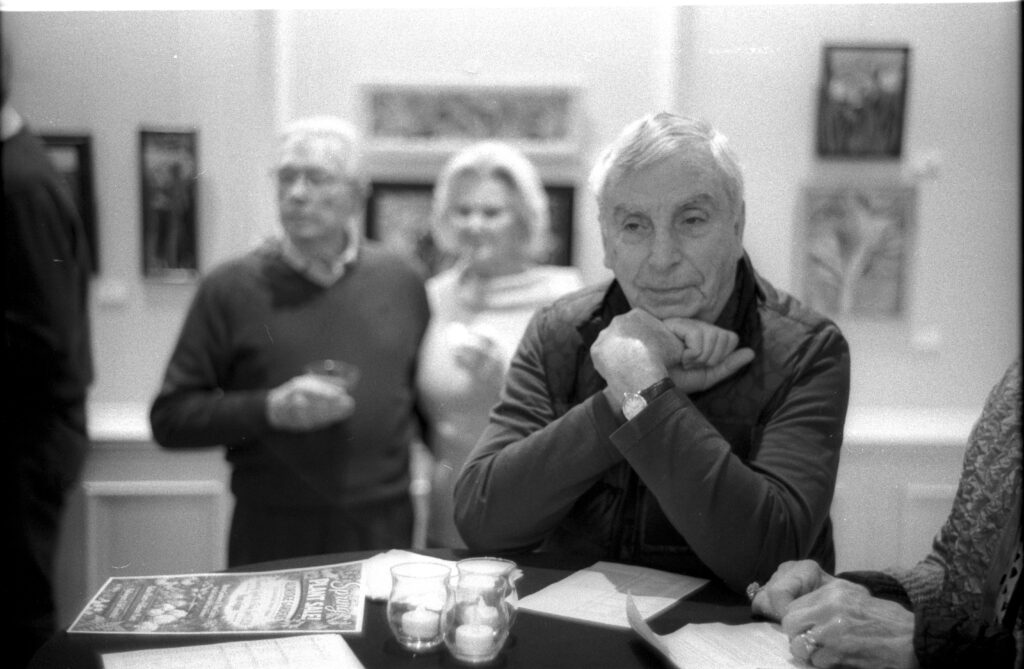
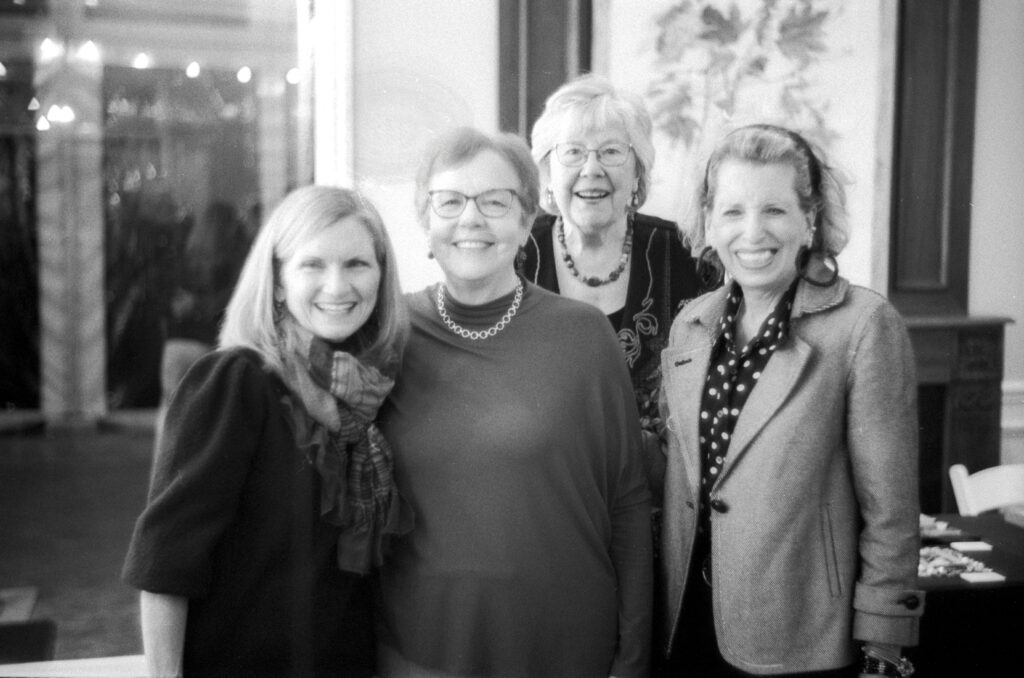
Having a lot of fun with it, I was surprised how quickly I became comfortable with its handling. It also served as quite a conversation piece. Another sharp-eyed photographer at the event made a beeline to me when his eyes lasered on it.
I found it a lot faster for me to quickly hit focus than with a Leica M body. Even though the tiny viewfinder window is somewhat limiting for a glasses-wearing shooter like me I had no trouble.
Back home I processed the film in Ilfotech DD-X using the Vintage Visual AGO processor. When the film was dry I used my Nikon Super Coolscan 5000 and quicky scanned the roll. The frame outside on the rabbit was crisp and sharp but shooting wide open inside the images lost contrast and gained a bit of a glow. But they were still sharp.
I was disappointed to see light streaks across some of the early frames. It was my own fault. When loading the reel in a changing bag I struggled to get the film cassette off the end of the roll. I took my arm out of the bag to grab scissors to cut the film. I think I leaked a little light doing that. It could be the camera back doesn’t seal properly but it’s unlikely since it was only on the first outer frames on the reel. I hope one day to again have a darkroom.
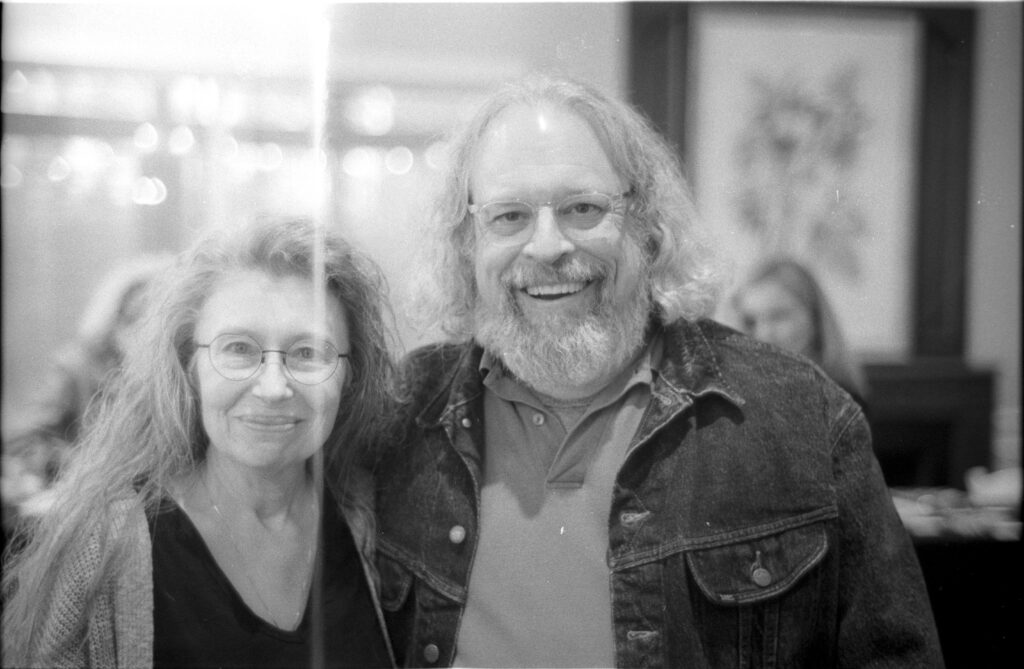
I edited the scans in LR Classic. And just to see what I could do I did additional editing using generative AI in Photoshop to ‘restore’ a few of them. It did amazing. It sharpened, added contrast and almost eliminated grain but it also took them too far away from the analog simplicity and honesty.
You can find more information on the Contax in a wonderful 35mmc post from June 2021 by Phil Calvit here
Share this post:


Comments
Charles Young on Contax iia – first roll and how I ended up with a couple classic cameras
Comment posted: 22/03/2026
I am able to do darkroom work in my kitchen when others have gone to bed.
Chuck