

This article is partly a process note and partly a reflection on working with a consumer photobook service. It comes out of a small group project to make books for an in-store display, but it became, for me, more about what happens when photographs are taken off the screen and printed to exist as physical objects. What follows is not a review of the service, but an account of how making a single £175 consumer photobook affected how I worked with sequencing and the materiality of printed photographs.
A fellow photographer invited a small group to put together photobooks. Her brief to us was simple: create a photobook with your work that could be placed on a shelf in a shop.
The photobooks went on display in a Central London photography store. While promoting our work may not have been the shop’s main aim (which was, of course, promoting their photobook services by showing concrete examples), the arrangement nevertheless created a small, informal exhibition. Customers (not everyone, but at least some…) could potentially pause, pick up a book, and spend time with it. At any rate, it was an opportunity for work to exist physically. In addition, each photographer could arrange to take their book from the shop display for a few days at a time and show it elsewhere.
What follows brings together all the images from the book, along with some thoughts on how it was put together, how this photobook project changed the way I see this particular set of photographs (and perhaps printed and bound photographs more generally), and how a photobook might shape a viewer’s experience.
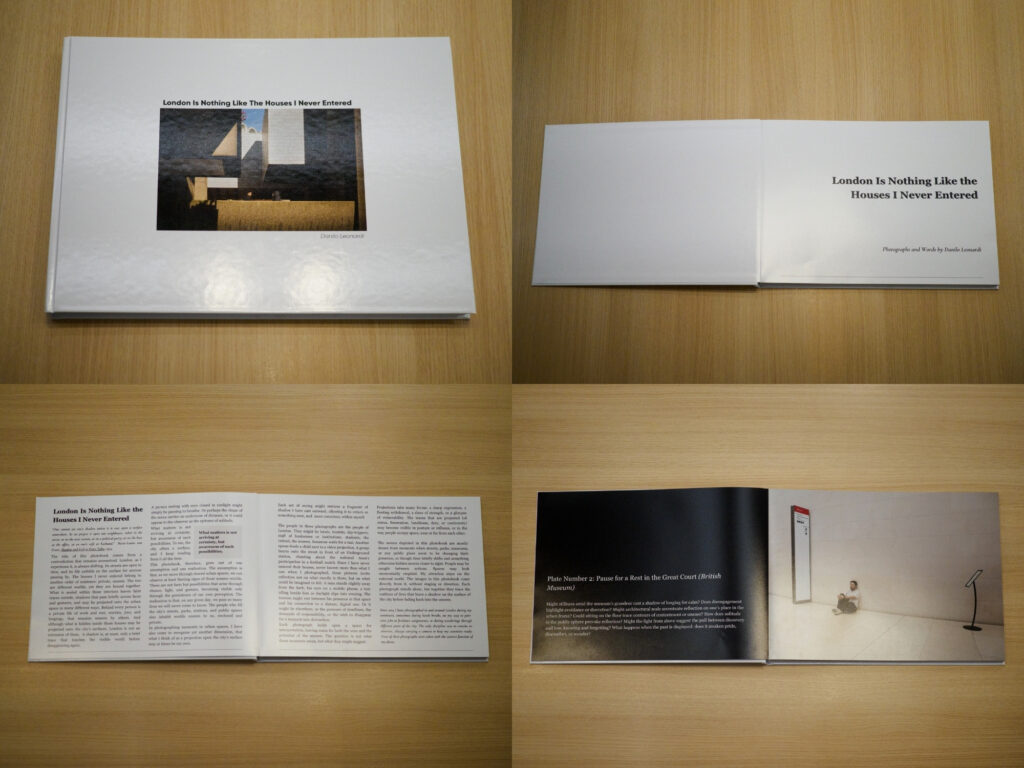
The framework of the project was loose. There were two pre-designed cover options, each using a photograph from the selection, along with a title, name, and a short biography placed either at the beginning or the end. Beyond that, each book was ours to shape.
I titled mine “London is Nothing like the Houses I Never Entered.” The size and cost of the book made something clear early on: this was not a mass-production exercise. My version (72 pages, overall size 40 × 50 cm, printed area on photographic paper 39 × 49 cm, bound) retails at £175 for a single copy (at the time of writing, approximately €210 or US$231). The cost was covered by the store as part of the exchange.
The usual customer for this kind of service is someone preserving photographs of weddings, holidays, or milestones. The result is a polished object, with a hard cover, lay-flat spreads, and substantial photographic paper.
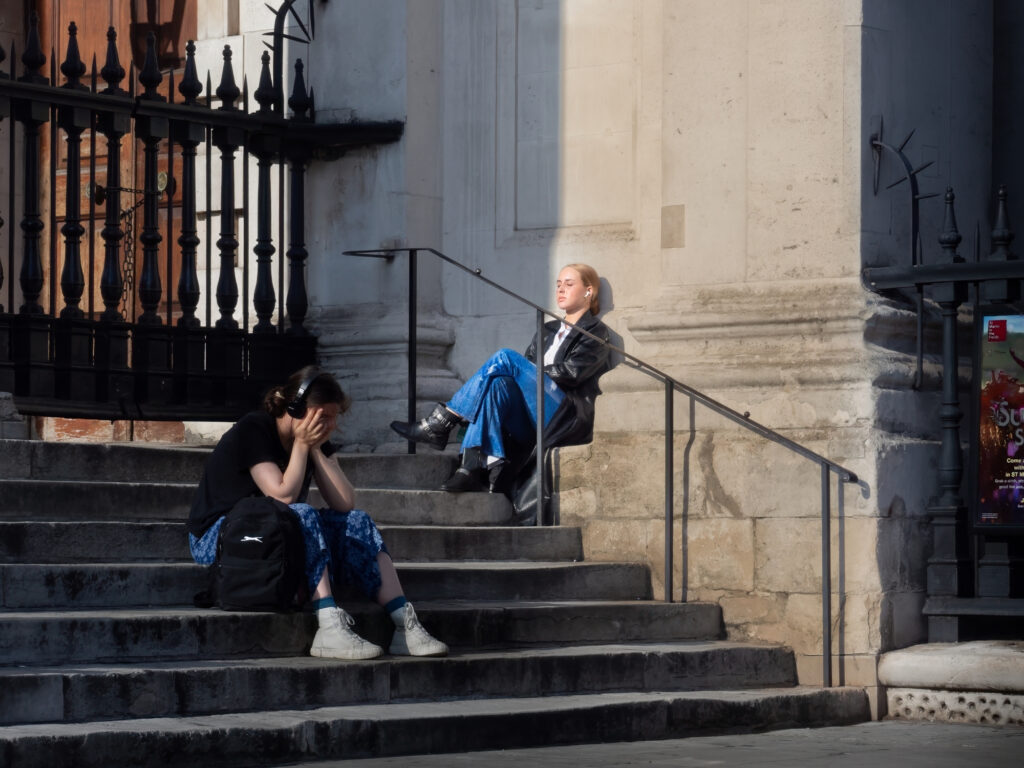
Could stillness in public hint at a wish for calm, or perhaps a need to gather oneself? Might turning towards sunlight or music reveal a familiar pattern of retreat, or simply a moment of grounding? Could observing another at rest stir questions about one’s own unease with pausing? Is there tension between reflection and the awareness of being among others? Might a brief withdrawal bring into view contrasts usually overlooked? Which desires for peace surface when someone pauses amid movement? How does solitude in a shared space draw attention to one’s own vulnerability or longing? Might an observer wonder whether this is solitude or a simple breath taken between tasks, and what such wondering reveals about the shadow within themselves?
(Pentax MX-1)
When the book arrived and I held it for the first time, it did not feel like a finished statement. It felt like a working object. Beyond being a sort of prototype for me, the book started to show how sequence, scale, and simply holding printed images changes how you read them.
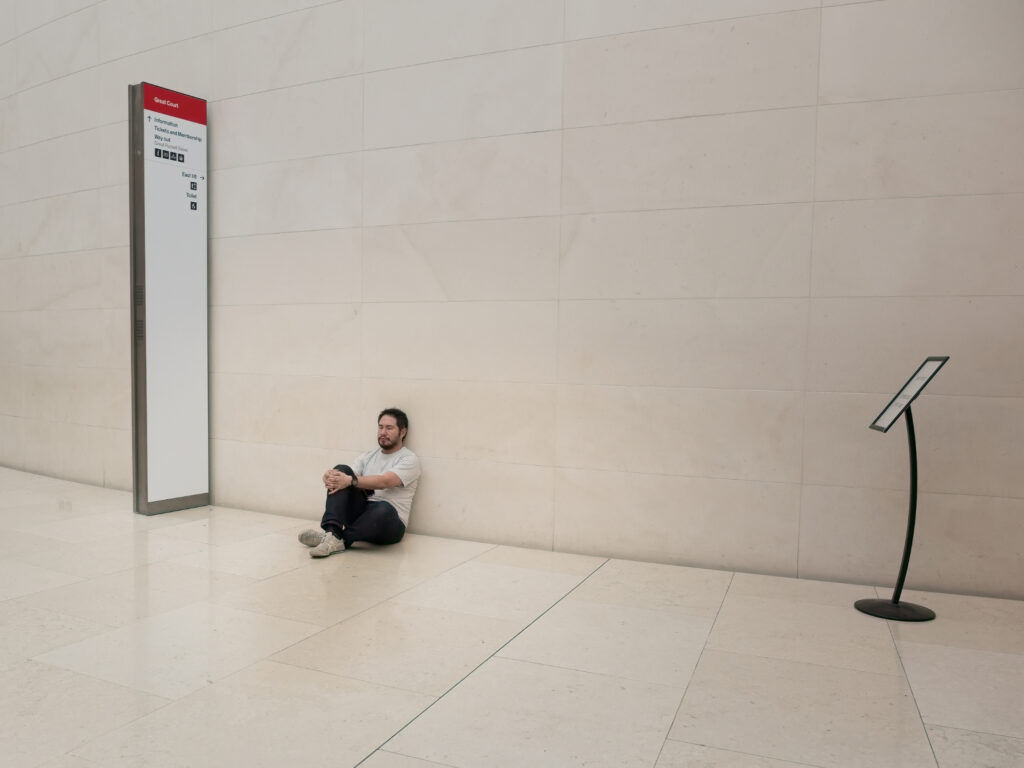
Might stillness amid the museum’s grandeur cast a shadow of longing for calm? Does disengagement highlight avoidance or discretion? Might architectural scale accentuate reflection on one’s place in the urban frame? Could sitting on the floor trace contours of contentment or unease? How does solitude in the public sphere provoke reflection? Might the light from above suggest the pull between discovery and loss, knowing and forgetting? What happens when the past is displayed: does it awaken pride, discomfort, or wonder?
(Fujifilm X-T2, Fujinon 18-55mm, f.2.8-4)
Images and the difference created by physical presence
I saw the images in a completely different way from how I see them on a screen. A photobook is different from online “content”. On screen, images move in a constant stream. Most are glanced at and quickly replaced. Much of it is about presentation, selling, or simply giving way to the next image.
With the photobook, I noticed something else. It has to be opened, held, supported. In the case of my particular book, it is large and heavy (well over 1 kg), so it does not invite casual handling.
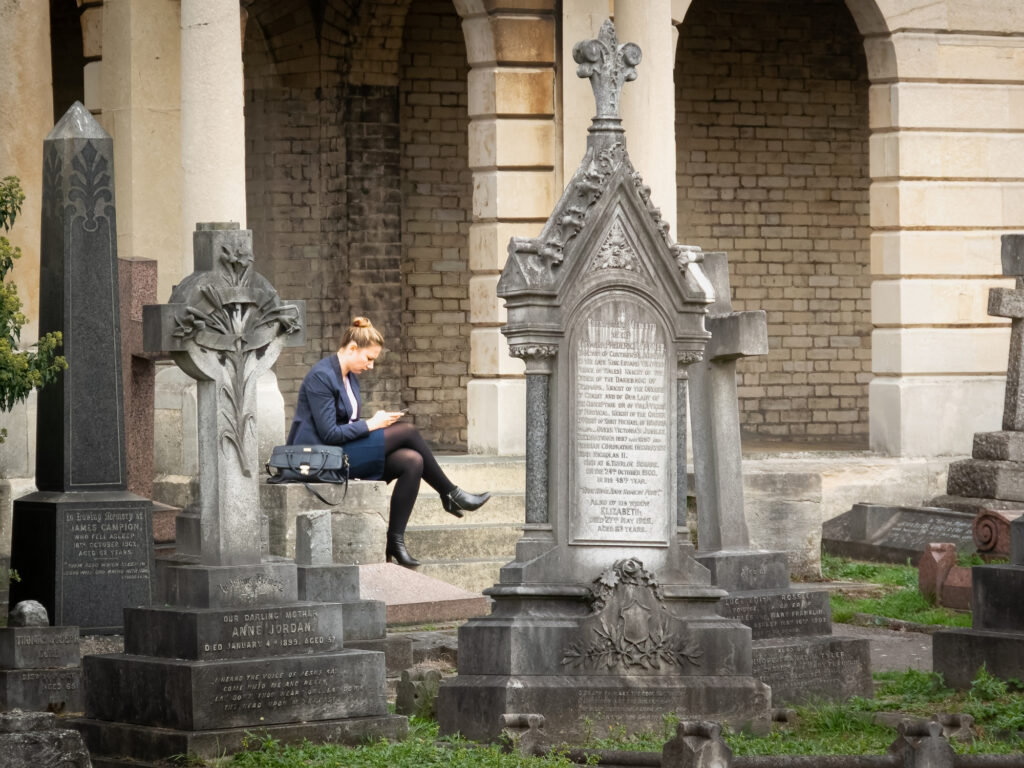
Could reflection in historical spaces reveal contemplation about mortality or legacy? Might public solitude provoke feelings of exposure? Is there tension between work focus and personal reflection? Could posture indicate self-protective tendencies? How do work and mortality evoke reflection?
(Nikon 1 V2, Nikkor 1, 10-100mm, f.4-5.6)
“Tactile” is the overused word often applied to anything analogue or physical in photography these days. But that word feels incomplete when trying to describe the experience of a photobook. I think “sensorial” is closer. When you hold the book, there is the faint smell of ink (the printing is inkjet, pigment on photographic paper, not chromogenic C-type), and even the glue used in the binding process. There is also the texture of the pages, the weight in the hands, and the sound of turning pages.These things matter because they slow you down. They make you notice where each image appears in a sequence, what came before, and what comes next.
Photographs set inside a book become part of something that unfolds in time. Turning the page is a shift, because one image gives way to another. That change of pace affects how you read the work, and asks for attention towards relationships between images, not just individual photographs.
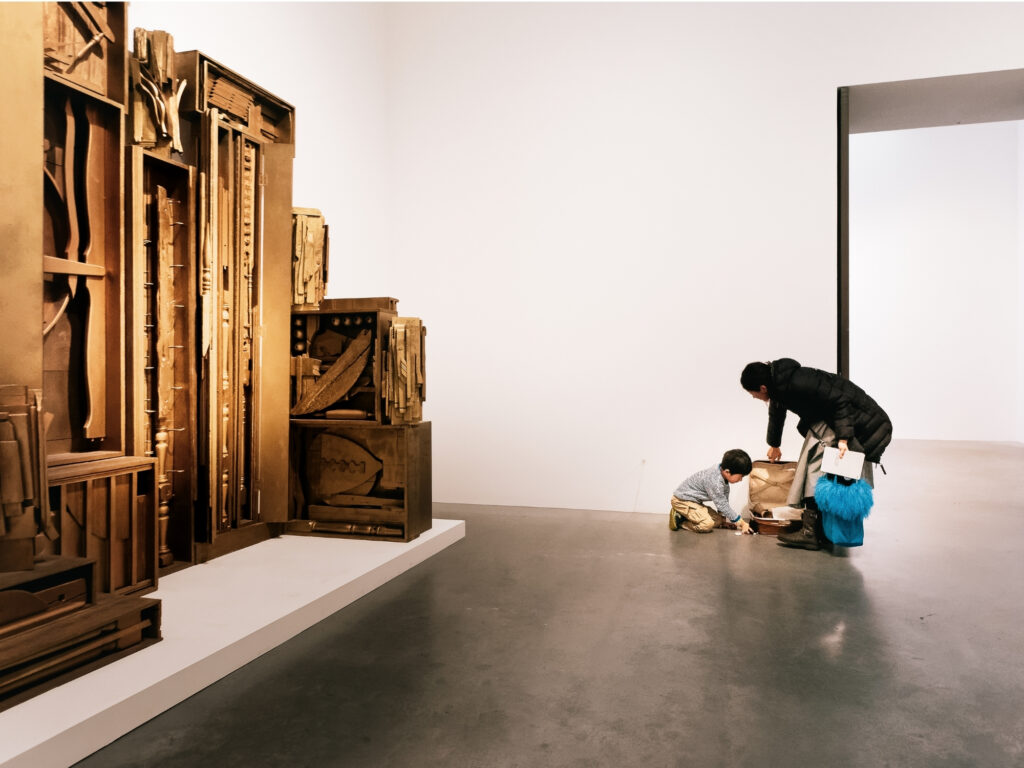
Might adult supervision juxtaposed with childlike activity show tension between control and freedom? Could observing interaction reveal patterns of guidance? Is there tension between structured and unstructured attention? Could playful observation reveal perfectionist tendencies? How does
structure affect participation? What traits appear in guiding others?
(Nikon D3X, Nikkor 28-300mm, f.3.5-5.6)
People who saw the book responded to its physical presence. Some talked about individual images, some about the selection. Others reacted simply to its size and presence. A few, perhaps used to scrolling, only looked at a handful of pages. At a business hub where I left the book for a few days on a table at the entrance, someone who runs a gardening company told me it made her think about gathering some photographs of her own work and putting them into a physical form she could place in the hands of potential customers. In that sense, she responded to the book itself rather than to its contents. Others said that the photobook looked expensive, and wondered about the cost.
Making the Book
As mentioned at the outset, the book was made using a consumer service. This means that the service was designed to make things simple: there is no soft proofing, no fine control over colour management, and no choice of paper beyond glossy or matte. Much of the technical side, colour handling, rendering, file preparation, is hidden from the user. It assumes no specialist knowledge and takes you straight to a finished object. If it looks right on screen, it will most likely look acceptable in the printed book. This is very different from a professional printing service, where costs would be significantly higher for each individual print.
The platform tools were basic and felt somewhat clumsy, so I designed the text pages outside the system and brought them into the book-making tool as JPEGs. I did not make any edits within the platform. The photographs had already been selected and sequenced, so only minor cropping was needed. Uploading and assembling the book took about an hour and a half.
The printed area of 39 × 49 cm landscape format meant that the page size determined a 4:3 format. The photographs I had selected were either originally 4:3 or, if they were 2:3, they could be cropped to fit. I used full bleed so the page itself became the frame.
Sequencing and selecting the images for the book
Each right-hand page carries a single photograph. Each left-hand page carries text in the form of questions.
The scenes I selected depict something at the edge of happening. It may be just before something completes, or just after it starts to fall away, without resolving into an event.
Each image suggests a moment of shadow projection, where hidden tensions or private states (e.g. fatigue, ritual, nostalgia, belonging) simmer just beneath the surface. Nothing is staged or constructed, all the scenes were “found”, “encountered” or “stumbled upon”, and in many, something may feel slightly out of balance, as though the familiar has shifted or is about to shift into something less fixed.
As an example of this kind of selection, a photograph taken in North Kensington in London days after a devastating fire in the Grenfell Tower (a block of flats) that claimed so many lives, shows a man crouched beneath a tree near the site. Yellow ribbons hang in the background. He looks down at a sheet of paper with names. The scene feels held, not settled.
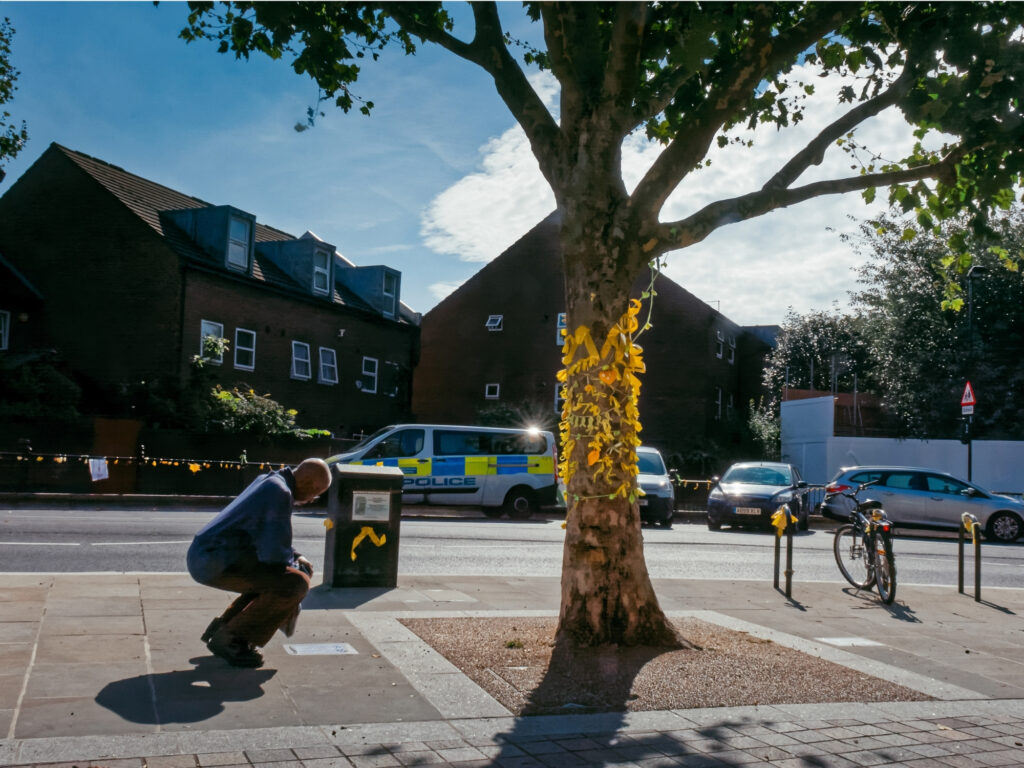
Might engaging with symbols of remembrance revive both longing and mourning? How does empathy reveal the struggle between hope and fear? Could shared grief invite reflection on our own capacity for care or remembrance? Might a stirring of unease reveal unspoken hopes for safety, fairness, or belonging? (Nikon D3X, Nikkor 28-300mm, f.3.5-5.6)
NOTE: At the launch of the Grenfell Tower Inquiry Phase 2 Final Report in September 2024, Inquiry Chair Sir Martin Moore-Bick pointed out that all deaths resulting from the Grenfell Tower fire were avoidable, had it not been for the failures identified in building safety, regulation, and emergency response, as detailed in the report. (Sources: Grenfell Tower Inquiry, Phase 2 Final Report, 2024; UK Parliament Research Briefing, “Grenfell Tower Inquiry Phase 2: Final Report”, CDP-2024-0161, 4 Sept 2024; press statements issued by the Grenfell Tower Inquiry and HM Government)
Seen in sequence, the 34 photographs do not form a story in the usual sense. They are not part of a direct narrative line. What emerges for me is a series of brief moments where something from private life seems to touch the surface of public space, and then it disappears again. The sequence begins and ends near St Martin-in-the-Fields, and this location point helps form a loose loop.
Encountering the photobook physically
In print, the effort of handling the book changed how I looked at the images. I turn pages, feel the paper, and perhaps stay longer with each image. I noticed the same reaction in others when I showed the book. The size of the book matters, this one is not easy to hold casually. The landscape format seems to push movement. It feels directional, like progression in a story.
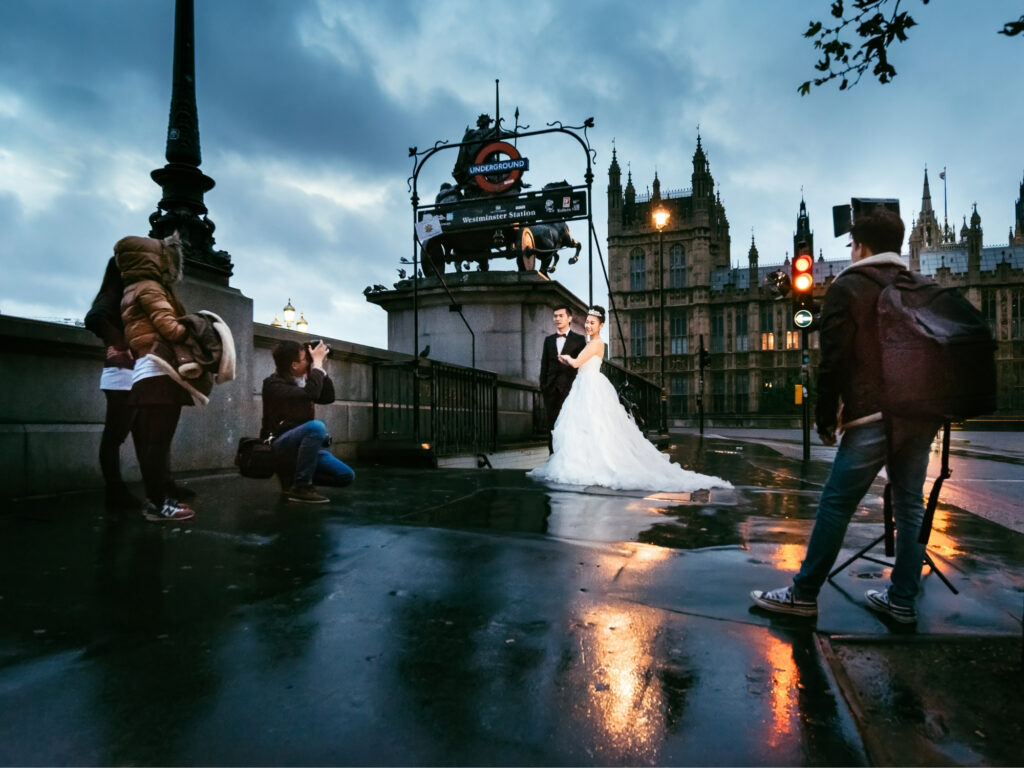
Could ceremonial attention highlight a wish to keep up with the Joneses? How is recognition desired? Might coordination show a hidden need for control? Could watching effort prompt reflection on responsibility? Is there tension between spontaneity and expectation? Might reflections on the pavement provoke thoughts on self-image? Could anticipation amplify perfectionist tendencies? What private fears surface in public performance?
(Nikon D800E, Nikkor 28-300mm, f.3.5-5.6)
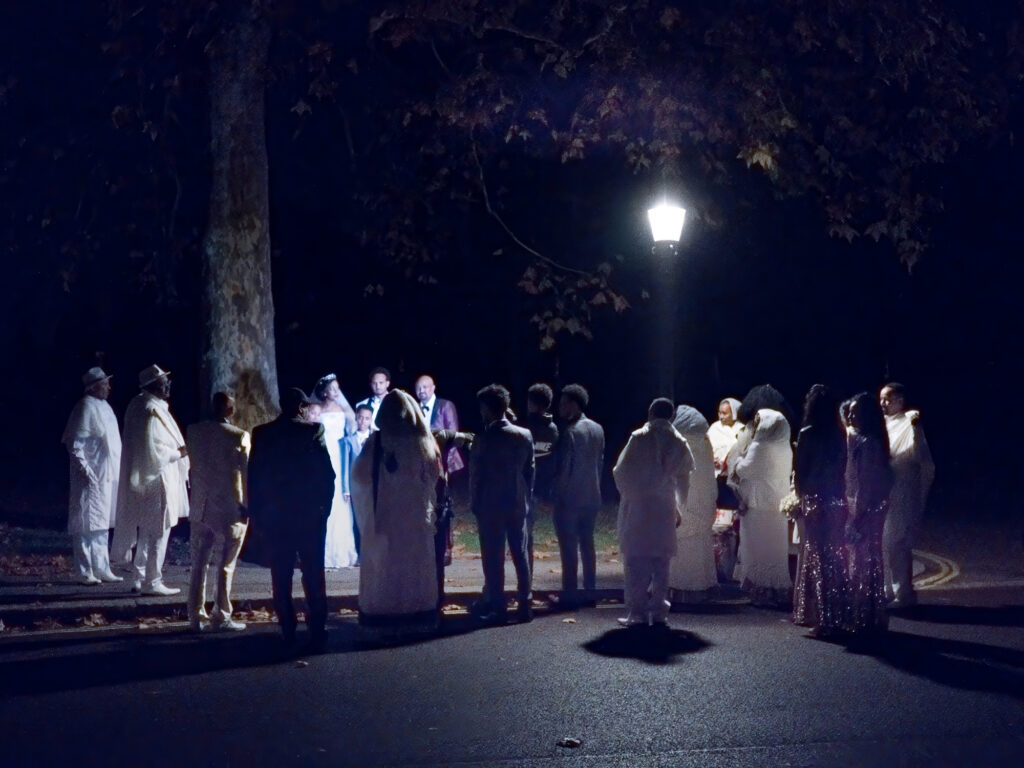
Could collective ceremony evoke reflection on conformity versus individuality? Might minimal lighting highlight uncertainty and/or enhance ritualised actions? Is there tension between presence and attention to observers? Might creating a circle reflect inclusion? Could participation in a particular tradition or ritual evoke introspection? Which shadow needs influence public participation? How do rituals show tension between self and group?
(Fujifilm X-T3, Fujinon 16-55mm, f.2.8)
Encountering the photobook on a screen
Online, things are different. Images move quickly and, admittedly, can potentially reach far more people than anything printed. What is lost, however, is the physical side of the work: scale, weight, paper, and the rhythm of turning pages. Screen and book ask for different kinds of attention.
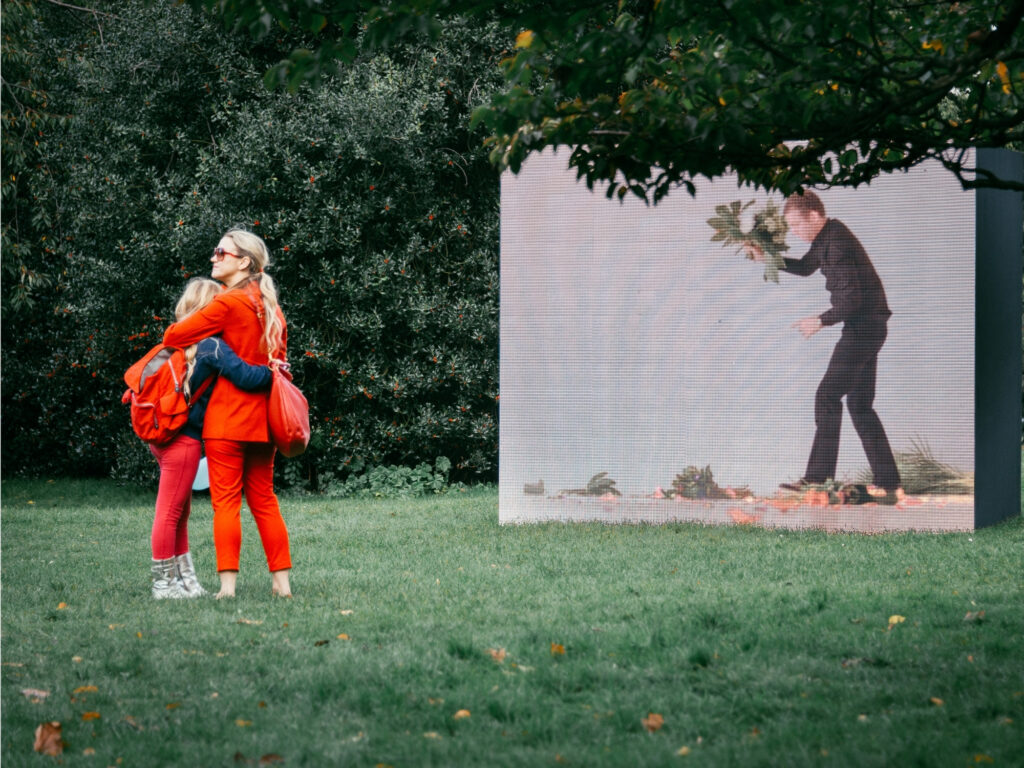
Could warmth and closeness reveal vulnerability or protective needs? Could public displays of care reflect private longing? Is there tension between intimacy and observation? Might colour evoke emotional projection? Could observing interaction reveal attachment patterns? Which deeper needs surface in warmth or protection? How does circumstance mediate affection? Which vulnerabilities emerge in close connection?
(Nikon D800E, Nikkor 28-300mm, f.3.5-5.6)
In this 35mmc version, the contents of the photobook have been reconfigured for the screen. The book itself is landscape and designed to be experienced horizontally as a sequence of spreads, whereas this article is read vertically through scrolling.
The essay I prepared for the photobook is included here in full. The questions that appear on the left-hand pages of the book are carried as captions to the images in this article.
The essay from the photobook
The essay that follows appears in the book. I wanted words alongside the photographs, but not with the idea to try to explain the images.
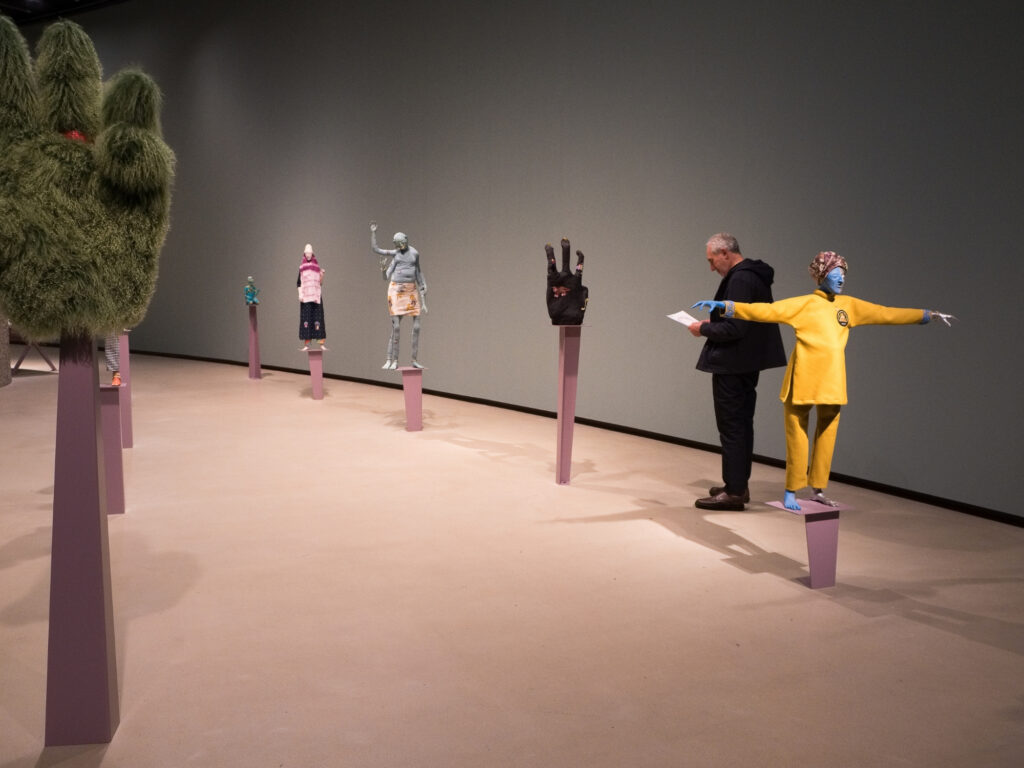
Could there be a sense of blending too much into structure, losing individuality? Is there tension between appreciating beauty and fearing inadequacy? Might juxtaposition of human and artificial forms provoke comparison? What private thoughts arise when blending into structured spaces? How does aligning with patterns highlight feelings of difference? When does attention to detail conflict with spontaneity?
(Fujifilm X-T3, Fujinon 18-55mm, f.2.8-4)
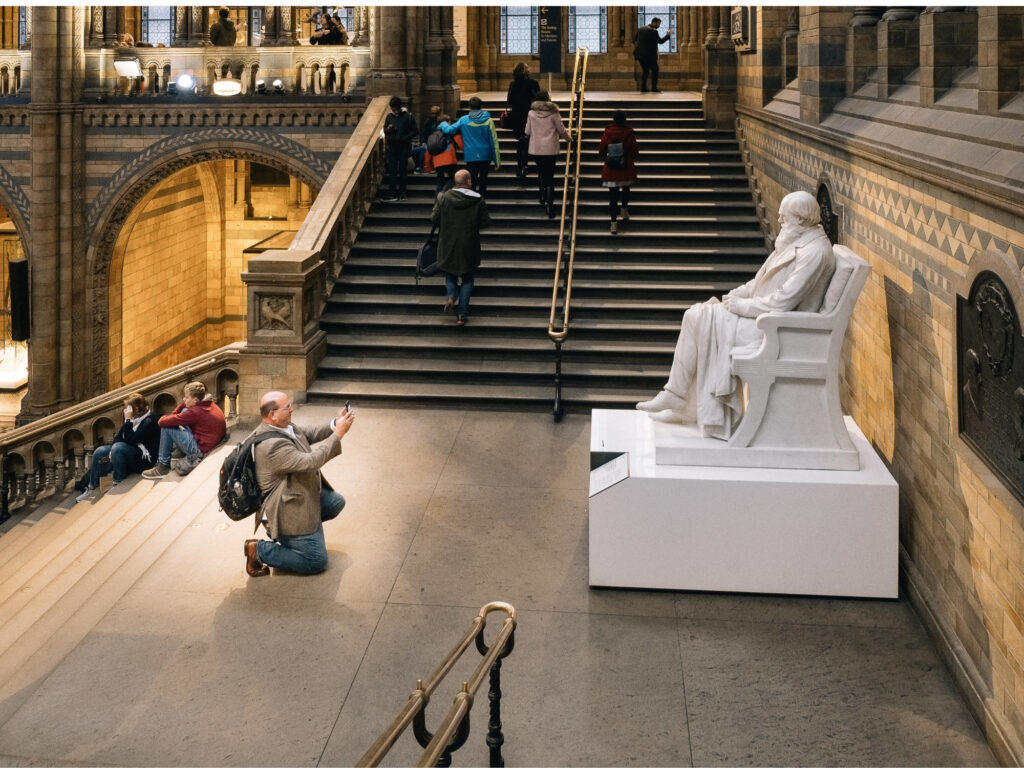
Could kneeling for a photograph, likely just to capture the “perfect” angle, take on the air of reverence in this church-like environment? Might deference to intellectual authority mask an unease in asserting one’s own understanding? Does photographing act as a way to frame and momentarily master, what cannot truly be possessed? Could the cathedral-like vastness of the museum inspire awe and a sense of smallness before the idea of evolution itself?
(Fujifilm X-T2, Fujinon 18-55mm f.2.8-4)
London Is Nothing Like the Houses I Never Entered
“One cannot see one’s shadow unless it is cast upon a surface somewhere. So we project it upon our neighbours, either in the street, or on the next nation, or on a political party, or on the boss at the office, or on one’s wife or husband.” (Marie-Louise von Franz, Shadow and Evil in Fairy Tales, 1974.)
The title of this photobook comes from a contradiction that remains unresolved. London, as I experience it, is always shifting. Its streets are open to view, and its life unfolds on the surface for anyone passing by. The houses I never entered belong to another order of existence: private, unseen. The two are different worlds, yet they are bound together. What is sealed within those interiors leaves faint traces outside, shadows that pass briefly across faces and gestures, and may be projected onto the urban space in many different ways. Behind every person is a private life of work and rest, worries, joys, and longings that remains unseen by others. And although what is hidden inside those houses may be projected onto the city’s surfaces, London is not an extension of them. A shadow is, at most, only a brief trace that touches the visible world before disappearing again.
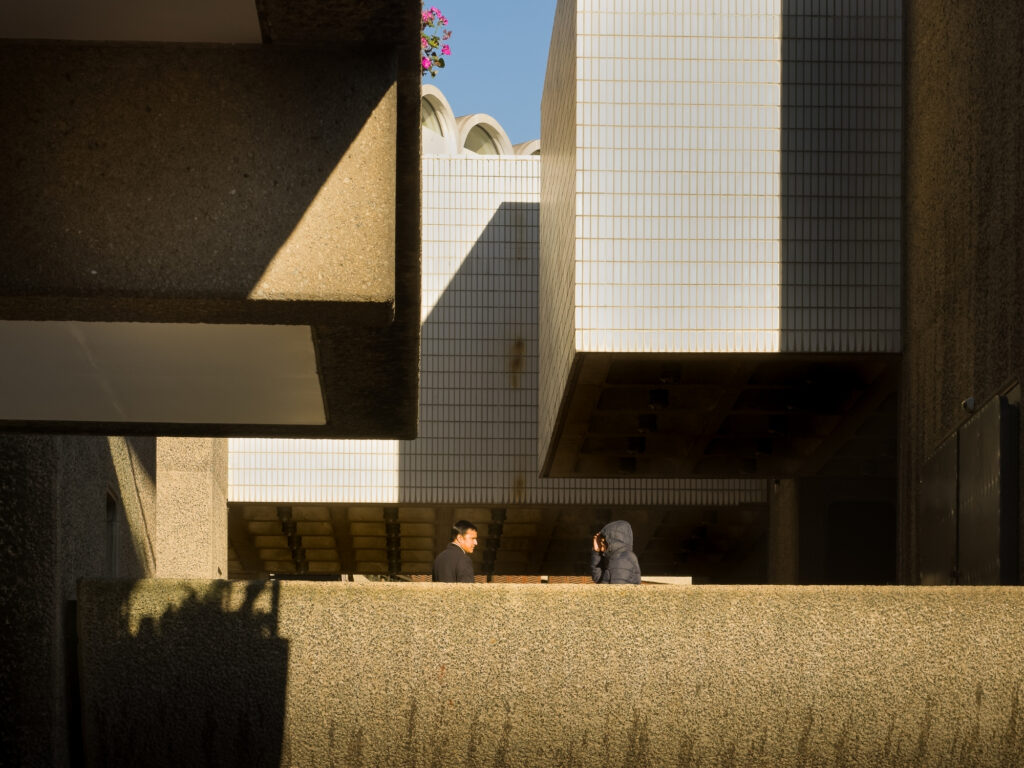
Might the shifting tones of dialogue (e.g. bright, muted, overlapping) reveal contrasts we would rather leave in shadow? Could the flow of conversation serve as a surface, polished to deflect reflection? Do light and shadow on concrete walls mirror the moods moving between people? Which desires to convince, to be heard, pass unnoticed beneath an exchange?
(Nikon D7200, Nikkor 28-300mm, f.3.5-5.6)
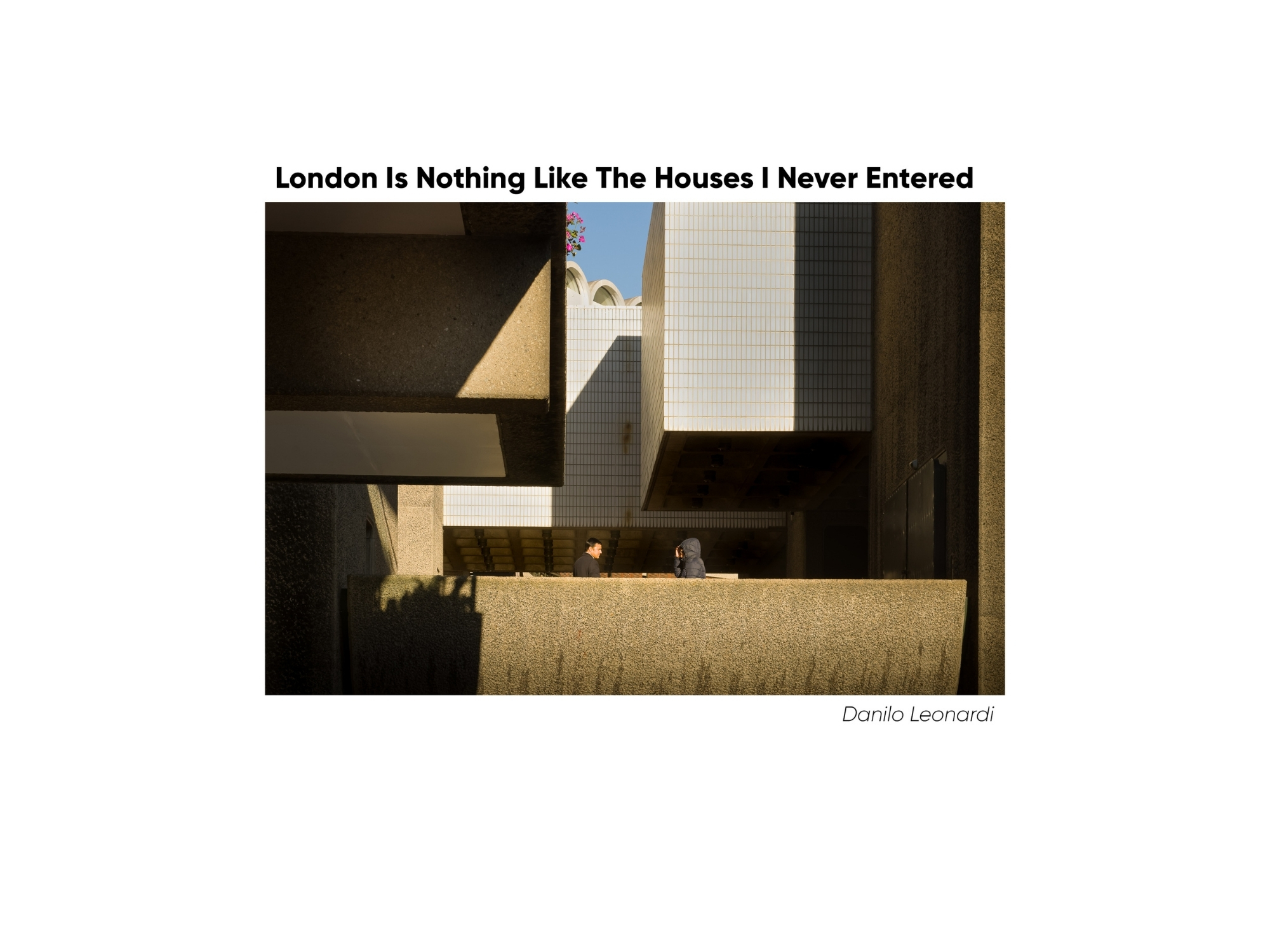
NOTE: Shapes and lines suggest patterns that are both external and internal, tracing gestures we cast but seldom notice. The photograph, chosen for the cover of London is Nothing Like the Houses I Never Entered, signals the presence of opposites at once, without offering a clear answer, e.g. shadow and light, projection and conscious awareness; themes that run throughout the photobook.
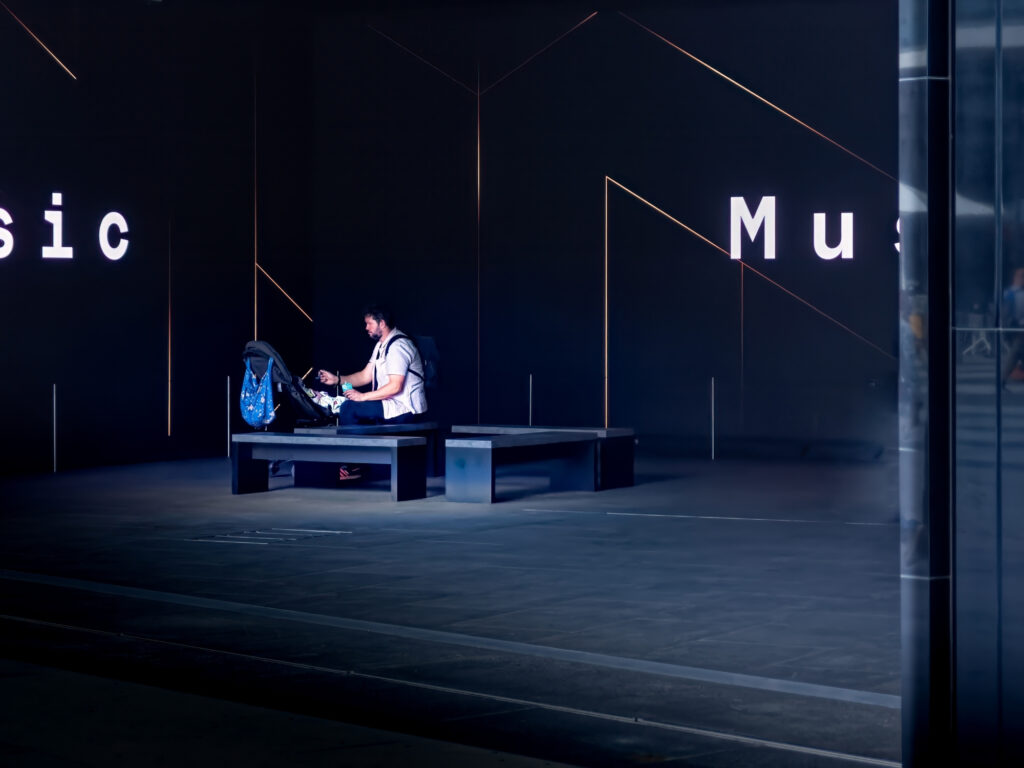
Is there tension between personal focus and distraction? Might symbolic elements evoke reflection on guidance? Could small acts of care reveal latent needs for approval? How does caregiving provoke reflection? Which internal conflicts arise?
(Pentax MX-1)
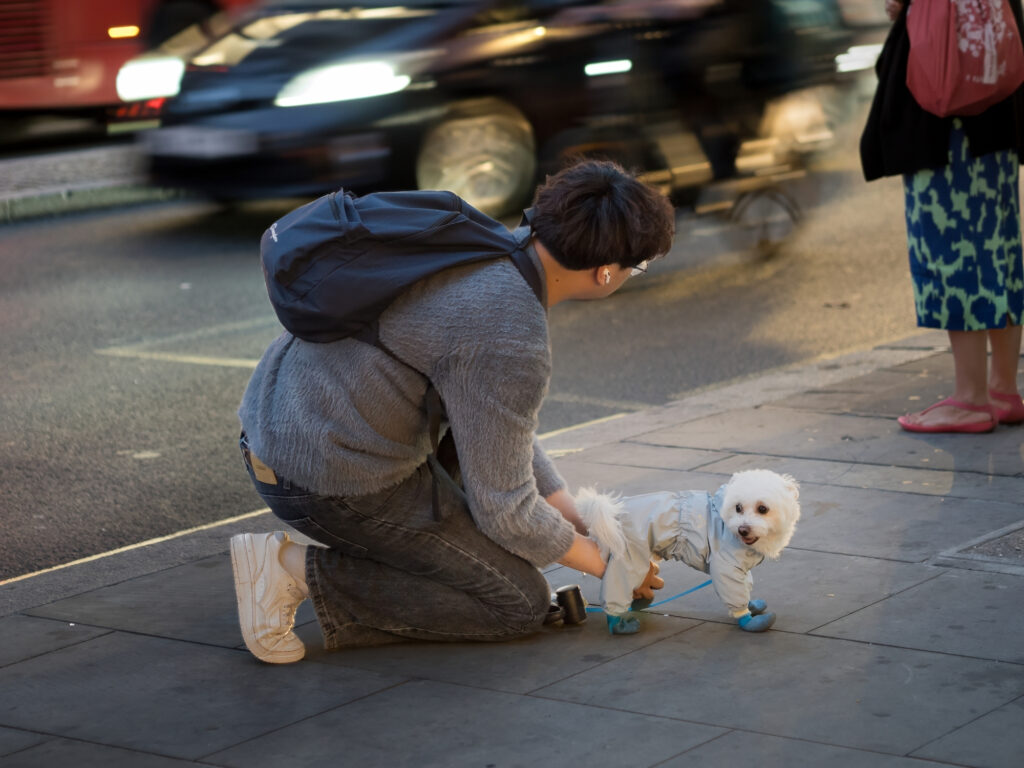
Do streets and pavements encourage particular expectations of an animal’s behaviour? Could anthropomorphising a pet reveal aspects of personal projection? How does the urban environment frame these interactions? How does observing humans interact with pets reveal social patterns?
(Olympus EM-1X, Panasonic Lumix 20mm f.1.7)
A person resting with eyes closed in sunlight might simply be pausing to breathe. Or perhaps the shape of the scene carries an undertone of distance, or it could appear to the observer as the epitome of solitude. What matters is not arriving at certainty, but awareness of such possibilities. To me, the city offers a surface, and I keep reading from it all the time.
This photobook, therefore, grew out of one assumption and one realisation. The assumption is that, as we move through shared urban spaces, we can observe at least fleeting signs of those unseen worlds. These are not facts but possibilities that arise through chance, light, and gesture, becoming visible only through the persistence of our own perception. The realisation is that, on any given day, we pass so many lives we will never come to know. The people who fill the city’s streets, parks, stations, and public spaces also inhabit worlds unseen to us, enclosed and private.
In photographing moments in urban spaces, I have also come to recognise yet another dimension, that what I think of as a projection upon the city’s surface may at times be my own.
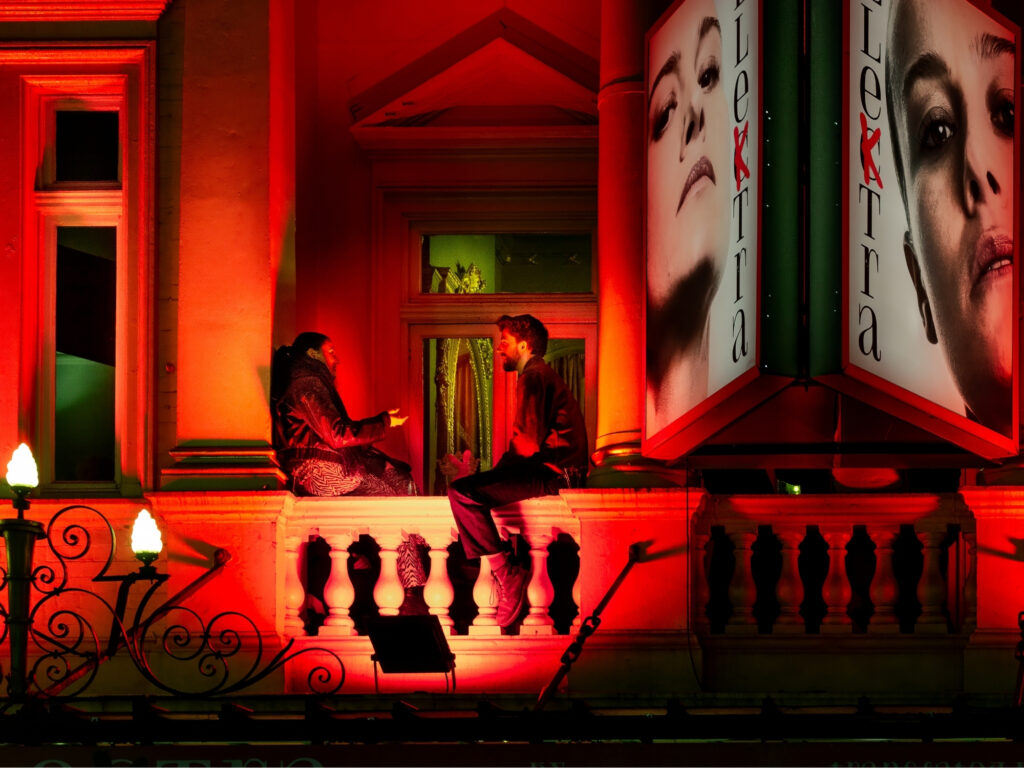
Could red, dramatic lighting provoke reflection on performance versus authenticity? How do bold exterior colours shape what’s noticed or ignored by passersby? Could positioning on the balcony provoke reflection on status or visibility? Which undercurrents emerge in concentrated conversation? How does the interplay of light, colour, and architecture affect self-expression?
(Panasonic Lumix G5, Zuiko 40-150 f.4-5.6)
Each act of seeing might retrieve a fragment of shadow I have cast outward, allowing it to return as something seen, and more conscious, within myself.
The people in these photographs are the people of London. They might be locals, tourists, day-trippers, staff of businesses or institutions, students, the retired, the unseen. Someone waits for a taxi. Another spoon-feeds a child next to a video projection. A group bursts onto the street in front of an Underground station, chanting about the national team’s participation in a football match. Since I have never entered their houses, never known more than what I saw when I photographed, these pictures invite reflection not on what exactly is there, but on what could be imagined or felt. A man stands slightly away from the kerb, his eyes on a mobile phone, a taxi idling beside him as daylight slips into evening. The tension might rest between his presence in that space and his connection to a distant, digital one. Or it might lie elsewhere, in the pressure of deadlines, the demands of responsibility, or the wish to disappear for a moment into distraction.
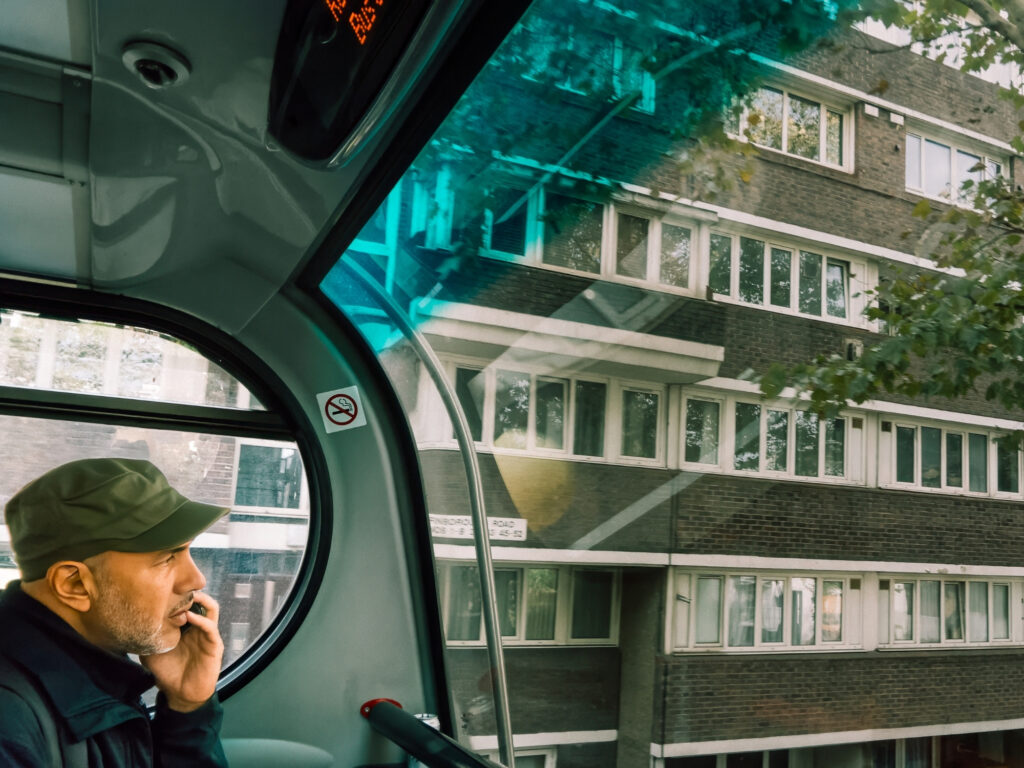
Could observing everyday life provoke comparison with others’ routines? Might attention to movement reveal internal patterns? Could commuting reflect repeated constraints? Is there tension between awareness and routine? Might solitary reflection evoke feelings of invisibility? Could technology mask desires for connection? How do routines reveal private tendencies? How do experiences in public transport highlight inner patterns?
(Nikon 1 V2, Nikkor 1, 10-100mm, f.4-5.6)
Each photograph holds open a space for interpretation, leaving room for both the seen and the potential of the unseen. The question is not what these moments mean, but what they might suggest.
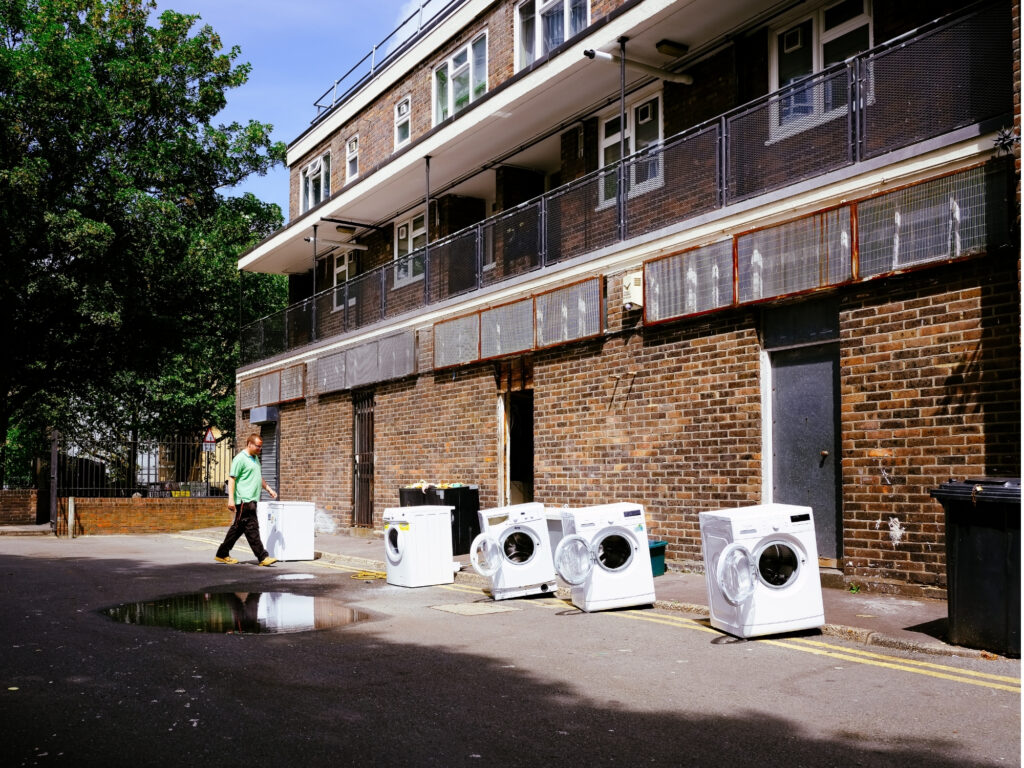
Could worn-out washing machines throw shadows of past labour across the cityscape? How does the tension between former utility and present dereliction shape perception? Could noticing discarded objects expose traces of habit, routine, or human presence? How do these machines, left in sunlight and shadow, map impermanence in the city, a step before the council collection? Might attention to urban detritus uncover patterns invisible in daily movement? Can observation of these spent appliances provoke reflection on passing use and human absence?
(Fujiifilm GFX-50R, Fujinon 32-64mm f.4)
Projections take many forms: a sharp expression, a fleeting withdrawal, a show of strength, or a glimpse of vulnerability. The traces that are projected (of status, frustration, loneliness, duty, or conformity) may become visible in posture or stillness, or in the way people occupy space, near or far from each other.
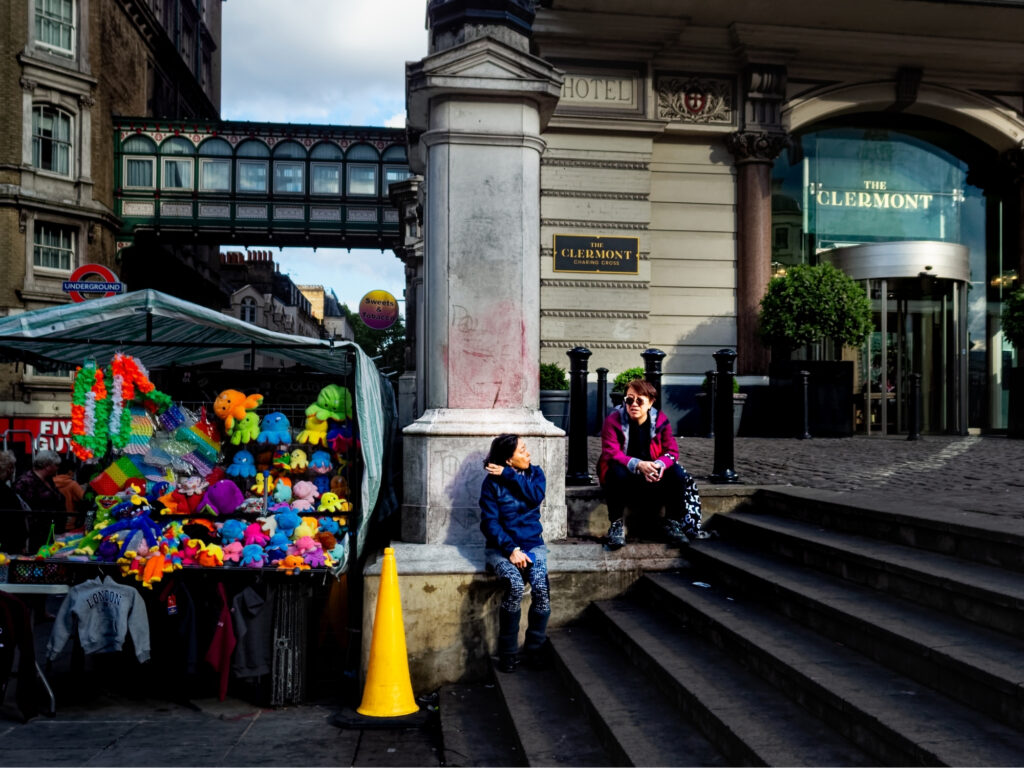
Might ephemeral displays highlight impermanence? Could observing others’ joy stir embarrassment or envy? Is there tension between order and spontaneity in behaviour? Might commercial and human contrasts reveal judgement? Could attention to minor details hide discomfort with life’s chaos? What inner judgement emerges when colour contrasts with order? Which feelings about unpredictability surface in public?
(Pentax MX-1)
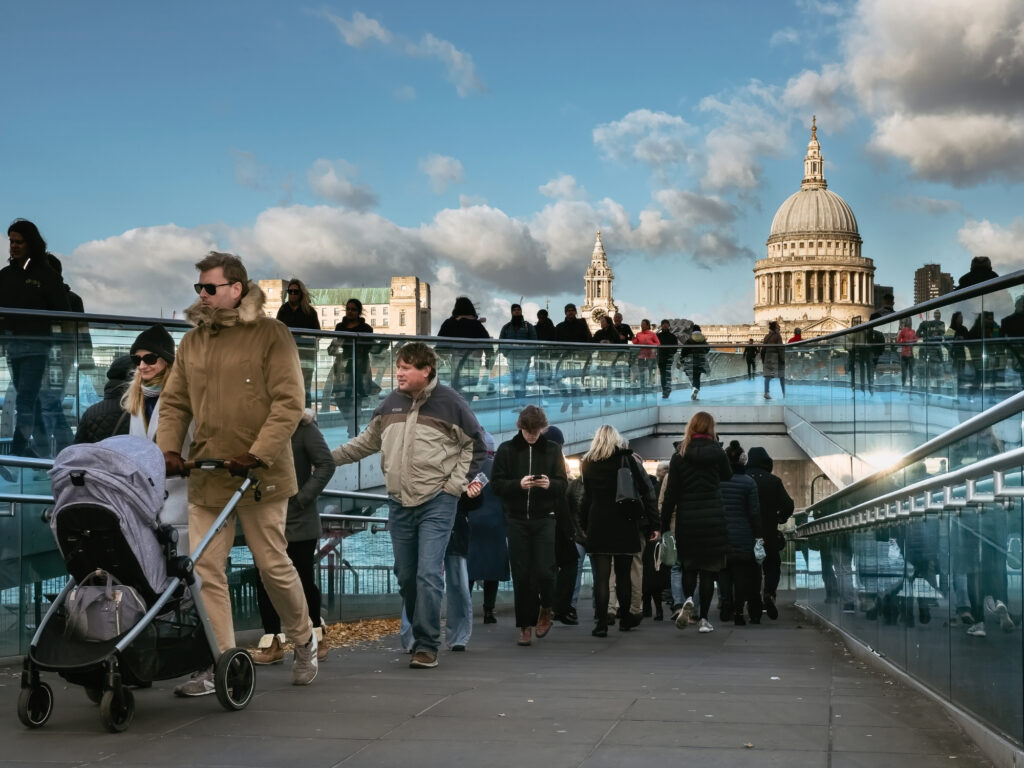
How does moving with the crowd invite reflection? What feelings arise in collective flow? How does pace versus societal rhythm provoke thought? Which contrasts surface in pedestrian movement? How is individuality experienced in crowds? Might architectural scale amplify vulnerability? Could crossing evoke reflection on transitions?
(Nikon D810, Nikkor 28-300mm, f.3.5-5.6)
The scenes depicted in this photobook are mostly drawn from moments when streets, parks, museums, or any public place seem to be changing their presence, as though time briefly shifts and something otherwise hidden moves closer to sight. People may be caught between actions. Spaces may look momentarily emptied. My attention stays on the external world. The images in this photobook come directly from it, without staging or direction. Each photograph stands alone, but together they trace the outlines of lives that leave a shadow on the surface of the city before fading back into the unseen.
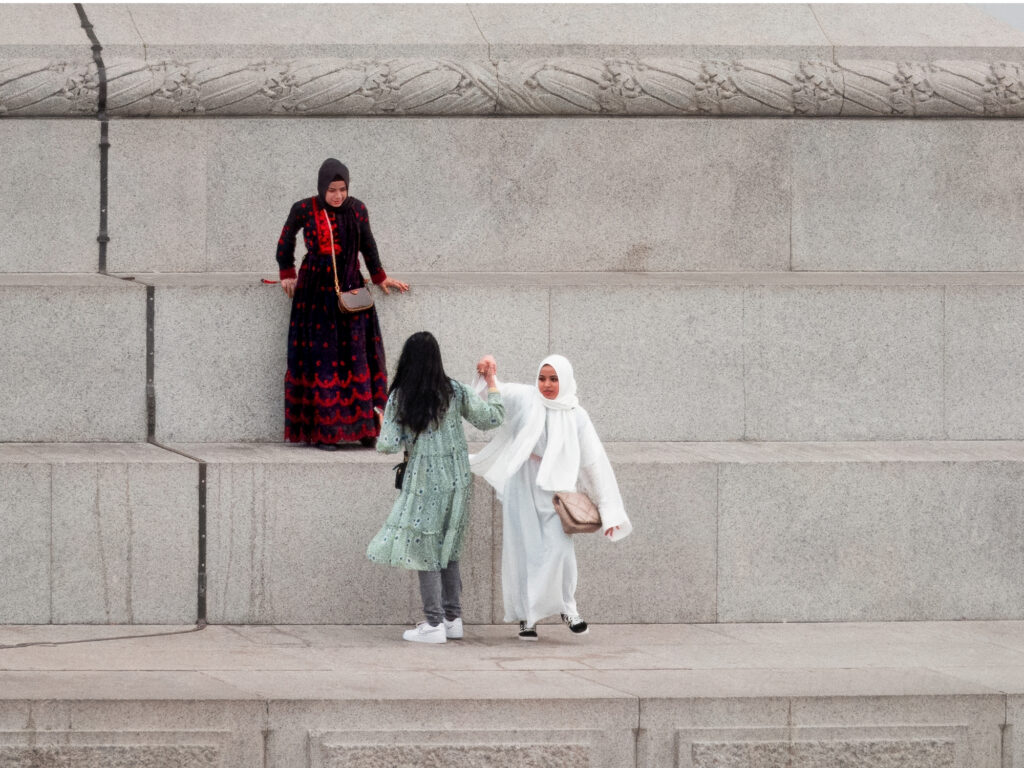
Could observing others evoke reflection on belonging? Might position reflect perceived authority? What private feelings arise? Might what seems admired or dismissed in others be a part of oneself that has been set aside? Could the unease of comparison point to something inward, long overlooked or denied? (Fujifilm X-S1 zoom at the longest position, which is a little longer than 600mm equiv.)
Since 2015 I have photographed in and around London during my commutes, sometimes during lunch breaks, on my way to part- time jobs or freelance assignments, or during wanderings through different parts of the city. The only discipline was to remain an observer, always carrying a camera to keep my attention ready. None of these photographs were taken with the camera function of my phone.
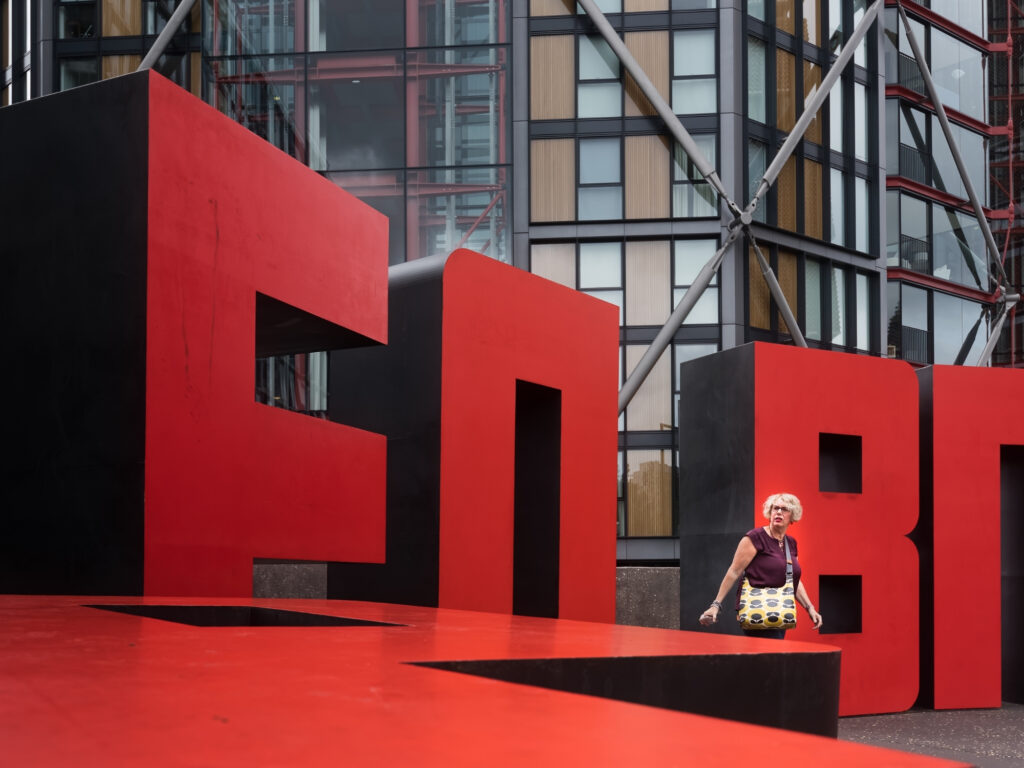
Could the Bnepëd (read as “vpeh-RYOT,” meaning “Forward”) letters cast shadows of the USSR onto a London space? Might encountering this particular piece of Erik Bulatov’s work, as displayed at Tate Modern in 2017, stir inner contrasts of admiration, unease, or the lingering shadow of historical power? How might the red forms suggest authority, control, or lost individuality? Does the circular layout evoke movement or stillness? Could the sculpture also be seen as anticipating post-Soviet attempts to rewrite history? How might light and shadow on the letters reveal traces of disillusionment, or the costs of enforced ideology?
(Nikon D810, Tamron SP 24-70mm, f.2.8)
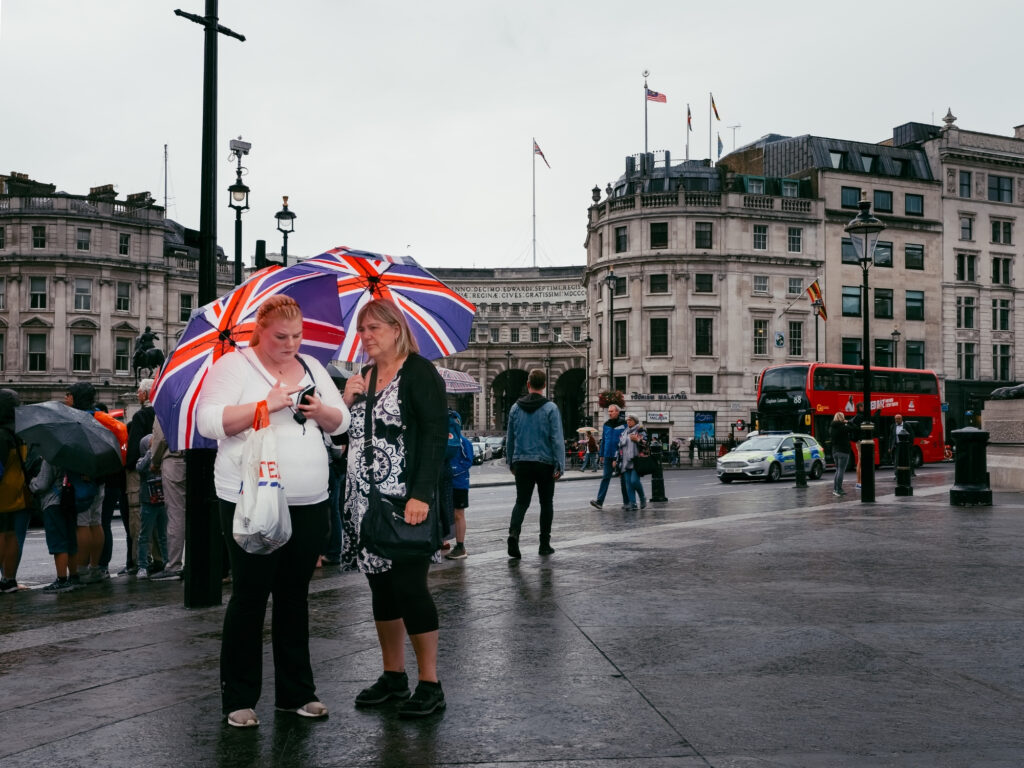
Could routine in rain reveal resilience or irritation? Might the weather’s insistence draw out a wish for steadiness or escape? Could the repeated flashes of the flag, even if simply a coincidence of umbrellas as those often chosen by tourists, lead an observer to consider reflecting on belonging or difference? Could such moments invite awareness of one’s own responses to inclusion or distance? Could noticing these feelings bring into view for the observer a shadow they are projecting, as in other moments throughout this photobook?
(Fujifilm GFX50-R, Fujinon 32-64mm f.4)
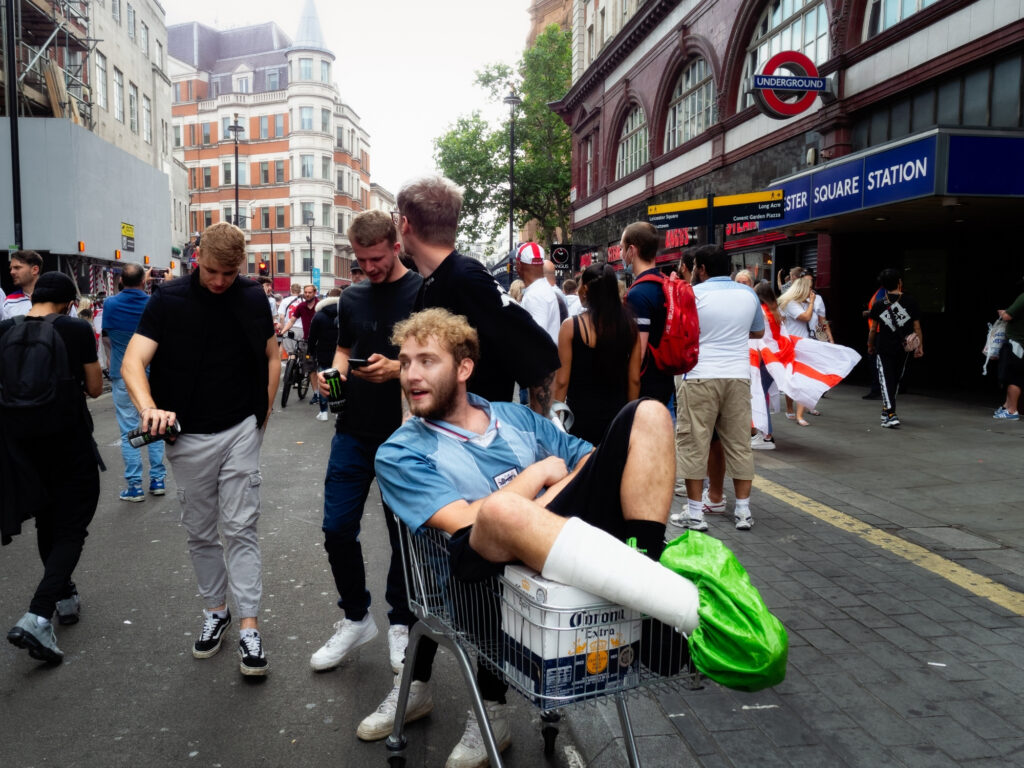
Might moving within a crowd help to forget or dull any anxieties? Might blending with others obscure aspects of individuality? How does shared energy highlight impulses or openness to risk? Where does collective attention intersect with personal recognition? Could connection with a group highlight a need for belonging? How might communal excitement reveal insecurities? What reflections arise when swept up in public energy? What private sensations emerge amid the crowd?
(Pentax MX-1)
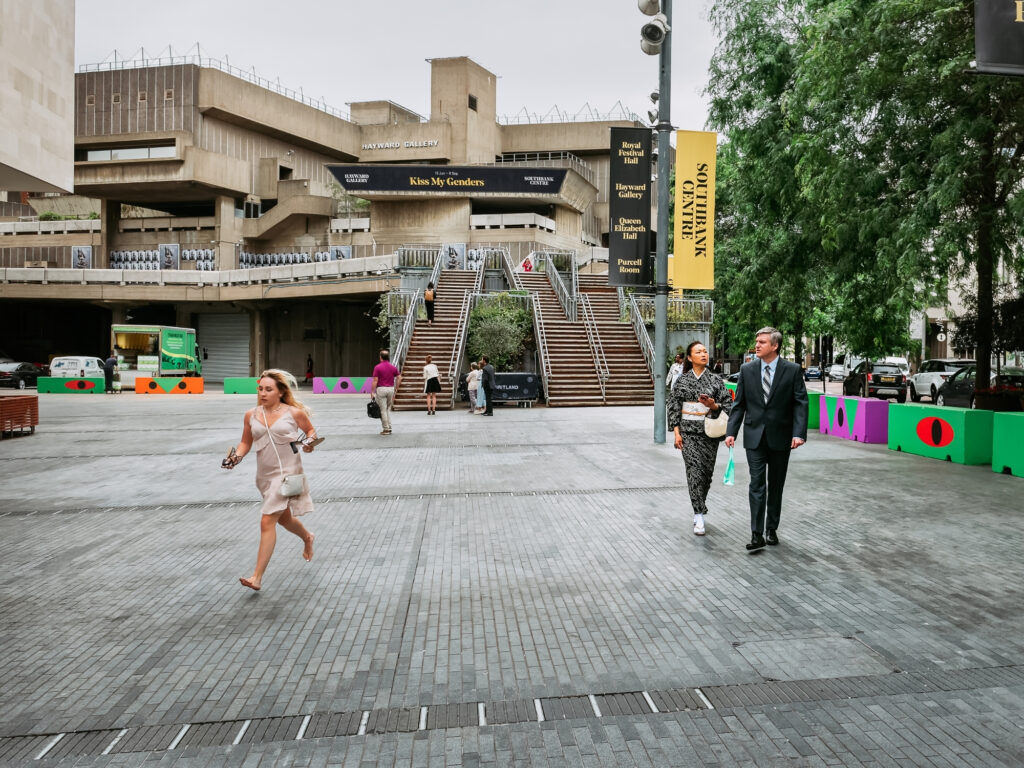
Could urgency cast a shadow of self-reflection? Might movement trace the line between freedom and restraint? Where does a rush of energy meet inner composure? What anxieties emerge in transition? Could the rush reveal marks of responsibility or care? Might anticipation uncover fears or ambitions? Do our own steps reveal shadows of doubt or hesitation?
(Nikon 1 J5, Nikkor 1, 10-100mm f.4.5-5.6)
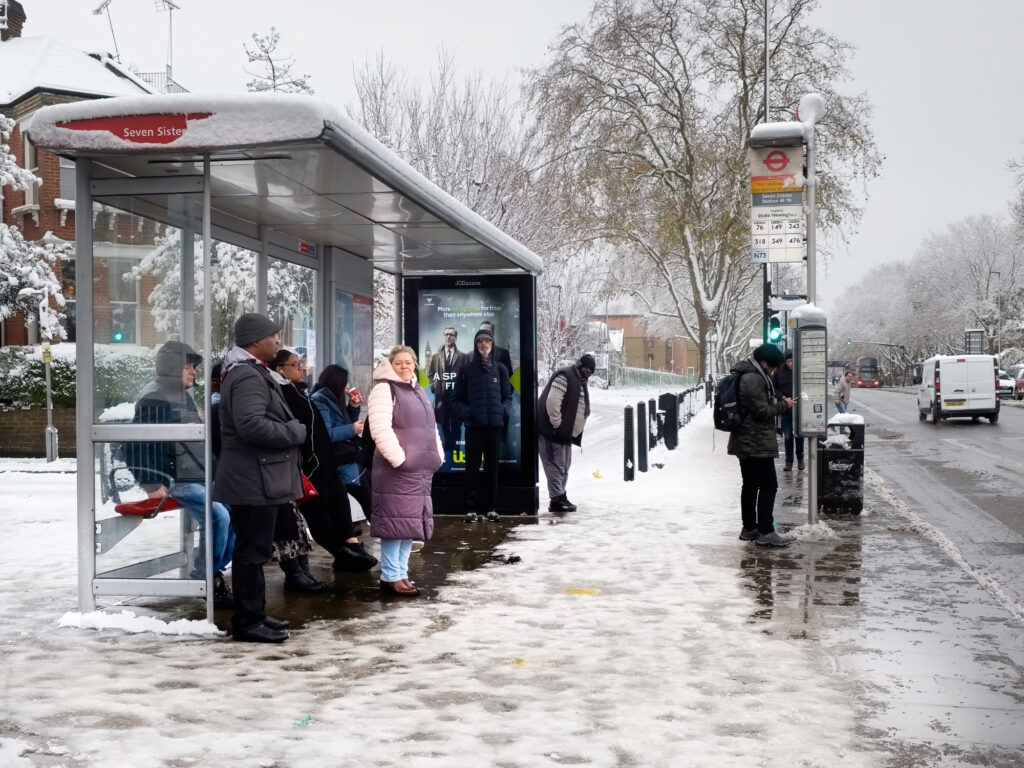
Could anticipation evoke reflection on patience? Might exceptional weather conditions reveal discomfort or adaptability? Could attention to surroundings show perfectionist tendencies? Is there tension between waiting and acting? Might social interaction provoke reflection on connection? Could winter conditions highlight vulnerability or resilience? Which anxieties surface while waiting? How does environment affect perception?
(Fujifilm X-E2, Fujinon 30mm, f.2.8)
Closing reflections
Taken together, these elements describe partly a process and partly what I observed: how the book was made, how it changed the way I see a set of photographs, and how a photobook might shape a reader’s experience of looking at photographs.
A consumer photobook is usually a private object. Using that format for work meant for wider viewing creates a tension, because it borrows a format typically used for preserving memories, but here it is used as a working structure.
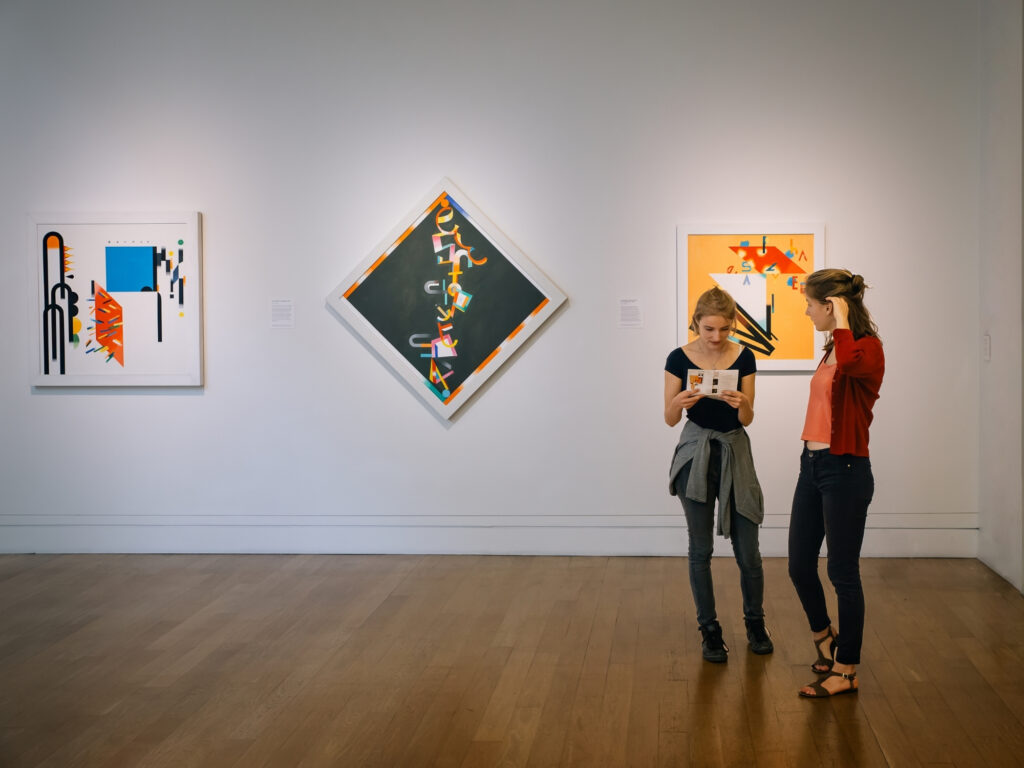
Could the abstraction of the human form in the gallery setting suggest how identity both conceals and reveals itself? With Jack Smith’s works in the background, might their shapes and colours frame what a face alone could never express? Could observing the visitors in front of the paintings awaken unease at what resists recognition, or curiosity? Might the pull towards order reflect a wish for definition, even as meaning drifts beyond reach? How might this scene echo the tension between expression and concealment that threads through other spaces in this photobook? (Nikon D800E, Nikkor 28-300mm f.3.5-5.6)
NOTE: Jack Smith’s works at the National Portrait Gallery,London, 2015, were part of a special display on unconventional portraiture. His abstract portraits suggest that identity may surface as much in what is withheld as in what is shown, which is something that in some ways may be echoed by this photobook’s focus on shadow projection and perception.
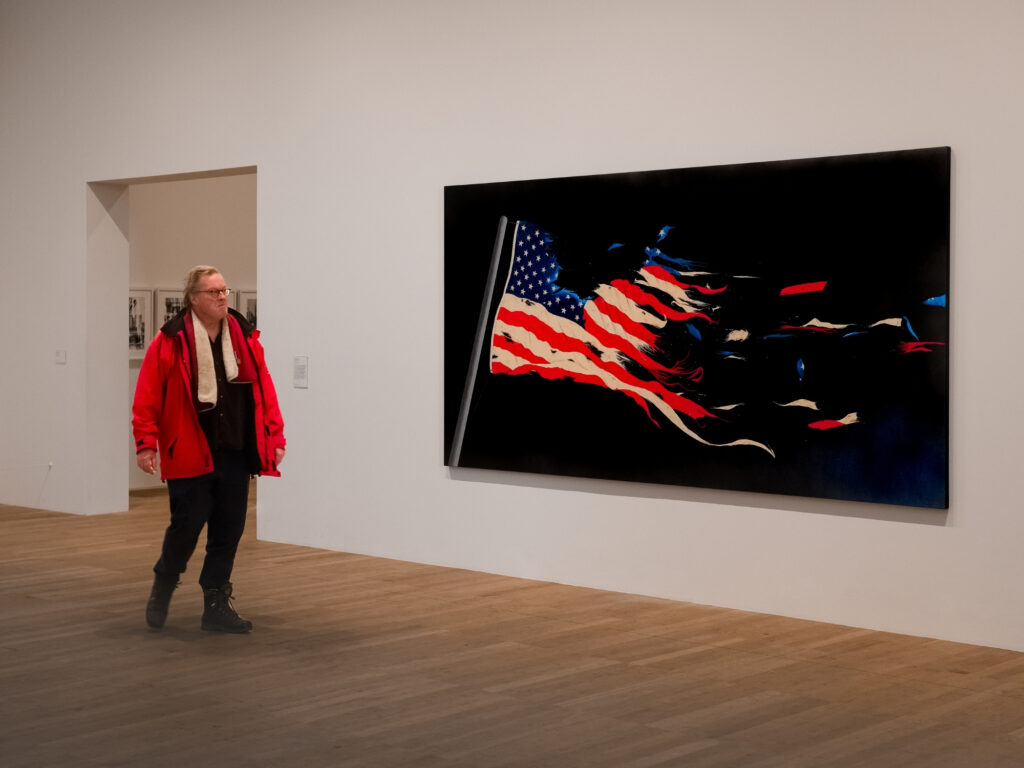
Could seeing a flag in shreds stir reflection on what symbols mean over time? Might it awaken memories or lessons once attached to ideas of belonging? Could disagreement or unease arise when national symbols are depicted in a reimagined way? Might such a work invite thought about how values shift, or how images change their meaning in new settings? Could a flicker of distaste simply reveal a moment of honest reaction, or a wish to hold on to something once steady? What feelings surface when the familiar is altered, and what might those reactions reveal?
(Fujifilm X-T2, Fujinon 18-55mm, f.2.8-4)
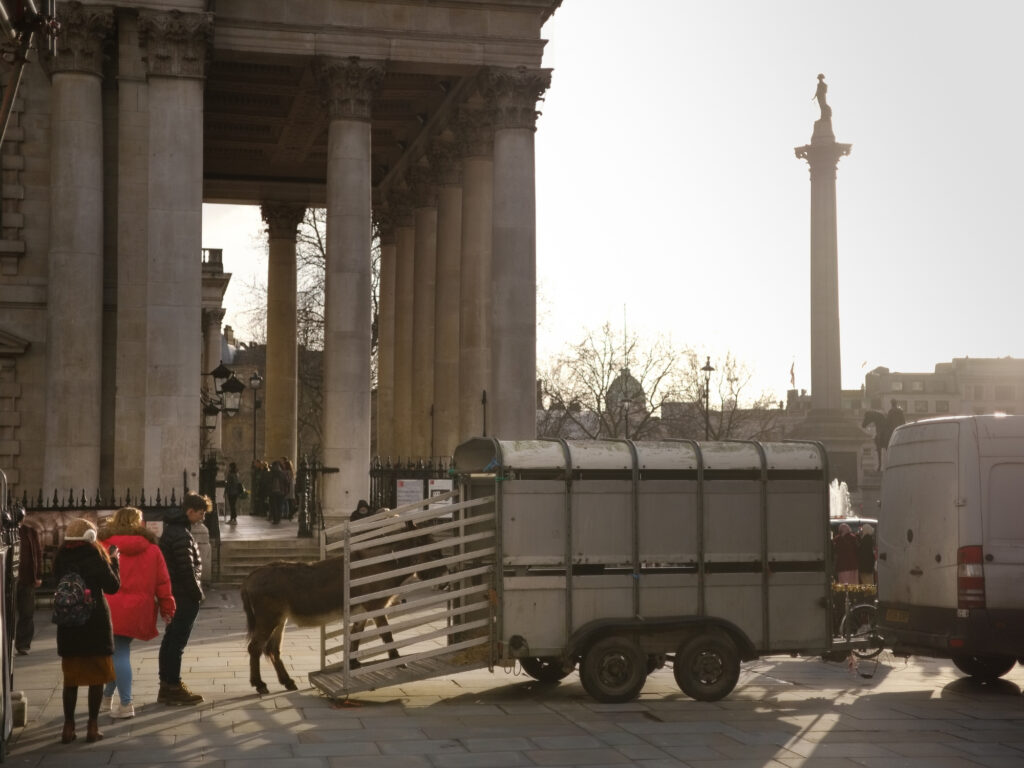
Could enactments of public celebrations reveal insights about shared traditions? Might guiding an animal show tension between participation and observation? Could public attention provoke reflection? Is there reflection on personal role in collective ritual? How do ritualised acts shape understanding of celebration? Which traits surface in public spectacle? How does observing public tradition affect reflection?
(Fujifilm X-T3, Fujinon 18-55mm, f.2.8-4)
Printing did not bring a conclusion to my thinking behind this series of photographs. It extended it. Once the photographs are fixed in sequence and held in the hand, they seem to behave differently. What looked like separate images starts to connect with elements of relationship and rhythm.
Making this single book, therefore, feels like the beginning of something else.
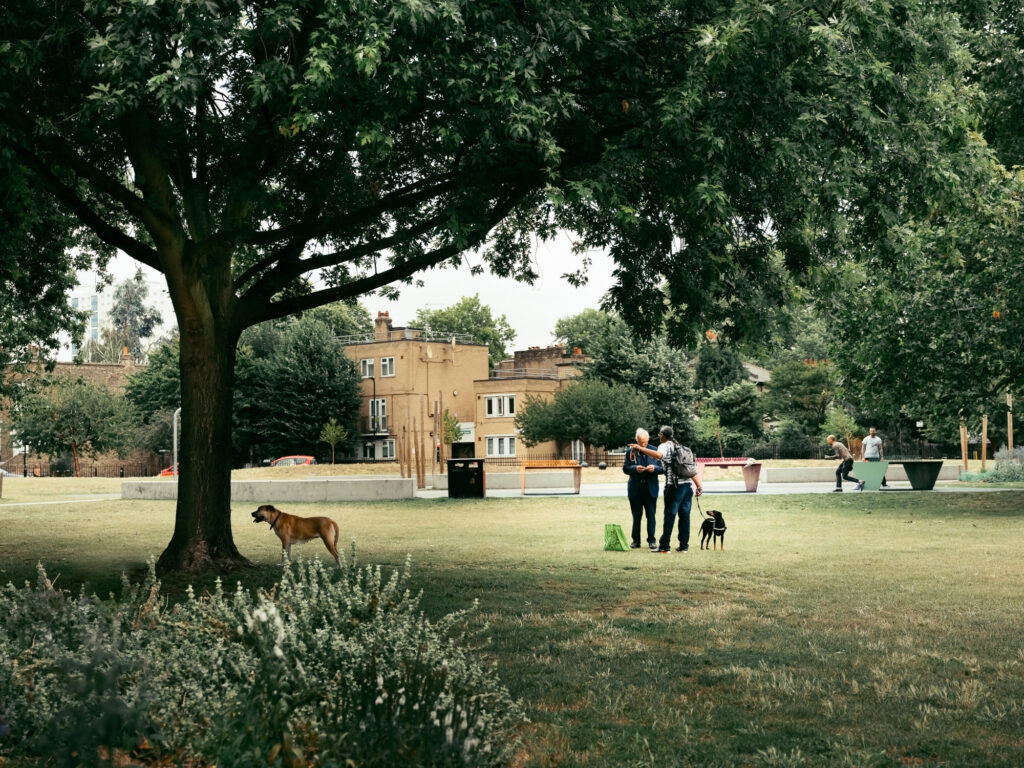
Could body language or gestures reveal unconscious needs? Might an urban backdrop amplify awareness of contrasts? How do interactions provoke reflection? Which desires are projected onto others? How does observation reveal inner patterns? Could attention to a pet reveal private tendencies to nurture, control, or anthropomorphise? Could noticing a pet’s behaviour provoke reflection on overlooked aspects of self or projection?
(Fujifilm GFX-50R, Fujinon 32-64mm f.4)
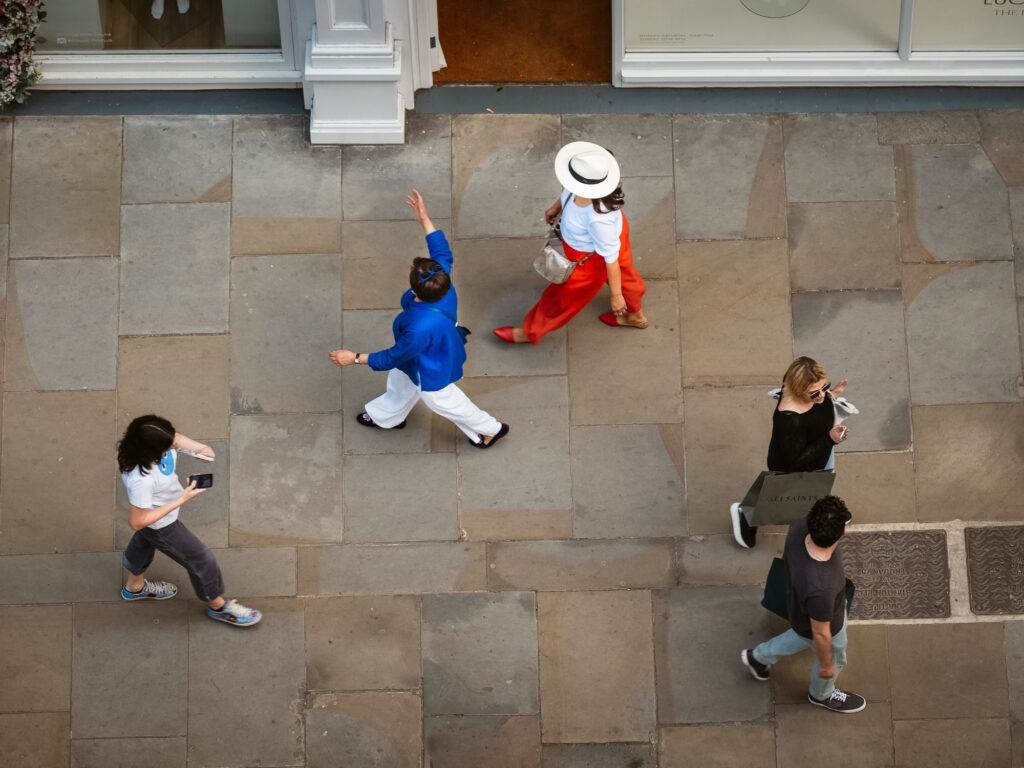
What thoughts surface when the street is seen from above, where currents of value and exchange appear in the flow of people, some moving with ease alongside those with more limited resources? Could such a view invite the observer to consider the shadows that money casts, shaping opportunity, pace, and presence in ways not always visible from the pavement? Might recognising this shadow prompt the observer to reflect on their own assumptions?
(Fujifilm X-T2, Fujinon 55-200mm, f.3.5-4.8)
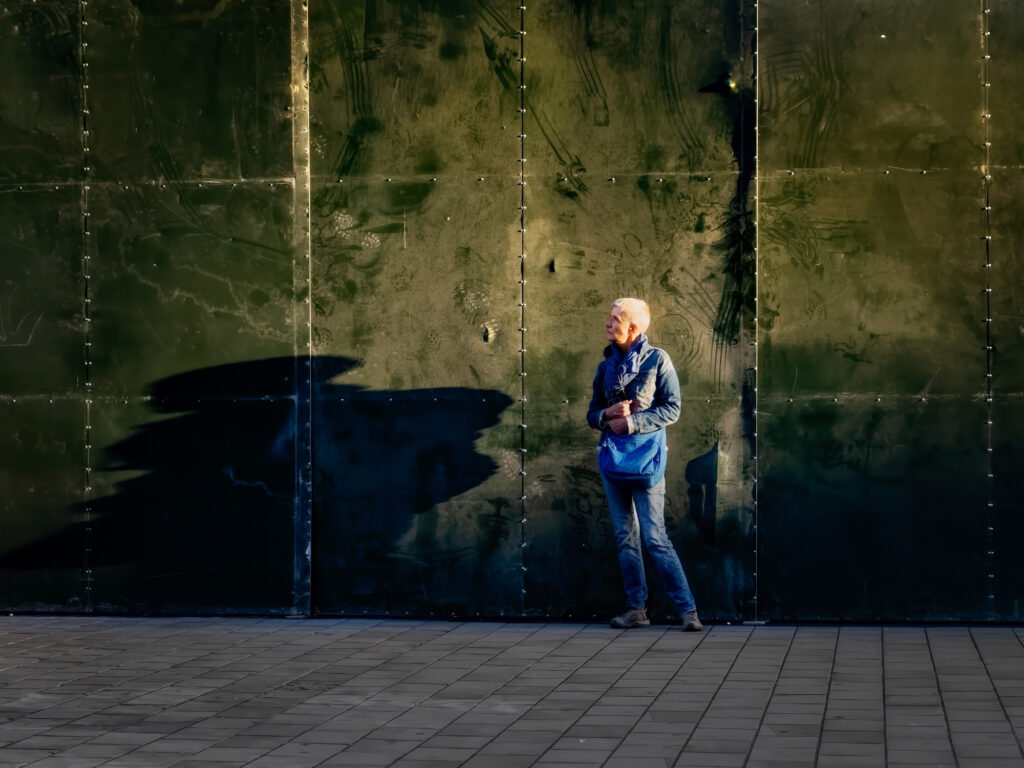
How does one passer-by’s shadow anticipate the crowd to come? Do temporary hoardings and metal barricades cast outlines of safety or control? Does sunlight tracing across metal reveal more than it conceals? Do footprints and fading marks echo past gatherings or previous unrest? Might these projected forms invite reflection on what protection obscures? Where do shadows fall when a city prepares for something not yet begun?
(Pentax MX-1)
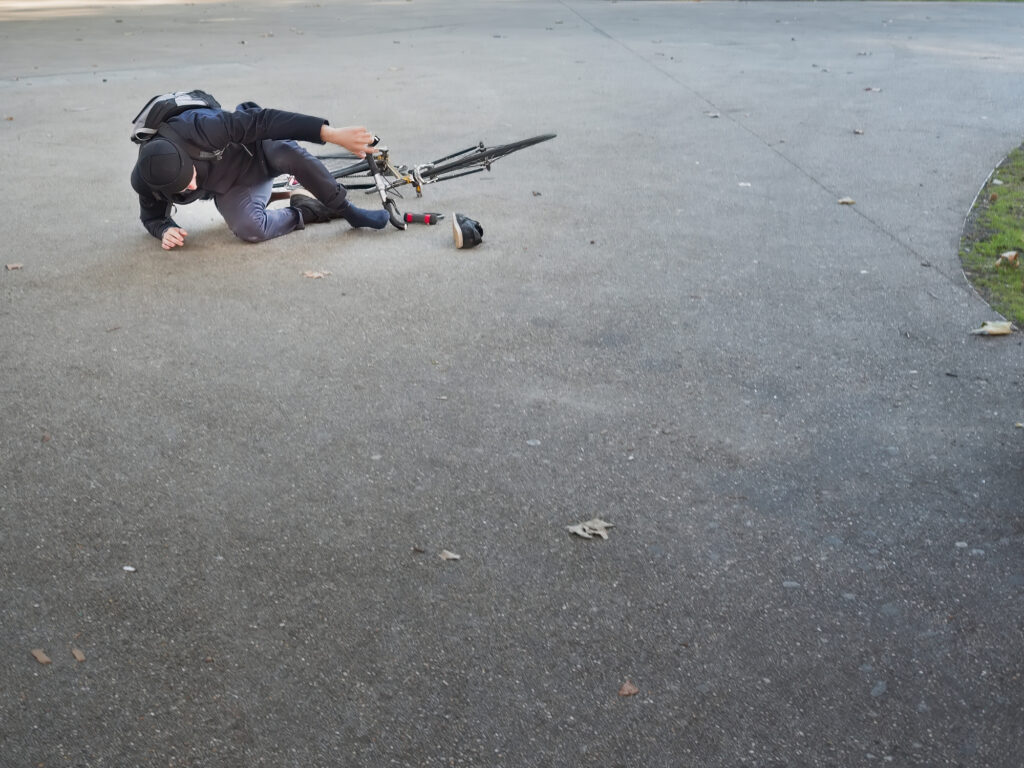
Could sudden vulnerability evoke reflection on preparedness or competence? Which traits are wished away in vulnerability? How do accidents provoke reflection? Might public exposure trigger hidden shame? Could minor accidents reveal patterns of self-critique? Is there tension between mobility and fragility? Might disrupted movement reflect inner resistance to change? Could observation of mishap show perfectionist tendencies? What desires to control emerge in fragility?
(Fujifilm X-T3, Fujinon 16-55mm f.2.8)
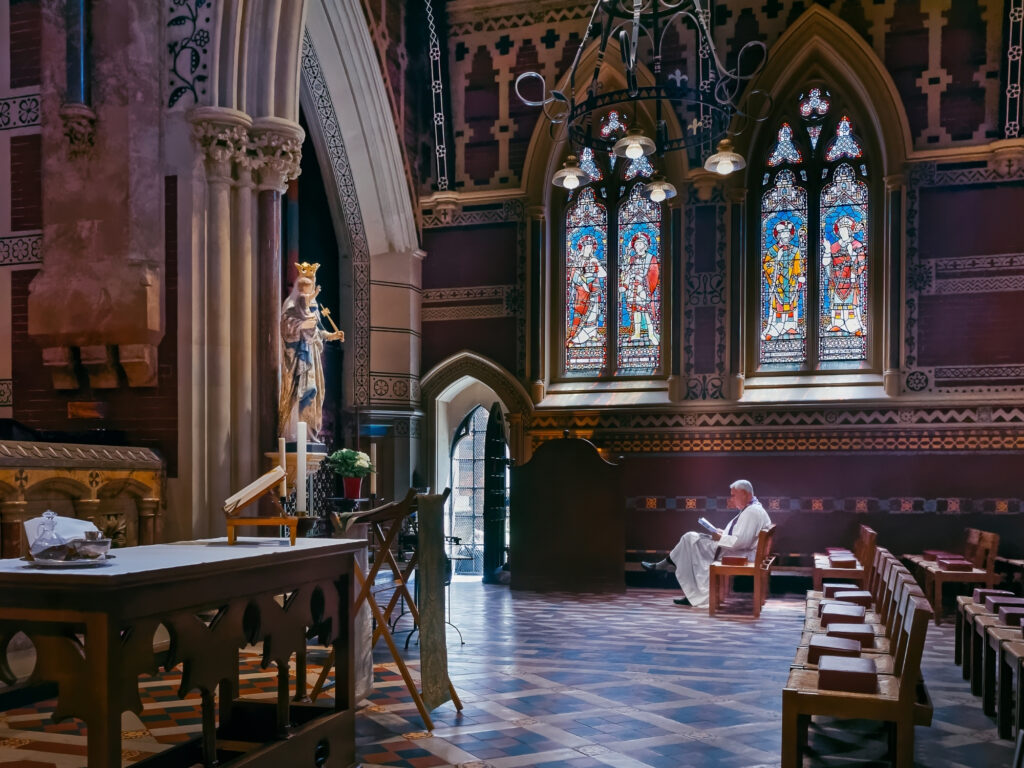
In what ways does ritual trace a passage between attention and drift, conviction and uncertainty? Could engagement with ritual reveal longing for order and/or meaning? Or could it reveal a longing for a particular meaning that reason alone cannot meet? Might the posture of rest suggest a rhythm between faith and familiarity? Could stillness amid ornate surroundings reveal a tension between grace and restraint? Might iconography help translate mystery into human terms, while still veiling what cannot be known? Which private boundaries are touched in the act of devotion? (Fujifilm X-T3, Fujinon 18-55 f.2.8-4)
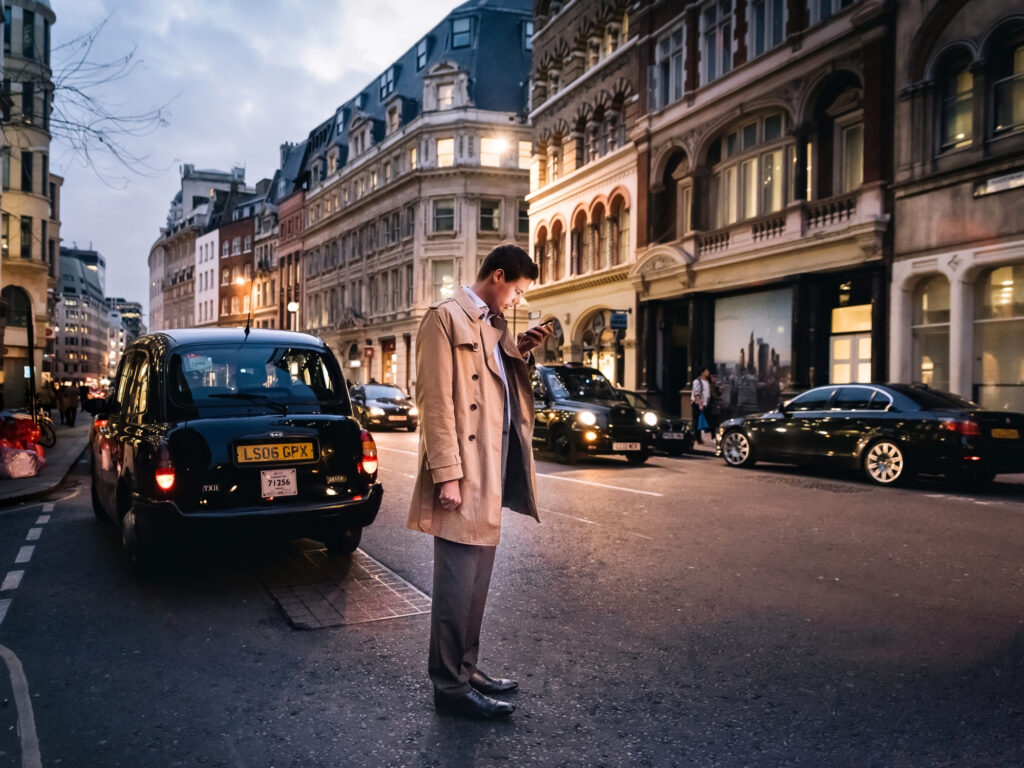
How does engagement with technology shape a sense of presence, or soften it? Might a glance towards a digital elsewhere reveal a wish to connect or to withdraw? Could the pressure of deadlines or unseen responsibilities colour the moment more than the place itself? Might a pull towards distraction hint at an inner tension between showing up and stepping back? Could immersion in routine conceal traits that ask for attention, such as uncertainty, self-doubt, or the hope to be briefly unseen? Which traces of the shadow appear in the space between composure and perhaps an wish to retreat? Could the shifting light at dusk mirror questions about direction or what remains unacknowledged within?
(Nikon D810, Tamron SP 24-70mm f.2.8)
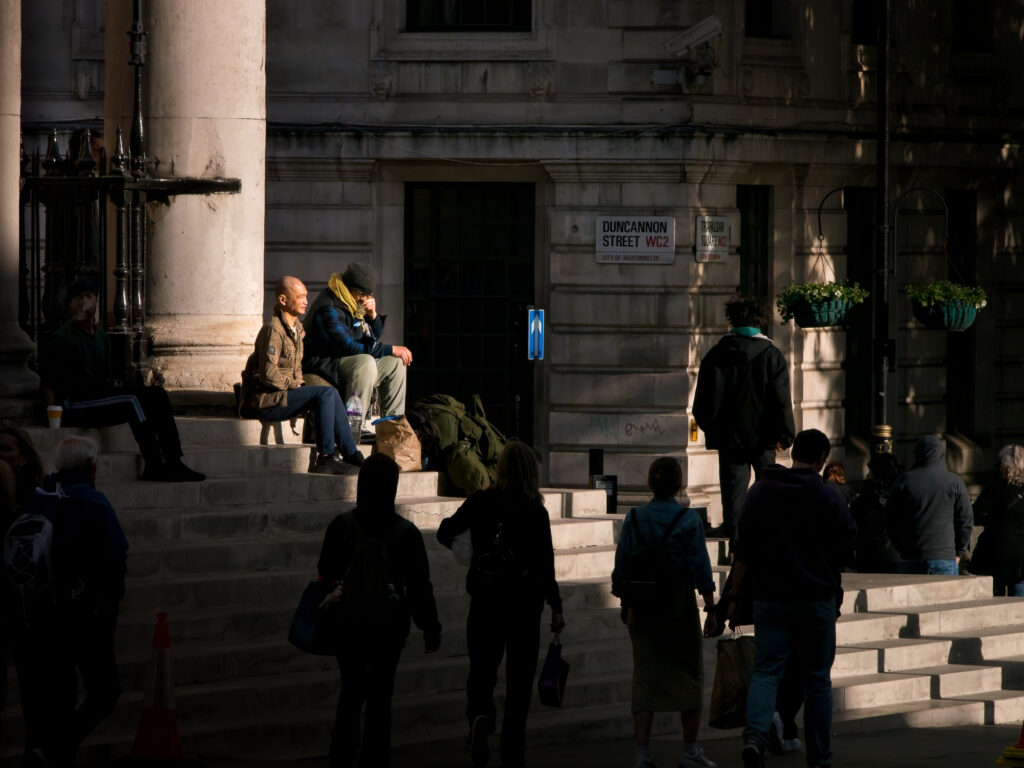
Could the interplay of light and shadow reveal inner contrasts or conflicts? Could the contrast of light and darkness in the scene bring to light aspects of self that are usually in shadow? Might the shadowed areas hint at qualities one has disowned, while the lit zones reveal what is accepted? Could lighting evoke awareness of unnoticed traits? Might passersby trigger reflection on the boundary between public and private self? Could the interplay of brightness and shade invite reflection on what one prefers to show and what one does not disclose? (Panasonic Lumix G5, Zuiko 40-150 mm f.4-5.6)
Featured Image: Front Cover of the photobook.
I wish to thank Veronica Skoglund for the invitation to take part in the photobook project, for coordinating the participation of the group, for designing the front cover using one of my images, and for helping me select that image from my series. Thanks also to Sofia Berto for reading and commenting on an early version of the essay I included in the photobook.
Share this post:

Comments
John Hillyer on Print, Hold, Spend: Making a £175 Consumer Photobook and What It Taught Me
Comment posted: 30/04/2026