

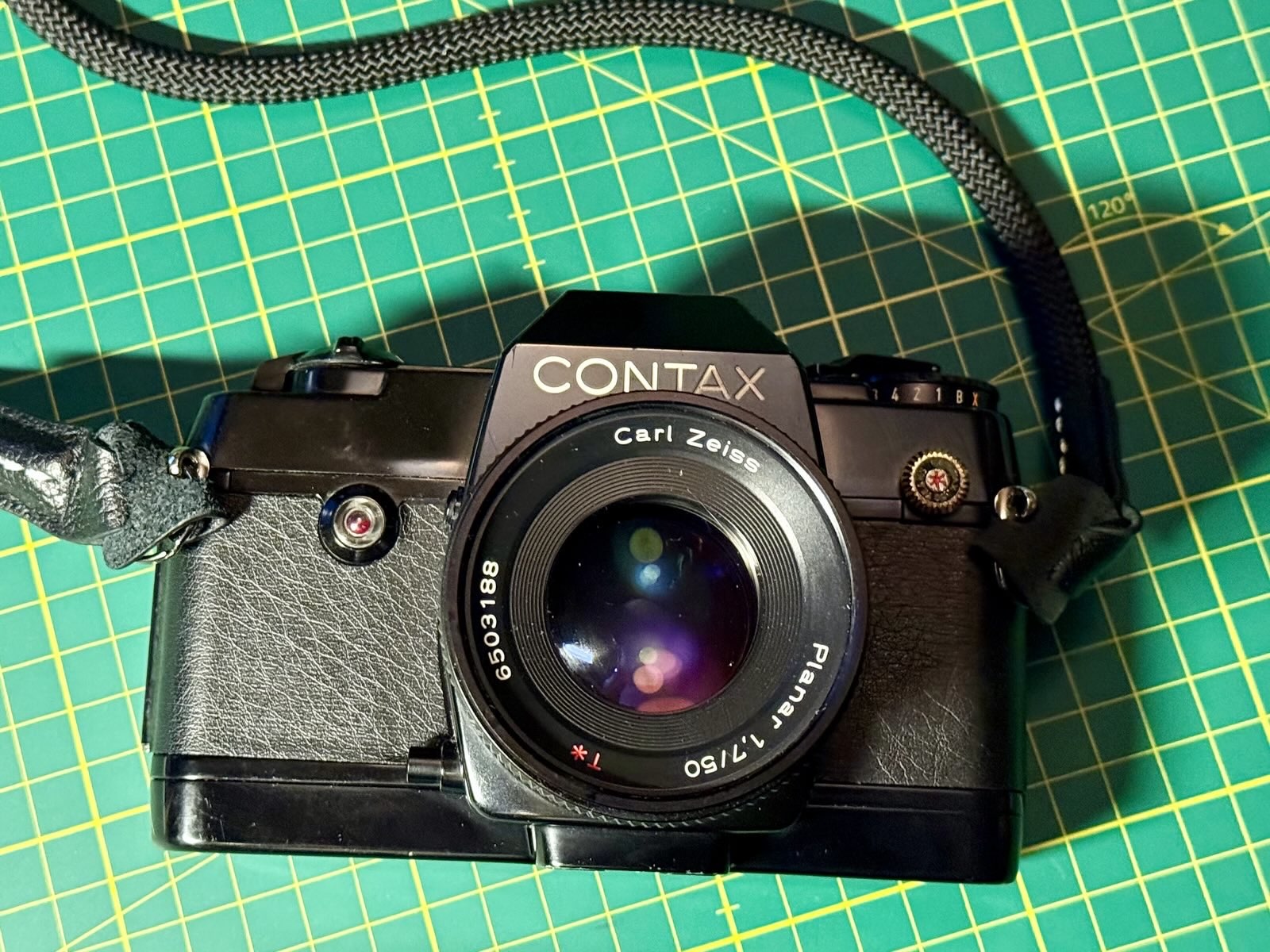
One evening, while scrolling through the second-hand section of online camera shops, I discovered a CONTAX 137 MA with a Carl Zeiss Planar 50 mm f/1.7 T* lens. It had been reduced to half its previous price, to about €90. I already had a CONTAX G1, and was thrilled with its optics. The autofocus, however, was a different matter. The online shop’s CONTAX looked worn, the leatherette was in a particularly poor condition. More importantly, the lens seemed to be fine. After thinking about it for a few minutes, I bought the camera, primarily for the sake of lens.
The first roll of film showed light leakage. In combination with the worn leatherette, it made a disappointing impression. However, the camera mechanics seemed to be in good condition; everything worked as it should. In the hope of eventually being able to restore some of the camera’s original appearance, I ordered new light seals and leatherette from Antikea Photo.
Replacing the light seals was messy and required patience. Removing the remains of the old seals was required toothpicks, tweezers, cotton buds and isopropyl alcohol. Installing new seals was a bit, but not much, easier. Replacing the leatherette was simpler, but also this required toothpicks, cotton buds and isopropyl alcohol. Finally, to test the light seals, I loaded the camera with Ilford HP5 Plus 400 film and brought it along on my daily walk around the neighbourhood with my dog. He had waited patiently at my feet without complaining while I worked with the camera.
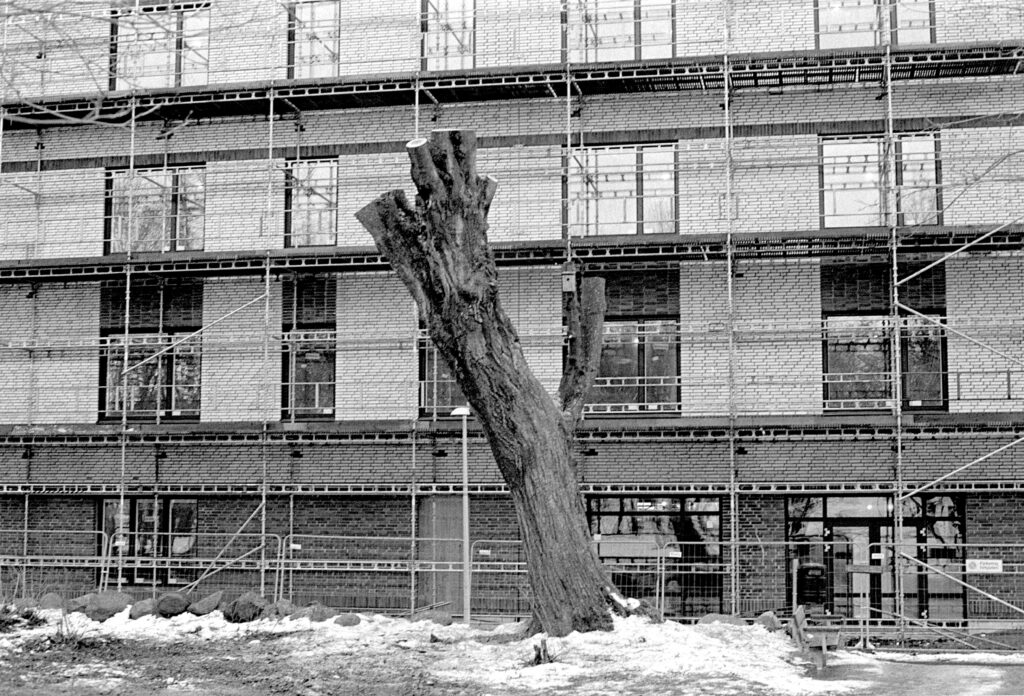
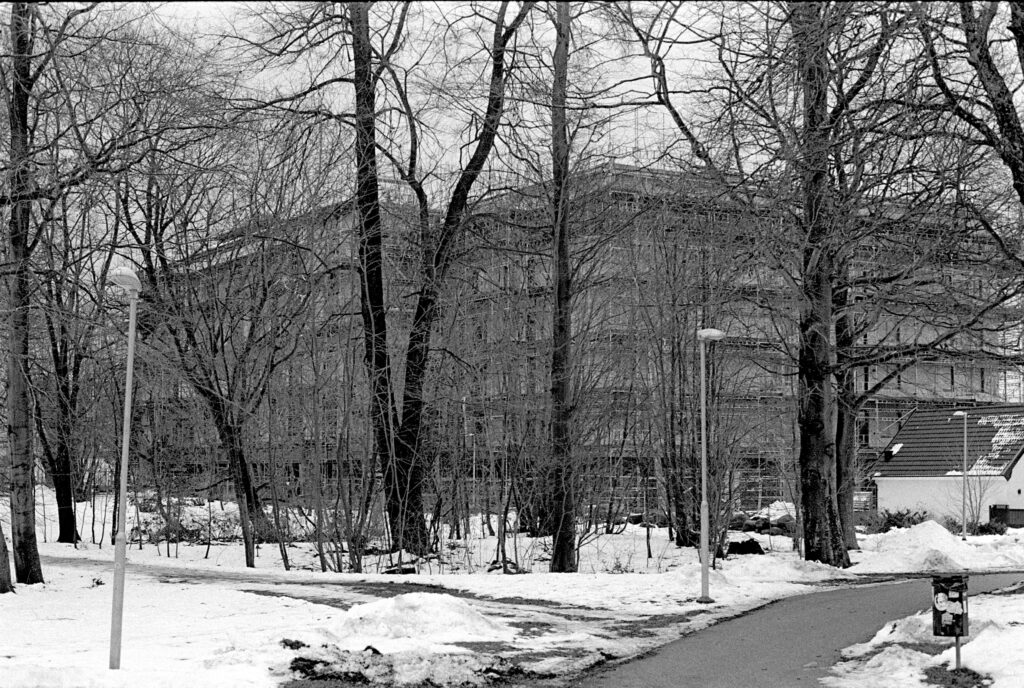
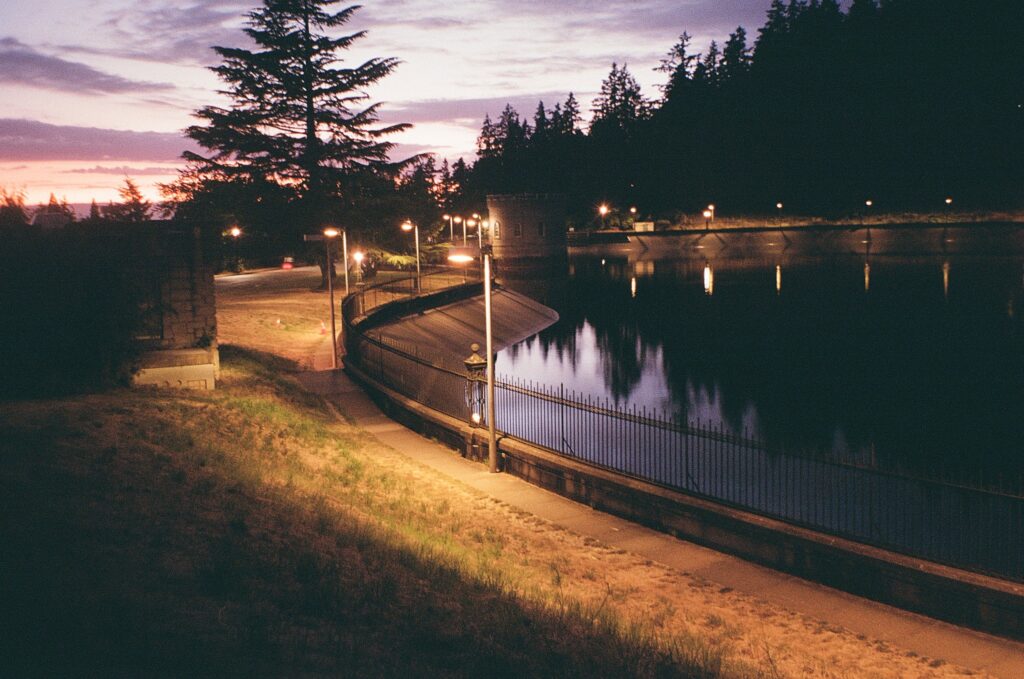
This was in the Scania town Ystad, in southern Sweden, at the beginning of January. The neighbourhood where the daily dog walk takes place is located north of the city centre and called Bellevue, probably because of the view it offered of the southern Baltic Sea. The area began to be developed during the 19th century and experienced rapid growth in the late 20th century, continuing to become increasingly densely populated today. The Scania climate is temperate, with mild winters and cool summers. Nevertheless, a few days before the dog walk, a heavy snowstorm delivered large amounts of snow, and it was now thawing. Fresh snow often tends to create an impression of pristine and untouched nature, but a few days of thawing changes it to waterlogged areas with trampled snow slush mixed with mud and marked by yellow spots where dogs have urinated. This is a more common, and disagreeable, landscape.
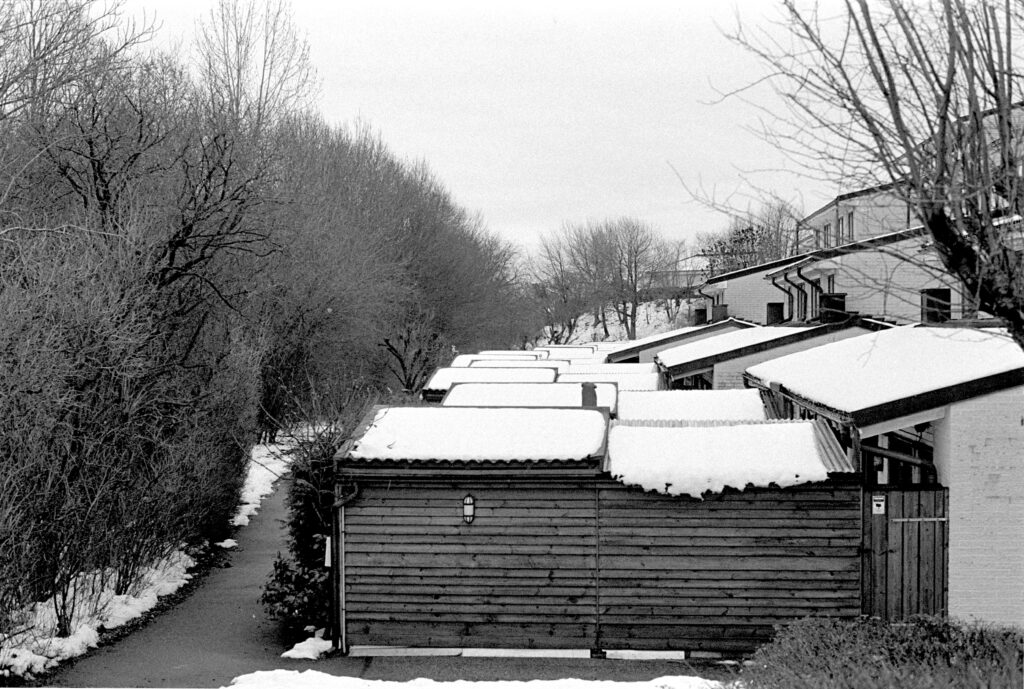
Having returned home from the walk, I developed the film in Rodinal at a dilution of 1+25 for 6 minutes, then fixed it for 3 minutes using Fomafix at a dilution of 1+5. I rinsed the film in running water for 5 minutes, before finally rinsing it in Fotonal and distilled water at a dilution of 1+200. When the film had dried, I scanned it using a Plustek OpticFilm 8200i film scanner. The procedure may seem tedious and could probably be done at a nearby photo lab at a reasonable cost, but I find developing photos relaxing, giving time to recharge. The tactile experience of handling the film, putting it into a reel and developing tank in a film changing bag, the smell of the fix, and watching the film as it dries, is to me an integral part of photographing.
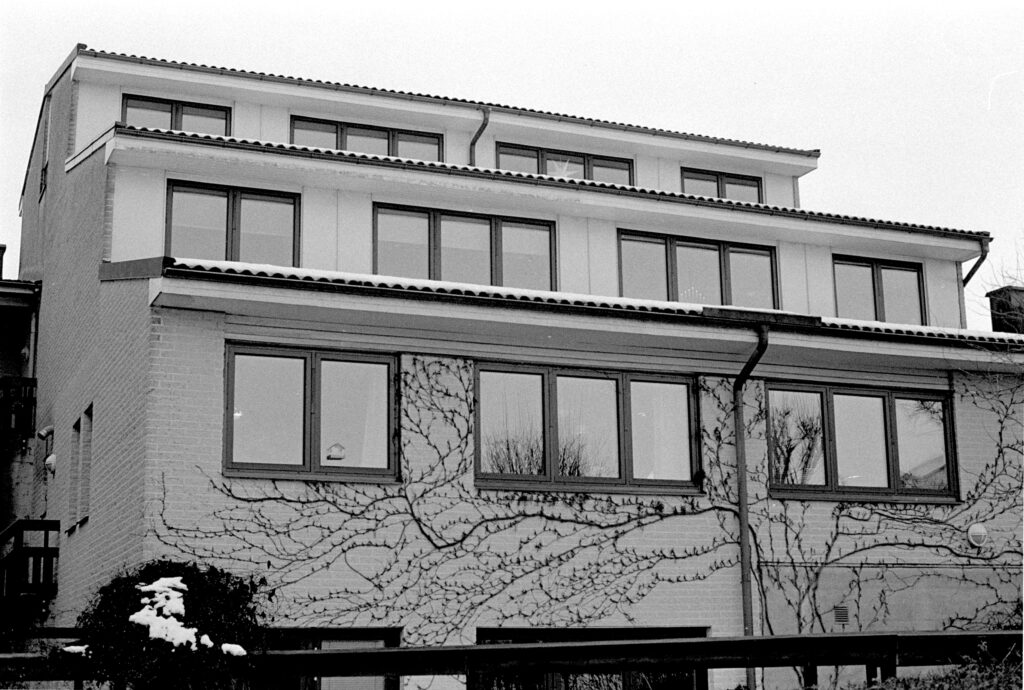
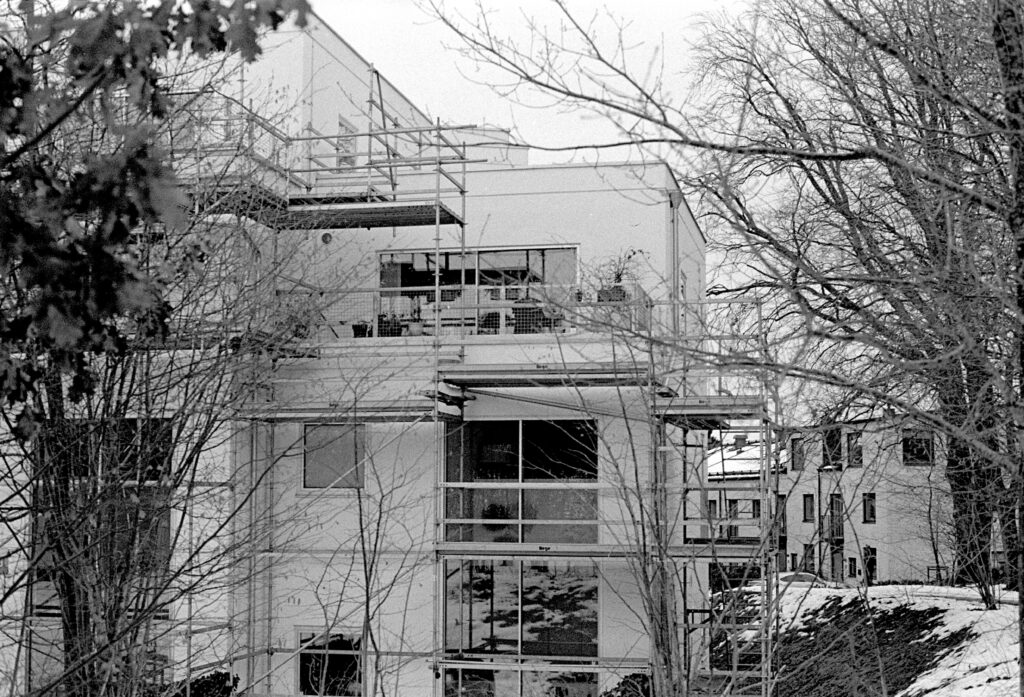
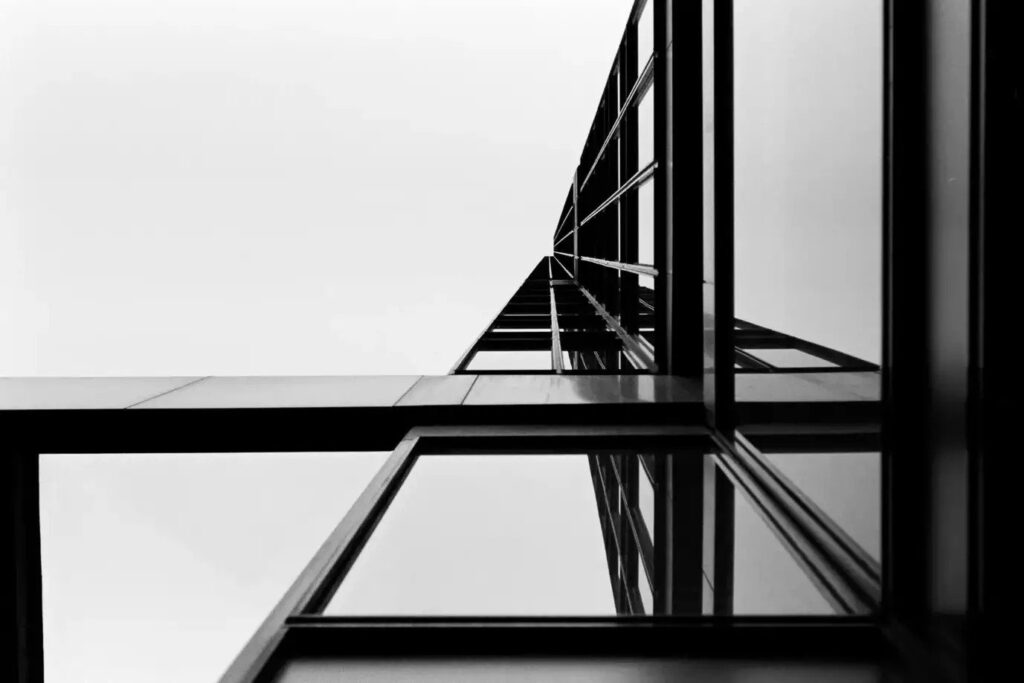
The photos were, in my opinion, rewarding: no light leak but excellent sharpness and contrast.
Share this post:



Comments
Juna on 5 Frames from a 50mm f1.7 Carl Zeiss Planar T* lens
Comment posted: 21/02/2026
Comment posted: 21/02/2026
John Fontana on 5 Frames from a 50mm f1.7 Carl Zeiss Planar T* lens
Comment posted: 21/02/2026
Comment posted: 21/02/2026
Omar Tibi on 5 Frames from a 50mm f1.7 Carl Zeiss Planar T* lens
Comment posted: 21/02/2026
The price you paid for the combo of 137MA & 50/1.7 is fantastic, the Planar alone is worth probably closer to 150 Euros. The first gen C/Y SLRs typically need a leatherette replacement, but aside from that, they are all very capable and reliable machines, and of course the Zeiss glass is superb. Have you considered any other C/Y lenses to accompany your Planar?
Congrats on the new camera and happy shooting!
Comment posted: 21/02/2026
Comment posted: 21/02/2026
Comment posted: 21/02/2026
Gary Smith on 5 Frames from a 50mm f1.7 Carl Zeiss Planar T* lens
Comment posted: 21/02/2026
Thanks for your article Jonas.
Comment posted: 21/02/2026
Tony Warren on 5 Frames from a 50mm f1.7 Carl Zeiss Planar T* lens
Comment posted: 21/02/2026
Comment posted: 21/02/2026
Walter Reumkens on 5 Frames from a 50mm f1.7 Carl Zeiss Planar T* lens
Comment posted: 22/02/2026
I don't know Ystaad like this, but that's understandable. In the summer of 1996, I spent two weeks in a holiday flat in Nybrostrand and got to know the area, of course, and we also visited Ystaad. We really liked Skane.
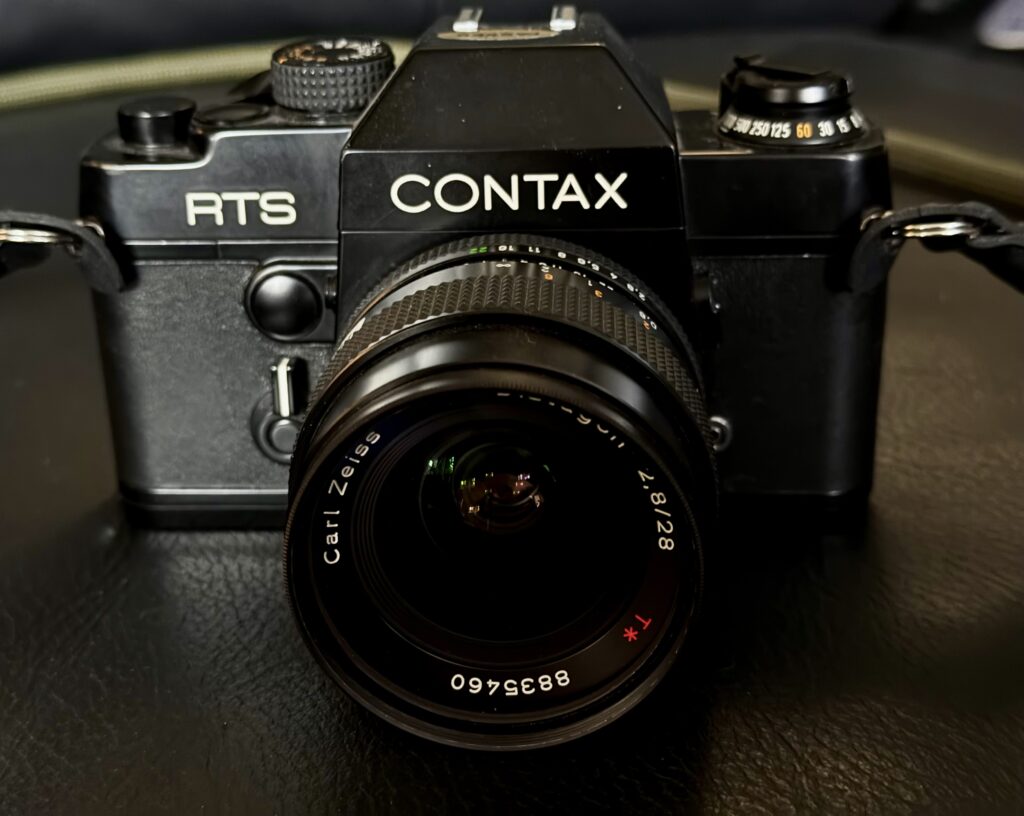
In other comments, you mention the Distagon 28mm as another lens. It's very good but also expensive. I looked into it and decided on a Yashica ML 2.8/28mm with a C/Y bayonet mount. Unfortunately, it's now stuck on a faulty adapter for Sony E-mount. I only use it on the Sony NEX cameras I still have. I am satisfied and find that the C/Y bayonet offers alternatives to the Zeiss lenses in the various Yashica ML lenses, which probably come from the same production facility. Incidentally, I use a Super-Albinar 28 mm/2.8 on my Contax RTS, which was already used by the previous owner of the camera and was the only lens included when I purchased the camera. It would be worth considering whether a 24 mm would also be a good solution, especially for landscape photography.
Thanks for sharing, Jonas!
Comment posted: 22/02/2026
Comment posted: 22/02/2026
Comment posted: 22/02/2026
Comment posted: 22/02/2026
Comment posted: 22/02/2026
Ibraar Hussain on 5 Frames from a 50mm f1.7 Carl Zeiss Planar T* lens
Comment posted: 22/02/2026
I’ve had a RTS II for many years m, the first one had the 45mm Tessar and 50mm f1.4 Planar, and now I use the Yashica ML 50mm f2 as main lens (plus a few M42) , which is probably my favorite standard lens of all. It has so much more character and less contrast for BW than the CZ. Of course it’s no way as sharp
Comment posted: 22/02/2026
Comment posted: 22/02/2026
Walter Reumkens on 5 Frames from a 50mm f1.7 Carl Zeiss Planar T* lens
Comment posted: 22/02/2026
https://www.digicamclub.de/showthread.php?t=11664
This website also features a review of the ML 28/2.8, which only gains sharpness from 5.6 onwards. The 28 mm is probably purchased more often, but I prefer to use the 24 mm in the city and for landscapes. Contrary to popular belief, many professional photographers recommend the focal lengths 24, 50 and 200 for their equipment.
Comment posted: 22/02/2026