

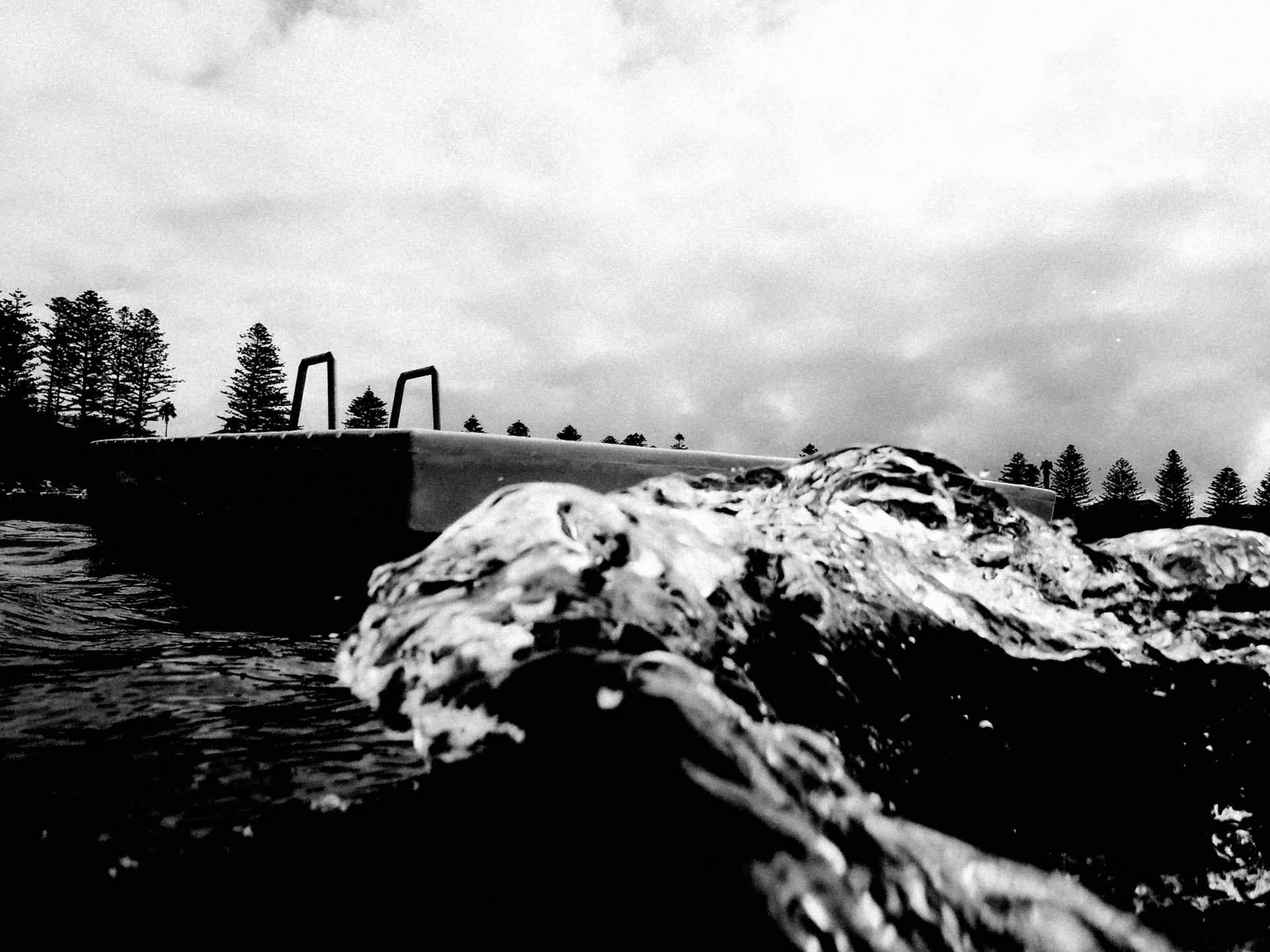
Two hours after my swim, and having done my best to warm up by eating fish and chips and sitting in the sun for a while, I’m still cold and my fingers are still a tiny bit numb. Luckily, my laptop has dictation on it.
We are holidaying down by the beach and it’s warmer than usual for this time of year, but it’s still heading into our winter in the southern hemisphere and a long way from the summer holiday season when this town is busy.
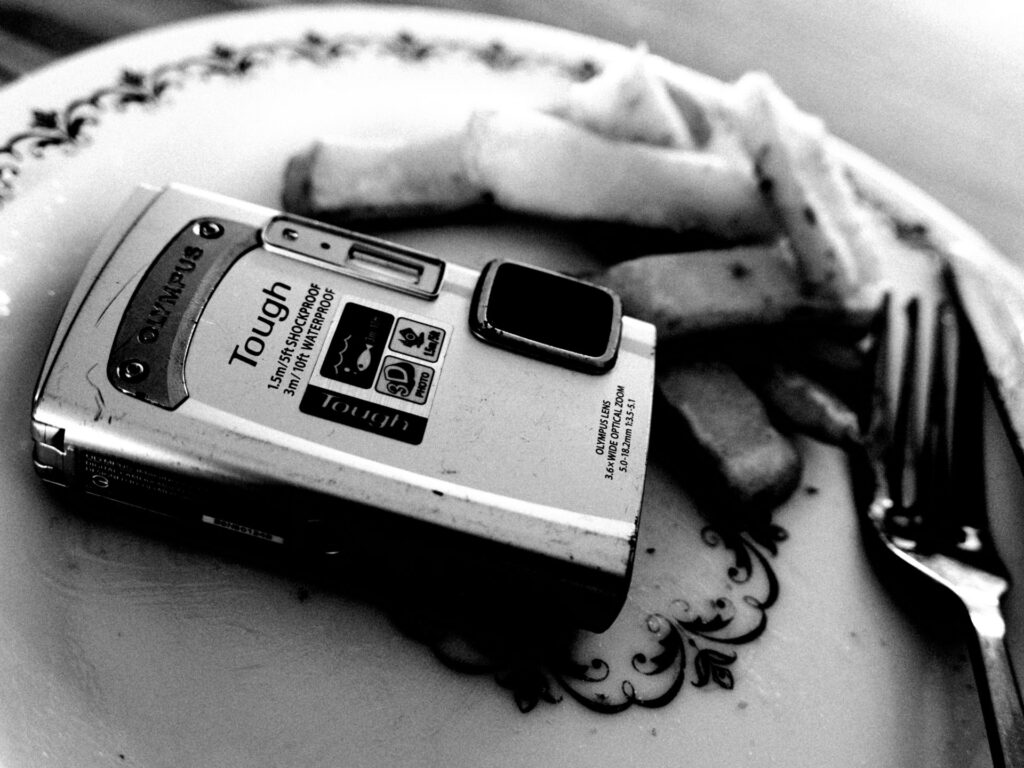
I have swum out around the pontoon for the last six mornings, and today it was feeling a bit warmer than normal. One thing I’d been meaning to do was to take along a little waterproof camera – an op shop find from last year – and see if I could make an image. I’d get to the pontoon and think ,”Oh, I’d like a photo of that.” But try as I might it seemed I was destined to forget to take the camera with me until I had already made it to the pontoon and then realised the camera was back at the house.
This morning on my swim however, I had taken my backpack to the beach with me and when, as usual, I made it to the pontoon and bemoaned my lack of camera I realised that instead of it being back at the house I had the camera in my backpack, so after swimming back in to the beach I made another trip out to the pontoon, this time with the camera, and it didn’t feel so cold at the time but felt very cold afterwards.
The camera in question is an Olympus TOUGH TG-310; a little 14MP digicam from 2011. As I mentioned above, it was an op-shop find – probably the last five dollar digicam I’ll ever see. Of course it’s now a $20 digicam because I bought a couple of batteries to replace the dud that it contained, but I don’t mind that because I think these fit a couple of other cameras I have. It also came with that delightful habit that these older cameras often seem to have whereby the internal battery or capacitor or whatever it is that maintains the clock and calendar no longer works and that means you have to reset the time every time you put the battery in, but no matter.
I had not been organised enough to put a strap on the camera, and having determined as I entered the water that it was a sinker not a floater I had to sacrifice one of my swimming hands in holding it. What I also hadn’t figured on was the fact that I would not be able to see anything through the rear screen except the vaguest of outlines of the scene. And because I was without my glasses and had salt water in my eyes I could not read any of the menus and I was going mainly by feel. Luckily I knew which button switched the camera on and off, which one fired the shutter and by squinting I could see how to zoom the lens. And that’s as far as it went. I also found out that the camera was waterproof enough to still function throughout the swim.
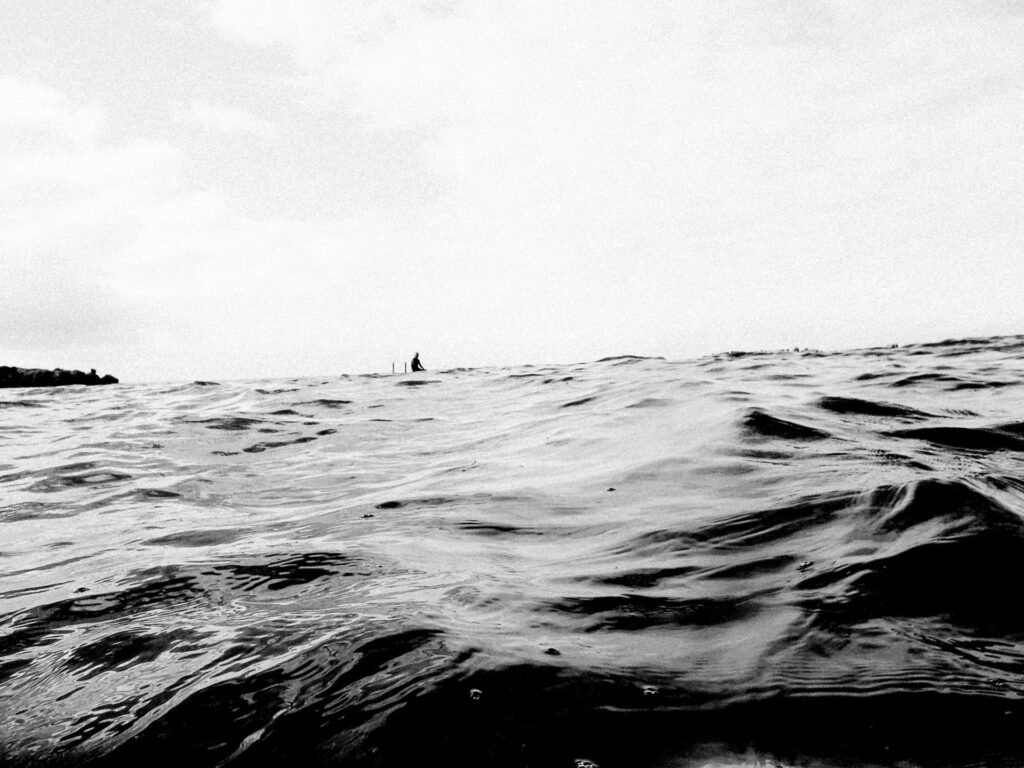
 I’m by no means a hero for swimming out in the bay; there’s a bunch of people who swim out from the Surf Club every morning year-round. I’m not a local, just a blow-in from the big smoke and only do the short trip out to the pontoon and back, but I still manage to get cold.
We came down here for a holiday, so I was intending not to think about photography as much as I normally do, however it looks like couldn’t help it. But at least I took a sidestep and started thinking about broader issues rather than the narrow ongoing narrative projects that normally seem to occupy my time.
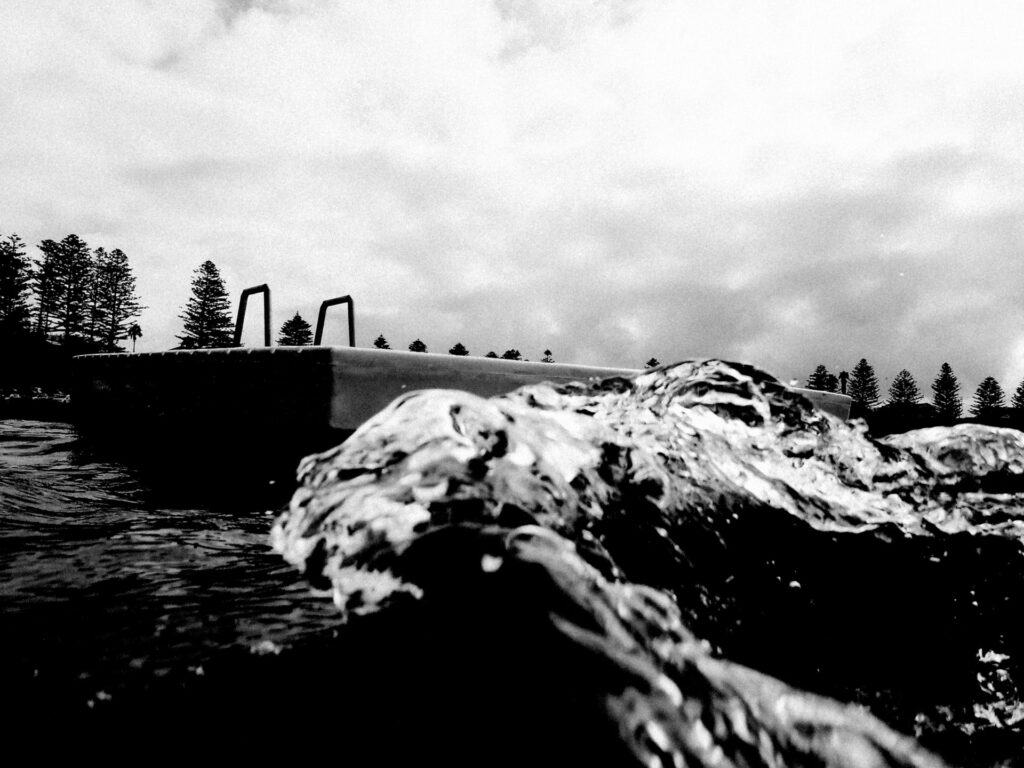
On this holiday I’d been reading about Post-War Japanese photography – Provoke Magazine from 1968-69, photographers like Daido Moriyama, Takuma Nakahira and Yutaka Takanashi. You know – that high-contrast, gritty aesthetic; seemingly random compositions, inky blacks, blown highlights and crazy horizons. What I did not previously know was that it was influenced by Ukiyo-e aesthetic from the nineteenth century. If you’re like me would not mean much as a name, but maybe it would be familiar if you think of the wood block print by Katsushika Hokusai of a huge wave with a tiny Mount Fuji in the background. And this, in its way, was also an influence on Degas and the French Impressionist painters. The movement had among its elements the idea that by chopping compositions across the subject you could invite the viewer to imagine a world beyond the frame.
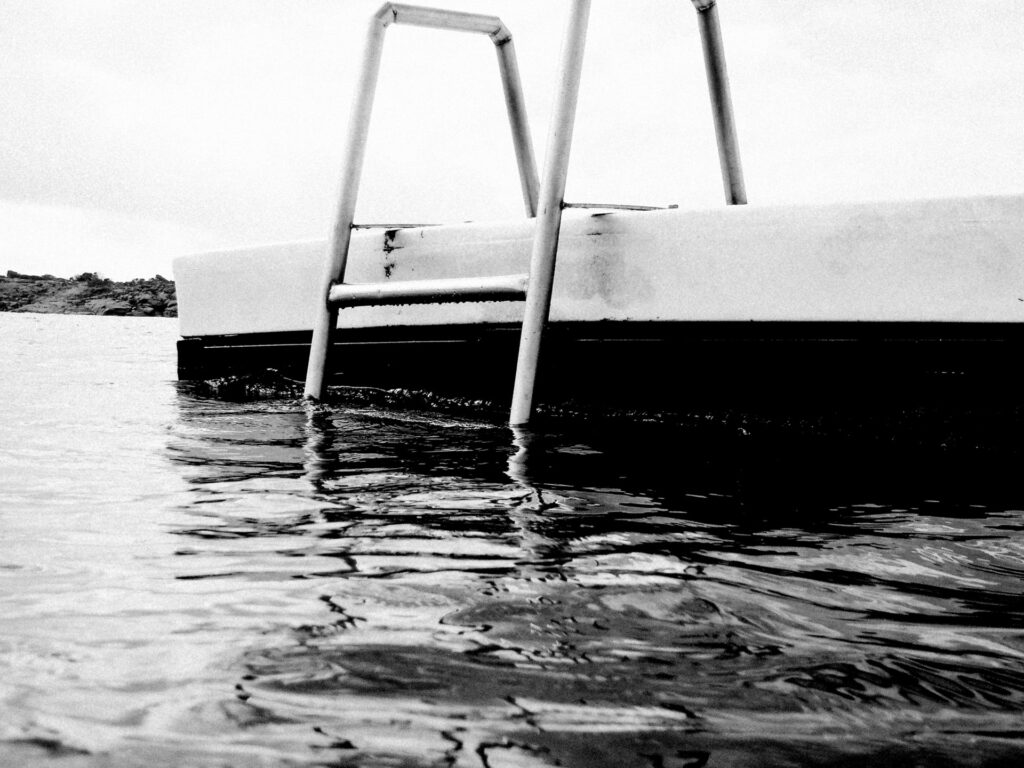
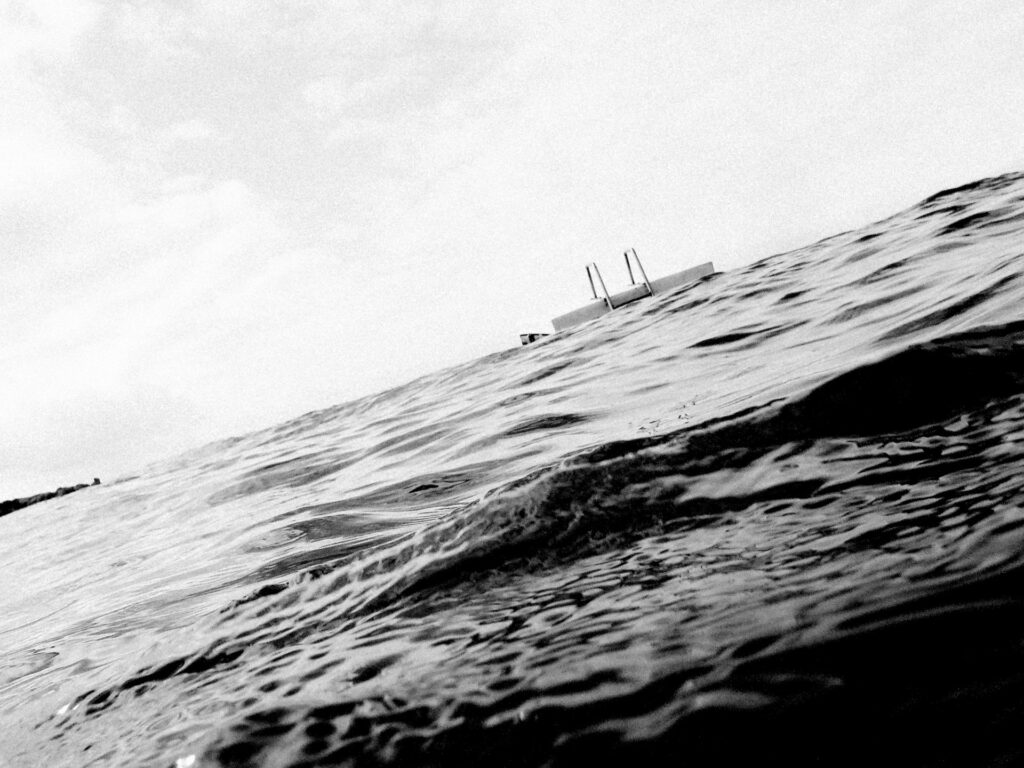
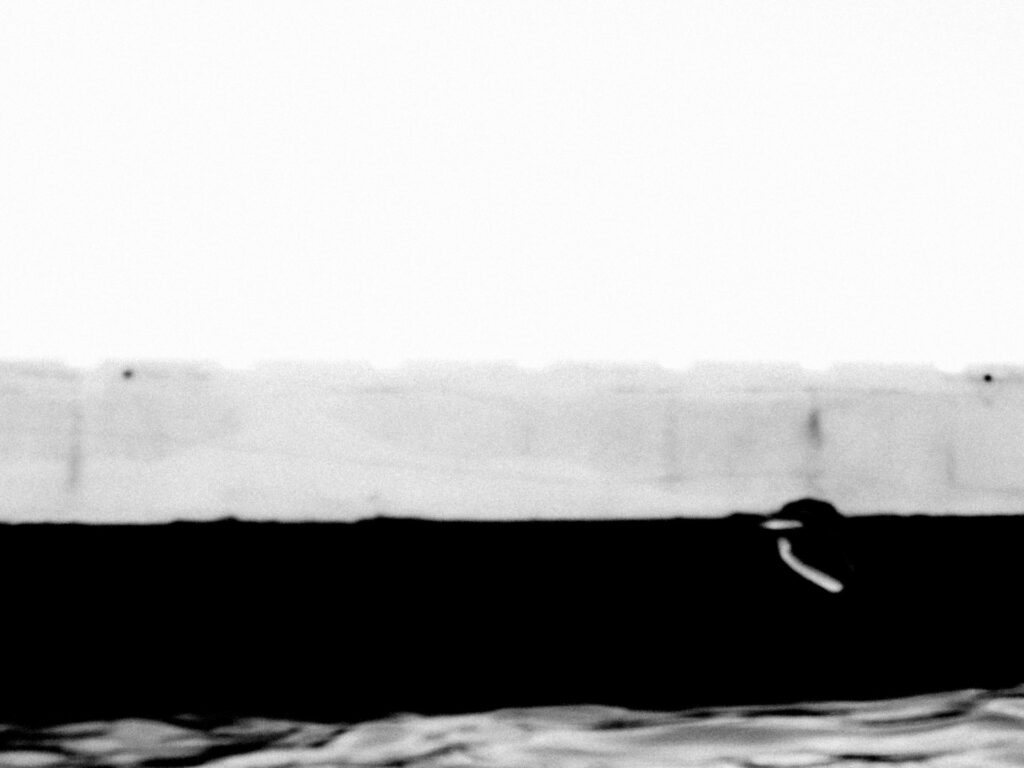
So what I was thinking on this morning, my head aching from the cold as I approached the pontoon, was how I could make a record of the pontoon and at the same time try to give a sense of the space around it, breaking regular ideas of composition and forgoing normal tonal conventions. So I decided to have a play with a completely different aesthetic from my usual one. As an experiment it was OK, and it gave me some things to think about. I saw the water differently when it was reduced purely to tones with the colour removed. I view this little excursion as a one-off, but you never know where these things will lead.
I think that’s really enough for this story. My fingers are back to normal so now I’ll be able to go through and correct the dictation and see if there’s anything in here that makes a kind of sense.
Thanks for reading.
Share this post:





Comments
Timothy Hancock on 5 Frames Around the Pontoon with an Olympus TOUGH TG-310
Comment posted: 07/07/2026
Comment posted: 07/07/2026
Art Meripol on 5 Frames Around the Pontoon with an Olympus TOUGH TG-310
Comment posted: 07/07/2026
Comment posted: 07/07/2026
Gary Smith on 5 Frames Around the Pontoon with an Olympus TOUGH TG-310
Comment posted: 07/07/2026
Thanks for reminding us David. I love the shot you used for your introduction!
Comment posted: 07/07/2026
Simon Atkins on 5 Frames Around the Pontoon with an Olympus TOUGH TG-310
Comment posted: 07/07/2026
Comment posted: 07/07/2026
Erik Brammer on 5 Frames Around the Pontoon with an Olympus TOUGH TG-310
Comment posted: 08/07/2026
Comment posted: 08/07/2026