

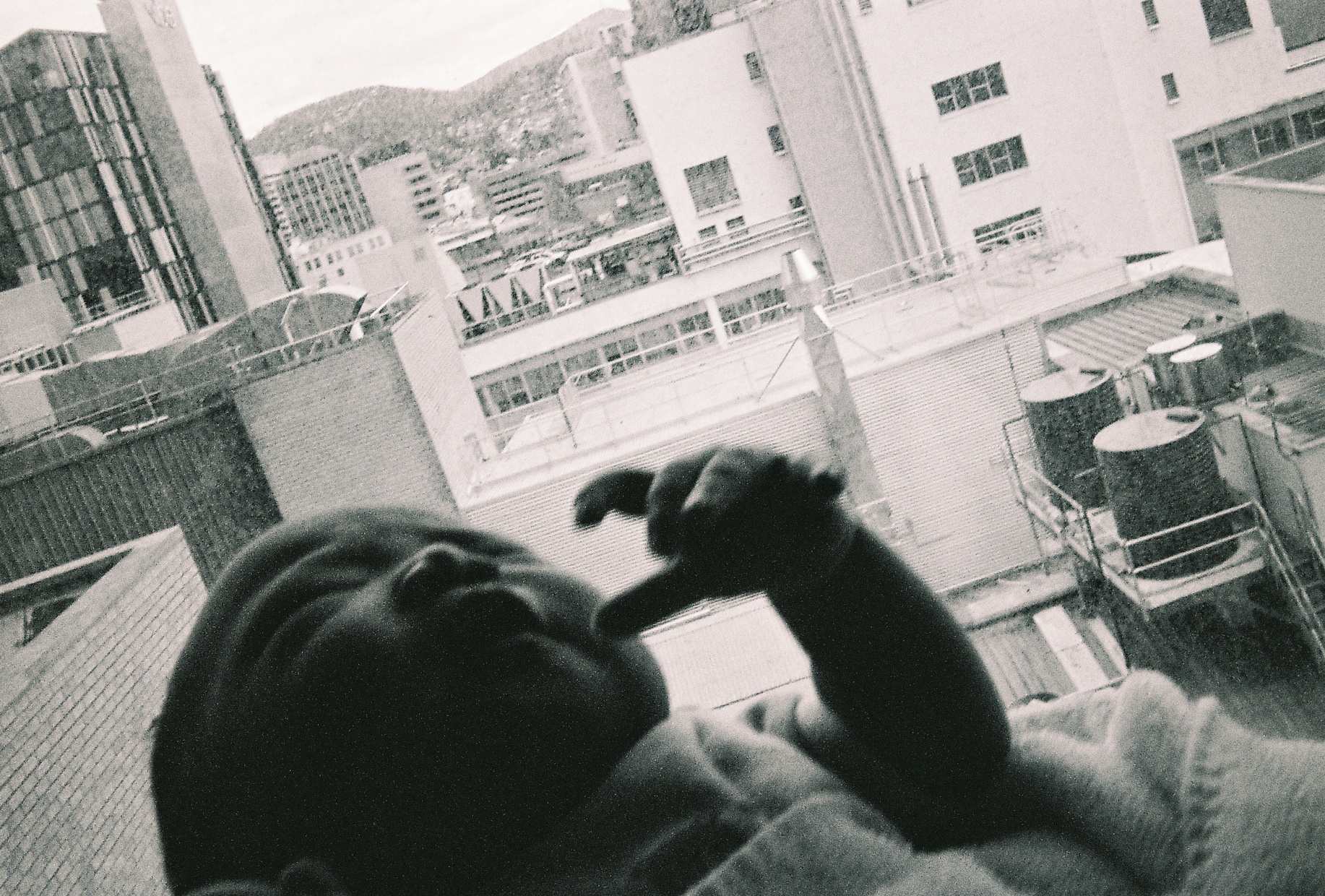
A film needs to be born twice before it shines.
The first birth is the exposure. When a shutter is fired, a certain amount of light, bounced from physical objects, passes through glass and tiny openings, engraving an image onto a blank film. That’s the first birth we all know about.
But the second, which I would argue against common sense, is probably far more meaningful.
It doesn’t happen until the film is developed, scanned, and finally presented in front of you, days, weeks, or even months later. This is what many people call the disadvantage of shooting film: you never really know what you’ve got until the film is already born as what it is. Before pressing that little button called a shutter, you can put all your imagination and effort into what you expect the photograph to become. But once it’s done, you either accept it or discard it. There is no second chance.
But aside from simply accepting or discarding a film, sometimes there is another possibility, at least for me: to discover a new kind of meaning in something that has already been born. More often than not, this new interpretation is completely different from what I had in mind when I pressed the shutter. A wrong exposure, an awkward composition, or even a pointless subject can become unexpectedly moody. Some frames I shot almost carelessly carry far greater emotional weight than an entire roll of well controlled photographs.
That is what I call the second birth.
I have found the beauty of the second birth throughout my work over the past two years. Some of my rolls were precisely planned and executed. I wouldn’t say none of those results had ever excited me. But I gradually realized that whether a film ultimately moves me has very little to do with what it was about or how it was shot. Not just technical aspects, sometimes even the original idea doesn’t matter that much. During the second birth, every frame is judged equally by the same emotional sensor.
Once the emotional sensor took over, I began wondering how I had arrived at this point. I still remember the excitement of getting my first SLR. I experimented with every piece of equipment I could afford and every technique I could imagine or learn from the Internet. Within just two or three years, I filtered out most of them, settled on a few focal lengths, and formed my own technical and aesthetic discipline. Then? It’s boring. I wanted to repeat the old experiments that once excited me, but I would stop myself: I’ve already ruled those approaches out. Why go back?
… Until I found the second birth. And I realized all those disciplines in photography and storytelling only belonged to the first birth. During the second, I no longer cared about descriptiveness, one of the fundamental elements of photography. I cared about how it feels when I look at it.
Digital rarely gives this privilege. A frame that doesn’t perfectly reflect the original idea is often killed on the memory card seconds after its first birth. I would look for a second shot, not a second birth.
And that’s why I took my Minolta Weathermatic Dual 35, an underwater toy camera, into the operating room to document Anastasia’s first second to her first seven days in this world. My journalist instinct still told me to anticipate every critical moment, plan how the story would unfold, and predict the exposure and composition. I knew there wouldn’t be a second chance for such a documentary. But, heck, why fear an imperfect first birth, when I knew another one was still waiting?
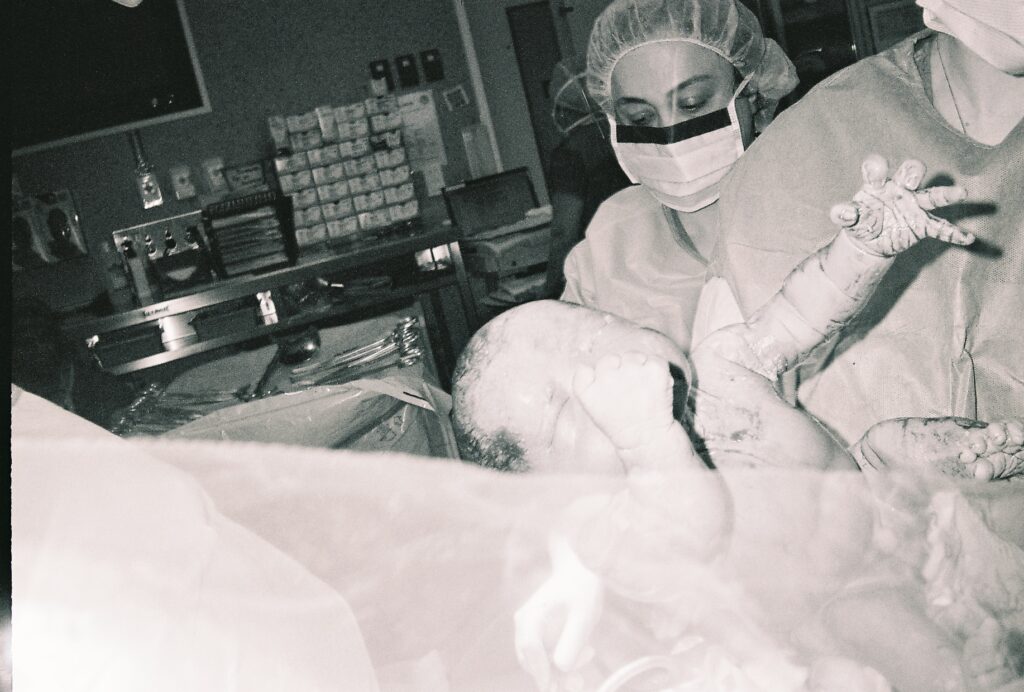
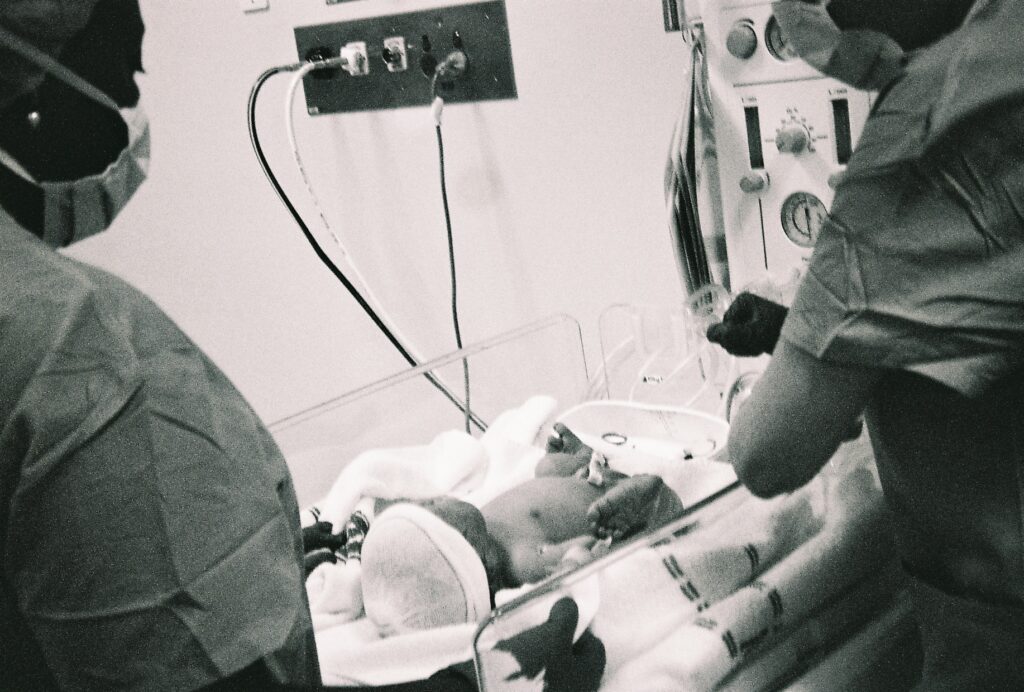
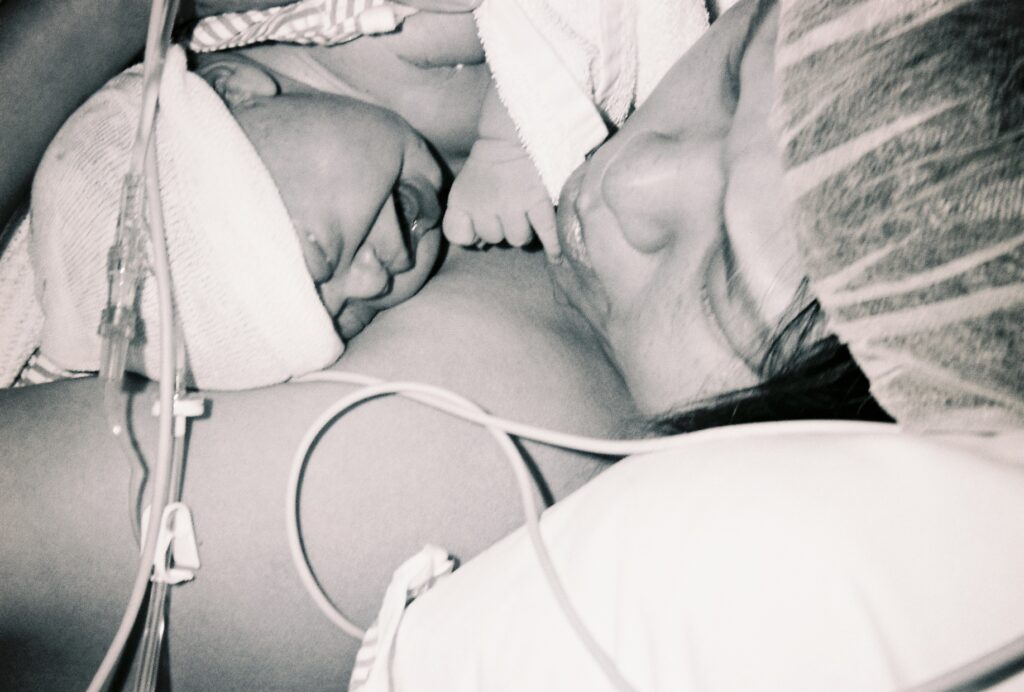
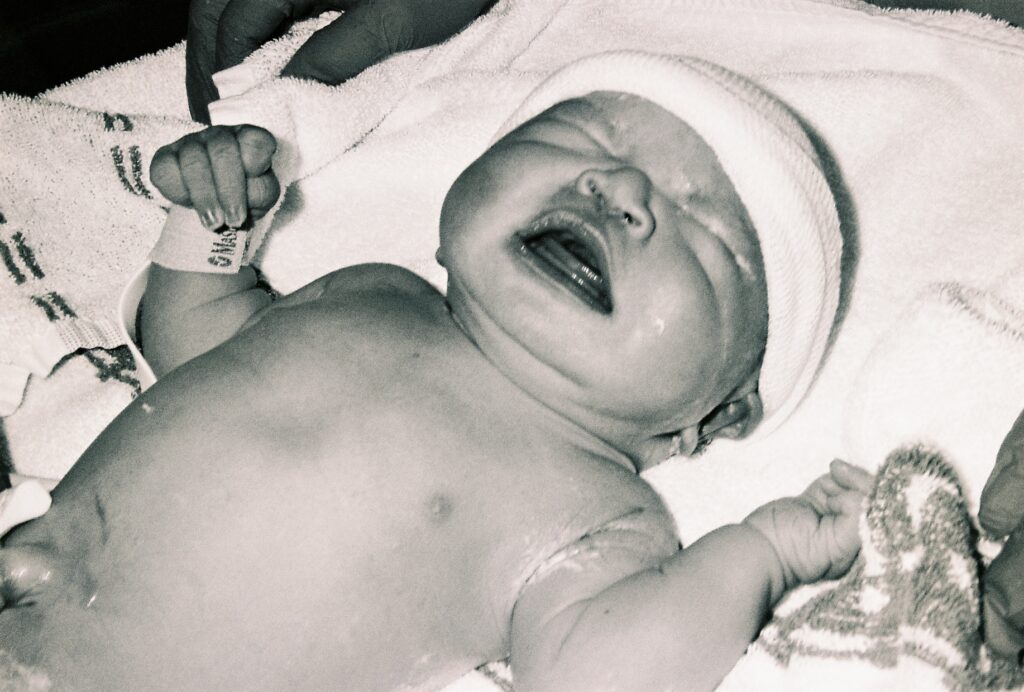
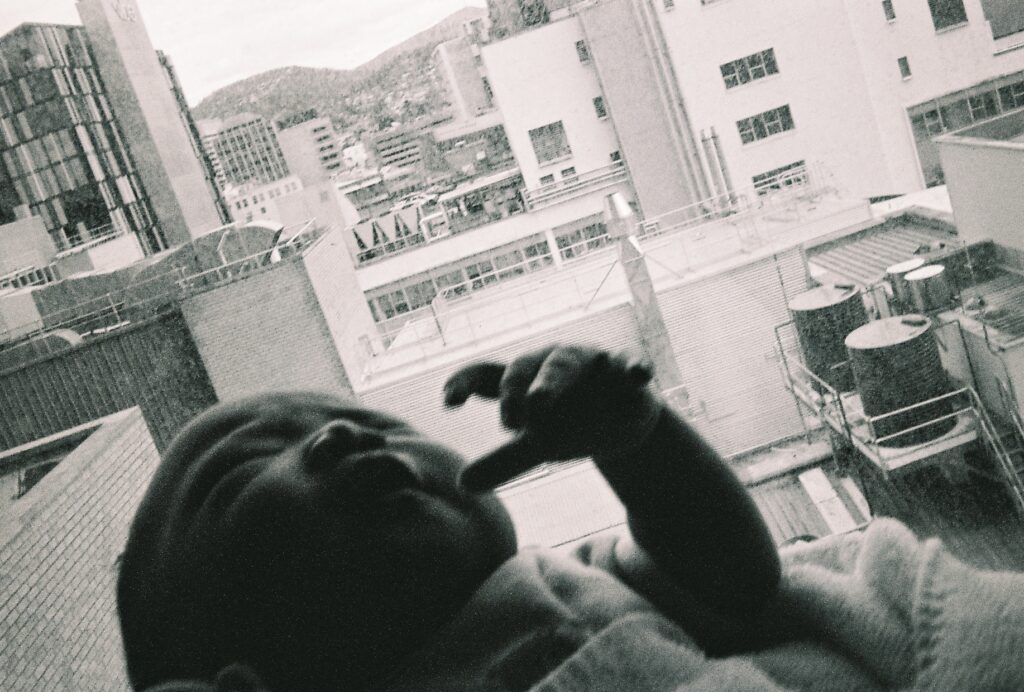
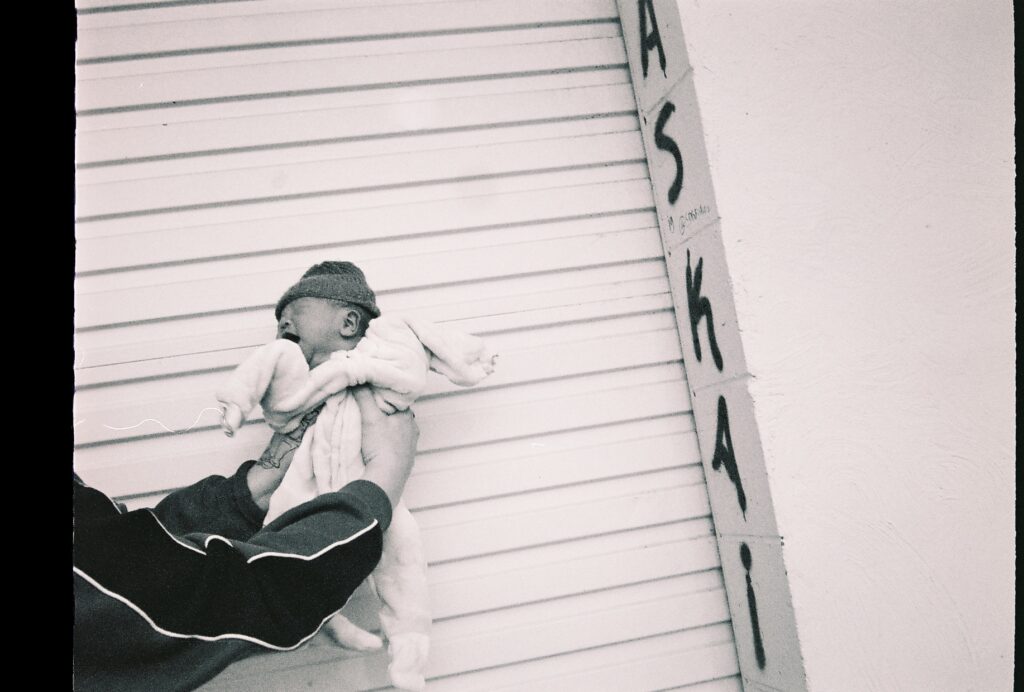
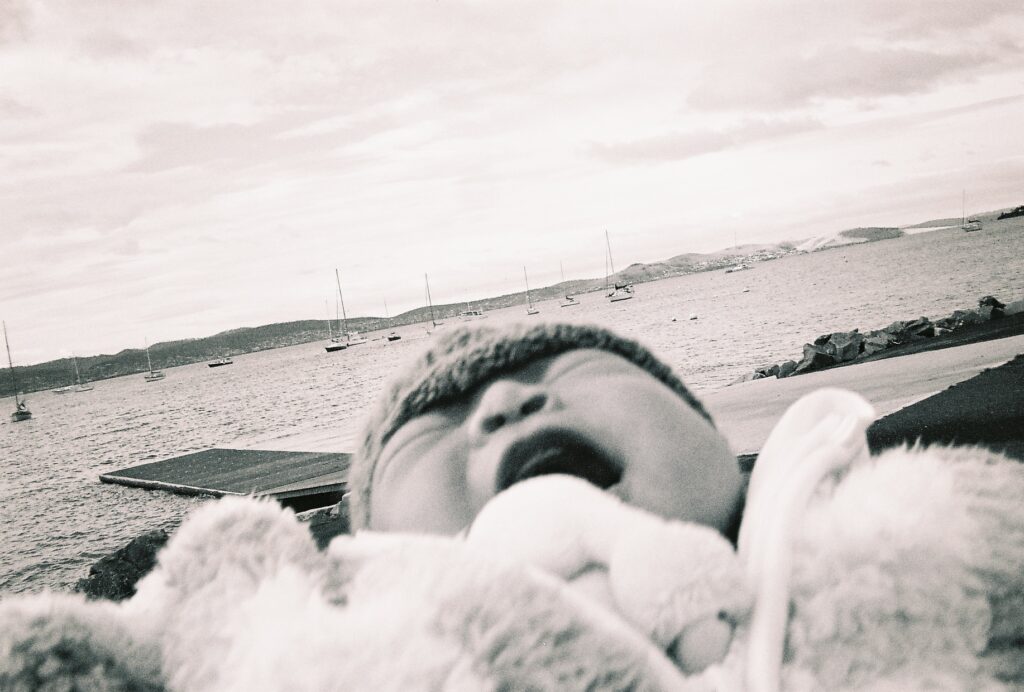
Acknowledgments: My sincere thanks to the obstetricians and support staff members at the Royal Hobart Hospital. Their professionalism and generosity made these photographs possible while ensuring the safe arrival of Anastasia into the world.
Model: Anastasia Omomuro
Share this post:


Comments
Geoff Chaplin on Born Chaotic
Comment posted: 02/09/2026
David Hume on Born Chaotic
Comment posted: 02/09/2026
For some reason, Polaroid Go popped into my head yesterday, and I remembered a nice story you did on that here at 35MMC. I wondered what you had been up to, and now I know. I'm very glad that time has brought you such riches. My children are now having their own children. There is a great truth in your images that resonates. I think it's wonderful that you are able to make, share, and reflect on them as you do. Thank you!
David Pauley on Born Chaotic
Comment posted: 02/09/2026
These black and white photos are great. They have an immediacy about them that I don't think would have been achieved with smartphone snaps, probably the most common choice these days in maternity wards (though I used a digital point and shoot when my daughter was born in 2007). I would imagine that these photos will be reborn in your eyes as you look at them and share them with Anastasia as she grows up.
She is beautiful...
David
Ed on Born Chaotic
Comment posted: 02/09/2026
Ed
Jeffery Luhn on Born Chaotic
Comment posted: 02/09/2026
Really well written posting to accompany the set of 'in the moment' photos. As an instructor once said to me, "No chance for a reshoot on this one, kid."