

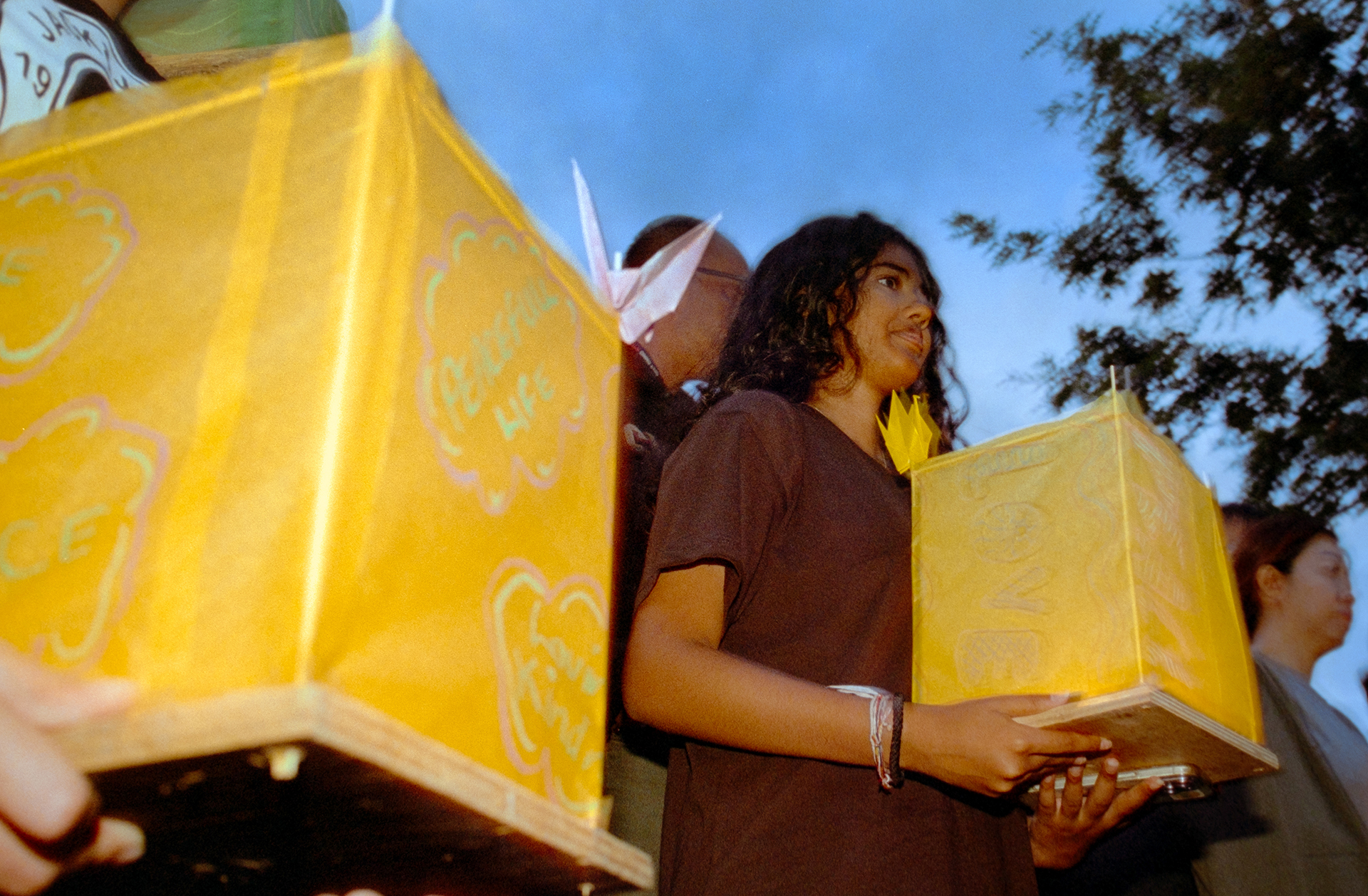
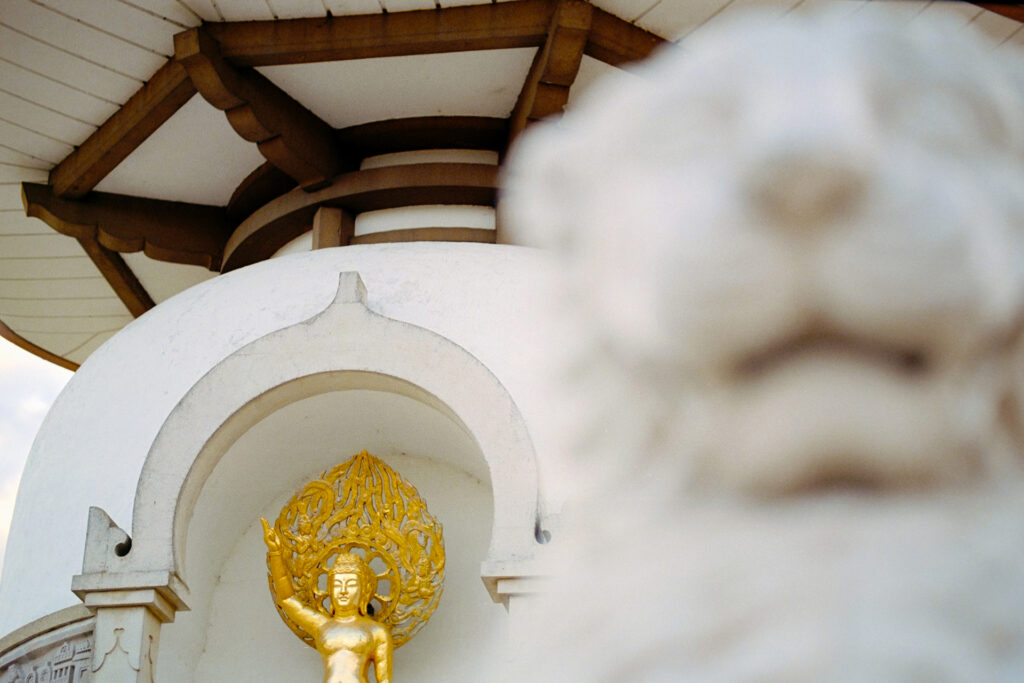
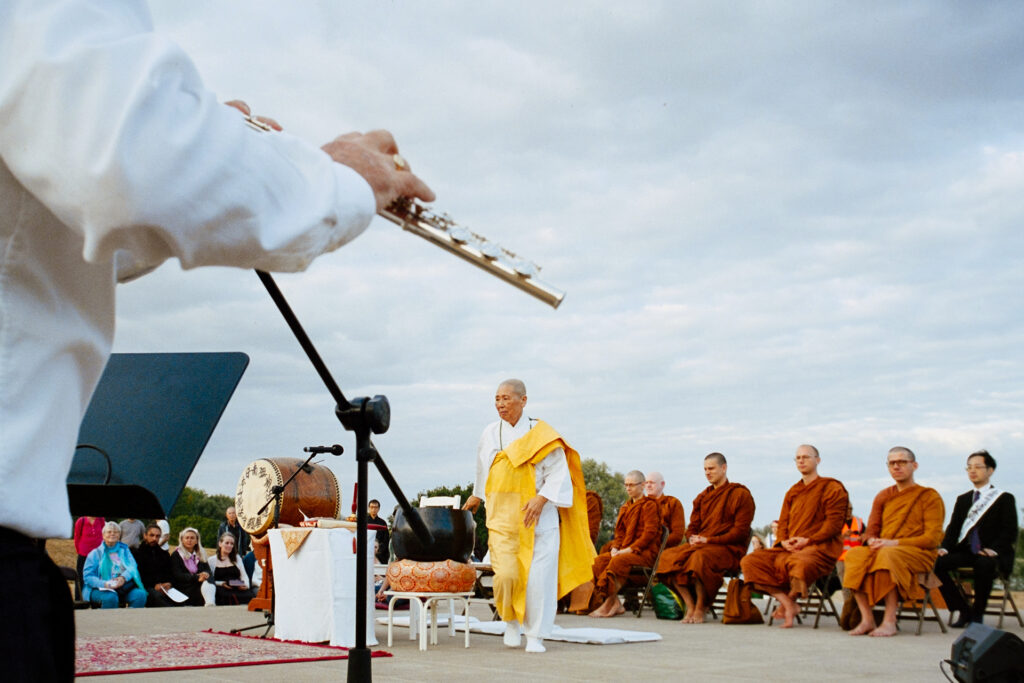
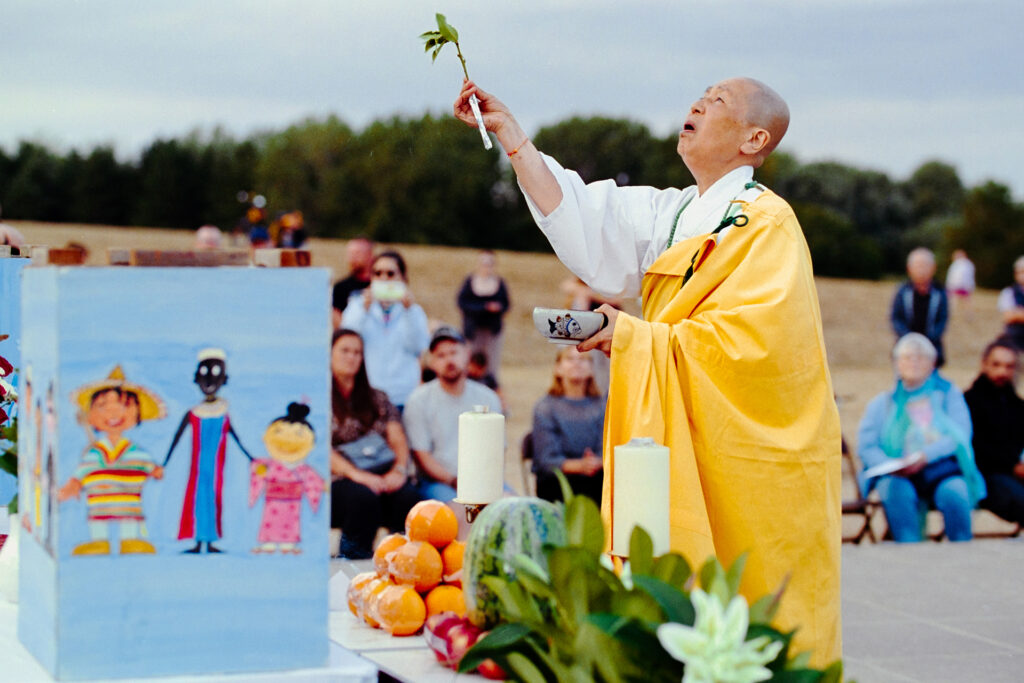
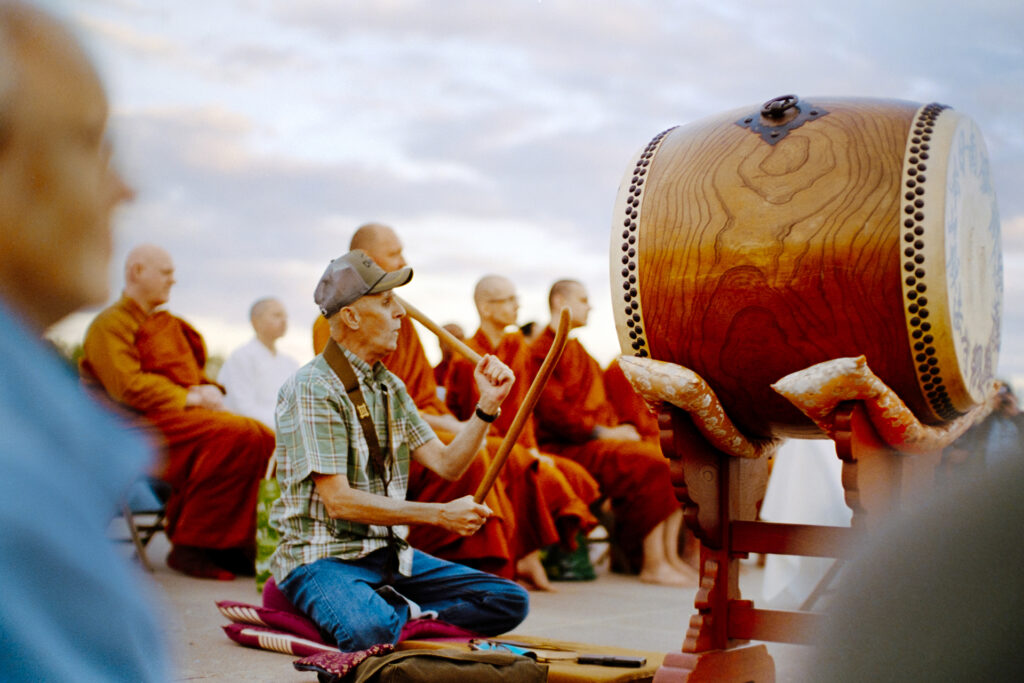
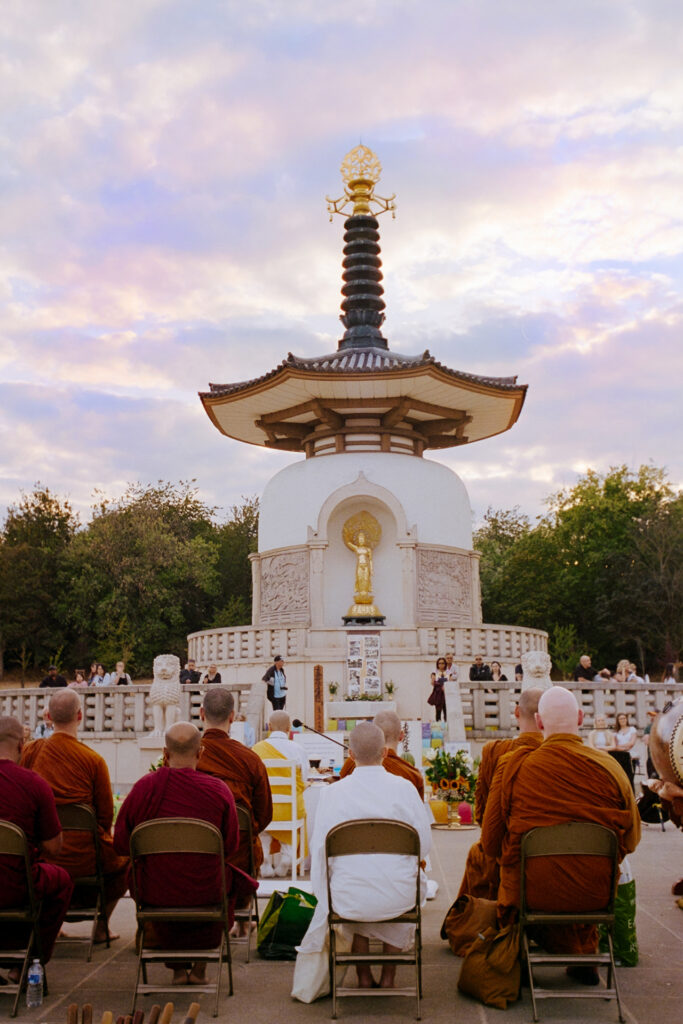
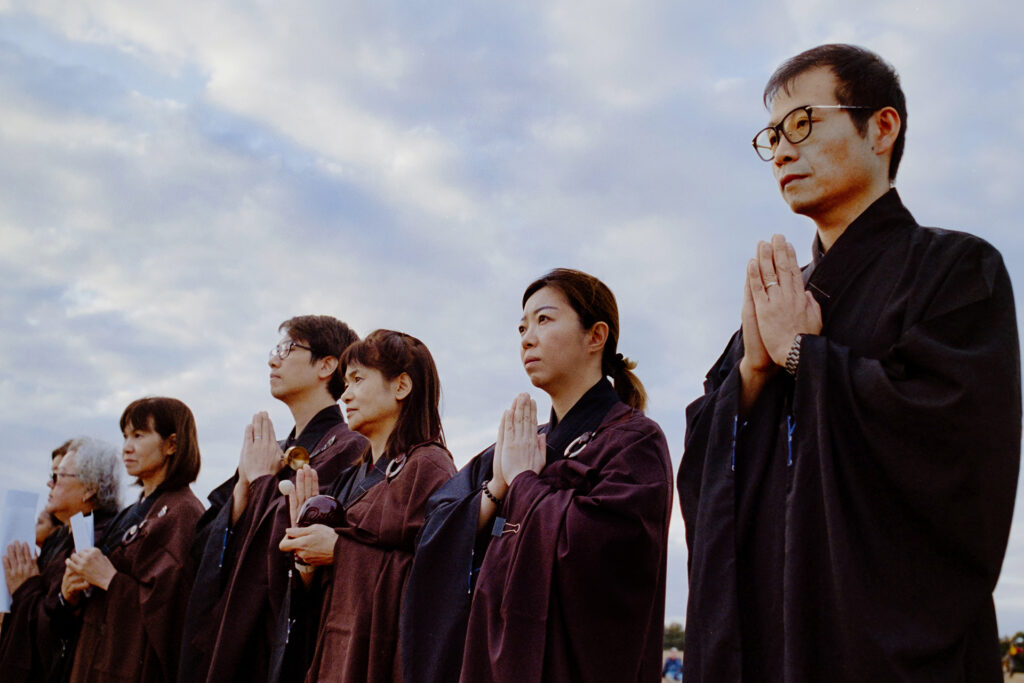
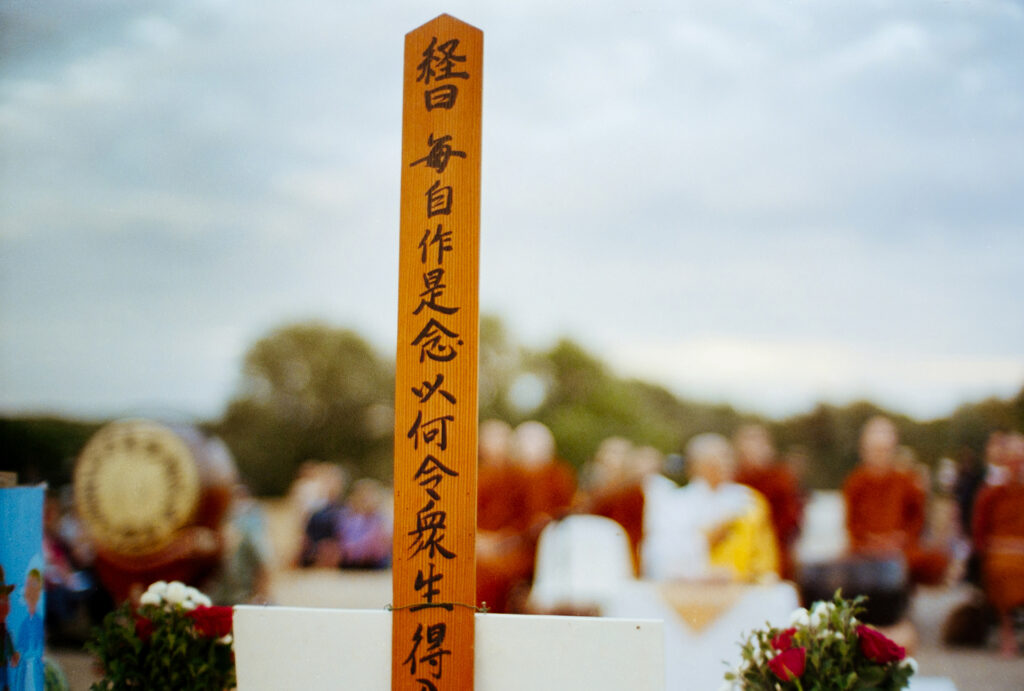
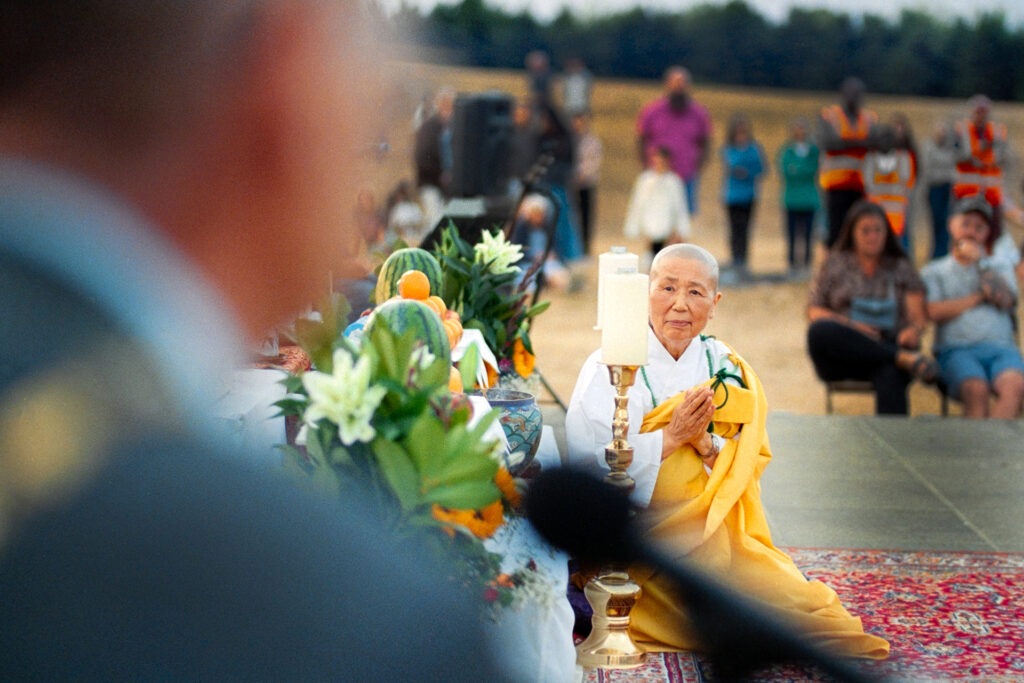
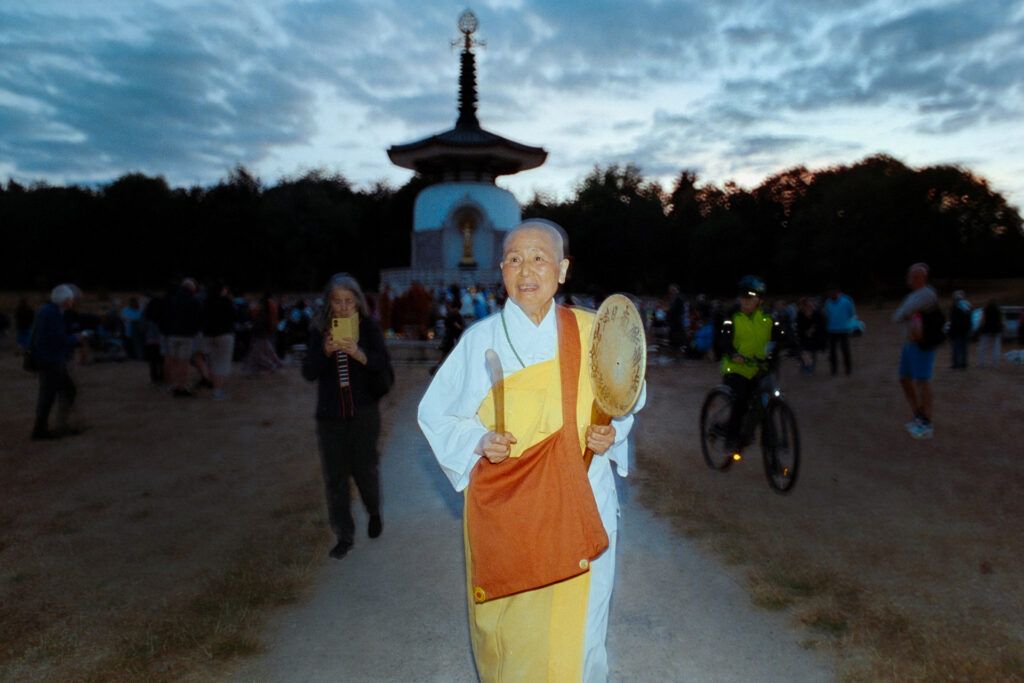
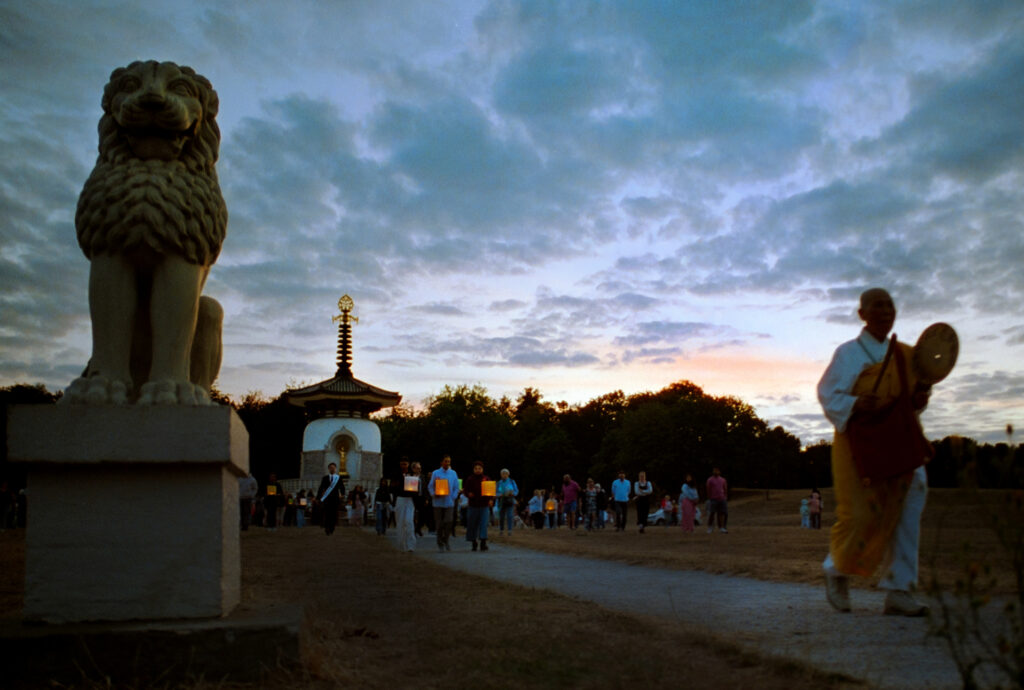
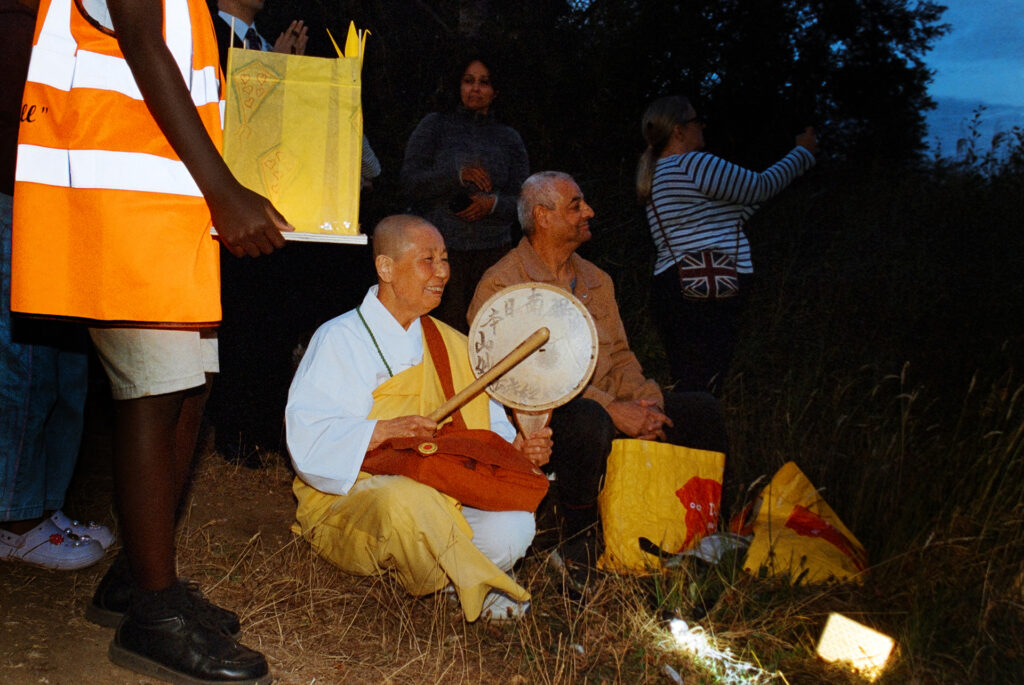
Each year, on 6th August, people gather at the Peace Pagoda beside Willen Lake in Milton Keynes to remember the victims of the atomic bombing of Hiroshima and to reflect on the continuing importance of peace. The Hiroshima Day ceremony is a deeply moving occasion, bringing together people of different faiths, cultures and backgrounds in a shared expression of remembrance and hope. It is led by local Buddhist monks and a nuns from the nearby temple.
I thought this would be interesting to photograph with my Leica M4-P and a roll of Kodak Portra 800. I wanted to photograph the Hiroshima ceremony not simply as an event, but as a moment of quiet remembrance — the people, the faces, the candles and the atmosphere as the evening gradually turned to darkness. It was important to me that my presence didn’t interfere with the ceremony, although as it happened there was several photographers in attendance.
The Peace Pagoda provides a particularly meaningful setting for this annual event. Surrounded by the peaceful landscape of Willen Lake, the pagoda stands as a symbol of peace and reconciliation. During the ceremony, prayers, Buddhist chanting, music and speeches are offered in memory of those who lost their lives in Hiroshima and Nagasaki, as well as the victims of all wars.
My choice of gear
I wanted to bring along minimal gear as I really don’t enjoy carting around a heavy bag, along with my Leica M4-P I took a 28mm Voigtländer Ultron F2, 35mm F3.5 Leica Summaron from the 1950’s and a 75mm F1.5 Voigtländer plus a small flash. This makes a fairly lightweight set up that fits in a small bag. I wasn’t too bothered that my only fast aperture lens was the 75mm as I intended to use flash once it got dark.
The M4-P lacks a light meter and so I took a few readings with my Sekonic L308 meter while it was still light and just guessed the exposure once it got dark. Portra is fairly forgiving of overexposure but less so for under, for that reason I am always a little more generous with my guessed exposures.
Portra 800
Kodak Portra 800 film is my go-to colour film for when the light is low or I am using flash. Portra is very predictable and also doesn’t block up the shadows, I also really like the colour signature look from Portra. I processed the film myself using my Jobo Duolab processor and the Bellini C41 kit and hung the negatives to dry in a Jobo Mistral 3 film dryer. Processing C41 isn’t for everyone but neither is it difficult, using a rotary processor with a thermostatically controlled water bath makes the task easier as I don’t have to worry about maintaining the correct temperature for the developer (bleach and fixer aren’t as temperature sensitive).
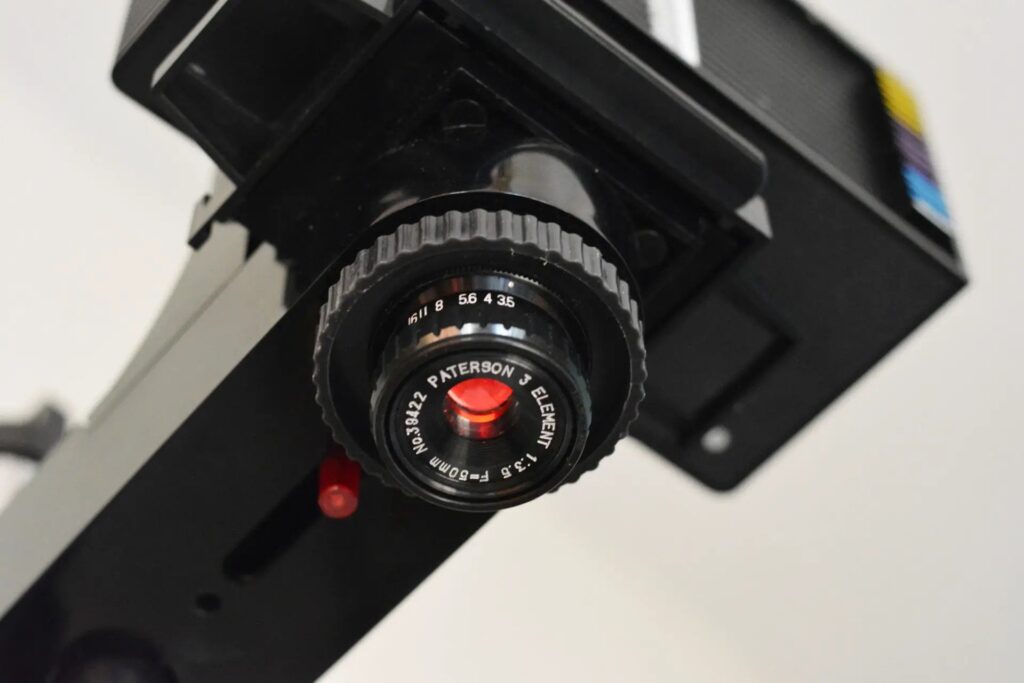
I used the Valoi 360 camera scanning set up with the camera mounted on an enlarger stand, using this set up I can scan an entire roll in a couple of minutes, the images are then processed with Negative Lab Pro which takes a couple of minutes each image, final processing is in Adobe Photoshop which is mostly spotting out the few specs of dust that always seem to end up on my film despite being very careful.
Lantern lighting
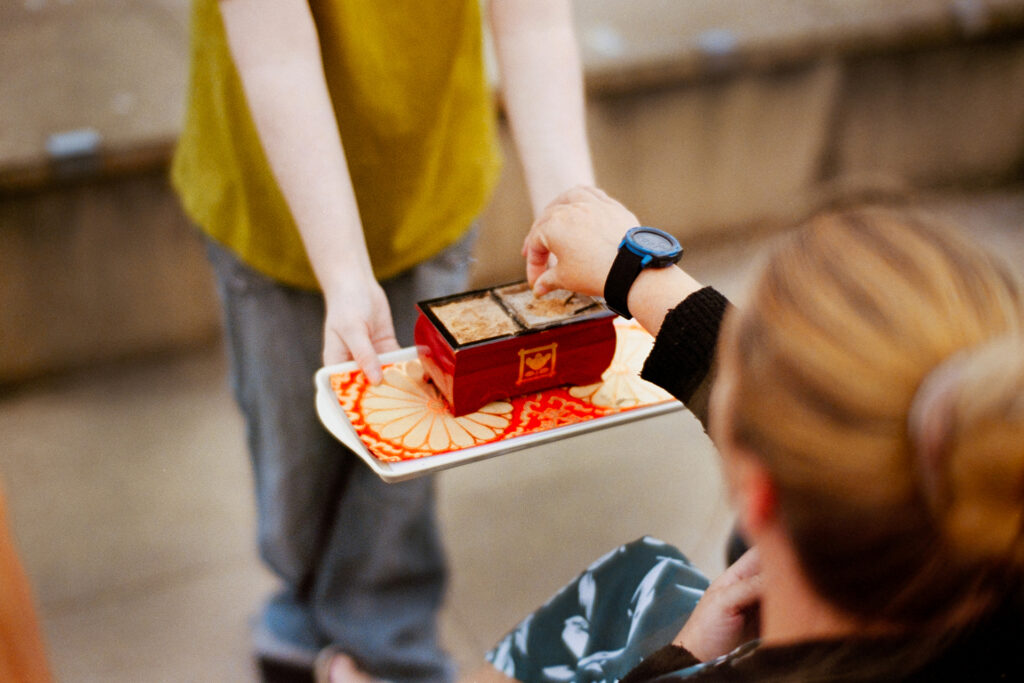
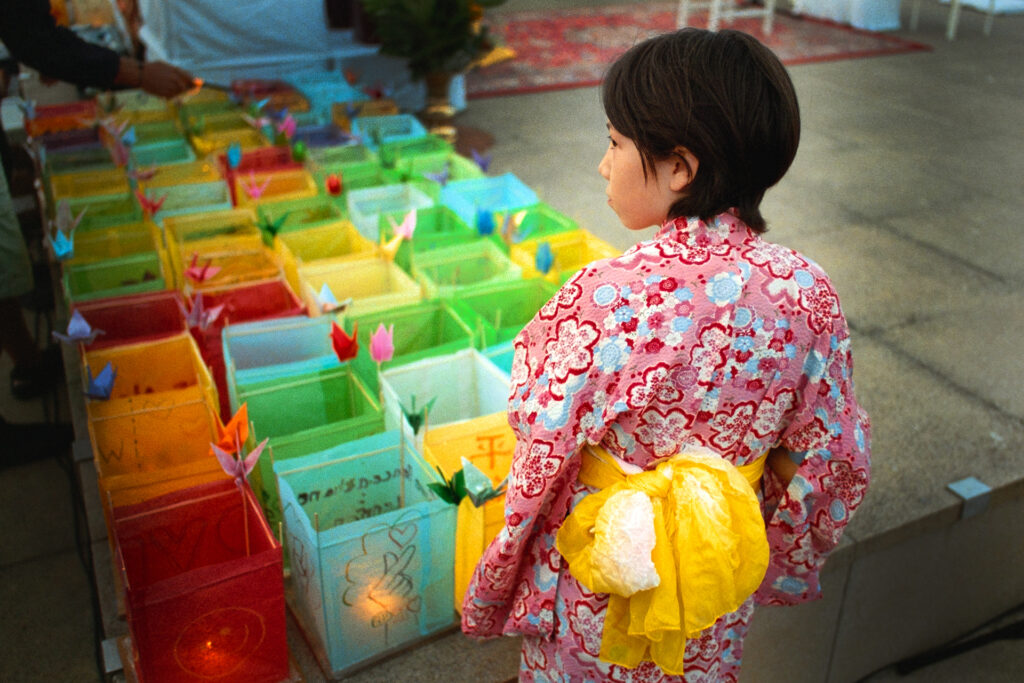
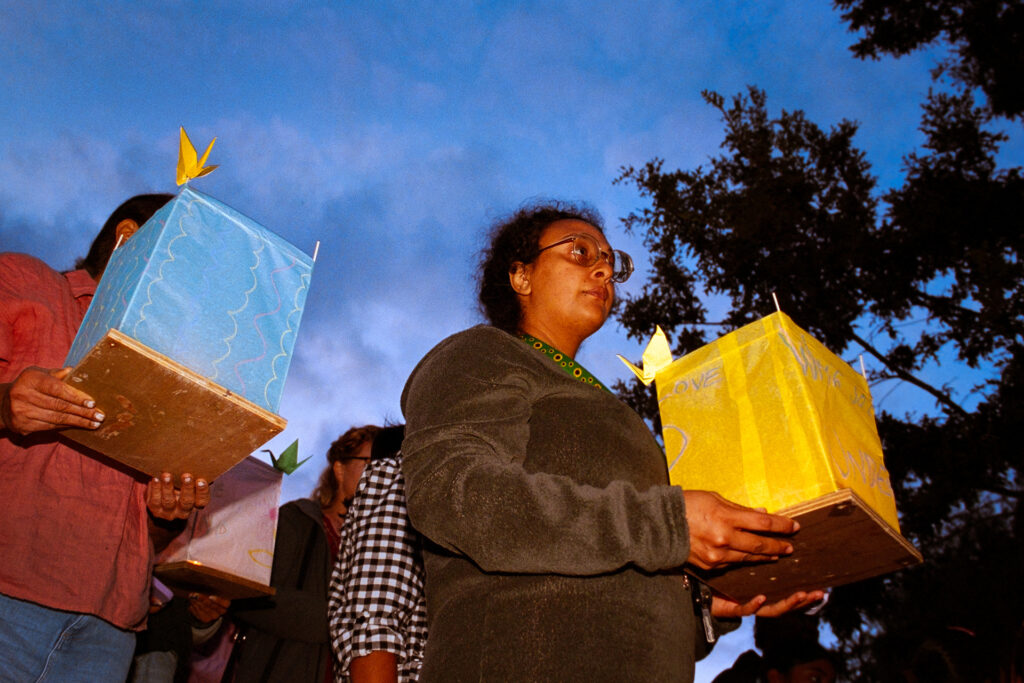
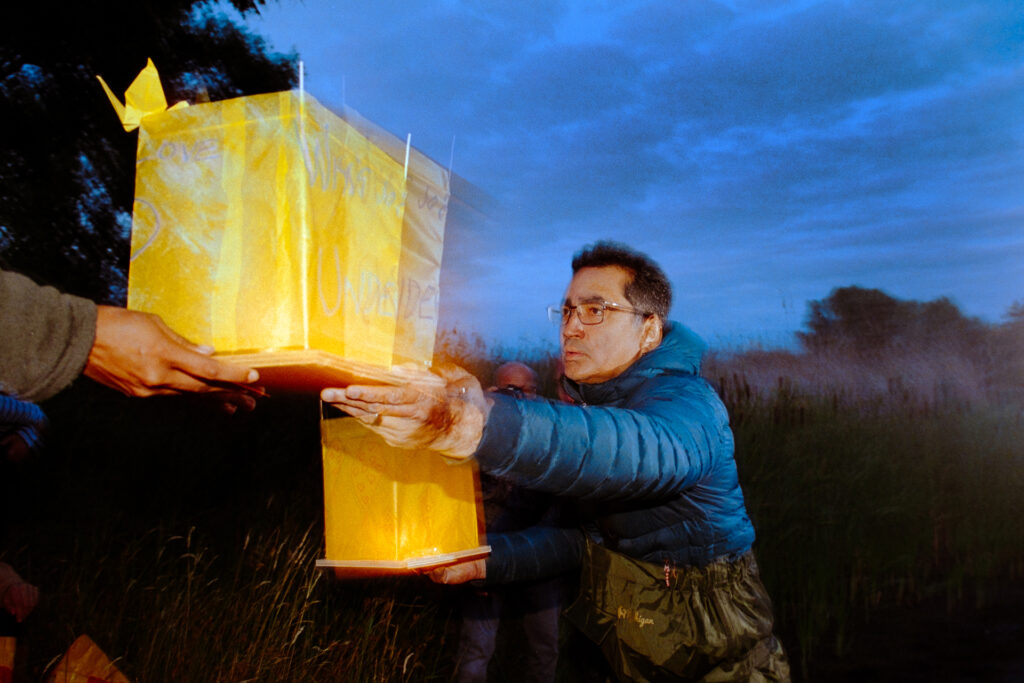
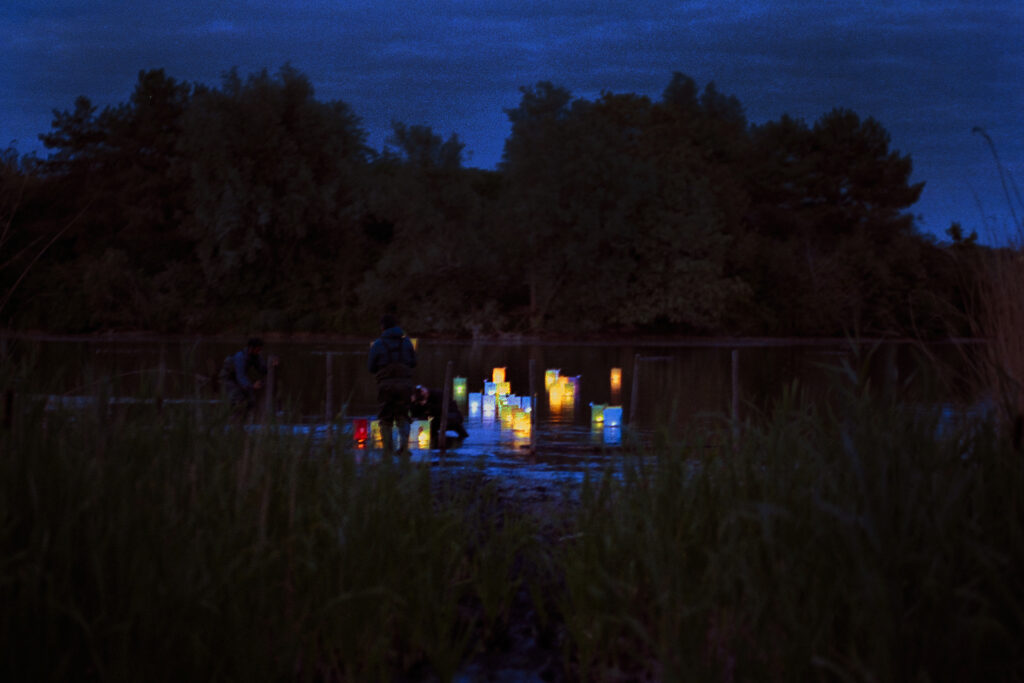
One of the most beautiful and memorable parts of the evening is the lantern floating. As daylight fades, participants make their way towards the lake carrying small, candle-lit lanterns. Each lantern represents a prayer, a remembrance or a message of peace. The gentle lights floating across the water create a powerful and reflective sight, transforming the lake into a sea of individual hopes for a better future.
The tradition has its roots in Hiroshima, where lantern floating takes place every year on the evening of 6 August.
This was also the more challenging part of the evening to photograph as it got dark very quickly and I soon needed my flash. I tried to keep some of the available light in my images by using a slow shutter speed combined with flash. Using just a single roll of film also brings challenges as you only have 36 to 38 exposures to play with (The Leica usually gets around 38 images on a 36 exposure roll of film as I start taking photographs straight away rather than winding on to frame 1). I only had one frame left to take the final image of the lanterns floating on the lake and due to the drought conditions the water was a long way out, I hadn’t brought wellies and didn’t fancy getting my shoes wet and muddy so I used the 75mm lens for this with a shutter speed of 1/15th at F1.5, I was pleased to get a reasonably sharp image.
Share this post:



Comments
No comments found