

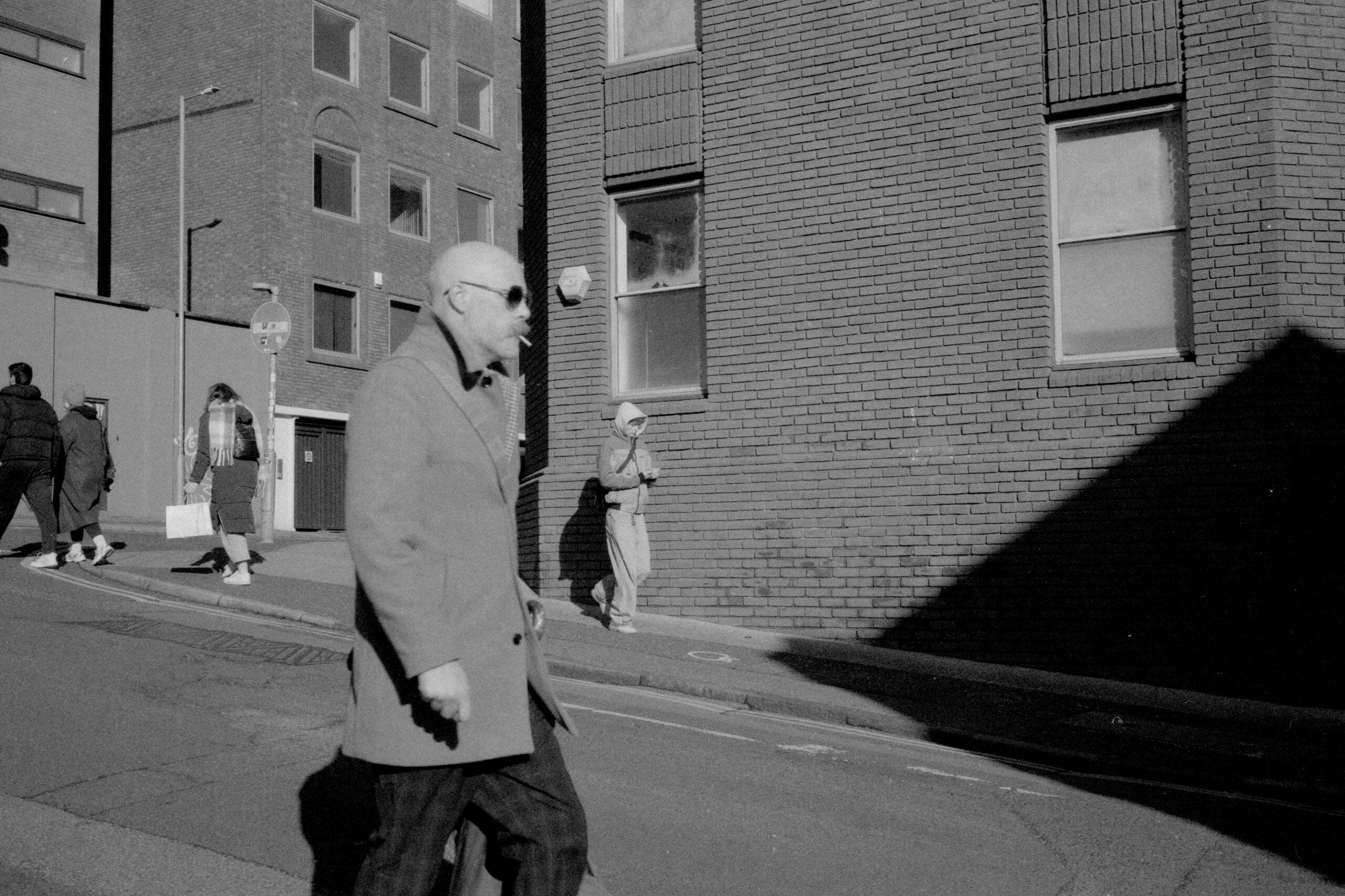
From my experience shooting expired 35mm film, black and white holds up better than colour (less to go wrong), and lower ISO withstands the effects of time much better than higher speeds. I think there’s a sort of cutoff point above a box speed of 200, where the years do start to show more of an effect, but lower than that, 100, 50 and so on are basically indestructible; with the caveat that how it was stored can have an impact, cold stored being ideal, and anything tropical being less than ideal. If you’re buying secondhand (as I do, from whatever sources I can discover) there’s no way of knowing how it was kept, which means the best practice is to find a large quantity batch from the same conditions, doing some tests, and then working from that basis.
Medium format seems to wear down a little differently over time, and the inherent characteristics and scale of the surface area means that even severe issues can be overlooked on a high quality scan.
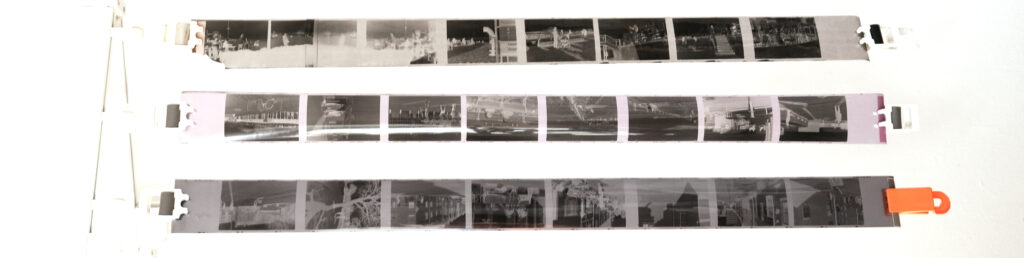
These three rolls I recently exposed in Brighton are from different sources and ages of expiry. I used my Fujica GW690III and a hot shoe light meter. All rolls were developed in the same tank, in the same batch, with a dilution of 30ml Ilfotec HC against 1470ml water. Agitation was the first minute, then stand for 30mins, further gentle agitation, then another 40 minute stand. Water rinse to stop, and fix as usual – for anyone trying this I recommend a two-bath-fix if possible/part of your workflow. Wash aid, rinse, hang to dry.
Scans were made with an Epson V500, and only highlight/shadow clipping was done in photoshop afterwards.
My first roll was Ilford Delta 3200, expired 2016, loaded just as I left the station in the morning. I exposed at 1000 as I do with all of my fresh Delta 3200; at this point it’s just the EI that makes sense to me, giving me much better results than box, or 1600. The light was fantastic, and anyone who knows Brighton will recognise the route from the station down towards the laines, the market stalls, and area before reaching the Brighton Dome. This is very much a warm-up roll, and you can tell I was just clicking away for it’s own sake to acclimatise and just enjoy the process of shooting.
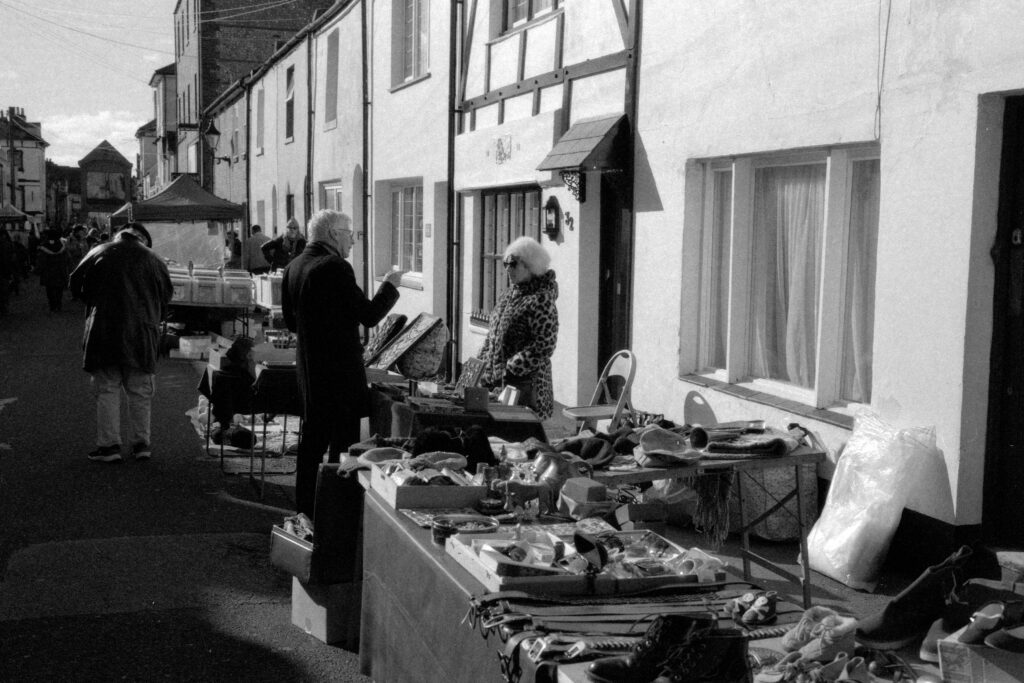
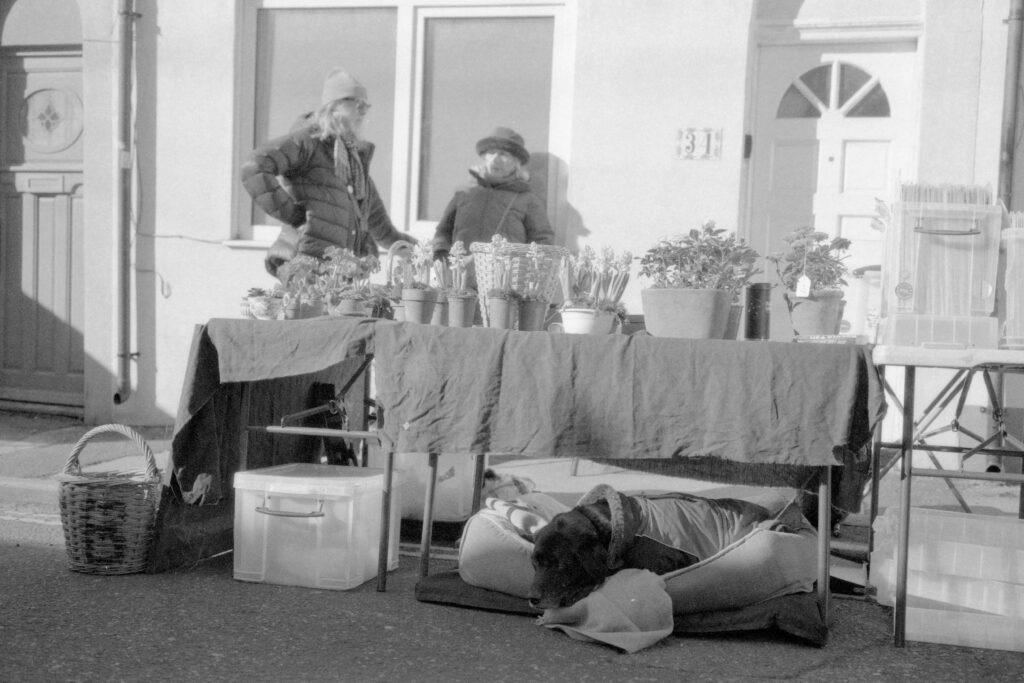
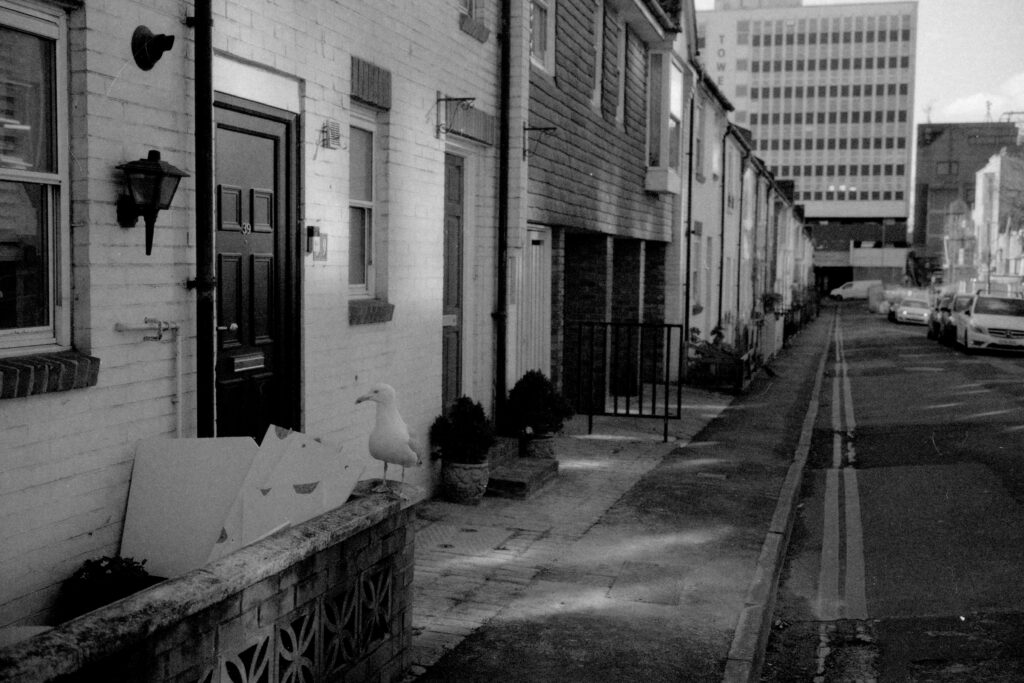
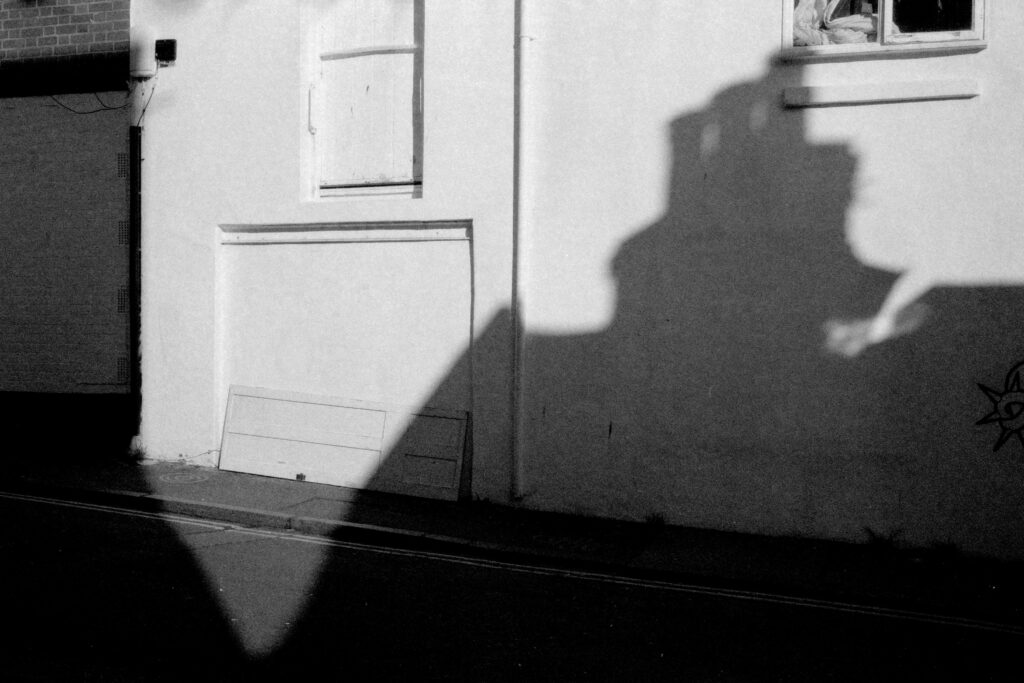
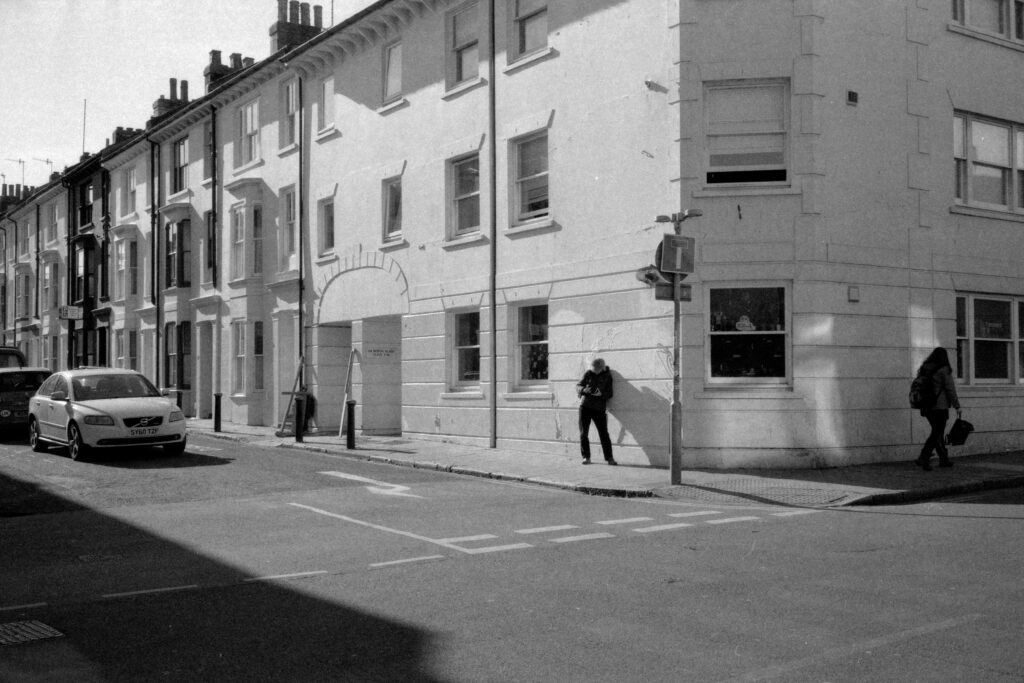
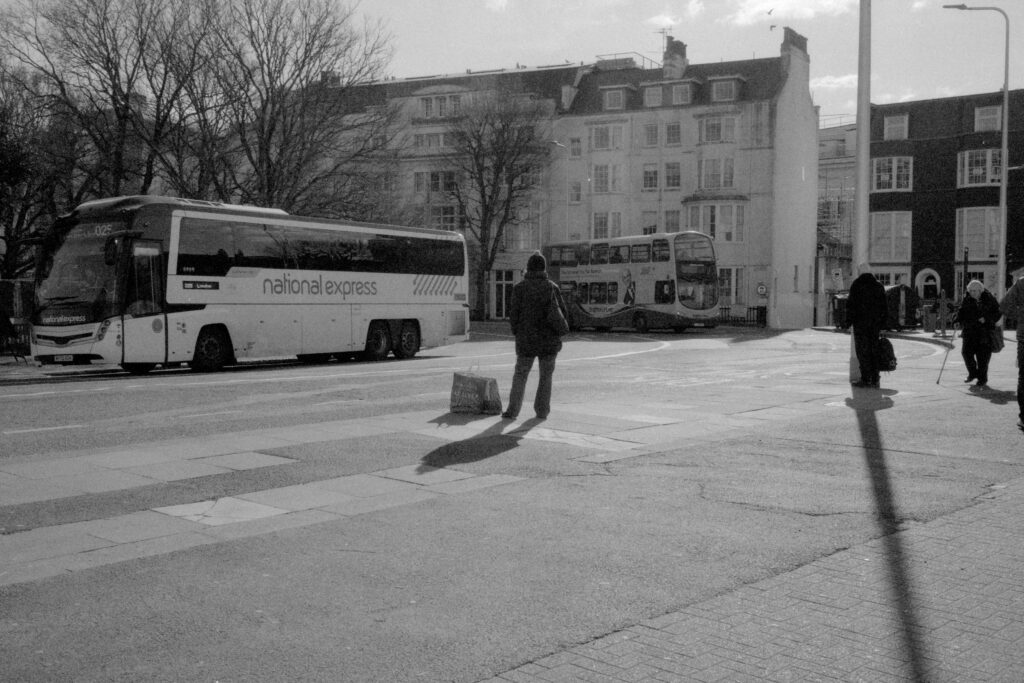
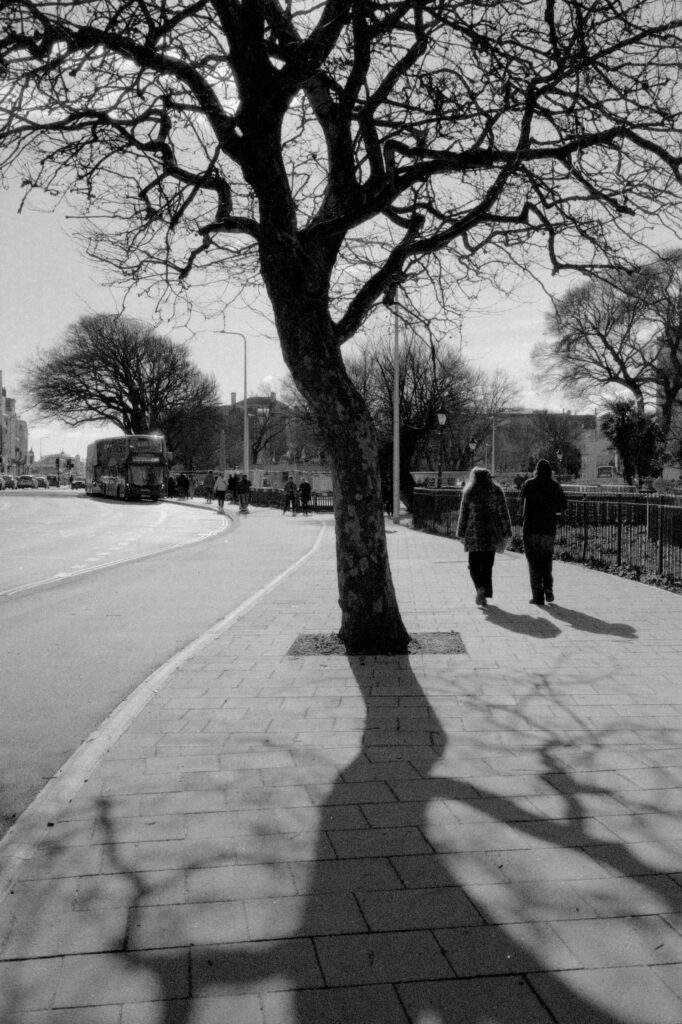
The results are as I would expect from Delta 3200 exposed this way, I don’t see any strong indications of expiry, fogging, or issues with the aesthetic qualities of the results. No stand out compositions, but a nice way to start the day, as well as a good measure of how I might shoot more of the same stock in the future.
Unloading this, I opted for a more “interesting” roll: Ilford FP4, original not “plus” which had expired in 1980. That’s a 46 year expiry gap, and I believe it’s the most heavily expired film I’ve worked with in my life as far as I can remember. This was exposed at box, 100. After winding on, I regretted it, as it felt from the tension and mechanics that something had gone wrong in the film chamber; very stiff to advance and I believed that the backing paper had come away from the film, meaning a thickness of material the camera was not designed to endure (this turned out to be the case, the paper had come away).
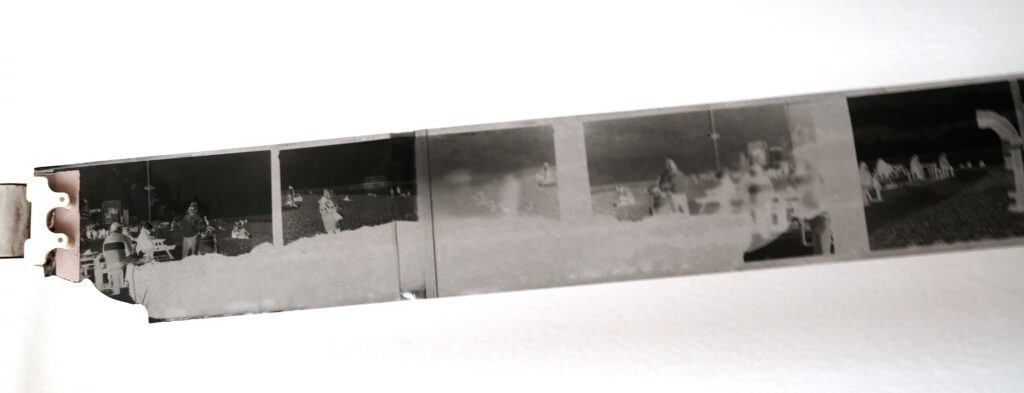
However, I managed to force it through, and made my exposures quickly in the hopes that despite the apparent issues, something would come of it. And it did.
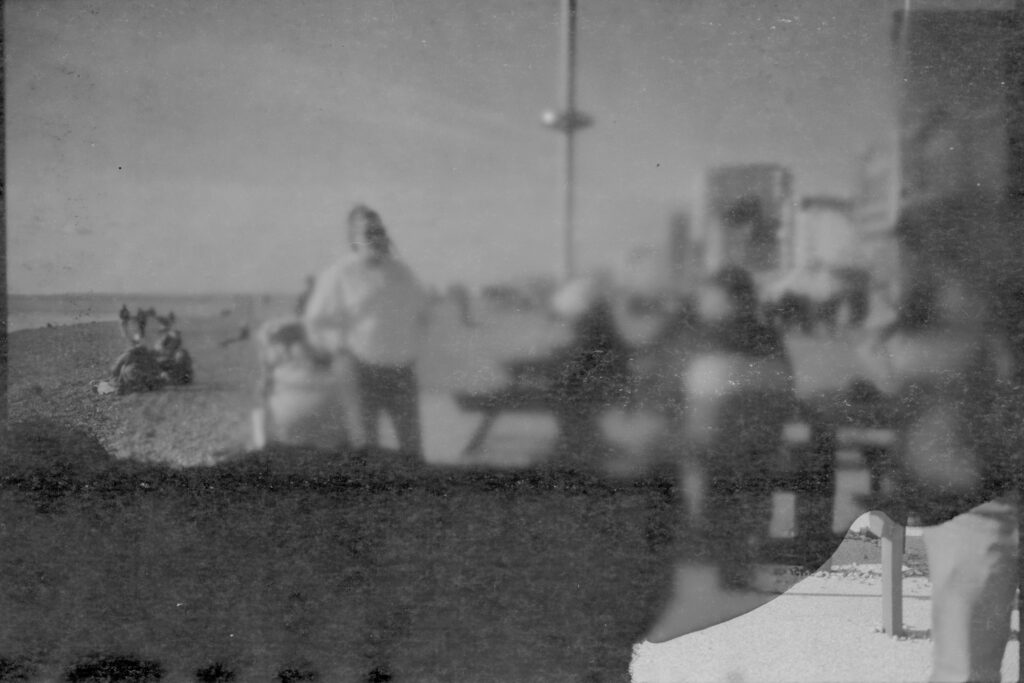
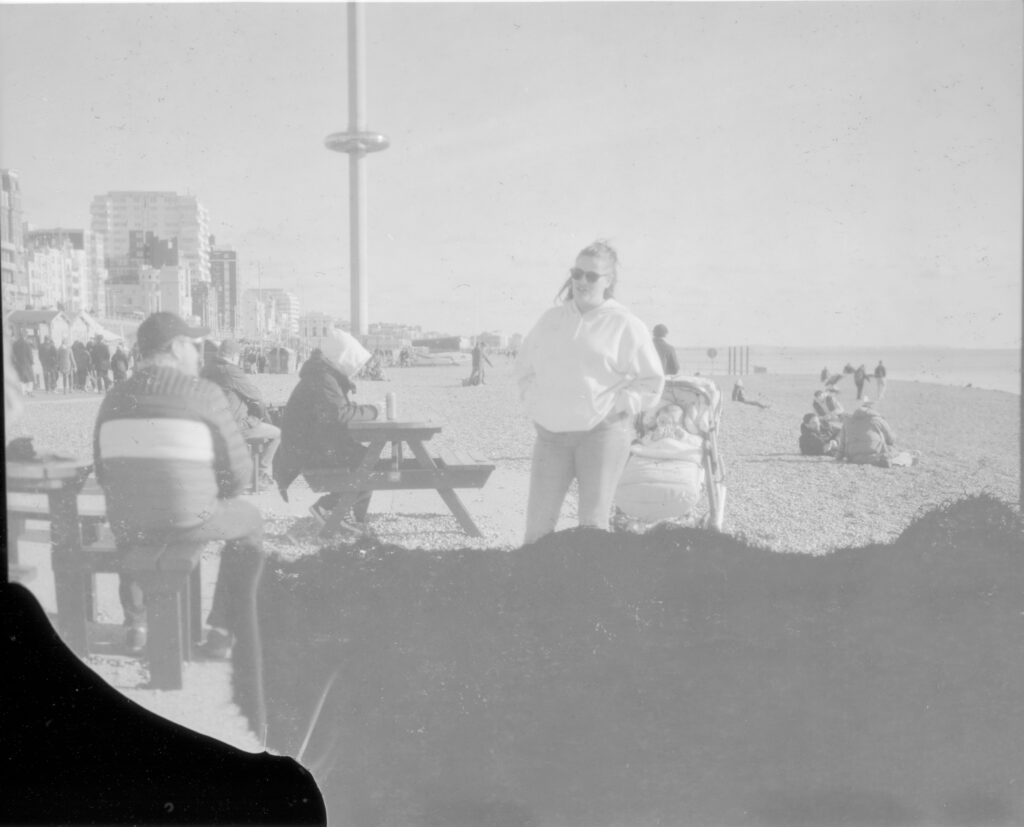
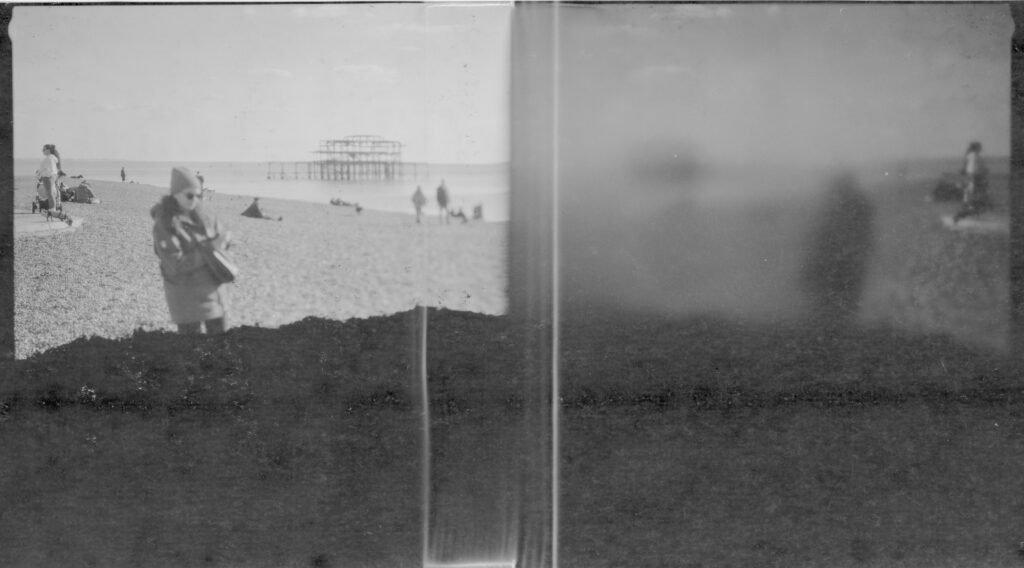
These first few frames are very odd, you can see that they are totally misaligned from the focusing plane, but also weirdly mirrored against themselves. I have no idea what caused this, unless they were somehow folded against themselves, or reflecting against something inside. It’s actually oddly artistic in and of itself I think. The parts of the emulsion that stuck to the backing paper appear as almost a rip, although the physical film itself is still there, it isn’t actually ripped.
However, past these frames the film wound fairly smoothly, and the results…
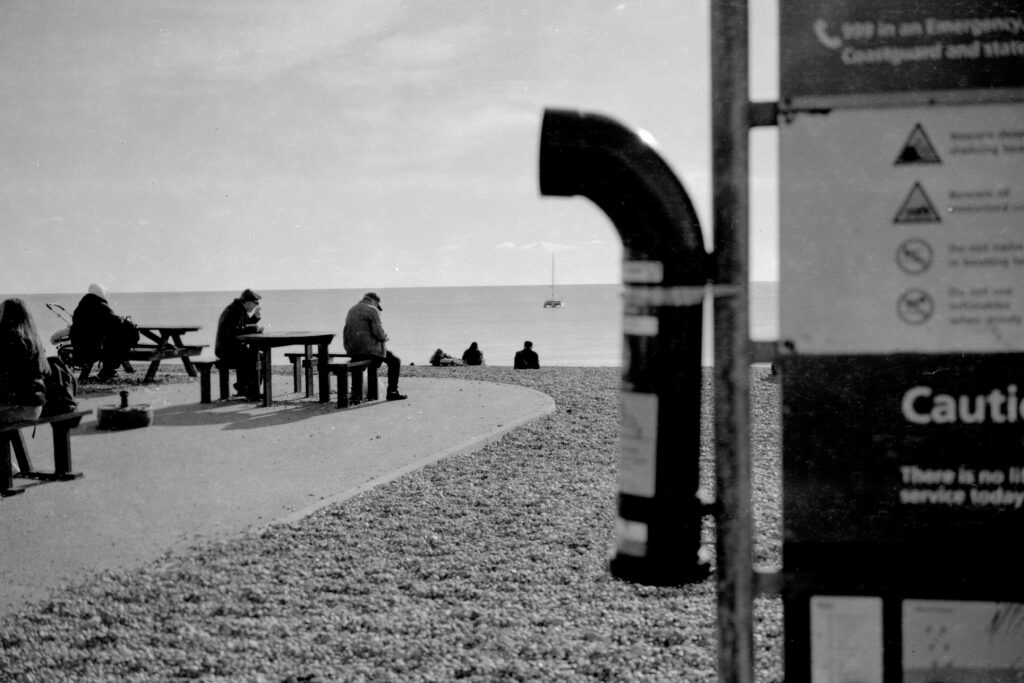
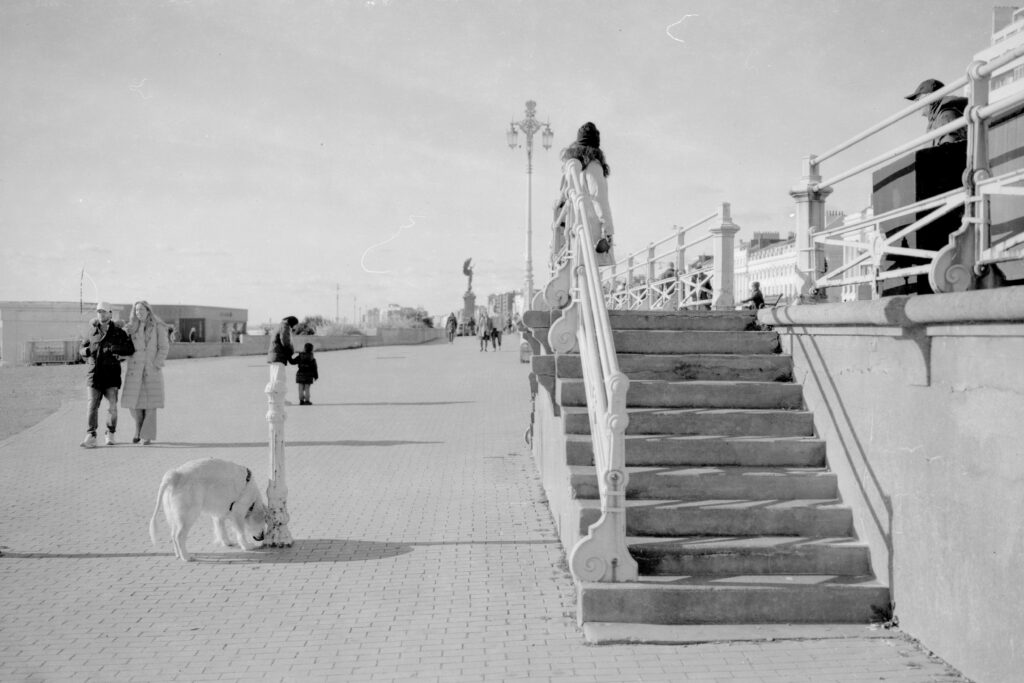
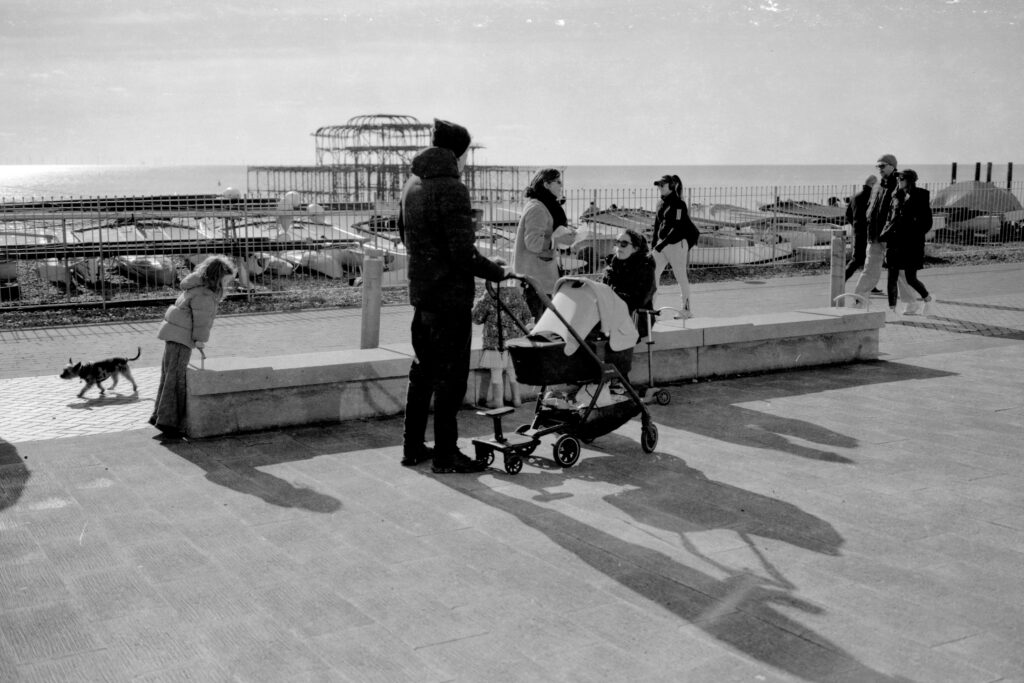
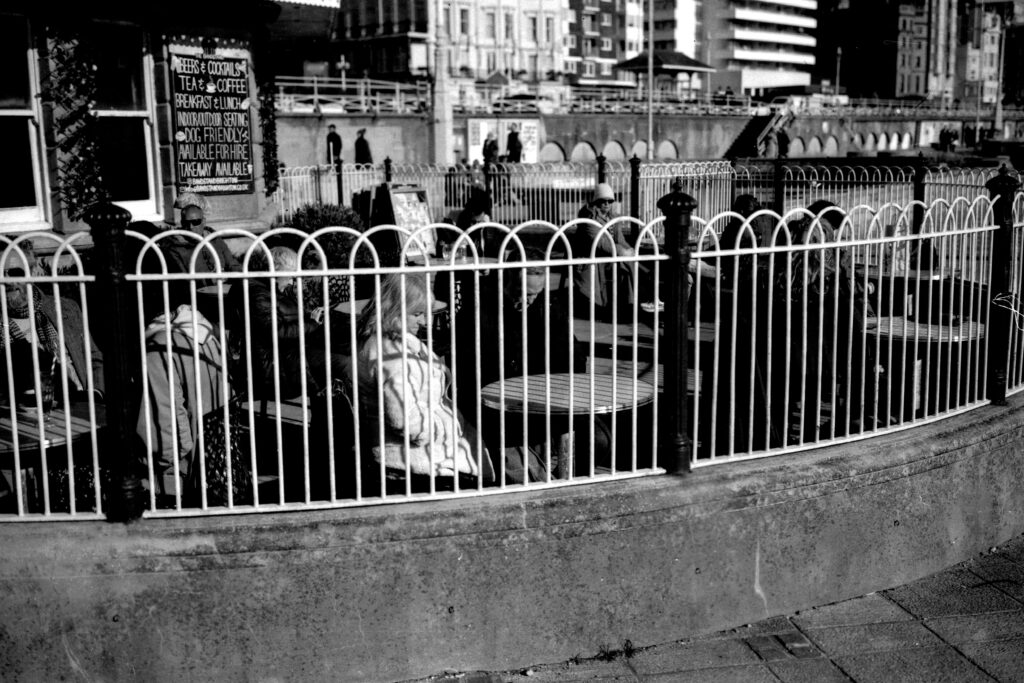
Really, if I never told you the extent of the expiry here, would you maybe think they were just normal/in-dated? Obviously the compositions are rushed, as I wanted to get what felt like a faulty roll out of my camera, but now I wish I’d slowed down just a little.
The stand-out composition from this roll was of a painter, wedged between the guard rail and a street sign, working on his canvas.
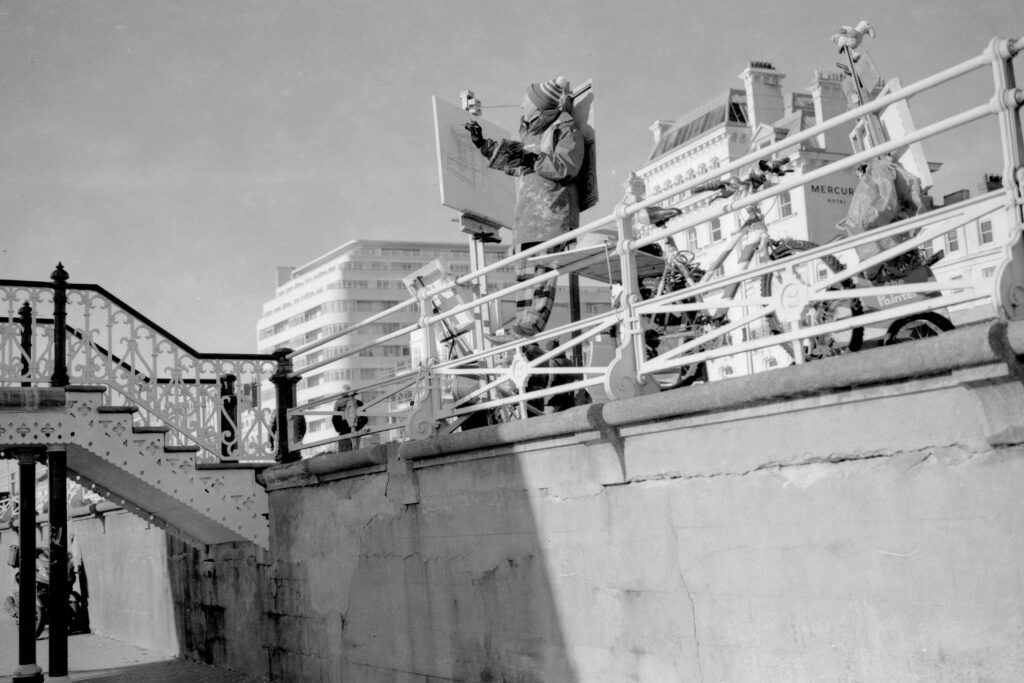
Although the frames I made of this scene on my M6 turned out better, I still like this angle which shows the work itself, and the fine detail which, on this heavily expired film, you might expect to be much worse than it actually is.
When I developed this film there were fibers (I assume from the backing paper) across the emulsion, but after a couple of rinses it was perfectly clean and clear. This perticular film was very very thin, and difficult to load onto the reel. The look might be a little off what you might want from fresh film, and there are some blotchy patches from uneven exposure, but honestly, I think they are just fine.
I think the results here on this film in particular, is a demonstration that, when it’s good, it’s really good; that low-speed films really can deliver high quality results even after half a century sitting in who knows what conditions!
Finally, a roll of Kodak T-Max 100, which I believe was in-dated but could be a little out maybe. I exposed at box, and made my last exposures before heading back to the train station. This is a profoundly sharp film, and paired with the lens of the GW690iii it makes for a very modern aesthetic, very clean and sharp and crisp.
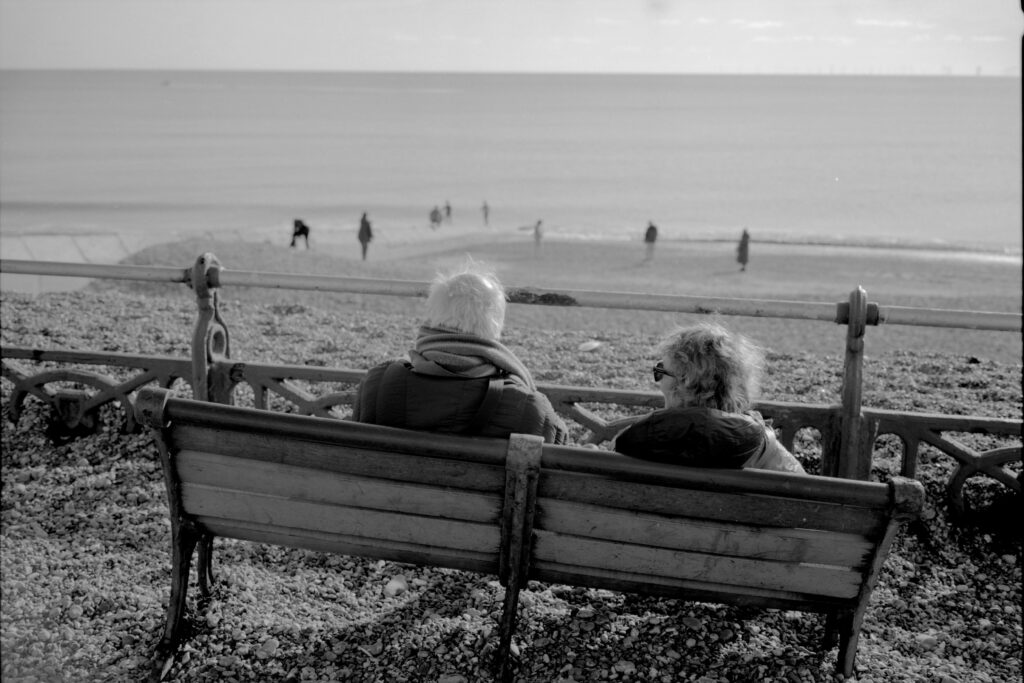
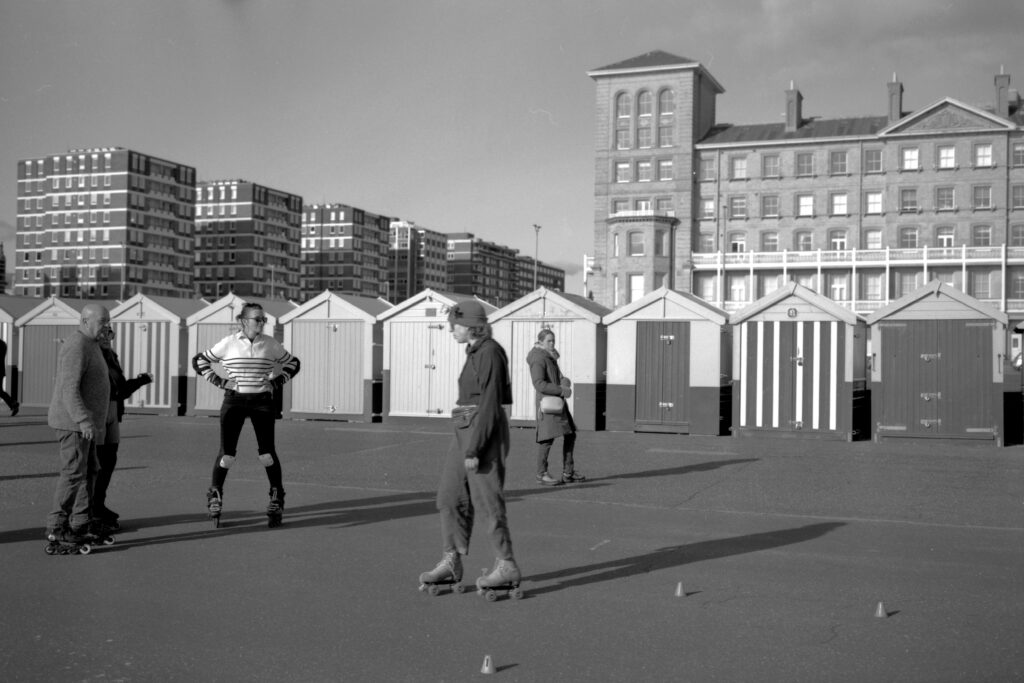
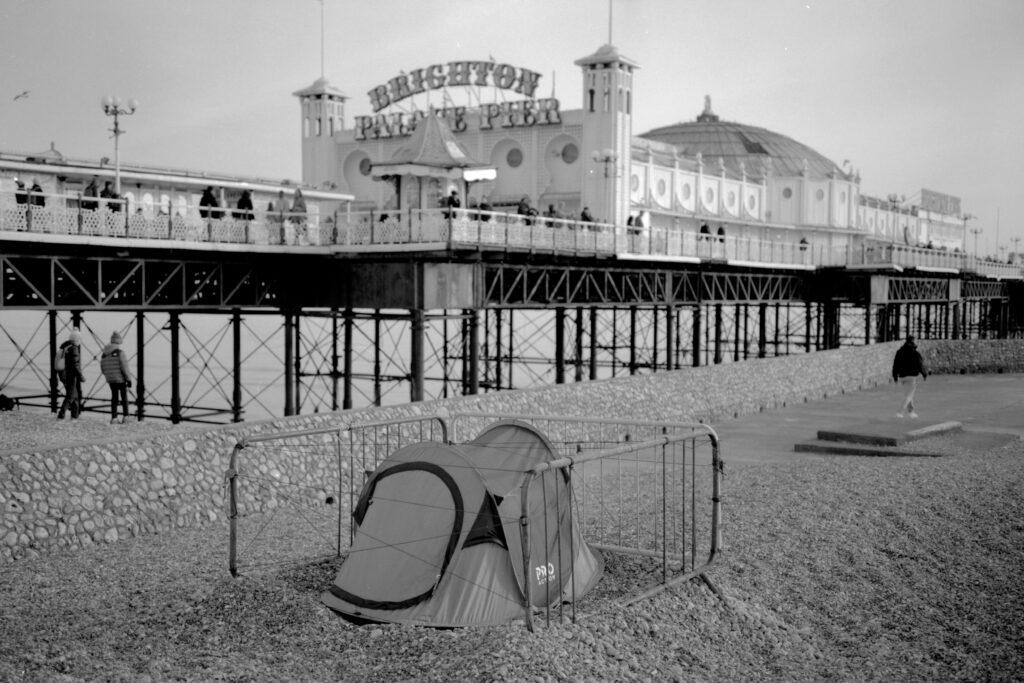
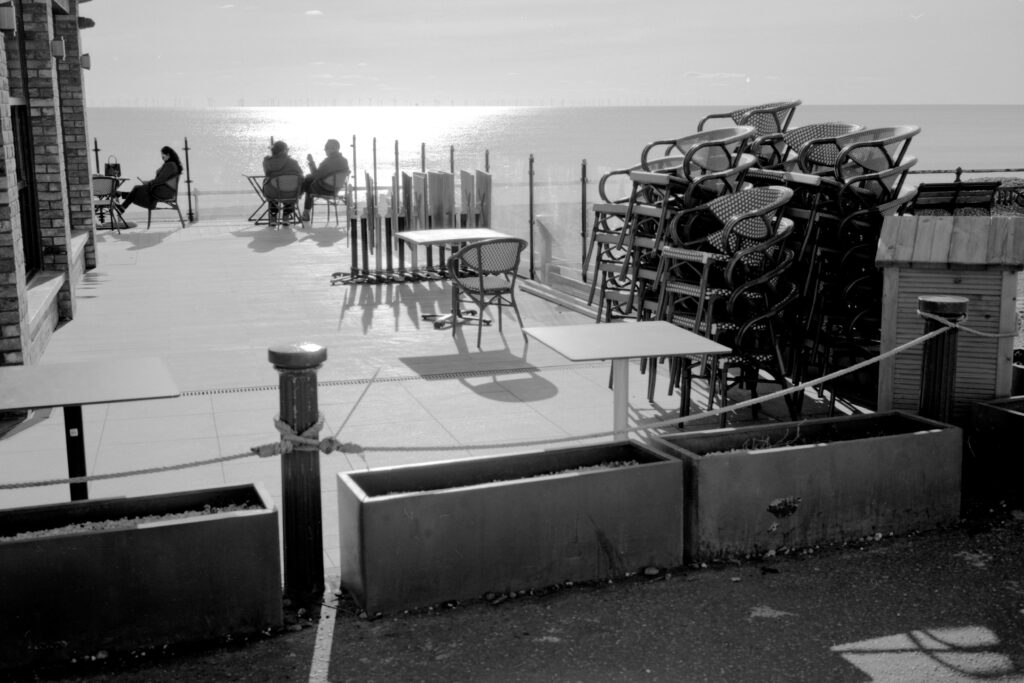
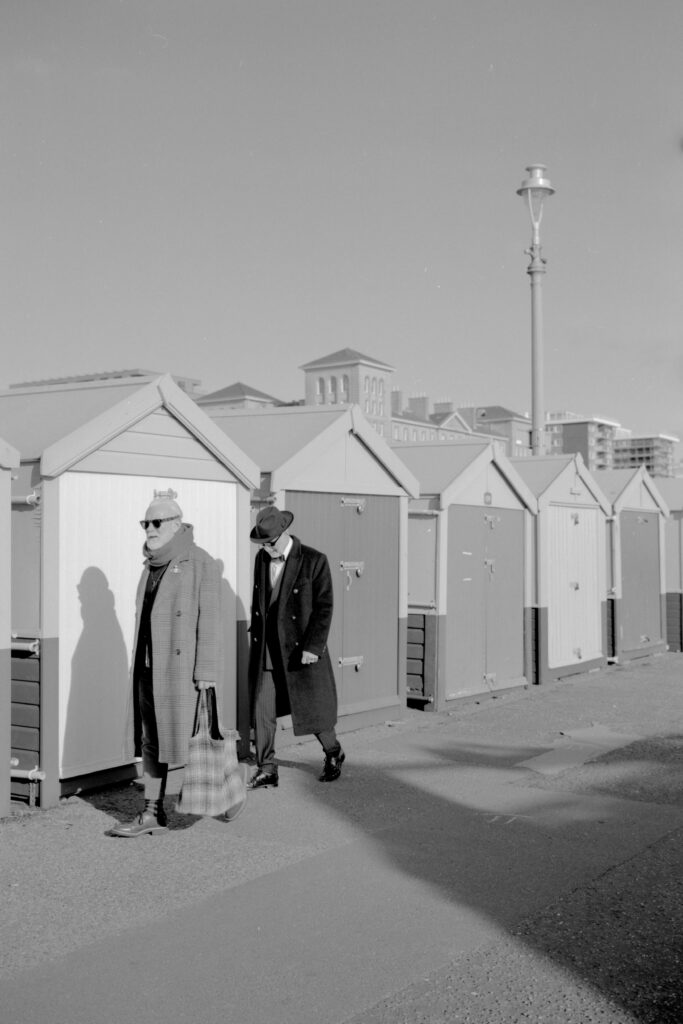
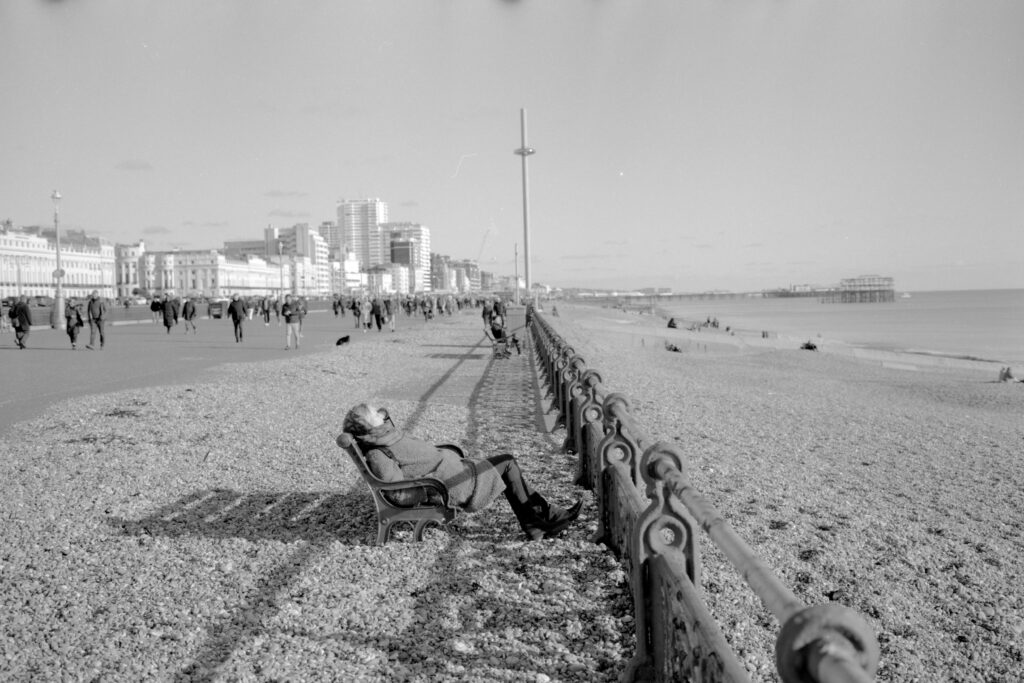
Pebbles from the beach had been brought up by powerful waves, encroaching onto the pathway, and this game me a couple of scenes where people were resting on benched, effectively at floor level among the stones.
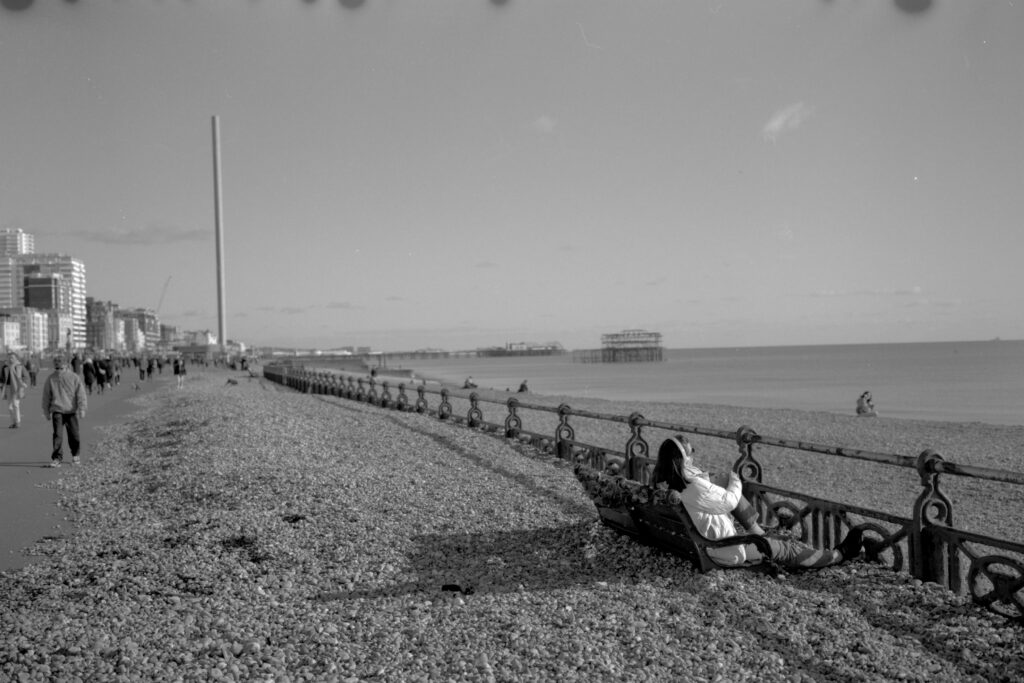
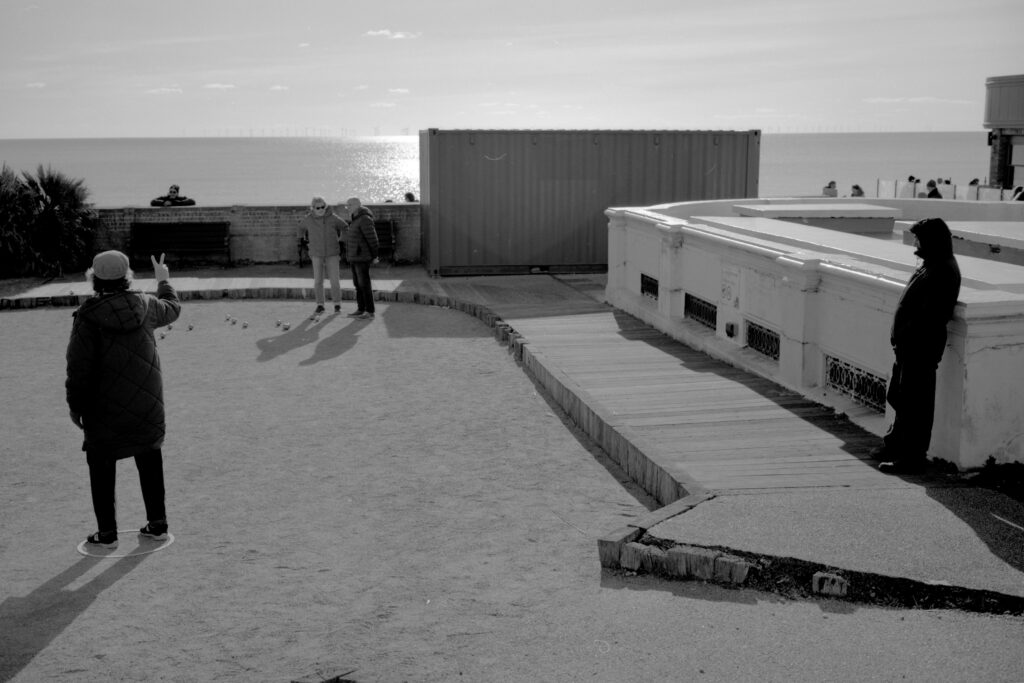
My favourites from this roll are these two, one angle of a bench and the pebbles around it, and another during a game of bowls.
All in all, three rolls with underwhelming compositions, but that isn’t always the point. I enjoyed the process behind these, and allowing myself a little bit of freedom with this usually expensive-to-fuel machine. In small format terms, these 24 frames might have been on a single 24 exposure roll, or two thirds through a regular 36 shot roll, very few when put that way. There’s nothing about these images that “needed” to be medium format, and I think the best frames of the day were actually from my Leica, not from these 120 attempts.
I think the next time I plan on really using this camera in a dedicated way will be during a celebration at a newly opening Hindu Temple, and there it will be for portraits first and foremost. If I make it through 24 frames there, all different portraits, I think my feeling will be totally different, that it was the “right” use-case.
Thanks for reading! If you enjoyed these images (somehow), you may want to follow me on Instagram.
Share this post:


Comments
Mark Azavedo on 24 Frames with the Fujica GW690III in Brighton on Valentine’s Day, 2026 (3 Whole Rolls)
Comment posted: 01/04/2026
Gary Smith on 24 Frames with the Fujica GW690III in Brighton on Valentine’s Day, 2026 (3 Whole Rolls)
Comment posted: 01/04/2026