

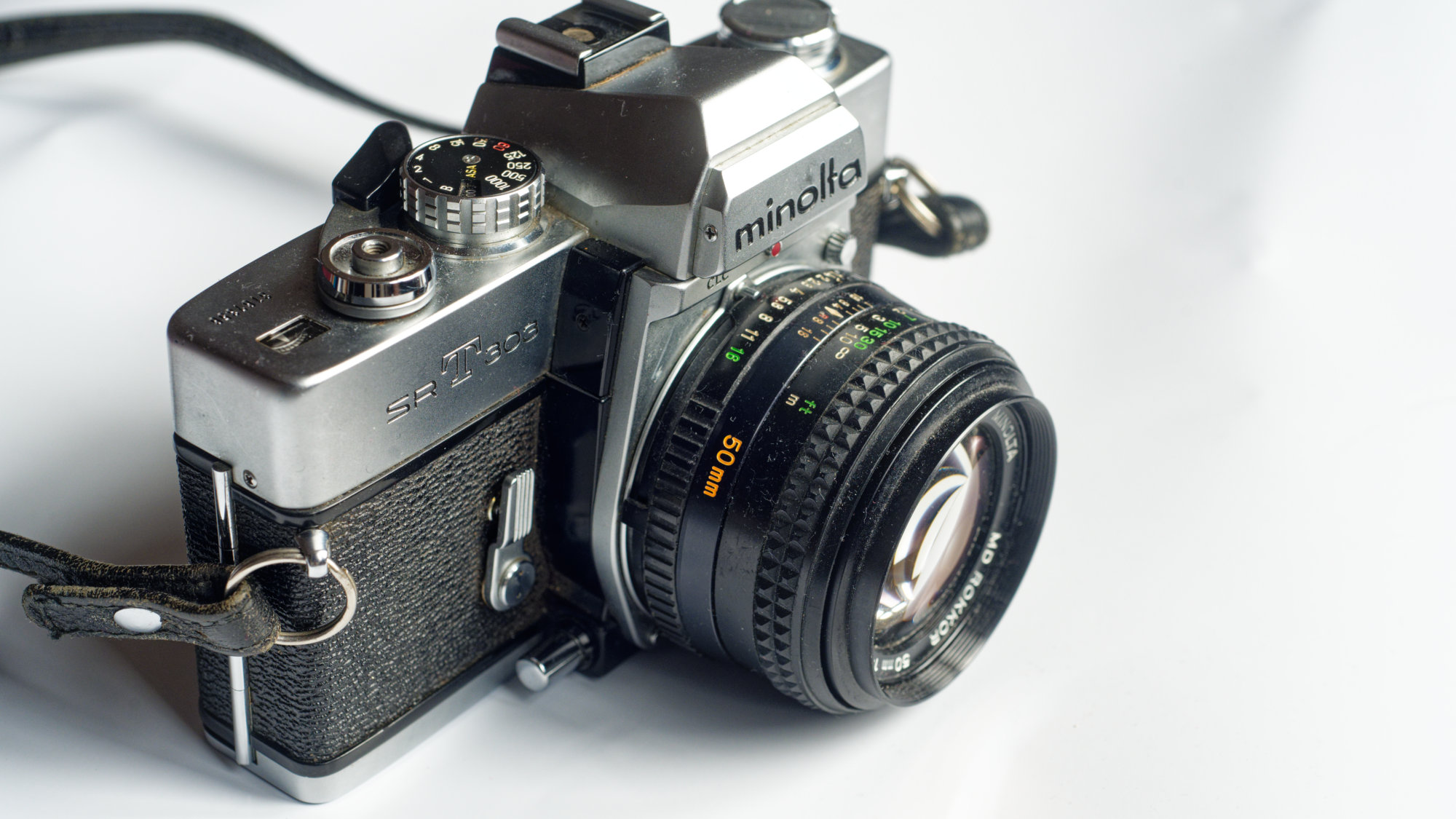
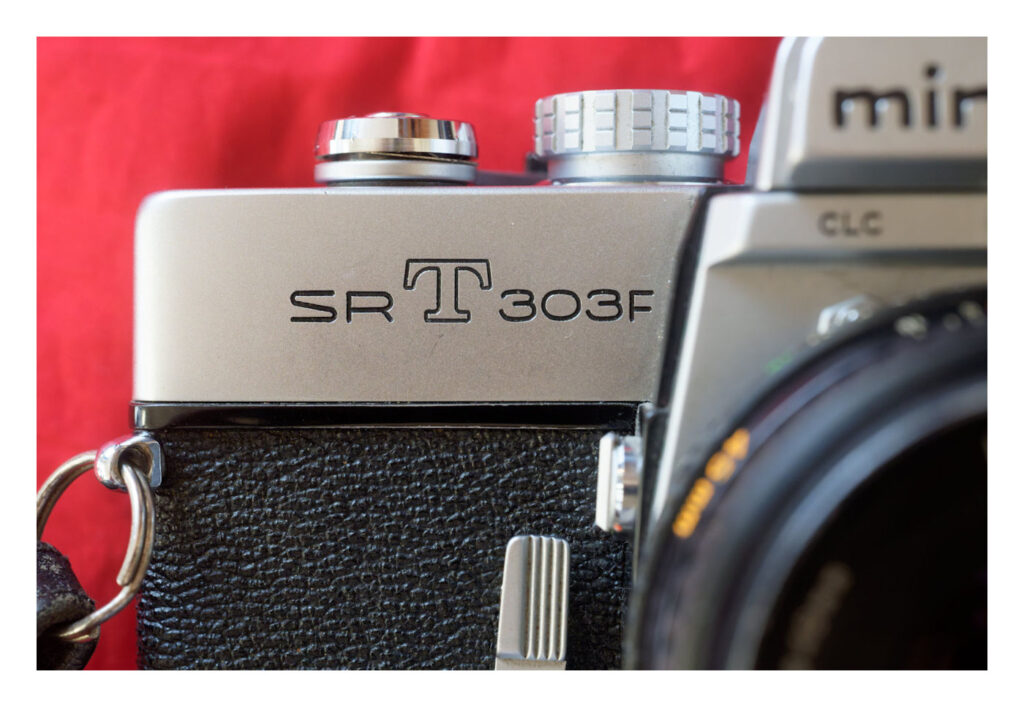
They say you should never meet your heroes. That has gone through my mind a few times when dealing with a particular Minolta SRT 303 I encountered recently..
I’ve long been a fan of Minolta’s SRT range. They are solid, mechanical cameras with TTL full aperture metering. They are also able to mount Minolta’s lovely Rokkor glass in SR mount (aka MC or MD mount).
My SRT fetish
I didn’t grow up with SRT cameras, or any other Minoltas for that matter. In the early 2000s I found that lots of people were ditching their old analogue cameras and selling them on a well-known online auction site. Here was a chance to own some of those cameras I’d read about in magazines as a teenager. I tended to target manual exposure models of the 1970s. Amongst Pentax Spotmatics and Olympus OM1 cameras, I picked up two SRT 101 cameras with dented top-plates and minor problems that were easily fixed. My SRT 101 cameras are from the second minor version of SRT 101 cameras, which dates between 1969, when Minolta adopted cross-head screws, and 1974-ish, which seems to be when they dropped the mirror lockup feature. Minolta printed codes on the base of SRT bodies, which are supposed to indicate month and year of manufacture – Mine say 2B and 3B, which suggests they were manufactured in February (B) of 1972 and 1973, respectively. SRTs of this time have a simple microprism, without a split-image focus aid, and they just sport a ‘cold’ shoe. I find them eminently practical cameras – the meter switch is awkward and badly placed, so you often can forget to turn it off, but the battery tends to last well in any case. I don’t miss the presence of a hot shoe, as most of my flash work is done with digital, where I get instant feedback on the results.
The Mechanical computer
The electronics on the SRT are very basic. If you look at the wiring diagram, you see a battery, a switch, two photo cells (arranged serially), a calibrating resistor, and a meter. The brighter the light, the more the needle swings towards the bottom of the right-hand side of the viewfinder. It doesn’t matter what aperture you set, what shutter speed, what film speed value – the needle is always in the same place for the same intensity of light.
So how does the SRT manage open-aperture metering with this basic circuit? It does it by moving the target. It is a lovely bit of thinking outside the box.
The exposure system of the SRT uses a mechanical computer. Cables run over pulleys from the shutter speed/film speed controls and the aperture following ring to a little ‘paddle’ arm with a circle at its end. Smaller apertures and faster speeds lower the paddle, wider apertures and lower speeds bring it higher. Line the paddle up so that the centre of the circle overlaps the needle in the viewfinder and you have the correct exposure. If the paddle is under the needle, you will be under-exposed, if it’s above, you will be over-exposed. Position the paddle so that the edge of the circle aligns with the needle and you are about half a stop out. Simple, bullet-proof, reasonably intuitive, and almost entirely mechanical.
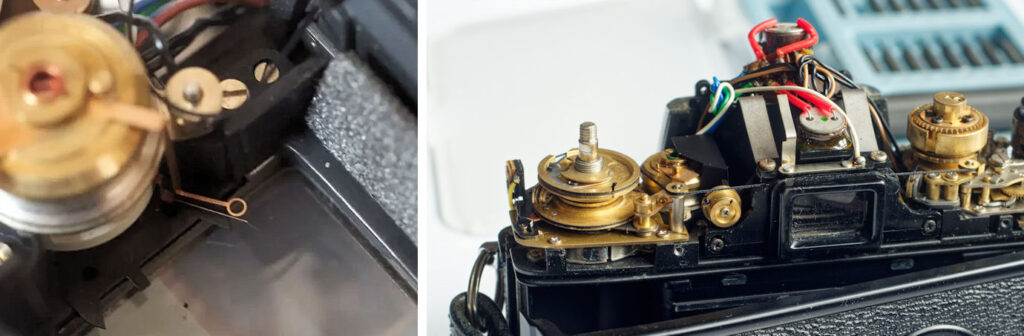
Any mechanical computer is subject to wear, but the scope for wear here is small. The cables are quite robust, and the pulleys are well-made. In contrast, the next generation of cameras used cutting-edge electronics. It is not uncommon to find that those more sophisticated exposure systems stop working because of the failure of a single component (and there can be lots of components). If you rule out accidents and misuse, those first generations of electronic cameras, dating from the late 70s and into the 80s tended to fail electronically rather than mechanically.
Of course, over the years, individual electronic components became more robust and there is far more sophistication you can build into electronic cameras. The mechanical exposure computer of the SRT is a dead-end, but for a manual exposure camera like the SRT, it works remarkably well.
The ‘enhanced’ SRT
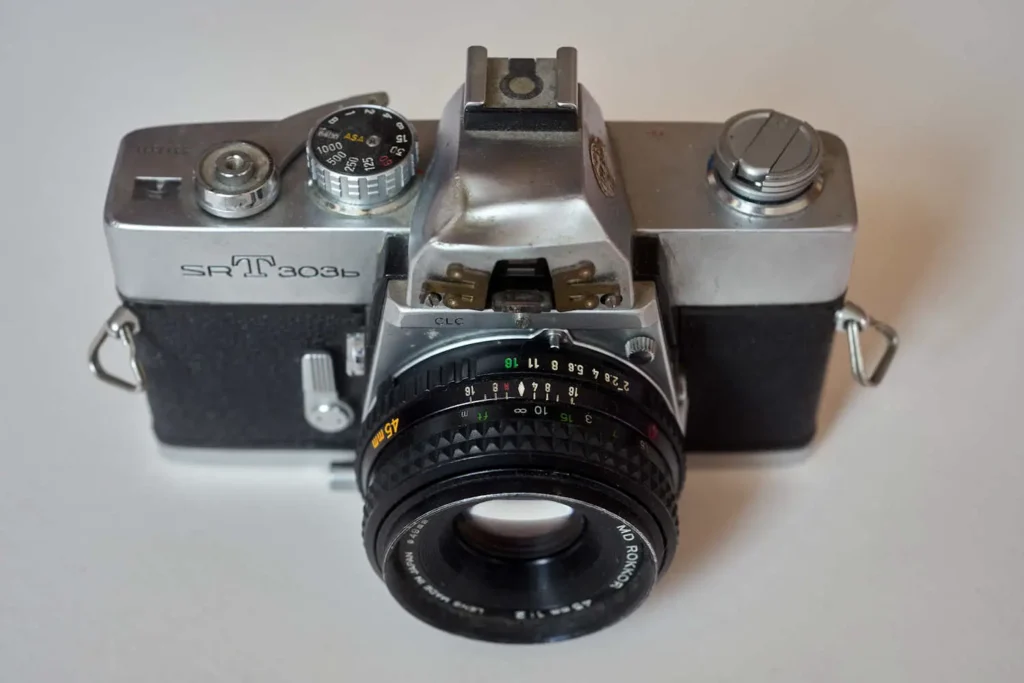
In 1973, Minolta introduced an enhanced SRT. It had a split-image focus aid to go with the microprism, a modern hot-shoe, a full information viewfinder, a modified top plate, and a multiple exposure feature. The enhanced model was called SRT 303 in Europe, SRT 102 in the Americas, and SRT Super in eastern markets; I’m just going to refer to all these enhanced SRT cameras (and their later variants) as 303-type from here on.
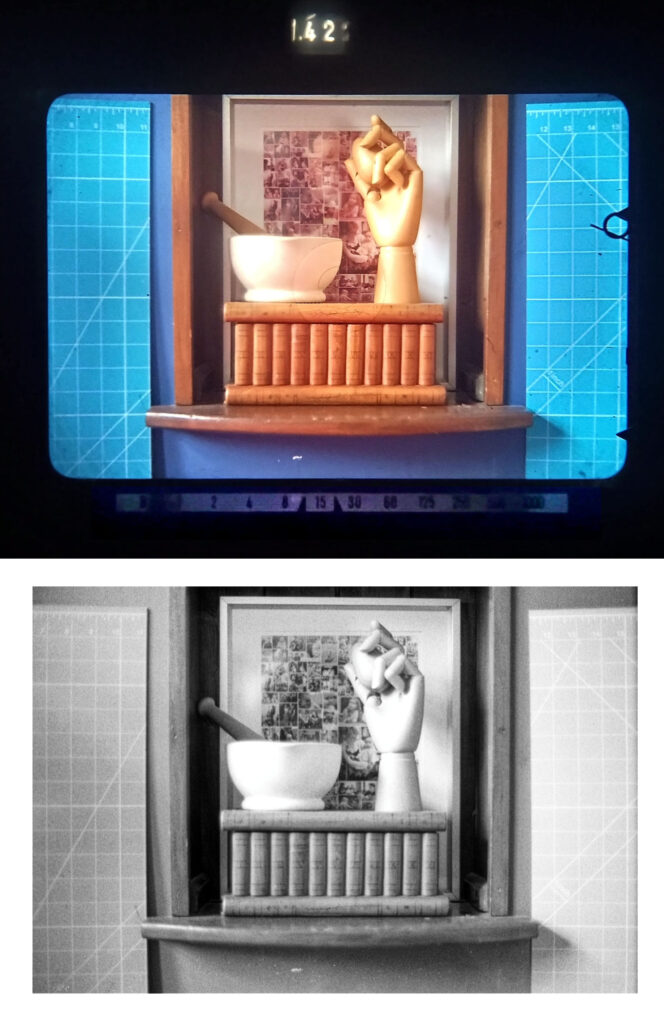
The SRT 101 had long shown the set shutter speed of the camera in the viewfinder using a similar arrangement of cables and pullies that positioned the paddle in the viewfinder, but the 303-type also had mirrors and prisms to enable you to see the settings of the aperture ring at the top of the viewfinder – what Nikon call an ‘Aperture Direct Window’.
When challenged over his frugality, my father would say “I’m not mean – I’m careful”. A bit of that tendency has rubbed off on me, so the 303-type cameras that have come my way have tended to have lived a bit. They have been broken or otherwise more unloved than a pristine copy would be. That was how I came across the camera I took apart for my ‘Inside the mind of Minolta’ article. A second seized-up example ended up donating its top plate to one of my SRT 101 cameras, which consequently masquerades as an SRT Super. When I think about it, I have more experience of taking 303-type cameras apart than I have of taking photographs with them.
I think the 303-type is a better-looking camera than the 101. Its top plate design just looks nicer to me. Six years separate the 101 and the 303. As well as accommodating the aperture direct window, the bevel on the front and rear edges of the top plate has gone, making it look more modern. I’ve previously maintained that the 303-type top plate was better made. I’ve seen a fair few SRT 101 top-plates. Almost all have dents on one end or another, but with the notable exception of my ‘Mind of Minolta’ strip-down example, the 303-type top plate appears to suffer less from damage. My sampling may be unrepresentative, but in my experience, the 303-type top plates seem to hold up better.
Temptation
A few months ago a SRT 303 came up on an auction site. The seller pointed out that the mirror tended to stay up after slower exposures (not the end of the world) and said that they didn’t know if the meter was working. It sounded fixable/usable/interesting. The camera also appeared to be in quite reasonable cosmetic condition. I put in a bid, which won the auction.
The original 303 was manufactured between 1973 and 1975. The early models had a manual mirror lock-up, but this one doesn’t. The date code on the base is 5E, which would suggest it was made in May of 1975..
When the camera arrived, I investigated the mirror problem. It was just as described, with the mirror failing to return when set to speeds below 1/60 until the camera had been wound on and the shutter cocked. I’m not sure what caused it, but while I was trying to investigate the problem, the camera locked up entirely.
As it happened, I had to take a trip abroad, so I put the 303 aside. While I was away, I remembered that the body that had donated my ‘Super’ top-plate was on a shelf and realised I might be able to use that to help diagnose the problems with the newly acquired 303.
When I got back from my trip, I took the top and bottom plates off the 303 and compared it to the broken ‘Super’. After a bit of cleaning around the sticking mechanisms, I got the 303 working again at the high speeds. With the base back on, I tried the full range of speeds to make sure it wouldn’t lock up again. I was pleasantly surprised that the mirror was no longer staying up at slow speeds.
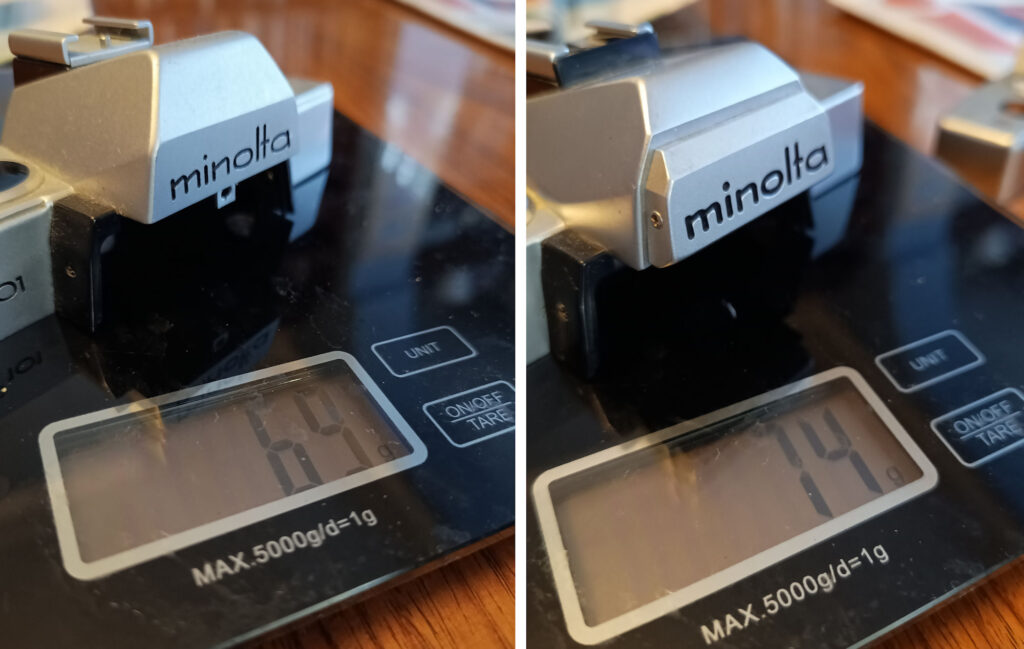
Having the camera apart also meant I had the opportunity to do a proper comparison of a 303 and a 101 top-plate – I’d mentioned in previous articles how the top-plate of the 303-type cameras was stronger and appeared to be built with heavier-gauge metal – and now I could quantify that using scales and a micrometer!
Only trouble is, it’s not. The 101 and 303 top-plates are within 5g of each other. Measuring metal thickness in various places confirmed that the thickness of metal is about the same on both. Away go my assumptions about thicker grades of metal. I still think the 303-type looks better though.
Film testing
The SRT 303 was now working, but still not quite perfect. The viewfinder, in particular, was filthy. I tried removing spots with blu-tack but without too much positive effect. I decided to run a film through it in any case.
Things I noticed:
When using third-party lenses, you might not see the apertures in the viewfinder. My Vivitar Series 1 19-35 lens shows enough of the aperture values to know what the settings are, but on an interchangeable mount Vivitar TX lens, the aperture ring is way too far forward. Two zooms I tried from Cosina and Tokina are fine, but a Hanimex 28mm lens in SR mount didn’t really show a usable amount of the aperture values.
During the film test, the amount of dirt on the focusing screen definitely detracted from the enjoyment of using the split-image rangefinder.
We have a problem
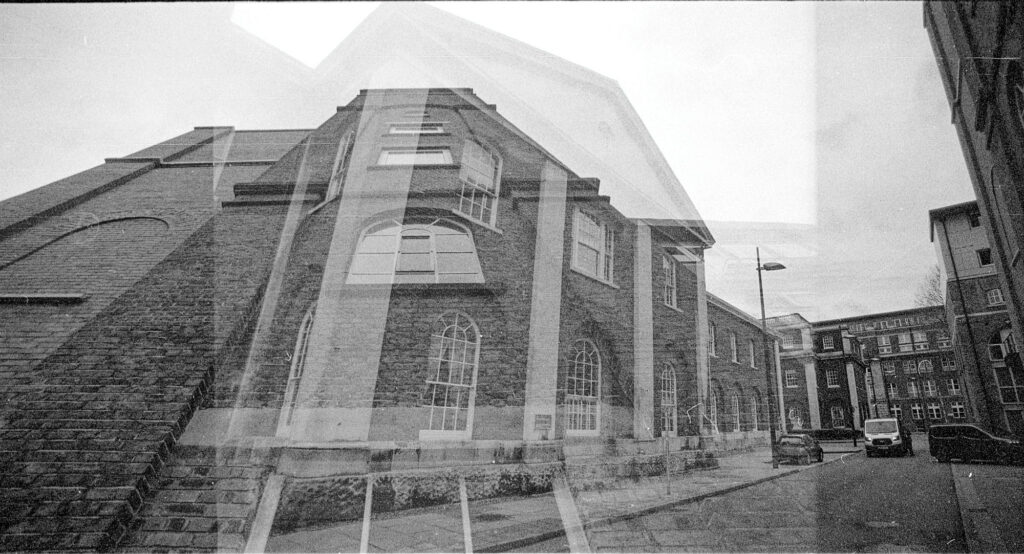
Then, towards the end of the film, I noticed something ‘different’. I was winding on in my usual way (reasonably fast, but not anything silly). The wind-on felt wrong, and I noticed the rewind knob didn’t seem to be moving as much as I would have expected. What I would describe as a slow pull seemed to produce a better result. Tellingly, the camera continued to wind after I had expected the roll to end.
Sure enough, when I developed the film, there were multiple overlapping frames at the end of the roll.
The strip-down
I put the 303 aside to concentrate on other (less frustrating) projects, but eventually I came back to the camera.
Poking inside the film door, I couldn’t see why the slippage was occurring. Bearing in mind that the previous problem had been put right by taking the base plate off and blowing out dust, I decided I’d go in from the top. I could blow out any dust from the mechanism and could even look to shift the pentaprism out of the way so I could clean the screen from both sides.
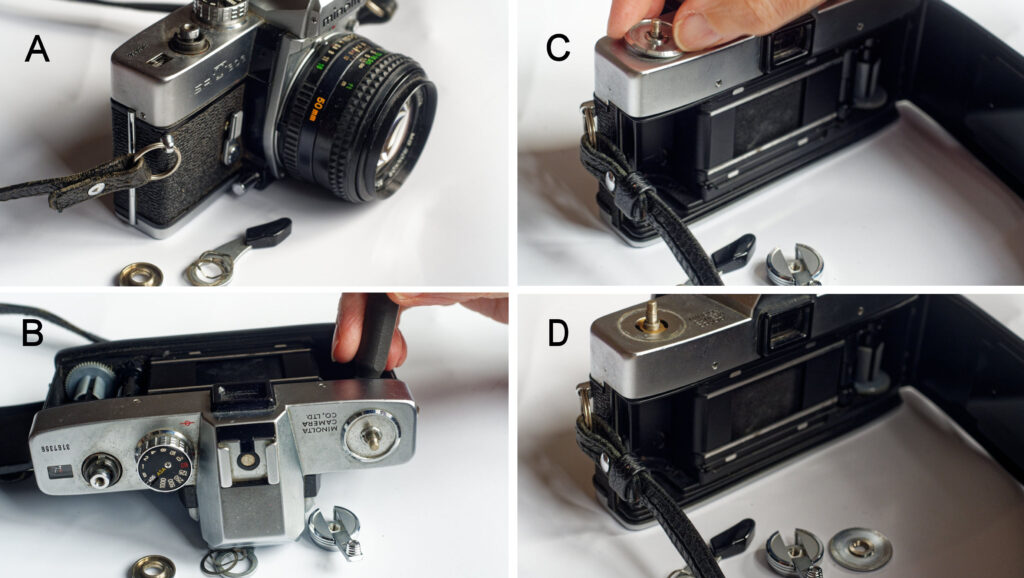
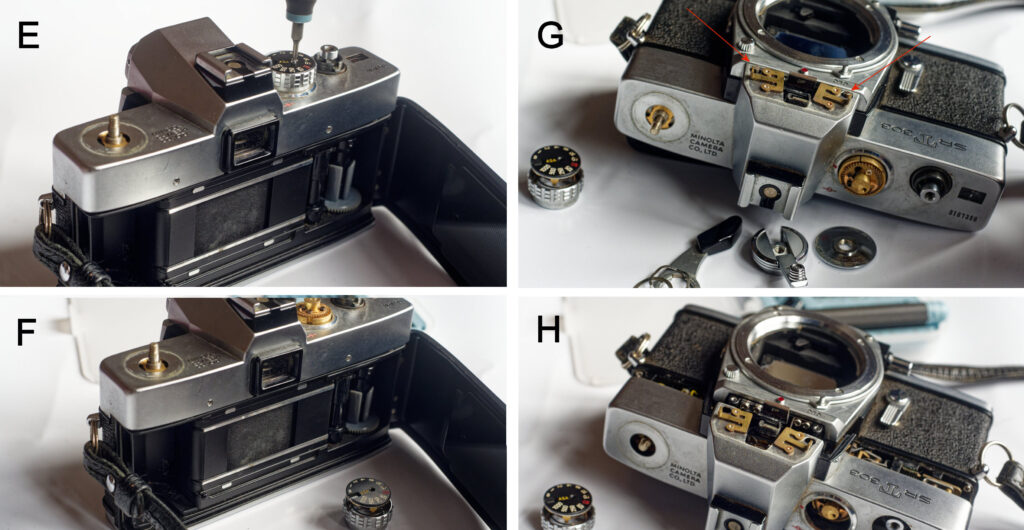
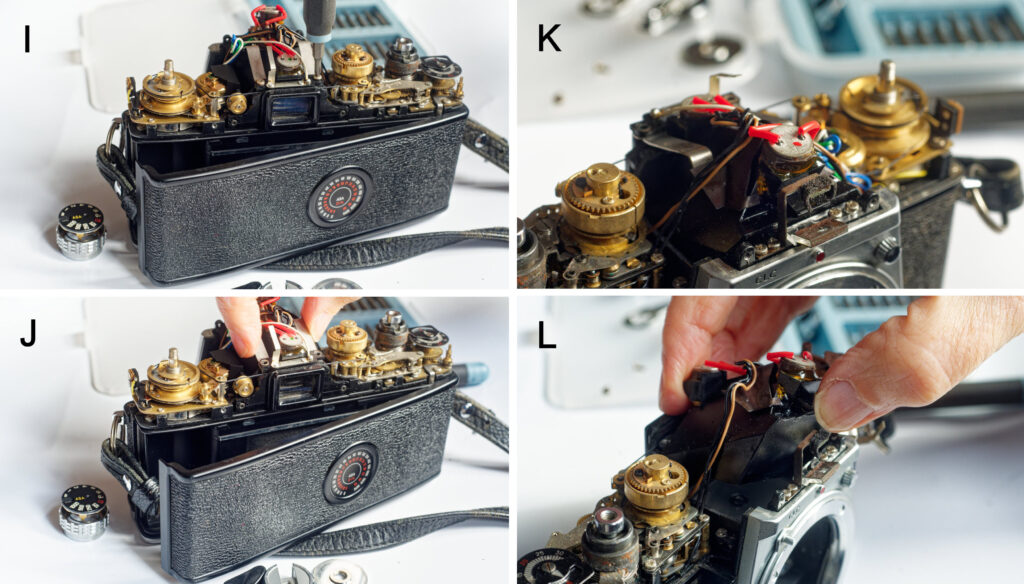
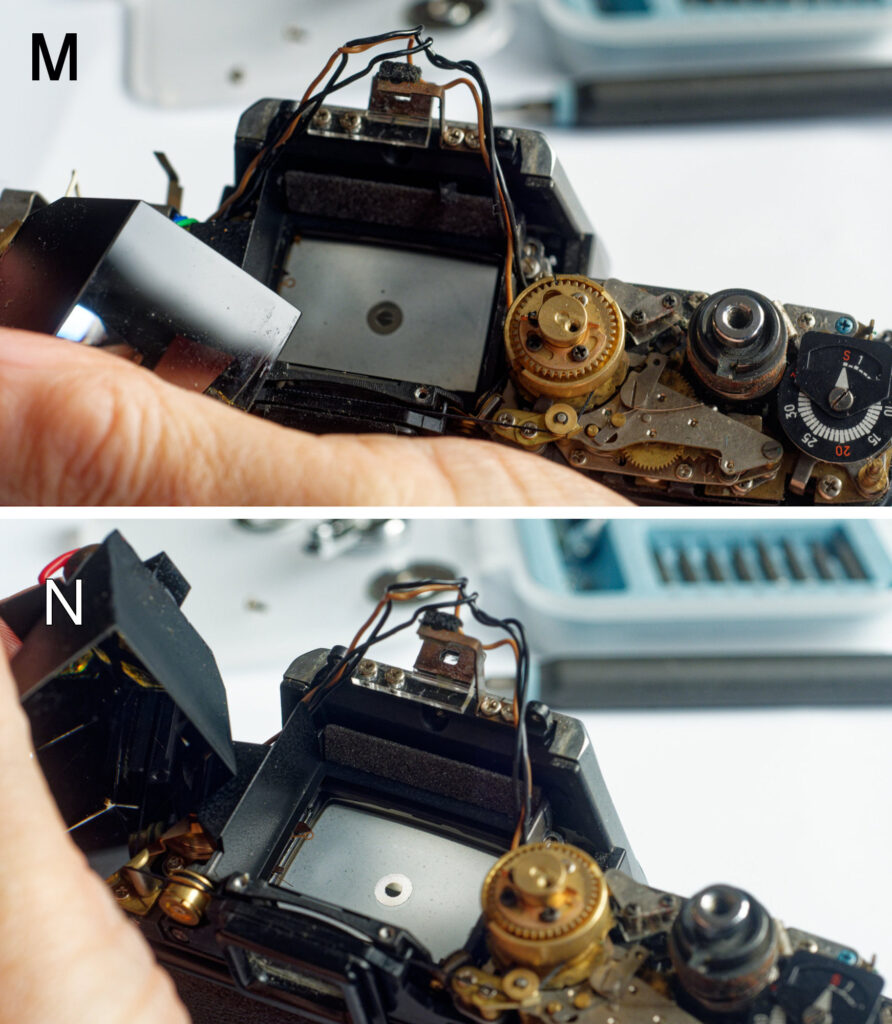
With the pentaprism moved to one side, I blew any remaining debris out of the chamber above the focusing screen and cleaned the underside of the focusing screen with hot water and a bit of detergent on the end of a cotton bud.
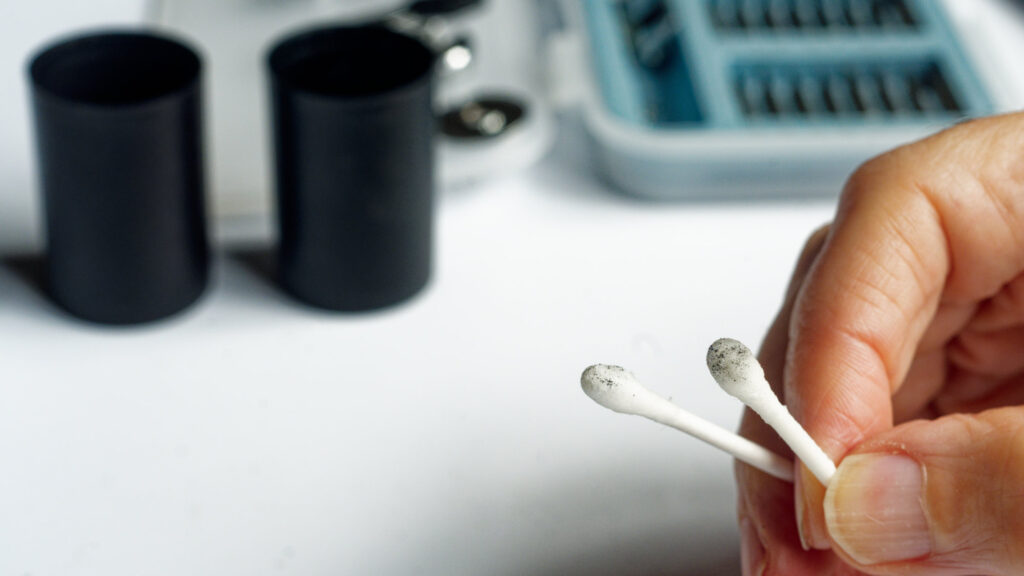
The improvement to the viewfinder was quite amazing. The clean viewfinder seemed to merit a second film. Maybe the overlapping frames were just a one-off?
The second film
Only they weren’t. On the second film, I could tell at about the 24th exposure that the film had not wound on as I would normally expect. Not wanting to lose two shots, I took a blank with the lens cap on, and wound again (better this time)… But the issue reoccurred. I could definitely ‘feel’ when the wind-on hadn’t gone right – it happened twice more on the roll, and each time I shot a blank and wound on to save the previous shot.
That the problem occurred at the same point in the roll suggested an issue with the take-up spool. Being able to tell when the problem was occurring (in the last third of a roll of 36) was useful information about what was happening with the film door closed. There is not a lot of pull from the SRT spool, and film is reverse-wound (emulsion-side out) around the spool. It appeared that the clutch on the take-up spool is not strong enough to move the film on in the film chamber with the increase in leverage required late in a film. The sprockets were then not able to wind their normal 8 perforations because the film was backing up.
I remembered that the 303 was supposed to have a double exposure provision. This involved locking the sprocket drive mechanism while the wind-on was happening, so that the film did not move in the gate. I’m left wondering if the weaker clutch on the film spool is linked to this, with the intention being that it shouldn’t provide pull on the film that might trouble the ‘locked’ sprocket drive.
And then we have another problem
I was working out quick fixes for the clutch on the take-up spool while the film was getting its final rinse and soak. When I hung the film up I saw four or five missing shots from the middle of the roll. I remembered that, at that point, I’d been doing quite a lot of silhouette-type shots, with the winter sun fully visible, and for which the shutter speed was set high.
I opened the camera back and pointed the lens at a bright light: 1/125 worked fine, as did 1/250 and 1/500 – but 1/1000 showed no light at all. On top of its other issues, the camera had also lost its highest speed. I almost felt that the camera’s ills were ganging up on me.
A project for another time
I found a service manual online for the SRT series that looks promising for restoring top speed and shows how to disassemble the take-up spool (and, more importantly, put it back together). It’s a fairly major challenge for me and I’m not sure I can quite give it my full attention at present. For the moment, I have set the 303 aside. If I get around to a proper fix for this particular camera, you may see another article.
Suspicion that the double-exposure capability of the 303-types might be linked to problems led me to revisit the jammed ‘Super’. Sure enough, some fiddling with the rewind button actually unjammed the camera. So now I have another project, but I feel the Super is a good deal further from being film-capable than the 303 is.
It seems that a reasonably niche feature added to the 303-type cameras may have given them an Achilles heel.
Transplant?
I did consider transferring the 303-type prism, aperture direct window, and mirror arm to a 101 body, but as my 101 cameras predate the 303-type they are not likely to have the drilled and tapped holes for attaching these parts. It is not easy to tell for certain, as the bit of the body that would be drilled is covered by the front plate on the 101. Removing the front-plate means taking off the bayonet, which is not for the faint-hearted. It might be possible to drill and tap the holes, or even to use adhesives to stick the mirror arm in place, but different photocells might require recalibrating the meter. All in all, it is quite a lot of modification just to see the aperture in the viewfinder.
Vanity, all is vanity…
In the interim, I’ve decided to go a simple (and purely cosmetic) route. My remaining original SRT 101 will trade in its dented top plate for a cooler-looking 303 number (which it may only have on loan). I’ve written explanatory notes and the proper serial number in the back of the receiving SRT 101.
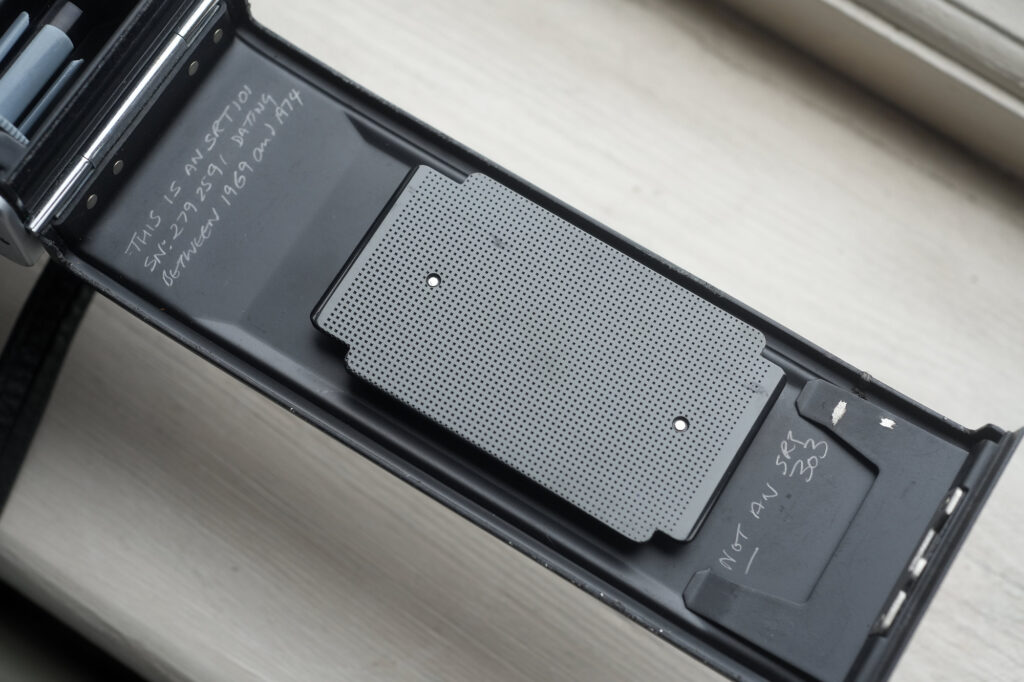
Some Pictures
SRT 303 – second film (Kentmere 400 processed in R09 1:50)
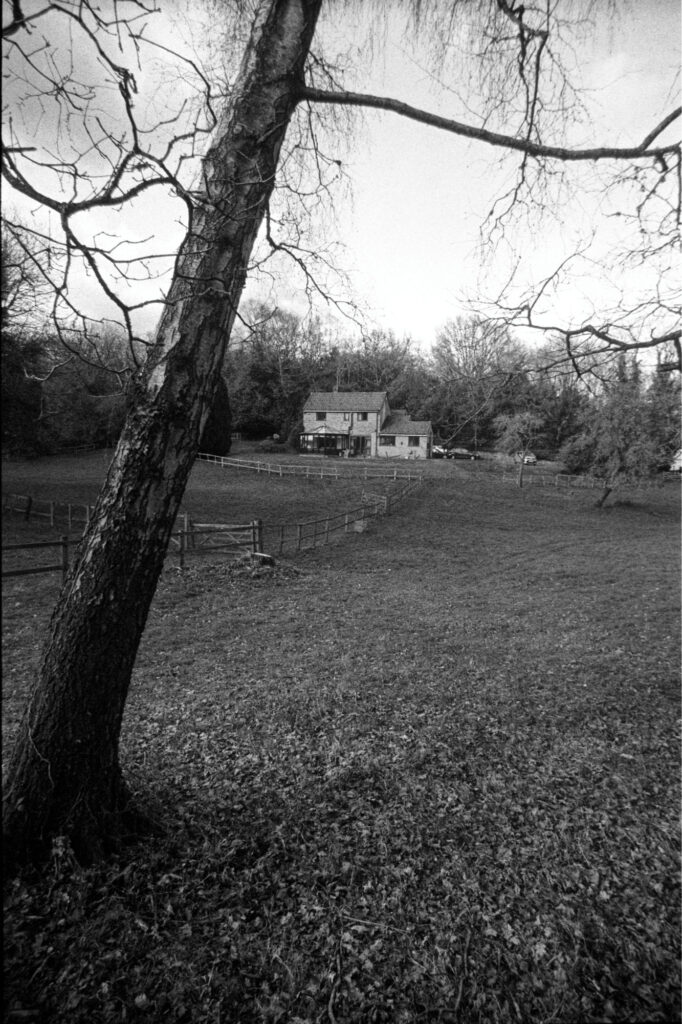

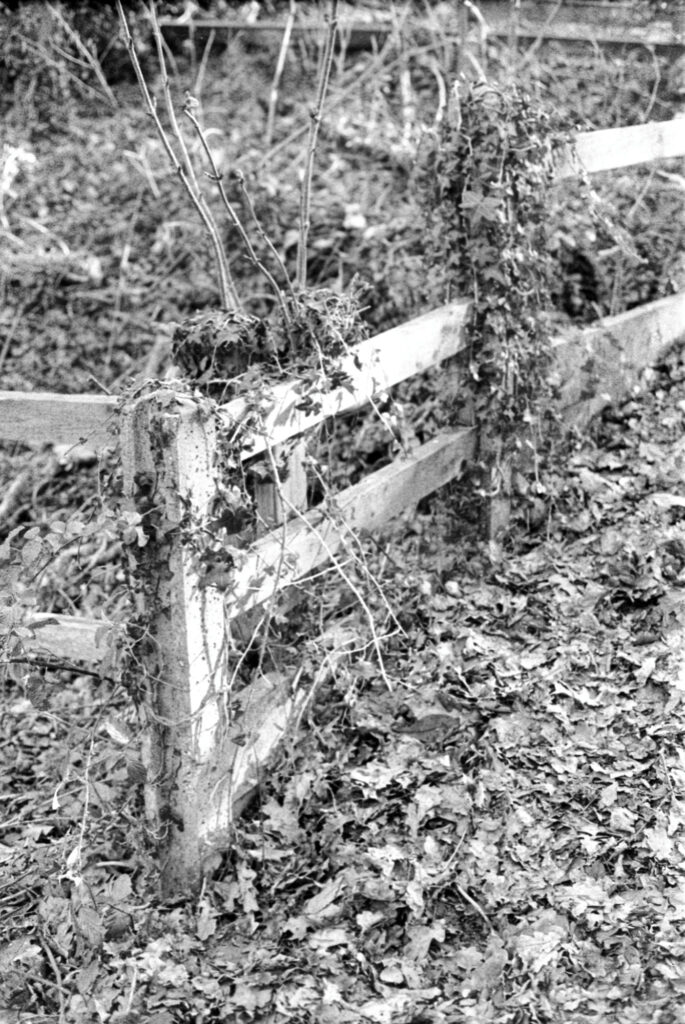
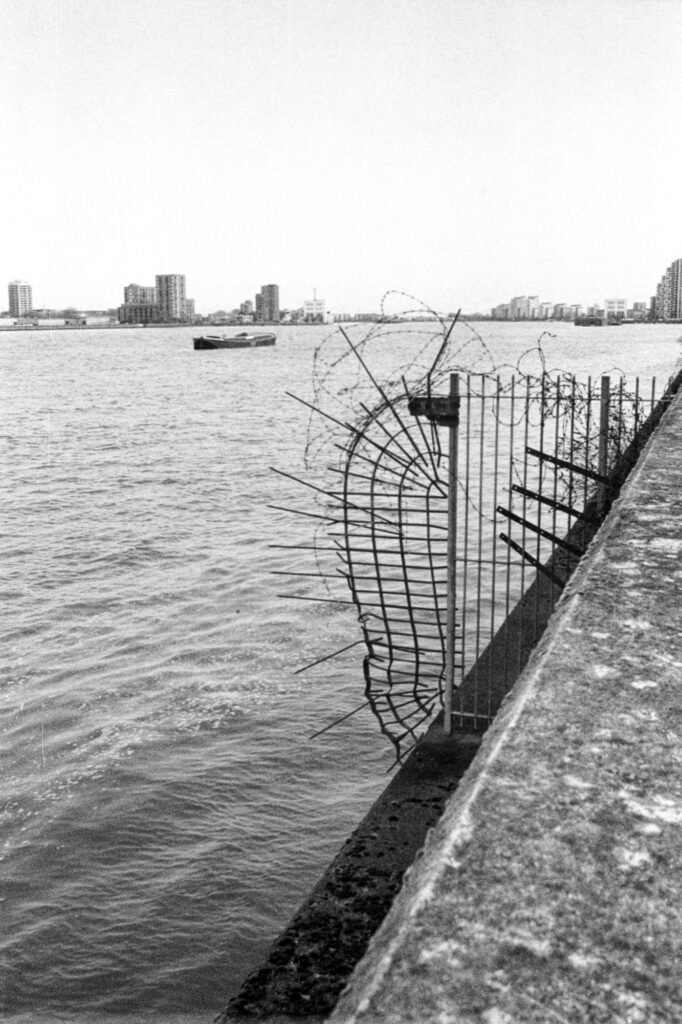
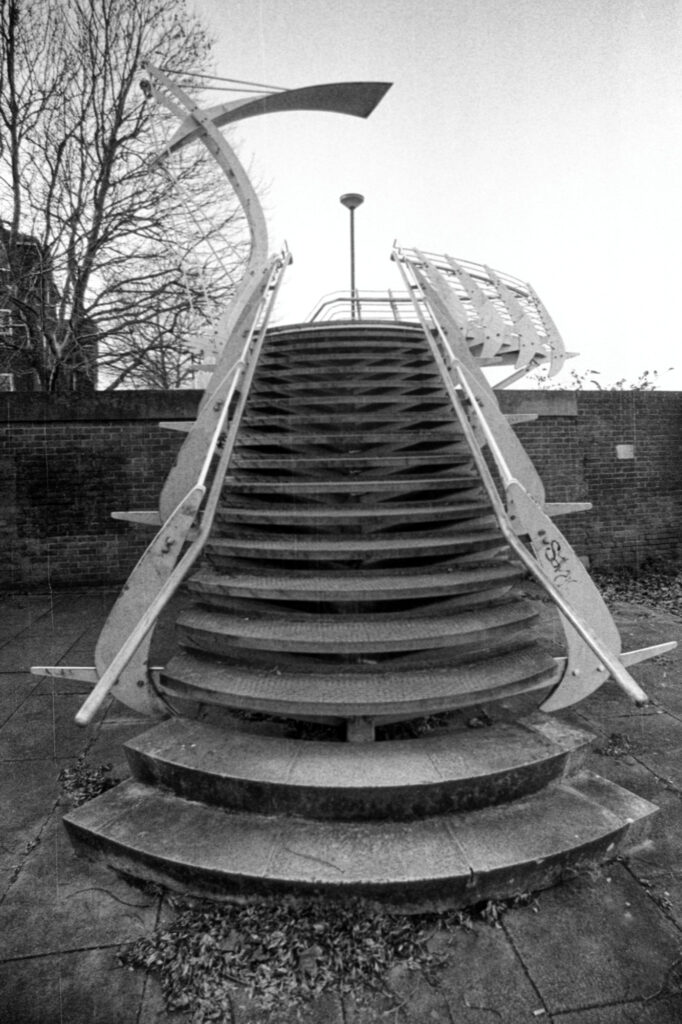
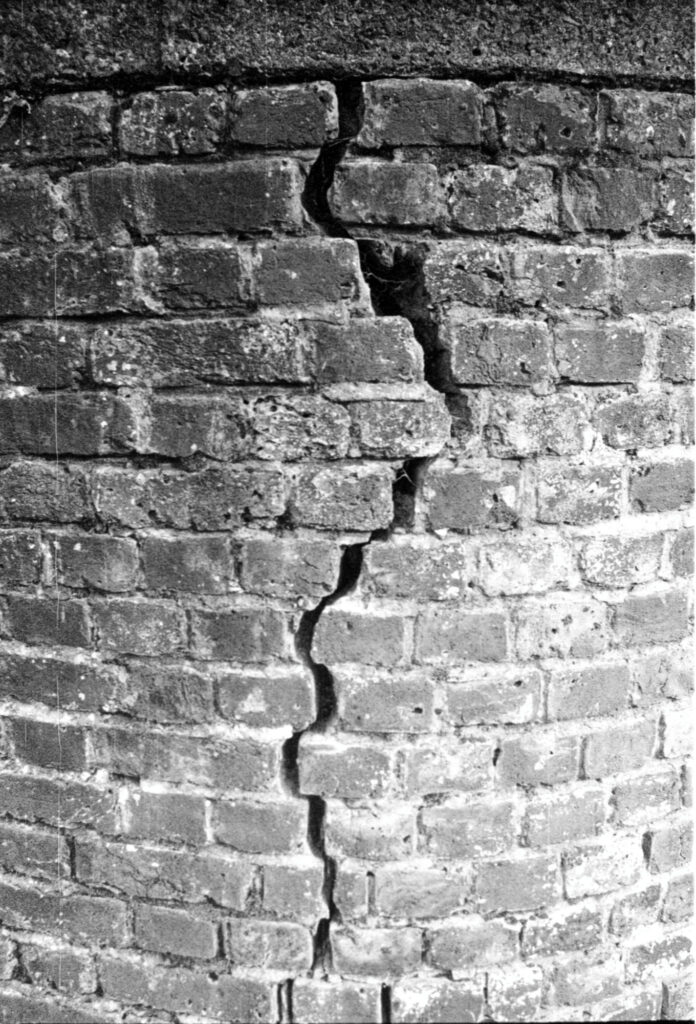
SRT 101/303 ‘F’ (Kentmere 400 processed in R09 1:50)
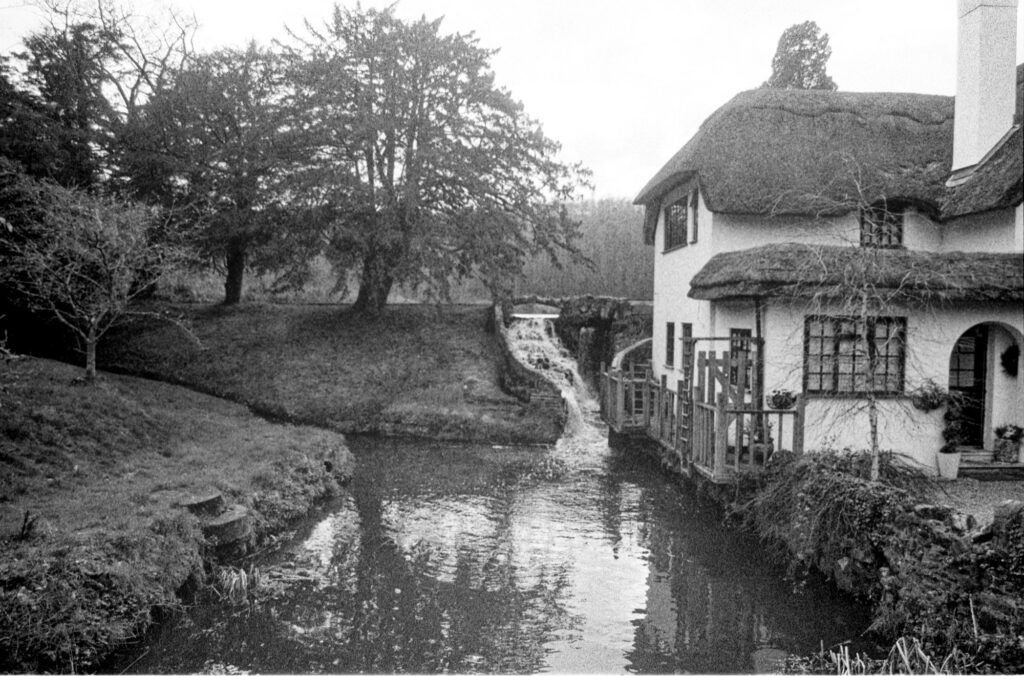
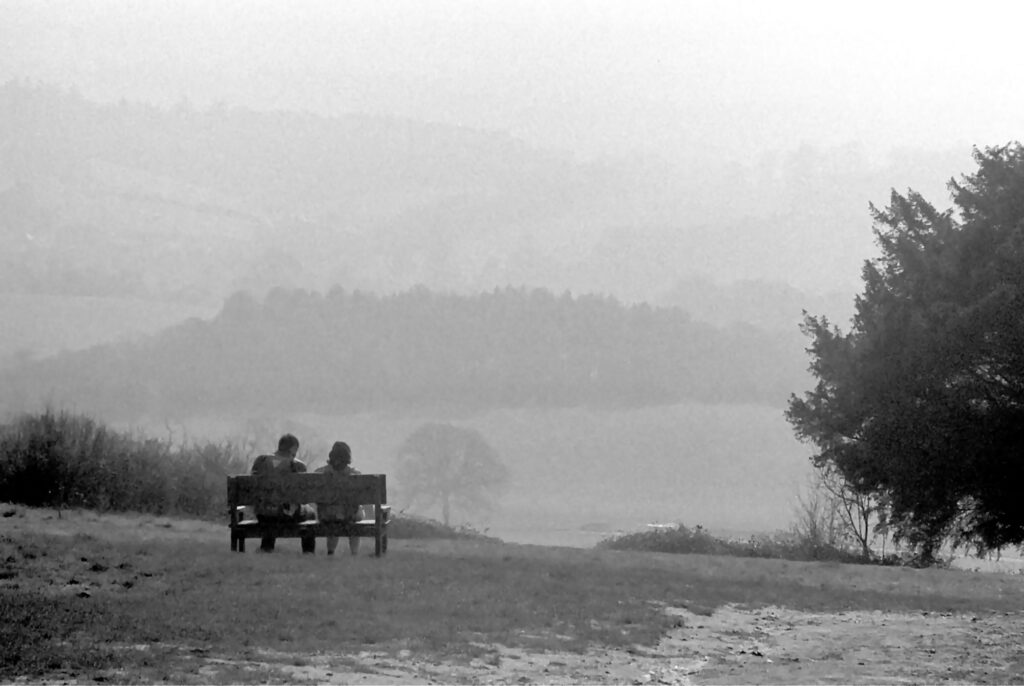

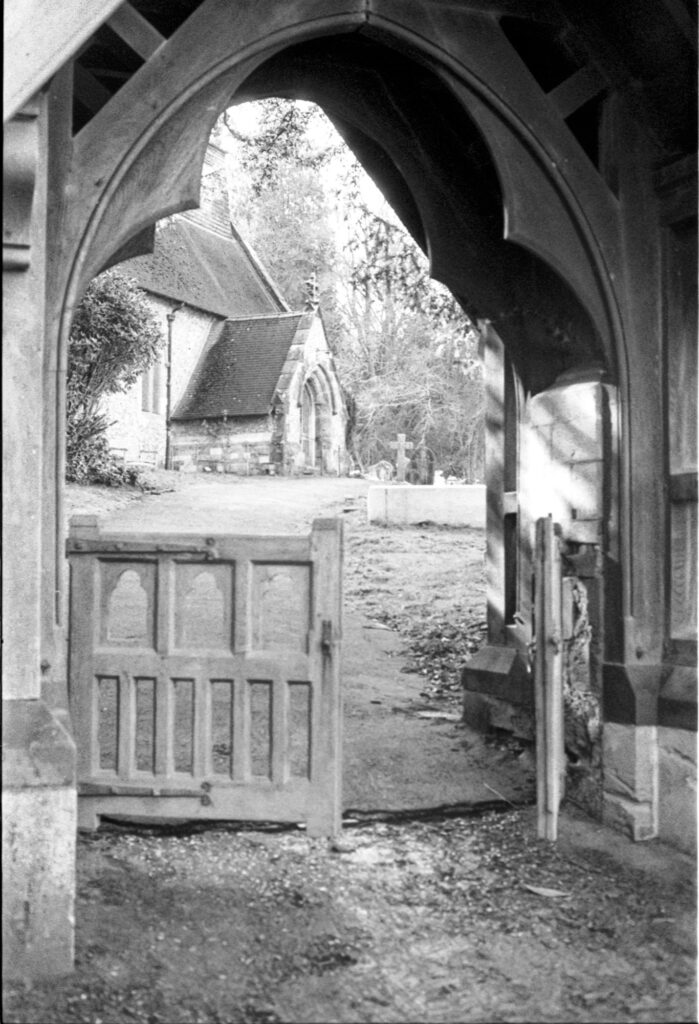
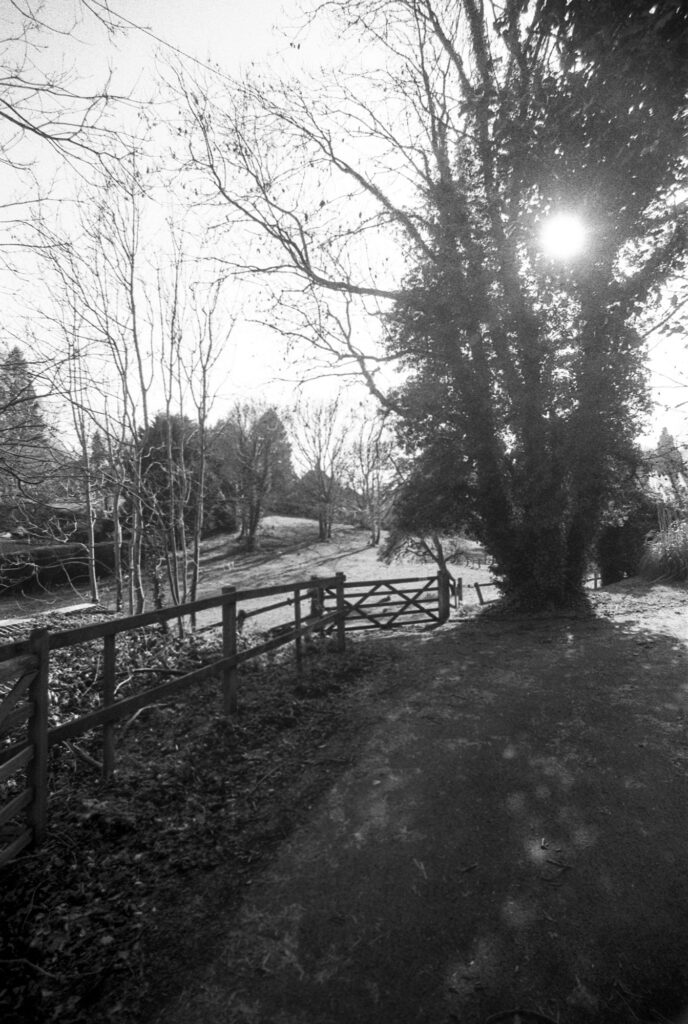
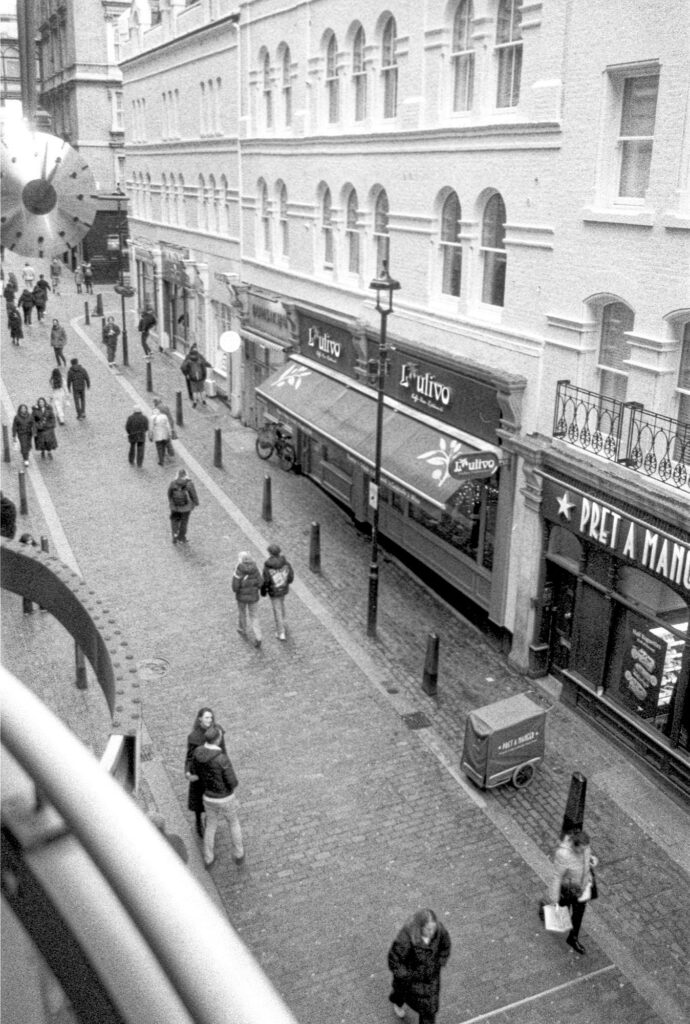
At the end of the day, a camera you can feel confident in is a reliable tool, even if it doesn’t have all the focusing aids, or apertures visible in the viewfinder.

Share this post:


Comments
Miguel Mendez on Never meet your heros – Misadventures in Camera Repair Land
Comment posted: 01/04/2026
Steve Kotajarvi on Never meet your heros – Misadventures in Camera Repair Land
Comment posted: 01/04/2026
Ned MacFadden on Never meet your heros – Misadventures in Camera Repair Land
Comment posted: 01/04/2026