

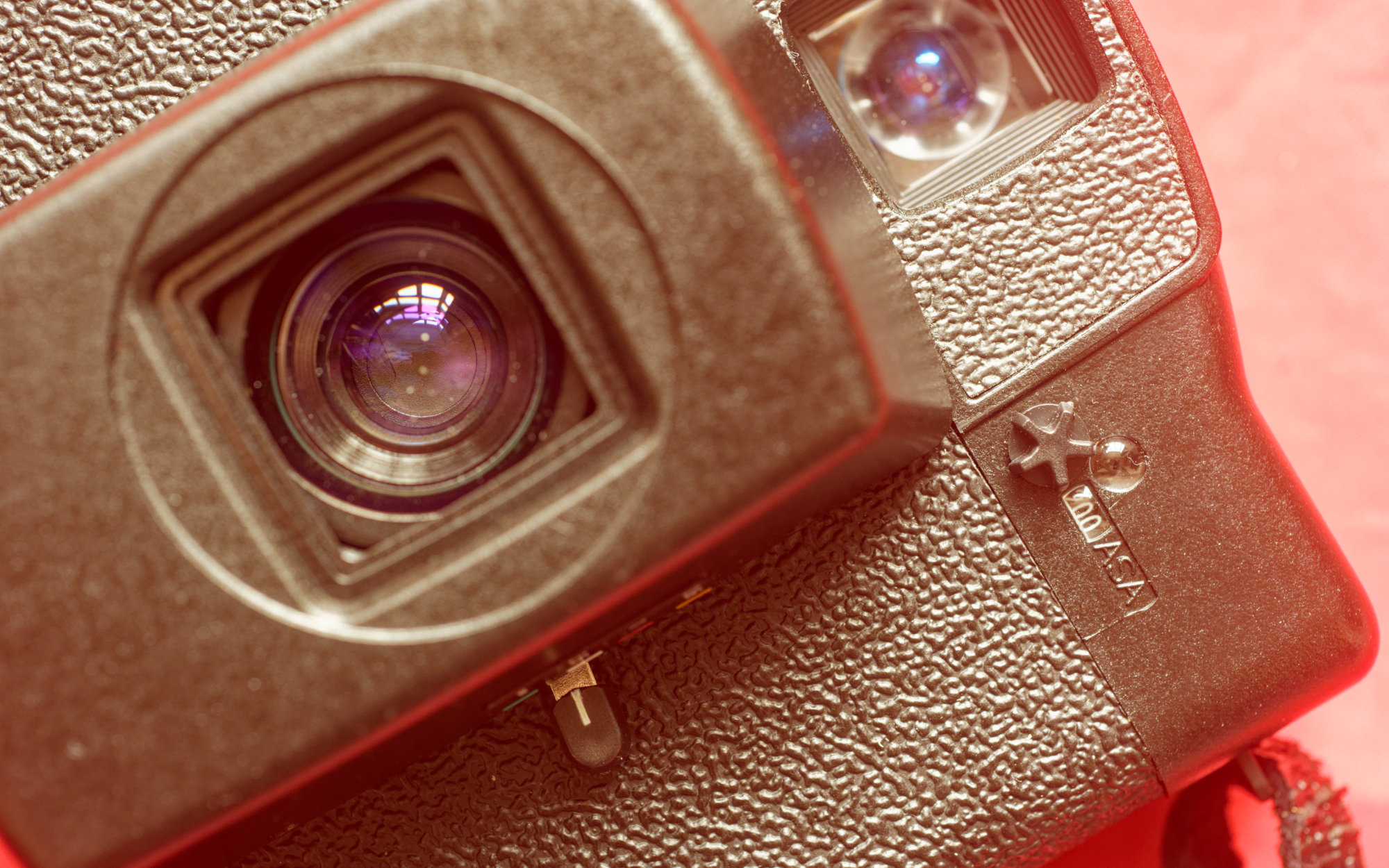
This is a review of the LOMO LC-A 120. I received a loan copy of the camera from Lomography (for which I thank them). This, however, is an independent review to which they have had no further input or influence. My declared interest is purely that I do like wide-angle lenses and analogue photography.
To set the scene…
So, you have a retro hit in a small pocket camera that takes 135 film, called the LOMO LC-A – what do you do next? Introducing a wide-angle version has been done a few times (Olympus with the XA4 and Balda with the 1000 EL BR). A slightly more off-the-wall idea is to take a small camera and go large. You might even be tempted to do both…
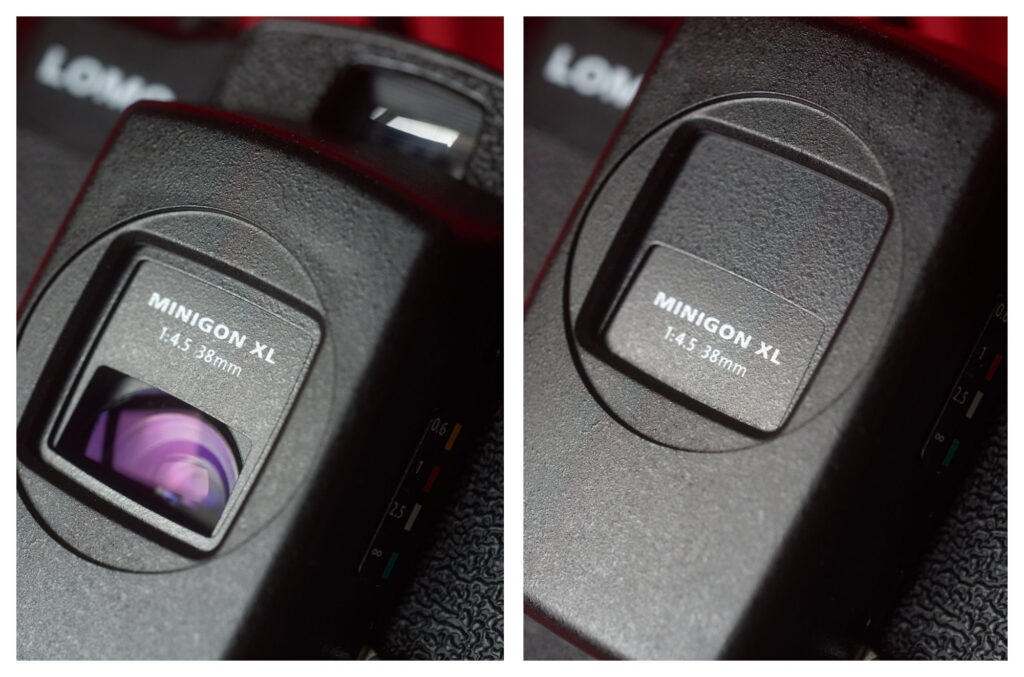
The LC-A 120 is a medium-format camera that takes square-format shots on standard 120 film. It sports a zone-focusing, multi-coated 38mm Minigon XL lens.
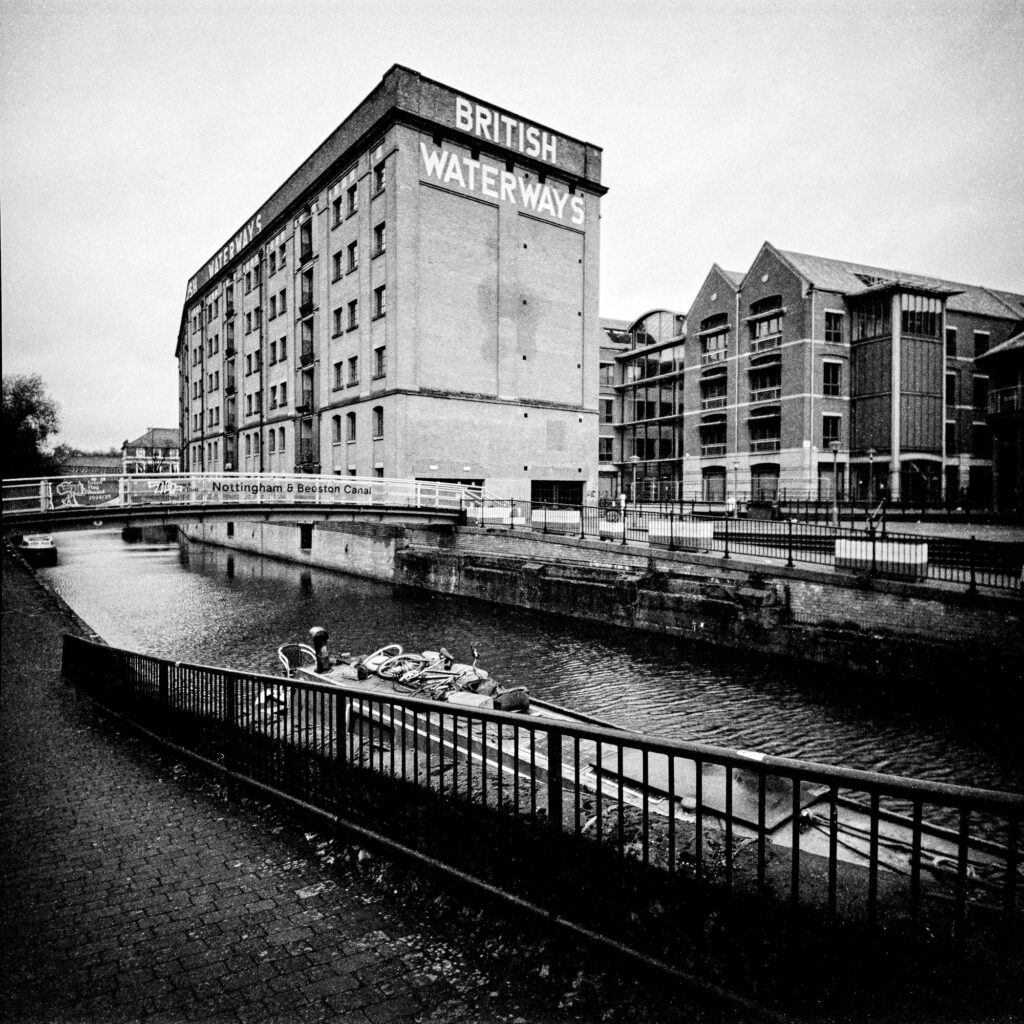
A 38mm lens on a 6×6 (56x56mm) frame gives an equivalence of 21mm on 35mm (although the change of aspect ratio limits the side-to-side wideness). Lomography say the field of view is 92 degrees, which I think is measured diagonally. Whatever the figures, the lens on the LC-A 120 is wide – wider than you would normally see on a medium format camera, and that gives the camera a definite USP (Unique Selling Point).
A view around the camera
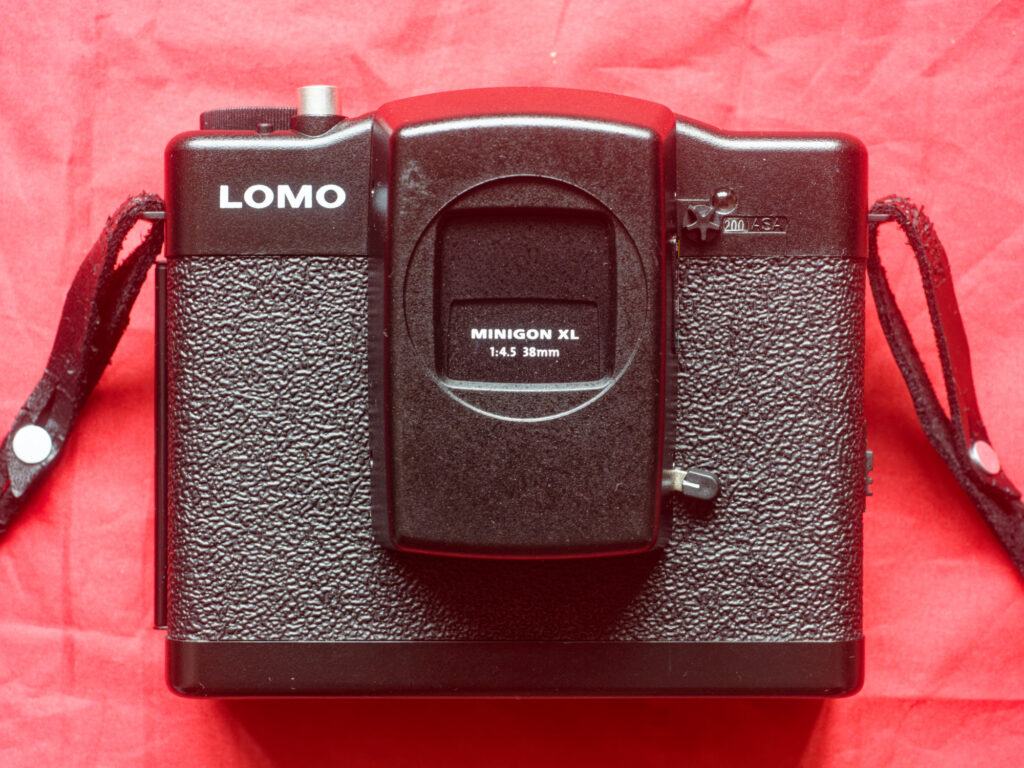
The camera opens up by moving the central lens cover down to reveal the viewfinder and lens.
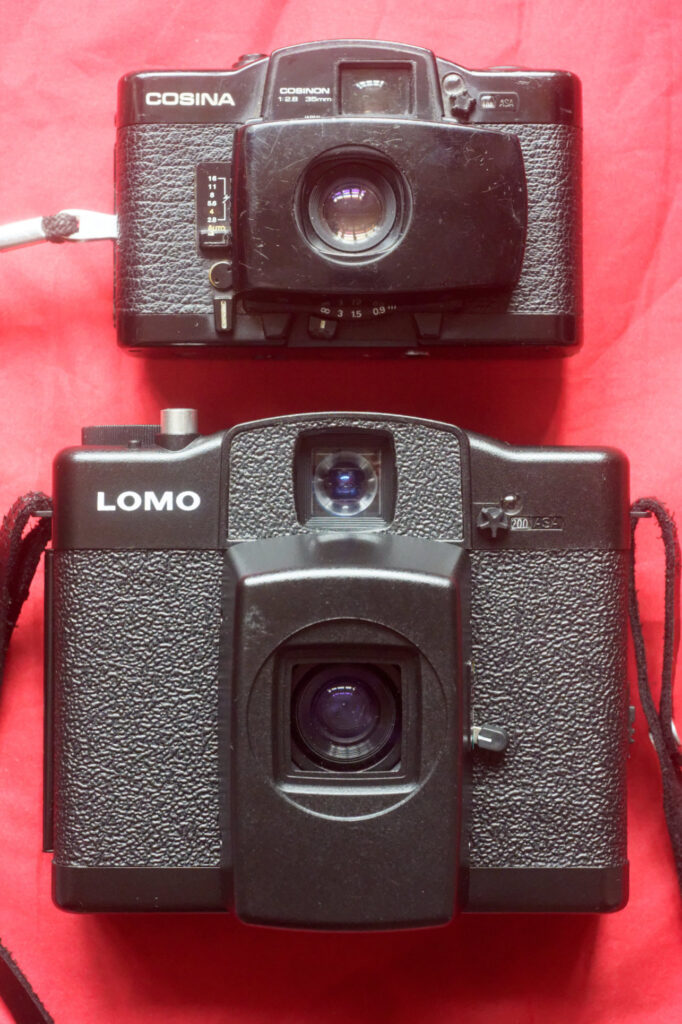
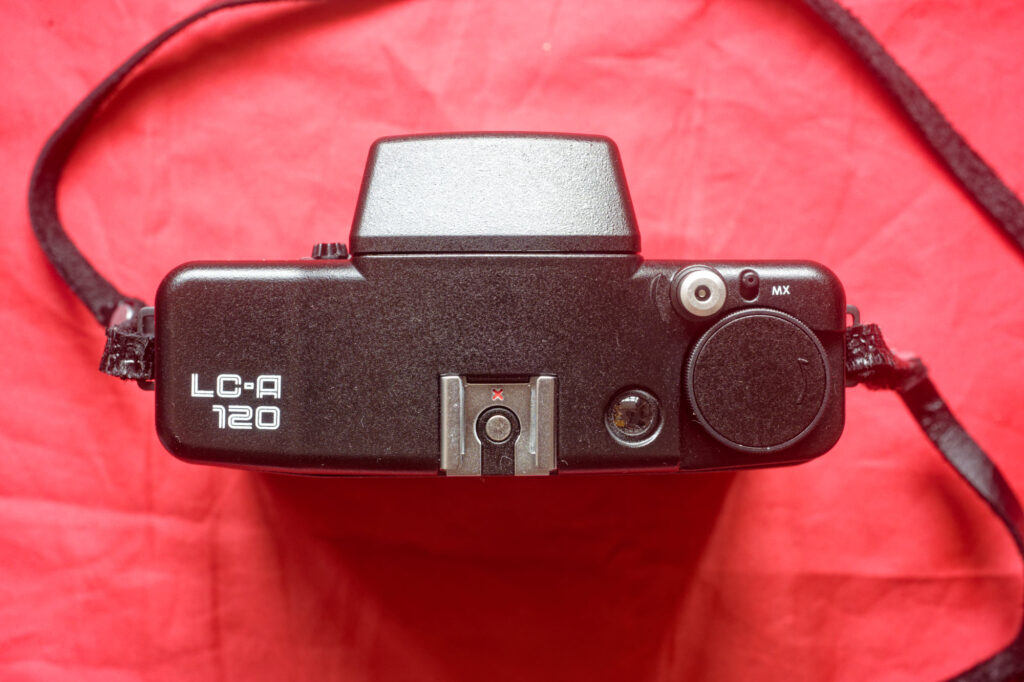
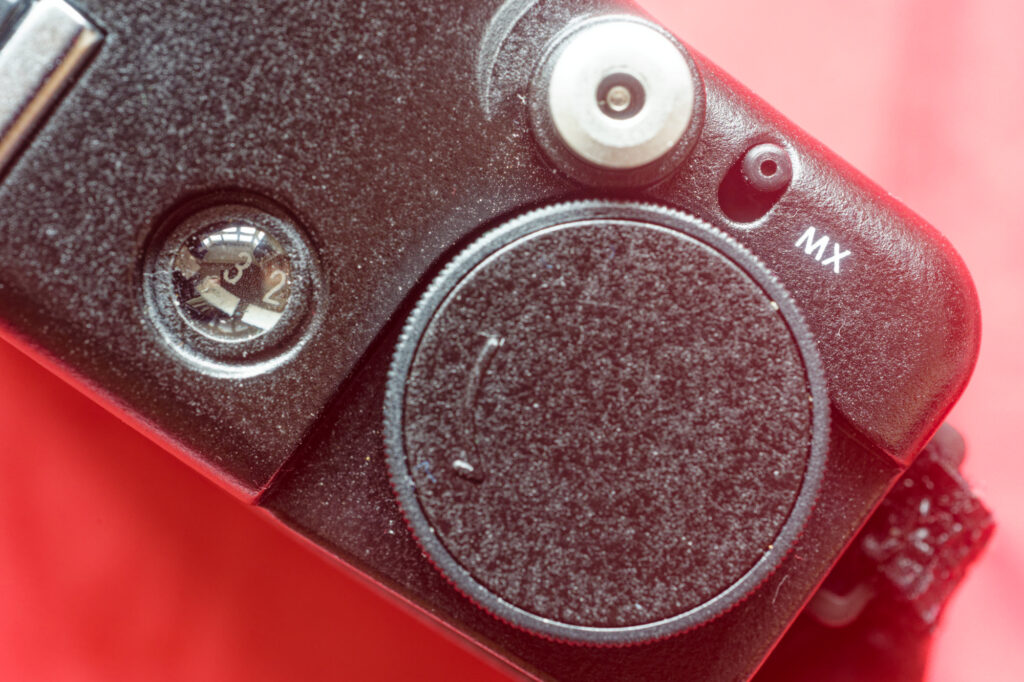
Although the wind-on knob isn’t the easiest to grip, it does turn quite easily. The multiple exposure switch disconnects the interlink that stops double exposures when set towards the ‘MX’ text. It is possible to knock this by accident in a camera bag – this happened to me in Warsaw and I thought that the camera was broken before I realised what had happened. There is no limit to the number of exposures that can be made on one frame – the shutter will just open every time the shutter release is pressed. Note that going into multiple exposure mode doesn’t affect the light meter, so if you may need to adjust the ISO settings to get a properly exposed set of multiple exposures.
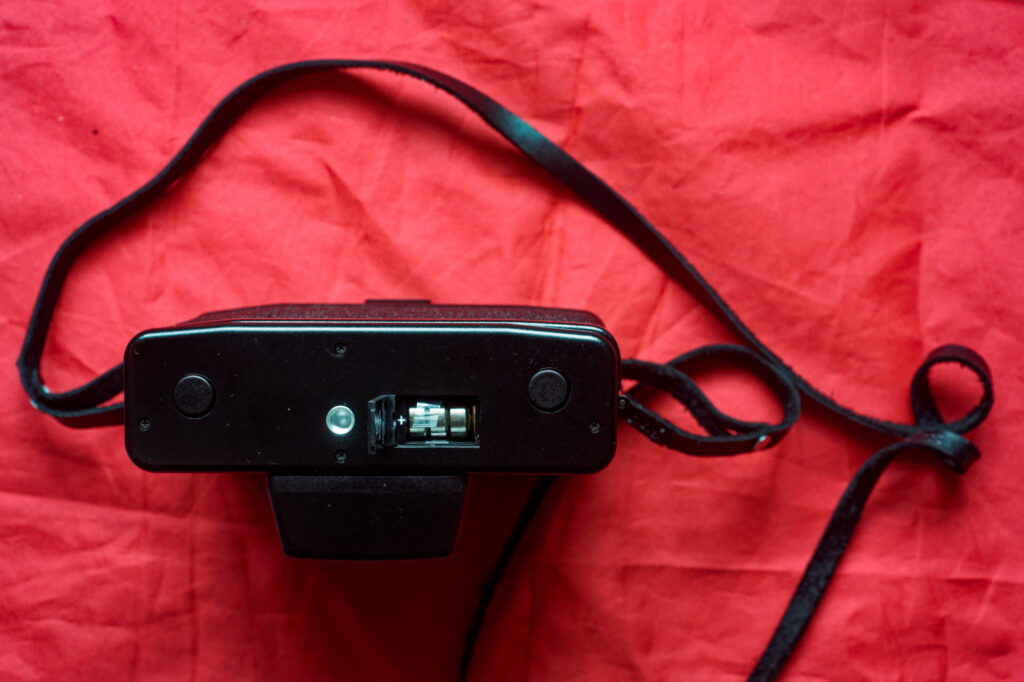
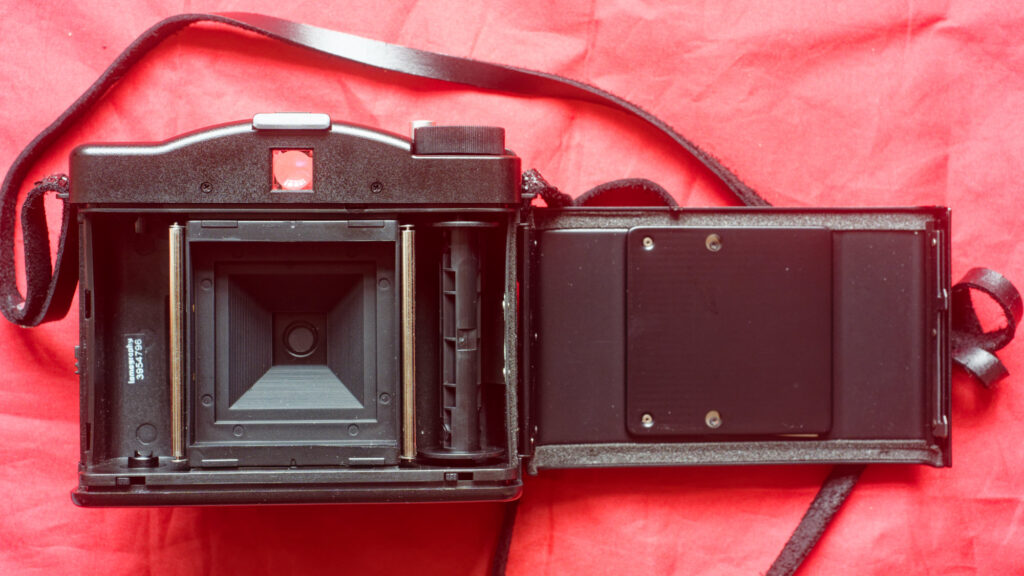
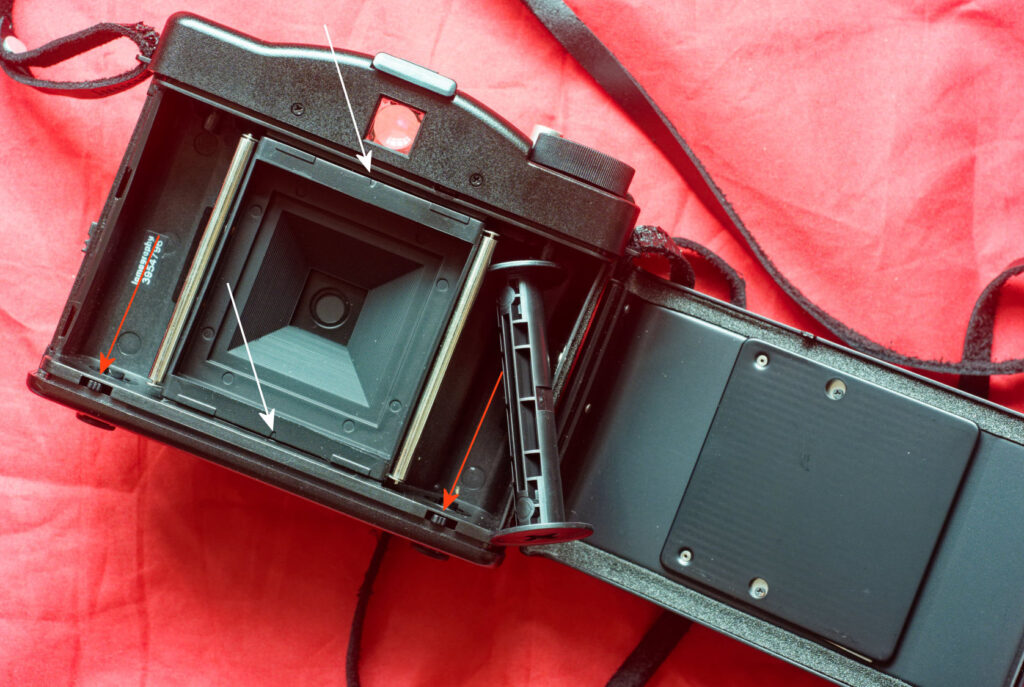
It is not a pretty camera, nor does it look impressive, but it does fit nicely under a coat with its strap around your neck. It is also no heavier than it needs to be. On the whole, a quite practical camera to carry around, and the best camera is the one you have on you.
Quirks
The shutter runs as fast as 1/500th of a second. The program for exposure seems to keep the lens wide open until that point is reached and then only then starts to close down the diaphragm.
The camera has two separate interlocks to prevent the shutter from firing. One prevents exposures when the lens cover is closed, while the second operates when the film has not been wound on (to prevent double exposures) and when the camera back is open (not sure why). However, the MX (multiple exposure) switch effectively disables the second interlock, which is how I was able to confirm that, while the lens stays wide open for most shots, it closes down to a kite-shaped smaller aperture if the light is bright enough.
The shutter release travel is quite long and requires a fair amount of pressure, which doesn’t enhance the experience of using it – I’m guessing that the initial depression is tensioning the shutter, as this is not done by wind-on.
I did notice that if you depress the shutter release to very near the firing point, but then let the release button up again (backing out of taking a shot) the shutter opens at a very small aperture (possibly below f/16) as the shutter release comes back up. You probably won’t hear the shutter open, but if this happens, the wind-on interlock will prevent you from taking a shot until the camera is wound on (or until you move the MX switch). I don’t regard this as a major problem, but it might affect you if you are the sort of photographer who tends to take the shutter release to its biting-point and then backs out. This might not occur on all copies, but be aware.
The LC-A 120 gives you 12 shots off a roll of 120, but you need to load quite accurately to get the full 12. Be sure to align the double-headed arrows on the film leader to the indented arrows on the centre line of the camera before closing the camera back.
Build
There are various reviews on the internet that lowered my expectations about the build of this camera before it arrived. I’d already decided that the first film through would be a bit of a sacrifice, identifying light leaks and annoyances that I could deal with on later films with the application of judicious amounts of black electrician’s tape. None of that was necessary. Light stayed outside the camera until invited in via the Minigon lens and all the strap lugs stayed attached to the camera. In fact, everything was rather nicely put together and showed every sign that it was going to stay that way.
Now, being a review copy, this camera might have had extra checks, but looking at the overall design of the camera, I couldn’t spot anything that would be difficult to get right straight off the production line. I see no evidence of the sort of QA issues reported elsewhere and I’m left wondering if those issues have been worked out since the camera was first released.
Issues
Despite what I’ve said above, there are issues.
The viewfinder is quite spectacular. It leads you to expect rather more barrel distortion than you actually get on the film.
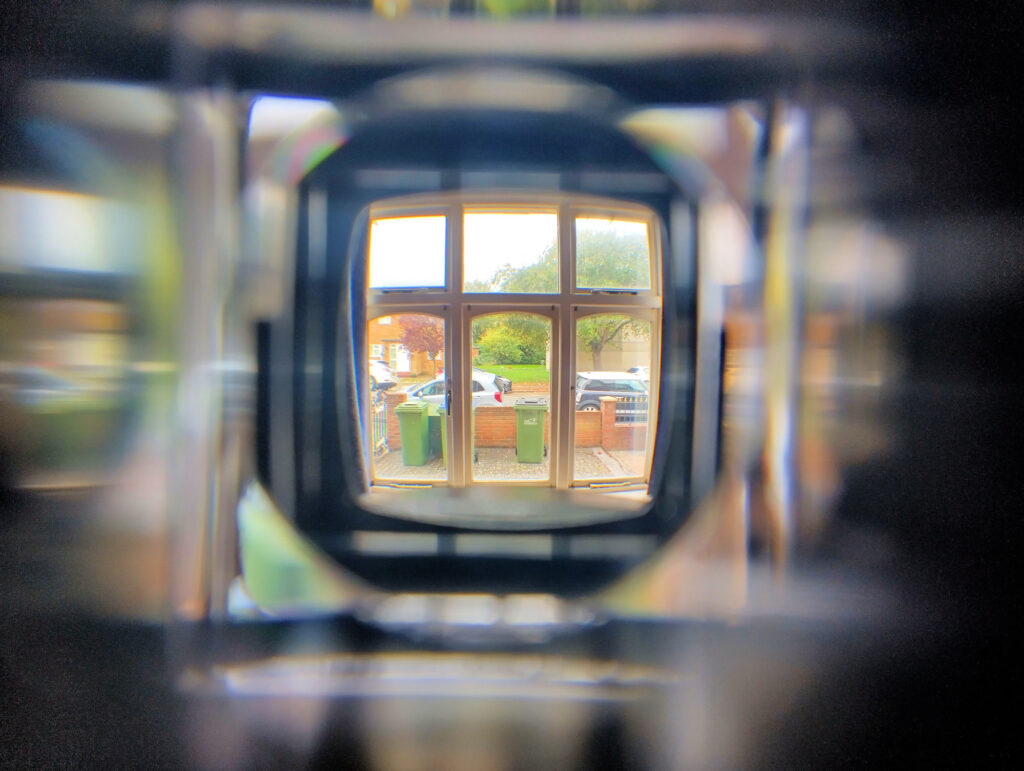
My gripe is that it doesn’t do the little Minigon XL lens justice.
While the viewfinder gives an idea of what will be included on the film (once you ignore the distracting tunnel sides), it is misleading about how it will look; as such, for me, it is not a good viewfinder. If I owned an LC-A 120, I would go looking for an auxiliary viewfinder or even a wire frame sports finder for the hot-shoe .
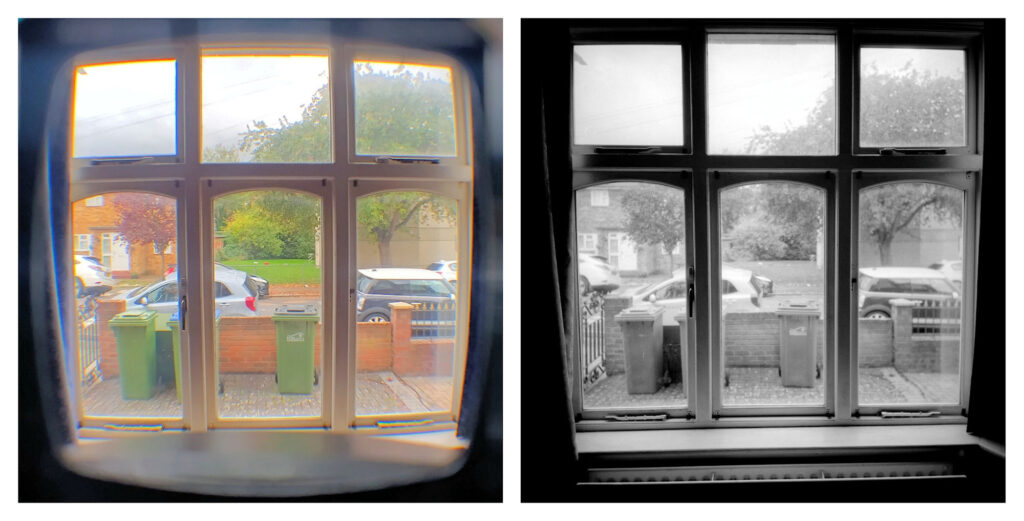
The craziness around the edge of the viewfinder is not enhanced by the bright red LED that shines out on pressing the shutter release – it is nice to have confirmation that the batteries are live, but this is a bit like someone shouting ‘GO AHEAD!’ loudly in your ear.
If you get a second red LED on the right of the viewfinder, the camera is warning you about low light. There is no indication in the documentation of what shutter speed the low-light warning comes on at, but my experiments suggest that it starts lighting up around 1/60.
This camera deserves a better viewfinder. It really should be possible to produce a viewfinder that gives a more accurate and distortion-free idea of what will be captured on film.
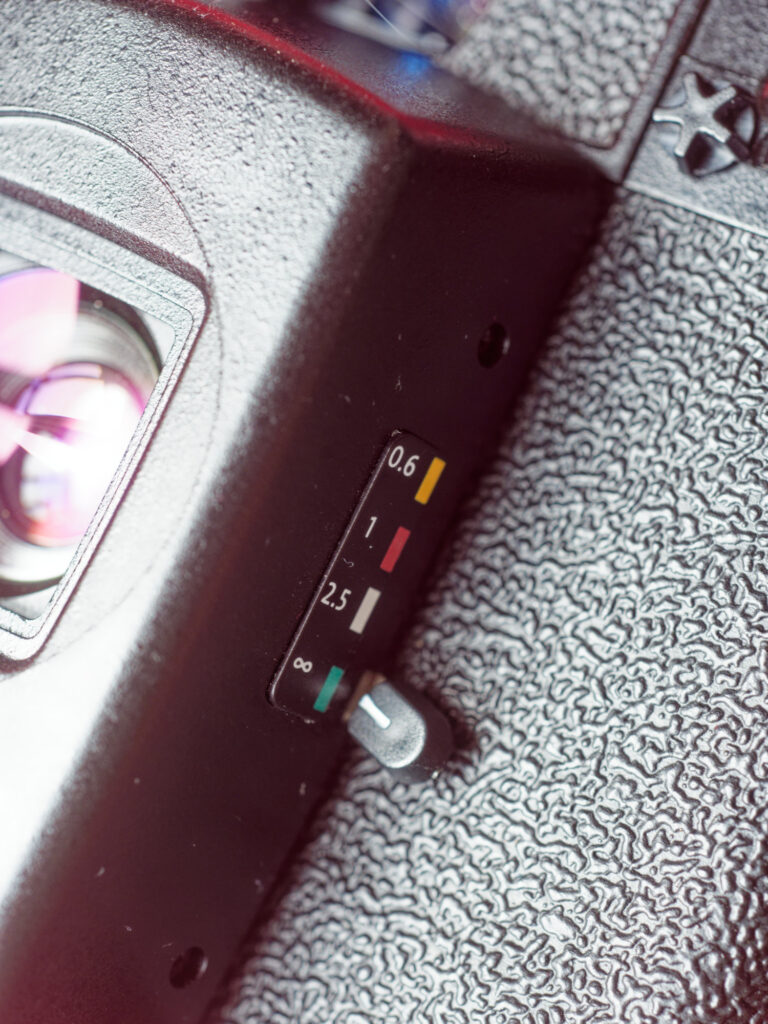
Another issue revolves around the zone focusing. Because the lens stays wide open for most shots, setting the correct focus zone is a bit more critical than you might expect from a lens this wide. I had a number of shots where the focus was off. The manual says that Depth of Field at f/4.5 for the Infinity ‘zone’ setting is from 4m to infinity, for 2.5m from 1.6m to 3m, 1m from 1m to 1.5m and 0.6m from 0.5m to 0.7m. You will have spotted that there are gaps. Unless the light is bright, or unless you fancy balancing the focus lever between zone stops, avoid placing subjects at 10ft, 5ft or 2.5ft.
After finishing the first draft of this review, I had the idea of trying another film in the LC-A 120 – this time a fast one and maybe pushing it a stop in order to get the camera shooting at 1/500 and a smaller aperture. Please see below for the results.
Some form of indicator in the viewfinder of what zone you are focused on would be a boon, and as it was a feature of the Cosina CX-2 that the LC-A series was originally based on, it should be possible.
The Big Issue
The Lomo LC-A 120 is (to my knowledge) the only affordable camera available for purchase new with a lens this wide in a film format this large. With a £200 price tag, this camera would be compelling. At £180 I’d buy one even though I don’t have a special need for it. The trouble is, it isn’t £200. A typical UK price is £399. For that sort of money, the LC-A 120 should have an accurate bright-line viewfinder with a focus zone indicator (and even then it might be over-priced).
Pictures
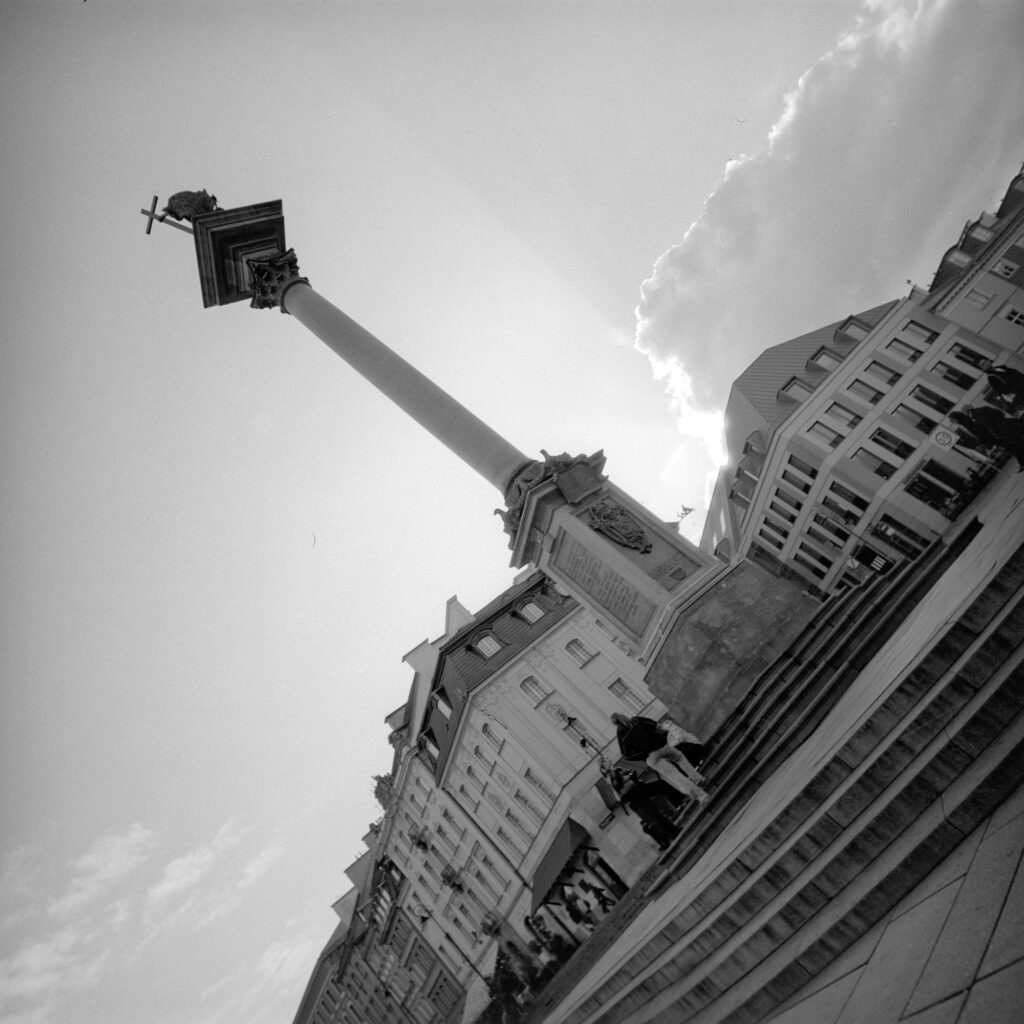
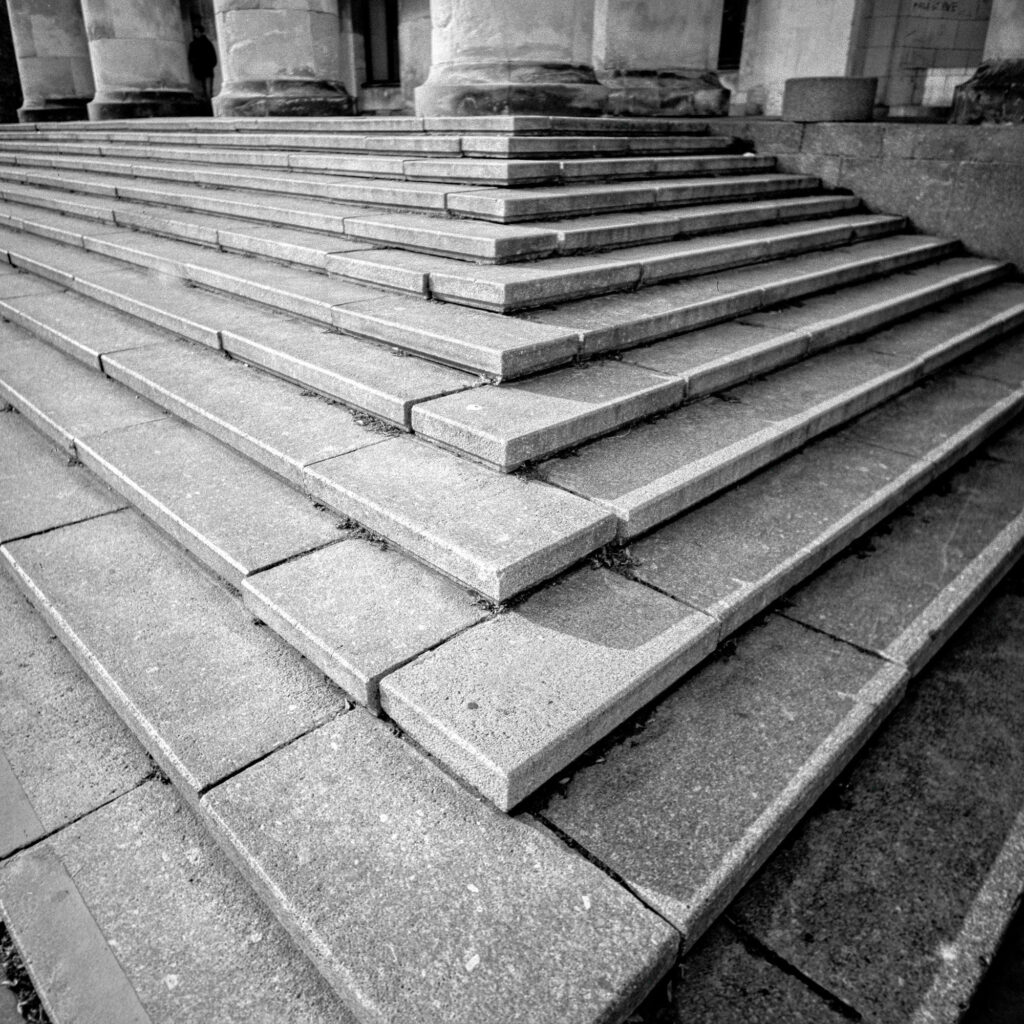
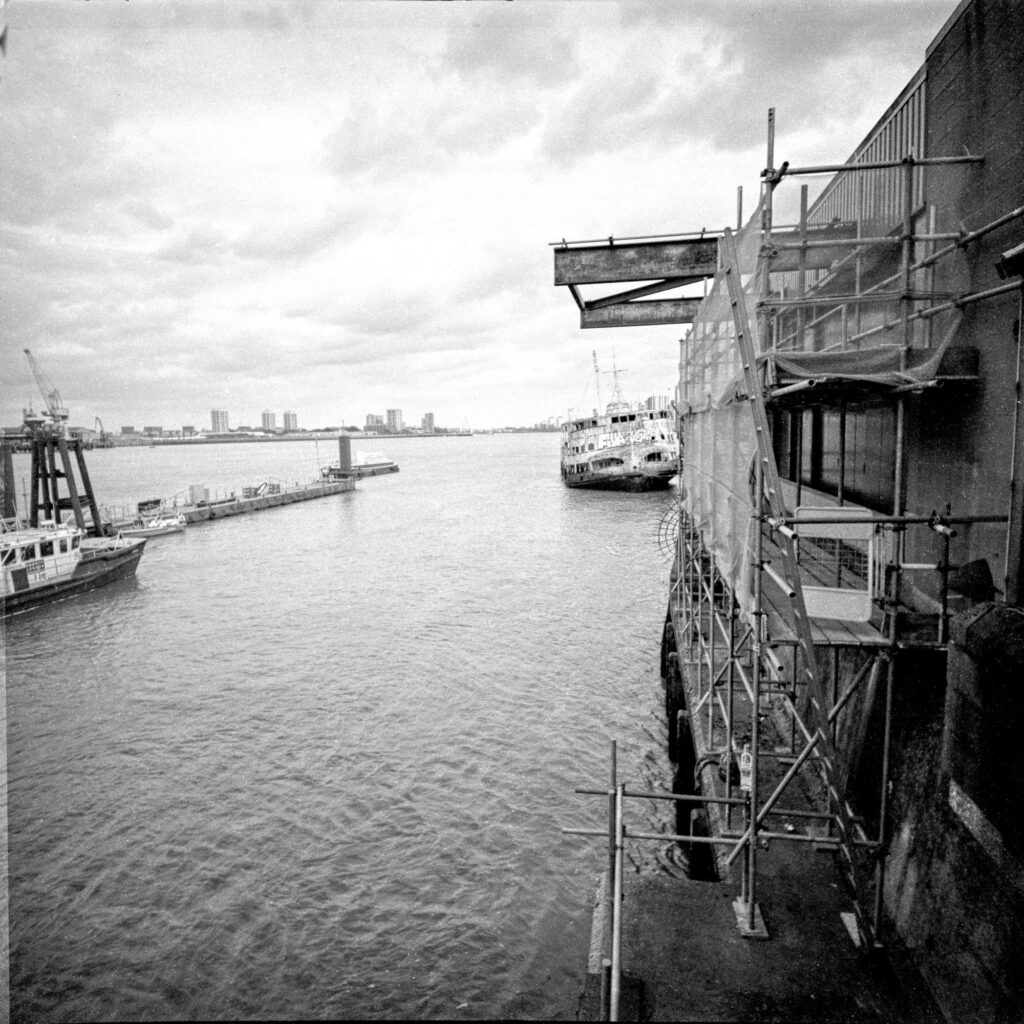
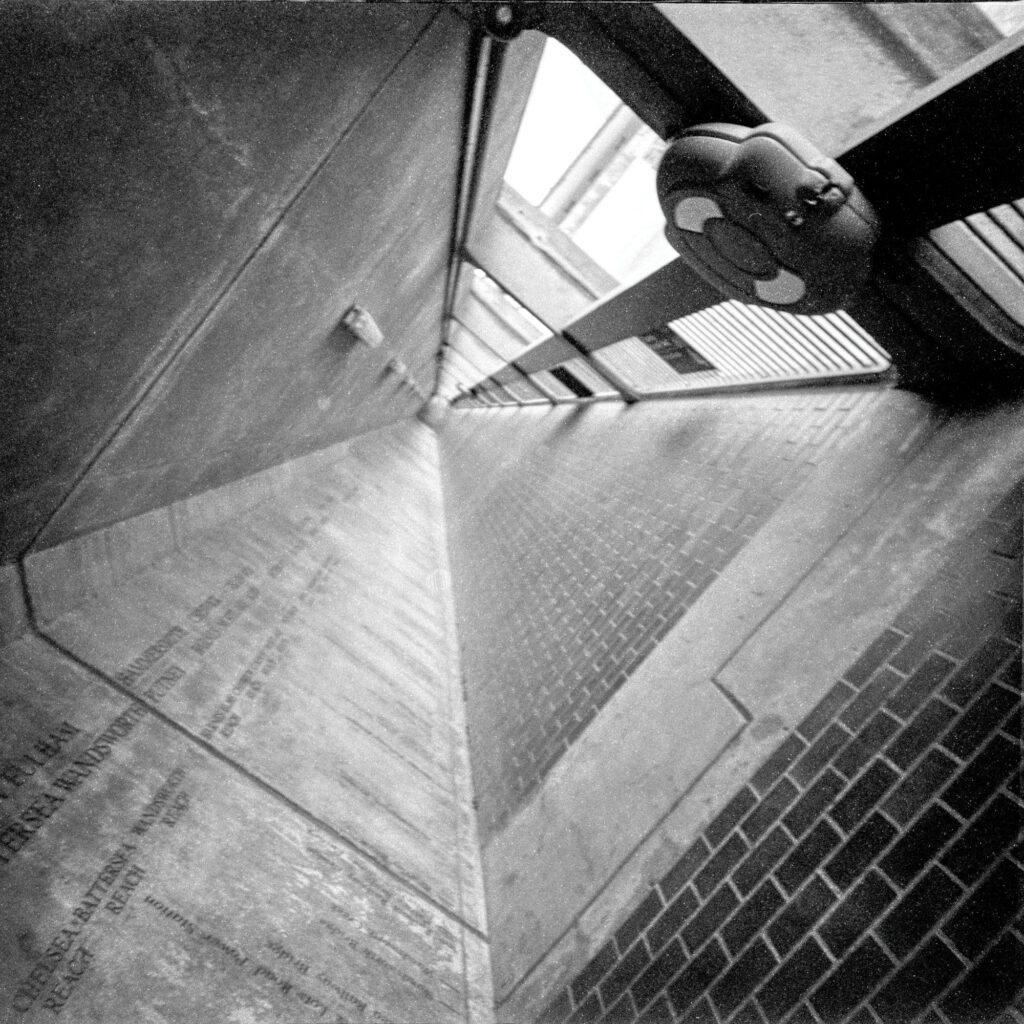
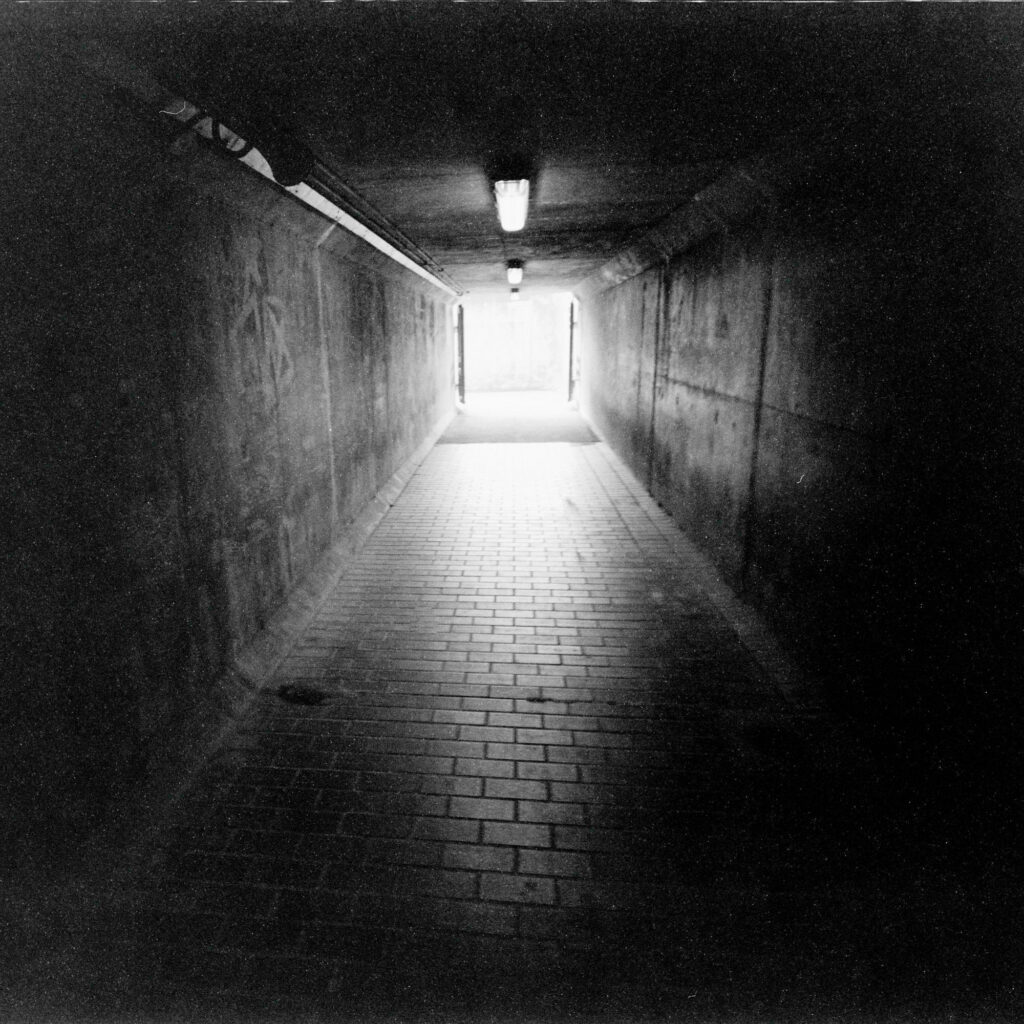
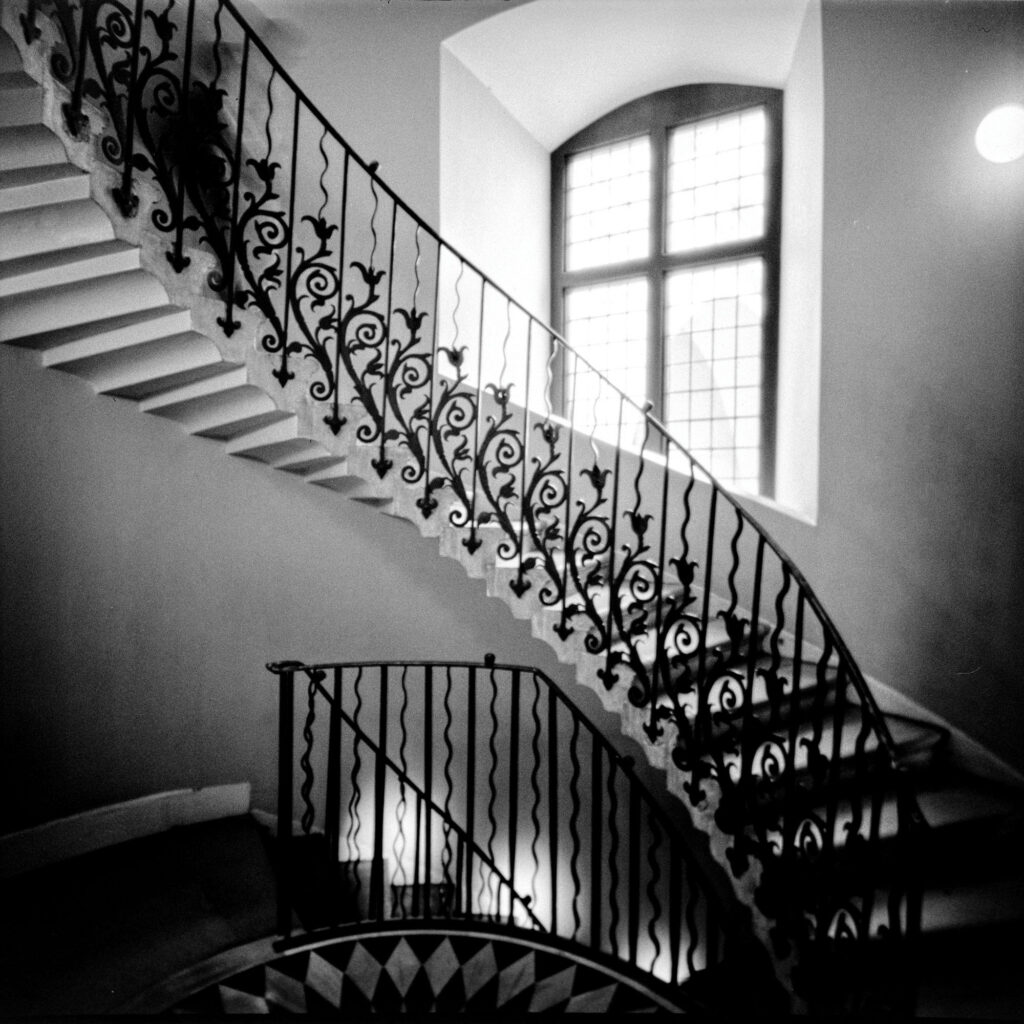
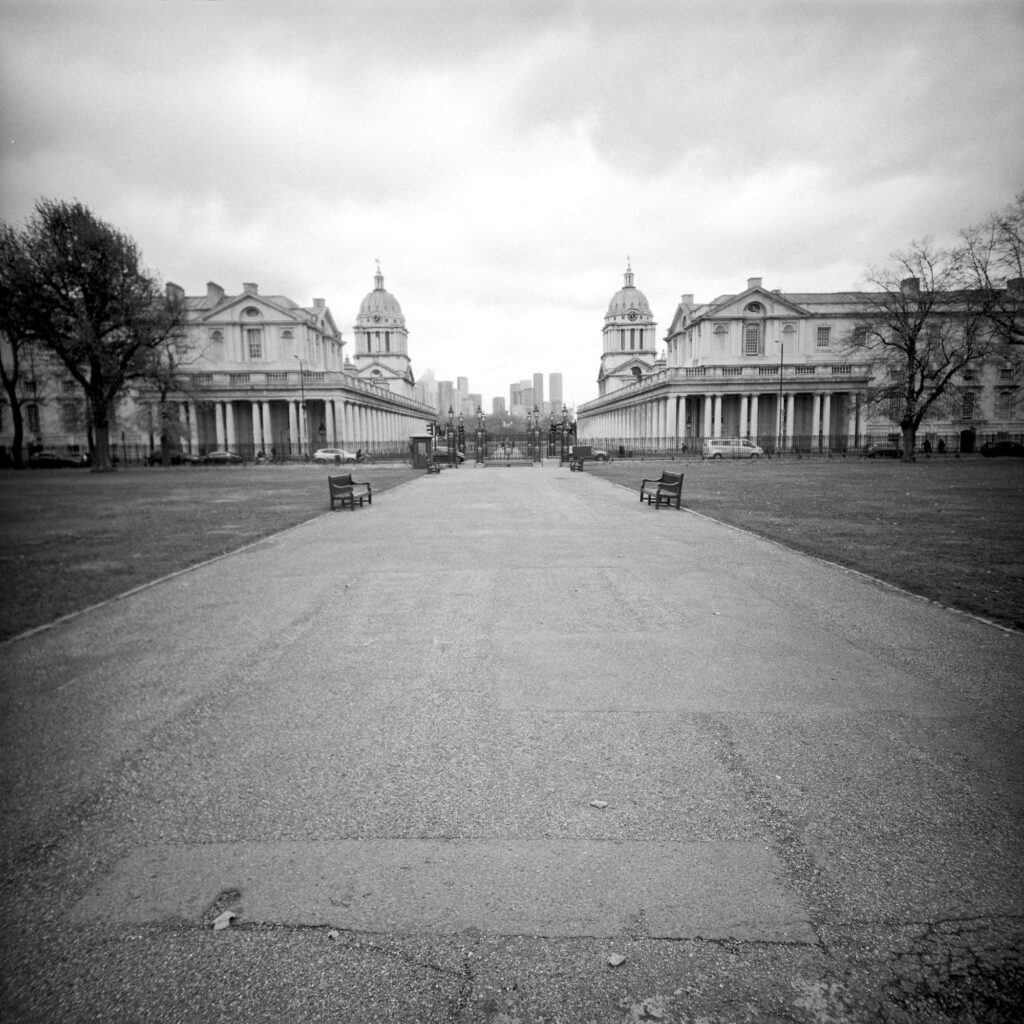
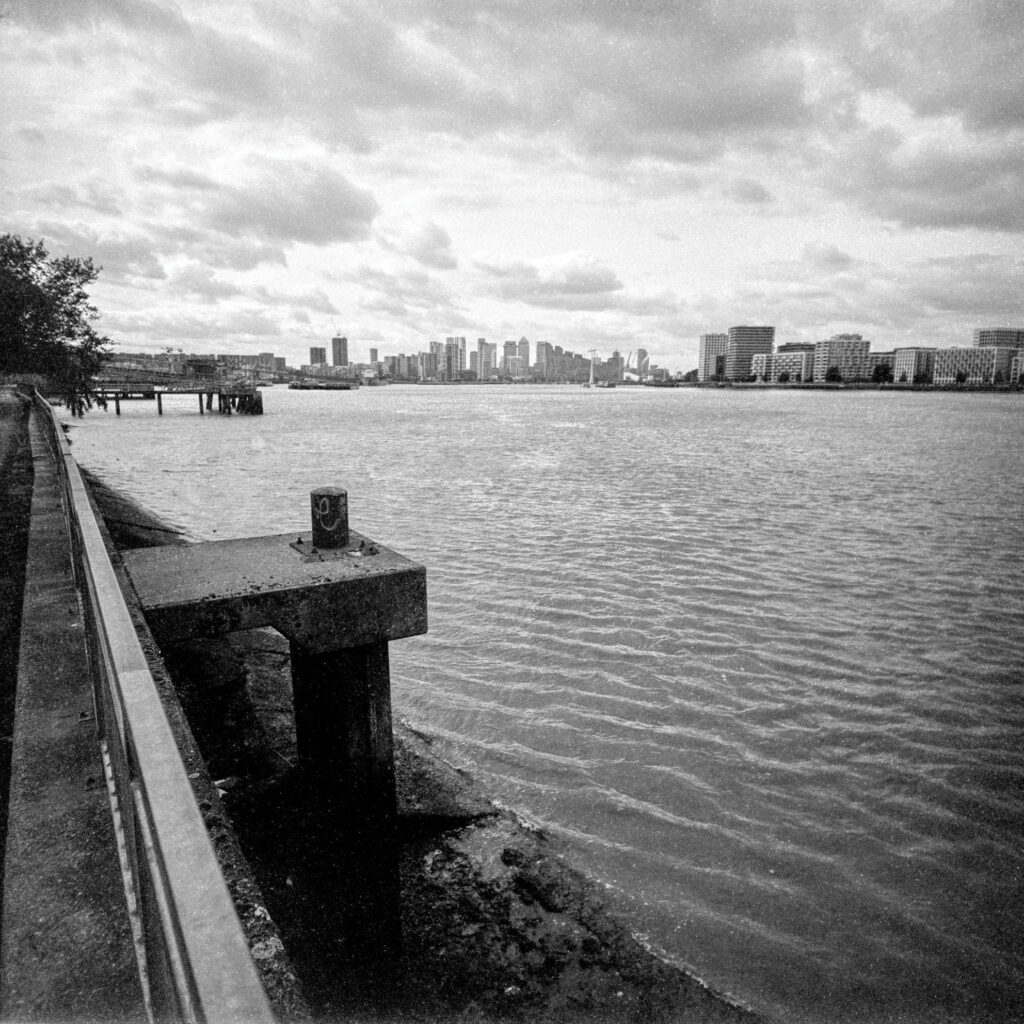
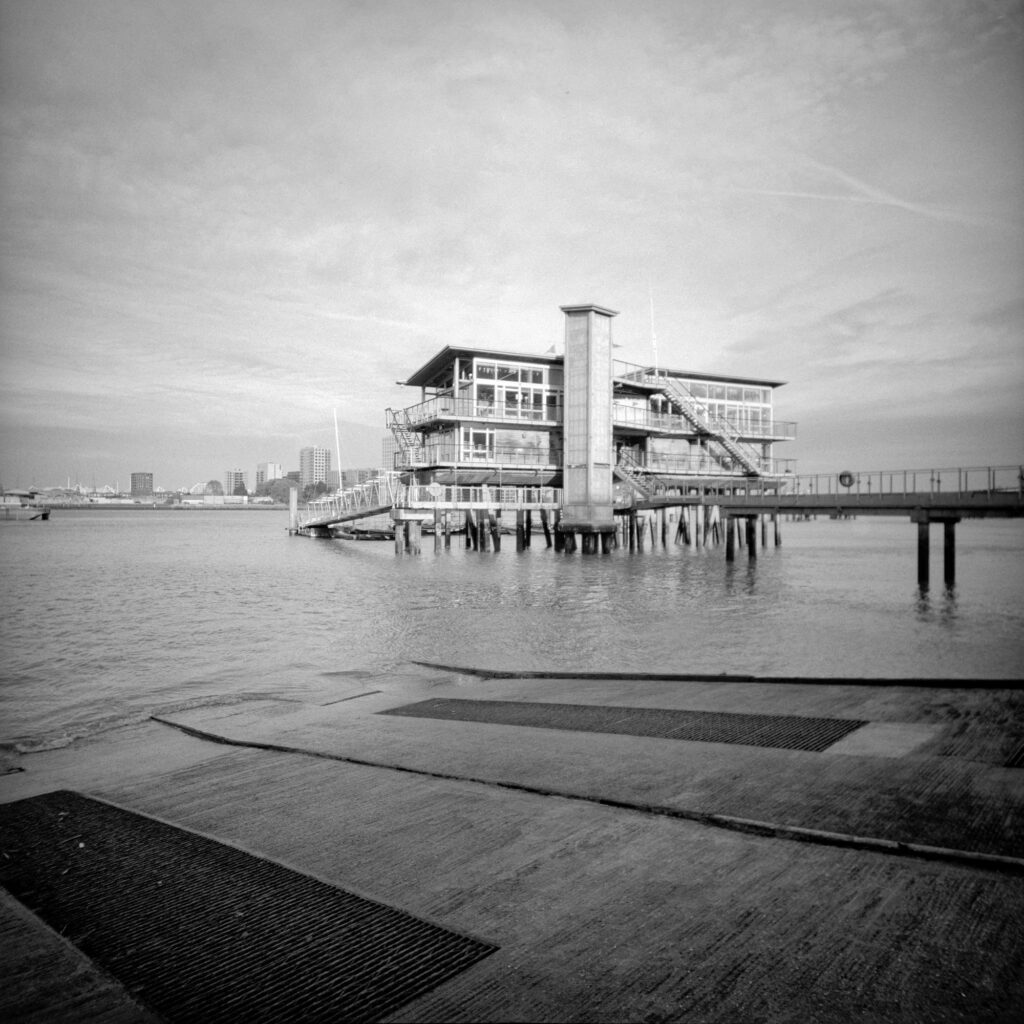
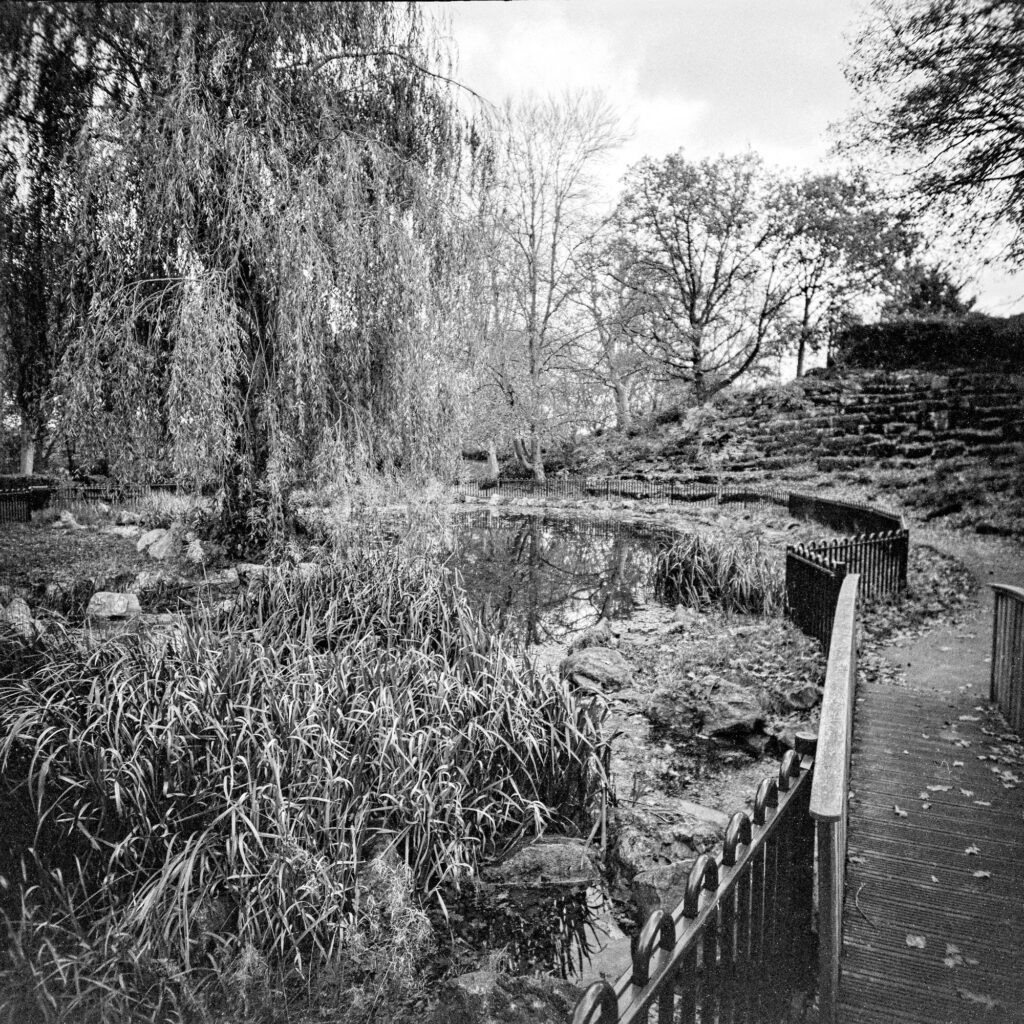
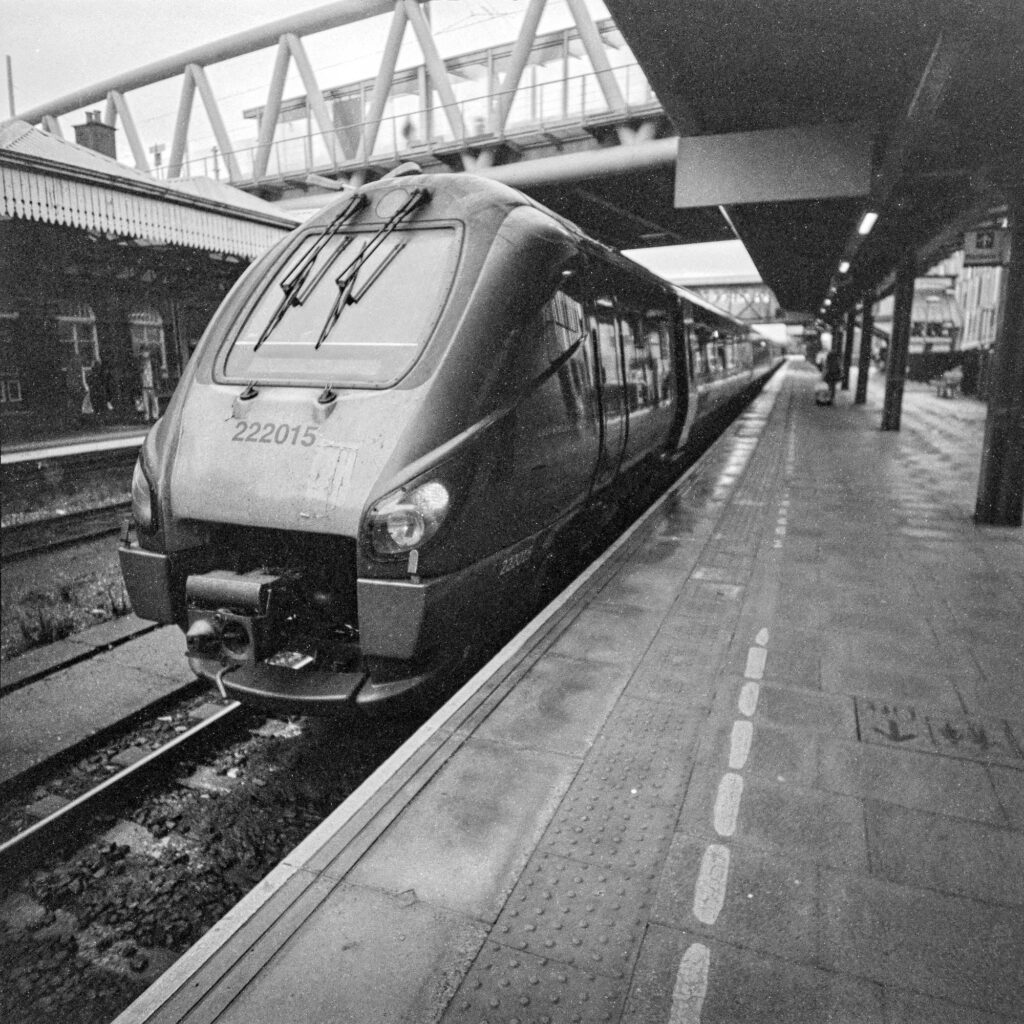
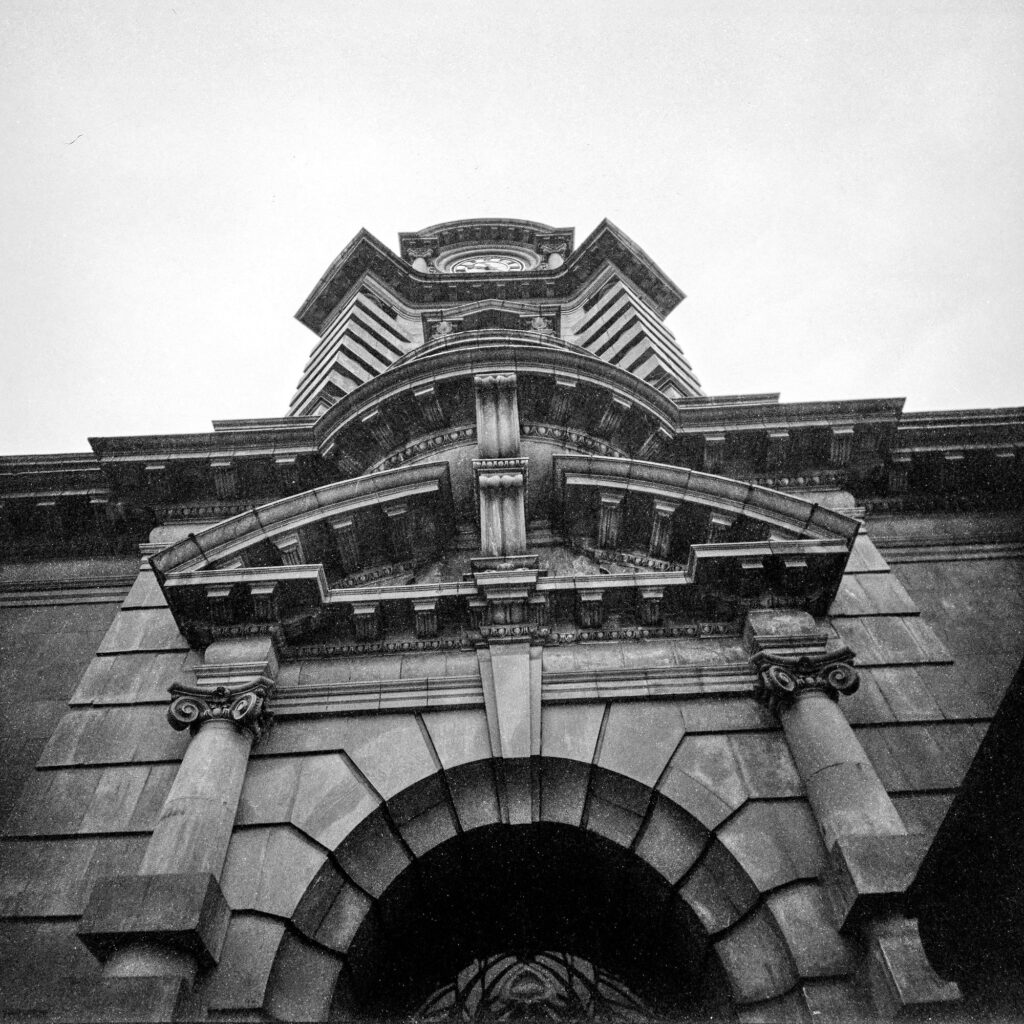
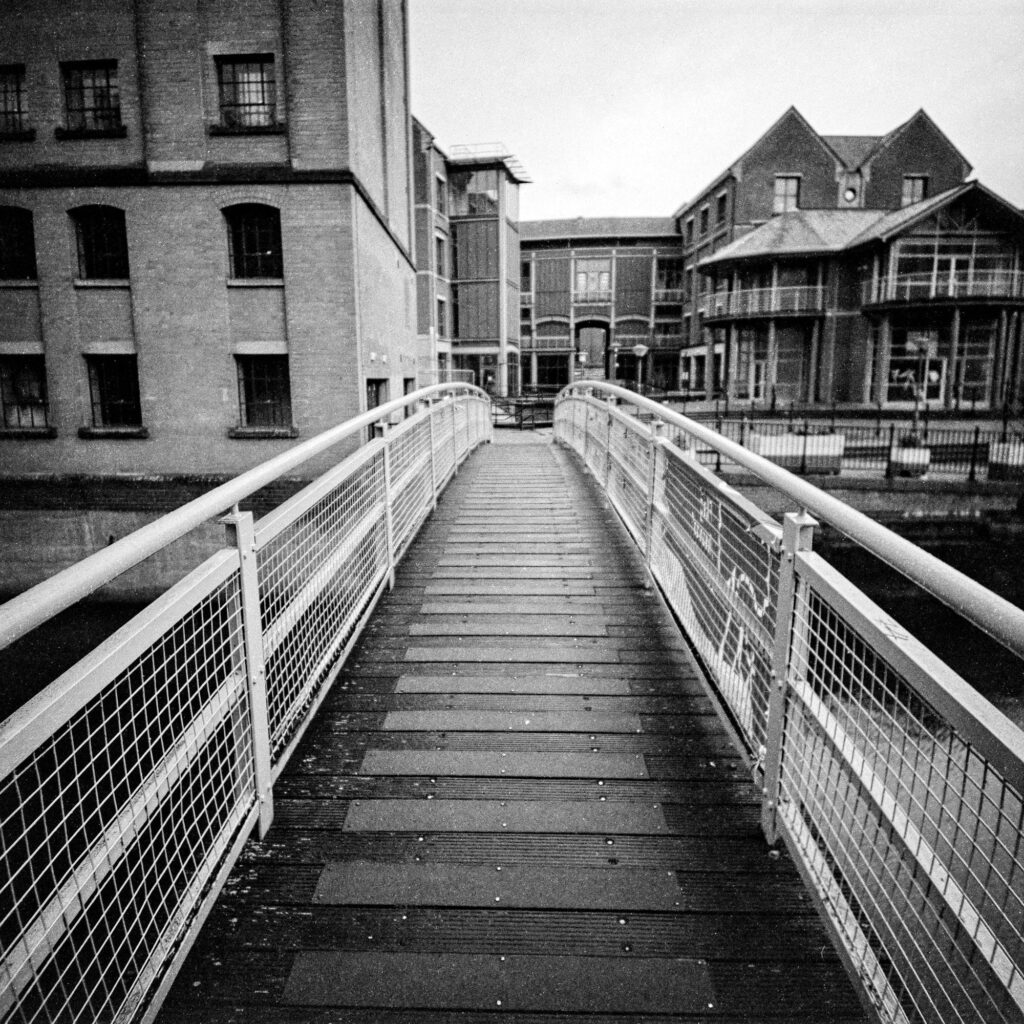
Photographs taken with Lomography Lady Grey shot at ISO 800
Summing up
Those of us with an interest in traditional photography owe Lomography (the company) a lot. They maintained an interest in the needs of the analogue community when others were running away.
In the LC-A 120 they have created an interesting photographic tool. The lens is genuinely wide and seems quite capable. But I’m not sure the camera has been aimed at the right people. The idea seems to have been to take a good lens and then force it to work wide open, where you might get the most aberrations and vignetting. I think the viewfinder certainly seeks to appeal to the artistic experimenter – the photographer who loves to incorporate distortion and dark corners, but I think those photographers may be disappointed by the lack of distortion and vignette in the resulting negatives. If I were shooting more with the LC-A 120, I think I’d tend to use it with higher ISO films to get more depth of field – the larger negative will not suffer too much from extra grain.
Maybe Lomography should produce two versions, one with a wackier lens and another with a better viewfinder and an exposure program that plays more to the strengths of the lens. I think that both should be way cheaper than £399.
Much as I like the LC-A 120 and could live with its idiosyncrasies, it is not realistically priced for a camera that is quite basic and which is, at times, less than a delight to use. Having said that, it is easier to carry than a medium-format SLR or TLR and is quicker to deploy than a folding camera taking the same format film. It also has a genuinely wide-angle lens.
Used interchangeable-lens medium-format cameras are available that take wide-ish lenses; these include relatively affordable cameras like the Mamiya C series (55mm f/4.5 on 6×6), and Mamiya Press cameras (50mm f/6.3 on 6×9). Fuji/Fujica/Fujifilm also produced a wide lens for the G690 (50mm f/5.6), and a fixed-lens 6×9 (65mm f/5.6) and some 6×45 (45mm f/4) ‘wide’ cameras.
I’d love to see the Minigon XL lens in a less compromised camera – even one with basic Waterhouse stops, a rudimentary manual shutter and a sportsfinder.
Share this post:

Comments
Michael Zwicky-Ross on LC-A 120 Review – A Lomo on steroids
Comment posted: 01/12/2025
Comment posted: 01/12/2025
Eric Norris on LC-A 120 Review – A Lomo on steroids
Comment posted: 01/12/2025
I agree with pretty much everything you say in your review. Yes, the cost is higher than it should be, but the LCA-120 is also a unique product--a light, durable, easy-to-use medium format camera with a very nice lens--so there's no competition to bring the price down. The closest cameras I own are the Lubitel 166 (images aren't as nice, harder to use, no meter) and the Fuji GA645zi (much more expensive, more functions, less durable, heavier). Neither hits the same lens/weight/durability-ease-of-use sweet spot that the LCA-120 does.
A few additional comments about the camera, based on my experience using it over the past five years:
I've found that the location of the first frame on the film varies greatly on different film stocks. I line up the arrows on the film about with the first metal roller, and that works for most films. I still lose part of the first frame sometimes, but loading as you recommend would potentially cause another problem (see my next comment). I'll have to check my version (it has film in it now), but I don't think mine has the indicator marks your does.
The frame spacing can be a little inconsistent. The LCA-120 also puts more space between the frames than other medium format cameras I've used, to the point where the last frame can be lost or overlap onto the paper backing.
Regarding the shutter button, I've learned that a slow, firm press works best. A quick press can lead to a situation where the shutter has fired once but the film won't advance (without using the MX switch). Pressing the shutter without covering the lens when this happens creates a double exposure. Then the film will advance. This is remedied by covering the lens and pressing the shutter (firmly) again. Once I learned to use a slower, firmer press this hasn't happened.
Finally, I added a hot shoe-mounted spirit level to the top of the camera. This allows me to shoot with camera at waist level (wide angle lens makes framing easy) while keeping vertical and horizontal lines straight.
Comment posted: 01/12/2025
Tony Warren on LC-A 120 Review – A Lomo on steroids
Comment posted: 01/12/2025
Comment posted: 01/12/2025
Alexander Seidler on LC-A 120 Review – A Lomo on steroids
Comment posted: 02/12/2025
Comment posted: 02/12/2025
Dennis Ng on LC-A 120 Review – A Lomo on steroids
Comment posted: 16/12/2025