

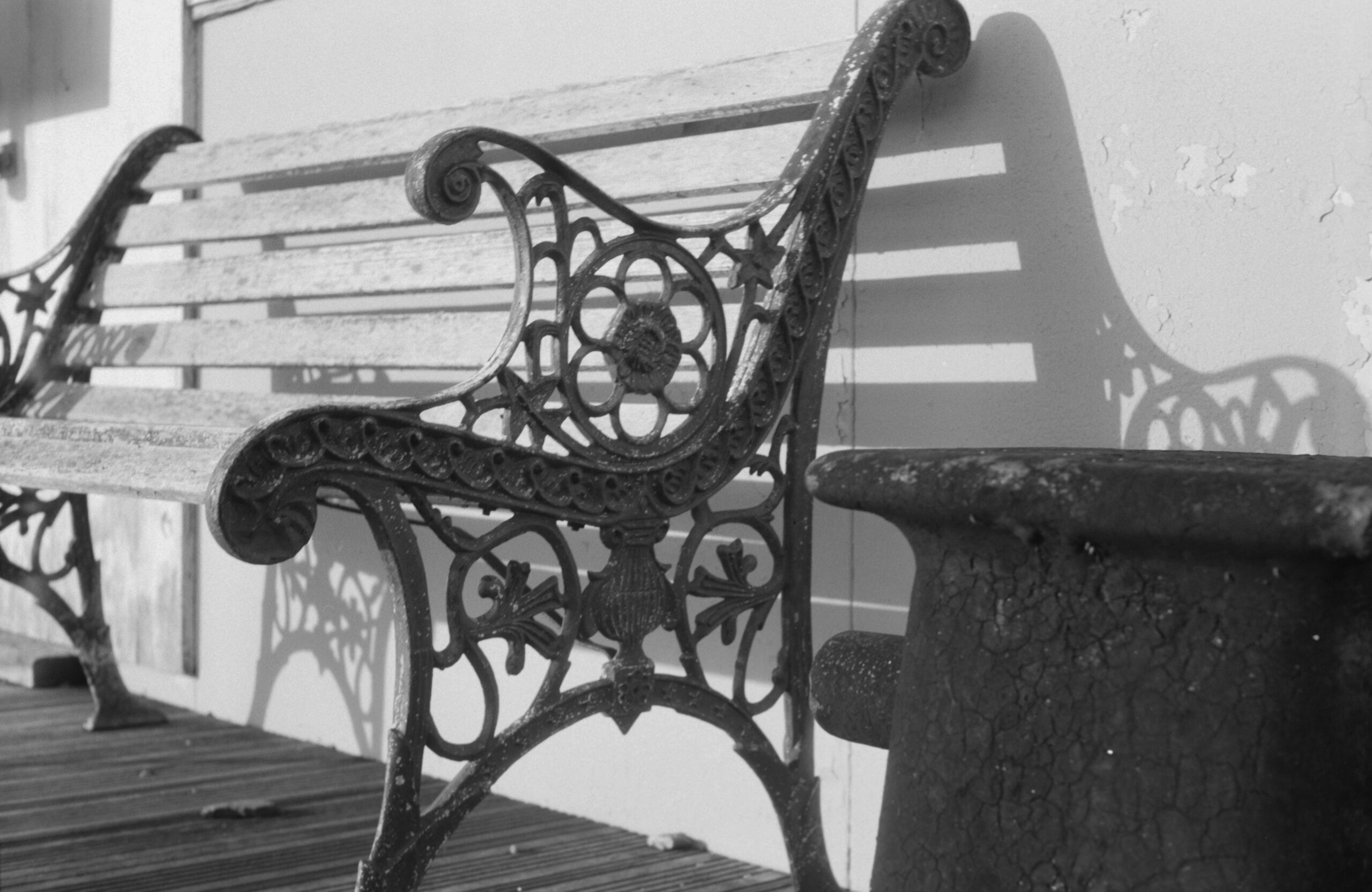
Voigtlander, oh Voigtlander, thou art but a cruel mistress. The Voigtlander Vito B is a marvellous camera that was produced between 1954 and 1959 giving it a relatively short production especially when you compare it to the Nikon F3 which was manufactured between 1980 and 2002! It is an incredibly compact camera that is not much bigger than a 35mm cassette making it easy to keep in the camera bag or carry around almost anywhere. I mean just look at it, would you not agree that it’s just so cute?
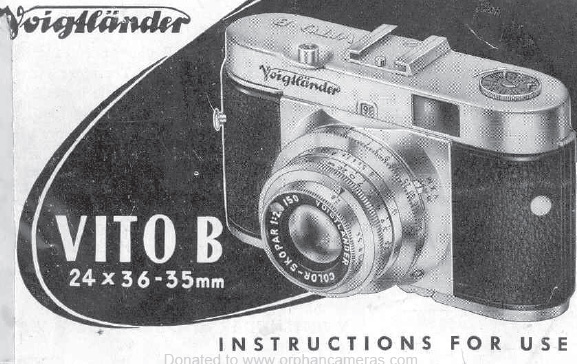
So why then do I call it a cruel mistress? Well simply because it is so hard for me to focus with it. It uses a rather classic zone focus system where you turn the lens to the distance of your subject and that’s it. The problem comes with the fact that the Vito B has an un-coupled viewfinder which makes gauging the distance and as-such the focus, rather difficult. Now for context, I am awful at judging how far away things are which is only slightly confounded when you take into fact that (as a British man) I work in meters while this copy of this German camera works in feet. Unfortunately not a match made in heaven. “Oh well” I think “how hard can it be?”. As it turns out, I took almost all of the images out of focus. But I had fun while doing it so who’s laughing? Not my wallet as you can probably guess.
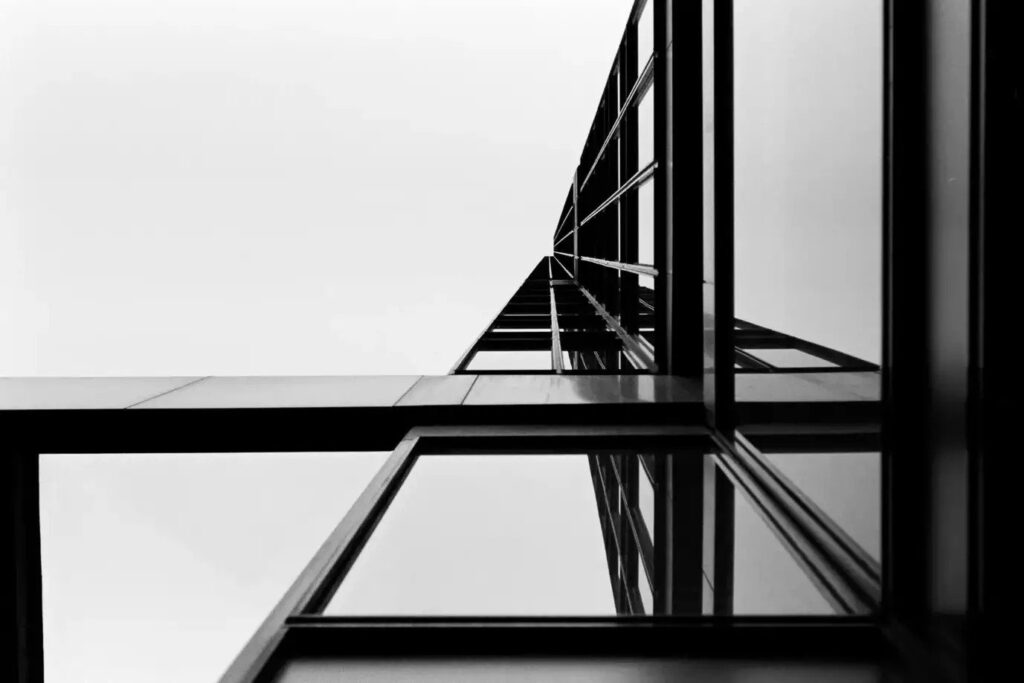
Do not fret, my dear reader, for I am done complaining though my issues with focusing will become prevalent throughout this article. But now that we have discussed the perils of focusing, let’s move onto a brighter topic – exposing the film. Because of the camera’s compact nature, Voigtlander had to omit certain features – like a lightmeter. While it would be useful to have one, I don’t actually mind its removal as there’s multiple ways around it. For example, you can find multiple light meter apps on your phone (I typically use my light meter pro if I don’t have my Gossen Lunasix on hand) or you can use an external one like the popular kex models, and if you are feeling particularly old fashioned, you can use sunny sixteen. For those of you who don’t know, sunny sixteen is a technique where you estimate the exposure based on the sun and the clouds. The rough premise is that you take your ISO, get the closest shutter speed to it and adjust the aperture based on how bright it is. For example, in the above image, I was using Fomapan 100 so I chose 100th of a second, and it was a sunny day with some cloud cover so I went for F8. This trick works incredibly well for a quick and easy reading and it means that you don’t have to take a lightmeter with you, keeping the camera light and compact. Plus it can save you if your lightmeter fails halfway through a roll of film.
Loading this camera is incredibly easy as it has got a little hinged door that swings open when you open the back, which allows you to slide the cassette in and out of the camera. After that, you load it in the same fashion as most other film cameras. Just be careful as it is possible to catch a bit of the film in the door if the cassette is not seated correctly, ask me how I know. However the Vito B has a trick up its sleeve. This is to say that it uses the film to cock the shutter instead of the film advance lever. A rather clever way to keep the size down, good job Voigtlander. It does come with the slight caveat that you can’t test the shutter without loading a film first. On the topic of the shutter, the Vito B has a decent if not slightly limited range of speeds going from one second to a maximum of 1/300th of a second which can make shooting in summer a tad interesting if you are using a 400 ISO film. Although it is rare in Britain to get a sunny enough day for such an issue.
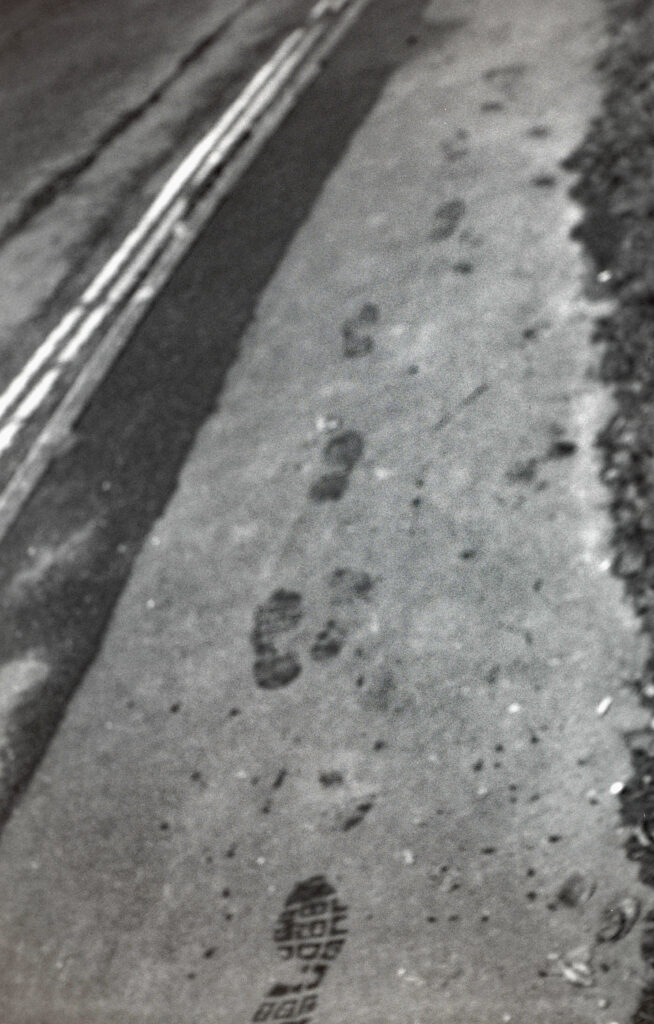
So would I recommend this camera? The answer is maybe. While it is a lovely machine with lots of charm, ingenuity and can create some beautiful images it is a bit lacking in areas and not having a coupled rangefinder is a bit of a diss-advantage in my opinion. With that being said, you can pick up a decent condition one for around £30 to £40 which is not a huge investment and it’s rather bare bones, stripped down style is a lot of fun to shoot. It forces you to slow down even further and really think about the image; after all isn’t that what we use film for? To slow down the ever-increasing motorway we call life?
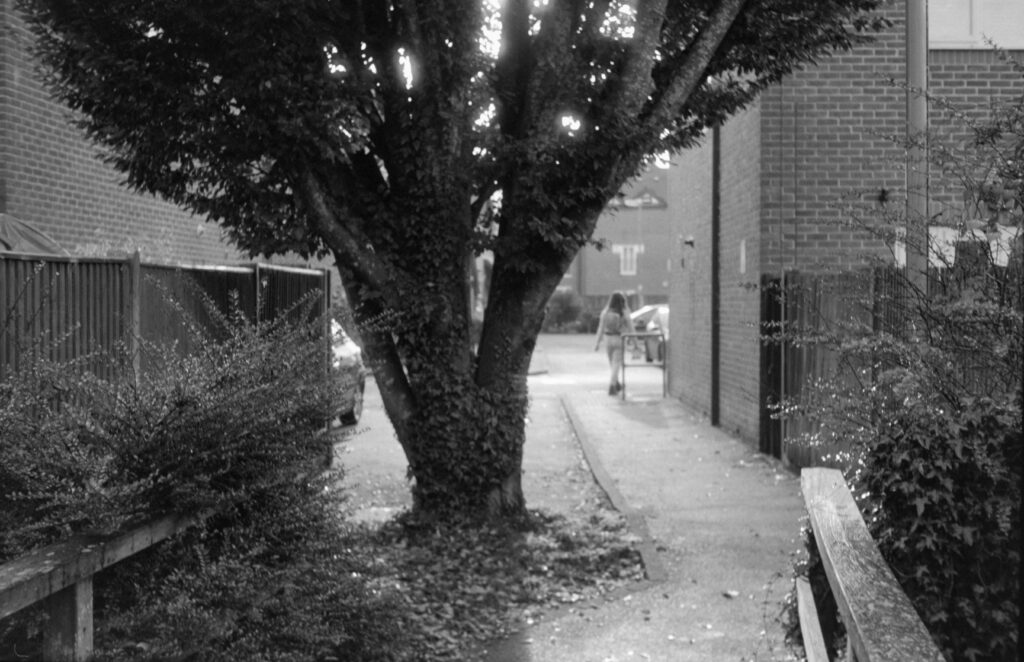
Thank you for reading my ramblings, I am going to heat up my cup of tea as it seems to have gone rather cold while writing this. Might have to open a pack of chocky biscuits too. If you like my work then you can find my full Flickr stream here (most of the images are in focus I swear) and my instagram here. Once again, thank you for reading, have a wonderful day and Happy shooting.
Share this post:

Comments
Gary Smith on Voigtlander Vito B – a Recondite Romance
Comment posted: 04/06/2026
From looking at your Flickr posts, it seems that you're able to get things in focus easier with your Z6.
Thanks for your article! Anyone thinking about a Voigtländer VITO should know that focus is possible as evidenced by Alastair's article's bench shot above.
Comment posted: 04/06/2026
Martin on Voigtlander Vito B – a Recondite Romance
Comment posted: 04/06/2026
Just two things I'd like to mention, it has two snapshot markings on the distance scale, a triangle around 10 ft (a bit over 3m at mine) and a circle just after 20ft (7m). And you can test the shutter withou loading film by rotating the gear above the film gate until you hear the click and the shutter is cocked. Your fingernails won't thank you for repeated tries and it returns back when did not go far enough - a cruel mistress she is indeed.
There is an easy way to check at least infinity with a second camera (SLR) with a known good infinity setting
https://youtu.be/5VxW_-qDmIs?si=Y31PXSBDYkCX0pmp&t=401
Thanks for the review and good luck with Vito.
Comment posted: 04/06/2026
Ibraar Hussain on Voigtlander Vito B – a Recondite Romance
Comment posted: 04/06/2026
I do find focussing with scale focus cameras easy. Judging distance I base on classic human elements - 1 pace = 1 yard = 3 feet ~ 1 metre. So @f8 on a 50mm lens it’ll be from 6 paces to infinity.
From tip of my nose to the tip of my outstretched arm fingertip is 1 yard - 3 feet ~ 1 metre, so quite simple to just measure and shoot wide open if you want a blurred background for a subject at 3ft. All these are on the lenses
I wrote about this in a few articles here such as this with a Balda CA35 Minox type scale focus camera https://www.35mmc.com/09/06/2025/balda-ca-35-a-fantastic-little-camera-shot-with-kodak-eastman-double-x-5222/
Comment posted: 04/06/2026
Comment posted: 04/06/2026
Comment posted: 04/06/2026
Comment posted: 04/06/2026
Comment posted: 04/06/2026
Comment posted: 04/06/2026
Michael Jardine on Voigtlander Vito B – a Recondite Romance
Comment posted: 04/06/2026
I left it behind on public transport a couple of years ago when I was preoccupied, and I very much hope that whoever picked it up has been inspired to go full fundamentalist on strictly analogue film photography, but somehow I doubt it.
Thanks for the memories, and good luck!
Comment posted: 04/06/2026
Tony Warren on Voigtlander Vito B – a Recondite Romance
Comment posted: 05/06/2026
As to your distance problem, either follow Gary and get a coupled rangefinder version, get yourself an accessory rangefinder for the accessory shoe or use the zone markings Ibraar pointed out.
As for metering, there is the Vito BL for that which has a meter built in to the same body or go the whole hog and get a Vitomatic, only a little bulkier but with all the bells and whistles and a fantastic viewfinder. I have never had a B but two BLs and two IIas, the folding version - even more pocketable - plus a Vitomatic IIa.
Your feature image I think is typical of the quality you can expect from these lenses. I have never come across a bad one on a Voigtländer.
Comment posted: 05/06/2026
davesurrey on Voigtlander Vito B – a Recondite Romance
Comment posted: 05/06/2026
When my girlfriend saw the B she thought it was cute so it's now on display in her home.
If I weren't reducing my camera collection I would see if I could hunt a working version.
Comment posted: 05/06/2026
Erik Brammer on Voigtlander Vito B – a Recondite Romance
Comment posted: 05/06/2026
A friend of mine recently kind of inherited one on unlimited loan. At first, and even now every single time it’s been sitting around for a few days, the coupled aperture and shutter speed mechanism seems to be stuck and requires a some mild force to get moving. Otherwise it seems to be working fine, the first roll soon completed to then be developed.
Otherwise I fully agree with the crowd here: It’s a damn cute little thing!
Comment posted: 05/06/2026
Walter Reumkens on Voigtlander Vito B – a Recondite Romance
Comment posted: 05/06/2026
Comment posted: 05/06/2026
CHRISTOF RAMPITSCH on Voigtlander Vito B – a Recondite Romance
Comment posted: 05/06/2026
Comment posted: 05/06/2026
Jeffery Luhn on Voigtlander Vito B – a Recondite Romance
Comment posted: 05/06/2026
A cute camera, for sure. I have a few viewfinder zone focusing cameras and I'm okay with them. My smallest 35mm rangefinders are the Zeiss Contessa and Kodak Retina III, and the rangefinder is worth the extra cost. Sure, grab shots on trips and hiking can be gotten on a viewfinder, but portraits are problematic. Here are some tips I find useful.
1- String theory method. You get some twine and tie knots at the close ranges you are uncomfortable with. You have the subject hold the string up to their nose for the distance measurement. After while, you won't need the string. It's also a good way to check thr focus on your camera.
2- Take an SLR camera with you and guess at various distances. Check your accuracy on the camera. A month of this and you'll be quite proficient.
When I was in the photo program at Laney College in Oakland, the department head, Bill High, would test us on measuring distances by eye. He also tested us on guessing light readings. We had to achieve high accuracy! We learned large format on Speed and Crown Graphic cameras. It was essential!
Comment posted: 05/06/2026