

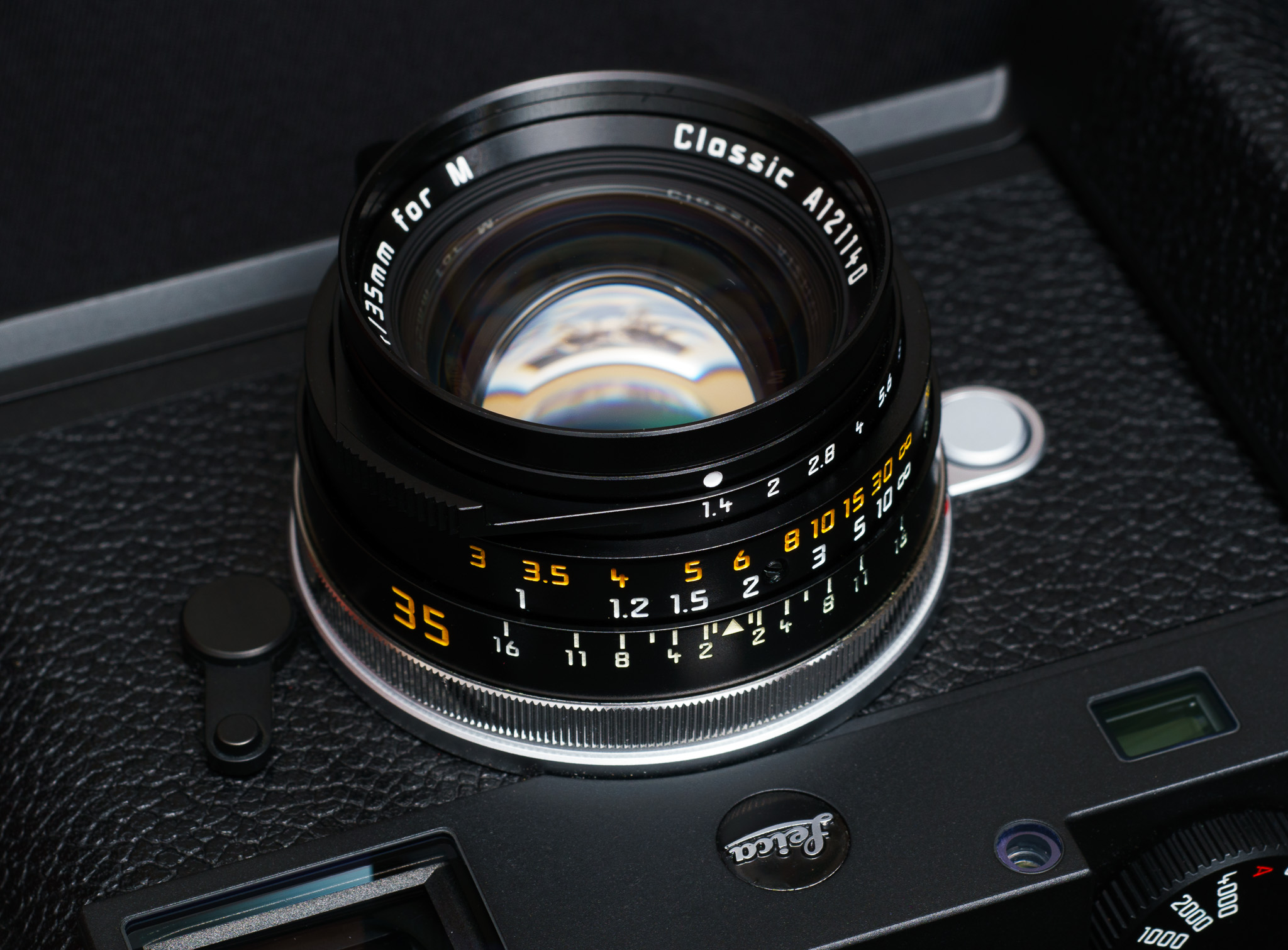
I found myself at an odd place without a 35mm lens for my digital rangefinder. Very odd for me, since that is by far my most used focal length, and I had volunteered to do news assignments for a pair of weekly papers. So I asked if I could review the Artizlab Classic 35mm f/1.4 for M, which is a collaboration with Funleader. What attracted me most was the small size, as I do not want my Leica M11 digital rangefinder kit to attract attention. The exterior of the lens is modeled after the first Leica Summilux 35mm/1.4, so very small, but the optics are more modern, without going aspherical. Potentially a nice combination for an affordable lens.
This is the second batch of these lenses and they have made some tweaks from the first round, and though it is not officially a version 2, I’m calling it that to distinguish it from the previous one. According to Funleader they have improved the rangefinder patch alignment at infinity focus, given it a “smoother focusing resistance for a more refined handling feel,” and “a better-fitting mount that makes it easier to use on film cameras without being too tight.”
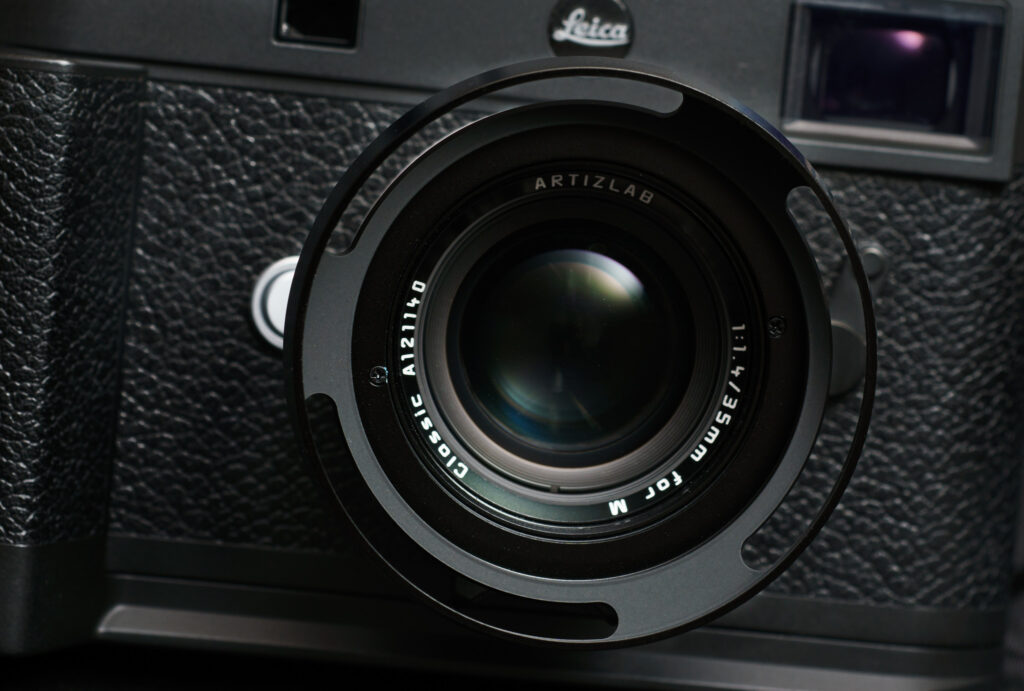
When the Artizlab Classic 35mm f/1.4 arrived I was impressed by the nice packaging and the solid feel of the lens. I chose a black one, and it is also available in silver. The lens hood is also a replica of the original, right down to the series VII filter being held within it, and not actually screwing onto the lens. This style of hood is notorious for getting bent easily, so I did not use it until I decided to keep the lens or not. They make the hood with filter available separately for those that have the original Leica lens and need a replacement.
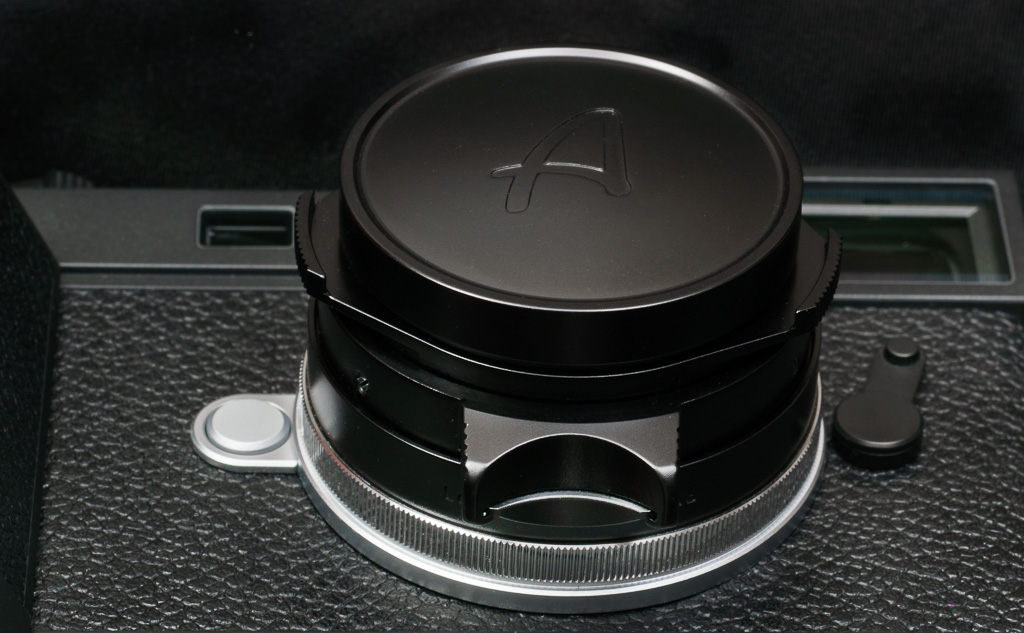
Also a throwback to one of the early Leicas is the focus lock – a button built into the bottom of the focus tab (above). While it was natural to press against it while using the focus tab and really never locked me out at a bad time, it is completely unnecessary being an M-mount and not a screw mount lens. The textured silver ring provides plenty of area to grab when mounting or dismounting the lens.
I did find the Artizlab Classic 35mm f/1.4 focus tab to get in the way when I was taking vertical images, I have the same issue on any lens that has one, but it has to be there as a tradeoff of keeping the lens small without a knurled focus ring. The focus was a bit stiff right out of the box, but after some use has loosened up just a bit and find it really nice to use. The aperture ring is nice and clicky, and I have also been impressed with the way the metal slip on front lens cap has stayed in place while the lens is in my bag, and does not come come off until I take it off.
As usual on 35mmc, this is not technical review of this lens, but a real world assessment. For an excellent technical review please see Bastian Kratzke’s review on Phillipreeve.net, keeping in mind he was using a version 1, so some results might have changed. I relied on his findings on the distortion, so all images in my review have +5 applied in the Manual Lens Correction in Lightroom as he suggested. That +5 correction will be cropped out of all but this first image (white area around image below) so you can see what that means in real world use:
What about the f/1.4 Bokeh already!
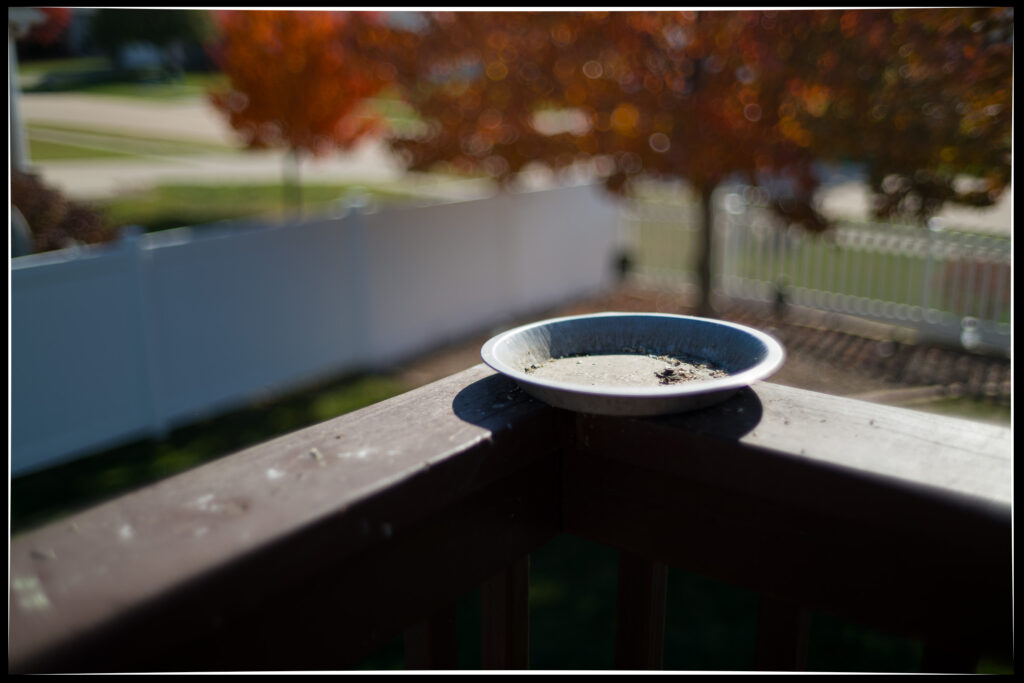
I’m not often a wide open -lux photographer so going to leave thoughts on the bokeh to you, as well everyone seems to have their own taste in the matter. This full-frame photo of the bird feeder on our deck is at the close focus point of 33” / .84cm and wide open at f/1.4. I was happy at only the slight bit of vignetting as seen here.
I did like the wide open spherical aberrations “glow” to add some feeling to our Boxerdoodle Guinness taking a mid-day nap in the sun:

The glow did subside pretty quickly when stopping down, so nice to have a couple brushes to use in the same lens. One more wide open for your review:

On Assignment
My first assignment with this lens was to get a photo with the fall colors starting to show. The Artizlab proved to be plenty sharp and did great at f/8:
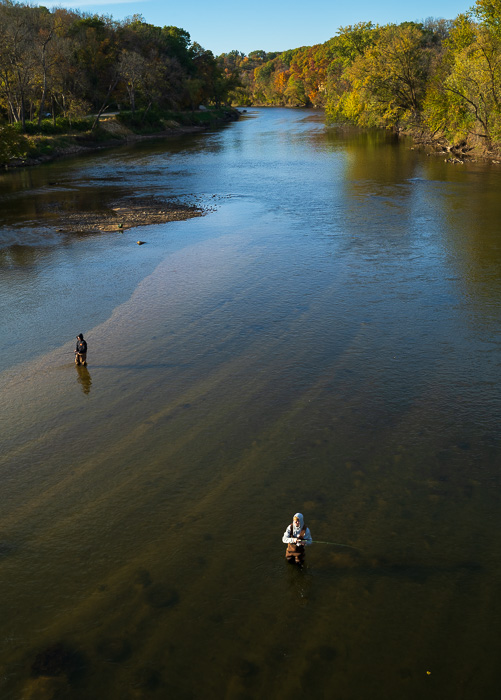
Next was a dress rehearsal for a high school play. I took all these at f/5.6:

I love the flexibility of this focal length – this moment where they were trimming the wig I really should have used a 50mm, but did not want to risk missing it so made a big crop and this lens worked great:


On stage during a microphone check I noticed a bit of flare while looking towards the lights so quickly slipped on my electronic viewfinder (EVF) and composed the flare where I wanted for a nice effect. An expensive high tech lens would probably not give something interesting like this to work with:

Next assignment was an outdoor live nativity. Again at f/5.6 I took advantage of the flaring:
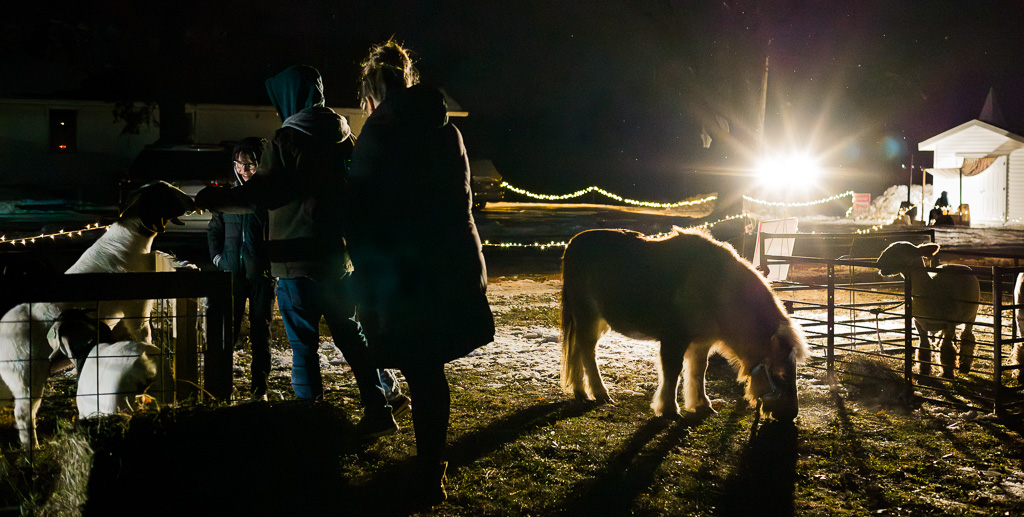
And photographed this shepherd with her bunny at f/2.8:

Focus Shift with Optical Rangefinders
You have probably noticed most everything above was taken at f/5.6. When processing my photos early on I was surprised to see I kept missing focus at my normal f/2.8-4 range. All the video reviews I had seen of this lens mentioned no issues. Then I took another read of Bastian’s article and saw I had missed his findings about the lens’ focus shift. If you are considering the Artizlab Classic 35mm f/1.4 for use on a camera with an electronic viewfinder then this will not be an issue for you at all as your camera is live view, and not mechanically dependent on the rangefinder focus cam, etc.
However, if you are an optical rangefinder photographer be aware. A lot of lenses have focus shift which is when the sharp point of focus for the lens changes depending on the aperture. In practical terms if you nail the focus with the optical rangefinder in the viewfinder at f/1.4 it will be sharp at the point where you focused in the photograph because the lens seems calibrated at that aperture. However, at f/2 there is a slight shift backwards so your point of focus will be a bit behind where the optical rangefinder showed was the sharp point. And then at f/2.8 there is a larger shift, with another good bit at f/4.
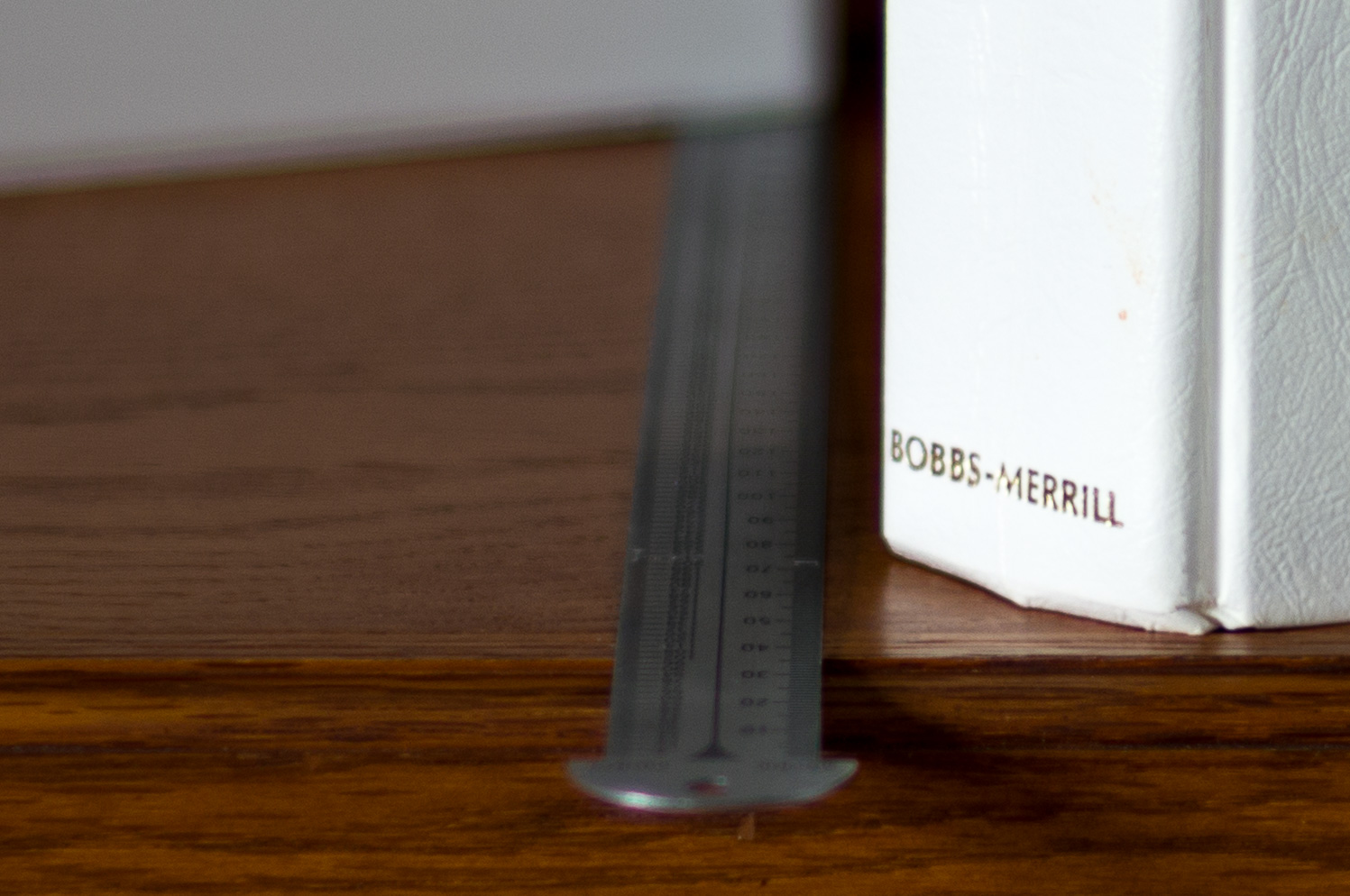
I did some tests with the camera locked down on a tripod and this one I’m sharing is from back a ways from the minimum focus distance, so a very large enlargement of the center of the frame from my 60mb Leica M11. In the first image below at f/1.4 the focus is at the front edge of the book which fell at about 45mm on the pica pole:
By f/4 the focus point has shifted to about 140mm on the pica pole even though I did not move the focus ring and had only changed the aperture. Looking through the viewfinder at the optical rangefinder it still read as the front edge of the book was the point of focus:
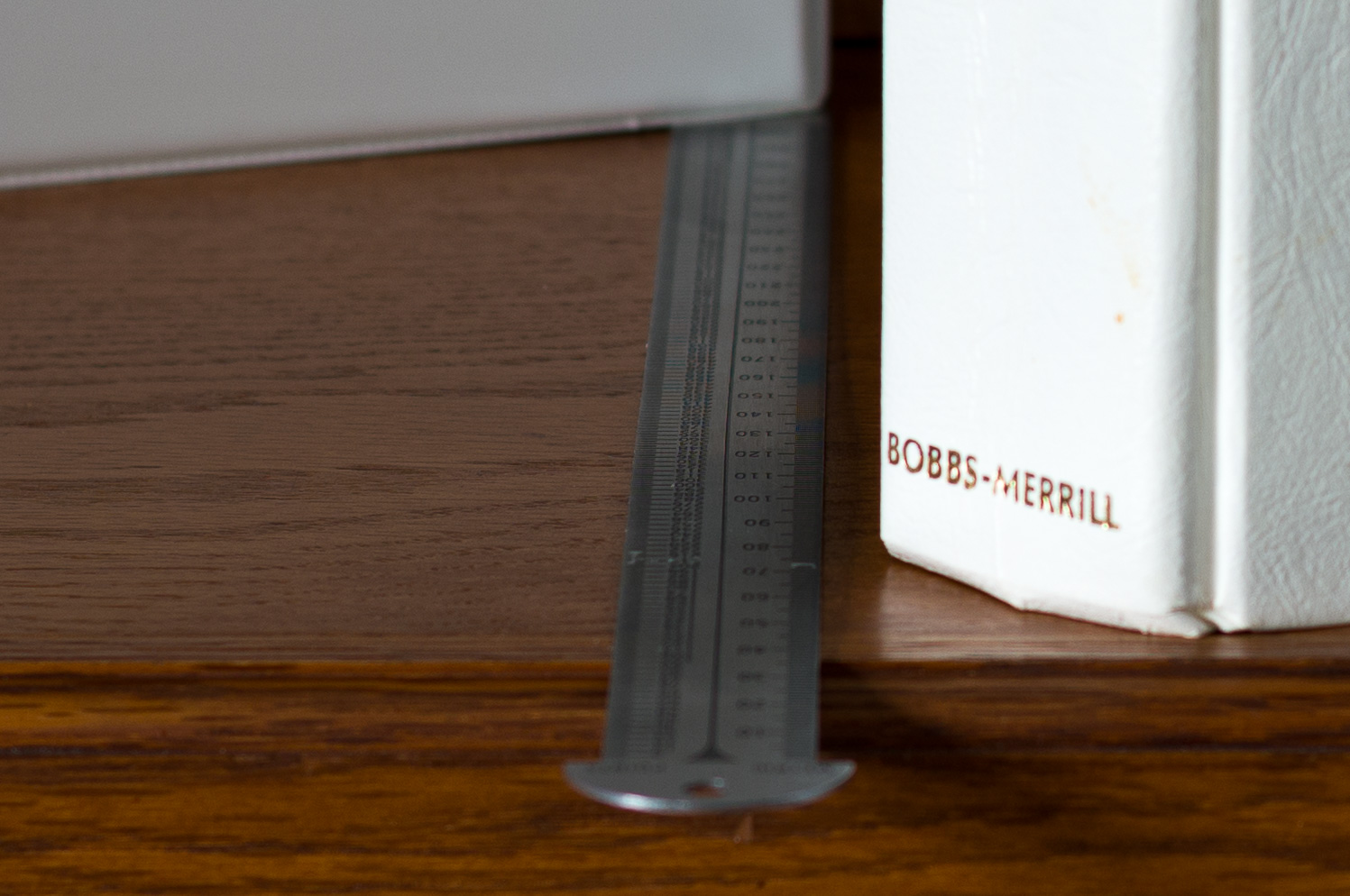
By f/5.6 the depth of field about covers the shift so at that point and beyond is not so much an issue. You could learn to compensate by leaning backwards a bit when using f/2.8-4 which I did on the rabbit photo, or nudging the focus ring a bit to the left after aligning the rangefinder patch. Or use live view or an EVF at these apertures if your camera allows. There is only one lens in the world that can compensate for an optics with focus shift and that is the Omnar Bertele 50mm/2 with it unique Floating Lens Block (FLB) system (which, for clarity) is not the same as lenses with a Floating Lens Element (FLE).
In Summary
I liked the images I got from the Artizlab Classic 35mm f/1.4 (v2) and its small size, solid build, nicely working aperture ring and focus feel. And the way it gave me a couple different looks – wide open glow, stop down good and sharp without being distracting, and flare to play with too. For the way I photograph if I keep the lens I will have it recalibrated to align with my optical rangefinder at f/2.8, and then use my EVF when I chose f/1.4, as I find it difficult to nail focus anyhow at that aperture with such a slim DOF that is inherent that wide open. As always, the images and text of my review are all of my own creation and not influenced by others, nor created by a machine. You can find me on Instagram @rollinphotoj.
Share this post:



Comments
Christophe Fontyn on Artizlab Classic 35mm f/1.4 (v2-ish) Review
Comment posted: 05/01/2026
Comment posted: 05/01/2026
Comment posted: 05/01/2026
Comment posted: 05/01/2026
Bastian Kratzke on Artizlab Classic 35mm f/1.4 (v2-ish) Review
Comment posted: 05/01/2026
Comment posted: 05/01/2026