

After finishing a roll of Kodak ColorPlus 200, I decided to try another Kodak classic: Kodak Gold 200.
The film was developed by bildskanning.com, and digitized using a Valoi easy120 system and TTArtisan 100mm macro 2X. The scans were then processed in Negative Lab Pro.
With this roll in the camera, I set out to explore two very different museums.
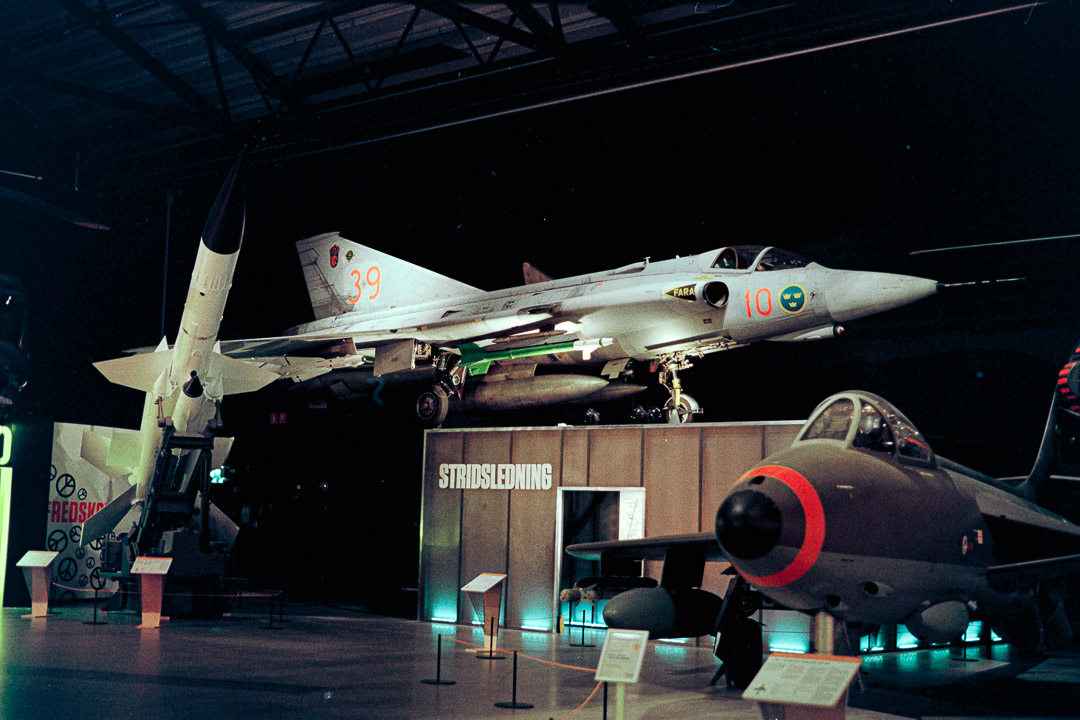
The Swedish Air Force Museum
The first was the Flygvapenmuseum, (The Swedish Air Force Museum).
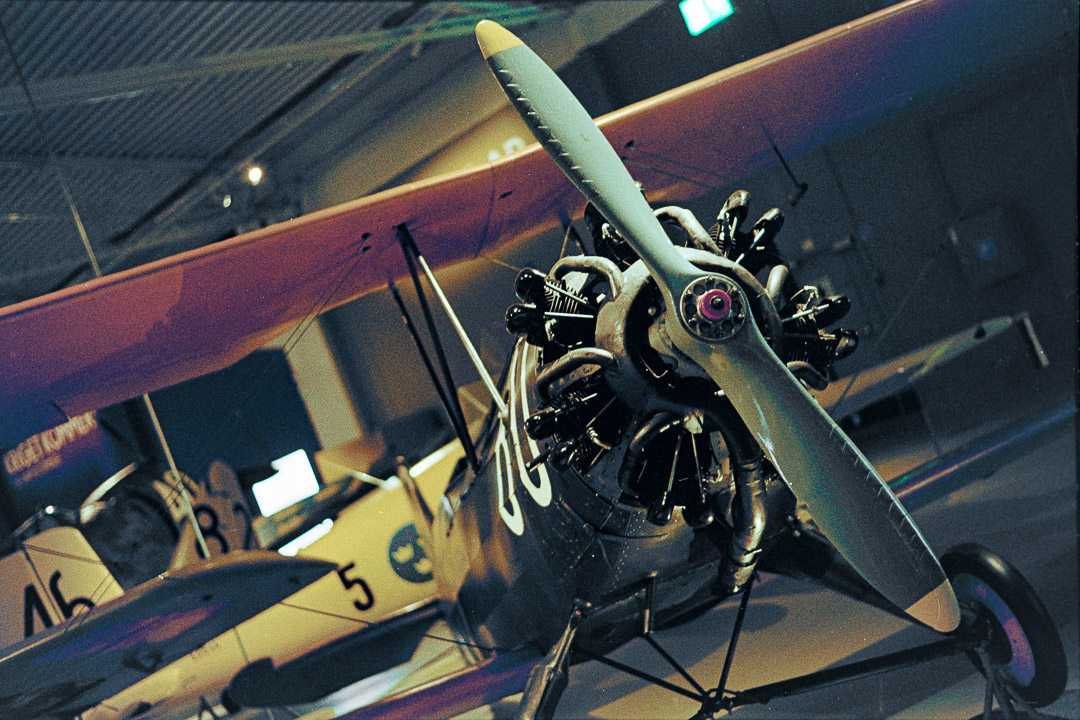
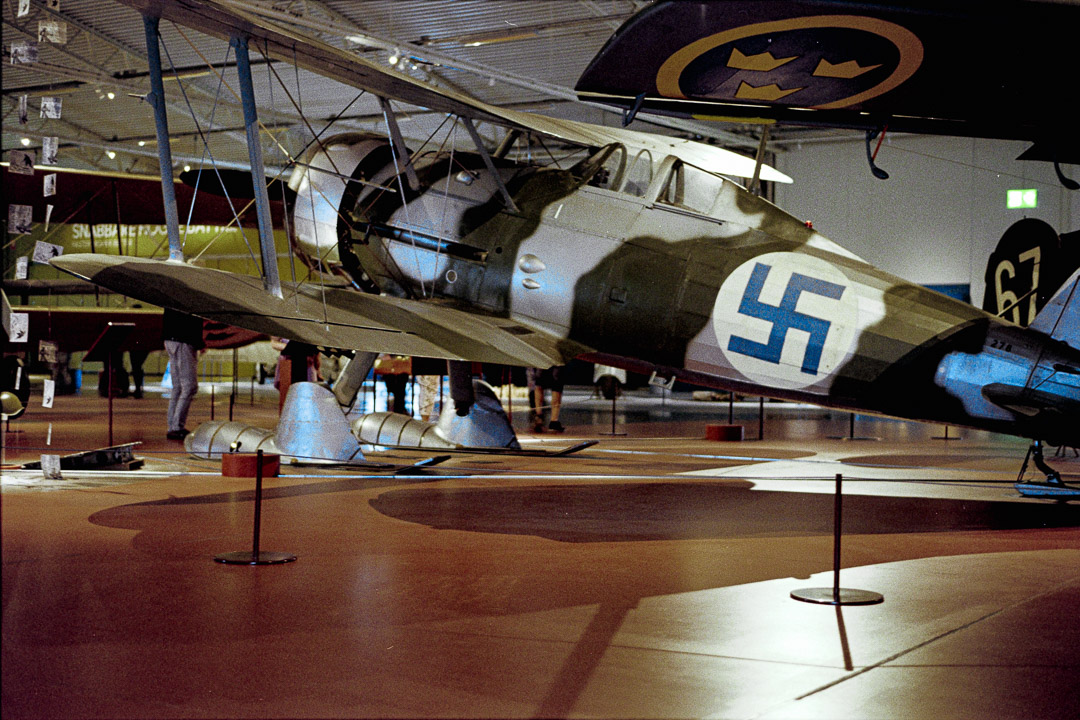
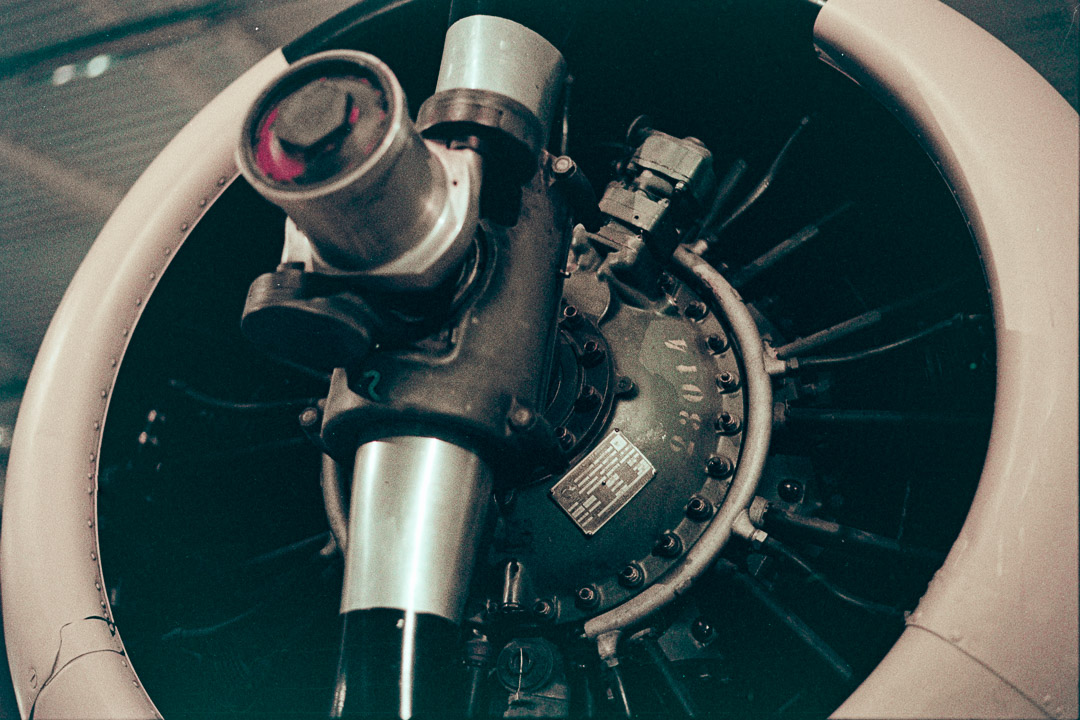
Saab 17 – reconnaissance dive-bomber aircraft of the 1940sThe Flygvapenmuseum feels less like a typical museum and more like walking through pieces of Sweden’s recent past.The first thing you notice when stepping inside is the space. Aircraft sit scattered across the hall in a way that feels almost casual, as if they’ve simply been parked there after a long flight. Some are compact and utilitarian, others sleek and purposeful, each telling a story about the era they flew in.
One of the most charming surprises is a row of recreated Swedish homes. From the 1950s through the late 1980s, each apartment lets you step inside, sit down, and experience everyday life. Old radios play softly in the background. Televisions flicker with news, music, and children’s programs. While the aircraft tells a story about what was happening in the skies, these apartments show life on the ground.
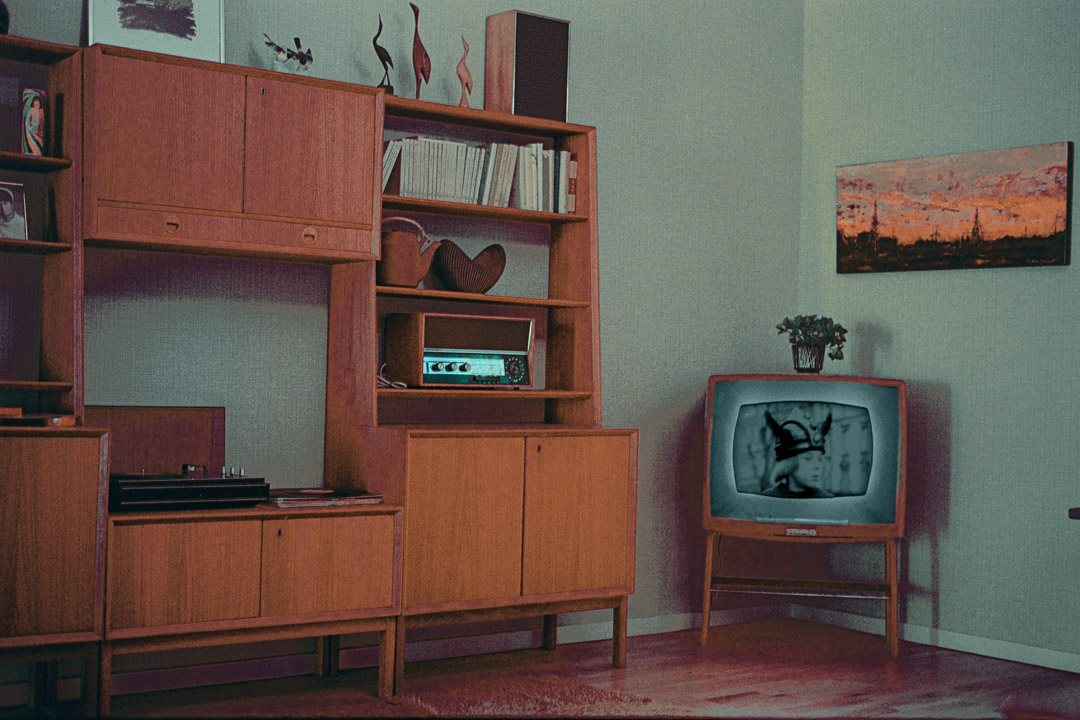
Of course, shooting indoors under mixed lighting can be tricky. With daylight film like Kodak Gold 200, the museum’s mix of tungsten, warm LED, green fluorescent, and window light made accurate colors a bit of a headache—but that’s part of the fun.
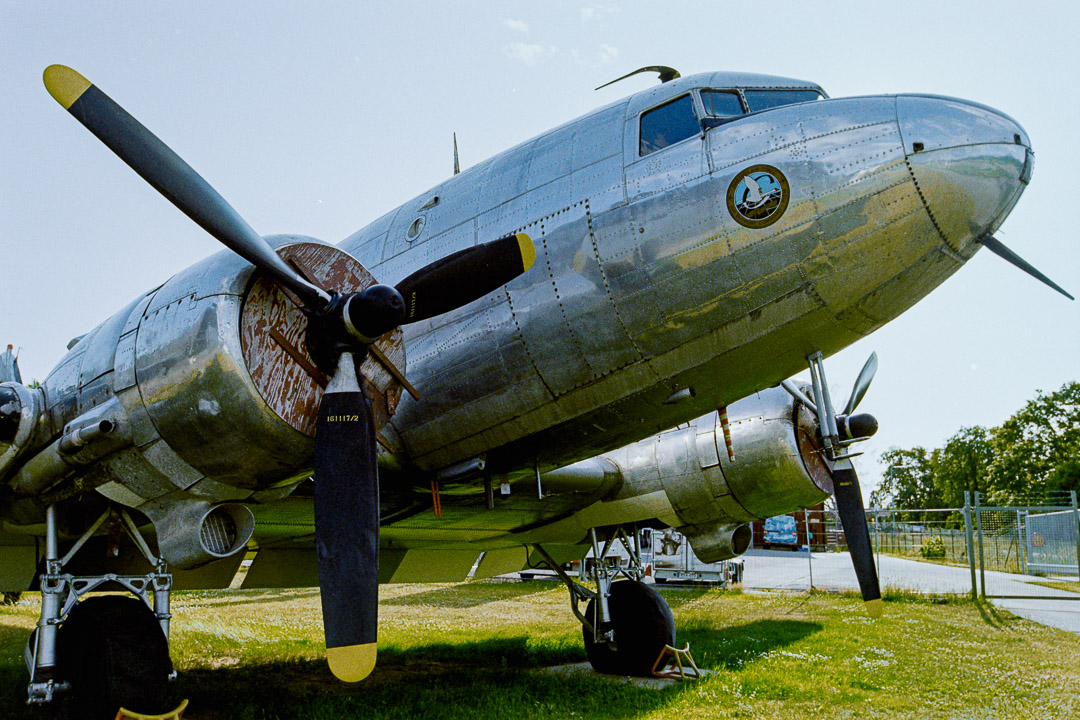
Stepping outside the main hall, the museum continues into an outdoor area where several aircraft are displayed in the open air. Natural light brings out details you might miss inside. One of the highlights outside is a Douglas DC-3, its rounded fuselage and classic lines giving it the unmistakable look of something straight out of an old war film.
Another unusual object connected to the museum is the Futuro House, a fiberglass pod originally imagined as the vacation home of the future. Lightweight, mobile, and futuristic, it looks more like something that landed from space than a cabin in the woods.
The Swedish Air Force ordered three of them—but not as houses. Instead, they were placed on tall concrete towers and used as observation posts for target shooting exercises, where crews monitored the ranges from above.

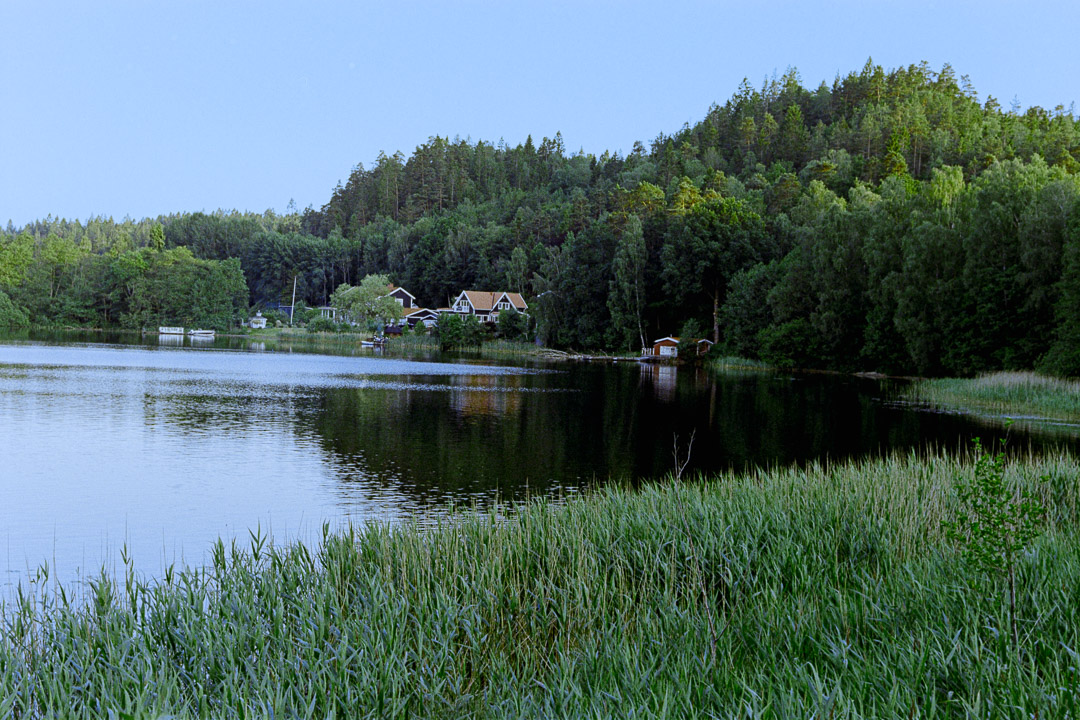
Husqvarna – From Muskets to Microwaves
Next up was Husqvarna, a historical museum that once again tested my color-adjusting patience—sometimes more successfully than others.
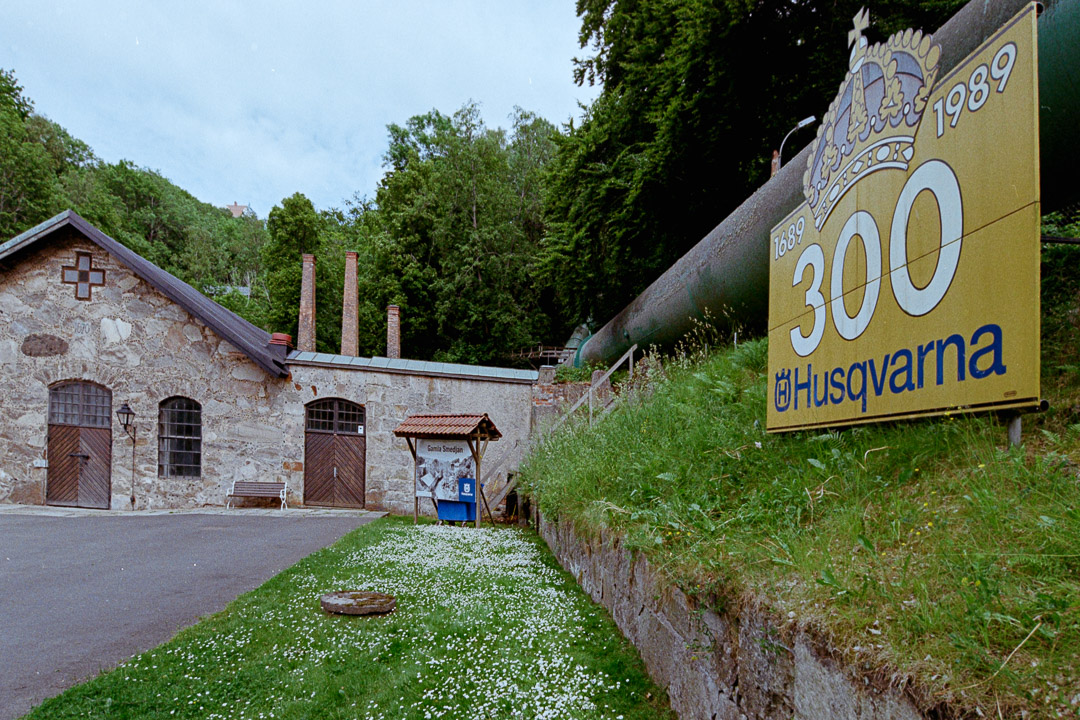
Husqvarna’s story began more than 330 years ago as a royal drilling works producing musket barrels for the Swedish army. The roots go back to 1620, when King Gustav II Adolf established a rifle factory in nearby Jönköping. In 1689, part of the operation moved to the waterfalls at Huskvarna to harness water power for drilling and precision machinery—the very site where the museum stands today. The name Husqvarna comes from the mill by the falls, historically known as Husquernen, meaning “the house’s mill”.
The move was a turning point. Using the river’s force to power massive drills and hammers, Husqvarna transformed from small manual workshops into a mechanized operation capable of producing weapons on a much larger scale.
For nearly two centuries, the work here revolved around muskets and rifles. In the early days, each piece was shaped by hand by master armourers. But as the operation moved to the waterfalls at Husqvarna, the craft gradually evolved into modern factory production, greatly increasing both the precision of the rifles and the volume that could be produced.
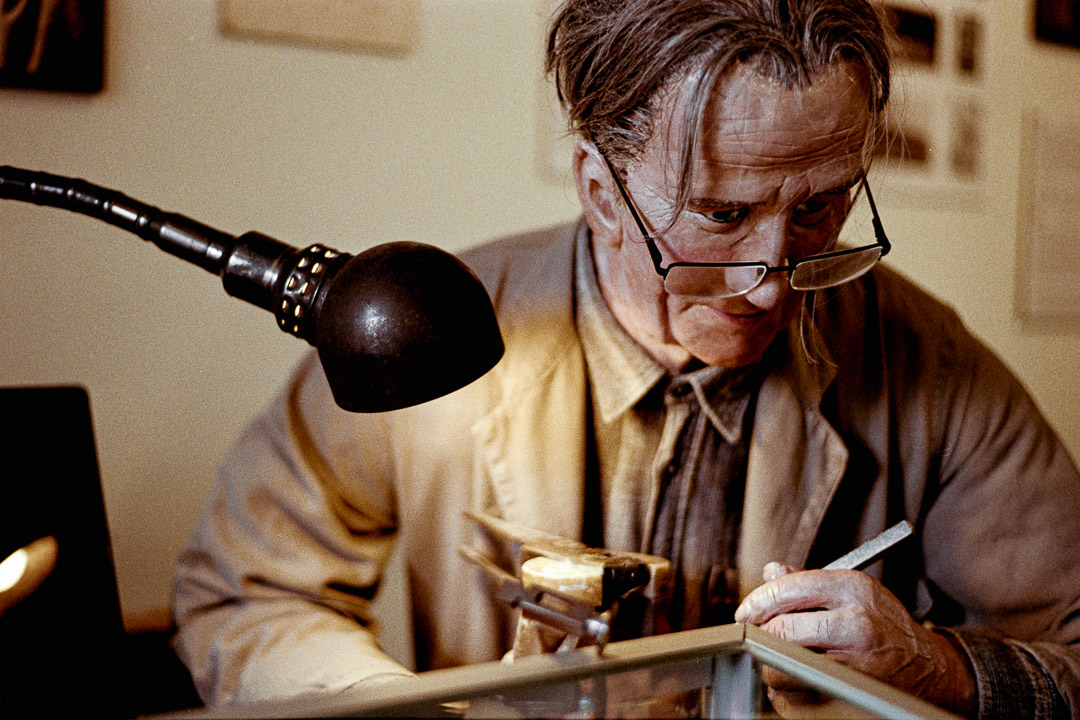
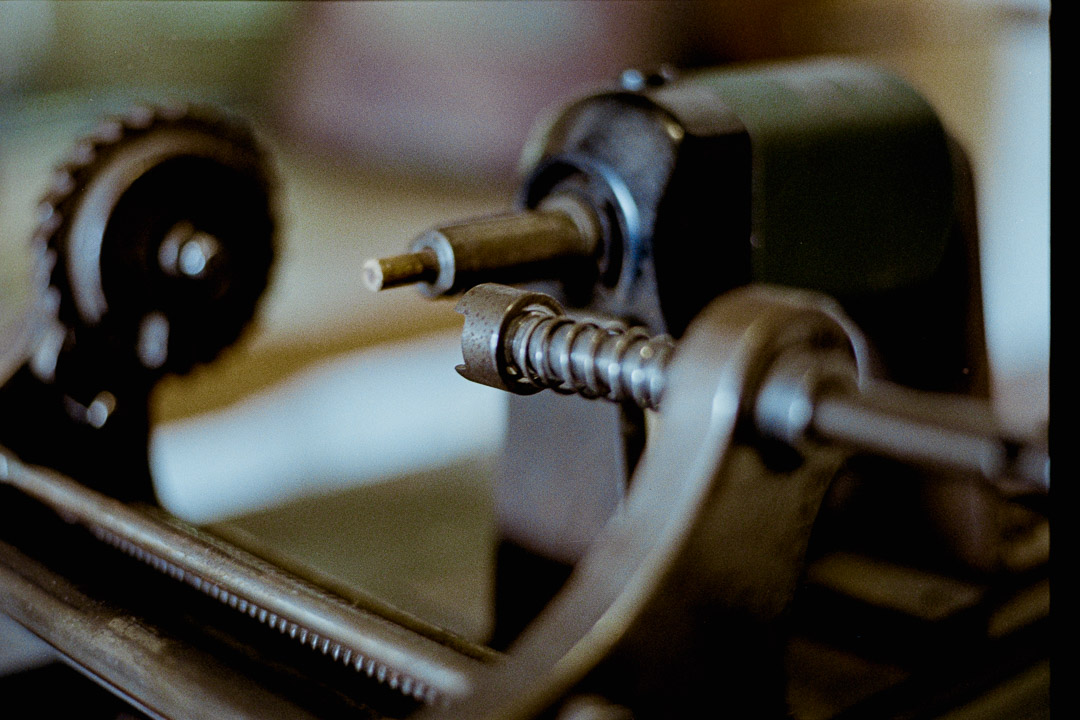
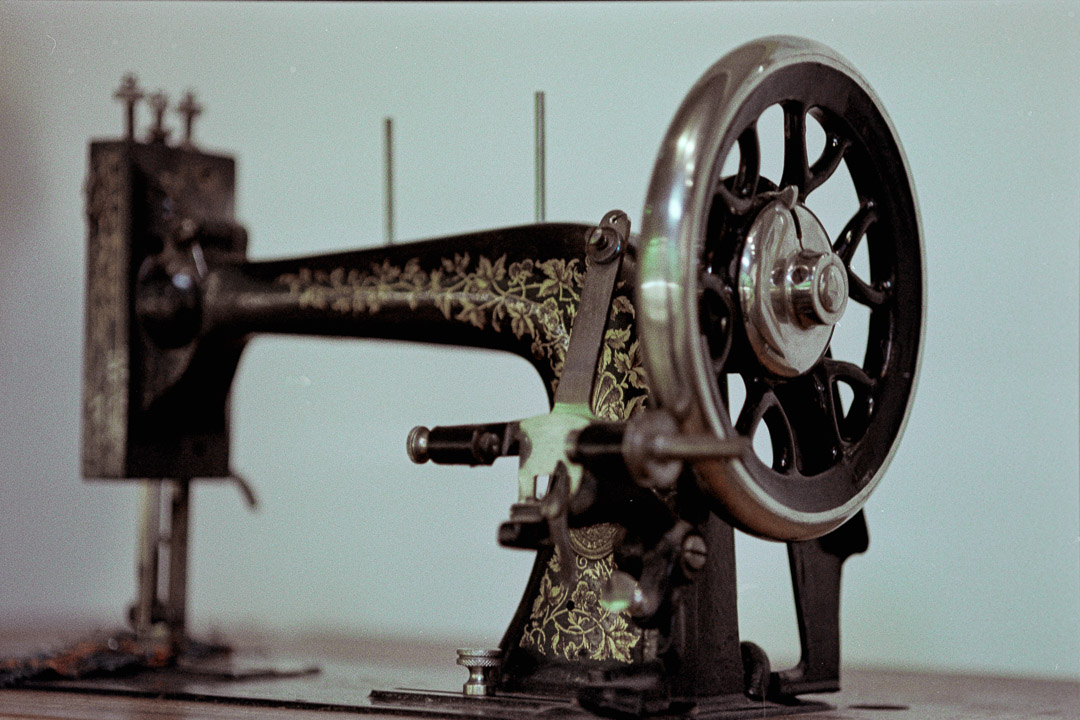
But in 1870, when the contract with the Swedish Crown ended, the factory was huge, filled with high-precision machines, but with far fewer orders. They had to get creative. Using the same expertise that made their rifles so precise, Husqvarna branched into sewing machines.
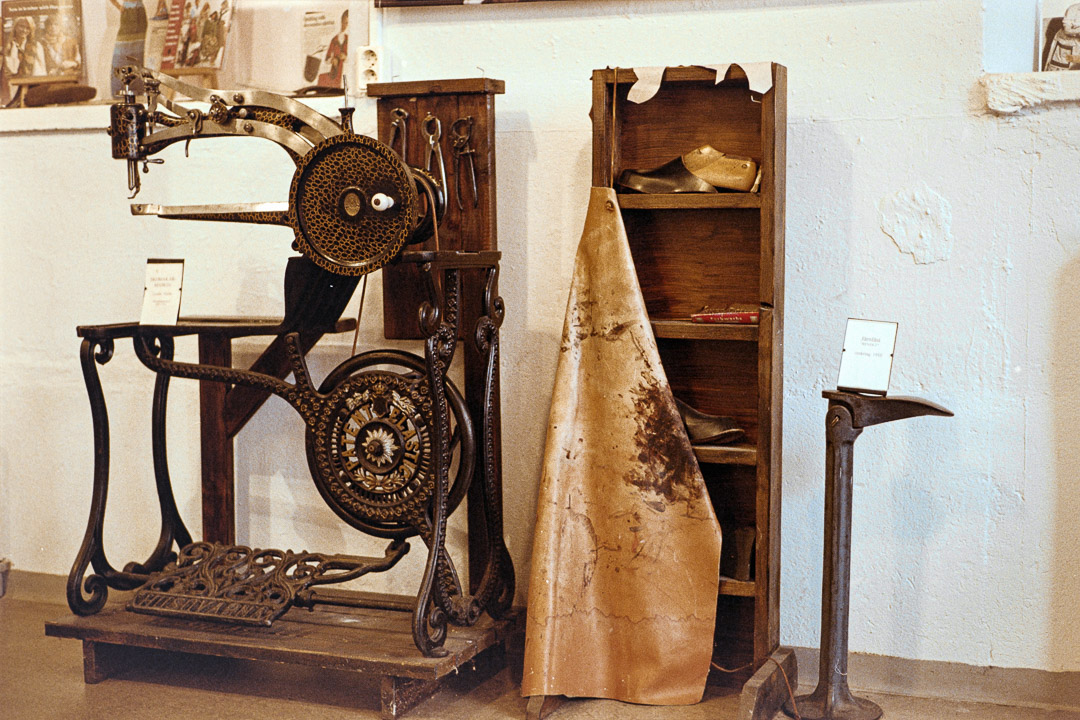
Soon after came cast-iron kitchenware: meat mincers, stoves, and ovens, designed with the same engineering care.
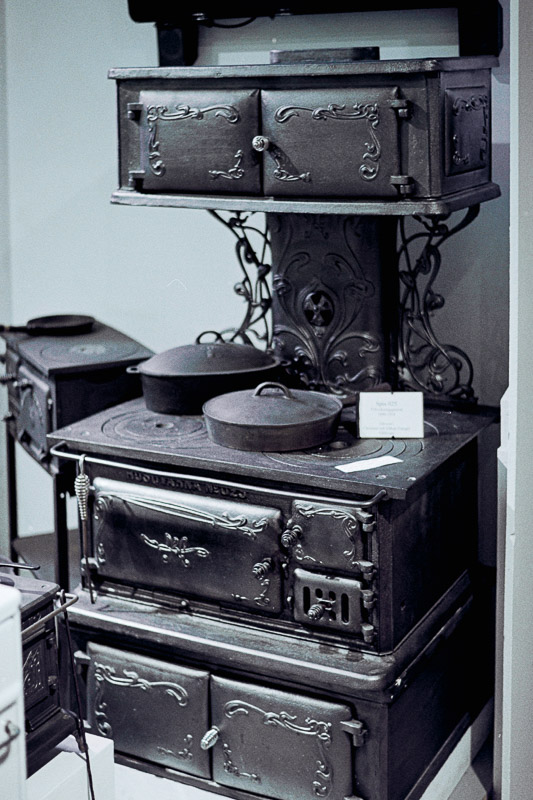
By 1896, bicycles appeared, followed by motorcycles in 1903—first as small engines on bikes, later growing into a world-famous racing brand.
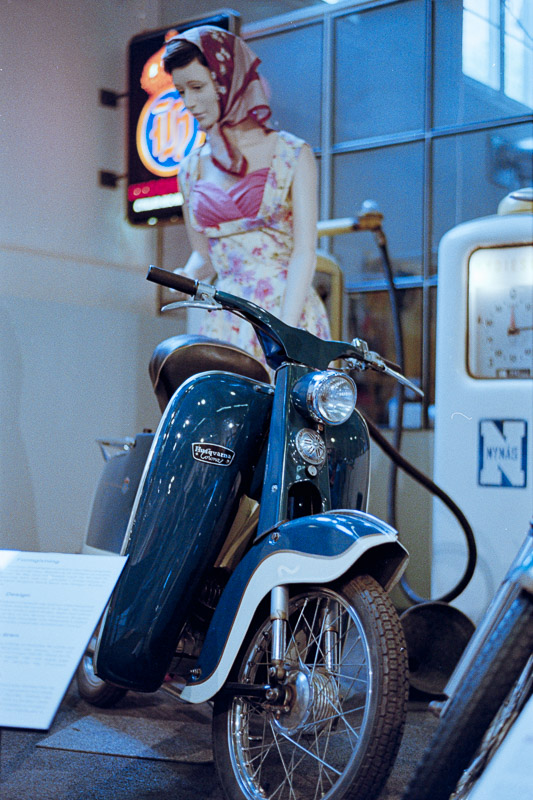
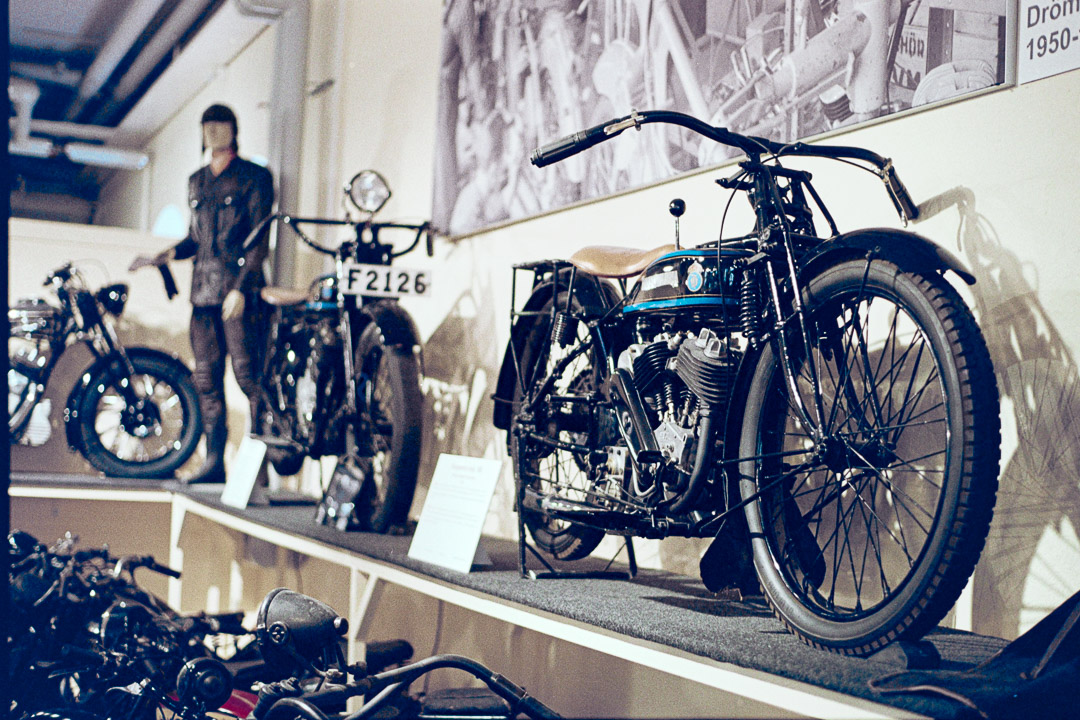
As Sweden electrified in the 1940s and 50s, Husqvarna transitioned into refrigerators, washing machines, and even early microwaves, pioneering some of the first microwave technology in the country.
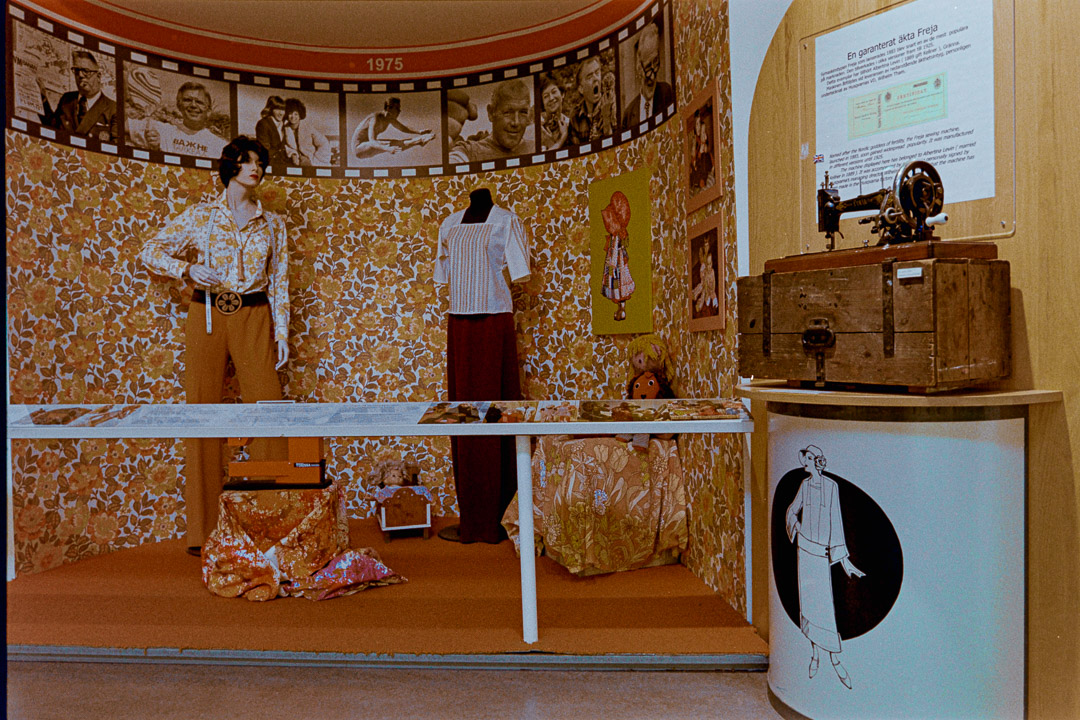
Today, Husqvarna is best known for outdoor power equipment—chainsaws, lawn mowers, and robotic garden tools—while the household appliances eventually became part of Electrolux.
Seeing centuries of precision engineering up close, especially at Husqvarna—from rifles to sewing machines to early microwaves—made me appreciate how much care went into every single detail. Shooting it all on film added a warmth that digital never quite captures; it’s like the colors themselves tell part of the story.
Final Thoughts
The indoor lighting kept me on my toes more than once, and I can’t say Gold 200 handled the museums perfectly—but realistically, that would challenge most films.
Well, Kodak Gold is a versatile film with wide exposure latitude and is a good general-purpose film. However, of all Kodak’s consumer films, Gold 200 is probably my least favorite—not just based on this roll. It feels like a bit of everything without really excelling at anything. There’s a slightly yellow-orange warmth with a hint of nostalgia, though not as pronounced as ColorPlus. It has higher contrast and less grain than ColorPlus, but UltraMax has a more modern, neutral look—and it’s twice as fast. Of course, this is just my personal take.
By the end of the day, I realized that choosing color film in these lighting conditions might not have been the most technically perfect choice—but those are exactly the moments that make shooting film feel alive.
You can see more photos from the same roll taken at these two museums, along with the full list of gear used, in the video or in the blog post below.
Share this post:



Comments
No comments found