

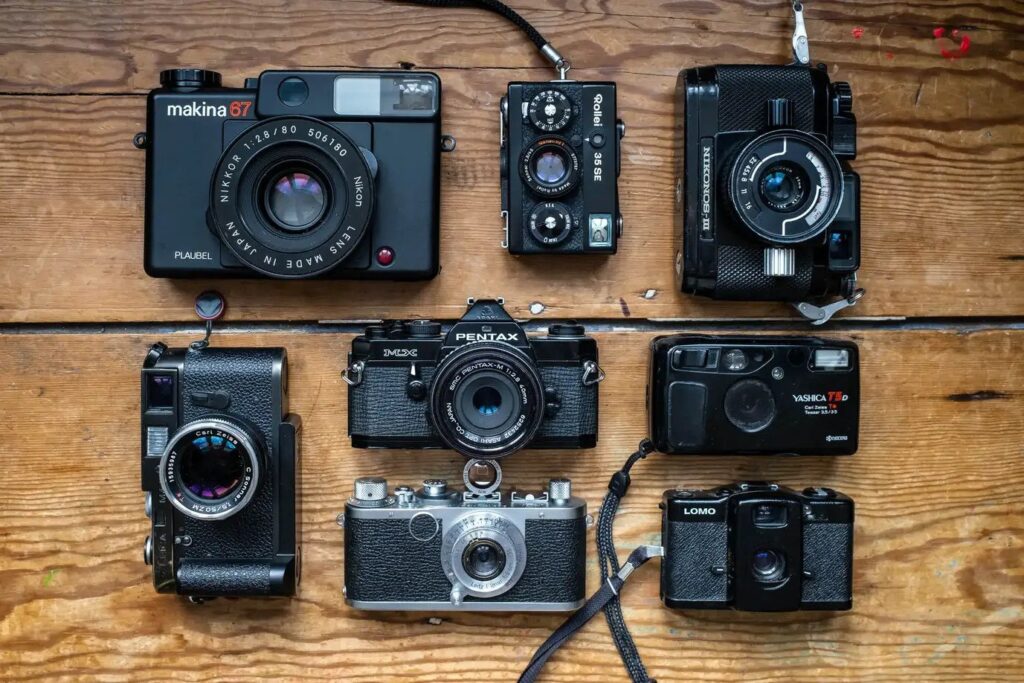
There are moments when I ask myself why I bother shooting these old film cameras. Often that question comes when I’m exasperated or discouraged. Maybe the color on a batch of scans is off owing to less-than-scrupulous attention to temperature in the developing tank. Or the grain on some prints is distractingly chunky. Or I repeatedly miss focus at critical moments. Suddenly I remember that digital camera I had a few years back: the ease of focus, the trueness of the colors. Why am I bothering with film cameras, a darkroom and scanner—all of this complicated rigmarole?

Over time, I’ve become aware that those discouraging moments actually belong to a larger story. Zooming out a bit, I can see there is often a period of irrrational exuberance before that stretch of exasperation: a time when I feel on top of the world, when camera and darkroom feel like natural extensions of my mind’s eye and I can’t imagine a better way of moving through life.
In those heady moments, I not only like the photos I’ve been making but harbor some pretty grand ideas about the future. Although most of the time I am committed to remaining an amateur, I may suddenly have visions of book projects, of gallery walls. I don’t ever go so far as to daydream about earning a living from photography—I’m not that far gone—yet still I hear the siren call of Recognition.
For me, these fantasies almost always mean a letdown is coming. Maybe my enthusiasm for a particular subject has run its course; perhaps I’m feeling frustrated with some new technique or at sea in some other area. Whatever the reason, I’ve crossed some internal threshold, and have begun piling expectations on an activity that at the end of the day I do for the pleasure it brings me (though I may not recognize that fact until the next set of negatives, when I decide I am actually quite a bad photographer). At such moments, I’m susceptible not only to Gear Acquisition Syndrome but to doubts about why I ever got into all of this in the first place.
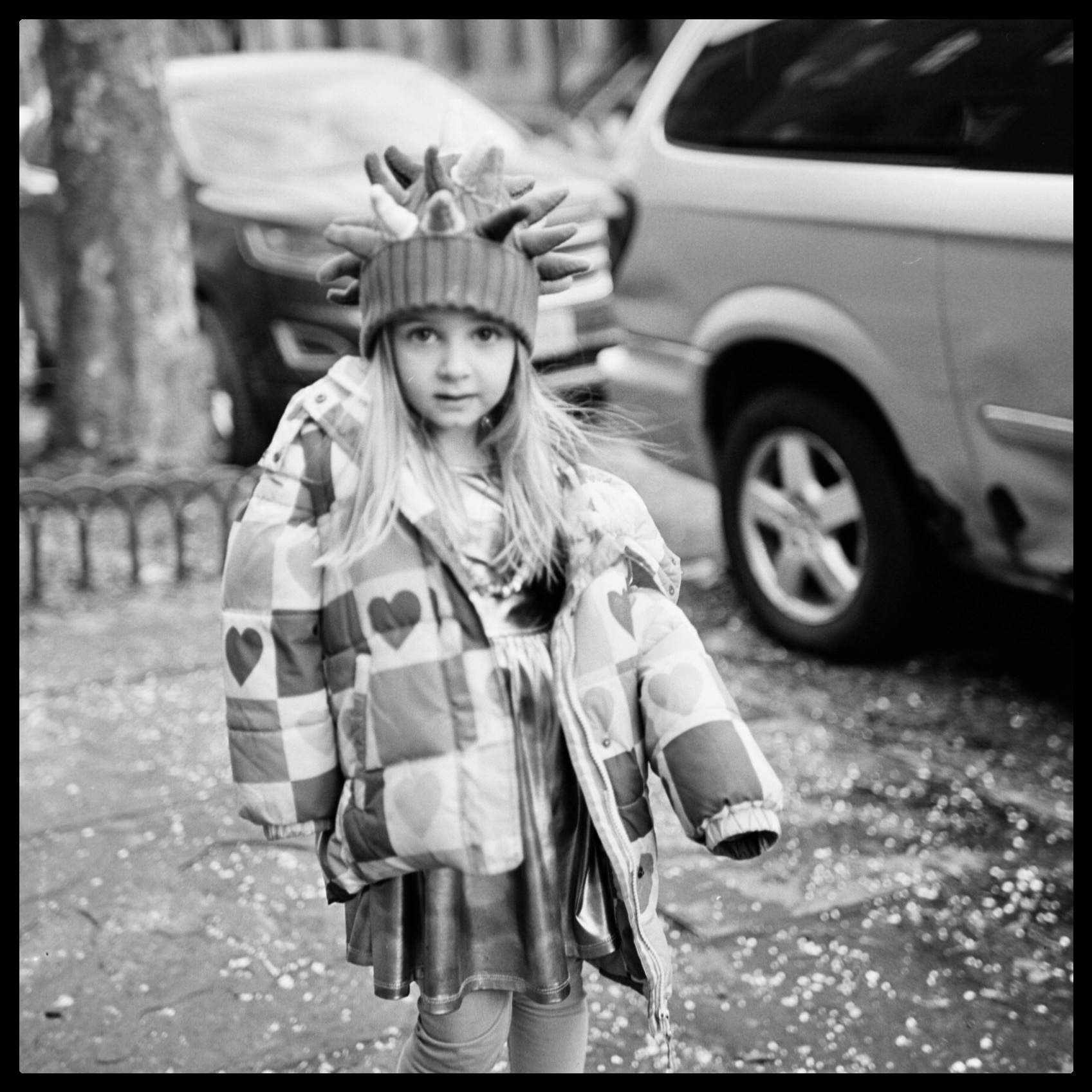
When I had that “easy” digital setup a few years back, however, I pretty quickly drifted away from it. Try as I might, I couldn’t find much satisfaction in a digital workflow—the photos felt interchangeable; editing on a computer, it turned out, was anything but simple—and I really missed my time in the darkroom. I decided at that point that I would commit exclusively to film photography: doing so allowed me to be an amateur in the best sense, as in a person who does and makes what they love. Another resolution, a bit more challenging to keep: I would try to judge my efforts less by results from any particular outing than by dedication to process.
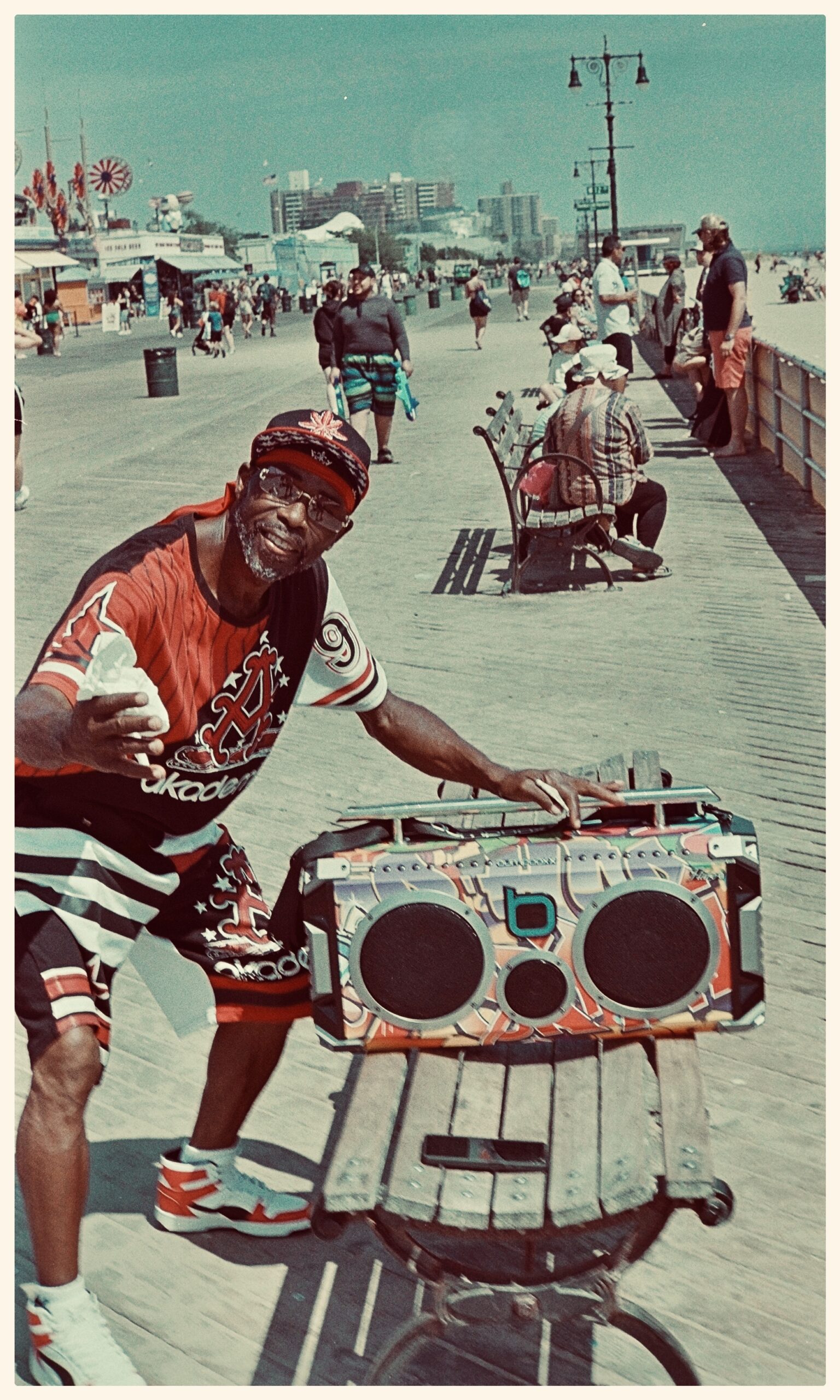
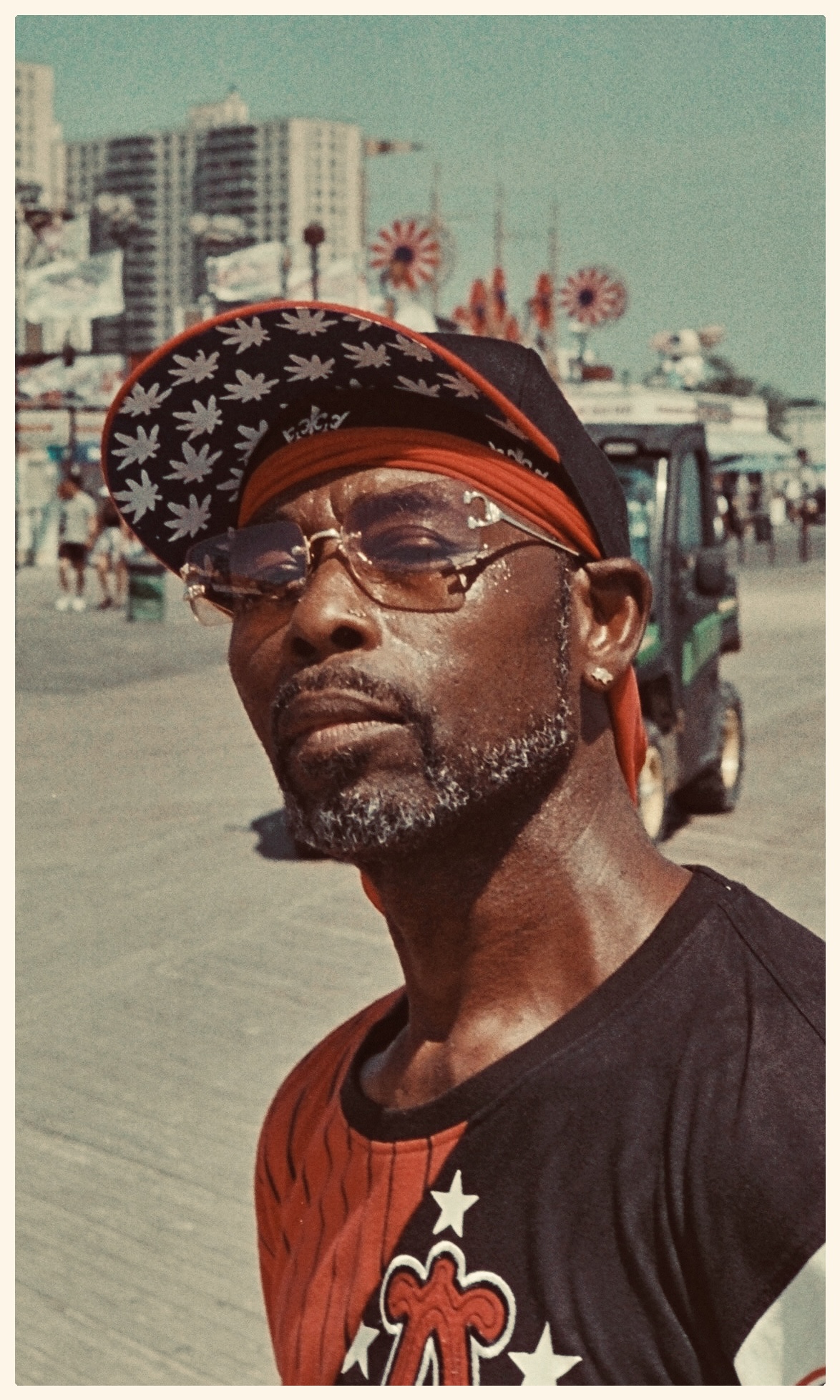
In photography as in most things, my doubts and daydreams will always be with me. Along with aperture, ISO and shutter speed, they are variables that I need to reckon with in this realm of my life. As I look back over binders of negatives from the past seven years I realize that the judgements I make about my work when I’m feeling low are scarcely more informed than those I arrive at when I’m feeling elated. A sober appraisal, for me at least, takes distance and time.
While hardly known for emotionality, Ansel Adams also came to favor this kind of reflection. That most obsessively systematic of photographers writes: “I often return to a print after days or weeks and see relationships that were not apparent at first.” He arrived at that approach from hard experience, having printed a whole exhibit’s worth of landscapes of which, unaccountably and atypically, not a single one sold. Though friends and critics had wondered whether Adams, headstrong, had perhaps printed the photos too “heavily,” it took the photographer a year’s distance to see what they meant: “When I looked at the photos a year later, I was appalled [….] how could I have printed them so dark?” (Adams, The Print, 1980, page 6). Caught up in the emotion of the moment, many of us fall short in our assessments.
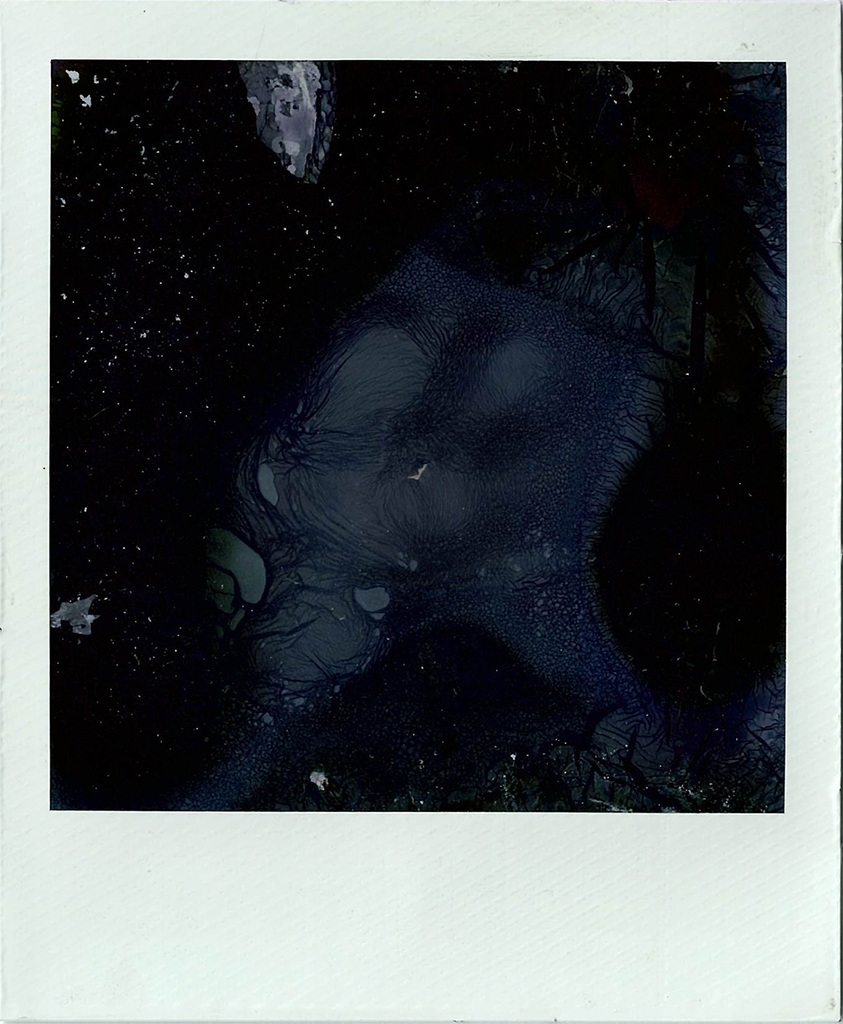
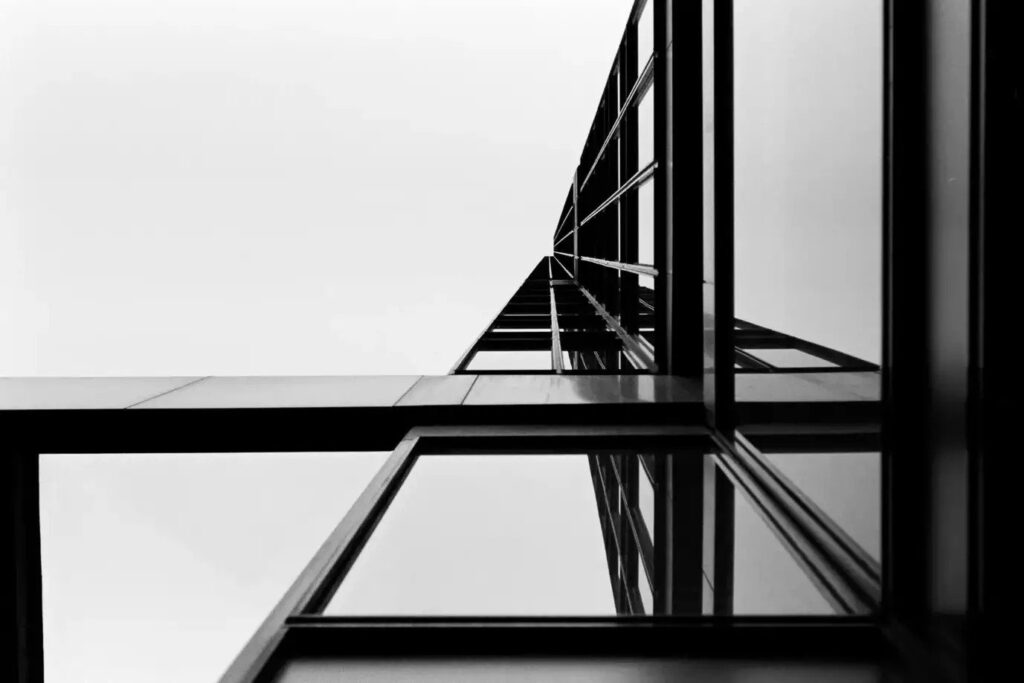
So it is, on occasion at least, with my “bad” pictures. Although I don’t yet love all of the photographs in this post, none of them is as awful as I felt them to be when, in the throes of doubt, I first laid eyes on them.
And in a year’s time—who knows? They might even make me proud.
Thanks for reading.
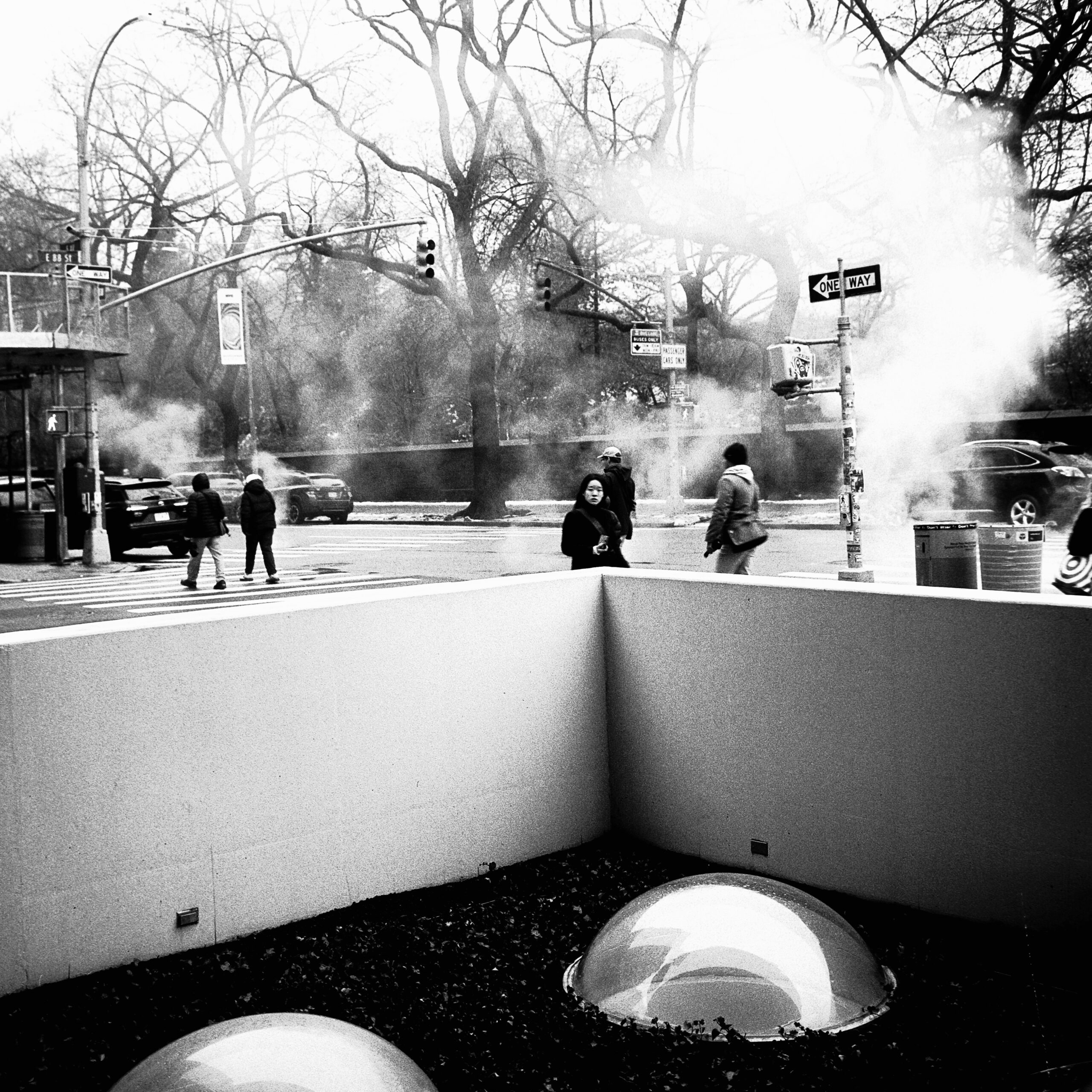
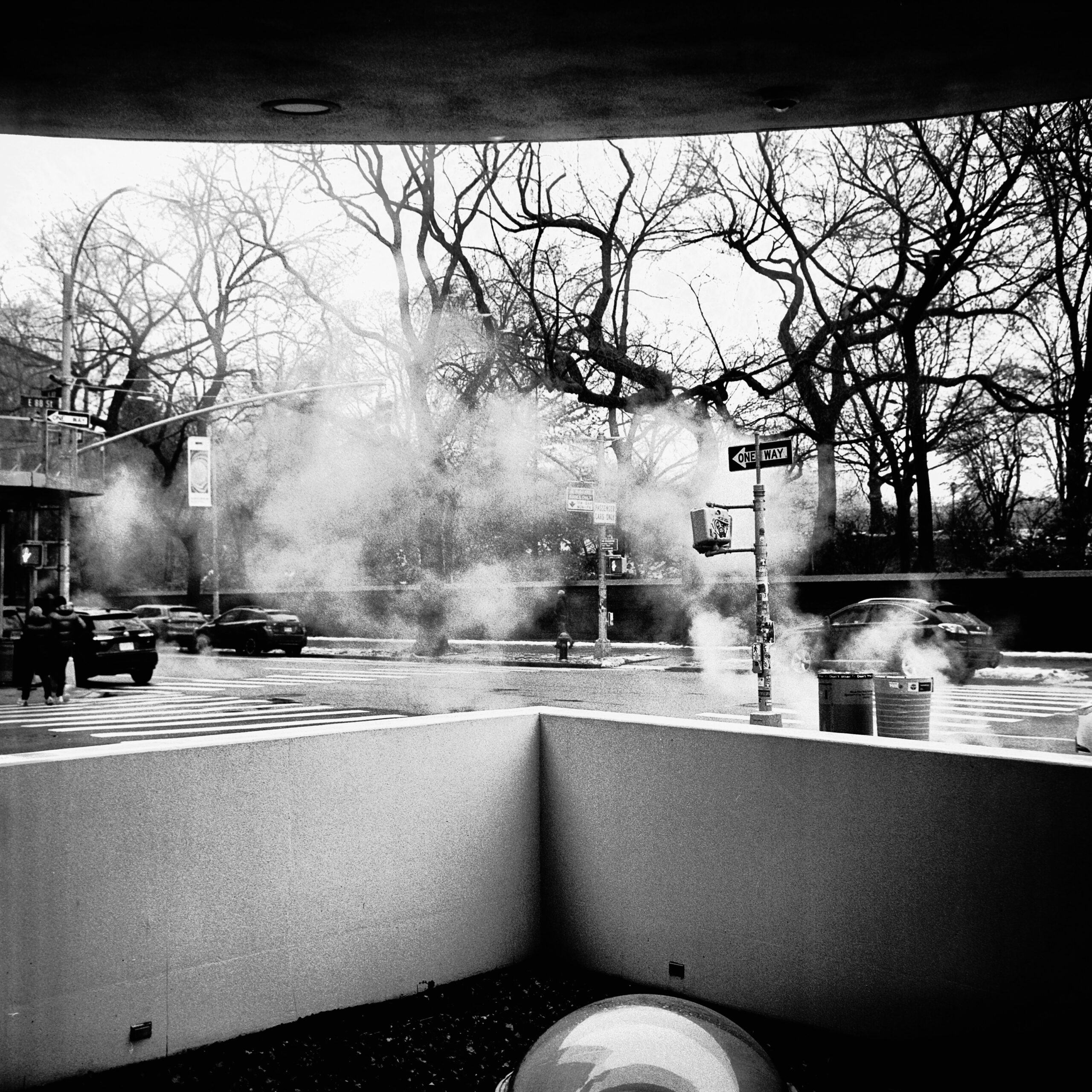
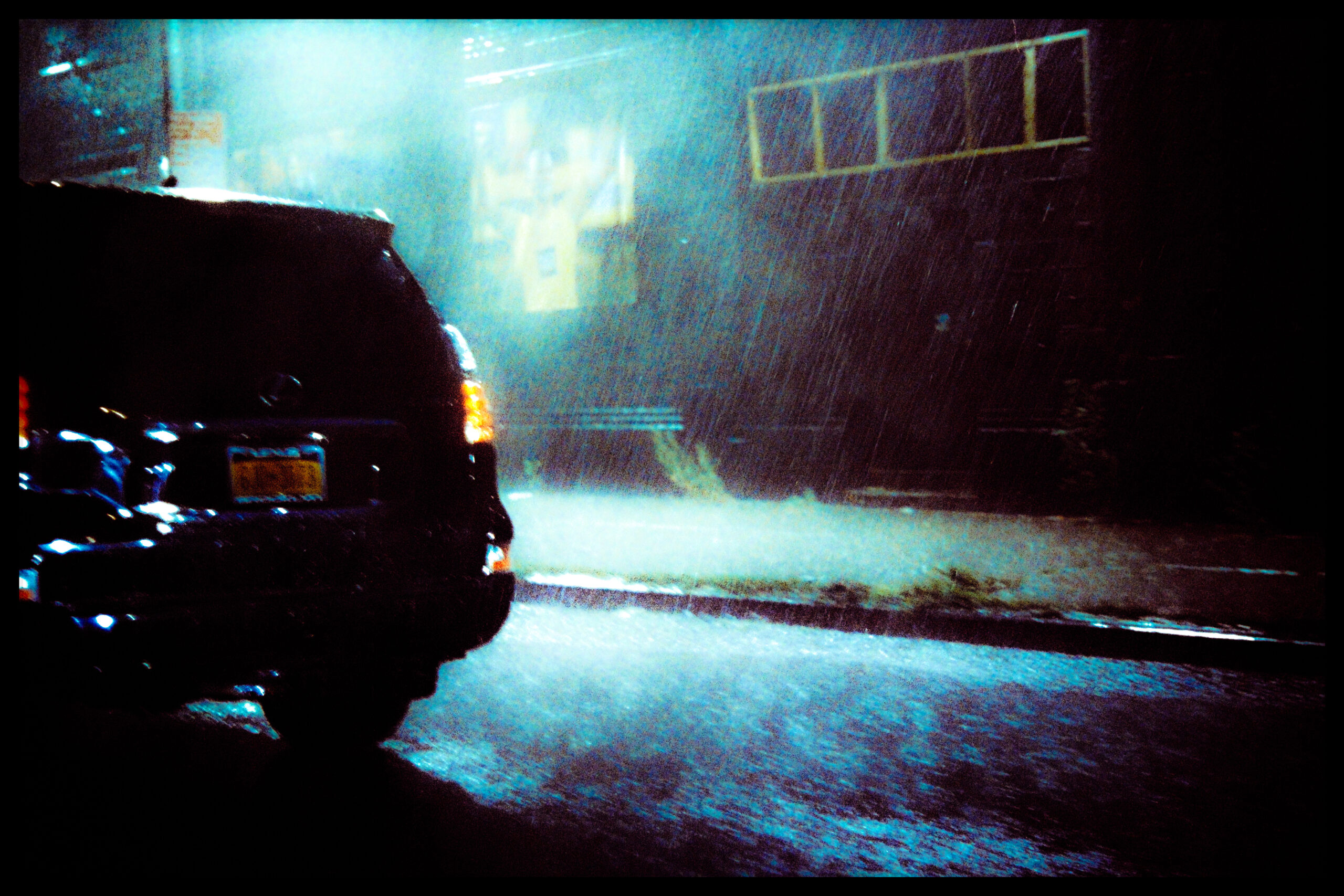
FEATURED IMAGE: Summer Downpour, Bed-Stuy. (2025). Leica III, Elmar 50 f3.5, Cinestill 400D.
Share this post:

Comments
Paul Quellin on My Doubts about Film Photography
Comment posted: 12/01/2026
Comment posted: 12/01/2026
David Brancaleone on My Doubts about Film Photography
Comment posted: 12/01/2026
Initially, I was taken with the discouragement I have experienced so often in the past eighteen months, since I returned to analogue myself.
The photos I find grip you. The reason they do may be the super dooper films. Could be. Perhaps the main element is the personal rapport between camera and the other; not reduced to a suitable subject to gawk at, but allowed to enjoy the status of a human being in a free and open exchange.
Colour is so difficult to do well. It can distract. It can be all over the place. But some of these photos still retain the subtle drive of monochrome.
Was it just the opening gambit that drew me in? Yes. But usually, when that is all there is, You're dusappointed. Not this time.
David Hill on My Doubts about Film Photography
Comment posted: 12/01/2026
Then I think do I really want a hobby where the things I do are controlled by computer chips? Haven't I spent enough of my life being controlled by the silicon god? And when I frame the enlargement of a photograph to hang on the wall, I feel that glow of "I did that. No autofocus, no matrix metering or composition guidelines here".
And part of the pleasure of my hobby is the tactile sensation of handling precision, hand crafted perfection. Just the feel of my Leica M4 or IIIc, a Rolleiflex, Nikon FM2 or some of my current exploration of Minoltas. The photographs may be rubbish, but the taking of them is profoundly satisfying.
Peter Schu on My Doubts about Film Photography
Comment posted: 12/01/2026
Charles Young on My Doubts about Film Photography
Comment posted: 12/01/2026
KF on My Doubts about Film Photography
Comment posted: 12/01/2026
Ibraar Hussain on My Doubts about Film Photography
Comment posted: 12/01/2026
And of course the pure classy photography - with your signature look and feel.
I like using AF 35mm cameras - it makes life easier. Now it’s a mix of AF 35mm or zone focus.
Erik Brammer on My Doubts about Film Photography
Comment posted: 12/01/2026