

The recent controversy between a group of photographers and the creator of an AI-powered editing software that promises effortless, professional-quality headshots has once again brought to the fore the concerns of content creators regarding the impact of AI on their jobs. In particular, the most voiced complaint is that, by releasing such a tool, this software company is destroying the livelihoods of its customers.
This is not the first time we have heard these kinds of laments from various sectors of the content creation industry. Nevertheless, I find it very difficult to understand what is motivating them.
Of course, in the short term, it is perfectly understandable that they are concerned about their ability to continue earning a wage. However, this concern does not justify calls to stop improving and ‘democratising’ products and services. However, a harsh truth of every job is that there is no divine right to keep it safe from decline or disappearance for whatever reason. And this is valid also for a relevant part of the photography business.
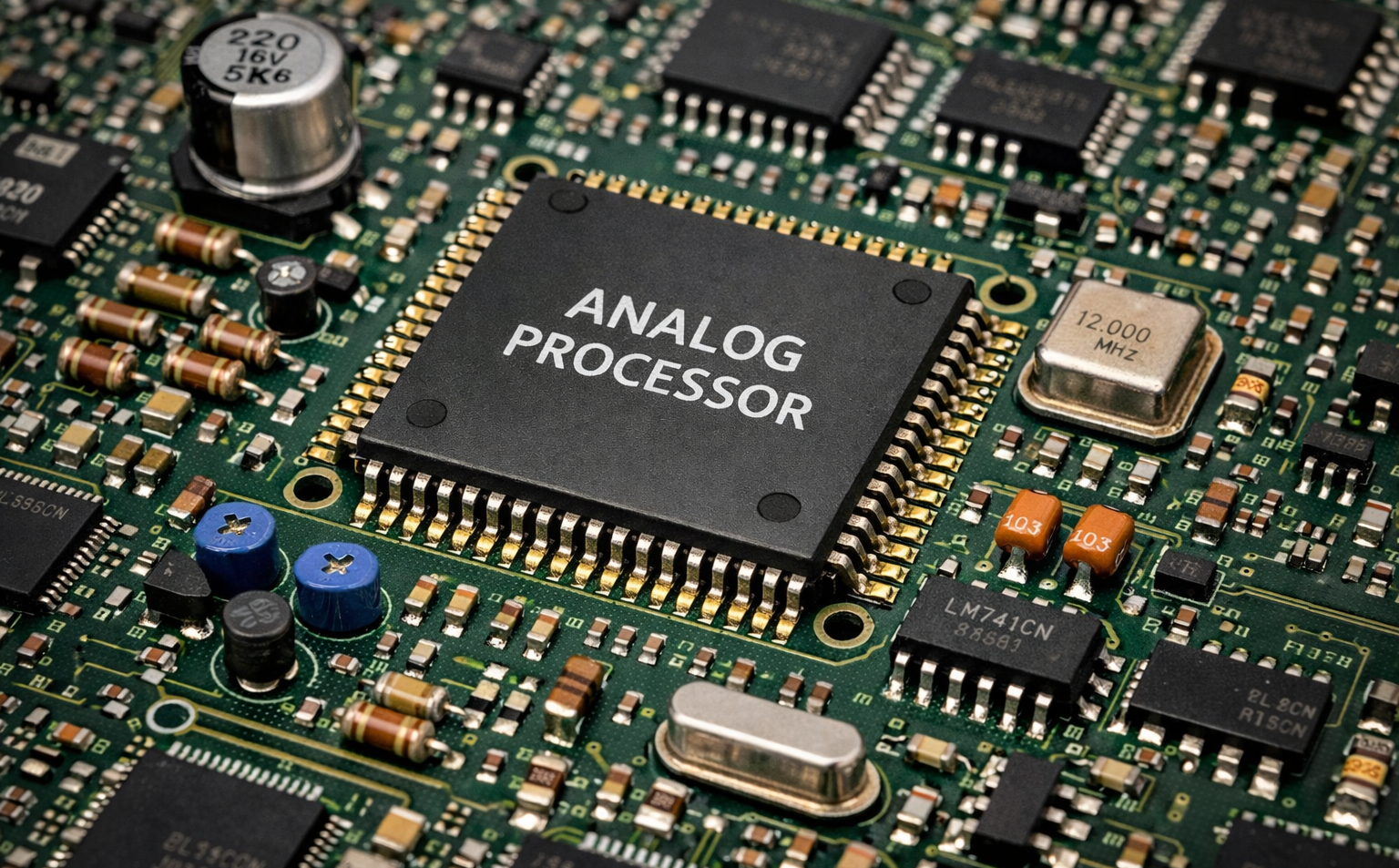
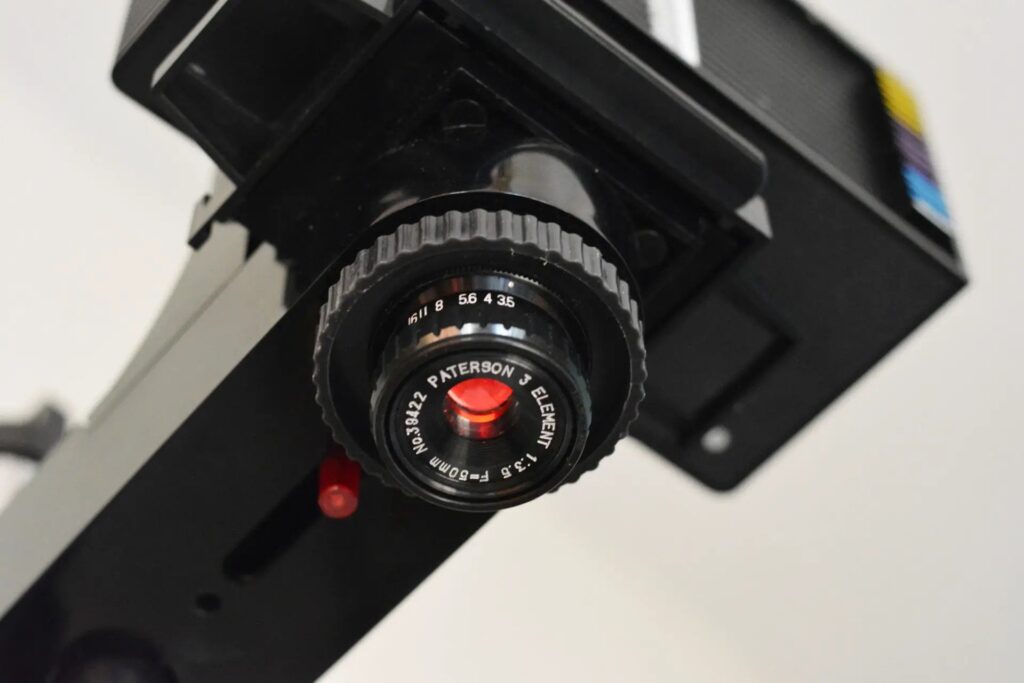
For many customers, it doesn’t matter who or what created the image to accompany a content; all that matters is whether it is fit for purpose. For instance, when I had to provide a featured image for a column I wrote for the Italian edition of MIT Technology Review I handed out a few shots I did myself and one image generated with Chatgpt. The magazine rightly chose the Chatgpt ‘artifact’ (the one featuring this post) that best matched the content, regardless of whether it was generated by humans or made almost entirely with machines. Sure, the image itself is nothing special. Yes, there were more creative ways to illustrate the concept of analogue processing. And, again, yes, I came up with different (and better, IMO) options. However, it was good enough, so there was no reason to keep fussing around. And the editor was absolutely right. Full stop.
This lengthy reflection introduces the central argument of this post: in the world of photography, only the creative element will survive the AI storm. In other words, ‘professional’ yet emotionless images —wheter in sports, news, portraits or advertising— are likely to lose value. By contrast, sincere and intellectually honest photos taken by ‘amateurs’ will endure. These photos are taken by people who want to express themselves, so they have no interest in software taking their place, no matter how perfect it may be. Can they make a living from this approach? Perhaps, perhaps not — but that doesn’t actually matter. History is full of ‘amateurs’ who produced outstanding creations and artistes maudits who spent their lives in misery cultivating their art.
By contrast, ‘professional’ work is only needed until it is no longer necessary. So, unless the client values craftsmanship over cold, artificial works, it is unlikely that he would choose a photography indistinguishable from an image which is artificial, but it is also cheaper and (almost) free of copyright issues.
Share this post:

Comments
Simon King on There are no divine rights to earn a living as a photographer
Comment posted: 12/02/2026
This cannot be what you are advocating for here, so what is the actual suggestion other than taking redundancy on the chin?
This applies to any threatened industry, photographic or otherwise. The recent layoffs at the Washington Post would indicate that even some of the highest quality, award winning professional calibre journalists are disposable, so what hope for the blue collar school-picture-day photographer?
The right to work is not divine, but nor will there be a divine intervention to raise up those who are suddenly without a means to support their families. The optimistic dream that UBI or similar social schemes will replace work and allow us to all self actualise in a post scarcity society is many, many battles away from being reality.
Comment posted: 12/02/2026
Comment posted: 12/02/2026
Comment posted: 12/02/2026
Comment posted: 12/02/2026
Comment posted: 12/02/2026
Comment posted: 12/02/2026
Comment posted: 12/02/2026
Comment posted: 12/02/2026
Comment posted: 12/02/2026
Comment posted: 12/02/2026
Comment posted: 12/02/2026
Comment posted: 12/02/2026
Comment posted: 12/02/2026
Comment posted: 12/02/2026
Ted on There are no divine rights to earn a living as a photographer
Comment posted: 12/02/2026
Comment posted: 12/02/2026
Nathan Leroy on There are no divine rights to earn a living as a photographer
Comment posted: 12/02/2026
Thank you for this thought provoking article. I believe this is simply the continuity of the long evolution of photography.
When you look at the work of a professional photographer from a perspective of an hundred years, it becomes evident that the photographic act became less and less expensive, therefore harder and harder for the professional photographer to make a living out of it.
I think the same situation happened a century ago to classic painters when people gradually stopped having their portraits painted and got their portraits taken instead,.
I'm certain many arguments that we find modern would have been said at the time in defense of paintings against photography.
Very good read indeed!
Comment posted: 12/02/2026
Comment posted: 12/02/2026
Comment posted: 12/02/2026
Comment posted: 12/02/2026
dragomir kovacevic on There are no divine rights to earn a living as a photographer
Comment posted: 12/02/2026
Gary Smith on There are no divine rights to earn a living as a photographer
Comment posted: 12/02/2026
Comment posted: 12/02/2026
Comment posted: 12/02/2026
Omar Tibi on There are no divine rights to earn a living as a photographer
Comment posted: 12/02/2026
Andrea, I would like to posit that even the creative side of photography isn't immune. A look at Flickr alone, a site large populated by hardcore photographers, shows many AI "art" groups with a small but dedicated following. On other social media sites even more. Even AI "art" exhibits are now being held in major cities. To these people, tweaking settings and engineering prompts is artistically, intellectually stimulating, on the same level as us composing a photo and selecting what film stock to use.
Do I agree with this? No, I despise AI and its "slopification". But you can't shove the genie back in the bottle. Who knows where this will go, as we stand on the edge of a new revolution? Perhaps film will end up becoming dominant in the future once again, as a purely artistic medium far divorced from the digital world? I know that disposable cameras have become popular amongst kids and young teenagers again, as many summer camps and even schools now ban electronic devices, and the imperfections of film are now considered artistic.
At the same time, I foresee a new class of professional photographer rising from this, one whose job is to collect high quality reference photos for training an AI model.
Well, regardless of what happens, I won't be putting down my Contax until the last roll of film is produced :)
David Hume on There are no divine rights to earn a living as a photographer
Comment posted: 12/02/2026
But that's not the only type of photography (Andrea goes on to say) There is also creative artistic photography done for other reasons than commerce.
People do seem to get a bit of a bee on their bonnets whenever those two innocent letters A and I are placed together. And yes the scale and rate of change that we are facing is unprecedented, putting those other changes like the Industrial Revolution, the harnessing of electricity, the advent of digital computers and the Internet in the shade, but we are still talking about the replacing of tasks once done by humans by machines.
No need for scriveners when we had typewriters, no typing pool in the office when we had word processors, no twice-daily mail deliveries when we could fax, the fax machine service industry needed to move on when people started emailing...
I could do a similar chain with Illustrators, engravers. plate makers, darkroom technicians, but I'd have to look up words I don't know like "who are the people who used to do those half-tone separations from negatives to use on offset presses?" But heaven forbid I'd ever pop that question in to my browser and get an answer in half a second.
As someone who uses AI regularly and has always had a keen interest in the philosophical questions about the nature of consciousness I'm now embracing finding out what it is that humans can do that machines cannot (for yes, AI is the work of machines) and find that journey fascinating.
Personally I find writing and photography more rewarding now as I look for the elements in my own work that are mine alone, and am able to embrace and nourish those.
So thank you Andrea.
(PS The irony of Ted's comment referring to your piece as "facile" is exquisite! If you were making a joke Ted, hats off to you.)
(PPS Disclaimer - this response generated entirely by ChatGPT)
Comment posted: 12/02/2026
Comment posted: 12/02/2026
Comment posted: 12/02/2026
Comment posted: 12/02/2026
Comment posted: 12/02/2026
Comment posted: 12/02/2026
John F. on There are no divine rights to earn a living as a photographer
Comment posted: 12/02/2026
Perhaps I'm a Luddite, I certainly don't discount the plausibility. The difficulty is that it seems that the so-called "progression" being offered is not only being foisted upon us as *the future*, but at the same time the promoters of said technology aren't working within the frameworks of conventional economics, and seem to be heading towards an inevitable crash in the not-too-distant future.
What will exist in the aftermath? It's hard to say, but I would say that even with AI, nearly anything done quickly doesn't produce the necessary quality, and anything that takes a while to get to a good standard of quality is exponentially more expensive, and still more expensive than letting a professional do their job. As an aside, it seems like with AI, the amount of effort invested is inversely proportional to the produced value when factoring expense to produce, that is to say that it is extremely expensive to produce something that approaches even "normal" quality that a human could produced, whereas a talented human given the same level of resources can produce something of exceptional quality that a machine could never replicate.
It all feels like a hype-driven proposed future akin to self-driving cars, NFTs, the metaverse, 3d anything that isn't printing, or Bitcoin (and anything Blockchain-adjacent). Some of the above list are still extant in one form or another, but none of them are the game-changers we were told they'd be, and a fraction of the potential marketability that was sold to us, I think in part because they're either answering questions that only a very few people are asking, or else require solutions/processes far more destructive or resource intensive of than the conventional way of doing things, for very marginal benefit.
Just food for thought.
Comment posted: 12/02/2026
Scott Ferguson on There are no divine rights to earn a living as a photographer
Comment posted: 12/02/2026
Some of the great short stories of the 19th century, including Herman Melville's 'Bartleby the Scrivener' and Nicolai Gogol's 'The Overcoat' are about clerks, people who made a living hand copying important documents in pen and ink. They were replaced about six or seven generations of technology ago, from typewriters, to photocopiers, to work processors, to personal computers & printers, to pdf's. And while it was probably tough on people like Bartleby when the typewriter replaced the quill pen, all of those sequential technologies ended up creating ever more jobs based on the production, copying and dissemination of documents. If we think of photography as 'image making', I suspect it's possible that the same thing may happen with the introduction of AI.
I think Andrea is probably correct that AI image-making will end up displacing a certain decent sized swathe of professional photographers, particularly commercial photographers who do work that might be most easily classified as "illustration", such as his example image from the post. Creative work is interesting because part of what we value in fields like photography, fine art, fiction & poetry, film & television, theater, dance, music and other creative fields is originality and authenticity, same for journalism. I don't think AI is truly capable of originality, and I'm certain most people think it is the opposite of 'authentic' when it comes to creative work.
I don't think AI will replace fine art photography because it can't compete with a human photographer of significant talent, and I think consumers of fine art photography place a premium on the authenticity of a print that includes its connection to the human photographer as well as the technology and equipment they used, including cameras and darkroom work. I also suspect it won't be able to compete at the high end with talented fashion photographers who are very creative.
I think it's quite likely that some interesting artists and commercial photographers will carve out styles of work that use AI as a too to push their creativity in interesting ways, but I don't think that will replace analog photography. Movies didn't replace theater, television didn't replace movies, and Youtube and Tik Tok clips didn't replace film & tv. These new forms and formats have probably created more new jobs than the ones that they have replaced, but these different art forms and formats continue.
I think part of what many of us value in photography as makers is very much about that kind of 'artisanal' authenticity that comes with a well crafted photo of a real life person, place or thing, and the choice and bits of luck and inspiration that go into it. I think Simon raises some difficult questions about AI and society's obligations to the people who might be displaced by the emergence of new technologies, but I think it's a bigger issue than just photography. On that front, I'm neither optimistic or pessimistic about the AI aspect -- I think the bigger question are about how we organize society and divide the proceeds that come from the value we create as workers and consumers. We are not at an encouraging moment when more and more power and control is getting concentrated in fewer and fewer hands, but I think its possible we may be approaching a tipping point. I am very hopeful about that, if not always optimistic. If we can figure out how to make our society and economy benefit everyone a little more evenly than it does now, I'm sure that will also apply to AI.
In any event, I don't think AI will displace people like most of us enthusiasts here on 35mmc because we are doing it out of love for doing it, and for the experience.
Khürt Williams on There are no divine rights to earn a living as a photographer
Comment posted: 13/02/2026
That doesn’t mean people don’t deserve dignity or stability. It just means innovation doesn’t pause because a field feels threatened. Photography has already gone through this with digital, stock libraries, and smartphones.
I think the post is less about surrender and more about asking where our real, human value lies when technical competence alone is no longer scarce.
Comment posted: 13/02/2026
Comment posted: 13/02/2026
Comment posted: 13/02/2026
Marco Andrés on There are no divine rights to earn a living as a photographer
Comment posted: 13/02/2026
The main thrust seems to be about AI generated images supplanting those made by humans.
« Nevertheless, I find it very difficult to understand what is motivating them. »
Well let’s try to illuminate one issue. Of being able to discern a « real » image from a :fake ». The implications are vast. Just think about that for a bit. Propaganda. 2 + 2 = 5.
Generative AI images turn the expression «Believe your lying eyes. » on its head. When the image is a lie.
This post is certainly controversial. This response will be as well. And it will be just as long. But the post does indeed require a considered response that will hopefully clear up misconceptions and encourage critical thinking.
Yes, nobody has a right to a living as a -fill in the blank - and, by logical extension, nobody has a right to make a living, once almost all jobs are replaced by AI. Just let that sink in.
Here’s the current response. «Let’s not address it now and just push that inconvenient truth off until the territory becomes more well-defined. »
This is very much in line with the oft repeated saying « =First they came for the _____ … and then they came for me. ».
No let’s start dealing with it now,
Let’s look at AI.
Geoffrey Hinton is called « the godfather of AI » (AI actually has many « fathers »). Hinton was awarded a Nobel prize in 2024 for his work in physics and received a Turing award in 2018. In 2013 Google bought DNNresearch, which Hinton co-founded in 2012, Hinton then divided his time between academia (University of Toronto) and Google.
¿So what is Geoffrey Hinton is currently writing/saying about AI? We better listen.
« In May 2023, Hinton publicly announced his resignation from Google. He explained his decision, saying he wanted to "freely speak out about the risks of A.I." and added that part of him now regrets his life's work. » from Wikipedia entry on Geoffrey Hinton..
AI is a pandora’s box. We have been warned before about these kinds of threats to humanity. They are baked into many fairy tales and myths in a variety of cultures and at many different times.
Let’s just say that the argument in this post seems to gloss over the profound and unforeseen effects that AI is having and will continue to have. The post more our less tells us to suck it up and get on with our lives. Basically find a new job if ours is no longer valued. But we are all becoming replaceable. ¿And then what?
The AI gold rush is so much like the overbuilding of railroads in the UK in the 1840s –Railway Mania. And just like railway companies went bankrupt and stockholders lost, many AI companies and stockholders are also set to collapse.
At least the UK got infrastructure [rail lines], ¿What will be left of this idiotic quest for AI [large language models – garbage in garbage out’ All, while it siphoning off intellectual property without compensating the owners. AI consumes vast amounts of power [with some sites having to use natural gas for power} along withvast amounts of water for cooling. ¿All to what end, other than money? And with no oversight or moral responsibility. To worship at the god(dess) of profit That is part of the hype of AI, propping up the stock price until the exit. And that's coming soon. ¿Ads on ChatGPT? Yes. That;s how bad it is.
And AI has attracted charlatans in abundance [Sam Altman ,Elon Musk and others] . AI has no visible means to make any real return on investment in the near term and is heavily dependent on borrowed money. They are all betting on one horse. And they are sucking up valuable resources now with virtually no oversight.
Look at that other tech invention –≠ social media. It is so toxic that some countries are considering it to be on par with pornography - not fit for children. Tech reaps all the rewards, takes no responsibly and places the burden on society for cleaning upits messes. We’ve been there before with other technologies. But not to such a profound extent.
While past « technologies » have had profound effects on the world [e.g. the Internal combustion engine], their reach was rather limited and their timescale was relatively long. In contrast AI holds the promise of basically eliminating all but the most highly skilled « jobs ». There will eventually be virtually no more need for humans.
AI is just one more example of how the human race is actually sowing the seeds of its own destruction. But they are nothing compared to AI.
Look at the effects of fossil fuels, for example. Global warming. An atmosphere that can « carry » more water, which results in desertification in some areas, coastal erosion everywhere (rising sea levels) and flooding (Europe now). And there are many other effects.
Humans seem to have forgotten that it Is indeed a small world and that we need to be stewards of nature rather than conquerers and destroyers. It’s not a zero-sum game.In fact we may all lose.
Note I did not allude to the possibility that the servant [AI} can become the maser and that it could lie or even kill you.
Just thought this was important to say now, And at length.
No the image is not funny to me. I am already aware that the firm Analog Devices is a « semiconductor company specializing in data conversion, signal processing, and power management technology ».
Comment posted: 13/02/2026
Comment posted: 13/02/2026
Comment posted: 13/02/2026
Comment posted: 13/02/2026
Comment posted: 13/02/2026
Comment posted: 13/02/2026
Comment posted: 13/02/2026
Comment posted: 13/02/2026
Comment posted: 13/02/2026
Comment posted: 13/02/2026
Comment posted: 13/02/2026
Keith Shearon on There are no divine rights to earn a living as a photographer
Comment posted: 13/02/2026
Work is good for us. Work done well brings satisfaction. Satisfaction is an important part of human happiness.
Without the need for work, humans get into quite a bit of mischief. I don’t think a world without work ends well.
Comment posted: 13/02/2026
Comment posted: 13/02/2026
Comment posted: 13/02/2026
Comment posted: 13/02/2026
Comment posted: 13/02/2026
Comment posted: 13/02/2026
Comment posted: 13/02/2026
Steve on There are no divine rights to earn a living as a photographer
Comment posted: 13/02/2026
David Pauley on There are no divine rights to earn a living as a photographer
Comment posted: 13/02/2026
Bill Brown on There are no divine rights to earn a living as a photographer
Comment posted: 13/02/2026
Walter Reumkens on There are no divine rights to earn a living as a photographer
Comment posted: 13/02/2026
Is it solely "AI" that is changing the world of photography? Since the advent of digital photography and social media, the flood of images has increased dramatically. The quality of photos, on the other hand, has declined significantly; people often just snap away, producing endless pictures. With fully automatic cameras and as much post-processing as possible, mostly without any knowledge of the basics of photography, alongside smartphones with the latest camera models, which are becoming increasingly expensive and only offer minor improvements that the majority of people are unable or unwilling to recognise. Many "photographers" simply do not know what they are doing.
A really good photo is no longer recognised; over time, people have become numb to it. Who still knows what the exposure triangle, image composition and image statement mean? As a result, for many years now, the major media companies have stopped employing their own photographers, buying photos from agencies and always resorting to stock photos. The inferior quality goes unnoticed and the publishers save money. Now the next step is being taken.
We cannot change this, but each individual can continue to occupy their niche, gather like-minded people around them, as here at 35mmc, and continue to pursue their wonderful hobby. With film, if possible! Personally, I have the impression that more and more people are joining us.
Comment posted: 13/02/2026
Leon on There are no divine rights to earn a living as a photographer
Comment posted: 13/02/2026
Before the advent of photography portraits had always been created by artists, drawings created using pen and ink, pencil. Paintings created using watercolours, oil paints. It was mainly the preserve of the rich to be able to afford such a luxury as personal portrait. When photography came along it allowed every man and woman have their portrait taken.
Photography allowed painters and their ilk freedom to go find other avenues of expression. 150 years on painters and that ilk are alive and well and flourish and are incredibly creative.
Photoshop is essentially a graphic arts tool. Most if not all commercial photographers creating images for advertising and promotional work will edit a baseline photograph to some extent or other to fulfil a client’s needs. Photoshop et al all now have AI generation tools. The commercial photographer embraces them to create what the client wants. But what of “real” photography?
The stuff you see in prestigious exhibitions all the way down to club level. The award of accreditations by prestigious bodies. Here AI is absolutely prohibited. Every pixel in that photograph has to have been created by you in camera. Any pixel created postproduction by photographic editing software, be that directly in computer or obtained automatically from a database of images is a big no-no.
Having said that collage is permitted. Whereby you can say merge the sky from one of your photographs with the foreground from another of your photographs to create an enhanced image is ok.
In the UK The Royal Photographic Society (RPS) and the Photographic Alliance of Great Britain (PAGB) are very harsh on the matter of AI usage. The RPS set standards for the professionals whilst the PAGB set standards for amateurs and the club circuits. Both work hand-in-hand with each other and are incredibly brutal against anybody found cheating. By cheating I mean using AI to enhance a photograph that is being put forward as examples of your work for the purpose of gaining an accreditation or placed into a competition or exhibition.
If cheating is discovered any accreditation awarded is promptly cancelled and you can’t reapply for five years. Similar penalties are imposed in respect of competitions and exhibitions. Think of it in the same way as the prohibition of drug use in elite sport. What is the test to determine if AI has been used to cheat? Simple a copy of the original RAW image(s) is required to be presented. The purity of the art form has been protected.
And if you want to see some stunning imaginative photography go visit a club exhibition or competion. Or an RPS or PAGB accredition panel. You will find that the art form is very much alive and well.
Comment posted: 13/02/2026
Comment posted: 13/02/2026
Michael Keppler on There are no divine rights to earn a living as a photographer
Comment posted: 14/02/2026
I use AI as a matter of course in my work. It makes some things faster and more efficient, it relieves me of tedious routine tasks, and at the same time I see the limitations of these tools. What is referred to as artificial intelligence is ultimately nothing more than the average of the information provided. But who wants to be average, and which client wants to buy average services in the long term? You can inspire or sell with emotions – and AI cannot do that.
Christopher Welch on There are no divine rights to earn a living as a photographer
Comment posted: 15/02/2026
Is AI a good thing or a bad thing? I don't know yet. What I do know is that it's eliminating many entry level jobs college grads take to get into a company. I also know my students use it to cheat on writing assignments. And I've even seen students using it to do their algebra homework. And it is replacing work once done by paid employees. And AI generated art and photography seems to be trending. But is it a novelty? A fad? I guess that remains to be seen.
Comment posted: 15/02/2026
Comment posted: 15/02/2026