

Because of my obsession with different sensors (currently in remission thankfully) I had to buy an Olympus E-300. It has the famed Kodak CCD sensor as found in the Leica M8 (except the E-300 is four thirds format and is 1/10 the price) and which people say is film-like. Actually I do seem to notice some of the cool kids who used to be saying, “Ah, film-like!” are now saying, “Film-like is a myth!” Anyway what I will say is that the colours out of this are pretty nice and because it’s an old sensor with limited dynamic range, if you hold the highlights and let the shadows block up you can pretend you’re shooting transparency film. With a modern sensor you can do that if you feel like it, but with this one you’ve got no choice.
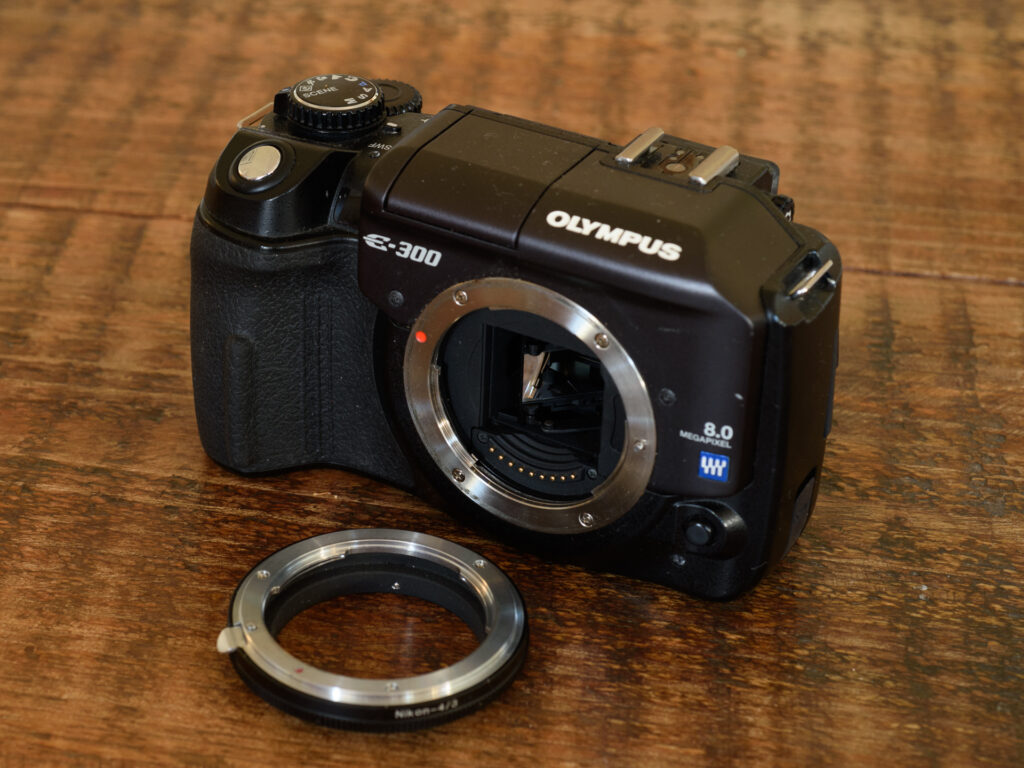
I’ve had mine for about 18 months and it’s a really nice camera. It’s a quirky 8MB 4/3 DSLR from 2004 with a porro-mirror and this strange chunky form factor. I also bought the 25mm (50mm equivalent) pancake which is great and makes it quite compact.
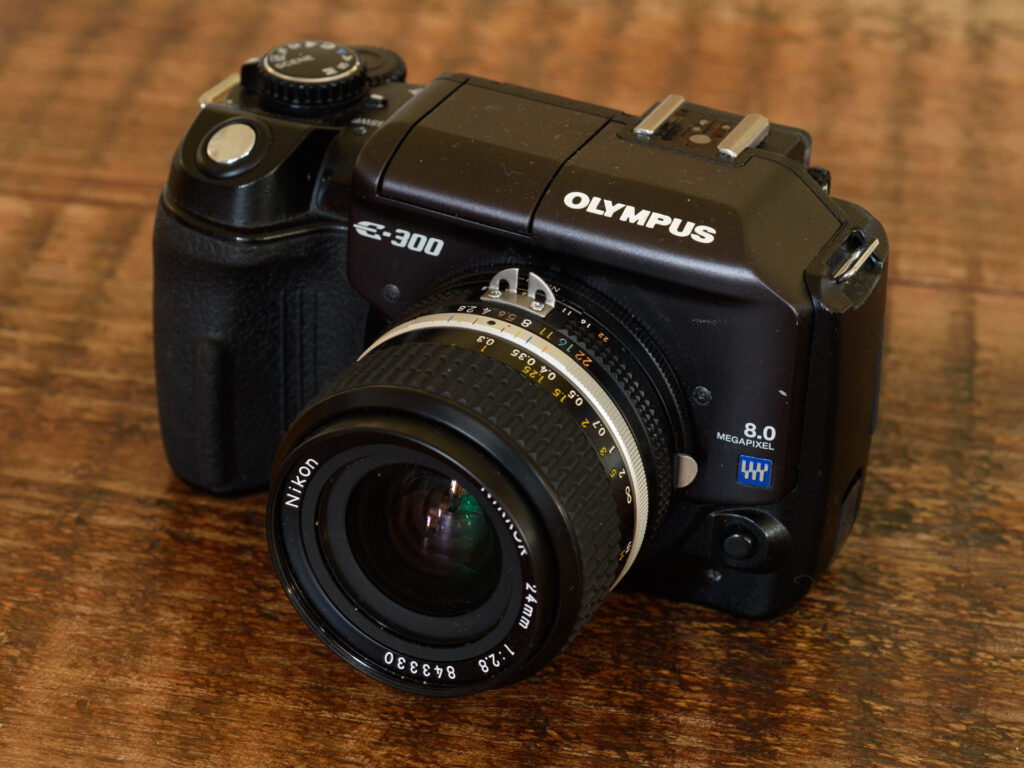
Back to my story. When the camera was new to me I decided to try it out on a trip my wife and I made to the Flinders Ranges about 500 km north of where we live. They’re not really mountains – more like bumps, but South Australia is very flat and these are very beautiful. I managed to find an F to 4/3 adapter (note: this camera is 4/3 not Micro 4/3, and the two are different even though sensor size is the same) so I whacked my Nikkor 24mm AI-S on it for a 50 mm equivalent. I did not have the 25mm Olympus lens back then, and it cost me €180 – as much as the whole clean kit with zoom and battery grip, by the way. Because I was shooting long exposure seascapes at the time I also took my 10 stop ND filter.
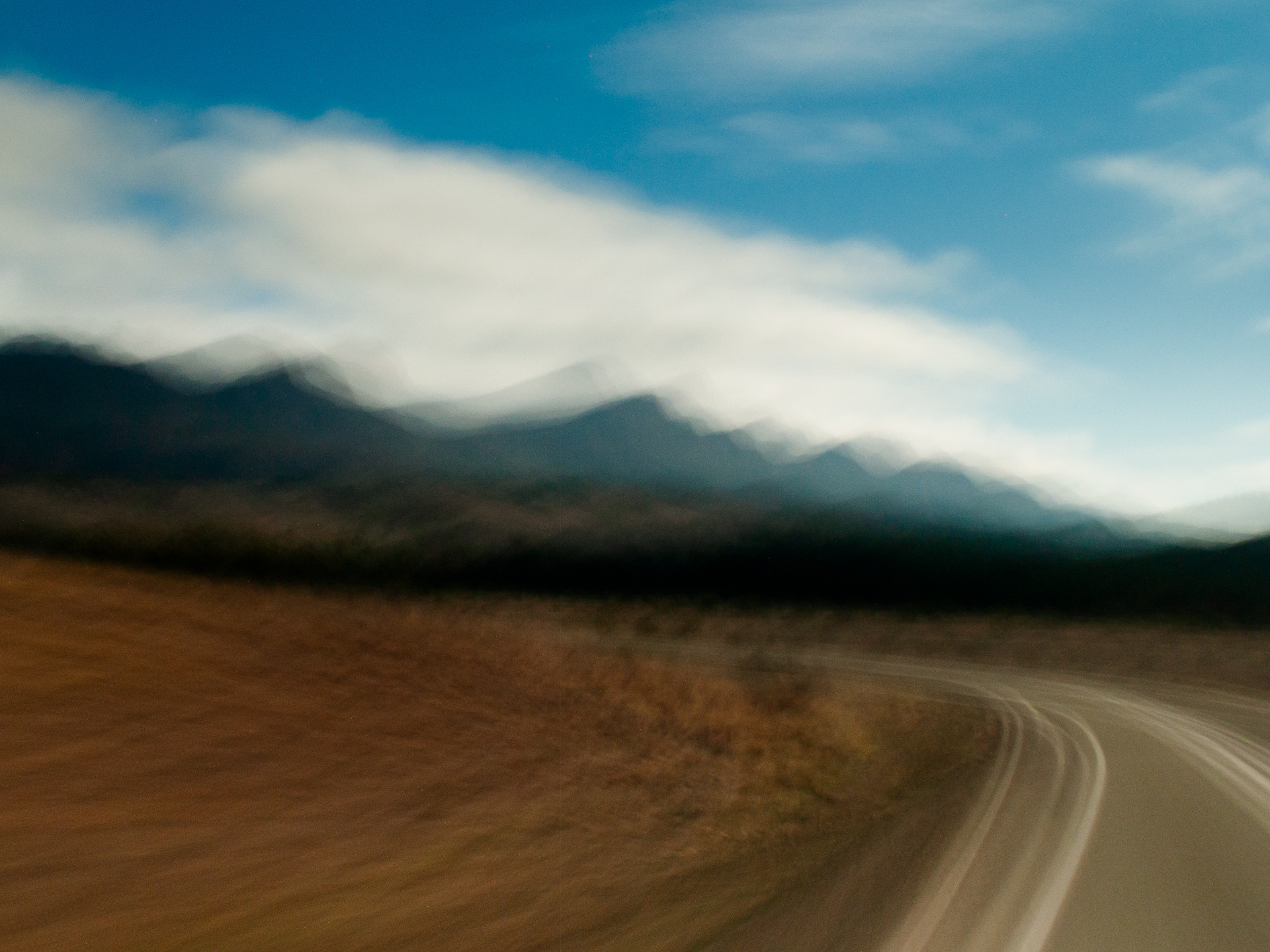
I am fond of a project, and I’ve taken many series of photographs up in the Flinders. This time I thought I would set myself the task of seeing if I could show the experience of travelling through the ranges. So I guess you would call these ICM, the acronym for intentional camera movement. Whether or not it’s intentional is moot if you are driving along in a car and happened to stick the camera out of the window. I guess you could call it inevitable camera movement. In any case let me say that I am rather suspicious of ICM because it’s one of those things that appeal when people first see it, but quickly becomes clichéd. My observations are that it’s easy to do badly and difficult to do well.
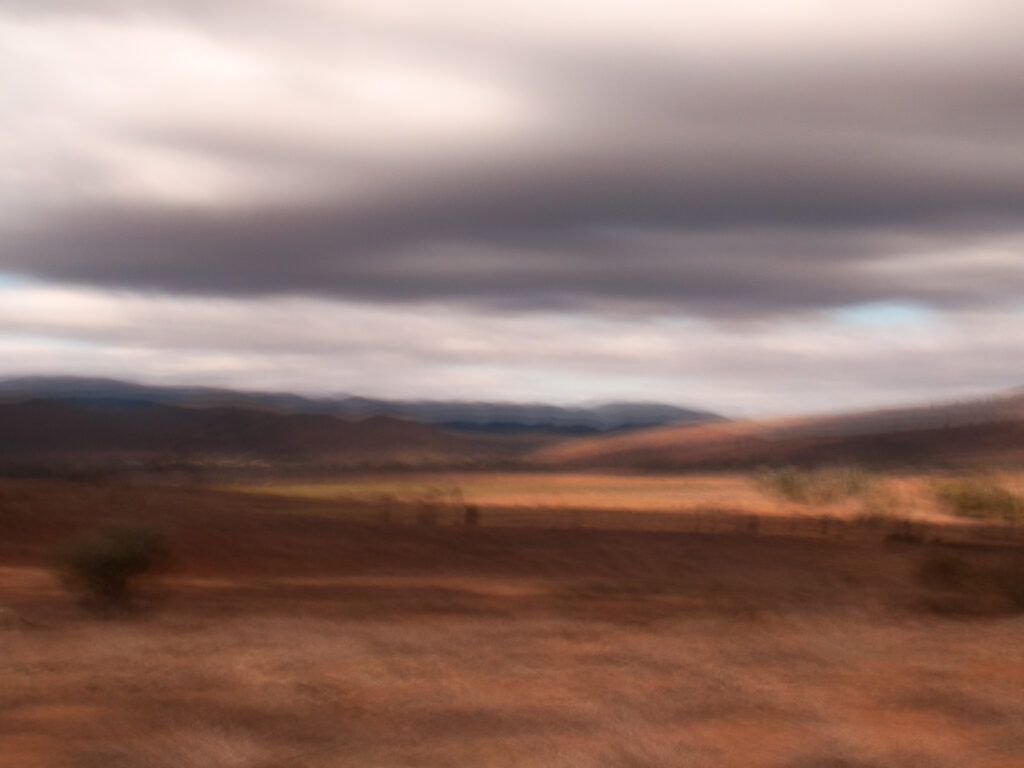
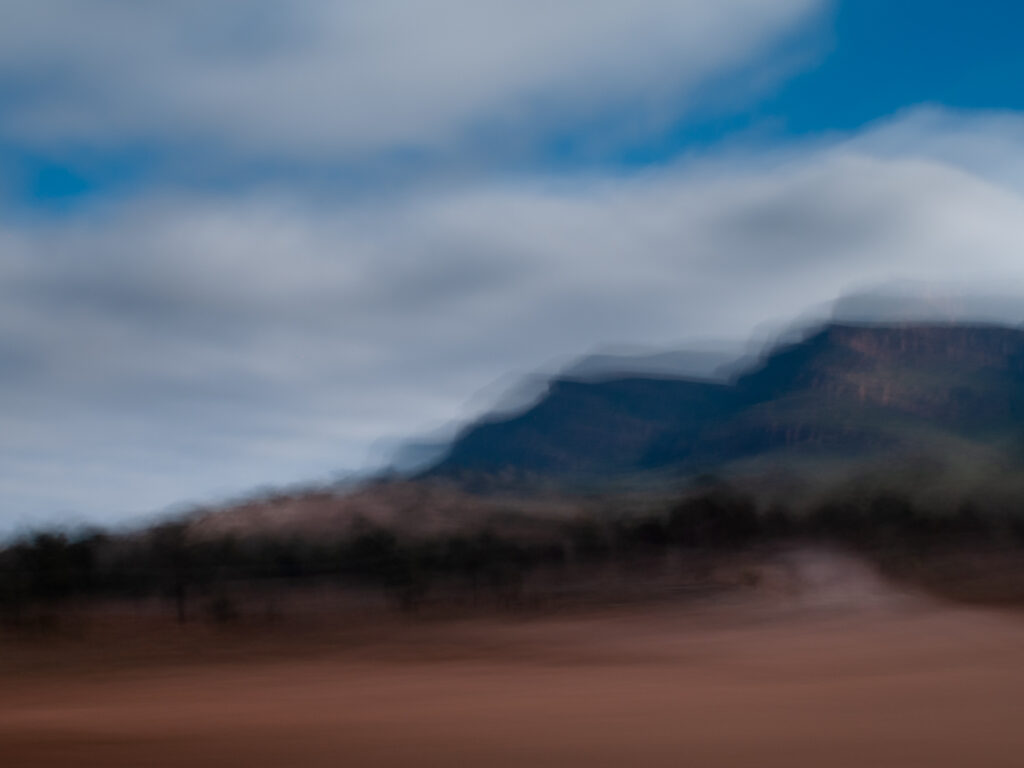
I won’t make any great claims for these photos, but I don’t find them displeasing. So, what about the camera? Does the sensor contain some kind of magic? Not really. However, I will give it it’s due. These frames are lightly processed raws. All I’ve done to them is shift the black point and the white point to something I find pleasing. I think I would say that this sensor does respond very quickly and easily to simple manipulations to give me something I like. The exposure times are one or two seconds here. I was using the camera on manual, guessing the exposure from the rear LCD which is about the size of a postage stamp by the way, but very quaint.
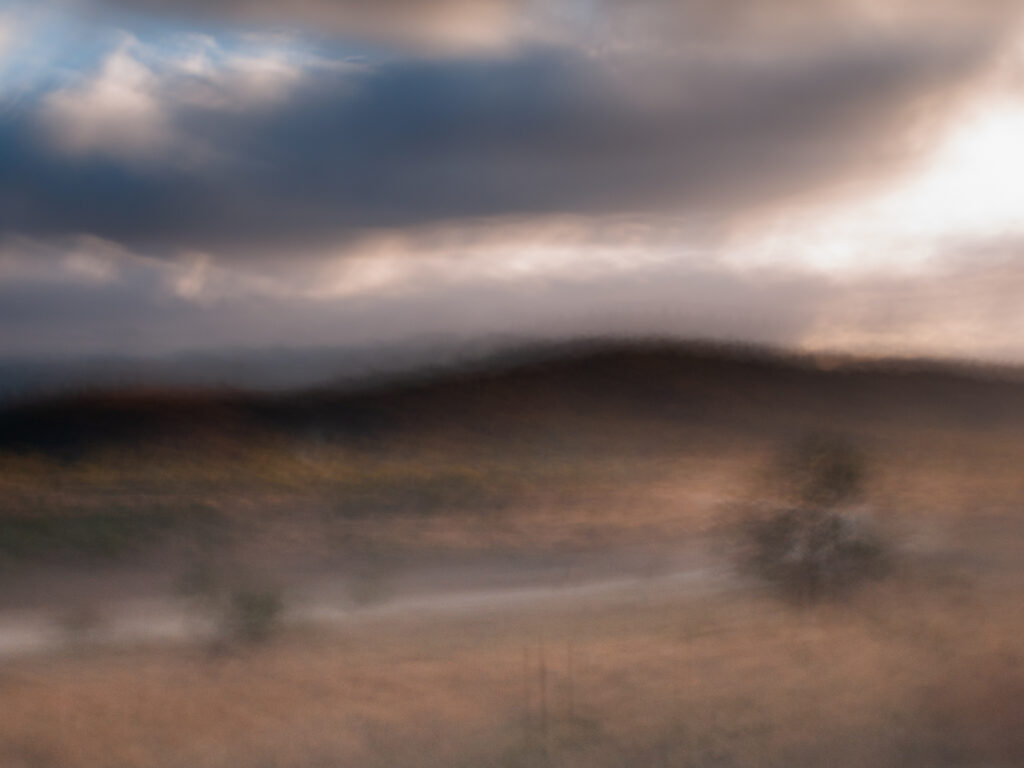

So there you have it. I came across this set in my Lightroom catalogue when I was looking for examples of photographs taken with this camera and it seemed to lend itself to a five shot story.
Thanks for reading.
Share this post:



Comments
Edward A Stitt on 5 frames in the Flinders ranges with an Olympus E-300
Comment posted: 14/05/2026
Comment posted: 14/05/2026
Ibraar Hussain on 5 frames in the Flinders ranges with an Olympus E-300
Comment posted: 14/05/2026
I’m a huge fan of the Olympus E-1 the elder larger sibling
The colours and the look are very special.
Comment posted: 14/05/2026
Comment posted: 14/05/2026
Walter Reumkens on 5 frames in the Flinders ranges with an Olympus E-300
Comment posted: 14/05/2026
I own three cameras with a CCD sensor: the Nikon D80 and D200, plus the Fujifilm FinePix S5 Pro with an F-mount. I don’t know if it’s the Kodak CCD sensor, as I lack the knowledge. In the Nikon D40 it was made by Sony, and presumably in the other two as well. The Fuji CCD is apparently modified. And in the Kodak DSLR in the Nikon body, with which Kodak tried to gain a foothold in the camera market back then – and which flopped as a result – the CCD sensor wasn’t even fitted. And from what I’ve read, the differences are barely noticeable; the colours are sometimes good, sometimes bad, and you probably shouldn’t go above 400 ISO. But, as is usually the case, it’s all down to personal taste. Thanks for sharing.
Comment posted: 14/05/2026
Comment posted: 14/05/2026
Comment posted: 14/05/2026
Comment posted: 14/05/2026
Comment posted: 14/05/2026
Comment posted: 14/05/2026
Comment posted: 14/05/2026
Comment posted: 14/05/2026
Comment posted: 14/05/2026
Comment posted: 14/05/2026
Comment posted: 14/05/2026
Comment posted: 14/05/2026
Comment posted: 14/05/2026
David Mackay on 5 frames in the Flinders ranges with an Olympus E-300
Comment posted: 14/05/2026
Comment posted: 14/05/2026
Scott Ferguson on 5 frames in the Flinders ranges with an Olympus E-300
Comment posted: 14/05/2026
These are great images. I love the very saturated colors and the use of camera movement for a very impressionistic image. I’m kind of curious how this technique might look on 35mmc or a full frame sensor.
Fun post!
Comment posted: 14/05/2026
Comment posted: 14/05/2026
Comment posted: 14/05/2026
David Pauley on 5 frames in the Flinders ranges with an Olympus E-300
Comment posted: 14/05/2026
Comment posted: 14/05/2026
Eric Rose on 5 frames in the Flinders ranges with an Olympus E-300
Comment posted: 14/05/2026
Comment posted: 14/05/2026
Gary Smith on 5 frames in the Flinders ranges with an Olympus E-300
Comment posted: 14/05/2026
Comment posted: 14/05/2026
Michael Flory on 5 frames in the Flinders ranges with an Olympus E-300
Comment posted: 15/05/2026
Comment posted: 15/05/2026
Alexander Seidler on 5 frames in the Flinders ranges with an Olympus E-300
Comment posted: 15/05/2026
Comment posted: 15/05/2026
Erik Brammer on 5 frames in the Flinders ranges with an Olympus E-300
Comment posted: 15/05/2026
Comment posted: 15/05/2026
Comment posted: 15/05/2026
Comment posted: 15/05/2026
Andrew on 5 frames in the Flinders ranges with an Olympus E-300
Comment posted: 16/05/2026
I seriously tried to like the Olympus 4/3 DSLRs and had several models (D400, D500 etc), but let them all go in the end. The dynamic range is very limited, which is ok if that’s what you intentionally want, but pretty frustrating otherwise. But most of all, it was the tiny viewfinder image that I couldn’t get along with- it was like looking along a dimly lit tunnel and I found it very hard to judge composition. Being a glasses wearer myself probably only made it worse.
It certainly IS possible to have a smaller sensor and a decent viewfinder- my Nikon D7100 being a case in point- that has a viewfinder which is a joy.
Probably what I’m saying is that to me, the viewfinder experience is critical- unless it allows me to assess composition without getting in the way, then the camera is not a keeper.
Comment posted: 16/05/2026