5 frames with a 85mm and a 75mm lens – Does it make a difference?

By Peter Schu

Recently, several 75mm lenses for full-frame cameras were presented by Chinese lens manufacturers. Only few 75mm lenses were produced in the past, like the Zeiss Biotar 75mm (a remake is available) and the Leica 75mm lenses for M-mount cameras. Leica never produced R-mount 75mm lenses. They do offer now a 75mm lens for L-mount cameras. The standard short telephoto focal length has always been the 85mm. So nowadays, the obvious question is, why should I choose one focal length over the other, given this small difference in 10mm?

This difference doesn’t matter for portrait photography, the most often mentioned use case for short telephoto lenses. One can keep a larger distance from the person with a 85mm focal length, but the difference in other lens parameters can be negligible. A 75mm lens allows you to include more foreground in landscape and in street photography though. If you can’t change your position, the field of view of a 85mm lens can be just a bit too small. This is why a like to use my 75mm lenses a lot. My first short fixed-focal length lens (“prime”) was a 85mm lens. It used to be my preferred focal length, but it got a tough competitor, when I bought also a 75mm lens for my rangefinder camera.

I was looking for a telephoto lens for my Zeiss Ikon ZM rangefinder camera and I found a Voigtländer 75mm f2.5 Color Heliar for a good price. This lens has a L(M)39 lens mount and so I needed a L-mount adapter. The native M-mount 75mm lenses show the 50 and 75mm frame lines in Leica cameras (there are also Voigtländer Bessa models with 75mm frame lines), but the Zeiss Ikon ZM lacks 75mm frame lines. I would see only the 50mm frame lines. That I had to get an L-mount adapter was therefore in fact a good thing. I chose the 28/90mm M-mount adapter, so I see the 85mm frame lines of the Zeiss Ikon ZM. The 75mm field of view corresponds very well to the outer rim of the 85mm frames lines. I don’t really have to guess what will be in the photo, in contrast to the much bigger 50mm frame lines.

Later, I also found the Zeiss ZM 85mm f/4 lens for a good price. However, I prefer the Voigtländer 75mm Color Heliar over the ZM 85mm, and not because it is the smaller lens of the two. Neither lens body gets even close to the 85mm frame lines. This Voigtländer lens is just good enough at f2.5, especially for b&w. Above that, it is sharp and has a beautiful color rendering. I did try it on my Nikon Z6 on a bright, sunny day and did not like the results. Others reported that it works just fine in combination with Sony cameras. The ZM 85mm works perfectly with the Z6 and as reported also with Sony cameras.

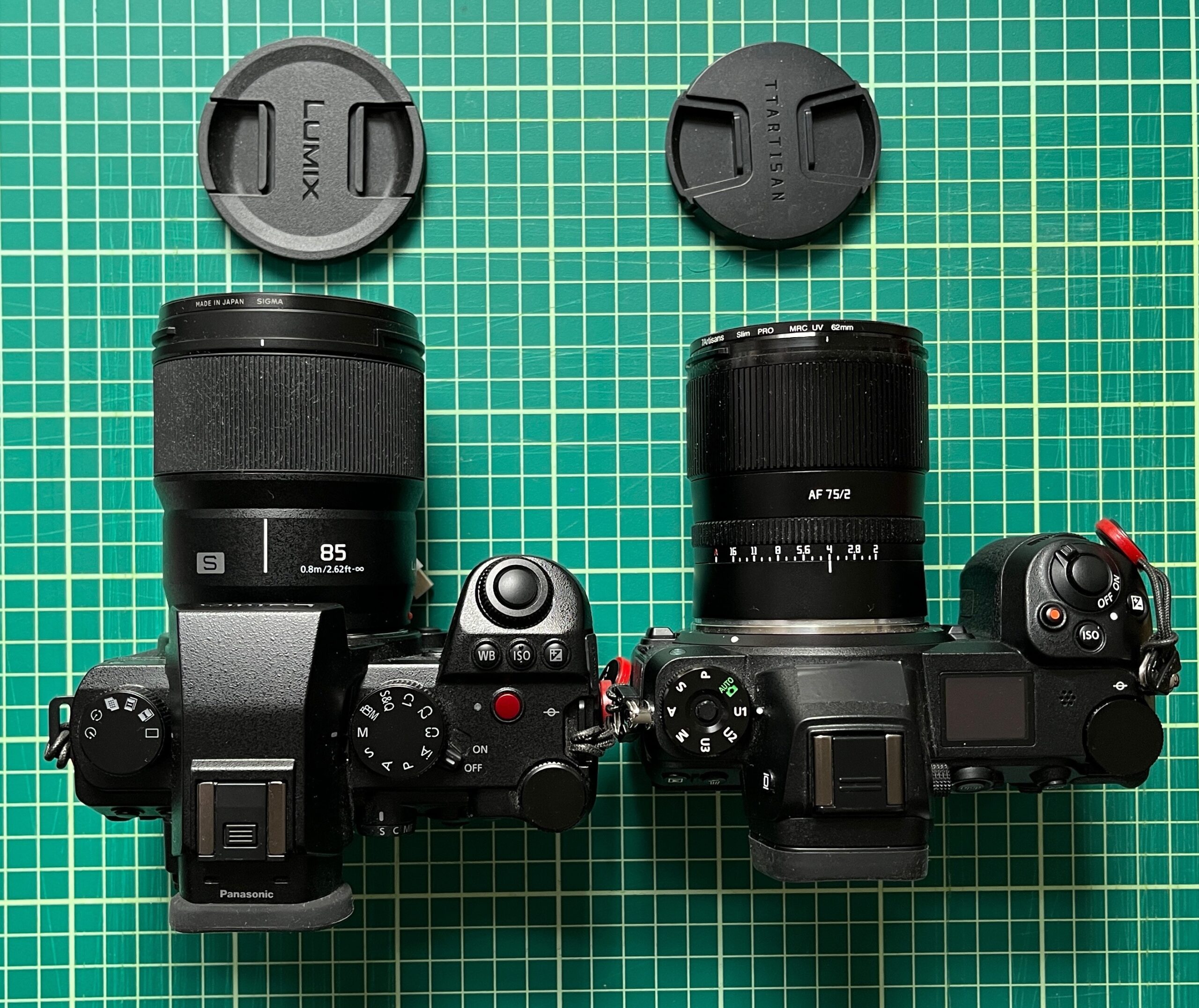
So, I decided to get myself the TTArtisan 75mm f/2 for my Nikon Z6. First of all, it wasn’t a huge investment for just under 200€. Secondly, my Z6 didn’t get much use since I also own a Lumix camera. I do like using this 75mm lens and I use my Z6 now more frequently now. I am not at all a fan of my Nikon 24-70mm f/4 kit lens and zooms in that range in general. This TTArtisan lens has been reviewed on 35mmc with other cameras and I can confirm the experiences described in those articles. I develop those raw files in Capture One using the ICC-profile ‘Nikon Z6 generic’ and ‘film’ or ‘linear’ by the way. Using the ‘standard’ will give bold high contrasts and bold highly saturated colors and there is usually too much green in the yellow spectrum too. This is easily fixed in the green channel in the RGB-profile.

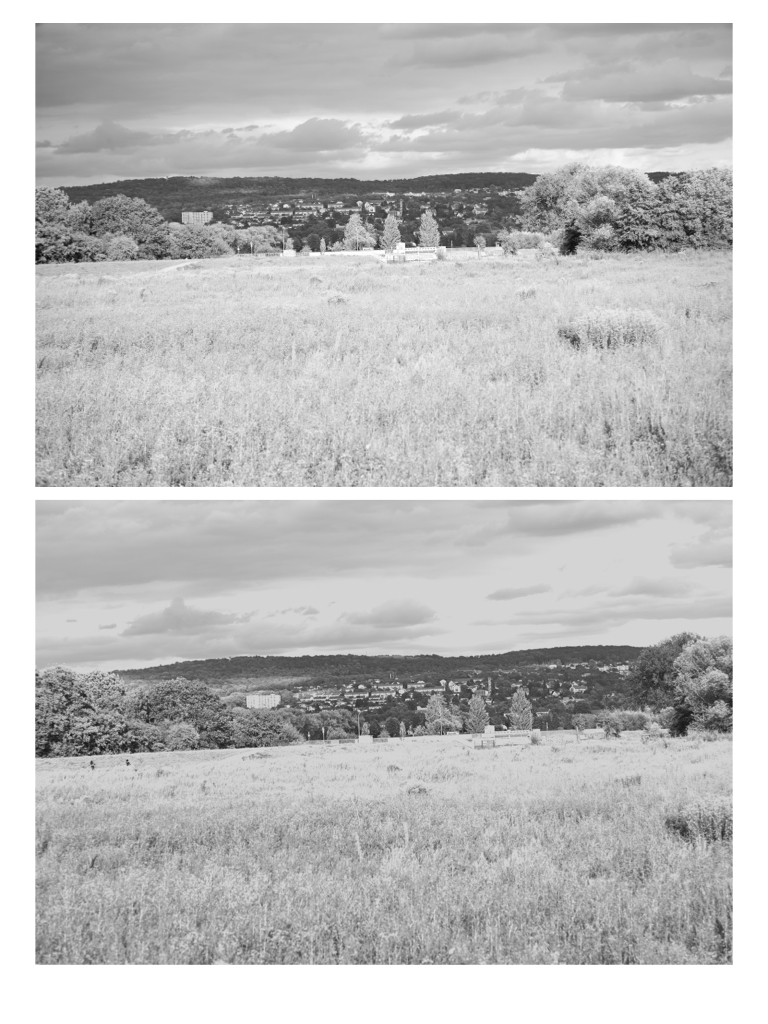
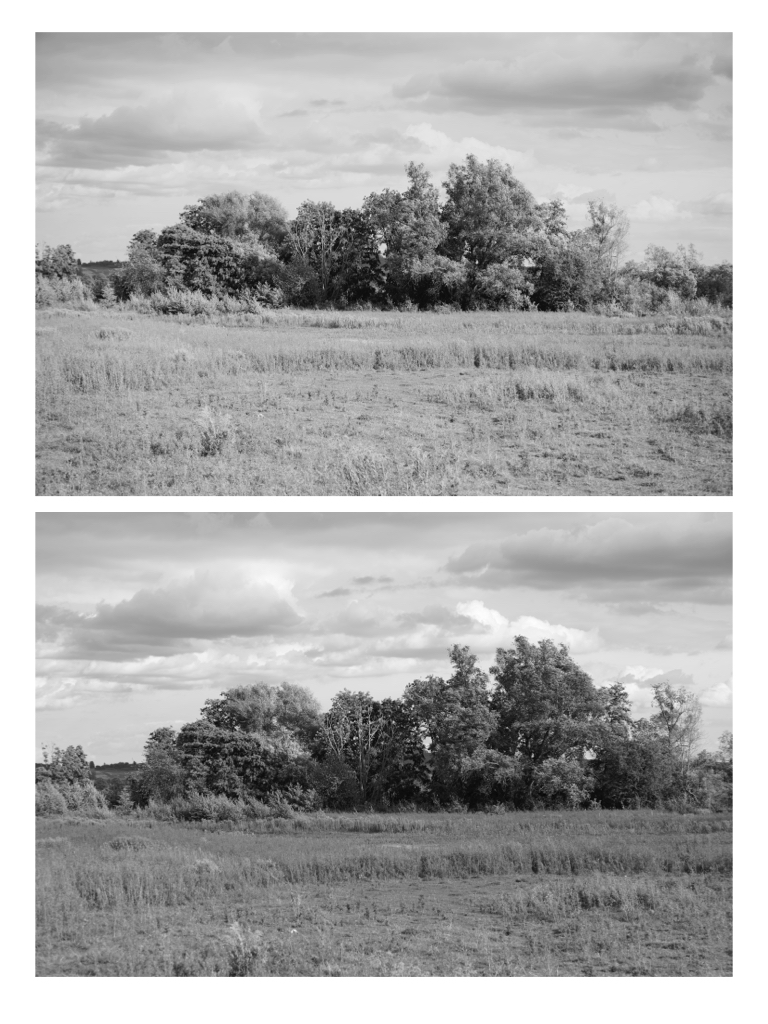
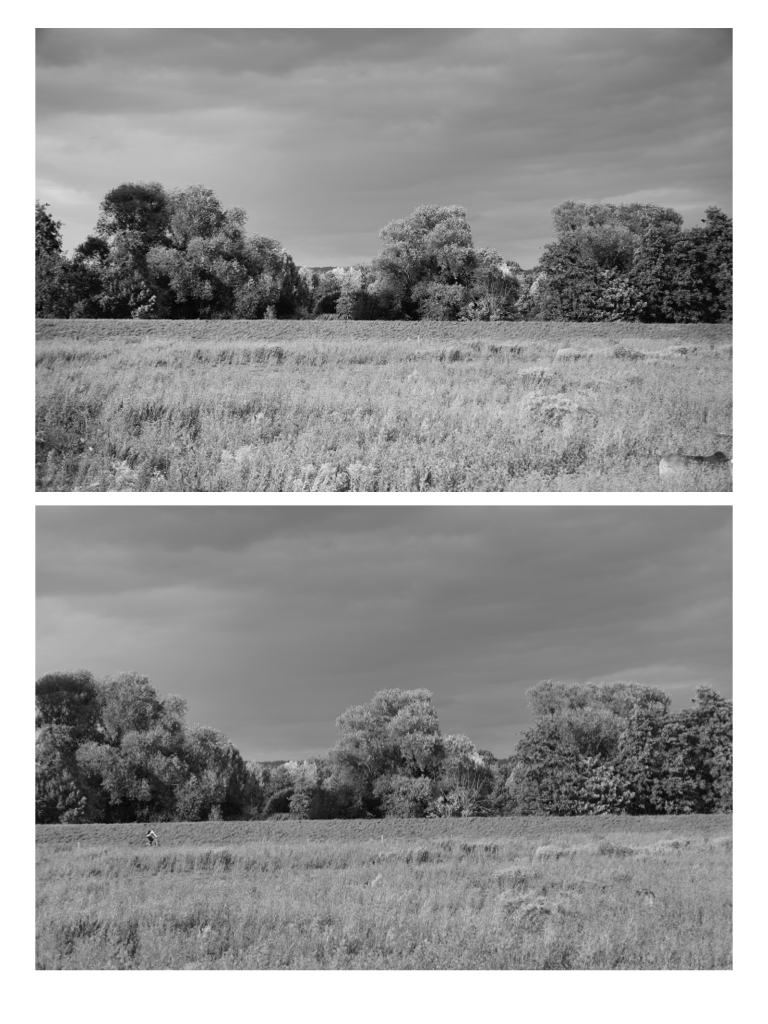
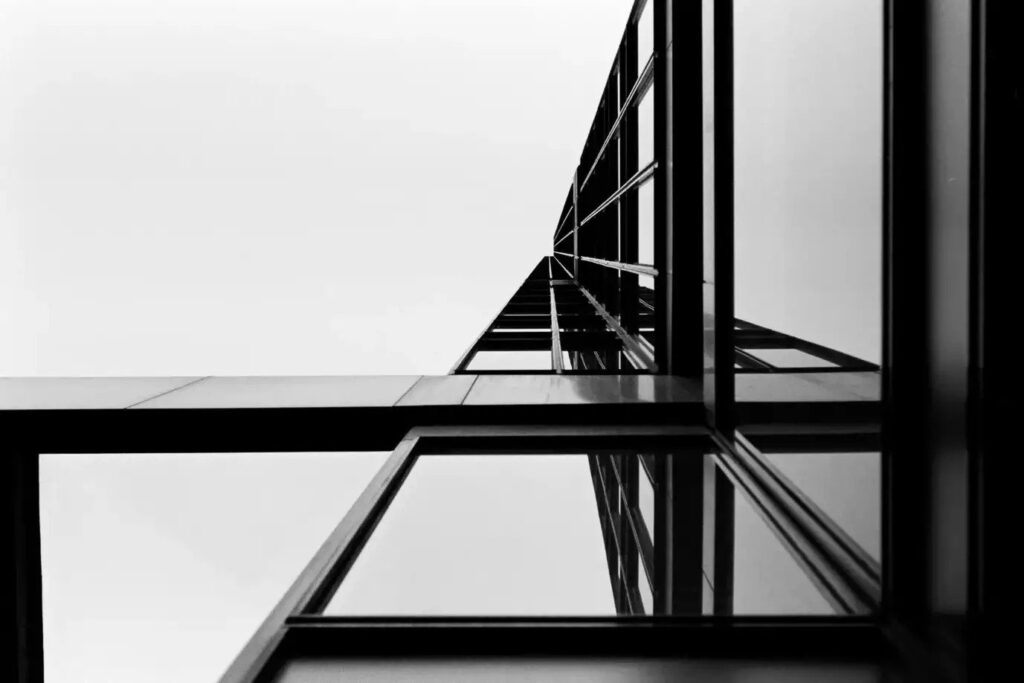
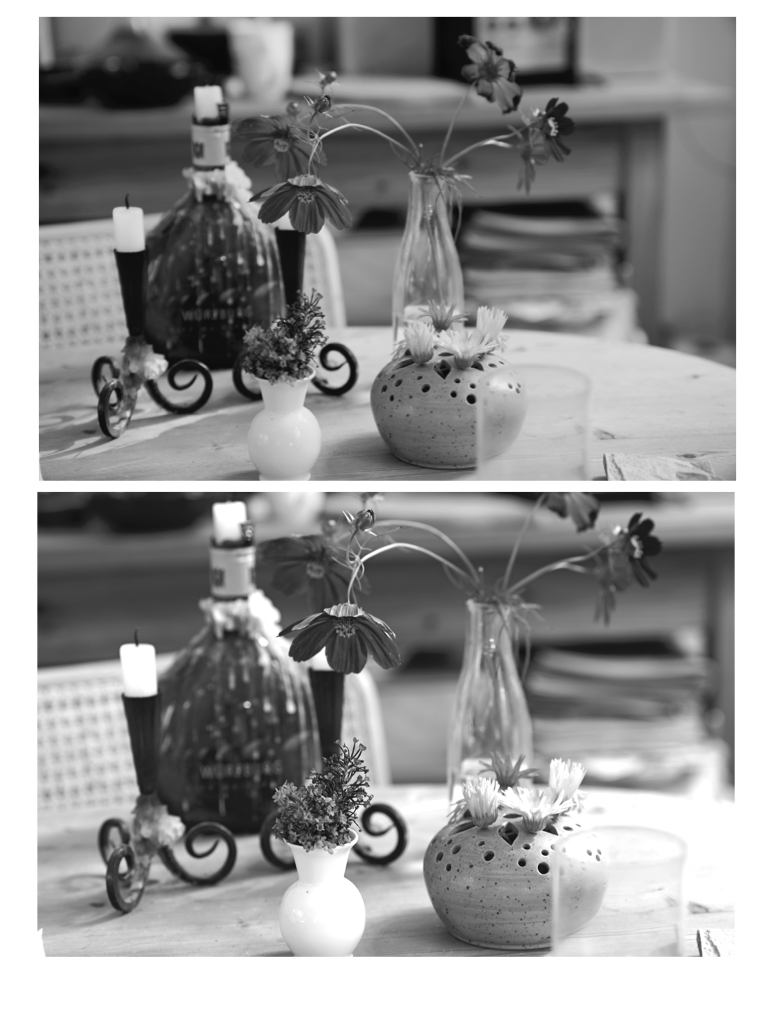
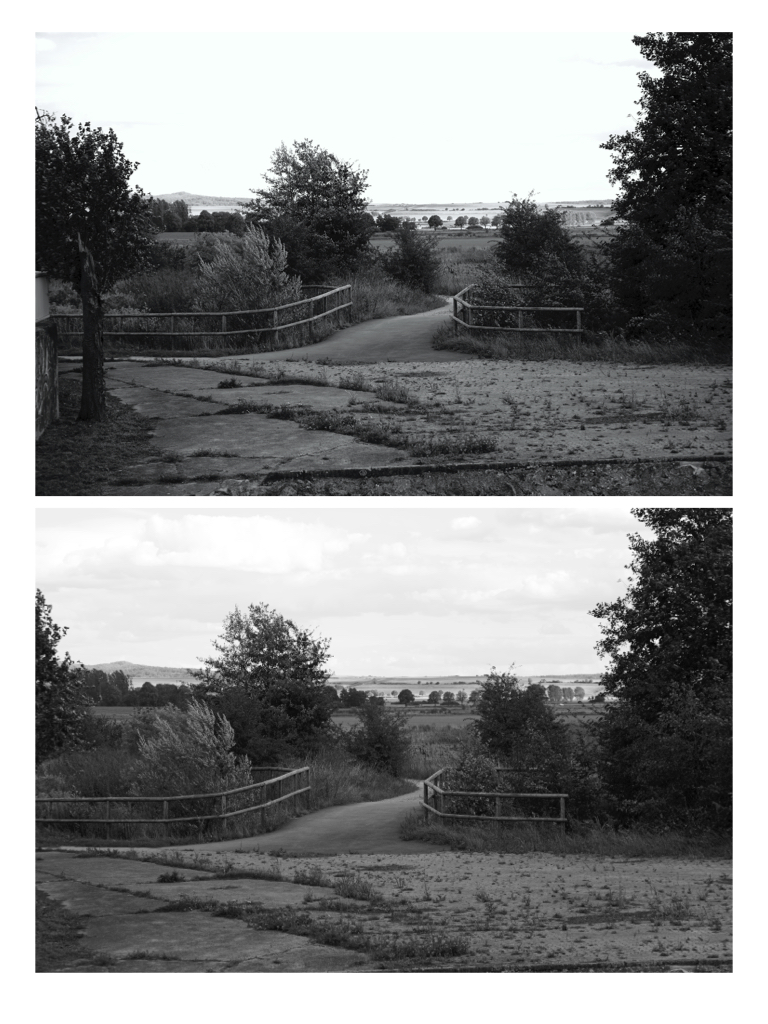
I took a few sample photos with the TTArtisan 75mm, which has a 32° diagonal field of view, on my Z6, and the 85mm f/1.8 which has 29° diagonal field of view, on my Lumix S5 IIx. All photos were taken at f4.0 and ISO 100. It was windy and so the clouds moved fast and the light changed.

Z6: Raw files imported into Capture One 20, no green-channel adjustments > Nikon monochrome > jpeg.

S5 IIx: out of camera Leica monochrome jpeg.

I adjusted a little bit the exposure of the photos, because the two cameras and lenses behaved differently. You’ll notice differences in gray scale and contrast, which could be adjusted in the files from the 75mm lens. The differences in the field of view between 75 and 85mm are minor, as expected, but this small difference can allow one to include just a bit more and this can be an important difference.

I hope that this description of my experiences can be helpful for people, who think about purchasing a short telephoto lens and who are not sure whether to get a 75mm or a 85mm lens.
Share this post:

About The Author

By Peter Schu
I started photography about 45 years ago after moving to my university town. I photographed everything which caught my attention. Only now, since I am retired, I consider to work on projects. I have a large library of b&w and colour photographs and I am browsing my libraries to see whether I can make a photo book or two. The goal is not a book, but working with my photos. I use digital cameras, when the technology offers advantages over analog photography. However, analog photography is so much more rewarding for me.
Read More Articles From Peter Schu

Find more similar content on 35mmc

Use the tags below to search for more posts on related topics:

Donate to the upkeep, or contribute to 35mmc for an ad-free experience.

There are two ways to contribute to 35mmc and experience it without the adverts:

Paid Subscription – £3.99 per month and you’ll never see an advert again! (Free 3-day trial).

Subscribe here.

Content contributor – become a part of the world’s biggest film and alternative photography community blog. All our Contributors have an ad-free experience for life.

Sign up here.

Make a donation – If you would simply like to support Hamish Gill and 35mmc financially, you can also do so via ko-fi

Donate to 35mmc here.

Comments

Michael Murray on 5 frames with a 85mm and a 75mm lens – Does it make a difference?

Comment posted: 14/10/2026

It's funny the 85 was standard. I like the 75 perspective in each sample image; not as much compression and the field of view just seems more natural. I wonder if my opinion would change with a set of portraits.
Reply

Leave a Reply

Your email address will not be published. Required fields are marked *

Peter Schu replied:

Comment posted: 14/10/2026

I guess that with portraits, the aperture can make a bigger difference than the field of view. I think of portriats in which the head takes up the most space in the photo. If I go out, without a specific photografic style in mind, I will take a 75 mm lens with me, because it lets me included just a bit more of a landscape. I just had to discover several typos in the text and I wrote L-mount adapter several times, but it should be M-mount adapter. Well, one can realize that, because of the context, but it shouldn't have happend.

Reply

Leave a Reply

Your email address will not be published. Required fields are marked *

Gary Smith on 5 frames with a 85mm and a 75mm lens – Does it make a difference?

Comment posted: 14/10/2026

The difference of 10mm in a prime lens wouldn't be enough for me to select one v. the other.
Reply

Leave a Reply

Your email address will not be published. Required fields are marked *

AlistairH replied:

Comment posted: 14/10/2026

That must depend on which primes you are thinking about. 85 v 75 is a difference of 13% (not a lot). 220 v 210 is 4% (tiny), but 24 v 14 is 71% (huge).

Reply

Leave a Reply

Your email address will not be published. Required fields are marked *

Peter Schu replied:

Comment posted: 14/10/2026

The closer I get to my subject, the more I prefer the 85 mm over the 75 mm. If I go out with just one body and lens, I will reach for the 75 mm lens, because it includes just a bit more and this bit can make a difference. One can't always change the position to include more, but one can always crop afterwards.

Reply

Leave a Reply

Your email address will not be published. Required fields are marked *

JC on 5 frames with a 85mm and a 75mm lens – Does it make a difference?

Comment posted: 14/10/2026

In the past days i shot a roll on my Pentax MEsuper.
So i used several times a SMC Pentax - M 75-150mm on it, especially for landscapes. And the 75mm position isn't that bad for landscapes !
For portraits i often use a CZJ Pancolar 80mm on Contax RTS and my experience is : there are perhaps one or two feet difference between 75 and 85mm.
Reply

Leave a Reply

Your email address will not be published. Required fields are marked *

Peter Schu replied:

Comment posted: 14/10/2026

I do have the Lumix 70-300 mm and I use it most often at either 70 mm or above 200 mm. It's large and I take it with me only, if I also want to take photos of animals, most of the time birds. The 75 mm lens is a lot smaller and significantly lighter and thus I take it with me, when I just want to have something with me, just in case....

Reply

Leave a Reply

Your email address will not be published. Required fields are marked *

Peter Schu on 5 frames with a 85mm and a 75mm lens – Does it make a difference?

Comment posted: 15/10/2026

I apologize for the typos I discovered only now. I also wrote several times L-mount adapter, but it should have been written M-mount adapter. The correct adapter is indicated by the context so. I must have read the text too often, which means I memorized it more than I actually read it.
Reply

Leave a Reply

Your email address will not be published. Required fields are marked *

Omar Tibi on 5 frames with a 85mm and a 75mm lens – Does it make a difference?

Comment posted: 16/10/2026

Peter, thanks for the comparison! 75 is certainly a rare FL, though I've experienced 70 through my 35-70 Vario-Sonnar lens. Quite frankly I prefer an 85 or even better, a 100, when it comes to mild teles, I prefer their FOV and separation more. The 70 feels more like a tight normal to me, and that is the impression I got from this 75 vs 85 test as well. Interesting how much of a difference only 10 mm of FL makes! Thanks for the test shots and looking forward to seeing what more you take from these lenses.
Reply

Leave a Reply

Your email address will not be published. Required fields are marked *

Peter Schu replied:

Comment posted: 16/10/2026

Omar, thank you for your comment, which is very interesting. I do not own a 100 mm lens, but if I would have to buy a 1:1 Macro lens, it would be a 100 mm Macro lens. I have a Sigma 90mm Macro lens (C/Y mount), I think the last lens SIgma produced in two versions, as an autofocus and as a manuel focusi lens. I use it also as a general lens, but exclusively with film. The bokeh, especially under very bright light, has sharp rims when used with digital sensors, something I don't like. If I want to have more tele look than the 85 mm deliver, I use my 135 mm lens. I actually just mounted ii on my Contax 167MT with 400 ASA b&w film for fall photos. I don't use this lens so often, but everytime I use it, I like the results. Thanks, Peter

Reply

Leave a Reply

Your email address will not be published. Required fields are marked *

Omar Tibi replied:

Comment posted: 16/10/2026

I didn't realize Sigma produced a macro lens for C/Y! Very cool, and that's interesting that Sigma made a MF and AF version of the same lens. I sadly don't own any of the macro lenses for my Contax SLRs though the 35-70 has a macro setting at 35 mm wide. Would love to give the 90 FL a spin too. 135 makes sense to me, it feels like the classical lineup is 35-50-85-135, and 100 is somewhere in between 85 and 135; what 135s do you use? Have a great time shooting! Love the 167MT, my first Contax SLR and still my trusty backup body :)

Reply

Leave a Reply

Your email address will not be published. Required fields are marked *

Peter Schu replied:

Comment posted: 16/10/2026

I have the Contax 2.8/135 mm. A great lens, with a build in hood and 55 mm filter threat. I was a student, when I got into photography. After pressing my nose twice a day against a shop window, I bought a Yashica FX-2 with the standard 1.7/50 mm. Later, I added a Tokina 4.0/70-200 mm and a Yashica 2.8/28 mm. After a while I wanted more and I had just enough money to buy a 'faster' lens, the Planar 1.4/50 mm. I still remember the first photo I took with that lens. The problem now was that photos taken with the other lenses were not comparable and they stood out in a slide show. So, I got the Contax 2.8/135 mm to replace my 70-200 mm. I played with the focal lengths of the zoom and found out that 200 mm is not so much different from 135 mm. My dream was the 1.4/85 mm, but that was way too expensive for me and we didn't really had a used camera/lens market in those days. This 135 mm delivers and it is a very robust lens. The Sigma 2.8/90 mm Macro MF lens is lightweight and the focus ring doesn't has much reistance, because it was build as an autofocus lens. It is 1:2 macro lens and it came with a close focus front lens (ø 52 mm) to reach a 1:1 ratio. If you get one, make sure you get it with its lens hood! Contrast is low and there is too much flare without it. I found mine as a second hand lens in a camera store in Hamburg decades ago. Hamburg was home to many print magazines and newspapers and therefore also to many professional photographers and the camera stores offered everything you can think of. This lens is best at closer focus distances and not so good at infinity, but it is still good enough as the only lens to take with you on a walk through town or the country side. It produces a very nice color palette and a wide grayscale. I like to use it with a green filter on very bright summer days. I wish you good luck finding one. It's fun to use.

Reply

Leave a Reply

Your email address will not be published. Required fields are marked *

Dave Lynagh on 5 frames with a 85mm and a 75mm lens – Does it make a difference?

Comment posted: 16/10/2026

I've had similar thoughts on 75 vs 85, but also a bit further out - 85 vs 90mm...

Thank you for the thoughts and shots here, Peter...
Reply

Leave a Reply

Your email address will not be published. Required fields are marked *

Peter Schu replied:

Comment posted: 16/10/2026

I only realize now, that I could have included my 90 mm Sigma Macro lens in this comparison. I guess I didn't think of it, because I don't like its bokeh when used with digital cameras. Sharpness and colors are great, especially under dim lightning conditions! I use it exclusively with film. Thank you, Dave.

Reply

Leave a Reply

Your email address will not be published. Required fields are marked *

Leave a Comment

Leave a Reply

Your email address will not be published. Required fields are marked *